
+++ The AC COBRA COUPE is a 812 hp V8-powered sports car that will turn the British firm into a global brand, according to chairman Alan Lubinsky. The new 2-seater will enter production next year. The Cobra Coupé is essentially a closed-roof variant of the 2024 Cobra Roadster, with which it shares 75% of its parts. It employs the same engine: a Ford-sourced 5.0-litre V8 that can be had in 450bhp naturally aspirated form or with a supercharger that boosts output to 720 hp. A 812 hp Clubsport Edition tops the line-up and is limited to 99 units. Power is sent to the rear wheels via either a Tremec 6-speed manual or a 10-speed automatic gearbox. There is a limited-slip differential for the naturally aspirated version and a Torsen differential for other variants. Suspension on all models is double wishbones all round.
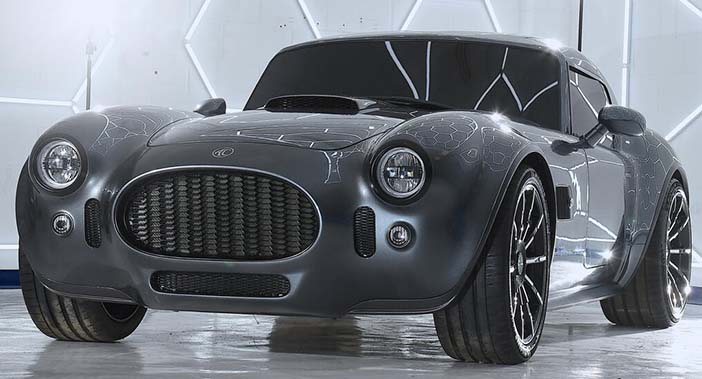
The car sits on an aluminium chassis and has a fully carbonfibre body. Both are built in-house, with the body coming from Sussex-based Green Tech Automotive, which AC recently bought in order to keep production and material costs down. AC claims that all of the bodywork behind the front wings is bespoke to the Coupé, which was inspired by the one-off fixed-head AC Cobra A98 that was created for the 1964 Le Mans 24 Hours. The car’s interior mirrors that of the Roadster, with a cluster of analogue dials alongside a small digital touchscreen and a three-spoke steering wheel. At 1.98 meter wide, the Coupé is broader than previous AC models. Its extra width is the result of conforming to regulations that will allow it to be sold as a road car in different regions around the world. It could have been made smaller but that would have limited it to track-only use in most markets, engineering chief Jon Peeke-Vout told. An alternative option would have been to replace the V8 with a smaller engine, “but that’s not us”, said Peeke-Vout. Despite the car’s more expansive size, he said, you can “see the heritage and where it has come” from, adding “there is no mistake that it is an AC Cobra”. The car shown in these pictures is still a prototype and AC is targeting a weight of “under 1.600 kg” in the Coupé’s heaviest, supercharged state, said Peeke-Vout. The Roadster weighs up to 1.500 kg. Lubinsky described the Coupé as the 125-year-old firm’s first “volume” model. The plan is to use it as a catalyst to take AC from around 100 hand-built cars a year currently to more than 1000. “This is the most exciting time for AC in its history”, he said. The Coupé has been earmarked for this task because fixed-head models have greater appeal than convertibles in markets such as the US and the Middle East. The US, where the car will be called the GT Coupé due to licensing issues, accounts for around half of AC’s sales. To achieve the planned increase in production, AC will open a new plant in the United Kingdom, although details of the facility have yet to be outlined. Currently, cars are 75%-finished at AC’s German production plant before being sent to the UK for completion. For the new plant, the plan is for everything bar the chassis to be produced there. Both the Coupé and the Roadster will be made at the new site, with the Coupé comprising the bulk of the builds. Production of the fixed-roof Cobra is slated to begin next year once current orders of the Roadster have been fulfilled. Deliveries will start in 2028. After those cars, AC will launch more models and, like the Cobra, they will come from AC’s back catalogue. Peeke-Vout said: “The platform for the Roadster and Coupé lends itself to some of the other models that we could create again”. Speaking about his ambition for the brand at the start of the next decade, CEO David Conza told: “There is a small line between a boutique like Chapelle and all the mainstream shops, like H&M, and I really want to be between them”. While the new models will be AC’s core business, its Classic range (made up of the Cobra Mk4 and incoming Ace) will continue and be used as a brand builder. “This is nice to do and it’s important we do it well, but it’s not going to keep the lights on”, said Peeke-Vout. Both models are built to original specifications, having been reverse engineered, but they sit on modern aluminium chassis and feature modern touches. For example, the Cobra Mk4 will soon be available with a one-piece carbonfibre shell, created to eliminate shutlines while also keeping weight down and produced in-house. All cars are built to order in Sussex (and that will continue even after the new plant opens) and they can be had with a vast array of bespoke elements.Asked how the brand could expand its Classic line-up, Lubinsky said more models are being planned. “From the Ace could come something like the 1950s Aceca again”, he said, “because of our skills of being able to mould the carbonfibre body for it. And from there it will spawn other relatives”. Lubinsky also hinted that an EV powertrain could be made available for each car. Currently, just the Ace is offered with that option and gets a 300 hp motor, 72 kWh battery and around 320 km of range. However, future cars will be more advanced, said Lubinsky: “The technology from that car is a little bit old now, because we did it about 18 months ago. We’ve got far better technology now, so we will update that”. +++
+++ AUDI boss Gernot Döllner lets out a hearty laugh. He pauses, smiles, and then says, “I’m a big fan of the V8”. That’s all we, the assembled group of journalists at a roundtable in Munich, needed to hear. A pathway for the R8’s return exists, and it would likely collide with the Lamborghini Temerario. While the discussion in the room mainly focused on the RS5 and the upcoming Q9, the gathered media pressed Döllner on other topics, such as increased hybrid options, global strategies, and even more rugged offerings. But for a brief moment, talk turned to a future R8, which Döllner deemed a “good idea”. The Walter de Silva-designed Audi R8 remains a supercar standout thanks to its gorgeous shape and awesome engine. Yes, the V10 shared with the Lamborghini Gallardo and Huracan delivered a great experience. But for my money, the nose of that original 4.2-liter Audi V8 still sings the sweetest song. “There’s no restriction to an engine like that”, says Döllner, regarding the packaging capabilities of a V8. Gernot goes on to say that the Lamborghini Temerario has a great V8: 10.000 rpm, twin-turbo, brilliant”. Speaking further, Döllner praises the VW Group’s platform-sharing capabilities and highlights the benefits of plug-in hybrids in the performance-car space. None of this is confirmation that a new Audi R8 is coming, mind you. But if you heard Döllner’s laugh and saw his smile, your halo-car-loving heart would’ve grown 3 sizes that day. +++
+++ BUGATTI may have only just launched its ultra-exclusive Programme Solitaire division, but the company is already hard at work making dreams come true. A new report suggests the automaker is already developing its third bespoke hypercar. The French marque is preparing a second one-off creation set to debut in early 2027. Like the recently revealed Brouillard and FKP Hommage, the new model is expected to ride on the Bugatti Chiron platform and could once again feature the brand’s legendary quad-turbocharged 8.0-liter W16 engine. While details remain scarce, the project appears to continue Bugatti’s growing focus on ultra-low-volume coachbuilt specials designed for its wealthiest collectors. Reports indicate the company plans to limit these exclusive creations to no more than two. The upcoming model could blend elements of both the track-focused Bolide and the new Tourbillon. Similar to the FKP Hommage, the car is also expected to pay tribute to another model from Bugatti’s heritage. There’s no word yet on pricing, but we expect it to be exceptionally pricey. If rumors are accurate, the FKP Hommage reportedly carried a price tag north of $20 million. Naturally, this upcoming one-off likely won’t come cheap either. +++
+++ It’s been nearly 3 years since LAMBORGHINI did the unthinkable and revealed an electric car. However, unlike the production-ready Ferrari Luce that everyone is talking about these days, Lanzador was a concept. At the same time, the 2-door GT was also a promise of a future EV model that people would actually be able to buy. That future won’t come as early as initially projected by Sant’Agata Bolognese. The Lanzador was supposed to come out in 2028 before it was pushed back to 2029, only to be delayed indefinitely. Similarly, the electric Urus was initially planned for a market launch before the decade’s end, but that’s not going to happen either. Although Lamborghini is still developing an EV, its launch date has not been established, and it’s safe to say it won’t be coming out before 2030. With the Ferrari Luce setting the Internet ablaze, Lamborghini CEO Stephan Winkelmann was asked about his stance on abandoning the launch of the Lanzador and Urus EVs in the coming years. The company bearing the raging bull logo has no regrets about delaying electric cars indefinitely, saying it was “the right way to go. By observing the market, we saw that the acceptance curve of EVs for our type of customers is not increasing and that therefore we decided to move away from a full-electric car into a plug-in hybrid”. Predictably, Lambo’s head honcho refused to talk about the Luce, only saying that “every brand, every company has to decide for themselves”, adding that “everybody has their own strategy”. Winkelmann’s stance on EVs is hardly a surprise. Just a few months ago, the number one at the Audi-owned Italian exotic brand told that electric cars are an “expensive hobby”, given the projected low take rate: “Investing heavily in full-EV development when the market and customer base are not ready would be an expensive hobby, and financially irresponsible towards shareholders, customers and to our employees and their families”. Looking ahead, Lamborghini still plans to add a fourth model to join the Temerario, Revuelto and Urus. The 2+2 Lanzador is being engineered to accommodate a combustion engine in a plug-in hybrid powertrain, much like the existing models, all of which are PHEVs. +++
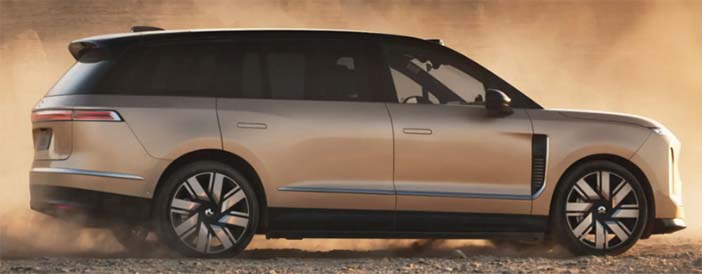
+++ A few months after the first photos and details about the Nio ES9 emerged, the huge SUV has been officially launched and priced in China. It’s the automaker’s most luxurious model built to date and could be enough to make local shoppers forget about European alternatives. All versions of the ES9 use an advanced 900 volt electrical architecture and come standard with a 102 kWh battery sourced from CATL. Power is provided by a pair of electric motors that combine to deliver 708 hp, allowing the ES9 to hit 100 km/h in just 4.3 seconds. The driving range will vary from 580 km to 620 km, depending on the trim level. Importantly, the ES9 has been designed to support Nio’s battery-swapping technology, meaning the 102 kWh pack can be replaced in just 3 minutes at one of the company’s swapping stations. Buyers can opt for Nio’s battery-as-a-service rental program to reduce the ES9’s starting price to 390.000 yuan ($57.500; €80.000 on the Dutch market). Those who opt to own the ES9 and its battery pack outright will need to pay a minimum of 498.000 yuan ($73.500; €100.000 in The Netherlands). Either way, it’s pretty cheap for what you get. The ES9 is massive, measuring 5.365 mm long, 2.029 mm wide and 1,.870 mm tall, with a 3.250 mm wheelbase. Given its size, it is perhaps no surprise that it sits on large 23-inch wheels. In general, the SUV’s design is quite homogeneous with other Nio models, meaning it includes a set of rather simple split headlights, simple body lines and creases, and a light bar at the rear. It’s in the cabin where most of the exciting stuff is found. The dashboard has a large central 15.6 inch infotainment display and a 48 inch screen stretching across the dash. There’s also a large head-up display and loads of premium materials. As with other premium SUVs, those in the second row get treated to a true first-class experience. Not only are there a pair of captain’s chairs, but there are also large entertainment screens and a 42-point massage system, including massaging footrests that fold down from the rear of the front seats. Nio has also added a panoramic glass roof and a 47-speaker audio system. +++
+++ SEAT will offer electric cars when production costs come down further but will not simply ‘de-content’ and rebadge Cupra models, because the sibling brands will have entirely separate line-ups going forward. Seat recently ended a long drought of new model launches with facelifts for the Ibiza supermini and Arona crossover, the first substantial investments in its line-up since the launch of the 4th generation Leon in 2020, and will follow up with new mild-hybrid engines for the duo next year. However, with the recent retirement of the Ateca and Tarraco, Seat is down to just 3 models, all petrol-powered, and has given little indication as to what the future holds, as the company diverts the bulk of resource and investment towards its fast-growing Cupra sibling. Now, though, CEO Markus Haupt has given the first clues that the first all-new Seat models in years could be on the horizon, as the company continues to invest in the value-oriented marque. Asked whether Seat still had a role to play in the context of Cupra’s plans to significantly expand its line-up and become a leading global premium brand, Haupt said: “We cannot imagine our company without Seat. Seat is the heritage of our company and has made history in Spain and other countries. So it’s a very important message: we still are investing in the Seat brand. Next year we will have mild-hybrid versions of the Ibiza and Arona, and both cars are still running at a very high rate”. He pointed to the fact that the Ibiza was Spain’s best-selling car in February as testament to the brand’s ongoing popularity and said there was no immediate need to reconsider its viability in the short to medium term. “When we face up to 2029 and 2030, and CO2 emissions regulation becomes harder than today, for sure there will come a point where we need to discuss what the future of this brand can be”, he continued. “For that, we probably still need to work on the cost of electric car platforms, because today it would be very tough to have a Seat that is able to earn money with the costs we have. Someday the discussion will pop up on what to do with Seat. But until then we have a clear strategy to keep betting on the models we have”. Asked whether Seat will still be selling new cars in 2035, Haupt said “I hope so”, emphasising the brand’s different positioning from Cupra and the different role it plays globally as a provider of affordable, ICE-powered cars. “The brand position is completely different, the customer base from both brands is different”, he said, “and we cannot forget overseas markets, where electrification is still not as it is in Europe. So we are very happy. It’s part of the strategy of what we are doing now. It’s not just a causality. We still bet on both brands very strongly”. Asked about the prospect of Seat selling a cheaper version of the Cupra Raval, perhaps with a shorter range and less equipment, Haupt responded: “We would never do that, because I think we need to keep both brands differentiated. Raval will always be a Cupra, and just de-contenting Cupra cars and making Seats out of them is for sure not the right strategy for us. I think both brands deserve their own DNA and both brands have to find their own way. So for sure we will not see a Raval with a Seat logo”. Haupt said all future Cupras will be bespoke, rather than warmed-up versions of Seats, like Cupra’s Ateca and Leon were, as part of a push to strengthen the brand’s DNA and carve out a more distinct position in the market. “If I look back, I think it was a clever move, and we used a good opportunity with the Leon, but also part of the strategy looking to the future is to have a completely different portfolio for both brands. So I don’t think we will repeat something like that. It was a good opportunity, and the proof of it is the Cupra Leon is working, and the Seat Leon is working. So we did a good job there, but now it’s about keeping both brands truly on their DNA”. +++
+++ China helped create many of today’s wildest EV trends, but now it’s starting to look like it regrets some of them. After cracking down on hidden door handles and giant touchscreen interiors, regulators are now questioning heavily reclining “zero-gravity” SEATS found in some modern electric (and luxury combustion) cars. The concern has solid foundations, because when passengers are stretched out almost horizontally during a crash, seatbelts and airbags can’t protect them properly. China’s Ministry of Industry and Information Technology warned this week that occupants sitting in deeply reclined positions can “submarine” below the belt. These lounge-like seats have become increasingly popular in Chinese EVs as automakers compete turning cabins into rolling living rooms. Many models now feature massaging seats, giant screens, ambient lighting and enough legroom to encourage passengers to take naps during journeys. But regulators seem increasingly uncomfortable with the idea that cars are becoming mobile relaxation pods first and transportation second. The proposed rules, which the public can have a say on until canvassing ends July 25, Reuters reports, are part of a much wider Chinese safety push reshaping how cars are designed. Earlier this year, China banned pop-out door handles after several high-profile crashes raised concerns about emergency exits failing during accidents. One fatal incident reportedly trapped passengers inside a burning EV when electronic handles stopped functioning properly. Yoke steering wheels have also attracted scrutiny because regulators worry drivers may struggle regaining control during emergencies. One-pedal driving systems faced criticism too, partly because some drivers reportedly become too reliant on regenerative braking and react slower when needing actual brakes. Even huge infotainment screens aren’t escaping attention anymore. China previously proposed rules requiring physical controls for key functions like hazard lights, turn signals, gear selection, and emergency calling, pushing back against minimalist interiors inspired by Tesla. This kind of state-led action shows how quickly China’s role has shifted. The country spent years pushing futuristic EV ideas harder than anyone else, helping popularize ultra-fast acceleration, lounge interiors, hidden hardware, and giant displays. But now China increasingly looks like the automotive industry’s toughest safety referee. And because it remains the world’s biggest EV market, those decisions probably won’t stay confined within its borders for very long. +++