
+++ There aren’t a lot of automakers that have lasted over a century and are still healthy to this day. One of these is BENTLEY , and it’s been around for 107 years. Founded by W.O Bentley on January 18, 1919 in Cricklewood. A longtime purveyor of ultra-luxury vehicles, it’s seen its fair share of ups and downs, but VW’s purchase of the marque in 1998 has seen it in good health since, with expansion perhaps far beyond what its founder would’ve imagined. Of those 107 years, a few things have stayed constant for a good chunk of those. The first is tapping into its sporting heritage, and the second is production at Crewe. This year marks the 80th anniversary of continuous production at that site, and you can bet Bentley is celebrating that. In the early years of the company, Bentley made its cars in Cricklewood, but then moved to Derby in 1931 following its acquisition from Rolls-Royce. Production there lasted until 1940 and stopped because of World War 2. After the war, Bentley set up its home base in Crewe in 1946, and has been rooted in the county of Cheshire since. While there is production in Germany and Slovakia now, Crewe will always be the home of Bentley.
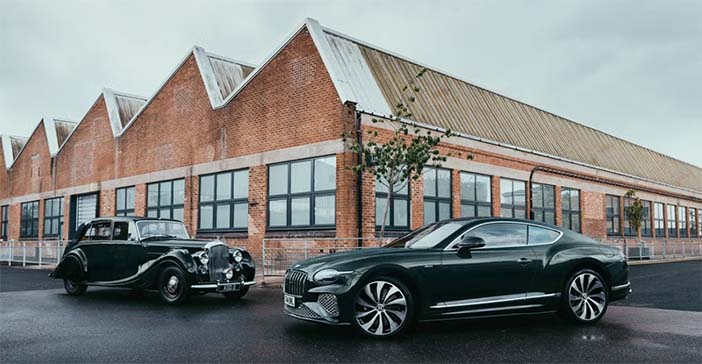
To commemorate the milestone, the British automaker has rolled out a Mulliner-curated Continental GT Azure with nods to the past that pays tribute to the first model built in Crewe, the Mark VI. Mind you, this isn’t the first commemorative Bentley that celebrates 80 years in Crewe, but there’s no stopping the company from celebrating either way. While we don’t know if Bentley will make limited examples of its special Continental GT Azure, the one it’s built already has its place in history. Thanks to the brand’s wide array of color and trim configurations, it’s built a fitting and elegant tribute to the Mark VI. It’s finished in a solid shade of Barnato Green, as metallic paint wasn’t as widespread in the ’40s. It’s then complemented by a Mulliner Black roof, just like some of the Mark VIs built back in the day. There is chrome, of course, but modern touches include subtle bits of carbon fiber, along with 22-inch wheels. Inside, there’s Connolly leather, walnut veneer and wool pile carpet. To recreate the post-war ambiance, the interior is trimmed in Cricket Ball, a deep shade of red that wouldn’t look out of place on many vintage cars. It’s then paired with solid black contrasts that Bentley simply calls Beluga. Sadly, there’s not a trace of burr walnut wood inside, although it has piano black wood instead. The Mark VI was a massive success for Bentley after the war. 4.001 had been built, with 3.171 in the standard steel body. But the one in the company’s heritage collection is even more special. It’s coachbuilt by H.J Mulliner, and it’s one of just 241 four-door, six-light sedans (or should we say, saloons?) ever made. This particular example was delivered to its owner in January 1950. Specs? It was powered by a 4.3-liter inline-six, although official power figures were never mentioned. Remember, this was a time when adequate was the term used to describe its horsepower and torque. Perhaps numbers were simply too vulgar to mention in those days. In stark contrast, the Continental GT proudly shows off its stats. There’s a choice between two 4.0-liter twin-turbo plug-in hybrid V8s. The High Performance Hybrid V8 makes 671 hp and 925 Nm, while the Ultra Performance version cranks that up to 771 hp and 1.000 Nm. It’s safe to assume the modern grand tourer packs a far bigger wallop compared to the Mark VI. +++
+++ The all-new DACIA SANDERO due in 2028 will be the first car from the Renault Group to feature both petrol and electric powertrains. I caught wind of the new Sandero almost 18 months ago, when then-CEO of Dacia, Denis Le Vot, confirmed the car was coming with a mix of electric and combustion powertrains. He told me that the market “is not yet there to go only electric”, but that the ICE options will “most likely be completely hybrids”. Recent conversations with UK managing director Lina Ribeiro confirmed that plans are still on track to deliver a new, multi-fuel Sandero for 2028, and that the model will once again spawn a jacked-up, rugged Dacia Sandero Stepway variant. Dacia’s role as the Renault Group’s budget brand will play a big part in the level of tech offered in the new Sandero. It’s assumed, therefore, that instead of using the bespoke AmpR electric-car architecture found underneath the Renault 4, Renault 5 and forthcoming Renault Twingo, Dacia’s supermini will build on the existing CMF-B platform, adapted to cater for both hybrid and EV powertrains. This strategy was hinted at recently by Frank Marotte, Dacia’s vice-president of marketing, sales and operations, who reiterated that while the Renault Group has “many technical solutions available on the shelf that can allow Dacia to build pure EVs on pure EV platforms”, it also has scope to develop “flexible, multi-energy platforms”. Current Dacia CEO Katrin Adt confirmed that while decisions are yet to be finalised, the team was working towards the solution of taking “one platform for all models”. Whatever the outcome, value will continue to be core to the Sandero’s appeal, with Marotte telling us Dacia needs to be “best in class in terms of affordability in the EV world”, emphasising that its objective is “to find the balance between product performance and affordability” in order to “bring EV to mass markets”. It’s understood that Dacia is keen to adopt a universal design language that will make its combustion and electric vehicles indistinguishable to the untrained eye. While the ICE models will get a conventional front-end treatment, the EV is expected to feature subtle aero tweaks and a faired-in grille, possibly even with the inclusion of flush door handles and a slightly lower ride height. As mentioned, the Sandero will be offered in supermini and pseudo-SUV forms. It’s a tried and tested formula for Dacia, and one that design boss David Durand is keen to exploit, suggesting the maker is looking to have “more difference between those two parts of the family”. Given its associations with the CMF-B platform, it’s sensible to suggest that the next-generation Sandero will inherit some of the powertrains found in cars such as the latest Renault Clio, as well as Dacia’s own Duster and Jogger. Le Vot’s comments on the proliferation of hybrid tech mean the Clio’s 1.8-litre petrol-electric set-up is expected to be the only ICE option, although Renault’s TCe turbo petrol will remain a possibility. On the EV side, the Sandero is expected to lift much of its tech from the latest Twingo and R5, possibly with a focus on the more affordable, less powerful models fitted with the smaller battery options. The Twingo’s 27.5 kWh set-up offers up to 262 km of range, while the larger 40 kWh and 52 kWh batteries in the Renault 5 officially return up to 400 km. Adt told me that Dacia is “still in the development phase of the new Sandero” and that the brand “will talk about that probably in 2028”. For now, the firm’s focus is on the next-generation Dacia Spring, due to be revealed in the coming months. +++
+++ For better or worse, passenger displays have become increasingly common. They used to be primarily reserved for luxury automakers, but even mainstream cars are beginning to get one these days. While automakers keep adding screens to new cars, a new J.D. Power study suggests that an EXTRA TOUCHSCREEN might be a technology that customers don’t necessarily want. They’re often presented as a way to give the front passenger something to do while the driver focuses on the road, as if the smartphone in everyone’s pocket hasn’t been invented. Features range from streaming video and web browsing to controlling navigation and other vehicle functions. There’s just one problem: Many owners apparently don’t care.
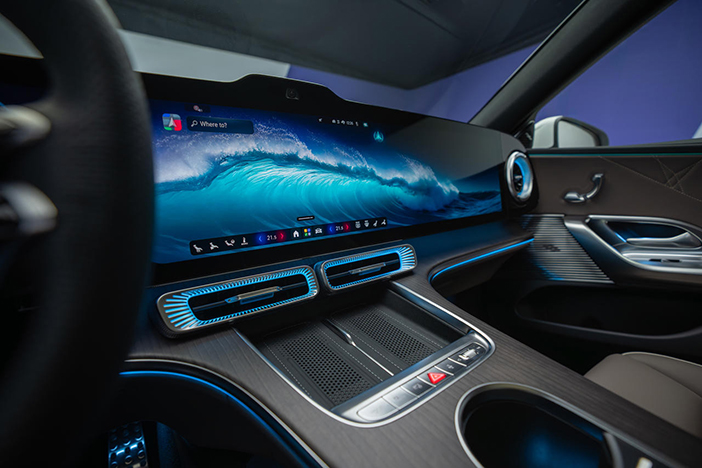
According to the 2026 J.D. Power U.S. Tech Experience Index (TXI) Study, 35 percent of owners whose vehicles have a passenger screen say they have never even tried to use it. A mere 6 percent say they use the screen every time they drive. When they do use it, some people often run into issues, as the same study revealed 21.3 problems tied to passenger screens for every 100 vehicles. Thankfully, the extra screen is optional on most vehicles, though there is an exception. You’re stuck with it on the recently facelifted 7 Series, as BMW doesn’t sell its flagship sedan without the 14.6-inch display. Thankfully, it is an option rather than standard equipment on the new X5. Speaking of the German luxury establishment, Mercedes does things differently, and weirdly, I might add. Some of its newer models come with a standard passenger display, but it’s not a touchscreen. Instead, the 10.3-inch “digitally animated trim panel” is more like a digital photo frame than a functional display. Circling back to the study, J.D. Power says some vehicles equipped with passenger screens also recorded higher rates of infotainment-system problems in its companion 2026 U.S. Initial Quality Study. That doesn’t prove the passenger display itself caused those problems, but it does reinforce the broader concern that adding more technology can also create more opportunities for things to go wrong. Simply put, more things could break, or software gremlins could leave a sour taste in the owner’s mouth. These findings come from a J.D. Power survey of 68,084 owners of 2026MY vehicles after three months of ownership. The study was conducted between June 2025 and May 2026 and covered vehicles registered from March 2025 through February 2026. +++
+++ LEXUS has started peeling back the cover on the NX, and the timing isn’t subtle. 5 years after the second generation landed, the brand’s second best-selling model in North America is getting a mid-cycle refresh, and the full reveal lands September 1. Official channels stop short of detailing specs in advance, holding most of the answers for the September 1 debut in Japan. The profile in the teasers appears close to the existing crossover, which reinforces the idea of a facelift rather than a clean-sheet redesign. Expect a restyled nose borrowing the RX’s spindle grille and sportier bumper intakes.
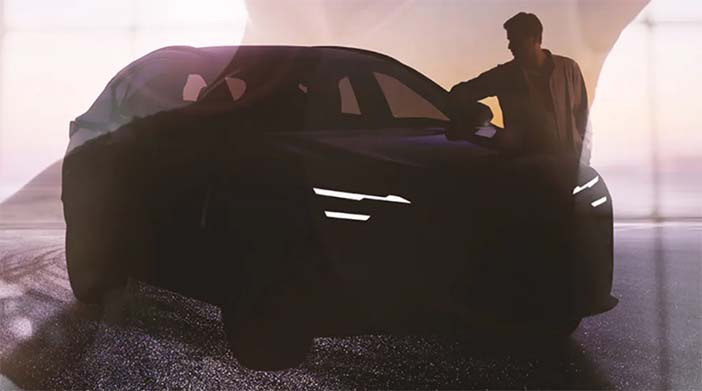
Headlight internals look set to feature horizontal or L-shaped daytime running lights that push deeper into the fenders than before. The profile stays close to the outgoing model, with a new green paint option and dark multi-spoke wheels doing most of the visual work outside. Inside, the biggest tell is a steering wheel borrowed from the ES sedan that replaces the old “L” badge with a full LEXUS wordmark. The dashboard appears to get cleaner-looking climate vents and controls around a large central touchscreen. Teaser shots suggest a display similar in size to the 14-inch unit already familiar in the NX range, but Lexus has not confirmed exact dimensions ahead of the reveal. Lexus has also kept quiet about the underlying TNGA-K architecture and the turbo gas, hybrid and plug-in hybrid choices available today. Current reporting treats this as a visual and interior update that keeps the Lexus NX aligned with its RX and ES siblings. What arrives September 1 will confirm how much more changes under the skin. +++
+++ MAZDA spent years pushing upmarket with a new rear-drive-based platform, inline-six engines, and a quartet of increasingly large SUVs. That’s great for enthusiasts, but it appears the company isn’t entirely satisfied with the results. Mazda CEO Masahiro Moro says major changes are coming to the CX-60 and CX-80, and he isn’t describing them as your typical mid-cycle nip-and-tuck. Speaking with Japan’s Chugoku Shimbun, Moro said Mazda intends to make substantial changes to the exterior, interior and powertrains of its Large Platform SUVs. “We will make changes to the exterior, interior and powertrain, and implement upgrades on a scale unprecedented to date”, Moro said, according to a translation of the interview. There’s a pretty obvious reason for the attention. Mazda sold a combined 150.637 examples of the SUVs (including CX-70 and CX-90) globally during its 2025 fiscal year, well short of its 200.000-unit target. That matters particularly in the United States, where Mazda sells more than half of its Large Platform vehicles. Earlier this month, CFO Jeffrey Guyton acknowledged that the company needs to grow the business, particularly in America, while confirming that several product enhancements are already in development. Exactly what those changes will entail remains unclear. However, Moro’s wording suggests something considerably more comprehensive than new bumpers, wheels and upholstery. The powertrain reference is probably the most interesting bit. We know that the next-gen Skyactiv-Z tech Mazda is building will spread beyond its 4-cylinder. That could easily lead to a lineup full of engines that can better compete with today’s hybrid-heavy industry. On top of that, it’s clear that Mazda doesn’t want to abandon its flagship aspirations. If anything, Moro sounds determined to double down on them. “We will develop these models into products that people will recognize as Mazda’s flagship,” he said. “It will take time, but we will certainly succeed”. Timing for the overhaul hasn’t been announced, and it’s possible the four SUVs won’t receive their updates simultaneously. The CX-60 is the oldest, having debuted in 2022, while the CX-80 only reached showrooms in late 2024. Now we wait to see just how much better the brand will make them. +++
+++ PORSCHE could have an interesting shortcut to a new flagship model sitting above the 911. Rather than developing an entirely new car from scratch, which would require many years of development and a massive budget, Zuffenhausen could potentially borrow hardware from within the Volkswagen Group. According to a new report from Automotive News, the obvious candidate is the recently revealed Audi Nuvolari. The idea makes sense when you look at what Porsche CEO Michael Leiters has said about expanding the lineup. Earlier this year, he confirmed that the company was evaluating models and derivatives positioned above its current two-door sports cars. Porsche subsequently told Motor1 that it was considering various concepts in the GT and hypercar segments. A Nuvolari-based Porsche wouldn’t be as far-fetched as it might initially sound. Audi’s new supercar already shares its architecture with the Lamborghini Temerario, giving the VW Group a proven mid-engined platform that can underpin multiple brands. The Nuvolari takes that foundation considerably further, with a carbon-fiber body, more power, and a production run limited to 499 units. The VW Group has already demonstrated that it is comfortable spreading expensive sports-car technology across its brands. The Temerario and Nuvolari aren’t the only examples, as the electric 718 Boxster/Cayman is likely to be twinned with a production version of the Audi Concept C. The latter arrives next year as a two-seater sports car with an electrically retractable targa roof. Porsche is already using another Audi product as the basis for a new crossover to replace the first-generation Macan. The latter went out of production last month, but its successor won’t arrive until 2028 at the earliest, with underpinnings adapted from the latest-generation Q5. Automotive News goes as far as to say the long-promised three-row SUV will be heavily related to the recently launched Q9, suggesting an even stronger relationship between Porsche and Audi. I haven’t forgotten that Porsche has already strongly hinted at a follow-up to the 918 Spyder. However, the 2023 Mission X concept was purely electric, and those who can afford these cars would still rather have a combustion engine behind them. As recently as last week, Bugatti Rimac CEO Mate Rimac projected that ICE-powered performance cars in the high-end segment will stick around “for a very long time”. Side note: Porsche sold its share in Bugatti Rimac earlier this year, effectively ending the VW Group era of Bugatti. Connecting the dots between Porsche and Audi is easy, but it’s all speculation at this point. What we do know for sure is that Porsche will outline its product roadmap to investors on October 7 during its Capital Markets Day, when we should learn all about the “Strategy 2035” plan. +++
+++ Cars have gotten angrier over the years. From oversized grilles and narrow headlights to increasingly aggressive front ends, automakers seem determined to make their latest models look like they’re ready to pick a fight. VOLKSWAGEN GROUP design chief Andreas Mindt isn’t a fan. In an interview, Mindt dismissed the trend of overly aggressive-looking cars as “nonsense,” arguing that there’s no good reason for cars to look as if they’re designed to intimidate everyone else on the road. According to Mindt, some automakers deliberately give their cars threatening faces because drivers will move out of the way when they see an aggressive-looking vehicle approaching in the rearview mirror. “Car brands do this because they want to be cool. VW doesn’t want that. You can think you’re the strongest, but if you’re not, then that’s nonsense. Why not give cars a friendly look? I want to live in a friendly world. I don’t want to live in a world with cars that look like they were designed to kill zombies. I really don’t want to live in a stupid world like that”. His argument goes beyond simply making cars look nicer. He believes design can influence how people perceive one another, especially as the transition to electric vehicles is in full swing in Europe. “When it comes to car design, you shouldn’t take one side or the other. Like, ‘Look, I’m doing the right thing: I drive an electric car. My car looks like an electric car, so I’m better than you. And you’re the bad guy because you’re spewing soot. You’re ruining the environment. Honestly, I think it’s really bad to divide society like that. To all those people who don’t want to drive electric yet, it’s better to say: ‘Look, gas prices are really high right now, aren’t they? Why don’t you give it a try?” Earlier ID models were deliberately futuristic to signal a break with the past. Mindt now believes that approach went too far. As BMW has been saying all along with its unified design language across ICE and EV models, VW argues an electric car shouldn’t necessarily look radically different to advertise the fact that it’s electric. How far did VW go? Well, the man in charge of design told Autoweek that the pre-facelift ID.3 “doesn’t look like a real VW. You don’t see VW’s DNA in it. It might just as well be from another brand”. The recently launched ID.3 Neo aims to address that with a design that doesn’t scream ‘EV’. Like the smaller ID. Polo, the compact electric hatchback also has more physical controls and ditches the touch slider as a response to customer feedback. Mindt also acknowledges that VW Group isn’t going to eliminate aggressive styling altogether. Different brands are supposed to have different personalities, and he specifically points to Lamborghini and SEAT’s Cupra as examples of companies where dramatic, aggressive design makes sense. As a refresher, Mindt is now responsible for design across the entire VW Group. He took over as Head of Group Design on March 1, adding the role to his existing position leading design at the core VW brand. The next model to embrace his styling approach will be the ID.4’s replacement, which should debut soon as the ID. Tiguan. +++