
+++ The new Giulietta is one of ALFA ROMEO ’s most anticipated models in its next product plan. The Italians will extend the Giulia and Stelvio’s life cycles through the end of 2027 while they prepare their successors. In 2028, the brand plans to debut an SUV built in Melfi and positioned between Europe’s C and D segments, followed by the successor to the Giulietta, which will sit in the C segment. That is the brand’s future strategy, outlined by CEO Santo Ficili at the 2026 Paris Motor Show this week. The gorgeous Cuorerosso previews the new Giulietta’s styling language. However, the production model will not be as low-slung as the concept created by the design team led by Alejandro Mesonero.
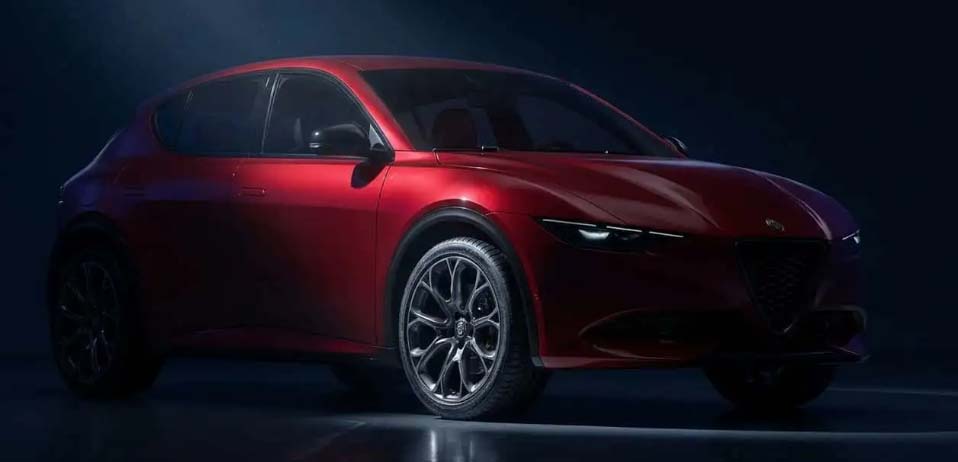
The new Giulietta will be a hatchback-style model, slightly taller than a conventional sedan but not as tall as an SUV. Think of it as a sporty crossover, potentially evolving ideas from the 2003 Kamal concept, particularly in size. The Kamal, in fact, had crossover-like proportions, which would fit well with the expected positioning of the new 2028 Alfa Romeo Giulietta. This body style would allow Alfa Romeo to increase interior space for passengers and cargo compared with the previous Giulietta. More importantly, it would accommodate Stellantis’ new multi-energy platform, expected to derive from the STLA One architecture announced in May during the company’s Investor Day by Stellantis CEO Antonio Filosa. The new Giulietta’s technical foundation is therefore expected to support both internal-combustion-engine versions and battery-equipped electric models. The multi-energy platform’s flexibility should let the new Giulietta offer hybrid powertrains, with electrification supporting internal-combustion engines, as well as EV versions powered entirely by electric motors. More performance-focused Quadrifoglio variants are also expected, showcasing the independent development work Alfa Romeo can rely on within the broader synergies of the Stellantis Group. That would help define the driving pleasure and dynamic behavior expected from an Alfa Romeo, thanks to suspension, steering, and braking-system tuning carried out at the Balocco Proving Ground. The Cuorerosso prototype also previews the philosophy expected to guide the 2028 Giulietta’s cabin, including the instrument cluster and other onboard interfaces, oriented toward the driver. The approach also places stronger emphasis on Alfa Romeo’s history and Italian identity. The new Giulietta is expected to arrive after the compact SUV launches, scheduled for early 2028. The plan would redefine Alfa Romeo’s positioning in the C segment, filling the space above the Junior and giving it a more premium character than the Tonale. The next-generation Giulia and Stelvio would remain the flagships. +++
+++ The midsize SUV segment is one of the largest in the United States, with these vehicles offering many buyers the ideal blend of practicality, performance and value. The X3 has historically outsold the Q5 in the U.S., but the gap between the 2 rivals has widened considerably over the last year. Over the first 3 quarters of 2026, BMW has sold 60.128 units (20,2% more than last year) of the X3, almost double the volume of the Q5 (33.509 units; 3% more than last year). It’s now ahead by 26.619 units; a year ago, the X3’s lead was 17.376 units. That’s a large gap, and underlines not only the market’s preference for the X3, but also the decline of Audi as a brand. Over the first 3 quarters of 2026, BMW has sold 287,154 vehicles, up by 4.3%. Audi has sold 107.667 vehicles, down by 16%. Audi’s struggles are part of a bigger shift for the Volkswagen Group, as VW and Porsche also reported lower sales in the third quarter. Porsche’s global sales have taken a real beating in 2026, but the German brand isn’t losing sleep over the numbers, at least, not yet. +++
+++ Stellantis CEO Antonio Filosa has reiterated the group’s commitment to the MASERATI brand after it was a conspicuous absentee from this year’s Paris Motor Show. Speaking with media, he said: “Maserati will be presented in December, in Modena. It won’t just be about slides, but a real plan that will secure the future for our beloved luxury brand”. The embattled Italian manufacturer has been under intense scrutiny regarding its future within the Stellantis conglomerate. Sales of its current models have been decimated in the last few years, as its initial dedication to electric powertrains, at the same time as killing off its V8 models, hasn’t proved popular with customers. In response, FIlosa continued: “Maserati needs product, Maserati needs technology and these will be extensively presented in Modena in December”. Front and centre of this new product offensive will be our first look at a concept previewing a replacement for the Levante, Maserati’s now-discontinued SUV that rivals cars such as the Porsche Cayenne, BMW X5 and Mercedes GLE. Maserati’s CEO, Santo Ficili, confirmed: “A new concept car will be presented. Let me call it Levante, just to say that we are coming back to the SUV E-segment”. However, while the Levante might prove to be a big driver of sales, the brand’s soul remains in its more traditional segments, one of which will be represented by a new interpretation of the iconic Quattroporte. Ficili continued: “The story of the Quattroporte, in my mind, for the future is not a sedan. It can be something between a shooting brake and a crossover: a very low, big car to come back to this part of the segment”. Of less certainty at this stage are the tools Maserati has to create this new line-up of models. The company might be part of the giant Stellantis group, but its access to cutting-edge technology at the very highest levels is limited in comparison to companies like BMW, Mercedes or the Volkswagen Group. There’s a more pressing question to ask, however, and it’s whether this new product will be enough to keep Maserati profitable and relevant in the long term. Ficili laid out the structural change to the brand by telling us: “We can imagine having the brand built on 2 different pillars. One is the world of the GranTurismo, where today we are okay because we have the MC20, the GT2 Stradale, the GranCabrio and the GranTurismo. Then Levante, which is a Quattroporte SUV. We need to come back to this pillar, and in the middle we have the Grecale that is supporting the volume of the brand”. With these new models in place, Maserati’s future could be considered more secure than it has been in a long while. But we’ll have to wait until December to see what the future of Maserati looks like, and whether confidence in the brand might be instilled after years of disappointment. +++
+++ MG has bluntly stated its case against additional tariffs on Chinese cars imported to the United Kingdom, calling them a tax on private sales at a time when consumers are rapidly turning to cheaper electrified models from itself, BYD and the Chery group. The UK is reportedly under pressure to follow the EU on Chinese EV tariffs and planned quotas on hybrids, in return for UK-built cars being included in new incentives designed to protect the European car industry. MG said this risked raising car prices in the UK again, following a period in which increased competition from China has made cars more affordable. That in turn has grown the market: it rose 10% in the 9 months to the end of September. “I’m struggling to see how the consumers would benefit from the application of tariffs in the UK to electric vehicles specifically”, Guy Pigounakis, commercial director at MG Motor UK, told. “Inevitably it’s going to increase prices”. So far the UK government has resisted pressure from the EU to impose additional tariffs. Business secretary Jonathan Reynolds said he was against such tariffs partly because of the danger to UK exports if China retaliates in kind. Non-Chinese car makers are keen for the UK to fall in line. Nissan would support increased tariffs and quotas in the UK, according to its European boss Max Messina, while Renault boss Francois Provost has urged the UK to follow the EU in curbing Chinese imports. Pigounakis pointed out that Chinese car makers are already locked out of the UK government’s Electric Car Grant scheme, which reduces the price of EVs built in Europe and elsewhere by more than €4.000. “The UK has already taken action to protect those manufacturers. Applying a tariff on top of that seems draconian”, he said. MG said that it’s increasingly embedding itself into Europe, creating jobs in its London design centre and its Longbridge R&D facility and building a new assembly plant in Spain. It also indirectly employs 2546 staff at its 160 dealerships in the UK, with a further 20 showrooms planned to open by the end of 2027, Pigounakis added. Chinese car makers have stunned established brands with the speed at which they have gained market share in the UK, rising to 23% in September, when the Jaecoo 7 once again became the UK’s best-selling car. BYD was the second best-selling brand in September and MG was the 4th. The combined brands of the Chery group (Omoda, Jaecoo and Chery itself) reached 9.4%, which was higher than Volkswagen. European brands have repeatedly called for a level playing field that recognises the fact that they have higher production costs in Europe and lack some of the state support offered to companies in China. Pigounakis countered those claims by saying that China’s low costs and competitive advantage have partly come from precise targeting of hybrid and electric cars, which allowed the sizing of organisations to suit these new technologies. “If you look at the legacy plants across Europe and North America, they’re 400-500 acres, they’ve got tens of thousands of people working in them. I genuinely don’t know what half of them do”, he said. “If you start up a business from scratch today, you’re going to scale it to exactly what the market requires and your overhead is going to reflect that”. Critics have accused European brands of dragging their heels on electrification as they try to extend the glide path of combustion-engined models, which offer greater profits. “For years capital was steered to sustain and optimize mature ICE platforms and defend near-term margins, rather than to pre-fund the electric and digital transition while there was still runway to do it gradually”, said Guillaume Dejean, head of autos research at insurer Allianz, wrote in an October report. MG believes the competition from China has accelerated the development of European EVs, particularly in the low-cost segments. “You’ve now got Citroën talking about a €15.000 electric car. The competition has made them build those cars. They wouldn’t have done them otherwise, in my opinion”, said Pigounakis. +++
+++ After hints and various reports, PORSCHE made the surprise announcement of a new hypercar. While we expect at least one every decade since the ’80s, the gap between the teaser and the reveal is pretty short. For those wondering, it’s just a day. The teaser came just days after the company announced its turnaround plans dubbed Sports Car Company 2035. And before you think that the hypercar is an afterthought, it’s actually part of Porsche’s plan to rake in more cash for the brand. As with all previous Porsche hypercars, it’ll be a limited-run model with an astonishing price tag. The concept model is called the Mission S, and it’ll be launched on October 15. That means by the time you read this, it’ll be less than a day before the full reveal. Still, that didn’t stop folks from finding leaks or any advanced information on the car. It gives us a general idea of its shape. Mind you, this isn’t a full reveal just yet, as the alleged photo leak shows the car still draped under a cover.
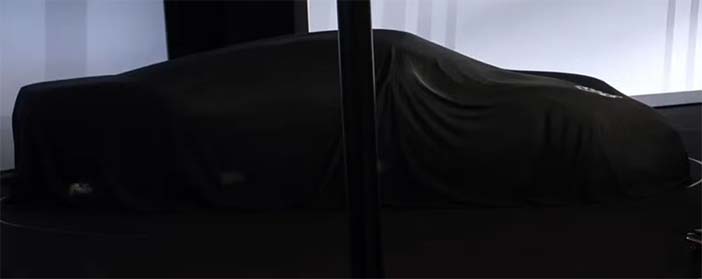
Still, it shows the car looks very much mid-engined and incredibly low. It also appears to have a fixed roof, a departure from 2 successive models with detachable tops: the Carrera GT and 918 Spyder. There’s no big wing sticking out, but it could have a deployable spoiler. The Mission S likely isn’t the production model’s name, and trademark databases haven’t turned up anything interesting yet. That said, it’s confirmed to be petrol-powered but likely to have some form of electrification like the 918 Spyder. The big question now is what kind of engine will power the car. Some reports have hinted at either a V8 or, more interestingly, a flat-8. If so, it’ll be Porsche’s first flat-8 in over 50 years, with the last flat-8-powered model being the 908. This might also be the first flat-8 application paired with a hybrid system. As for the platform, it is said to be based on a highly modified 911 chassis. If so, it won’t be bespoke like the Carrera GT or 918, but something more in line with the 959 and GT1. Again, it’s only a matter of hours before we see actual photos of the car, and while it’s still a concept, the road car shouldn’t stray too far from what we’ll see in less than 24 hours. +++
+++ RENAULT has taken steps to increase the differentiation between its models and those from rival brands built on its platforms. The French firm has a number of partnerships to produce cars for other manufacturers, in particular on its RGMP Small platform, which is used for the 5, 4 and Twingo. It currently produces the 5-based Micra for Nissan, will soon start to produce the Twingo-based Pixo and has agreements in place to build future models for both Ford and Mitsubishi. The Micra in particular is notably similar in design to its Renault relation, with a virtually identical interior, the only major external differences being the front and rear light designs. Renault has previously offered partners varying levels of differentiation, up to bespoke body panels, although that also pushes up the price of manufacturing. Due to confidentiality agreements, Renault executives don’t have prior oversight of the cars it produces for rivals, but senior sources have told there was some consternation at the lack of design alterations made to the Micra. Renault Group boss François Provost has now changed the scheme introduced by his predecessor Luca de Meo to ensure that future rival models are more distinct from the Renault versions. “We did not request enough differentiation”, he said at the Paris motor show. “Everything is linked to differentiation. Look at the Dacia Spring: the Twingo and Spring look like different cars but the platform is the same. “This is a change compared with my predecessor. I will never do partnerships without enough differentiation. With Ford, CEO Jim Farley has exactly the same view. He said that if he chose to partner with Renault, the car must be a Ford. We will discover that together, because I cannot legally see the design of the Ford. “So I prefer to do less partnerships with strategic partners who want a one-shot tactical partnership and more for the long-term. That means enough differentiation”. +++
+++ The TOYOTA CELICA first appeared in the 1970s as an affordable sports coupe. The GT-Four versions built a strong rally reputation with their turbocharged engines and all-wheel drive. Production of the 7th generation ended about 20 years ago, leaving a gap in Toyota’s line-up. Now, ever since a Toyota executive hinted at the Celica’s return 2 years ago, the rumor mill has been in overdrive. We’ve seen prototypes, anecdotes of a rally comeback and plenty of speculation about what Toyota might be cooking up. If the latest reports are on the money, this isn’t just a nostalgia trip. Toyota could be working on a turbocharged, all-wheel-drive coupe that channels the spirit of the rally-bred GT-Four, giving the Celica name a fresh twist that stands apart from the rest of Toyota’s sports car stable What might the new Celica look like?
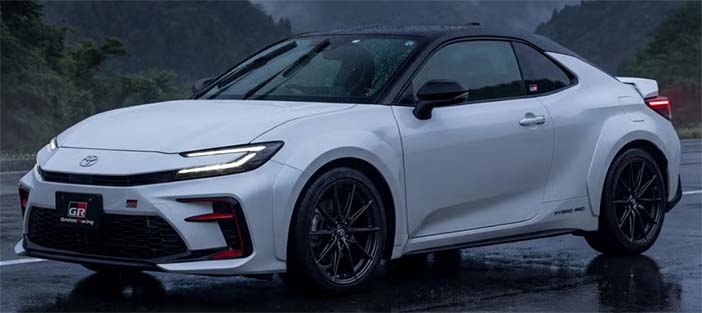
Based on the prototype sightings, expect a low 2-door coupe with sharp led headlights, a large front grille, big air intakes, flared fenders, and a prominent rear wing. The prototype spotted in Portugal is believed to be linked to Toyota’s preparations for next year’s World Rally Championship regulations. However, a direct link between that competition vehicle and the road-going Celica remains unconfirmed. As for what they’ll call it, ‘Celica Sport’ has popped up in the rumour mill, but ‘GR Celica’ is also in the running. Toyota’s lips are sealed for now. Inside? Your guess is as good as mine: Toyota hasn’t shown off the cabin or spilled any details about features. Where it’ll fit in the line-up is also up in the air. It could carve out its own space, separate from the rear-drive GR86. If Toyota goes hybrid, the Honda Prelude might be a rival, but expect the Celica to put performance front and center. Of note, the images here are unofficial renderings, not the real deal from Toyota. They are meant to give us a taste of what a rally-inspired Celica could look like based on prototype sightings, but don’t be surprised if the production car ends up looking pretty different.
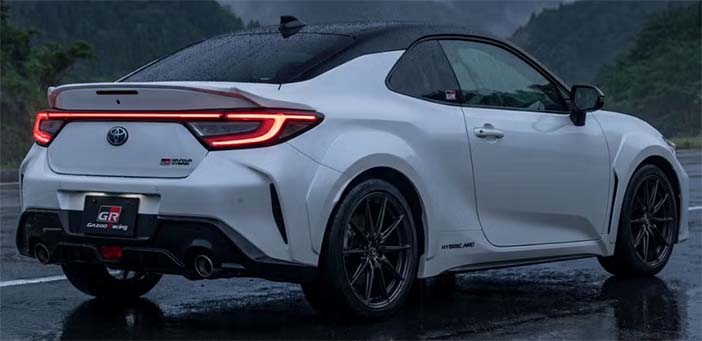
The biggest development concerns the powertrain. Reports suggest Toyota is considering a new 2.0-liter turbocharged inline-4, potentially based on its G20E engine currently being developed and tested through motorsports. The GR Yaris M Concept gives us a sneak peek at what Toyota might be up to. Unlike the regular GR Yaris, this wild experiment puts the engine in the middle and sends power to all four wheels. It’s already been tearing up Japan’s Super Taikyu Series while Toyota fine-tunes the hardware. Some say the new Celica could crank out around 400 horsepower, but nothing’s set in stone. Hybrid tech is also on the table, though Toyota hasn’t decided if it’ll be a regular hybrid or a plug-in. A 6-speed manual and an 8-speed GR-DAT automatic are both rumoured, but the real cliffhanger is whether Toyota sticks with a front-engine setup or goes all-in on a mid-engine layout like the GR Yaris M Concept. As for when we’ll actually see it, 2027 or 2028 is the best guess so far, but Toyota’s keeping quiet. For now, the next Celica is still a moving target – engine, drivetrain, and even its final form are all up in the air. +++
+++ VOLKSWAGEN will reduce its range through “natural transition” rather than systematically axing a number of models, according to CEO Thomas Schäfer. The Volkswagen Group is currently undergoing a major restructuring and has pledged to reduce the number of models and variants across its whole portfolio by around half. Asked at the Paris motor show how that would impact the Volkswagen brand specifically, Schäfer said: “We started this debate mainly because of the 2035 end of combustion engines in Europe. It’s not a miracle that after 2035 you will not have a Polo and an ID.Polo, or a T-Cross and an ID.Cross. So there will be automatically a reduction. We were working on what is the ideal portfolio for Volkswagen in 2035 and in what size of cars (small, high, and so on) and we’ve done that. Then we’ve done the same with Skoda. Then we’ve done the same with Cupra. We just aligned all of that, and out came a top portfolio for 2035, which is half the size. This wasn’t a miracle, it was actually a natural transition and a reorganisation of the portfolio to the most profitable products”. Part of the Group’s strategy is to introduce greater collaboration between the brands, in particular Volkswagen, Skoda and Cupra, which each sit within the Core group headed by Schäfer. He explains that in the future models would be managed in “synergy groups” so that “we are not all fishing in the same spot at the same time”. That doesn’t rule out multiple brands having vehicles in the same areas (as is the case now with the ID.Polo, ID.Cross, Cupra Raval and Skoda Epiq small EVs) but in such cases the projects will be clustered and assigned to a specific brand to lead. One example of this new strategy is the forthcoming production version of the ID.Every1 city car concept, which will sit on a cut-down version of the ID.Polo’s platform and which will be called ID.Up. Only Volkswagen will offer a car in that class, which Schäfer said is down to the small size of the market. +++