
+++ ALFA ROMEO is preparing to reveal a new concept car that will embody the brand’s “vision for the future” at next month’s Paris Motor Show. It could be called Battito Rosso. That name translates as ‘red heartbeat’, which would be quite on-brand for Alfa Romeo. The firm previously said its concept is something “every Alfisti has been waiting for”. The fact that Alfa applied for a trademark in June this year for ‘Battito’ is a strong clue. This isn’t the first time Alfa Romeo has drummed up excitement over its new concept car. In a previous release, the firm said its new creation is a “distinctive interpretation of the automobile embedded in the DNA of the Biscione: one that transcends the notion of a mere means of transport and embraces the purest of driving emotions”.

Beyond the bombast, the company refrained from giving us any concrete information on the concept. So it’s unclear what, exactly, is in store. A new SUV, perhaps, that will bridge the gap between the Tonale and Stelvio; a compact hatchback to recreate the spirit of the 147 and Giulietta; or maybe even a design that points us towards the all-electric successor to the Giulia saloon. A teaser image that went with the aforementioned release shows us the concept will be painted in familiar Alfa red, and the brand says it will add “sportiness” to make the concept a “masterpiece”. Read into that what you will. The concept is also claimed to be a driver’s car, with the release stating it is “created for those who still love to drive and seek authentic experiences behind the wheel”. The Paris show runs from 12 to 18 October, with Alfa’s big unveiling expected on the first day. +++
+++ BENTLEY is adopting a much more flexible and agile electrification strategy in response to uncertainties in the marketplace, having scrapped a previous plan to make the brand all-electric by 2030. In 2020, the company announced plans to phase out all combustion models by the end of this decade, but in light of waning luxury EV demand and relaxed rules on selling ICE cars in the years since, it delayed the launch of the electric Torcal by a year and began developing a new range of plug-in hybrids. It now isn’t expected to launch another model on the Torcal’s Porsche-derived PPE platform; its next EV is due to arrive the other side of 2030, likely using a variation of the Volkswagen Group’s next-generation SSP architecture. Speaking at a preview event for the Torcal, Bentley CEO Frank-Steffan Walliser told that the previously outlined strategy wasn’t compatible with how the car market has evolved throughout the 2020s. Asked whether Bentley had set a new timeline for going all-electric, he said: “With all the planning and things changing, and I’m sure regulators have new ideas every week, my answer is maybe not what you expect: we will bring in more flexibility in our strategies. We have to react a little bit more, not just say: ’this is the plan’. In the past, you made a plan for 10 years and then you just went with it. We delivered the cars in a relatively stable environment. It’s not the case any more. We need the flexibility. This is the reason why, on the manufacturing side, we are trying to bring together EVs and plug-in hybrids on the same line in future, so we have full flexibility, also to meet market demand and regulations. So we need way more flexibility: shortening the cycle times, shortening the development times. This predictable planning is honestly gone, and I don’t think it will come back”. In line with that push for flexibility, Walliser said Bentley had cut development times for new models down to 48 months and is aiming to accelerate that further to 36, matching sibling brand Volkswagen. Continuing to offer a multi-powertrain line-up is central to that flexibility too, but Walliser said there’s no scope to introduce a hybrid version of the Torcal. That’s partly because its platform is EV-specific but also because then “it would overlap” with the slightly larger Bentayga, “and I really would like to have product identity”. +++
+++ DACIA is preparing to put its bold Hipster microcar concept into production in China next year as a rival to the upcoming Fiat Multiplina and it is targeting a sub-€12.000 starting price. Dacia revealed the Hipster last year as a vision of a tiny, 4-seat electric city car to sit under the new Spring. It was designed hypothetically to comply with the same L7e quadricycle regulations as the Silence S04 and Fiat’s retro-styled, 4-seat take on the formula, being launched next year. Dacia previously suggested it would consider building the Hipster if it were able to do so profitably and there was sufficient demand, and hasn’t yet confirmed plans to start production, with CEO Katrin Adt telling only to “stay tuned” when asked for an update recently. But now a source close to the project has revealed that the Hipster will enter production in 2027 at the Chinese factory where the outgoing, first-generation Spring was built. Denis Le Vot, who stepped down as Dacia CEO in September 2025, shortly before the Hipster’s debut, originally envisaged the car as the natural successor to the Spring and planned to launch it in late 2026 with a target price of €13.000. However, despite Le Vot’s opposition, then Renault Group CEO Luca de Meo decided in late 2024 that the next-generation Spring would instead be based on the reborn Renault Twingo and built in Slovenia. That decision followed the collapse of negotiations with Volkswagen over plans to develop the forthcoming ID.1 on the French firm’s compact EV platform. Le Vot’s departure and the appointment of Fabrice Cambolive changed the direction of the Hipster project. In autumn 2025, the new chief growth officer for Renault and Dacia instructed Dacia’s teams to revise the product brief. Cambolive’s requirements included studying a 2-seat version complying with the lighter L6 quadricycle category, alongside the four-seat L7e model, and significantly lowering the target price.
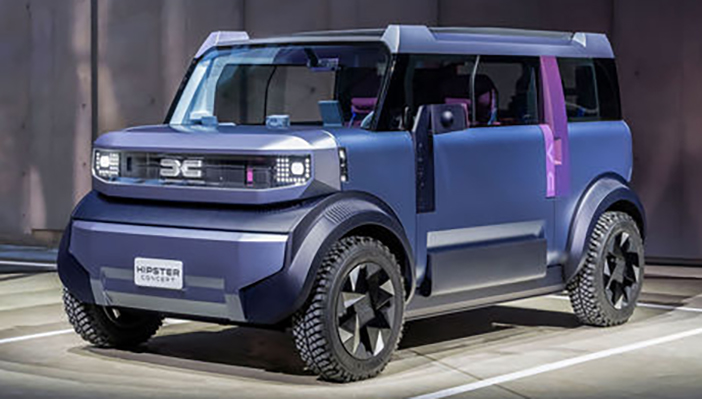
China has demonstrated considerable expertise in developing low-priced microcars in the ‘A0′ segment. The Renault Group has first-hand experience of this through the eGT New Energy Automotive plant in Shiyan, which has been left without production since manufacturing of the current Spring ended there in July. Asked about the plant’s future, Frank Marotte, Dacia’s senior vice-president of global sales, marketing and operations, acknowledged that “a plan is being prepared with the joint venture’s two other shareholders (Dongfeng and Nissan) to safeguard activity at the plant”. He added: “The Renault Group wants to retain this industrial site, which has annual production capacity of 45.000 vehicles for the group, for 2 main reasons: its competitive production costs and its innovation capabilities”. According to internal sources, the Shiyan team is also contributing to the vehicle’s technical development, including its motor, battery and chassis, with components from the previous-generation Spring being reused wherever possible to minimise costs. The L7e category imposes strict technical limits: a maximum weight of 450 kg (excluding the battery), power capped at 21 hp and a top speed of no more than 90 kph. Dacia’s 2 main challenges are weight and manufacturing cost. The ideal solution would be to use plastic body panels, as on the Ami, but these are “expensive” compared with steel panels, according to Dacia design director David Durand. The Chinese engineering teams working on the vehicle are consequently exploring ways of reducing its weight while meeting the lower price target imposed by Cambolive. The final price will also depend on the size of the battery (sources say the capacity will be 15 kWh) and the chemistry selected. The final version of the Hipster will be revealed next year, say sources, but recently filed patent drawings give a good look at its design, which stays largely true to that of the 2025 concept. Durand said the patents were filed to protect the Hipster’s styling and added: “The project is under development and now only requires final approval from senior management”. To within a few centimetres, the Hipster will retain the concept’s dimensions: 1.55 metres wide, 1.53 metres tall and 3.0 metres long. The styling will also remain broadly unchanged, although the bumpers, front grille and lighting signature have been reworked. The front windows are now divided into 2 sections, with the lower section hinging upwards in a similar fashion to those of the Ami. The most significant change is at the rear, where the concept’s 2-piece boot opening has been replaced by a side-hinged rear door similar to that of the Land Rover Defender. +++
+++ FRONT PASSANGER SCREENS are the latest trend in automotive infotainment. An optional, dashboard-mounted 10.9-inch screen first appeared in the 2020 Porsche Taycan, and over the last few years, the trend has spread like wildfire. The BMW 7 Series has a massive, 14.6-inch passenger display standard, while the Audi Q9 also gets a 12.3-inch display, among others. And let’s not even talk about Mercedes-Benz’s Hyperscreen. Early data proves that passenger screens may turn out to be more trouble than they’re worth. Now, at least 1 brand in the Volkswagen Group isn’t having it. Bentley product line chef Martin Page made a point of highlighting the upcoming Torcal’s lack of a front passenger display during a presentation to media at the company’s Crewe headquarters. He said that the company would “never” add a passenger screen to its cars, noting: “Technology has to add value. It should not dominate the experience”. Page shared that while the idea of a passenger screen was discussed during the Torcal’s development, it was ultimately dismissed as a solution in search of a problem, and not fitting with Bentley’s ethos of being “human-focused”. He added that maybe when cars are autonomous, it’ll be more useful. What’s still unclear is whether passenger screens do add any value for luxury car owners. According to a recent report from JD Power, more than a third of owners of cars equipped with front passenger screens say they never use them. And according to that same study, for every 100 vehicles equipped with front passenger screens, there were 21.3 reported problems; more than 1 in 5. The Torcal isn’t totally devoid of screens, though. It shares a curved OLED central display with its platform-mate, the Porsche Cayenne Electric, reskinned with Bentley’s software. But where the Cayenne rocks a 14.9-inch passenger screen, the Torcal just gives you an expanse of wood, aluminum, or carbon fiber. Page told that curating the experience is part of the mission for high-end brands. He made an analogy to a Michelin-star restaurant that might serve a set of courses rather than an extensive, multi-page menu. Another notable new EV without a passenger screen? The €550.000 Ferrari Luce. +++
+++ GENESIS just filed the paperwork that makes a 2-door flagship look less like a fantasy. The United States Patent and Trademark Office granted design patents for both the X Gran Coupe and the X Gran Convertible in August, and the timing has fans of the brand asking whether Bentley, Aston Martin and Maserati should be worried. The grants cover ornamental bodywork only, but they land alongside years of hints from Genesis executives about wanting a proper grand tourer in the lineup. The documents spell out what Genesis has locked in and what still sits in the “maybe” column. Design patent US D1,144,037 S covers the X Gran Coupe’s two-door hardtop shape. US D1,138,892 S does the same for the X Gran Convertible’s open-air body. Both are classified under USPC D12/92, the category the USPTO uses for heavyweight passenger automobiles.
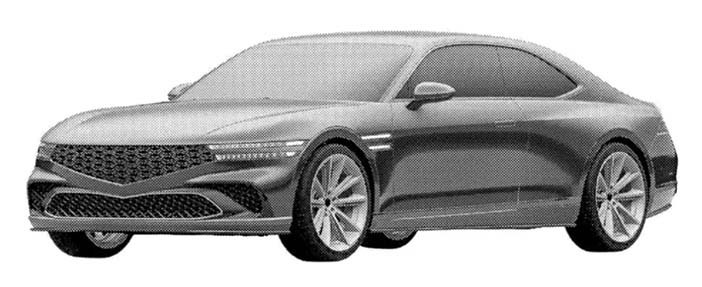
That classification and the patents’ scope only protect the way the cars look, not any mechanical hardware underneath. Reporting on the filings ties the shapes to combustion and high-performance hybrid setups, with dual exhaust outlets visible on the bodywork, but the patents themselves do not specify a powertrain. A design patent is a legal tool for stopping rivals from copying a silhouette.
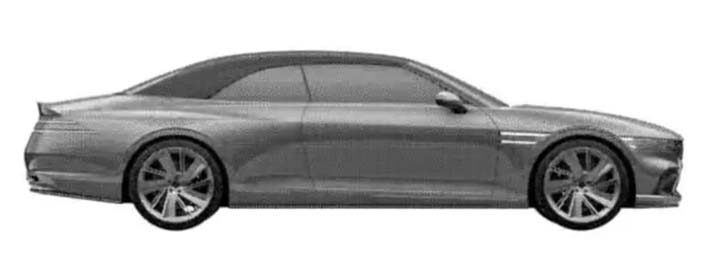
Genesis has used the same protection on past wild concepts that never reached production, so the grant alone does not guarantee either car gets built. What tips the scale toward a real product is the price range circulating around the pair, reportedly between $120,000 and $160,000. That bracket sits in territory BMW and Lexus have both abandoned, and it lines up with the gap Genesis has been eyeing since the Magma GT concept first surfaced. Both applications were filed in the US on July 29, 2025. Each claims priority from a South Korean design application dated March 19, 2025, a gap that fits the usual pace for design patents moving through the office. The convertible patent cleared first, granted August 4, 2026. The coupe followed 3 weeks later on August 25. Identical filing and priority dates for both suggest Genesis developed the 2 body styles as a matched pair. Chief creative officer Luc Donckerwolke has repeatedly confirmed the company’s internal determination to put a 2-door grand tourer into production. That is a designer’s stated intent, though, not a board-approved program with a build date. No official Genesis announcement has named a production timeline, a factory, or a specific powertrain lineup for either car. Until that happens, the patents stand as the strongest documented signal yet, alongside recent moves like the Genesis GV90, that the brand is serious about building beyond SUVs and sedans. +++
+++ NISSAN says it will keep the combustion-engined Qashqai on sale for as long as there is demand and is able to do so while meeting mandated EV targets. Now in its fifth year on sale, the current-generation Qashqai remains Nissan’s most popular car in Europe. Built alongside the smaller Juke and electric Leaf crossovers at Nissan’s Sunderland plant, it’s offered with a choice of mild-hybrid petrol and ‘e-Power’ full-hybrid drivetrains. It was previously planned to gain an electric option as part of Nissan’s transition to an all-EV line-up, but the firm now says it will stick with ICE power in the Qashqai for as long as possible. Recent reports alleged that development of the electric Qashqai (which was previewed with a radical concept dubbed Hyper Urban in 2023) had been scrapped as part of a widespread cost-cutting plan that had Nissan slash its global product offering, factory count and workforce. During a presentation for the new Pixo, a spokesperson clarified that Nissan has never publicly confirmed the electric Qashqai’s cancellation, but the firm’s European boss Jordi Villa told that the current strategy is to keep the petrol Qashqai for several years to come. “We go through electrification with a choice; we really walk the talk”, he said of the firm’s multi-powertrain strategy, under which the Qashqai will be built alongside the new electric Juke, Leaf and hybrid Kicks crossover from next year. “Is Qashqai a vehicle that is crucial to our line-up in Europe? The answer is yes. Does it work well with either mild hybrid or electrified solutions like e-Power, as we know well? The answer is yes. Frankly, we are not making an announcement today, but the intention is that while there is a demand for a vehicle, we are very happy to continue with the model”. He said that Nissan will “further discuss” plans for the Qashqai going towards the end of the decade and that the prospect of an electric equivalent (as with the Juke) hadn’t been written off. “We are looking what can be always electric versus electrified solutions, so it’s not something we have closed, because we are following the market evolution as we speak”, he said. But at the moment, I would say certainly we plan to leverage Qashqai and Qashqai e-Power as long as there is a demand”. While Nissan has no immediate plans for an electric Qashqai, today’s petrol car is only slightly longer than the Leaf and slightly smaller than the Ariya, and sits neatly between the two electric cars in price terms too. Sustaining the Qashqai for another few years will almost certainly mean it receives a significant facelift soon to keep it fresh among its rivals and range-mates. The last significant update came in 2024, with the addition of a bolder new front end and additional tech, while the latest generation of the e-Power powertrain was added last year. +++
+++ OPEL will unveil the STX Concept at next month’s Paris motor show as a “vision for the future of the wagon”, and a first look at the 9th generation Astra. The STX name references the estate-bodied Sports Tourer variant of the Astra. The meaning of the ‘X’ has yet to be confirmed, but Opel bosses have previously hinted at a less “traditional” shape for the next-generation of the long-running hatchback.
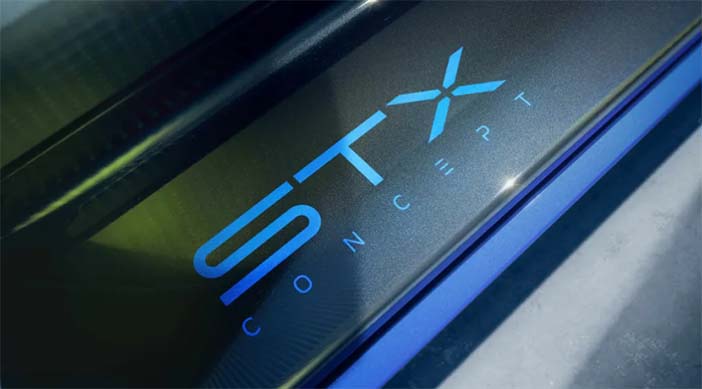
‘X’ designations have previously been used to signal the brand’s crossover models, suggesting the Astra could eventually follow suit and become a high-riding estate. In a post to social media platform LinkedIn, Opel CEO Florian Huettl said: “In Paris, we will unveil the Opel STX Concept, our vision for the future of the wagon silhouette. The name includes the Sports Tourer reference for a good reason: Opel pioneered this segment in Europe as early as the 1950s with the Car-A-Van. With the STX Concept, we reaffirm our commitment to a body style that continues to combine versatility, innovation and everyday practicality in a unique Opel way. “At the same time, it shows the next generation of our design language – and you will see elements in future production models”. In June, Huettl confirmed that the next-generation Astra will be one of “at least” 4 new Opels due to be launched by 2030. The others include a new Corsa, an SUV co-developed with Leapmotor and a new model that will replace the Mokka. Discussing the future Astra’s shape, he said: “Whenever we look at what the next generation of a well-established car such as the Astra should be, looking at the evolution of the segment is a big deal of our work. The hatchback segment continues to decrease. We see a lot of flow to other segments, namely the SUV body styles. Sometimes as smaller cars get more mature and provide more performance, people move down, and then also people move up, for example, as family life evolves”. The STX concept will be shown alongside the new GSE-Line trim for the current Astra, which hints at the look of a forthcoming 280 hp version of the hatchback. +++