
+++ BMW BRILLIANCE AUTOMOTIVE has started cutting about 1.800 jobs at its Shenyang operations, with the reductions beginning on November 2. The figure represents roughly 10 percent of the joint venture’s headcount and it arrives as BMW’s China sales come under heavier pressure. Most of the affected workers are frontline production staff, though some administrative roles are included too. BMW has not confirmed the cuts publicly, and it’s unclear whether they are tied to any wider restructuring beyond the Chinese market. BMW Brilliance began as a joint venture with Brilliance Group in 2003 and BMW has controlled it since a 2022 stake increase. The company has reportedly slowed hiring and let contracts lapse over the past 3 years before this round of cuts began. Severance for departing employees reportedly follows an N+5 formula, with “N” tied to pre-tax monthly salary for each year of service and the extra 5 months paid at base salary, excluding bonuses. That’s more generous than the standard N severance baseline, though still short of what some workers expected given the company’s German footprint. BMW has made other workforce moves abroad recently, including cuts tied to its 8,000 planned job reductions in Germany and a separate round of management-level cuts announced as part of a broader strategy shift. Neither of those moves has been formally linked to the Shenyang layoffs. Other automakers have run similar plans this year. Volkswagen circulated an internal memo discussing layoffs affecting up to 100.000 positions globally, while Porsche has reportedly weighed cutting roughly 5.000 jobs as margins tighten across the German industry. BMW’s third-quarter deliveries fell 6.3 percent year over year to 551.075 vehicles worldwide. Results in China dropped much more sharply, down about 25 percent in the same quarter compared with a year earlier, as competition from local brands intensified. Combined BMW and Mini deliveries in China for the first 9 months of 2026 came to 376.128 vehicles; down 21.8 percent from the same stretch a year earlier. China’s share of BMW’s global sales mix has shrunk too, slipping from 29.2 percent in 2023 to 25.4 percent in 2025, as domestic brands take a bigger slice of the country’s EV and hybrid market. BMW Group responded by cutting its 2026 Automotive segment profit outlook twice this year. Guidance moved from an original 4 to 6 percent EBIT-margin to a 1 to 3 percent range in June. Then came another cut, to a margin of negative 0.5 percent to positive 0.5 percent in November, with the latest reduction linked to expanded portfolio and structural measures tied to phasing out older hardware. The company still expects its automotive margin before those one-time measures to stay above 2.0 percent, and it now guides to a moderate decrease in 2026 deliveries versus last year. BMW has not clarified whether the Shenyang job cuts are part of those structural measures. BMW Brilliance had issued no official statement on the reported layoffs as of this writing, leaving the scale and scope of the cuts unverified by the company itself. That silence follows a pattern BMW has shown with other workforce reductions, including a reported voluntary exit program that also went unconfirmed for weeks after it surfaced. Jaguar Land Rover took a similar approach earlier this year with its own voluntary departure offer, which it also declined to detail publicly until pressed. The pattern suggests automakers increasingly prefer letting workforce reductions surface through local reporting rather than global press releases. For now, the 1.800 positions at Shenyang stand as a reported, not confirmed, reduction tied to a specific plant and a specific BMW-controlled subsidiary in China. BMW’s latest guidance links its lower 2026 Automotive profit margin to expanded portfolio and structural measures, including phasing out older vehicle and technology generations as Neue Klasse ramps up, and upcoming financial disclosures may show whether the Chinese cuts sit inside that push. +++
+++ Mercedes has plenty of confidence in its ability to compete with automakers from CHINA , but that doesn’t mean it isn’t paying attention to what they’re doing right. The world’s second-largest luxury brand has openly acknowledged that China’s automotive industry is setting an impressive pace, especially in developing new vehicles. The company’s newly appointed Chief Technology Officer, Jörg Burzer, didn’t hold back his praise for the competition. He described the speed of development among Chinese automakers as “outstanding”, which is quite an admission from a company with Mercedes’ engineering pedigree and 140-year heritage. However, Burzer was quick to point out that respect for the competition doesn’t mean Mercedes believes it’s falling behind in every area: “What is obviously outstanding, is the speed of developing in a way that the customer really appreciates: customer focus. Competition is good. It’s good for the customer. On the one hand, I have a lot of respect. On the other hand, we also have self-confidence that we can compete with these guys in China but also in Europe”. But the sales numbers aren’t particularly encouraging. Mercedes fell by 19 percent in 2025 to 551.932 cars in China. This year is proving even worse, with deliveries through September dropping by 29 percent to 418.305 units compared to the first 9 months of 2025. The situation isn’t much better globally. Mercedes sales fell 9 percent last year to 1.801.291 cars and deliveries through the first 3 quarters of 2026 dropped another 7.2 percent to 1.341.427 units compared to the same period in 2025. Of course, we can’t attribute the decline solely to Chinese competition, but nearly all major traditional automakers are struggling. Mercedes is betting heavily on artificial intelligence to shorten development times, with a new system called PLM.AI designed to connect information from across the entire business. The company describes it as an AI-powered digital backbone linking vehicle development, purchasing, production, sales, and after-sales services. The system aims to make information more accessible across departments, allowing engineers to identify problems, assess technical trade-offs, and make decisions earlier in the development process. Mercedes says PLM.AI could reduce overall development time by up to 30 percent while improving efficiency in individual engineering processes by up to 50 percent. The company also expects AI-powered simulations and digital development processes to reduce the need for physical testing by as much as 50 percent over time. AI agents already assist with tasks such as optimizing material costs, handling certification and homologation, identifying faults, and supporting software development. PLM.AI takes things a step further by connecting these previously separate applications through standardized data models, giving teams access to relevant information in real time. Importantly, Mercedes insists that faster development won’t come at the expense of quality or safety. Engineers will remain responsible for making the final decisions, with AI serving as a tool to help them work more efficiently rather than replacing their expertise. The ambition is clear: Mercedes wants to bring new technologies to production faster without compromising the standards associated with the three-pointed star. And with Chinese automakers earning praise for their development speed, the German company has plenty of motivation to do the same, even if its sales numbers are going from bad to worse. Mercedes isn’t sitting still while Chinese automakers ramp up the pressure. The company has an ambitious product offensive planned, with a wave of new and updated models across its lineup. A new entry-level model is in the works, alongside the next-generation CLA, an electric E-Class, a baby G-Class and the return of the G-Class Convertible. On the AMG front, a 6-cylinder C53 is on the way, along with a new GT Black Series and an open-top G63. Whether this new-model onslaught will be enough to reverse the downward trend remains to be seen. +++
+++ General Motors reportedly had big plans to turn CORVETTE into a standalone performance brand and cash in on the nameplate’s considerable brand equity. However, a fresh report suggests that vision is now falling apart. The automaker has apparently pulled the plug on an ambitious expansion that would’ve taken America’s long-running sports car well beyond its traditional 2-door format, scrapping several new models along the way. The idea had been floating around since at least 2022, when reports first emerged about an electric Corvette SUV and a battery-powered sports car. Rather than limit the nameplate to traditional 2-door performance cars, GM reportedly wanted to expand into several segments that would go far beyond the petrol-powered sports car formula. The proposed expansion included at least 2 additional vehicles beyond the existing C8-generation Corvette. The most controversial of the bunch was an electric SUV, internally known as V224. A second project, carrying the V284 code, envisioned an electric 2-door sports car. There may also have been a third model in development, reportedly assigned the internal code V285. Had it been given the green light, it would’ve been a 4-door sedan with a swoopy, fastback-esque silhouette. All 3 vehicles were expected to ride on GM’s BEV Prime platform, an architecture developed to underpin upscale purely electric cars with more power, torque and range. However, sources familiar with the matter now claim GM has shelved the entire expansion effort. Perhaps GM ultimately decided that Corvette doesn’t need to become an entire family of vehicles to remain successful. After all, there’s something to be said for keeping an iconic nameplate focused on what made it famous in the first place. However, an electric Corvette isn’t dead in the water. GM’s executive chief engineer for Corvette and Performance Cars, Tony Roma, recently reaffirmed the company’s commitment to a fully electric version, saying that EVs are “the end game” and that an electric Corvette will happen someday. There’s no official timetable yet, and GM hasn’t confirmed whether the EV will arrive during the current C8 generation or wait until the C9. Either way, the important distinction is that while the broader Corvette expansion has reportedly been shelved, an electric 2-door model remains part of the company’s long-term vision. Don’t expect it anytime soon, though. Another thing Corvette purists shouldn’t hold their breath for is the return of a manual gearbox. The car’s chief engineer also explained that Chevrolet has no plans to bring back a third pedal, largely because the C8’s mid-engine layout made it impossible to carry over the manual transmission used by its predecessors. Developing an entirely new gearbox would’ve required a substantial investment, one GM couldn’t justify given declining demand for manual-equipped cars. Looking at what the competition is doing, Ford is considering expanding the Mustang lineup beyond the pony car and the Mach-E. Earlier this year, The Wall Street Journal reported that Ford told dealers about a 4-door sedan with a petrol engine coming by decade’s end. While a company spokesperson refused to comment on the matter, rumors of a four-door Mustang have been swirling around for years. With an electric crossover already carrying the Mustang moniker, anything is possible now. Automakers are increasingly willing to stretch the meaning of their most important nameplates to attract new customers, even if that means dusting off badges once reserved for sports cars and repurposing them for something completely different. After all, brand recognition sells, and nostalgia can be a powerful marketing tool. Whether longtime enthusiasts like it or not is another matter entirely. The world didn’t end when the Mustang Mach-E arrived, and it probably wouldn’t if GM decided to put the Corvette badge on an SUV or sedan. +++
+++ Hyundai Motor’s GENESIS production line at its Ulsan plant remained shut down Monday night after union representatives failed to reach a decision on resuming operations following a dispute over staffing levels for upcoming models. Union representatives met for more than 1 hour to discuss the production stoppage but reached no conclusion, according to industry sources. The shutdown was expected to continue, with industry observers warning that disruptions could persist if negotiations over staffing requirements remain deadlocked. The disruption began on Monday at Plant 5, where union representatives blocked the company from putting a test vehicle for the Genesis G80 hybrid sedan onto the assembly line. Production remained suspended despite efforts by management to persuade workers to resume operations. Hyundai notified workers that it would apply a “no work, no pay” policy to the entire Genesis assembly unit, which reportedly employs about 800 union members. The dispute centers on negotiations over staffing requirements for production of the G80 hybrid and a facelifted version of the flagship G90 sedan. Hyundai has sought an agreement with the union on the labor hours and workforce needed to build the new models, but union representatives have refused to proceed with the negotiations, according to the company. The representatives are reportedly concerned that changes to the production process could reduce staffing requirements once the new vehicles enter mass production. With no agreement reached, it remains unclear when production will resume. +++
+++ In GERMANY , auto parts supplier Schaeffler said that it planned to cut almost 3.500 jobs and close 5 sites in Europe as the crisis gripping the region’s car industry deepens. Like other German carmakers and suppliers, the group has struggled with competition for its key products, which include ball bearings and electric vehicle parts, especially from Chinese manufacturers. Three-fourths of the 3.460 job cuts and four of the five site closures will be in Germany, the company said in a statement, pointing to “above-average” costs for workers in Europe’s top economy. The cuts, to be completed by 2028, are around 3 percent of the group’s global workforce of almost 110.000. They should result in annual savings of around 300 million euros from 2030, it said. Schaeffler, in a statement, said it was “responding to the persistently challenging environment in the automotive industry”. There was “an overall downturn in the market and intensifying competition, characterised by weakened demand for internal combustion engine vehicles and a delayed ramp-up of electric mobility”, it added. The cuts would be mainly focused on production and research and development. Sites would be closed in Berlin, Dortmund and 2 other towns in Germany. A small site in Belgium will also be shuttered. There will also be job cuts at sites in France and Slovakia. Schaeffler said some of the job losses would be offset by the creation of positions in “future-oriented fields”, such as humanoid robotics and defense. While not as well known as the car titans they work with, such as Volkswagen, BMW and Mercedes, Germany’s suppliers are a crucial part of the auto ecosystem, providing everything from braking systems to in-car electronics. But as their customers have fallen into crisis, battling Chinese competition, high production costs at home and weakening demand, suppliers have been hit hard. Volkswagen is planning to cut around 120,000 jobs across its brands by 2030. German industrial titan Bosch, the world’s biggest supplier of car equipment, announced last year 13,000 job cuts, mostly in its auto division. +++
+++ KG Mobility ( KGM ) reported an operating loss of 29.8 billion Korean won in the third quarter of this year, turning to a deficit compared to the same period last year. This is attributed to declining sales, including a more than 44% drop in domestic sales due to falling exchange rates. KGM announced on the 4th that it recorded an operating loss of 29.8 billion Korean won under separate criteria, marking a shift to a deficit year-on-year. Net loss also turned to a deficit of 133.2 billion Korean won. Revenue amounted to 994.1 billion Korean won, a 16.4% decrease. A KGM official explained, “The operating profit margin decreased due to fixed cost burdens from production line maintenance in the third quarter and expanded foreign exchange conversion losses caused by falling exchange rates”. As a result, cumulative operating profit for the first 3 quarters reached 700 million Korean won; a 97.8% drop year-on-year, while net loss turned to a deficit of 78 billion Korean won. Revenue remained 5.8% higher year-on-year at 3.3129 trillion Korean won. KGM’s third-quarter sales volume significantly declined. Domestic sales dropped to 7.010 units, a sharp 44.4% decrease from the same period last year. Although exports increased by 4.6% to 17.264 units, total sales fell by 16.6% to 24.274 units. To boost domestic sales, KGM is conducting promotional campaigns, including offering discounts on a total of 1.000 units across models in line with the 2026 K-Sale Festival. To expand exports, the company plans to target emerging markets such as Saudi Arabia, Vietnam and Cambodia, following the launch of its brand in Myanmar in August and its knock-down (KD) entry into Ethiopia in September. This strategy aims to strengthen its global market presence. +++
+++ MERCEDES-BENZ could be pushing back a major US production plan by roughly 30 months. The automaker is reportedly considering delaying the start of GLC assembly at its Vance, Alabama plant from late 2027 to May 2030, according to people familiar with the plans. However, Mercedes-Benz has not officially confirmed the reported change. The same applies to the production targets and other details surrounding the reported delay. I reached out to Mercedes-Benz and a spokesperson told me: “At this time, we’re not providing an update on production timing or allocation of an individual future model. Our commitment to Tuscaloosa and our planned US investment of $7 billion through 2030 has not changed”. The reported plans concern the next-generation GLC, which Mercedes is expected to add to its Alabama production lineup. The current model is already built in Europe for several markets, while Mercedes also manufactures other SUVs at its Vance facility, including the GLE and GLS. The original production schedule reportedly called for the next-generation GLC to start rolling out of Alabama in the fourth quarter of 2027. That timeline could now move to May 2030. If accurate, the change would represent a delay of more than 2,5 years, potentially leaving the US market dependent on imported GLC models for longer than initially expected. The reported delay comes after Mercedes and Alabama officials announced plans in spring 2026 for approximately $4 billion in investment at the Vance facility. The proposed expansion was linked to future SUV programs, reportedly including the GLC alongside updated GLE and GLS models. Previous reports also suggested that expanded production could eventually push the plant’s annual output beyond 280.000 vehicles. The GLC was reportedly expected to account for approximately 50.000 units during its first 12 months of US production. However, neither the reported production timeline nor these volume projections have been officially confirmed by Mercedes-Benz. Vance has been building Mercedes SUVs since the 1990s, making it a logical location for any future expansion of GLC production in the United States. Whether the reported delay will affect the automaker’s broader investment plans remains unclear. The company expects to build around 50.000 GLCs in the first 12 months of the new US line once it starts, though it has not tied that figure to a specific calendar year. Mercedes-Benz has not provided an official explanation for the reported production delay. It would be premature to attribute it directly to tariffs or other business considerations. Nevertheless, a delay of this scale could have financial implications for Mercedes. If expanded US production does not begin until 2030, the automaker could remain dependent on European-built GLC imports for several additional years. Those vehicles are potentially subject to the 15 percent combined tariff currently applied to passenger vehicles imported from the European Union under the U.S.-EU trade framework. For a vehicle built in the hundreds of thousands annually, the exposure compounds with each model year the delay stretches on. Mercedes continues building other US-market models domestically at Vance, including the EQE and EQS SUVs, and in South Carolina with the Sprinter van. For now, however, the reported GLC production delay remains unconfirmed. Until Mercedes-Benz provides an official statement, the proposed May 2030 start date and the other reported production figures should be treated with caution. +++
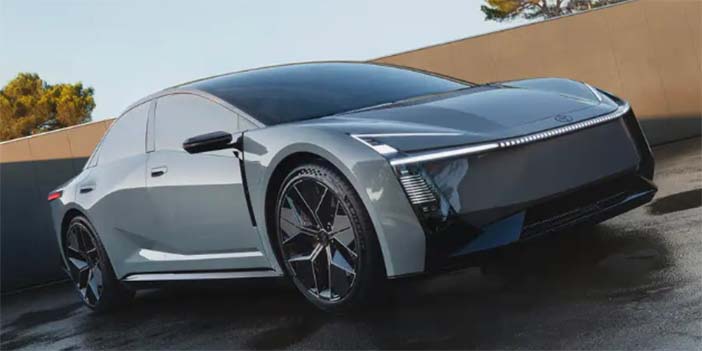
+++ TOYOTA will launch a new Corolla by 2030 with the option of an all-new hybrid system that promises to return almost 3 litre per 100 km. Previewed by a rakish, futuristic concept at last year’s Tokyo motor show, the 13th generation of the world’s best-selling car will be a complete technical and visual departure from the current model. As well as ushering in a bold, new-look design language, the next Corolla will be the first to use a new ‘multi-pathway’ platform that can accommodate all types of powertrain, including (for the first time in a Corolla) pure-electric power. The new architecture will also host a next-generation hybrid system that is claimed to bring significant improvements in packaging and efficiency compared with the system used by Toyota’s current models. Based around a new 1.5-litre petrol 4-pot (which can operate with or without a turbo), the new hybrid powertrain is said to be capable of 15% better fuel economy too. Toyota has not disclosed official forecasts but points to the ability of the Aygo X to achieve 3,7 litre per 100 km, suggesting almost 3 litre per 100 km would be feasible. The system has also been engineered to be as compact as possible so that it can fit in the new generation of ‘EV-first’ platforms that will underpin Toyota’s future line-up. The engine itself is 10% smaller than the 1.5-litre engine used by today’s Aygo X and Yaris (despite having an extra cylinder) and the electric element has been similarly downsized, courtesy of a new motor with a smaller inverter and power control unit. By making the combustion element of the drivetrain smaller, Toyota will be able to offer ICE cars with the same interior space as their EV counterparts while also enabling lower, sleeker silhouettes, which boost aerodynamic efficiency and thus cut fuel consumption; important for both EVs and ICE cars. Crucially, engineering a hybrid drivetrain into an EV platform means that combustion and electric versions of the same car can be produced on the same line. This reduces the amount of investment needed in retooling factories and enables Toyota to react more flexibly to changes in demand. The modular platform is described as EV-first because, as Toyota Europe R&D boss Thiebault Paquet explained: “The battery-electric vehicle is the most challenging. If we want to make it that efficient, we must have the best aerodynamics. Also, for the customer, we want to create a good value proposition with packaging space, so we have decided that this is the base platform. We don’t want to make any compromise. So, we had to find a way to integrate the plug-in hybrid and hybrid powertrains into an EV platform”. Toyota is also aiming to recoup some of the substantial development costs associated with its new platform and powertrain by selling the new hybrid system to other manufacturers, with its modularity and compact nature touted as chief selling points.
Powertrain boss Timothy D’Herde said: “Thanks to making this powertrain very compact, we also strongly believe in the opportunity from a business point of view, because having this highly efficient, very compact powertrain will allow this to be integrated in other OEMs’ platforms”. Toyota says it is in conversation with potential buyers already, including at least one unnamed UK manufacturer. Lotus has used Toyota engines in its lightweight sports cars for more than 20 years, but with the Emira set to swap its Toyota V6 for a new hybrid powertrain supplied by Renault-Geely-owned Horse in the coming years, it remains to be seen which firms will take Toyota up on its new hybrid system.+++
+++ The end of the year is fast approaching, and with Halloween behind us, October sales results from the UNITED STATES are in for the handful of automakers who release them monthly. Electric vehicle sales remain a fraction of what they once were while consumers scoop up hybrids at record rates alongside consistently high gas prices. Hyundai, Kia and Honda all posted record-breaking months, with consumers continuing to flock to crossovers, trucks and SUVs. But a closer look reveals a few surprises. Despite the market’s turn away from EVs, a few models are showing positive signs of growth. Mazda’s line-up is closing the year hot, but regardless of what happens for the remainder of 2026, here are your latest October sales winners and losers. Mazda just recorded its second-best October sales results ever in the US, with sales increasing 25.0 percent to 31.446 units last month. Models like the aging ‘3’, the iconic MX-5 Miata and the all-new CX-5, along with its larger line-up of SUVs, helped propel the brand to the record. Sales for the Mazda3, one of the oldest compacts on the market, continued its boom, with the sedan and hatch up 183.3 percent and 78.5 percent, respectively. The CX-5, the brand’s best-selling model, saw sales increase 7.9 percent, even with its large display and its lack of tactile controls. Despite the strong sales month and signs of growth, Mazda sales are still down for the year, but by just 0.9 percent. So far, Mazda has sold 341.714 cars in 2026, with the CX-5 and CX-50 accounting for nearly two-thirds of all sales, though the rugged CX-50 dipped. CX-50 sales fell 1.2 percent last month, but sales are up 17.8 percent for the year, which can’t be said for the CX-70 and CX-90, even with last month’s increases. The CX-30 also saw sales fall by 0.8 percent, with overall sales down 25.3 percent for the year. While EV sales in the United States remain a fraction of what they were a year ago, the latest sales report shows positive signs. Federal EV tax incentives ended in September 2025, with sales cratering in October of last year. EVs have struggled ever since, but a handful of models are selling better than they were a year ago. The Hyundai Ioniq 5, Kia EV6 and Honda Prologue (RIP) all posted sales increases in October. They increased by 21.0 percent, 58.1 percent and 48.5 percent, respectively, but EVs remain a minuscule fraction of the new-car market. Ford Mustang sales have largely rebounded this year, but not every month has been a banger. October saw sales for Ford’s iconic pony car fall 19.6 percent, with the Blue Oval selling 3.092 last month versus 3.845 a year ago. Despite the dip, Ford might not break the 50.000 mark this year, which is far below the 105.932 sold a decade ago. So far this year, Ford has sold 41.777 Mustang coupes and convertibles, up 13.9 percent. After a not-so-great sales year in 2025, the Subaru WRX has seen a resounding rebound in 2026. Sales for the all-wheel-drive sedan increased 137.1 percent in October, with 1.707 WRXs sold and it’s not a recent trend. Subaru WRX sales have posted big monthly gains all year. That has resulted in nearly 14.000 units sold through the first 10 months of 2026, up 55.0 percent. So far this year, Subaru has sold 529.968 cars, down 0.8 percent. +++