
+++ CHINA ’s passenger car production declined 4.1 percent year-on-year in October while sales fell 13.9 percent from a year earlier, data from an industry association showed. Bucking the trend, the country’s sales of new energy passenger vehicles soared 141.1 percent year-on-year to 321.000 units in October, according to the China Passenger Car Association. During the first 10 months, sales of new energy passenger cars skyrocketed 191.9 percent from a year earlier to 2.14 million units. The market performance of new energy cars and petrol vehicles took diverging paths, with the former continuing to see explosive growth, said Cui Dongshu, secretary general of the association. China’s leading new energy vehicle manufacturer BYD remained the most popular brand among buyers, with its car wholesales reaching 80.373 units last month. Tesla China sold 54.391 vehicles in October and its exports reached 40.666 units, data from the association showed. In 2022, China’s wholesales for passenger cars will likely grow 5 percent, the association said. +++
+++ The FIAT Tipo, first unveiled in 2015, received a facelift in 2020 with the addition of the Cross variant alongside the Hatchback, Sedan and Station Wagon. With the Tipo Cross, Fiat stepped into the crossover segment rivaling the likes of the Ford Focus Active and the Kia XCeed but with a more budget-friendly approach. However, buyers of this category are often fond of the wagon bodystyle, as shown by the Volkswagen Golf Alltrack, Toyota Corolla Trek, Ford Focus Active Wagon and the rumored Opel Astra Cross. So, now Fiat is getting ready to launch the Tipo Cross Station Wagon. Merging the Station Wagon and Cross variants of the Tipo into one sounds pretty easy and straightforward. The model will inherit the plastic cladding, and silver skid plates from the Cross, together with the increased ride height (40 mm) and the 17 inch wheels with meatier tires. Fiat has an aging range but before the automaker moves into Stellantis’ underpinnings they will keep updating their current models. I suspect that the heavy camouflage of the prototype is hiding the same body panels with the Cross Hatchback, with the exception of the rear bumper which has to be redesigned due to the longer rear overhang of the Station Wagon. The led headlights and taillights are giving a modern feel to the budget-oriented C-Segment model that has been in the market for 6 years now. Engine options should be identical to the Cross, including the 1.0-liter 3-cylinder producing 100 hp, the 1.3-liter Multijet diesel producing 95 hp and the more powerful 1.6-liter Multijet diesel producing 130 hp. Sadly, there is no all-wheel-drive option since all variants of the Tipo are FWD. The Fiat Tipo Cross Station Wagon is expected to launch in 2022, complimenting the current range and allowing the model to march on for a few more years before Fiat becomes an electric-only brand by 2030. +++
+++ HYUNDAI ’s urban air mobility (UAM) company in America is christened Supernal. The company, which was established in 2020, is headquartered in Washington D.C. and has been doing research on electric vertical take-off and landing (eVTOL), the technology that will allow cars to fly. It was originally called Genesis Air Mobility. Supernal is planning to build a research center in California next year, according to the auto group. “We are on a mission to develop a new type of mobility that moves and connects a society as well as changes the way people live”, said Shin Jai-won, CEO of Supernal. Shin, who worked for the U.S. National Aeronautics and Space Administration (NASA), was hired by Hyundai in 2019. “Utilizing Hyundai Motor Group’s smart mobility solution technology and manufacturing capacity, we are going to approach the public with high-quality products at affordable prices”, Shin added. Supernal’s long-term plans aren’t limited to developing and selling UAM products, Hyundai Motor said. “We plan to incorporate UAM into the existing transportation system, where it will be operated as easily as today’s car-sharing platforms”, the company said. Supernal plans to come up with an electric UAM product by 2028, which is designed to operate in urban areas. In the 2030s, Supernal says it plans products for regional air mobility, or RAM, which will connect a city to a nearby city. +++
+++ NISSAN tripled its full-year net profit forecast as it rebounded from the impact of the pandemic with a strong quarterly performance, saying it expected to withstand challenges including the chip crunch and rising raw material prices. The Japanese auto giant has faced a series of trials in recent years, from weak demand to the fallout from the arrest of former boss Carlos Ghosn, and its annual earnings were last in the black in 2018-19. But despite lower-than-expected sales volume so far this fiscal year, mainly due to the microchip shortage, “the quality of sales in each market continued to improve, resulting in higher profit per unit”, Nissan said. The crisis-hit company now projects 180 billion yen ($1.6 billion) in net profit for the year to March 2022, up from an earlier estimate of 60 billion yen. But it revised down its full-year sales forecast to 8.8 trillion yen from 9.75 trillion yen. “The semiconductor shortage continues to be a challenge for the automotive industry”, chief operating officer Ashwani Gupta told reporters. But “we anticipate that our sales performance efforts will more than offset the reduction in the sales volume resulting from these challenges”. A shortage of semiconductors (a key component in modern cars) has held back global car production, with automakers’ troubles compounded by supply chain issues in pandemic-hit Southeast Asia. “What this crisis has taught us is resilience and agility. We should not expect that this crisis will be over and the new crisis will not be there. Something new will happen”, Gupta added. Nissan logged a 54.1 billion yen net profit for the three months to September, reversing a 44.4 billion yen net loss for the same period last year, when virus lockdowns battered the firm and its rivals. “Our strong results are the outcome of diligent financial management, improved quality of sales and continuing product offensive. This has helped us withstand several headwinds”, said CEO Makoto Uchida. Analysts said that despite the challenges, Nissan stood a good chance of meeting its goals. “Nissan is on track for recovery”, said Satoru Takada, an auto analyst at Tokyo-based research and consulting firm TIW. “Returning to the black is likely, and it is a target Nissan must achieve no matter what following 2 years of net loss”, Takada told ahead of the earnings release. “But headwinds, including production cuts, remain strong”, he added. Nissan’s French partner Renault said last month it expects to manufacture around 500.000 fewer vehicles than anticipated this year due to the global shortage of electronic components, particularly semiconductors. Last week, rival auto firm Honda logged a drop in net profit in the second quarter, revising its annual profit forecast downwards also due to the chip shortage. But Toyota, the world’s top-selling automaker, upgraded its full-year profit forecast after a strong quarter that saw it weather production cuts. Even before the Covid crisis, Nissan was struggling with increasing sales costs and the ongoing saga surrounding its former chief Ghosn. The one-time auto tycoon was detained in Japan in 2018, accused of financial misconduct charges that he denies, but jumped bail and fled to Lebanon the following year. He remains at large, but his one-time associate Greg Kelly and Nissan itself are facing court proceedings in Japan. Last month Kelly told a court that he was “not guilty of any crime”, with prosecutors seeking a 2-year prison sentence for him. The verdict will be delivered on March 3. +++
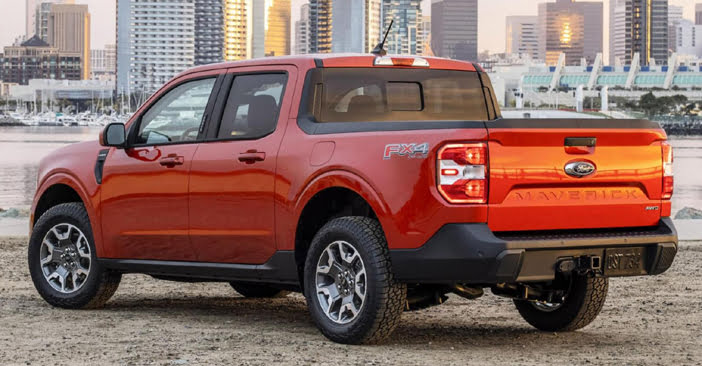
+++ U.S. Army Staff sergeant Trevor McKinnon decided to buy a new car slowly and then all at once. In a matter of days, he had to call on his boyfriend’s parents to shuttle a water heater and he read a review of the Maverick, a PINT-SIZE PICK-UP ; the newest new thing from Ford. “I saw that there was one Maverick for sale in all of Colorado Springs”, he recalled. “I drove over there and bought it that day”. McKinnon, 26, doesn’t ski or camp; he doesn’t ply a trade or even drive off road. But he is a first-time homeowner and is thrilled to no longer ratchet-strap furniture to the roof of his 2018 Focus. What’s more, his “cactus gray” Maverick is just as efficient, consistently logging 28 miles per gallon of gasoline. Having supersized its pick-ups and killed off many of its regular, car-shaped vehicles (including the Focus that McKinnon traded in), the U.S. auto industry is playing an old hit with tiny pickups. The same types of fuel-sipping work rigs that gained momentum in the Reagan era, after the gas crisis of the 1970s, are having a renaissance today, as young buyers fret over the climate crisis and confront piles of student debt. Jim Baumbick, Ford’s vice president of product line management, said the company sees small trucks as “an untapped opportunity”; precious so-called white space in an auto industry jammed with SUVs of all shapes and sizes. Ford had been closely eyeing the market for starter vehicles, Baumbick said, and saw “a lot of competitors and a lot of customers” but not a lot of choice. “When you make a list of things you can do in a pick-up that you can’t do in a car”, he said, “the list gets really long”. In addition to Ford’s Maverick, Hyundai recently launched the Santa Cruz, an even more modest rig that looks like a small SUV with a hot tub bolted on the back. In developing the machine, which is being made in Alabama, Hyundai tacticians did more research in America than they have on nearly any vehicle, according to Gil Castillo, senior group manager of product strategy. They didn’t find many disgruntled pickup drivers, but they did discover a large crowd of people driving compact cross-overa or SUVs who yearned for more cargo space. These are the mountain bikers of San Francisco and Brooklyn’s striped-bass fiends, the soccer dads and ski moms of the suburbs and the do-it-yourself fans all over America. “We don’t really think of our vehicle as a pickup”, Castillo explained. “When you look at the size of the compact SUV market, we realized it wouldn’t take that many people interested in a solution like the Santa Cruz to reach some significant sales”. Forecaster LMC Automotive sees the compact-pickup market in the U.S. growing to as many as 200.000 vehicles a year by mid-decade. It also expects Toyota will get back in the tiny-truck game and possibly General Motors. GM declined to comment. “This is a segment that has legs”, said Jeff Schuster, senior vice president of forecasting at LMC. “Millennials are interested in the utility of a pickup and the flexibility of having that open bed, whether you’re using it as a lifestyle truck or making trips to the hardware store”. Chris Cuellar, a computer scientist in Albuquerque, New Mexico, just bought a nearly fully loaded $39.000 Maverick in a blue-gray color called Area 51 Blue to add to his family fleet, which also includes a Focus and a Honda Odyssey minivan. “If you would have asked me 2 years ago if I’d ever own a pick-up, I would have told you you’re crazy”, Cuellar said. “But then as life catches up, you’re a homeowner, you start having to do yard work, you need to make a Home Depot run and you realize your Focus isn’t cutting it anymore”. The major selling point: the Maverick can fit all 3 of his kids’ car seats. Matt Meredith’s YouTube videos about customizing his new Maverick have garnered 60.000 views in the past 2 weeks. The attention helps drum up ad revenue and business for Meredith’s company, Bullseye Custom Autos. The U.S. Air Force veteran spends much of his time tuning his 2 F-150s for the racetrack, but the Maverick has taken over his day-to-day driving: hauling headlights and other gear to trade shows and serving as a loaner for clients. Last year, Meredith logged 46.000 miles in his bigger Ford pickups, so he expects his fuel savings to be significant. “I’ve beaten the ever-loving crap out of it and I’m still averaging well more than 23 miles per gallon”, he said. “It’s extremely useful”. Maverick engineers traded an attic’s worth of cargo capacity for the option of parallel parking on a tight urban block: it’s almost 90 centimeters shorter than its full-size sibling. They swapped jumbo-jet towing stunts for a hybrid engine that goes up to 42 miles on a gallon. And they nixed the go-anywhere chassis of the F-150 for the unibody frame of its Kuga, a far smoother ride on a paved road. The dashboard is a cheap composite, but Apple CarPlay is standard. The decisions let the carmaker engineer a modest window sticker, with a starting price under $20.000. “Entry level does not mean cheap. It means affordable”, said Baumbick. The Maverick is built in Mexico, where worker pay is a fraction of what Ford’s U.S. employees make. Hyundai’s Santa Cruz, meanwhile, is even more diminutive, 10 cm shorter and nearly 7 cm narrower. The rig, which starts just shy of $24.000, is dubbed a Sport Adventure Vehicle by the suits in South Korea. Unlike the Ford’s boxy build, it’s a suite of sinuous curves, akin to a contemporary SUV with a chunk chopped out of the rear. “We couldn’t just design something that looked like a traditional truck but smaller”, Castillo said. Getting the look and capabilities right was tricky, but Hyundai did have a playbook of sorts. In the wake of the 1970s gas crisis, automakers launched several tiny trucks as a cheap set of wheels for first-time buyers. These included the Chevy S-10, a Ford Ranger that was much smaller than the current version and the Toyota pickup in North America (known as Hilux in international markets). It was the inspiration for the yellow Pizza Planet pickup in the Toy Story movies, with a tailgate featuring only the letters “YO”. The Chevy S-10 became the foundation of the first compact SUV in America in 1983, the S-10 Blazer. Gas prices eventually swooned and changing tastes sent compact pickups to the scrap heap, ultimately replaced by larger and pricier midsize trucks, including the “Taco”, Toyota’s topselling Tacoma. GM rolled out two midsize pickups in late 2014, the Chevrolet Colorado and the GMC Sierra. Ford followed in 2018 with its reborn Ranger; it’d been off the market for 7 years. And Jeep gave its Wrangler the truck treatment with its Gladiator, which hit dealers in early 2019. Launching a smaller, cheaper vehicle is a fraught exercise. The risk is that it will lure buyers who would otherwise have bought the bigger, more profitable machine (what consultants call cannibalization). Critically, this didn’t happen when Detroit unleashed its parade of midsize pick-ups nearly a decade ago. Sales of its half-ton moneymakers continued to swell steadily, suggesting the industry had tapped an entirely new crowd of buyers. Ford sold 4.140 Mavericks in October, its first full month on sale and it has 100.000 nonbinding reservations, roughly the number of F-150s it sells in 7 weeks. In August and September, Hyundai sold nearly 3.000 Santa Cruz pickups. The rig is poised to zoom past the company’s traditional cars. Between 2014 and 2019, U.S. sales of midsize trucks surged 155% to 639.000. In the same period, the market for full-size pickups increased by 20%. It was a nifty bit of product planning and if it worked going from large to medium, maybe it can going from medium to small. LMC sees Ford selling 50.000 to 60.000 Mavericks a year and Hyundai may sell between 30.000 and 40.000 of the Santa Cruz. When Toyota enters the market, it will challenge Ford for bragging rights, Schuster said. GM is taking a “wait and see” approach, Schuster said, but it’s likely to join the fray if the segment takes off. For now, the Maverick and Santa Cruz have the budding market to themselves. “There’s always that risk when you’re trying to develop something that isn’t quite here and isn’t quite there”, Castillo said. “But it seems like the market’s getting it”. +++
+++ A union-affiliated pension fund advisor pressing RIVIAN on human rights and environment concerns in the electric vehicle startup’s battery supply chain ahead of a blockbuster initial public offering said on Monday the company’s response fell short of expectations. SOC Investment Group executive director Dieter Waizenegger said he was disappointed in the lack of substance in the Irvine, California-based company’s October 29 response to earlier concerns the fund manager raised. “They sent us a lot of words, but it’s really raising a lot of questions and we expect more substance than aspirations”, Waizenegger said in an interview. “It’s particularly lacking on firm commitments to address critical environmental and human rights risks”. As issues of environmental, social and corporate governance take on growing importance with investors, automakers have come under pressure to prove that such minerals as lithium and cobalt for their EV batteries are sourced without human rights abuses. Rivian, backed by Amazon.com and Ford, on Friday raised the offer price for the shares in its IPO, aiming for a valuation of as much as $65 billion. It now expects to raise nearly $10 billion. In an October 29 response to SOC, board member Rose Marcario said Rivian was committed to ethical and sustainable growth in the EV space. “We have already taken extensive measures to protect the environment and human welfare in the course of our business operations; we have always understood that we must grow our policies as we grow our company; and we are intent on setting new industry standards for human rights and environmental diligence”, she said. Marcario cited Rivian’s plan to put 1% of equity in an environmental program aimed at helping address climate change and preserving wildlands and waterways, its intent to be climate neutral by 2032 for all emissions, a promise to release a full impact report in early 2023, a commitment by its battery supplier Samsung SDI not to use deep seabed mining, Rivian’s supplier code of conduct, and more. SOC in an October 20 letter called on Rivian to adopt policies to identify and prevent human rights risks and environmental impacts through its supply chain based on United Nations guiding principles for businesses. In Monday’s letter, Waizenegger said Rivian’s supplier code of conduct was not publicly available, its position on deep seabed mining needed to be clarified, the startup needed to commit to disclosures around its efforts, and the fund manager was concerned Rivian’s board might not be able to effectively oversee efforts in these issues. A Rivian spokesperson said the company was not commenting further during the quiet period ahead of its IPO. SOC, formerly known as CtW Investment Group, is an advisor for union pension funds that have more than $250 billion in assets. It has taken a more activist approach with such companies as Doordash, Uber and Lyft, around issues including board diversity, executive pay and company stock structure. This is the first time SOC has approached an automaker about the battery supply chain. +++
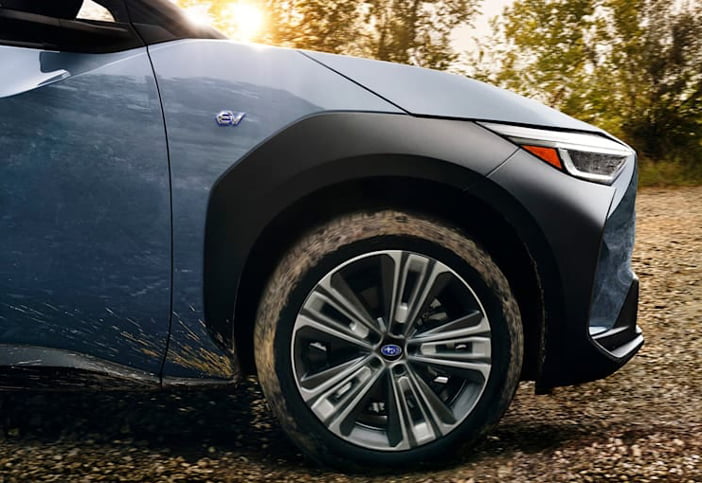
+++ Our wait to see SUBARU ’s first electric vehicle is almost up. The Solterra is now officially slated to debut at this month’s Los Angeles Auto Show. Those ravenous to see the information as soon as it hits should tune in on November 17 to see Subaru reveal the crossover via a livestream show. Today’s news is accompanied by a single preview image showing the Solterra trekking through a muddy road. We see the wheel, giant black fender cladding, part of the headlight and the “EV” badge on the fender. Just like the preview images we saw before, the resemblance to the Toyota bZ4X is obvious to see. The LA Auto Show is shaping up to be a show with a number of electric car debuts. I know the Kia Concept EV9 is going to be revealed at the show and the final production Fisker Ocean is coming, too. Add the Solterra to the list, and we’re going to have quite the electric time. As for expected Solterra specs, we have the official bZ4X specs to look at. The Toyota version is available in both front-wheel drive and all-wheel drive, but we already know the Subaru will be all-wheel-drive-only. Toyota’s car only makes 214 horsepower with all-wheel drive, so don’t expect this to be a super-quick EV. Driving range is 450 km for the AWD bZ4X, and Toyota estimates that charging at a 150 kW charger should get you from 0-80% in about 30 minutes. Take all of the above vital specs with a grain of salt, though, as Subaru could have done some tinkering of its own to produce different numbers. We’ll find out soon enough. +++
+++ TOYOTA defended a decision not to sign an emissions pledge proposed during the COP26 climate talks, saying its global business would make the commitment “difficult”. Ford, Mercedes-Benz, General Motors and Volvo were among the auto giants that said they would “work towards reaching 100% zero emission new car and van sales in leading markets by 2035 or earlier”. Various national and local governments, companies and investors in the transport sector also signed the policy paper released by Britain ahead of an announcement at the Glasgow summit. But Toyota (the world’s topselling carmaker) has not signed the pledge, with Volkswagen, Hyundai-Kia, Stellantis and the Renault-Nissan alliance also absent from the list. In an interview, Kohei Yoshida, a general manager at Toyota ZEV Factory, the group’s dedicated zero-emissions vehicle division, said there were “many ways to approach carbon neutrality” other than the deal. “It’s very important to make sure that we have all countries and regions, different environments and different places in mind”, he said. It will take time to establish infrastructure for electric, battery and fuel-cell vehicles in developing economies such as those in Africa and Latin America, Yoshida explained. Toyota said in a statement that it was “difficult for us to commit to the joint statement at this stage”. But Yoshida stressed that the firm respects the COP26 discussions. “More important than having a joint statement is the fact that each and every player is taking up the challenge and trying to make efforts towards carbon neutrality”, he said. The Japanese firm, which last week hiked its annual profit forecast, said in September it would invest ¥1.5 trillion ($13.2 billion) in batteries for electric and hybrid cars by 2030. It has also pioneered vehicles that burn hydrogen; much hyped as a green fuel, as it emits just water vapor, although the way most of the gas is currently made produces harmful emissions. Yet the market for such cars remains small: since Toyota launched its hydrogen fuel-cell Mirai in 2014, it has only sold 17.000 units. That pales in comparison to the 9-10 million vehicles it sells overall each year, including almost 2 million hybrid cars in 2020. While hybrid vehicles are increasingly popular worldwide, they have been criticized by environmental campaigners, with Greenpeace saying plug-in hybrids only reduce emissions by an estimated one-third compared to petrol or diesel cars. However, Toyota believes hybrids “will be a very important way to realize carbon neutrality” in developing economies by boosting energy efficiency, Yoshida said. The COP26 auto emissions pledge commits governments to work towards all sales of new cars and vans being zero-emission globally by 2040, and no later than 2035 in leading markets. +++
+++ In the UNITED KINGDOM , the passenger car market noted its 4th consecutive year-over-year fall and the weakest October since 1991, with 106.265 new registrations (down 24.6 % year-over-year). One of the main reasons is car supply constraints. Nonetheless, the plug-in electric cars are expanding even in the challenging environment. In October, some 24,537 new plug-ins were registered (up 43 % year-over-year), which is 23.1 % of the total. In the recent months, the battery-electric cars continue to sell at a much higher volume and expand quicker than plug-in hybrids. “Plug-in vehicles now account for 16.6 % of all new car registrations in 2021, which, when joined by a further 9.1 % from hybrid electric vehicles means that 25.7 %, or more than a quarter of the new car market, has been electrified year-to-date”. In October, BEVs made 16.155 registrations (up 73 % year-over-year) at a market share of 15.2 %. PHEVs did 8.382 (up 7.5 % year-over-year) at market share of 7.9 %. Kia reports that in October it sold more all-electric cars than any other brands: 1.669 (22.8 % of its volume), which consists of the e-Niro, e-Soul and the all-new EV6 that has just entered the market with 349 units sold. The South Korean manufacturer said also that during the 10-month period it sold in the UK some 11.762 BEVs (14.4% of its total volume of 81.532) and has a strong bank of more than 1.600 pre-orders of the EV6. +++
+++ VOLKSWAGEN boss Herbert Diess’ frail relationship with German labor representatives hit a new low this week with disagreement over how radical the overhaul at Europe’s top carmaker must be in its quest for electric vehicle dominance. While both sides tried to demonstrate unity at a staff meeting, the first at Volkswagen’s giant Wolfsburg plant in nearly 2 years, there is no guarantee the dispute can be fixed quickly, if it can be fixed at all. In fact, Volkswagen’s 4-member mediation committee is planning to discuss Diess’ future soon, sources have said, creating uncertainty around the carmaker’s leadership less than 4 months after the CEO’s contract was extended. However, Diess is still the man for the job Daniel Schwarz, analyst at Stifel, thinks so: “His consistent EV (electric vehicle) strategy makes sense. He has a stronger focus on capital markets than his predecessors, which is benefiting the Volkswagen share”, he said. While Volkswagen’s preferred shares have gained just 6 % since Diess took over as CEO in April 2018, its common stock (more than half of which is owned by top shareholder Porsche SE) is up 68 %. Diess, whose contract was extended until 2025 in July, is currently hammering out the company’s next investment plan to 2030, a process that usually causes friction among stakeholders each year. Bernstein analyst Arndt Ellinghorst is more skeptical. “Diess stands for the radical change the company must go through after the dieselgate emissions scandal. What he does not yet stand for is implementation”. Porsche AG boss Oliver Blume, Audi CEO Markus Duesmann as well as Volkswagen brand CEO Ralf Brandstätter have all been named as potential successors in the event that Diess gets the boot or decides to leave the multi-brand group. “You need someone in Wolfsburg who understands the company and who is prepared to engage with the works council. I don’t know if Oliver Blume is the right person”, Ellinghorst said. “Ralf Brandstätter could possibly be better at that”. Volkswagen, the world’s second largest carmaker after Toyota, is under pressure to adapt to huge industry shifts, most notably the rise of EVs and self-driving cars. Both areas are outside the comfort zone of German carmakers, including Volkswagen, who have long dominated the age of internal combustion engines. Enter new rivals, particularly Tesla, which have started with a clean sheet of paper and revolutionized production and supply chains. “In the world of combustion engines we are leading. We’re good at that, maybe better than everyone else”, Diess told workers. “But in the new world, we are facing competition Volkswagen has never seen before”. The 63-year old has been repeatedly criticized for his communication style that labour representatives say displays a lack of interest in the concerns of 675.000 employees around the world. Diess, in particular, drew the ire of workers when he told Volkswagen’s supervisory board in September that roughly 30.000 jobs were at risk if the company was too slow in its EV transition, sources have said. The same goes for some of Diess’ social media activities, including a video of him thanking staff for record first-half results while surfing on the canal next to the Wolfsburg headquarters. “The way you have presented yourself in recent months I do wonder whether you’re actually aware of the situation at our site here and how this is being perceived by the workforce”, works council head Daniela Cavallo said. However, Tesla is itching Diess. The U.S.-based carmaker has shown it’s not just the number of cars you make, but technology and software that determine success in the new auto world. Tesla, which sold 627.350 vehicles in the first nine months of 2021, is worth $1.2 trillion, more than 8 times Volkswagen’s €124 billion market valuation, even though the German group sold eleven times as many cars in the period. Tesla is also producing more quickly and efficiently, with Diess expecting the U.S. company will require just 10 hours to assemble each vehicle at its planned Gruenheide plant near Berlin, expected to open later this year. “In our plant in Zwickau we’re at more than 30 hours, we hope to achieve 20 hours next year; our original project target was 16 hours”, Diess said. At 31.4 %, Porsche SE, which is 50%-owned by the Porsche and Piech families, is Volkswagen’s largest shareholder, while Qatar and the state of Lower Saxony, where Volkswagen is based, own 14.6 % and 11.8 %, respectively. Between them they hold more than 90 % of the voting rights, but on Volkswagen’s supervisory board – which approves key strategic decisions; labour representatives hold half of the 20 seats as part of Germany’s co-determination principle. In the rare event of a stalemate on the board, the chairman (in this case Porsche SE CEO Hans Dieter Pötsch) holds sway. +++
+++ VOLVO said it had set a price on carbon emissions from its operations of 1.000 Swedish crowns ($116.30) a tonne, part of attempts to ensure all future projects are sustainable. Announcing the move at global climate talks in Scotland as it joined an imitative to phase out fossil fuel cars and vans, the company said it had deliberately set a relatively high price to “future proof” itself. Negotiators at the COP26 talks are trying to finish rules to create an international carbon market. Put simply, it would allow some countries to pay others to cut emissions, with the aim of pushing much-needed cash into green projects around the world. Volvo said it was the first automaker to set such a price across its whole operations, as part of its aim to be a climate neutral company by 2040. The price is double the current cost of carbon in the European Union’s carbon trading scheme. Going forward, every new car project would go through a “sustainability sense-check”, with a carbon price assigned throughout the life of the vehicle, to ensure it would be profitable even under a much higher government-set price. “A global and fair price on CO2 is critical for the world to meet its climate ambitions, and we all need to do more”, Björn Annwall, chief financial officer, said in a statement. “We strongly believe progressive companies should take the lead by setting an internal carbon price. By evaluating future cars on their CO2-adjusted profitability, we expect to accelerate actions that will help us identify and reduce carbon emissions already today”. Also, Volvo signed up to the Glasgow Declaration on Zero Emission Cars and Vans, along with peers including Ford and General Motors, aiming to end production of internal combustion engines by 2040. +++