+++ The sky-high valuations of companies such as Canoo, Lucid, Nio and even Tesla are already deflating. Of 23 electric vehicle manufacturer stocks in a chart entitled ELECTRIC BUBBLE WATCH , all are down on their peaks, some by more than 70% as we went to print (including Faraday Future, Lordstown and Workhorse). In one crazy moment this year, Tesla was valued at more than the next 9 largest manufacturers while selling fewer vehicles than Isuzu. If you organise global car makers based on their market capitalisation (the combined price of publicly and privately held stock), Tesla still comes way out in front of Toyota, with a $1 trillion valuation in a snapshot taken on 7 December. But are we entering a phase where the stock valuation begins to align more closely with the physical realities of the start-ups? After Toyota comes Chinese EV and battery maker BYD, and then in 6th, ahead of General Motors, is Rivian, at $87 billion. California- based luxury EV maker Lucid is 8th, at $78 billion, just ahead of Ford at $76 billion. Chinese EV maker Nio is 14th, ahead of Honda. And Fisker, another Californian effort, ranks 36th, at $5.2 billion, ahead of Mazda. The catalyst for this pricing was of course Tesla, which genuinely disrupted the global car market. No one else making EVs is close, reckons Patrick Hummel, head of European car research for investment bank UBS. “In 2021, Tesla has gapped away further from all others in terms of volume growth and profit margins, and its lead should be undisputed in 2022”, he wrote in an analyst’s note. Tesla, however, has a long way to go before it will match the physical size of ‘legacy’ car makers. For example, in the third quarter this year, it delivered 627.572 vehicles and generated $31.3 billion of revenue. Meanwhile, Ford delivered 2.84 million vehicles and brought in $91 billion. Tesla scored profits of $1.62 billion, which was impressive for a firm that has struggled to make money but still dwarfed by Ford’s $5.7 billion profits over the same period. The narrative driving stock prices for less established EV start-ups is essentially that they’re ‘the next Tesla’. But how valid are their claims? Rivian is the EV maker that investors are betting most heavily will follow in Tesla’s footsteps. After a successful stock market flotation last November that raised about $13.5 billion, the Californian firm is now being promoted by financial analysts impressed by its successful roll-out of its first product, the R1T, last September. “Rivian’s calibre as an organisation is made clear when considering it beat Tesla, Ford and GM to market with the industry’s first battery-electric pick-up (and an excellent one at that)”, wrote analyst Ryan Brinkman for American investment bank JP Morgan in a research piece. Rivian is cash-rich, capable and in possession of an order for 100.000 vans from retail giant Amazon, which is also a major shareholder. But it also has a mountain to climb as it follows Tesla’s lead to do much of the work itself, for example creating a network of chargers, rather than outsourcing. Another analyst, George Gianarikas of investment bank Baird, started his coverage of Rivian’s stock by saying that this ‘vertical integration’ approach needs big sales to succeed and called on its founder and CEO to move fast. “Clark Kent needs to emerge from the phone booth as Superman soon to scale Rivian and save the planet”, he wrote of bespectacled RJ Scaringe. Rivian said in its stock prospectus published last October that it wants to move to enter Europe “in the near term”, followed by Asia, and to “localise production and supply chains in those regions”. So far, though, its planned products are the 5.537 mm long R1T pick-up, its 5.131 mm long R1S SUV sibling and a van. Only the van would be likely to achieve anything other than niche status in Europe. Rivian admitted this in its prospectus, saying that “initially and for the foreseeable future, we will depend on revenue generated from a limited number of models” and that “historically, automobile customers have come to expect a variety of vehicle models”. Tesla also depends on a limited number of models, but at least the Model 3 and Model Y belong to market segments with global, rather than mainly US, appeal. Lucid has more directly followed Tesla by launching with its Air luxury saloon first, but its valuation (reckoning it to be worth more than Ford, BMW, Ferrari and Stellantis) is looking shaky after it confirmed on 6 December that the American stock exchange regulator, the SEC, was investigating how it went public via a spac (special- purpose acquisition company). The role of spacs is increasingly coming under scrutiny in the US, given how the listing process is far less rigorous than that of the traditional IPO (initial public offering), potentially allowing fraudulent claims and downplaying risks. The spac process allowed the likes of Arrival, Canoo, Faraday Future, Lordstown and many others to jump from the fringes of the automotive industry into the consciousness of American investors looking for the next Tesla in one of the frothiest stock markets in history. However, the disparity between revenue generated and market valuation has also caused many to bet against the start-ups using so-callled short-selling methods. Short-sellers dug into some of the spac claims and found them wanting. The various tricks of Trevor Milton, the former CEO of American start-up Nikola, were exposed by short-seller Hindenburg Research in 2020. Now the company is facing a $125 million fine from the SEC as it tries to move past the excesses of Milton. Its valuation of $3.8 billion at the start of December was well down on its peak of $12.3 billion. Other start-ups have also been targeted. Short-seller J Capital Research skewered 2 spacs for the price of one in the title of its report entitled ‘Move Over Lordstown: There’s a New EV Scam in Town’, which predicted that Faraday Future would never sell a single vehicle. “Same nonsense, nothing more than a rehash of old news”, countered Faraday Future founder Yeuting Jia on Chinese social media. Previously, Hindenburg Research had gone after Lordstown for misleading investors by falsely claiming customer reservations for its electric pick-up truck. Lordstown CEO Steve Burns resigned last April amid the accusations. Looming large over everyone’s claims are those of the traditional car makers, themselves betting billions on the shift to electric. But given the start-ups’ access to stock-market cash, their lack of ‘legacy’ factories and structures and their ability to be nimble could yet enable the best to follow Tesla and become household names in the future. You’ve gone public, there are financial forums dedicated to guessing whether you’re going to succeed or fail and you have short-sellers breathing down your neck, betting on the latter scenario. How do you keep the plan on track? “There’s a lot of pressure on all the start-ups, particularly if you’ve gone public”, said Henrik Fisker, the founder of American EV-start up Fisker. He unveiled the production version of the Ocean, an SUV pitched against the Tesla Model Y, at the Los Angeles motor show last November ahead of sales starting late 2022. Until then, the incredibly tough work of taking a concept to roadreadiness continues. The trick is apparently to keep your head down and deliver. “You’ve got to build a brand and you need to get the order reservations to make sure the suppliers feel good about your business model”, Fisker said. Suppliers can make or break start-ups. “They’re evaluating to see if they want to work with you or not”, Fisker said. “They actively look at you to say: ‘Do we believe you’re going to make it’? If they don’t believe it, a lot of times they don’t want to work with you, or they charge you extra up front in case you go bankrupt”. Fisker says his company has avoided that fate in part because of its relationship with Canadian super-supplier and contract manufacturer Magna, which will build the Ocean at its factory in Graz, Austria. Fisker claimed to have taken 20.000 retail reservations for the Ocean as of 2 November. +++
+++ The very best people in business, I’ve noticed, tend to belie their age. And sure enough, when FIAT boss Olivier François, pointed out to me during a recent Zoom chat that he’s only just turned 60 years of age, I had to raise an eyebrow. Olivier is fizzing right now, and with good reason: Fiat’s all-electric 500 has been well received and the company is just about to tap into the huge potential for parts and platform-sharing with its Stellantis group stablemates: Peugeot, Citroen, Opel and DS. Development costs for new models, he freely admits, can be cut by up to three quarters, in some cases. There was a key point in our conversation, in fact, when I offered what I think is a specific phrase to describe Fiat’s current position: sleeping giant. Frankly, François could have taken exception to this, not least because his brand scored the biggest global volumes of the whole Stellantis group in 2021. But instead, he seized it positively. “A sleeping giant? I love that”, he grinned. “That’s exactly my point of view. We have not even started awakening the giant”. Fiat has been a part of European culture for generations. My own family had a series of them, including a 125 and a Panda, and I learned to drive in an Uno before exploring the grip levels of Puntos on the back roads near my home. François’ plan, as you can read overleaf, is to build on this brand recognition with 2 clear pillars of models. They will be sold not at massively high prices, but in impressive volumes, and with sensible profit margins. “We need to be obsessed with synergies”, he says. “If we do this, you will have the satisfactory margin level of the mass-market brands of former PSA, combined with the biggest volume of Stellantis”. It makes sense to me, and I can’t wait to see the cars it delivers. +++
+++ HYUNDAI has clarified that the recent rumor claiming it had stopped developing gasoline- and diesel-burning engines to focus on various forms of electrifications is false. It said that development work remains on-going and that the internal combustion engine still has a future. “The Hyundai Motor Group can confirm that it is not halting the development of its engines following recent media speculation. The Group is dedicated to providing a strong portfolio of powertrains to its global customers, which includes a combination of highly efficient engines and zero-emissions electric motors”, said senior group manager Michael Stewart in an interview. The report that emerged in late 2021 claimed that the Hyundai Group (which includes the Hyundai brand, Kia, and Genesis, among other entities) had completely stopped designing piston-powered engines to focus on electrification. It claimed that most of the engineers had been assigned new roles related to electrification, though it also noted that some were staying behind to continue refining the technology. If this sounds familiar, it’s likely because Hyundai recently shot down a separate but similar rumor that said it had put the hydrogen-electric powertrain it planned to install in many of its cars (including some upmarket Genesis models) on hiatus. The carmaker explained that it has merely reshuffled the team that’s developing the technology because unspecified technical hurdles have slowed down the project. Several electric Hyundai models are in the pipeline, including the ‘6’ production version of the Prophecy concept unveiled in 2020 and a relatively big SUV previewedin 2021 by the ‘7’ concept. But, its comments suggest that more gasoline-powered models are on the way as well, which is great news; its range of N-tuned high-performance models includes excellent cars and there’s still room for it to grow. +++
+++ Our Next Energy ( ONE ), a 2-year-old Michigan startup, said it had tested a prototype of its new battery in a Tesla Model S, driving 1.210 kilometers before recharging. ONE aims to begin producing battery packs that will deliver similar range (about double that of most existing electric vehicles) by late 2023, according to Mujeeb Ijaz, ONE’s founder and chief executive. “We plan to build (batteries) in North America and believe it can be done economically”, Ijaz said in an interview. ONE has focused on developing an advanced long-range battery that uses safer and more sustainable materials, while packing more energy into a smaller, less expensive package. Ijaz, a 30-year industry veteran, is a former senior executive at Apple and A123 Systems, where he led teams developing battery systems for electric vehicles. For ONE’s Gemini battery, Ijaz said: “We want to eliminate both nickel and cobalt, but we don’t want to give up energy density. We aim to re-invent battery chemistry as well as the cell architecture” in order to provide at least 1.200 km of range between charges. “If you put that much energy on board, you are ready for anything the customer asks: a round trip from Detroit to Chicago, or towing a trailer”. ONE’s range target is well beyond even the best of current electric vehicles, including the Lucid Air, which offers just over 800 km of range in the top version. Ijaz said ONE chose a Tesla Model S to showcase its prototype battery because “it has fairly high efficiency and a fairly large battery pack” which provided enough space to fit ONE’s battery. The testing was done in a road test across Michigan in late December, at an average speed of 90 km/h, ONE said. +++
+++ After more than a decade since the launch of the PAGANI Huayra, its replacement has been keenly awaited by many. After numerous variations of Zonda and Huayra (codename C9), the rumoured Pagani C10 will be an all-new design for the Italian supercar manufacturer, and this image is thought to be a rendering of what Pagani’s third model could look like. Leaked online via an anonymous Instagram account but subsequently taken down, the image has spread across the internet and has sparked great interest in Pagani’s next move and whether the company will confirm that this is indeed its new model. Accompanying the rendering was a photo of what is claimed to be a document targeted at potential customers, which could signify that the rendering originates from a past sales event or presentation. The low-resolution picture shows a car which exhibits some customary Pagani design traits, with clear styling cues evolved from both the Zonda and Huayra, such as small, individual rear wings and the car’s headlight design. A number of apparent aerodynamic aids are also visible, which could help cement previous claims by Pagani that it intends to focus more on handling with the C10, rather than all-out power. The overall styling also gives a somewhat retro impression, which would certainly help the new Pagani to stand out as much from competitors as its predecessors managed. Also, given the brand’s track record, and if this is indeed the C10, it’s a pretty safe bet that the interior will follow suit. Although a hybrid powertrain has been rumoured for the near future, the C10 is believed to be the last fully combustion-powered car to come from Pagani. This suggests a Mercedes AMG-sourced engine, and given the brand’s relationship with the German manufacturer it’s thought that a new version of the 6.0-litre twin-turbo V12 could be used offering as much as a 40bhp increase over the Huayra, with the option of a manual or a dual-clutch gearbox. It’s thought that around 300 C10s are currently planned for production, with Pagani claiming that demand has already been high. As with Paganis of the past, other variants, including a roadster, will also make up some of the total production number. We’ll likely see the next Pagani model make its debut in the second half of 2022. +++
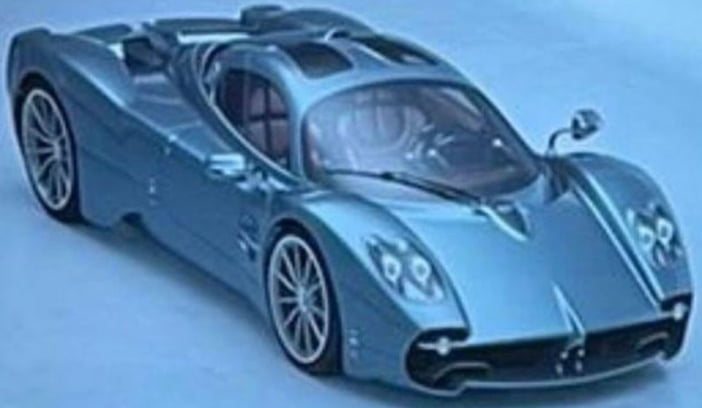
+++ A unique PAGANI ZONDA 760 ROADSTER has been teased on Instagram, and is said to be the final factory-built Zonda. While the supercar’s production run officially ended in 2019 (when it was replaced by the Pagani Huayra) a small number of special limited-edition cars have been created since. It’s the final car built as part of Pagani’s 760 Series, which are all custom cars created for its prefered customers and are based on existing Zonda chassis. They feature the same legendary 7.3-litre AMG-sourced V12 engine tuned to produce 760 hp (hence the name). The drop-top has been created in collaboration with LMM Design, who worked with the car’s buyer to come up with its unique design and specification. Teaser shots show the car features a prominent Pagani Zonda R-style carbon fibre air intake that reaches over the car’s roll hoops and should create an exciting soundtrack inside the cockpit. A large rear wing is also fitted, hinting that despite the open-top design, there are few concessions to performance. LMM Design’s Instagram feed also includes photos documenting the 760 Roadster being hand-built at Pagani’s facility near Modena, Italy, and show the car’s trademark quad-exit exhaust layout, as well as the double wishbone suspension’s race car-style components. London-based LMM Design offers services including 3D rendering, modelling and logo design to customers. It was founded by Harry Poore, who cut his teeth designing cars for racing games. Other Zonda 760 owners include 7-time Formula One world champion Lewis Hamilton with his Zonda 760LH, while it is thought that this new model developed in conjunction with LMM Design takes the total number of bespoke 760 Series models to 22.+++

+++ Amazon.com and STELLANTIS said they will collaborate to develop cars and trucks with Amazon software in the dashboards, and deploy electric vans made by Stellantis on Amazon’s delivery network. The agreements expand Amazon’s efforts to get a bigger foothold in the transportation industry, and could help Stellantis close the gap with Tesla in developing vehicles with sophisticated, software-powered infotainment features that are connected to the data processing cloud. The agreements between Stellantis and Amazon, the online retailer and cloud computing power, announced in conjunction with the CES technology conference, are wide ranging, involving software and hardware. Amazon and Stellantis said they will work together to develop software for the “digital cockpit” infotainment systems of Stellantis vehicles that will start launching in 2024. Stellantis said it will use Amazon’s Alexa technology for voice controlled features, “navigation, vehicle maintenance, ecommerce marketplaces, and payment services”. Big ecommerce delivery fleet operators such as Amazon will be key to determining winners and losers as established automakers compete with startups to electrify the world’s package delivery system. Stellantis chief software officer Yves Bonnefont said during a conference call that the automaker’s use of Alphabet Inc’s Android software for vehicles will “evolve over time”. Amazon will also help Stellantis speed up development of new digital products and “upskill Stellantis’ global workforce”. Stellantis and other established automakers are scrambling to match Tesla’s ability to rapidly deploy new vehicle features and revenue-generating subscription services using software delivered over the air. As part of the partnership, Stellantis will use Amazon as its “preferred cloud provider” to provide the mobile network and computing power future vehicles will need. Under what Stellantis said is a separate agreement, Amazon will be the first customer for Stellantis’ new line of electric delivery vans due to launch in 2023. The companies said they plan to put thousands of Stellantis Ram ProMaster electric vans on the road every year. Amazon has a previous agreement to buy up to 100.000 electric vans from startup Rivian Automotive. Stellantis in May had agreed with iPhone assembler Foxconn to create a joint venture to supply in-car and connected-car technologies across the auto industry. +++
+++ In the UNITED KINGDOM , 1 in 6 new car registrations in 2021 was a plug-in, electrified vehicle, compared with one in 10 the previous year, creating a growing chasm between electric vehicle adoption and the infrastructure with which to power EVs. New data from the Society of Motor Manufacturers and Traders showed that 305.000 plug-in vehicles (electric vehicles and plug-in hybrids) were sold last year, accounting for 18.6 % of overall market share. Including non-plug-in hybrids, 27.5 % of the market is now electrified. In 2021, electrified cars had a market share of 17 %. Electric vehicles accounted for 11.6 % of the market, around 190.000 units. It means that more EVs were registered last year than over the previous 5 years combined. SMMT boss Mike Hawes said: “It’s very good news on the plug-in front but we can’t afford to be complacent. Other competitor markets are growing just as quickly, and sometimes even faster than us. There’s a long way to go to reach net zero. Around one in 100 vehicles on the road is a plug-in. The government’s ambition is that, by 2030, we need to get that to 1 in 3”. He continued: “It shows how much we need to accelerate sales. It’s not by lack of want from the manufacturers. There are now 140 plug-in vehicles available with another 47 expected this year. “The biggest obstacle to our shared net zero ambitions is not product availability but cost and charging infrastructure. Recent cuts to incentives and home charging grants should be reversed and we need to boost the roll-out of public on-street charging with mandated targets, providing every driver, wherever they live, with the assurance they can charge where they want and when they want. “With the increase in EV sales and much slower increase in provision of on-street charging, the gap is getting worse”. The overall car market has improved fractionally over 2020, but only by 1 % or around 16.000 units. In 2020, 1.63 million cars were sold, while in 2021 it was 1.65 million. Hawes commented: “2020 was the worst year for car sales since 1992 and 2021 is the second worst year since 1992. It is not a fabulous picture by any shape or form”. He added: “It’s been another desperately disappointing year for the car industry as Covid continues to cast a pall over any recovery. Manufacturers continue to battle myriad challenges, with tougher trading arrangements, accelerating technology shifts and, above all, the global semiconductor shortage which is decimating supply. “Demand is still strong. The challenge is how you maximise your ability to supply customers when supply is so heavily challenged”. While sales of plug-in vehicles have grown massively, petrol remains by far the most popular power source, with a 58.5 % market share. Diesel accounted for 16.0 % of registrations, still outperforming electric vehicles for now. Superminis (B segment) remained Britain’s most popular cars, with 513.000 registrations, followed by the lower medium (C segment; 449.000) and dual-purpose (443.000) segments. The Vauxhall Corsa was the topselling car of the year and sees a new brand at the top of the standings for the first time in 50 years. The electric Tesla Model 3, an unexpected candidate, came in second place followed by the Mini hatchback. The Ford Fiesta, which has topped the charts for a number of years, is nowhere to be seen in the top 10, restricted by supply issues caused by the semiconductor shortage. The only Ford car ranked in the top 10 is its Puma in 8th position. A Ford spokesman told: “In 2021, semiconductor shortages meant we prioritised commercial vehicles, customer orders and newer products like Puma and Kuga, and have consequently sold less of our traditional models like Fiesta and Focus. As is evident from our passenger range, it is becoming far more focused around SUVs, with around 64 % of all our passenger vehicle sales across Europe in the third quarter being SUVs”. The Model 3 was the bestselling electric car, with the Kia d-Niro and Volkswagen ID.3 placed second and third respectively. SMMT predicts sales of 1.96 million for 2022, an increase on this year but nowhere near what it considers a ‘normal’ run rate of 2.25 million to 2.3 million. Hawes said the pressures from the semiconductor shortage are expected to ease as the year goes on, but are likely to run into 2023, adding that “different brands are affected to a greater or lesser extent, depending on their relationship with semiconductor suppliers”. He commented: “We can’t lose sight of just how tough it is for the industry. These are significant drops from where we should be. Semiconductors are the major challenge: vehicles use between 1.500 to 3.000 semiconductors. When car makers can’t get them, they mitigate, focusing on high-margin vehicles. But they also need to hit CO2 targets, which means allocating supply to electric vehicles. It’s one reason why EVs have performed so well”. Full import controls, as a result of Brexit, are also now in place. Hawes said: “It’s too early to say, but we don’t see any major problems bringing vehicles and goods through ports. That’s partly because the industry spent a huge amount of time preparing for this. The current shortage of vehicles is not Brexit-related, and the EU still remains the biggest market despite Brexit. We got a deal that just about worked for the industry. We’re avoiding tariffs, we’re avoiding quotas, although it is more administratively burdensome. It’s a highly distorted market because of the semiconductor crisis, but we’re operating under the new Brexit regime with additional costs and there is more to be resolved; for example, a permanent type approval for vehicles”. The topselling 10 cars overall were: 1. Vauxhall Corsa, 2. Tesla Model 3, 3. Mini, 4. Mercedes-Benz A-Class, 5. Volkswagen Polo, 6. Volkswagen Golf, 7. Nissan Qashqai, 8. Ford Puma, 9. Kia Sportage and 10. Toyota Yaris. The topselling 10 electric vehicles were: 1. Tesla Model 3, 2. Kia e-Niro, 3. Volkswagen ID 3, 4. Nissan Leaf, 5. Audi e-Tron, 6. Hyundai Kona Electric, 7. Mini Hatch Electric, 8. Renault Zoé, 9. Vauxhall Corsa-e and 10. MG ZS EV. The topselling 10 plug-in hybrids were: 1. BMW 320e/330e, 2. Mercedes-Benz A250e, 3. Volvo XC40 Recharge T4/T5, 4. Ford Kuga PHEV, 5. Audi A3 40/45 TFSI e, 6. Range Rover Evoque P300e, 7. BMW X5 xDrive30e/45e, 8. Volvo XC60 Recharge, 9. Range Rover Sport P400e and 10. Seat Leon PHEV. +++
+++ In the UNITED STATES , General Motors slid to second place in 2021 U.S. auto sales, ceding first place to Toyota by approximately 100.000 units in a still-tumultuous Covid recovery market plagued by lingering supply chain issues. While many automakers are now in a position to start building cars again (with some even altering available options in order to build complete units), the chip shortage has already taken its toll, and getting units into customer hands remains a challenge. Toyota sold approximately 2.3 million cars in the U.S. in 2021, to GM’s 2.2 million. GM had been tops in sales for 90 years, since 1931, when it passed Ford. For decades, GM proudly touted itself as the “world’s largest automaker” in advertising and even press releases, though it lost that title a decade ago in the run-up to its historic 2009 bankruptcy. The Detroit automaker remained No. 1 in the U.S., though occasionally it would slip due for a month or a quarter due to inventory issues. Under CEO Mary Barra, the company has emphasized profitability over volume, withdrawing from segments and markets that are not lucrative. GM’s hardships were largely due to its inability to deliver bread-and-butter pickups due to parts shortages. While assembly lines are moving again and GM dealers are starting to see the best inventory numbers since a year ago, the damage is already done. Despite a market aching for new trucks, GM moved about 64.000 fewer Silverados and 4.000 fewer Sierras than it did in lockdown-stricken 2020 because the parts just weren’t there to build them. That story repeated at Ford, but with fewer indications that truck production is recovering in the face of strong demand. Even in Q4, when Ford outsold all other automakers in the U.S, F-Series volumes were down nearly 16 %; twice as much as they were over the course of the year (7.8 %). The Ranger likewise tumbled in Q4 (-29 %), weighing down its 6.6 % slide for 2021. Stellantis had better news on the pickup front. Ram volumes took a dive in Q4, but the pickup line improved over 2020 by 1 % alongside its ProMaster offerings, which improved by 25 % and 40 % over 2020, respectively. Gladiator was up 16 % for the year, outselling both Cherokee and Compass. How much of that was due to production shortfalls of the 2 smaller, unibody cars with less profitmargin is unclear, but both slid from their 2020 volumes by more than 30 %. That good news didn’t translate to growth, however. Volumes were down 2.3 % overall in 2021 and 17.5 % in Q4. At Honda, a strong surge in volume early in the year attributed to careful stockpiling of chips faded in the second half. Overall, volumes were down 21.5 % in Q4 (-26.3 % at Acura, -20.9 % for the core brand) but remained up over 2020’s for the full year (8.9 %). Mazda finished 2021 up just over 20 % despite late-year inventory shortages. Every model’s sales improved over 2020’s with the exception of the CX-3, which was discontinued. Porsche’s full-year results were similar. The German performance-car builder saw a 22 % increase for the year despite stagnation in Q4. Mitsubishi, on the other hand, has nothing but good news to share. Q4 sales were up more than 68 % over the same period in 2020; full-year 2021 total sales increased by nearly 17 %. This is just the 4th time the brand has topped 100.000 sales since 2007, Mitsubishi said in its release. Nissan finished the year up just under 9 % over 2020, but had a Q4 slump of nearly 20 %. Hyundai saw a drop of 23 % for the month compared to December 2020 despite setting a company record for total retail sales in a calendar year. Kia likewise surpassed its previous year-long best (retail and fleet combined) by nearly 10 % despite a December drop. Subaru (the Little (Boxer) Engine that Could for several years) managed to hold its decline to just under 5 % for the year after another supply-constrained month (and quarter). Volvo flipped that script slightly, eating a heavy drop in Q4 but maintaining a nearly 11 % uplift for the full year. Gauging sales in relation to 2020’s performance has been dicey this year at best, but the second half of 2020 saw strong rebounds as dealers re-opened after spring lockdowns. In many cases, declines in the latter half of 2021 are as much an indicator of strong second-half sales from the previous year as they are of continued chip shortages. Hyundai and Kia have posted five months of consecutive declines, for example, despite setting the aforementioned sales records. +++
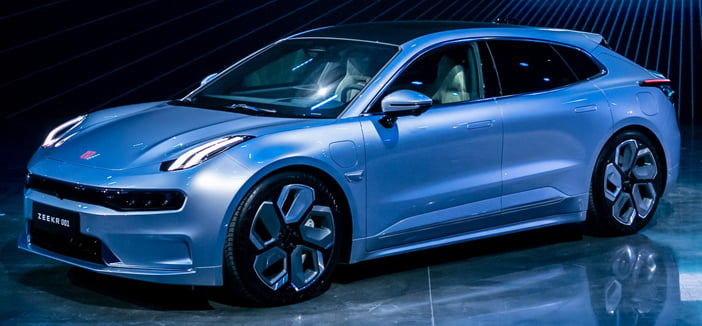
+++ ZEEKR , a new premium electric car brand from Chinese giant Geely, has agreed a deal to work with Intel-owned Mobileye to launch what it claims will be “the world’s first consumer autonomous vehicle” with level four advanced driver assistance systems by 2024. The new Tesla-rivalling brand unveiled its first car, the 001, earlier this year and is aiming to develop a range of EVs that will use Geely platforms and be offered in China and Europe. Zeekr and Geely have already been working with Mobileye, an Israeli firm that develops advanced self-driving car technology. Under the partnership, the two firms will collaborate on the development of a car with level four assistance systems, which effectively means the vehicle can drive itself without supervision in certain situations. The vehicle will be based on Geely’s forthcoming SEA electric platform, which will also underpin a range of future models from sibling firms Volvo and Polestar and use the ‘true redundant braking’, steering and power from that architecture. The autonomous systems will be operated by powerful EyeQ5 system on chips, which will allow for both Zeekr and Mobileye’s software to run. Zeekr has not given any details about whether it will be offered in China only or in other markets into which the firm plans to expand, such as Europe. Zeekr is also working with Californian technology firm Waymo on a separate project to develop an autonomous ride-hailing vehicle. The deal expands on an existing relationship between Mobileye and Geely. Mobileye, which was founded in 1999, has also worked with firms such as Renault, Nissan, Nio and BMW, and previously worked on Tesla’s driver assistance systems. +++