
+++ Chinese electric vehicle maker BYD has a market capitalization of more than $128 billion, making it the world’s third most valuable automaker by market cap, according to CompaniesMarketCap statistics. The Shenzhen, Guangdong province-based company, which is backed by legendary investor Warren Buffett, was the only carmaker to come from China placed among the top 10. The company has set another record month of sales and production in May, with both figures surpassing 100.000. According to the China Association of Automobile Manufacturers, last month, sales of BYD new energy vehicles rose 148.28 percent year-on-year to 114.943. During the first 5 months, BYD sold 512.363 units of NEV cars, surging 161.85 percent on a yearly basis. BYD earlier announced that it has already ceased the production of traditional gasoline-powered vehicles starting from March. In the future, BYD’s auto business will focus on pure electric vehicles and plug-in hybrid electric vehicles. With the Covid-19 outbreak on the wane, Chinese carmakers’ market cap has shown an upward trend recently as domestic auto sector resumes production. Great Wall Motors, with a market cap of $39 billion, overtook Ferrari to rank No 11. Nio and SAIC Motor ranked 13th and 16th respectively. Overall, Tesla, with a market cap of $742.46 billion, takes the crown at the ranking. Toyota came in second place with Volkswagen and Mercedes-Benz ranking fourth and fifth respectively. +++
+++ In CHINA , local car brands maintained steady expansion in sales and gained a larger market share in May, industry data showed. A total of 620.000 Chinese-brand passenger cars were sold last month, up 5 percent year-on-year and surging 29 percent from April, according to the China Passenger Car Association. They accounted for 46.3 percent of the total sales in May, up 9.8 percentage points from a year ago. In the first 5 months of the year, Chinese-brand car sales accounted for 46 percent of the total passenger car sales in the Chinese market, up 8.6 percentage points from the same period last year, said the association. It noted that domestic auto brands have recorded robust growth in the new energy vehicle market, with the market share of leading firms such as BYD, Geely, Changan, and Chery recording remarkable growth. +++
+++ GENERAL MOTORS made an eyebrow-raising move this month with the Chevrolet Bolt hatchback and its slightly bigger cousin, the Bolt EUV. At a time of incredibly scant car supply, with dealers often charging thousands of dollars above sticker and consumers waiting weeks or months to take delivery, GM slashed the price of these electric models by about $6.000. GM only just started building these vehicles again in April after stopping assembly for around 9 months while it wrestled with a vexing safety issue. The automaker recalled all of the roughly 142.000 Bolts ever sold over a rare tendency for their batteries to catch fire. 2 months is hardly enough time to restock dealerships and get a good sense of demand. So what’s happening here? It appears GM is trying to buy a bigger share of the EV market while it ramps up production of newer, top-dollar models. It had to be painful for chief executive officer Mary Barra to watch fierce rival Ford pass her company in US electric-vehicle sales last year, with the Mustang Mach-E carrying the Blue Oval to a second-place finish behind Tesla. This race for the silver medal will remain a fun one to watch, with Ford rolling out the F-150 Lightning and GM countering with the GMC Hummer and Cadillac Lyriq. Next year, Barra will launch electric versions of the Chevrolet Silverado pickup and Equinox plus Blazer SUVs. The cavalry is still over the hill. Counting on the Bolt hatchback & EUV for volume in the meantime will be tricky. Both are on the small side for a nation of consumers who love their big pickups and SUVs. Both run on GM’s older-generation batteries rather than its much-ballyhooed Ultium packs. Chevrolet kicked off an advertising blitz in April to jumpstart sales when production resumed, but flooding the airwaves is no way to make up for being outclassed by new competition. Before the price cut, the Bolt EUV sold for $33,500. GM and Tesla both have used up the $7,500 federal tax credits their US customers were eligible for, putting their electric models at a disadvantage. Kias are still eligible for this incentive, which brought the cost of the Korean brand’s sharp-looking EV6 down to only about $1,000 more than the much older Chevrolet. Hyundai’s Ioniq 5 is similarly priced. The perk also puts Ford’s $45,000 Mustang Mach-E within a few thousand dollars of the Bolt EUV, and it’s bigger, newer and sportier. To be fair, the Bolts do offer competitive range. The hatchback can go 400 km on a charge, and the EUV gets 430 km. This compares with 370 km for the Ioniq 5 and around 350 km for the Kia EV6 and Mustang Mach-E. Electric vehicles are now coming to market at a much faster clip. GM may have gotten out ahead of many automakers other than Tesla with the Bolt, but it didn’t prove to be the antidote to the Model 3. GM wants to stay in the EV race in the US while scaling production of Ultium-based vehicles. To do so, the company had little choice but to bring Bolt prices down. These won’t be the last discounted EVs we’ll see. At some point, Ford, Kia and Hyundai’s models will be challenged by something newer and more stylish with better batteries. Shoppers will always have shiny new objects to admire along with duller, marked-down ones to consider. +++
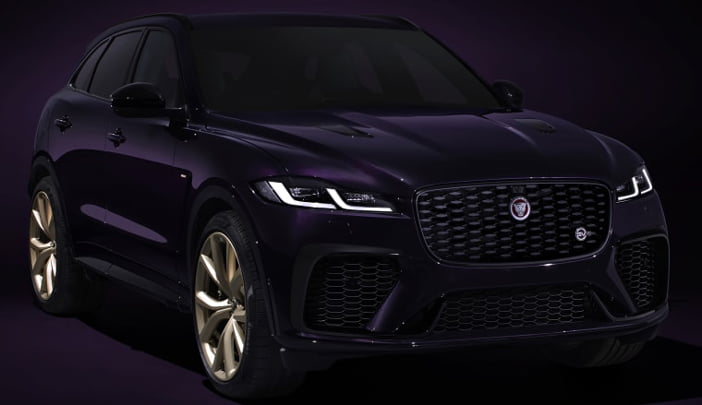
+++ At the end of last month, JAGUAR hit the ‘Delete’ button on nearly ten years of Instagram posts, replacing them with 3 images of the XJR-9 endurance racer that won the 1988 24 Hours of Le Mans. I made 2 conjectures as to what it could mean, the first being, “a limited-edition version of an existing car inspired by the XJR-9 could be around the corner”. And here I have none other than a limited-edition version of an existing Jaguar, called the F-Pace SVR Edition 1988. Created by the SV Bespoke division with help from Special Vehicle Operations and the design team, this is the Jaguar’s first limited edition F-Pace; the brand will make just 394 of them for global consumption, celebrating the number of laps the XJR-9 completed during its win at La Sarthe. The changes are cosmetic, sadly, which means no 7.0-liter V12 up front. The standard supercharged 5.0-liter serves here, making the standard 550 hp and 700 Nm. It looks more sinister than ever, though, hidden behind Midnight Amethyst paint and a set of 22 inch Champagne Gold forged alloy wheels. If that weren’t enough to announce itself, there are also Sunset Gold Satin accents that contrast with the standard Black Package, such as the Edition 1988 badging on the fenders, leaper badge in back and tailgate script. A silver “SV Bespoke commissioning graphic” informs that each model is “One of 394”. Inside, occupants find more Sunset Gold on the steering wheel, shift paddles, instrument panel and ventilated Performance Seats. They’re offset by semi-aniline leather everywhere, and carbon fiber trim finishers. Jaguar mentions as well that it’s incorporated what3words navigation into the Pivi Pro infotainment system. A combination of 3 terms identifies 3 m2 around the world, the phrase “echo.twin.papers” providing directions to the Empire State Building, for instance. The F-Pace SVR Edition 1988 won’t be sold in the Netherlands, but if it would, customers should have counted on a stickerprice of €300.000. Now we wait to find out about our second surmise for the brand: a return to old-school competition with an endurance racing program. It’s unlikely for tens of millions of reasons, but we’d love to see the cat back at that French country house with Acura, Audi, BMW, Cadillac, Lamborghini and Porsche. +++
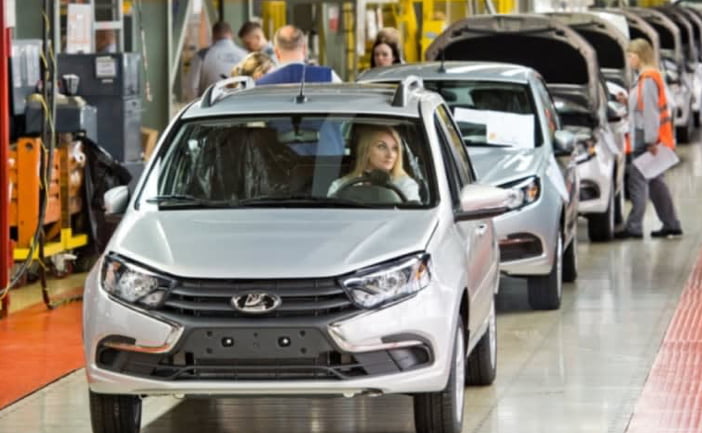
+++ LADA , the largest car manufacturer in Russia, has resumed production in spite of numerous sanctions and shortages. The company unveiled a new variant of the Granta, one of its most popular models, that has been stripped of several features that rely on imported components. Russia’s government nationalized Lada parent company AvtoVAZ earlier in 2022, in the wake of its invasion of Ukraine, after buying the 68% stake held by Paris-based Renault. The deal reportedly cost Russia one symbolic ruble, though Renault has a 6-year option to buy back the stake. With full control of the company, government officials set out to figure out how to build a car without relying on foreign suppliers. The answer is a bare-bones version of the Granta named Classic. It’s marketed as the most affordable passenger car available new in Russia, pricing starts at 761.500 rubles (around $13.200), and it’s powered by a 1.6-liter four-cylinder engine that sends 90 hp to the front wheels via a 5-speed manual transmission. It lacks a lot of things: There’s no traction control, no passengerside airbag, no airconditioning nor remote keyless entry. Buyers do get body-colored exterior trim, power steering, and power-operated front windows as a consolation prize. But anything that requires foreign-sourced parts to manufacture has been removed. It’s worth noting that there are some inconsistencies between the specifications sheet published on June 10 and the official Lada website. The former lists that airconditioning is not available on the Classic, while the latter states that it’s part of an option package. Buyers have 3 body styles to choose from: sedan, hatchback and wagon. All three are built in Togliatti, Russia. It’s too early to tell how long they will remain in production; AvtoVAZ President Maksim Sokolov said Lada is working closely with federal and regional governments to “develop the competencies of Russian suppliers”, presumably to bring some of the missing features back sooner or later. In the meantime, unverified reports claim that stripped-down versions of Lada’s other models (including the 45-year-old Niva) are on their way. +++
+++ Chinese electric-car maker NIO said that in 2024 it will start making high-voltage battery packs that it has developed itself, as part of a drive to improve profitability and competitiveness to take on rivals such as Tesla. Nio, plans to start producing an 800 volt battery pack in the second half of 2024, its chairman William Li told analysts on a call on Thursday. Most electric vehicles operate with 400 volt batteries while Porsche’s Taycan, Hyundai’s Ioniq 5 and Kia’s EV6 electric cars are powered by 800 volt lithium/ion battery packs, which recharge faster. Li said Nio (which has over 400 employees working on the research and development of battery technologies) also plans to use a combination of self-produced and externally sourced batteries in the long run, a plan similar to Tesla’s. Li said Nio plans to use self-produced battery packs for its new mass-market brand, which is expected be ready for sale in the second half of 2024. These new models are expected to be priced around 200.000 to 300.000 yuan ($30.000-$45.000), he added. Nio said battery costs would have risen in the second quarter after the renewal in April of an agreement with its sole battery supplier CATL. The company said on Thursday its net loss narrowed to 1.8 billion yuan in the first quarter from 4.9 billion a year earlier. But Nio forecast deliveries of between 23.000 and 25.000 vehicles in the quarter ending June 30, down from 25.768 in the first quarter, reflecting a general drop in production by major automakers as a result of a 2-months long Covid-19 lockdown in Shanghai. +++
+++ 2 years ago, struggling NISSAN announced a restructuring plan to cut costs and revamp its aging model lineup in an effort to rebuild sales as the coronavirus pandemic eased. Jérémie Papin, the company’s chairman for the Americas, says the turnaround is happening. In May, Nissan reported its first fiscal-year profit in 3 years, and Papin says North America is a big contributor. U.S. sales, however, have struggled as a global shortage of computer chips has hampered automakers’ production. Plus, Papin says Nissan is getting out of the business of selling a large number of vehicles to rental car companies at low profit. He talked about Nissan’s future, the chip shortage, and the need for U.S. electric vehicle factory capacity. The interview has been edited for length and clarity. Question: First-quarter U.S. sales were down almost 30%. Is that because of the chip shortage and supply chain issues? Answer: Any performance on a quarterly basis is going to be a function of the chips that are available. The performance is in no way reflective of the interest and the level of customer demand that we are having. The company is delivering its outperformance because of all the work that’s been done on efficiency, getting the customer to buy value. Q: Leadership in Japan has said you’re going to need a new U.S. factory to meet electric vehicle demand. What’s the status of that? A: We see customer demand for Nissan products to be 40% for electrric vehicles in 2030. I would expect other investments in Canton (Mississippi assembly plant). I would expect other investments in Smyrna (Tennessee assembly plant). I would expect other investments in Decherd (Tennessee powertrain plant). As we are successful, that’s the condition where there may be a need for a third assembly plant by 2030. Q: What about battery plants? A: The batteries that are for the products that are built in the USA will be built in the USA. The announcement for who would be the supplier in Canton, we will be doing in the next few weeks, months. We want a U.S. battery supplier. We’re working on finalizing that. Q: It used to be that there were a lot of Nissan vehicles on rental car company lots. Those sales aren’t as profitable as retail sales to individuals. Are you cutting rental business? A: I would say today we’re a third of what we used to be. We increased the profitability per unit. We are a smaller company, but we are a much healthier and more profitable business that can invest in its future. Q: Have you seen any change in consumer buying habits with the recent inflation, interest rates, or gas price increases? A: There will be an impact from increasing monthly payments because most of the cars are financed. Clearly there will be an impact on customers’ ability to pay. It’s going to be a balance between the affordability of the monthly payment and then the pent-up demand. Q: Because there’s limited new-vehicle inventory, people are paying sticker price for cars. Do you see this as a permanent change rather than haggling over price? A: It’s not what people want. People are used to transparency of their pricing, getting things on time and fast. I can’t elaborate on what will happen to incentives. The strategy we want is one where we don’t need the incentives of the past to sell the cars. It’s fully digitalized, and when you do that, there’s pricing transparency because there’s been no discussion of price. You either are interested and we help you with the financing, or you’re not interested. I think there has never been a reset the way it’s been reset today. And I think the whole industry, including the customers, are fine. +++
+++ Intelligent electric vehicle company Jidu, a joint venture established by tech giant Baidu and carmaker Geely, unveiled its first concept robocar, ROBO-01, on Wednesday night. Integrating Baidu’s intelligent driving capability and world-class intelligent driving configurations with a futuristic design, Robo-01 is symbolic of a coming intelligent car era driven by AI. Jidu said the concept car features unique design elements including a U-shaped folding steering wheel, 3D borderless one-piece screen, 3D human-machine co-driving map, full-scene voice inside and outside the car, millisecond voice response and offline intelligent voice assistant. Xia Yiping, CEO of Jidu, said the transition to the “Intelligent Car 3.0 Era” is marked by the shift of driving power from humans to AI, with robocars ultimately achieving self-generating progress led by AI. “The automotive industry in the 3.0 era will see a seismic shift from a revolution in energy to a revolution in product attributes. The ultimate goal is to realize a fully driverless transportation experience. The Jidu robocar aims to meet users’ needs for intelligent travel with its in-car assistance and cabin”, Xia said. The robocar was unveiled at Jidu’s first-ever branded event Roboday, held in the Xirang metaverse platform. At the unveiling, the first-ever digital human car owner, Xijiajia, drove and interacted with Robo-01. Robo-01 comes with stronger AI perception and more active service capabilities and has the ability to recognize the user’s emotions and interact with the outside world. Advanced autonomous driving capabilities have also been applied. Jidu plans to officially launch a limited version of its first production model in the fall, which will be 90 percent similar to the Robo-01 concept car. In addition, it will also unveil the design of its second production model at this year’s Guangzhou Auto Show. +++
+++ RUSSIA Industry Ministry expects car sales to halve in 2022 as the country’s automobile industry grapples with supply issues, a senior official said. “We saw a sharp fall (in car sales) in April and May”, Tigran Parsadanyan, deputy head of the ministry’s automotive and railway engineering department, said on Thursday. “We expect that some 750.000 cars will be sold on the market by the end of the year”. That figure represents a 51% drop in sales year-on-year. The Association of European Businesses (AEB) said on Monday that sales of new cars in Russia in May slid 83.5% year-on-year to 24,268 vehicles. It expects car sales to fall by at least 50% this year. +++
+++ VOLKSWAGEN and leading Japanese nonferrous metal manufacturer JX Nippon Mining & Metals will start a trial project for recycling automotive lithium/ion batteries in Germany. They aim to start the recycling business in Germany in 2030 as the spread of electric vehicles accelerates in Europe. They also plan to develop business in Japan. Backed by the German government, VW established a joint venture with JX, a German university and other entities. JX, a unit of Eneos Holdings, will cooperate on technology to extract rare metals such as lithium, cobalt and nickel from automotive batteries. In August last year, JX established a subsidiary in Germany to recycle batteries. The global market for electric and hybrid vehicles is expected to expand fivefold from over 6 million units in 2020 to at least 30 million units in 2030. With the spread of EVs, the market for their batteries is expected to grow to about ¥53 trillion in 2050, more than 13 times the 2019 level. Battery manufacturers plan to expand production, but competition to acquire rare metals is intensifying. There are also concerns that battery prices will skyrocket. Countries are making efforts to promote recycling of batteries, and the European Union plans to mandate the use of recycled materials in batteries, starting in 2030. Japan has also made the development of recycling technologies eligible for support from the Green Innovation Fund, which supports the development of decarbonization technologies. Since efficient recycling technologies for automotive batteries have not been established, it is cheaper to buy new raw materials. Amid concerns about a shortage of mineral resources in the future, however, battery manufacturers are accelerating their competition to develop batteries with the involvement of national governments. JX is hoping to take the lead in the field by partnering with VW, one of the world’s leading EV manufacturers. +++