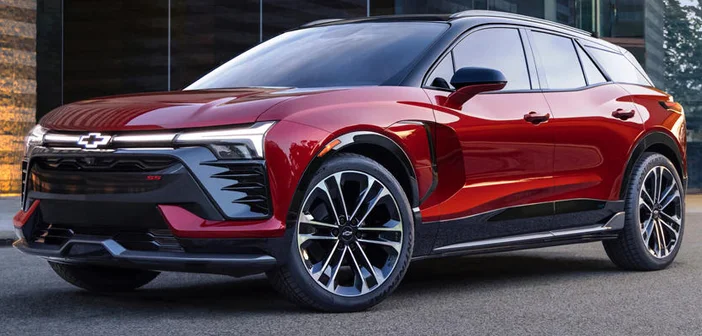
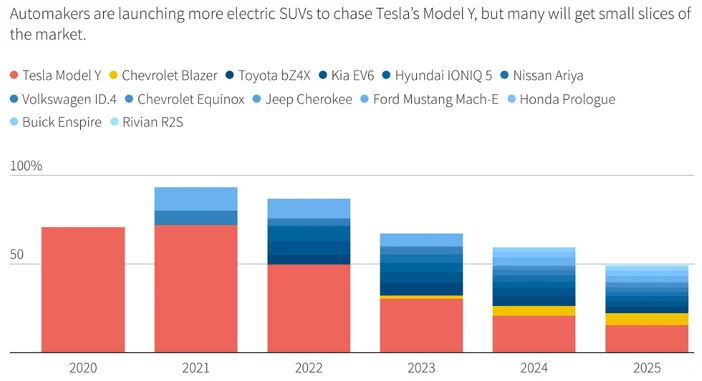
+++ General Motors’ electric CHEVROLET Blazer will be vital to the automaker’s effort to catch Tesla in the U.S. EV market, but by the time it hits showrooms next year it will be fighting a crowd of vehicles to run second in a segment dominated by Tesla’s Model Y. The traffic jam over the next several years in the electric SUV segment could define winners and losers in the U.S. auto market for years to come. The U.S. electric SUV market segment is projected to more than double in size to 2 million vehicles annually by 2026, according to AutoForecast Solutions, which tracks automakers’ future production plans. However, more than 90 models could be competing for very small slices of that pie, AutoForecast Solutions and other analysts said. Tesla’s Model Y is by far the bestselling electric SUV today, and most analysts expect that to remain the case 4 years from now. LMC Automotive predicts that by 2025, the Model Y will account for 15.6% of a segment of 13 vehicles, including Ford’s Mustang Mach-E, the Hyundai Ioniq 5 and Rivian’s future R2S compact SUV. Chevrolet’s Blazer is forecast to be in second place, but with only 6.6% of the segment’s sales. Bank of America analyst John Murphy warned last month in his annual “Car Wars” assessment of future models that automakers risk saturating the market with cross-overs, both electric and conventional. “The profitability of the segment is likely to decline materially over time as competition intensifies”, Murphy wrote. Facing this competitive challenge, Chevrolet dealers will start taking customer reservations for the electric Blazer on July 18, months ahead of the promised Spring 2023 arrival of the vehicles. Brad Sowers, owner of Jim Butler Auto group, which includes 3 Chevrolet stores in Missouri, said customers are already asking about the electric Blazer and the electric Equinox SUV that GM has said will start at $30,000 (about half the price of a Model Y). Sowers expects the Blazer’s price to start at $36,000. “It’s interesting for me because I’m in the Midwest, definitely not the early adopters of anything. But I will tell you that I think people are excited about not just the Blazer but also the Equinox”, Sowers said. GM chief executive Mary Barra is aiming to deliver 400.000 new electric vehicles in North America in 2022 and 2023. Successful launches for the Blazer and the Equinox will be essential to hitting that goal. So far this year, GM is trailing not just Tesla but Ford and Hyundai in the U.S. electric vehicle market. GM’s bestselling EV, the Chevrolet Bolt, was out of production for months because of a battery recall. Production of newer EV models including the GMC Hummer EV, Cadillac Lyriq and electric Chevrolet Silverado pickup is just starting. GM’s decision to start promoting the electric Blazer so far before its launch could help Chevrolet dealers “keep the buzz going” as Ford and other brands rev up sales of new EVs they have today, Chevrolet dealers said. “This is to keep the interest going in the EV space with respect to the Chevrolet brand since we’re really stuck with a vehicle we can’t really sell in the Bolt EV”, said Steve Hurley, managing partner at Stingray Chevrolet in Plant City, Florida, east of Tampa. +++
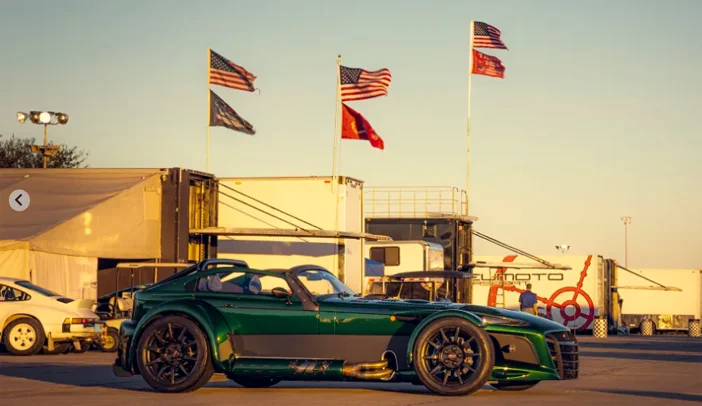
+++ If you’re one of the Americans who’s been waiting patiently for niche car builder DONKERVOORT to come state-side, today is your lucky day. For decades, the Dutch firm has gotten attention from abroad with its extremely quick, bare-bones cars, but thus far they have not been officially available in the U.S. Until Now. Donkervoort has announced that its D8 GTO Individual Series will be the first model to be offered in America. It’s powered by the turbocharged 2.5-liter Audi 5-cylinder found in the RS3. According to Donkervoort, it makes over 400 horsepower, which can push the sub-700 kilo car to 100 kph from a standstill in just 2.7 seconds. To reach 200 kph, it takes as much time as a normal car gets to 100 kph: just 7.7 seconds. If you’re unfamiliar with the brand, here’s a brief history lesson. The company was established in 1978 by a man with the exceedingly fantastic name of Joop Donkervoort. Like many great performance cars, the first Donkervoorts were inspired by the Lotus Seven. Early Donks were powered by Ford engines, but Donkervoort began sourcing them from Audi in the 1990s. The cars have evolved too, with current models resembling what a Lotus Seven might look like if it had continued over the decades. However, Donkervoort insists that its motto of “No Compromise” has been maintained throughout. That means the cars have minimal electronic assistance and weight. It wasn’t even until 2007 that they added a closed roof version. “Inquiries from the U.S. rank second behind only Europe, despite our supercars never being sold there, so we know enthusiasts in the United States are aware of what Donkervoort delivers”, says managing director Denis Donkervoort. To get the cars distributed in the U.S., Donkervoort has partnered with the Bespoke Motor Group. Apparently, it was a long-held dream to get the brand over there, but the company says it wanted to find the right partner that could offer the same level of service and customization. There are already 3 orders on the books. The first 3 cars are being sent to Florida, Colorado and California. Donkervoort says there’s a 2-year waiting list in Europe, but production allocations have been carved out for the U.S. launch, so American buyers won’t have to wait that long. The price: $240,000 not counting options, taxes and fees. +++
+++ FORD and South Korean battery maker SK on Thursday finalized setting up a joint venture for building and operating battery production facilities in the United States. The joint venture, called BlueOval SK, will establish a battery plant for electric vehicles (EV) in Tennessee and 2 other facilities in Kentucky, the U.S. automaker said in a regulatory filing. Both the companies had signed a memorandum of understanding for the JV in May last year. BlueOval SK is expected to produce about 60 gigawatt hours of power annually that could be raised further. Several battery makers have announced plans to invest in the United States, as part of an industry trend to meet the expected growth for EVs and reduce reliance on production in China and cut the related supply chain risks. South Korean battery makers have announced investment plans of $5.5 billion this year in U.S. plants. Ford will contribute up to $6.6 billion in capital to BlueOval SK over a 5-year period ending in 2026, the automaker said. +++
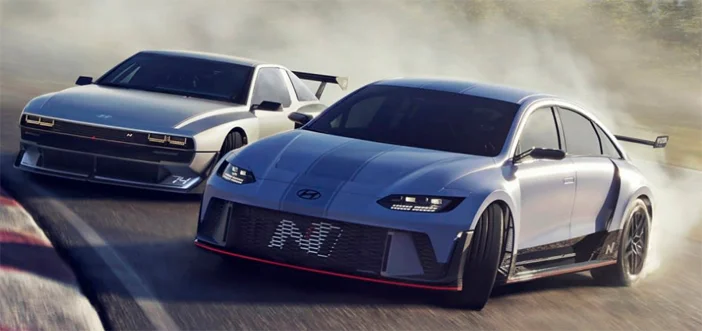
+++ Hot on the heels of HYUNDAI Ioniq 6 details are, well, hot Hyundais. That’s because ‘N-Day’ has arrived, and the company has a couple of concepts to illustrate what the performance division has in mind for the future. It’s all electric, but not purely battery powered. One of them features a hydrogen fuel cell. Notably absent from display is the already confirmed Ioniq 5 N. But Hyundai hasn’t forgotten about it. It will be launched in 2023. In the meantime, let’s check out these Hyundai concepts. Although it very obviously is based on the Ioniq 6, the first of these concepts is called the RN22e. The R stands for “rolling lab”, the N for, well, N; the 22 for this year, and the e for “EV”. It’s a bit awkward, but it also fits in with Hyundai’s naming scheme for its performance prototypes. That Veloster N TCR electric race car prototype was RM20e, the M signifying the mid-engine layout used on it and its internal-combustion predecessors. The body isn’t the only thing shared with the Ioniq 6, though with much wider fenders and a front splitter and rear wing. It features the same type of E-GMP battery and motor platform used by the Ioniq 6, Ioniq 5 and other Hyundai Motor Group products. In fact, the specs line up with the upcoming Kia EV6 GT. It has dual motors making a combined 585 hp and 700 Nm, and it has a 77.4 kWh battery pack. It also has a rear limited-slip differential. In the case of the Hyundai, it’s a dual-clutch unit that allows for torque vectoring. Other Hyundai-specific upgrades include the four-piston brake calipers and even larger 15.75-inch rotors. Hyundai is trying out some interesting technologies on this test car, too. It’s testing to see how it can use regenerative braking to adjust the car’s handling, changing how much is applied front and rear. And since sound and vibration are a big part of current performance cars, Hyundai is experimenting with something called N Sound+, which applies artificial sound and, yes, vibrations through the chassis, to make the car feel more exciting. The N Vision 74 is a far more unusual concept. It has a better name, too. N Vision is pretty self-explanatory. As for the 74 part, it’s a reference to the 1974 Hyundai Pony Coupe concept designed by Giorgetto Giugiaro, which is the inspiration for this car’s design. It shares the same basic shape with crisp lines and sharp corners. But it gets the pixel-style lights from Ioniq models and extensive aerodynamic modifications, not to mention huge overfenders. Propulsion comes via 2 electric motors at the back, one for the left and the other for the right. This enables advanced torque vectoring. Total output is more than 670 hp and 900 Nm. Energy is stored in 2 ways. It has a 62.4-kWh battery pack, which would allow for quite a bit of battery range. But if that’s not enough, there’s also a 4.2-kg hydrogen fuel tank with an 85 kW fuel-cell stack for generating electricity. It would also allow for quick refueling, instead of relying on plug-in charging, though it seems either would be allowed. Hyundai estimates total range for the N Vision 74 would be more than 600 km. Hyundai didn’t say anything about either of these cars seeing any kind of production. They’re mainly for testing future technologies that could appear in future models. It seems to us that the RM22e has more features that could appear soon, maybe even as early as the Ionq 5 N next year. And it would certainly seem possible for an Ioniq 6 N to appear sometime after the 5. The 74 seems like a long shot, but perhaps the powertrain could appear in the future. If not the hydrogen powertrain, possibly the fancy dual-rear motor setup. We’ll be very curious what comes of these prototypes. +++
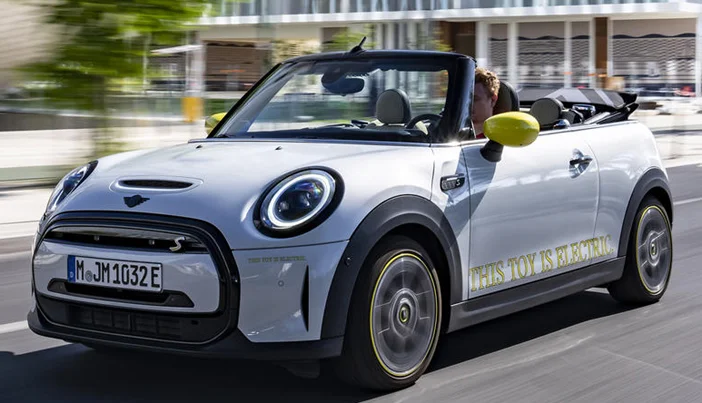
+++ BMW has built a one-off pure-electric version of the current MINI Convertible to test the market for a potential next-generation model. According to the company, “the one-off Mini Electric Convertible is a prototype, to test the waters of emission-free, open-top driving with Mini”. The prototype uses the current Cooper S Convertible upper structure but is based on the powertrain components of the Mini Electric and was built in Munich. This means that the prototype Mini Electric Convertible has a 184 hp electric motor and a range of up to 230 km (WLTP), which is the same as the production Mini Electric. And that’s despite this convertible weighing 140 kg more than an automatic combustion-engined Cooper S convertible. The boot capacity remains unchanged at 160 litres. Despite these encouraging numbers, BMW says the current Mini Convertible will not be electrified. All the company will say on the record is that there will be a new convertible model: “We have announced that the Mini Convertible is to receive a successor, but it is too early to speak about the engine portfolio of an upcoming replacement for the current Mini Convertible”. However, BMW sources told that a production electric convertible is entirely on the cards as a sibling to the upcoming new-generation Mini hatchback EV, which is being built on a bespoke platform as part of a joint venture with Chinese car maker Great Wall. The new electric Mini, which is at least 18 months away, will come as a 3-door model as standard, making it the ideal basis for a convertible model. The wheelbase of this 3-door architecture is also 40 mm longer than today’s car, which should improve the ride as well as noticeably increase space in the rear. This stretch also means that any production Mini Convertible would have a significantly bigger battery than this one-off prototype. The EV platform has allowed the current Mini’s long front overhang to be significantly reduced while passing future crash tests. The future electric convertible will have a bigger battery, with the equivalent Cooper model getting a 40 kWh battery. Any Cooper S convertible could get a battery as big as 50 kWh and a real-world range of 400 km or so, as well as very strong performance. Officially, BMW sources would not divulge any more detail about this fourth-generation Mini derivative, although Autointernationaal.nl has learnt that a number of the classic Mini design cues will be dropped on the next-generation model, including the clamshell bonnet that has featured since BMW relaunched the brand in 2001. One source told that the large bonnet pressing was expensive to produce as well necessitating the inclusion of the substantial chrome rings around the Mini’s headlights, which are an essential part of the lamp-bonnet alignment set-up. With Mini design chief Oliver Heilmer moving to reduce the complexity of the fourth-generation Mini’s exterior and interior design, the removal of the clamshell bonnet not only saves money and speeds up construction time, but it also allows the chrome headlight bezels to be ditched. The bezels around the rear lights will also be dropped for the fourth-generation design, as will the distinctive separate panel in front of the Mini’s front doors. Even though the 3-door Mini EV and Mini ICE hatchbacks are based on entirely different architectures, they will both share the stripped-back interior that has been developed under Heilmer. Sources say the Mini’s circular speedo will survive as a touchscreen and other switchgear will be significantly reduced, including the axing of the BMW-style circular controller. +++
+++ TESLA top artificial intelligence executive and a key figure behind its driver-assistance system Autopilot is leaving the electric-car maker after a months-long sabbatical. Andrej Karpathy, who joined Tesla in 2017, announced his departure in a series of tweets Wednesday. He was senior director of AI and led the Autopilot computer-vision team that’s tried for years to render the company’s cars capable of driving autonomously. “It’s been a great pleasure to help Tesla towards its goals over the last five years and a difficult decision to part ways”, Karpathy wrote. “In that time, Autopilot graduated from lane keeping to city streets and I look forward to seeing the exceptionally strong Autopilot team continue that momentum”. The departure adds to a long line of turnover atop the Autopilot group, which has struggled to realize Elon Musk’s autonomous ambitions. The chief executive officer raised billions of dollars in 2019 after telling Wall Street Tesla would have 1 million robotaxis on the road the following year. The shared network of driverless cars Musk described still doesn’t exist, and the systems Tesla markets as Autopilot and Full Self-Driving, or FSD, require fully attentive drivers to keep their hands on the wheel. The departure of Karpathy, 35, may reflect challenges Tesla is having with FSD and robotaxis, according to Dan Levy, a Credit Suisse analyst with the equivalent of a buy rating on the shares. “We continue to view Tesla efforts in AV/robotaxi as ‘show me’ ”, Levy wrote in a note to clients. Musk announced Karpathy was on a roughly 4-month sabbatical in March, and Karpathy tweeted at that time he was looking forward to returning to Tesla. After Karpathy wrote Wednesday he decided to leave the company, Musk replied with thanks and praise. Karpathy said he had “no concrete plans” for his next act but would revisit “long-term passions around technical work in AI, open source and education”. Autopilot has come under intensifying scrutiny from U.S. regulators. Last month, the National Highway Traffic Safety Administration escalated one of its investigations into whether the system is defective and revealed it had reviewed almost 200 crashes involving vehicles using the technology. NHTSA’s other defect probe relates to vehicles equipped with Autopilot features suddenly braking at high speeds. The change in Tesla’s executive ranks also follows a move to scale back part of the Autopilot group. Last month, Tesla laid off roughly 200 data-annotation workers and closed an office in San Mateo, California. A year ago, Musk said responsibility for Autopilot was shared by Karpathy, Ashok Elluswamy and Milan Kovac, describing the group’s leadership as a “knights of the round table” structure. +++
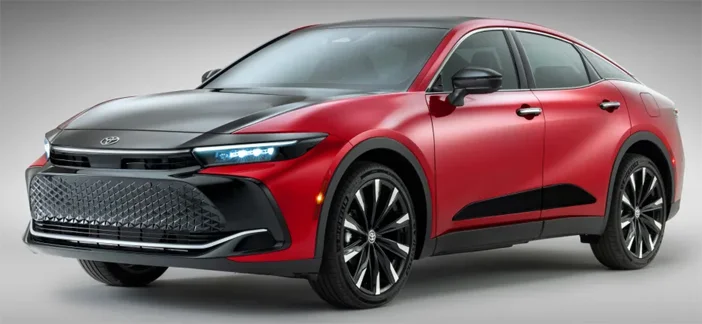
+++ This is the new TOYOTA Crown, returning unrecognizable after a long hiatus from American shores. The Crown debuted in Japan in 1955, making it Toyota’s oldest passenger car name. Akin to a Japanese E-Class, over the Crown’s 15 continuous generations in its homeland it’s known for launching new technology to Toyota’s range, as a chauffeured ride for potentates, and for being a taxi. Toyota sold it in the U.S. from 1958 to 1972. The closest we’ve been to it since then was the Lexus GS, which used Crown platforms and powertrains. This 16th generation of the Crown continues the model’s penchant for novelties, first among them being 3 new bodystyles in Japan: A wagon, an SUV, and a high-riding sedan that join the latest version of the standard sedan. Americans will get one of them: the elevated sedan. A few years ago, a wave of new vehicles came with the disclaimer, “It looks better in person”. The 2023 Crown tips its hat to that era. Standing next to it in the studio, it looks like a crossover. In fact, its form would hit the bullseye as an electric crossover, another of the shapely, lifted lozenges balancing the dictates of aerodynamics, packaging, and market tastes. The Crown even has a flat underfloor, the grubby bits from the front bumper to the rear suspension hidden behind aero panels. But it’s not electric. And when we asked Toyota if it’s conceivable that there could be an electric Crown, we were told the automaker has no plans to combine electric drivetrains with the Crown’s TNGA-K platform in the U.S. Before we dive under the hood, let’s get some comparisons out of the way. First, since this is effectively the replacement for the Toyota Avalon, Toyota sized it like the Avalon. The Crown’s about 5 cm shorter than the soon-to-retire sedan, width and wheelbase less than 1 cm apart between the 2 cars. Roof height and the all-important hip point (for that commanding seating position that sells cars in the U.S.) are all 10 cm higher than the Avalon. Second, some might wonder how this isn’t a cross-town reboot of the Honda Accord Crosstour. This a full-sized sedan billed as premium, the Crosstour was a mass-market midsized sedan. The Crosstour started at about $29,000, the Crown will be appreciably more expensive. And although the Toyota looks like a liftback, it has a trunk, unlike the Honda. Substantive differences in experience, yes. Superficially, I wouldn’t fault anyone for summarizing, “So it’s a larger, nicer Crosstour with a trunk”. There will be three trims, XLE, Limited and Platinum. The XLE and Limited ride on 19-inch wheels, the Platinum comes on an exclusive set of 21-inchers. An Advanced Technology package for the Limited can get that middle trim on its own 21-inch rims. The Platinum is also the only trim that offers a bi-tone paint job, combining black down the middle and 1 of 5 colors on the sides. Every Crown here will be an all-wheeldrive hybrid. The XLE and Limited will come with Toyota’s Hybrid System, the same we’re familiar with from several other Toyota models but with upgrades like a high-output nickel/metal battery. A naturally aspirated 2.5-liter 4-cylinder gets help from 2 electric motors, sending its power to the front wheels through a continuously variable transmission. The E-Four AWD system is on-demand, using an electric motor to drive the rear axle. Torque split ranges from 100% in front to 20:80 front-to-rear. Combined system output is 236 hp; 18 hp more than the RAV4 Hybrid. This one can drive on battery power alone, but only at low speeds and for short distances: think parking lots and pulling into the gated community after a night out. Otherwise, it’s Normal, Sport, and Eco. The Platinum comes with an all-new Hybrid Max drivetrain tuned for performance. A 2.4-liter turbocharged 4-cylinder and a water-cooled rear motor increase combined output to 340 hp. Instead of a CVT, a 6-speed automatic with multi-plate wet clutch instead of a torque converter improves the dynamism, an e-motor in that transmission filling in power dips during shifting. The E-Four Advanced system provides constant all-wheel drive, the front axle maxing out at 70% of drive torque. The torque split can go 20:80 the other way, as with the plain E-Four AWD, but given the increased output, there’s a lot more action being sent rearward. The drivetrain adds three more modes, Sport+, Comfort, and Custom. MacPherson struts in front work with a new multilink suspension in the rear. On the Platinum, and adaptive variable suspension is dialed in to minimize pitch and roll. Inside, the XLE comes with black fabric weave, the Limited with Softex in either black, chestnut, or macadamia, the Platinum with black leather. All trims get a 12.3 inch driver’s display and a 12.3 inch infotainment screen running Toyota’s latest software, meaning boons like OTA updates and wireless Apple CarPlay and Android Auto. Since Toyota has Lexus to protect, the premium cabin I experienced in the Crown Platinum does the best it can with various black materials and a touch of contrasting trim. I suspect the greater part of premium perception will be the dynamic experience, the automaker saying it took pains to diminish noise, vibration, and harshness. We were told that instead of spotlighting a decibel level, engineers paired sound deadening and design details to create a “calm atmosphere conducive to enjoying easy conversation or hearing music in cleaner detail”. For instance, the steering gear has been mounted differently so as to provide better steering feel and less vibration, and every Crown gets acoustic glass. All 3 trims come with dual-zone climate control and heated, eight-way power front seats. Limited and Platinum add ventilation to the front thrones and heating to the rears. The XLE makes do with a base, 6-speaker audio system, the Limited and Platinum get 11-speaker JBL audio. On the Limited, opting for the Advanced Technology package that bolts on those 21-inch wheels also throws in Toyota’s Bird’s Eye View Camera with Perimeter Scan. The all-seeing cameras are standard on Platinum, as is the Advanced Park System that can slot the Crown into an empty space. Every trim also comes with Toyota Safety Sense 3.0, including driver aids like blind spot monitor and Dynamic Radar Cruise Control. Improved sensors will mean better behavior from the lane assist. Toyota isn’t ready to say anything about price, but it’s clear this one’s gonna be spendy. The 2022 Avalon XLE Hybrid starts at $38,920 after destination. We would not be surprised at a range of $43,000 to $50,000 across the lineup when the Crown begins arriving at dealers before the year is out. +++