
+++ AUDI has kicked off construction of its first electric vehicle-only plant in China, as part of the German premium carmaker’s latest efforts to explore the burgeoning EV segment in the world’s largest vehicle market. The plant, located in Changchun, is set to be completed by the end of 2024. It is designed to produce more than 150.000 vehicles a year based on the PPE platform that Audi has developed with Porsche, another premium brand of the Volkswagen Group. Changchun is one of the largest automotive cities in China, where FAW is headquartered. Audi has been producing models for the Chinese market in FAW-Volkswagen plants since 1988, and many suppliers for the new plant are located in and around the city. “We are bringing the Premium Platform Electric (in short: PPE) to China. This means, electric Audi models, from China for China”, said Markus Duesmann, chairman of Audi’s board of management. The first models expected to roll off the assembly line include the A6 e-Tron and the Q6 e-Tron, said Duesmann, who is also responsible for the carmaker’s China business. The plant is owned by Audi’s joint venture with China FAW Group. Called Audi FAW NEV Company, it is the first Chinese joint venture in which Audi holds a majority stake. Audi said it is investing around 2.6 billion euros in the overall project, including the creation of the joint venture and construction of the manufacturing facility. “Audi has a clear road map for the electric future. And the Audi FAW NEV Company is an important part of our strategy for China”, said Duesmann. A total of 20 buildings will be finished on the site by the end of this year, said the carmaker. The technical crews housed at the site will cover the entire value chain needed for automotive manufacturing. There will also be a battery assembly facility, where Audi will manufacture high-voltage batteries used in China-specific PPE models, it said. Audi China president Jürgen Unser called the new joint venture an important part of the German carmaker’s new growth strategy in China, its largest market globally. “In the years to come, we want to put an even stronger emphasis on China. The goal of our new strategy is ’to make Audi in China even more Chinese’ “, he said. He said one of the major efforts is to intensify localization in terms of both production and research and development. “We will increase our R&D budget spending, we will hire new talents especially for connectivity and electronics development, and we will invest heavily in new technologies”, said Unser. Helmut Stettner, CEO of the new joint venture, is confident about their prospects. “We are bringing together Audi’s knowhow from over a century of automotive history and the comprehensive expertise of our long-standing Chinese partner FAW in a new, ultramodern company with a production site”, he said. Audi is one of many international carmakers that are stepping up efforts to seize opportunities in China’s new energy vehicle market. China has the world’s largest market for electric cars and plug-in hybrids since it overtook the United States in 2015. The China Passenger Car Association estimated that NEV sales in June may exceed a record 500.000 units. A total of 1.72 million NEVs were sold in the first 5 months; up 119.5 percent from the same period of 2021. Yet so far, the market is dominated by local brands. Of the 15 most popular NEV carmakers from January to May, only 3 were international brands. Tesla ranked third and Volkswagen’s 2 joint ventures (FAW-Volkswagen and SAIC Volkswagen) occupied the 14th and 15th place. Combined, they had a 10.4 percent share of the market. Analysts said local Chinese brands moved earlier in the NEV era. Their agility and speed in production and offerings as well as their better understanding of local tech-savvy customers have helped their sales. In the first 5 months, NEVs accounted for 19 percent of the total sales of internationally branded premium vehicles in the Chinese market. While the proportion was 45 percent when it comes to Chinese marques. The vast potential has attracted Audi as well as its rivals BMW and Mercedes-Benz to hasten efforts to electrify their product lineups in the country. Audi said it will offer 5 China-made electric models in the Chinese market by 2025. The carmaker estimated that NEVs will account for more than half the total premium vehicle sales in China by 2030. +++
+++ In CHINA , General Motors (GM) sold 484.000 vehicles in the second quarter of this year, down 36 percent year-on-year. Sales of every of GM’s 5 brands in China (its largest exportmarket) registered double-digit declines in the quarter despite the fact that the sales began recovering in May. The Detroit automaker reported Friday a 15-percent year-on-year decline in its US sales in the second quarter. Nevertheless, the automaker’s US sales of 582.401 surpassed its sales in China in the second quarter. Ford announced that it sold 483.688 vehicles in the second quarter and 152,262 in June at home, up 1.8 percent and 31.5 percent year-on-year, respectively. Despite all the headwinds, Ford outperformed the industry in June, when overall industry sales were down 11 percent, the Dearborn-based automaker said. Ford’s total US share in June expanded to 12.9 percent, as the market demand for GM new vehicles remained strong. Ford’s electric vehicles sales jumped 76.6 percent from a year ago, totaling 4.353 units for June. Ford ended June with 297.000 units of gross stock, up from about 236.000 at the end of May. The automaker’s average transaction price rose $1,900 per vehicle in June from May, lifting average transaction prices for Ford and Lincoln vehicles to $52,200. For other automakers, Toyota’s US sales dropped 18 percent year-on-year in June. Honda’s second quarter sales in the United States fell 51 percent year-on-year. Hyundai reported a 23 percent sales drop in US sales in the second quarter. +++
+++ GENERAL MOTORS , the largest carmaker in the United States, is expanding investment in China, showcasing its confidence in the long-term growth of the world’s largest automobile market. The carmaker signed an agreement on Thursday with Shanghai Pudong New Area with an intended investment of $100 million for GM’s premium import business. Julian Blissett, president of GM China, said: “The latest agreement demonstrates GM’s long-term confidence in the Chinese market, and will address evolving demand in the niche market and complement GM’s locally produced model and brand lineup”. The new premium import business, tailored for China, will present a collection of iconic GM products, ranging from full-size SUVs and pickup trucks to performance cars, powered by both petrol and electricity. GM will officially launch the business in the third quarter. According to the China Passenger Car Association, the number of Chinese imported vehicles declined by 10 percent every year from 2017 to 2020. Last year, imported vehicles maintained the same volume as 2020 due to the chip shortage. In the first 5 months of this year, China imported 400.000 vehicles; down 7 percent year-on-year. Although the overall imported vehicle volume continued to decline, the premium sector posted growth, Blissett said, and with four years of experience participating in the China International Import Expo, GM found that the premium imported vehicles showcased at the CIIE attracted a great deal of attention, which makes him believe the import business was created at the right moment. The new business plan follows a series of investments GM China made in facilities and cooperation. Last year, the carmaker expanded the GM China Advanced Design Center in Pudong area in Shanghai and reached an agreement with Chinese startup Momenta for a $300 million investment to develop autonomous driving technology. Blissett said that the Chinese electric vehicle market has shown such strong growth in recent years that GM increased investment in electrification. It launched China’s first Ultium Center in Pudong to assemble battery packs for GM’s growing number of new energy vehicles for the domestic market. GM launched the Cadillac Lyriq for Chinese customers in 2021, which is the first model based on GM’s EV platform Ultium. The carmaker plans to launch more than 30 EVs worldwide based on the Ultium platform by 2025, and more than 20 of them will hit the Chinese market. By that time, GM is expected to have produced 1 million EVs in China. In addition to Ultium, GM’s joint venture in China (SAIC GM Wuling) launched the GSEV platform to produce small all-electric models. One of the best-selling EV models in China, the Wuling Honguang Mini, is produced on the platform. The upcoming premium import business will also enhance GM’s electrification layout in China, Blissett added. +++
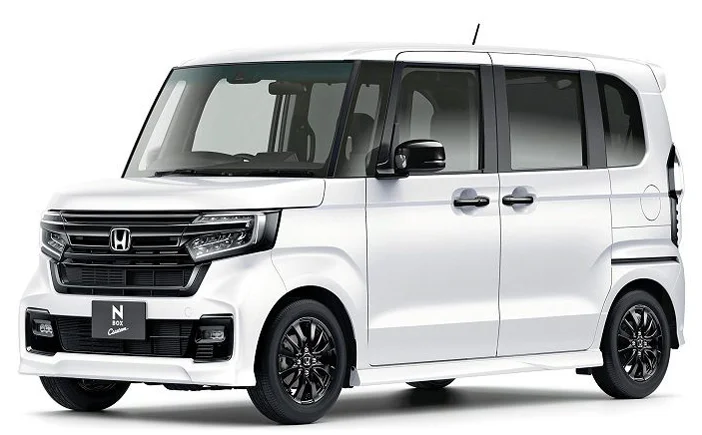
+++ HONDA ’s N-Box minicar was the topselling new vehicle in Japan during the January-June period, taking the top spot for the first time in 2 years on a first-half basis, industry data showed. The model sold 103.948 units in the first half of 2022, down by 6% from the same period last year, according to the data, released by the Japan Automobile Dealers Association and the Japan Light Motor Vehicle and Motorcycle Association. Following its partial remodeling in December 2021, the N-Box has maintained upbeat sales. Its production, forced to be reduced due to the Covid-19 lockdown in Shanghai and a semiconductor shortage, has now returned to normal since the lockdown was lifted in early June. N-Box sales rose to 15.149 units in June; up 75.5% from the previous month. Toyota’s Yaris, which had topped the list in the first half of 2021, placed second with sales of 81.580 units, down 31.5% year on year. Toyota’s Corolla took third place with sales of 70.988; a 31.8% increase from the previous year. Toyota added a Cross version its Corolla series in September 2021. +++
+++ In JAPAN , automakers’ drive to tap the potentially lucrative electric vehicle market has swung into full gear as they are eager not to miss out on the global shift to electrification. Along with storage battery development, Japanese companies are exercising ingenuity in crafting sales strategies. But with no clear outlook on how much the Japanese market will expand after falling far behind the U.S., European and Chinese markets, they are struggling to find a path to success in “an era where no one knows the right answer,” as one senior Toyota official put it. In May, Japanese industry leader Toyota released the BZ4X electric SUV, its first mass-produced EV model, in Japan. The BZ4X is available only under a subscription system, reflecting Toyota’s aim of alleviating drivers’ concerns, primarily over battery degradation, by setting fixed monthly fees including maintenance expenses. Terminal values for EVs, which indicate their future value, tend to be assessed relatively low, probably due to stringent appraisals to reflect the expected degradation of batteries. The lower terminal values mean a need for more loans to finance EV purchases as well as adverse effects on trade-in prices for the vehicles. The factor has been singled out as a psychological impediment to new EV purchases and thus as a roadblock to wider use of EVs in Japan. “We should take on risks regarding trade-in prices, a major source of worry for drivers, and battery degradation,” said Shinya Kotera, president of Kinto, which operates subscription services for Toyota models. The new Fiat-brand EV released in April by Stellantis, is also limited to lease contracts, including subscriptions, in Japan. Setting EV prices is another major challenge for Japanese automakers. Increasing the mileage per charge and winning the attention of drivers in Japan would push up storage battery costs, conflicting with any attempt to lower EV prices to put the vehicles into wider use. Torn between the incompatible demands, in the early phase of EV market development in Japan, automakers chose to focus on luxury models, introducing high-priced, high-margin models for popular SUVs and billing them as their flagship EVs. The reference price for Toyota’s BZ4X starts at ¥6 million, while the lowest price for Subaru’s Solterra, which was co-developed with Toyota and shares the chassis with the BZ4X, is ¥5.94 million. Both are priced higher than similar SUV models from other companies. Nissan Motor released the Ariya, an electric SUV, in May with a price range from ¥5.39 million. The model features a high-quality interior and is equipped with newest driving assistance technologies, aiming to attract customers seeking an upscale touch. Hyundai started accepting orders for the Ioniq 5 electric SUV in Japan in May. With the minimum price set at ¥4.79 million, the Ioniq 5 is available only via the company’s online channel. The automotive industry is seen to be in a once-in-a-century period of transformation due to the spread of auto sharing and young people’s lack of interest in owning or driving vehicles. Manufacturers are unlikely to survive the tough times unless they think outside the box in working out sales strategies. Toyota, which decided to use the subscription channel, started out by bracing for trial and error. “We never know how the new business will develop until after we take a shot”, executive vice president Masahiko Maeda said. +++
+++ Carmakers are investing in online sales and marketing but a recent survey of Chinese car owners finds that KICKING THE TIRES and getting their hands on the wheel are becoming increasingly important for car purchase decisions. Those who made up their mind during the test drive process accounted for 21 percent of car owners polled, up from 15 percent in 2021, said J.D. Power China on Thursday. In comparison, the percentages of car buyers who made their decisions in other steps were smaller compared with last year’s findings. The findings this year were based on responses from 25.154 vehicle owners in 70 Chinese cities who purchased their new vehicle between June 2021 and February 2022. The annual study measures customer satisfaction with the purchase experience among new vehicle buyers as well as among rejecters, defined as those who seriously consider a brand but ultimately purchase another. Buyer satisfaction is based on 7 measures: online experience, communication before visit, reception, showroom visit, test drive, deal and delivery. Rejecter satisfaction is based on similar measures, with deal and delivery replaced with negotiation. The J.D. Power China study shows that of the top reasons for giving up a model, the driving experience not being as good as expected during the test drive is highest, confirming the importance of the test drive during the sales process. “Currently, consumers in China who visit a dealership spend a lot of time experiencing and verifying products by themselves instead of receiving information from salespeople”, said Ann Xie, head of digital retail consulting practice at J.D.Power China. “Brands need to change based on the needs of their customers, including the upgrade of the existing test drive, as well as improving the process and experience of scheduling a test drive online”. The J.D. Power China study shows luxury brands led the market again this year, scoring 759 on a .,000-point scale; 9 points higher than in the mass market segment. Of them, Porsche sat atop the list of premium carmakers with a score of 768. Audi followed with 765. BMW and Cadillac ranked third in a tie, both with a score of 759. Of volume brands, SAIC-GM-Buick and GAC Honda had the highest score, each earning 759. FAW Hongqi and GAC Toyota ranked third in a tie, each with a score of 756. FAW Hongqi had the highest among Chinese brands. It was followed by Changan, Chery and GAC Trumpchi, each of them scoring 749. J.D. Power China said among the measures that comprised this study, luxury brands scored most in test-driving while for volume brands it was the delivery process. The survey also finds that those who visit dealerships because of their affinity with the marque are quicker decision-makers, with 42.9 percent of them inking the deal within one week of their visit. Another interesting finding is that those who are buying their second or third vehicles are different from first-time buyers. They are more concerned about brands but they are more likely to ask for bargains, according to the J.D.Power China survey. +++
+++ Chinese electric car startup NIO said it is planning to build 4.000 battery-swap stations across the globe by 2025. It has over 1.000 such stations across the country, of which 256 are along expressways, said the Nasdaq-listed carmaker. Usually, it takes car owners less than 5 minutes to get their empty batteries swapped for new ones, said Nio. Nio statistics show that battery-swap is becoming the predominant way for its car owners, with over 52 percent of its car owners in June relying on the service instead of charging to extend the mileages of their vehicles. The startup said Nio owners have swapped 10 million batteries at its stations, and 75 percent of these owners have used the service at least once. Besides Nio, carmakers including BAIC as well as battery maker CATL are exploring the segment as well. Dozens of models are now capable of battery-swap. Their combined sales in the first 4 months this year reached 42.000 units; up 54 percent year-on-year, according to battery website GG-LB. There were 1.519 battery swapping stations across the country by the end of May, according to the China Electric Vehicle Charging Infrastructure Promotion Alliance. Analysts at Founder Securities estimate that there will be 3.2 million battery-swap cars across the country by 2025, with more than 28.000 power stations. +++
+++ China’s major carmaker SAIC MOTOR sold 381.000 vehicles overseas in the first half of 2022; up 47.7 percent from the same period last year, the company said Thursday. Despite Covid-19, the overseas sales of the Shanghai-based carmaker went up 59.4 percent year-on-year to 84.000 units in June. Its target is to sell 800.000 vehicles overseas this year. From January to June, SAIC Motor sold more than 2.23 million vehicles, close to the sales of the same period in 2021. The carmaker said it will continue cooperating with upstream and downstream partners in the industrial chain to speed up its production and sales in the second half of 2022. Since the beginning of this year, the Covid-19 epidemic has impacted auto bases of Changchun, Shanghai and cities in Guangdong and Hubei provinces. Local authorities have actively responded to the impact of the epidemic, helping auto producers resume production, develop new-energy vehicles, and boost automobile exports. +++
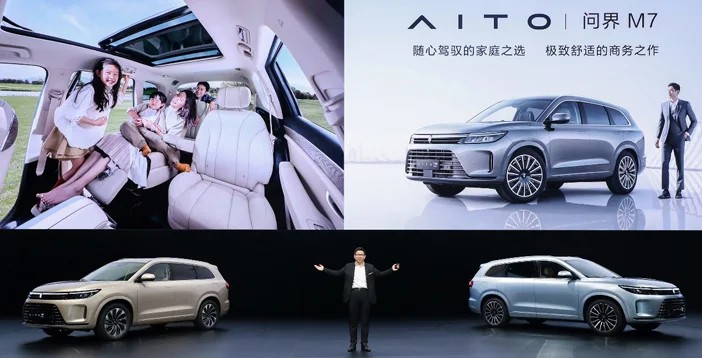
+++ Huawei Technologies unveiled its latest electric car Aito M7 co-developed with Chinese carmaker SERES , as the Chinese tech heavyweight extends its reach into the auto industry. The Aito M7 is a 6-seat luxury large electric SUV, jointly designed by Seres and Huawei. Yu Chengdong, CEO of Huawei’s device business group and its intelligent vehicle solutions business unit, said Aito has become the fastest-growing smart electric vehicle brand. The cumulative sales of the Aito M5, which was unveiled in December, exceeded 10.000 units on the 87th day of its launch, and so far 11.296 units have been delivered. Yu said Aito’s charging network now covers more than 300 cities, and by the end of the year consumers will be able to test drive Aito cars in more than 1.000 Huawei retail stores. Chongqing-based carmaker Sokon Group said it will have long-term and sustainable cooperation with Huawei as the 2 companies join hands to explore the booming New Energy Vehicle (NEV) segment. Zhang Xinghai, chairman of the group, made the remarks when the 2 companies unveiled the electric Aito M7. As said, the model was the result of cooperation between Huawei and Sokon’s subsidiary Seres. “We have just started our cooperation, which will be deep, long-term and sustainable”, said Zhang. He said the partnership has allowed the 2 companies to bring into full play their respective strength. “Huawei is leading in smart technology and Seres has over 2 years of experience in car manufacturing”, he said. “Our cooperation has been very efficient and we will roll out more models”. said Zhang. Sokon has been shifting towards electrification. The company sold 45.622 NEVs in the first 6 months this year; up 204.5 percent from the same period last year. +++
+++ In the UNITED STATES , new vehicle sales more than 21% in the second quarter compared with a year ago as the global semiconductor shortage continued to cause production problems for the industry. Yet demand still outstripped supply from April through June, even with $5 per gallon gasoline, high inflation and rising interest rates. The low supply has raised prices to record levels, knocking many consumers out of the new-vehicle market. Automakers sold 3.49 million vehicles during the quarter; nearly 933.000 fewer than the same period last year. J.D. Power estimates that the average sales price of a new vehicle for the first 6 months of the year hit nearly $45,000; a record that is 17.5% higher than a year ago. Of the consumers who financed a new vehicle in June, 12.7% had monthly payments of $1.000 or more. At General Motors, which reported a 15% sales drop, shortages of chips and other parts forced the company to build 95.000 vehicles without one part or another. The incomplete vehicles are expected to be finished and sold by the end of the year. Jack Hollis, head of Toyota sales in North America, said the chip shortage didn’t improve as much as the company expected in the first half of the year, and he doesn’t see it getting much better until next summer. “Every microchip producer is producing at maximum speed because they have maximum demand”, Hollis said. “There is no catching up going on. It’s actually falling behind”. Toyota sales were down 19% for the first half of the year and they fell 18% in June. That allowed GM to pass the Japanese company and retake the crown as the top-selling automaker in the U.S., a title GM lost last year. Stellantis, formerly Fiat Chrysler, posted a 16% sales decline. Honda’s second-quarter sales fell by more than half, with the company blaming “severe” supply chain issues. Nissan sales dropped nearly 39% for the quarter and Hyundai posted a 23% sales dip. Edmunds predicted that nearly 3.5 million new vehicles were sold last quarter in the U.S.; 20.8% fewer than the same period a year ago. It expects inventory shortages to continue for the foreseeable future, frustrating auto buyers. “The majority of consumers who are purchasing vehicles in these conditions are either in a financial position where money is less of a consideration or are doing so out of absolute necessity”, said Edmunds analyst Jessica Caldwell. Toyota’s Hollis said that demand remains exceptionally strong, especially for more efficient gas-electric hybrid vehicles, and the company’s electric vehicle, the BZ4X. Hybrids and plug-ins accounted for about 27% of Toyota’s sales in June, following a rising trend, he said. But supply problems are limiting inventory and sales, Hollis said. The company started June with 9.000 vehicles on dealer lots and ended the month with about 8.500, he said. Vehicles are being sold within 36 hours of arriving at dealers. Hyundai announced that it would stop selling its Accent and Veloster small cars in the U.S., furthering the trend of automakers cutting car models as SUVs have become America’s favorite body style. Randy Parker, head of sales for Hyundai, said he expects the chip shortage to gradually get better this year, predicting a 30% production increase over last year. The company’s main electric vehicle, the Ioniq 5, is selling strong, with nearly 7.500 delivered in the second quarter, Parker said. But smaller, fuel-efficient gasoline vehicles don’t appear to be faring as well. Hyundai’s Elantra compact car saw a 44% sales drop during the quarter, but is sales were halted for a time due to a safety recall issue. Honda’s Civic sales fell 54% during the first half, and Toyota’s Corolla compact car sales dropped 25% from January through June. Honda’s sales plunged 50.7% to 239.789 units, with its popular CR-V suffering a 51.4% tumble. Nissan’s sales slumped 38.6% to 183,171 units, with sales of its Rogue (X-Trail in Europe) down 55.6%. Until last year, semiconductor shortages had been dealing a heavier blow to U.S. automakers than to their Japanese rivals. But sales drops were milder at U.S. manufacturers recently. “U.S. automakers are storing unfinished cars so that they can be completed and sold soon after necessary parts are procured”, an industry official pointed out. +++