
+++ The entry by Volkswagen brands AUDI and Porsche into Formula 1 has been one of motorsport’s worst kept secrets, with both car companies yet to officially announce their plans. But amid growing indications that confirmation of their intentions for 2026 is now imminent, Audi may be the first to reveal its plans and could do so as early as this weekend’s Belgian Grand Prix. After months of discussions to sort out a partner team, it is understood that an agreement is now in place between Audi and the Sauber team, which currently competes under the Alfa Romeo moniker. Audi had originally negotiated with McLaren about a takeover of team shares, having been initially put in touch with the team and its owners through former McLaren F1 racer Gerhard Berger. “I established the contact with McLaren”, said the DTM boss. “McLaren would have been a candidate as a partner for Audi in Formula 1”. But the talks between McLaren’s owners, the Bahrain sovereign wealth fund Mumtalakat, and Audi ultimately came to nothing. In the end, Sauber emerged as the preferred candidate following an evaluation of Aston Martin and Williams. Discussions have now advanced with Sauber, after its owner Finn Rausing previously rejected an offer from Michael Andretti to sell the team for 350 million euro at the end of 2021. It was suggested that Rausing insisted on the continued existence of the Sauber Group at the Hinwil site and the preservation of jobs, and also demanded a further 250 million euro as a contribution to the team in order to be sure the team was in safe hands. In the end, Andretti walked away because of terms it could not accept. With Audi, Sauber is getting a strong partner who, according to sources, is prepared to pay more than Andretti for a smaller percentage of the company. Rausing is set to remain on board as a minority owner. There is also the promise to further develop Sauber as a factory team, very similar to how the Sauber-BMW partnership worked between 2006 and 2009. It’s interesting to note that current Audi CEO Markus Duesmann, who has pushed the brand’s F1 entry, was head of development at the BMW-Sauber team between 2007 and 2009 and still knows the Hinwil operation from back then. The plan includes continuing to build the chassis in Hinwil, where one of F1’s most modern wind tunnels is still located. The powertrain is to be created at Audi’s site in Neuburg and thus developed and produced on German soil. This is unlike VW Group sister company Porsche, which will develop large parts of its engine at Red Bull’s Milton Keynes powertrains division. Like Porsche, Audi is to set up a new company for its F1 project. There are suggestions that Adam Baker, whom Audi hired at the end of 2021 for “special tasks”, is set for a managing director role. Baker previously worked at BMW, where he first met Duesmann, and at the FIA. Another obvious candidate for the post would have been the current head of sport Julius Seebach, who as CEO of Audi Sport is more experienced in higher management than Baker. However, it is understood that Seebach is about to be replaced and has been linked with a newly created position in Audi’s development department. While Audi’s plans are making good progress, a public announcement about Red Bull and Porsche’s tie-up has not happened as quickly as some had anticipated. For weeks, it was explained that delays in finalising the 2026 engine rules were cited as the reason that neither car company wanted to commit until they were sure about the regulations. Red Bull motorsport advisor Helmut Marko told at the Hungarian GP: “VW’s board decision is that if the technical regulations meet the criteria, then they have the mandate to go into Formula 1. Purely formally, however, these new regulations do not yet exist. The FIA president is supposedly going to put it to the vote in an email ballot soon. Only then will it officially start”. The engine rules were subsequently signed off on 16 August, but there is still no indication of when an official communication from Red Bull and Porsche will be made. However, a recent document published by anti-cartel authorities in Morocco relating to the Porsche/Red Bull tie-up has indicated that it will wait until 30 August for any feedback from interested parties before giving its green light to the plan. It is possible that only then will Porsche feel everything is in place for it to go public with its ambitions. +++
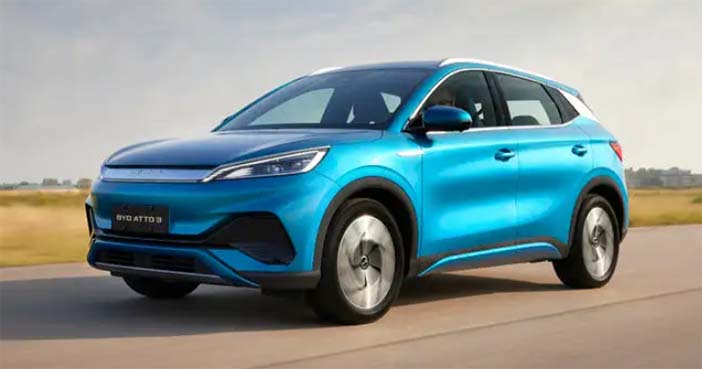
+++ Chinese giant BYD will begin European deliveries of 3 electric cars in the coming weeks, leveraging a market foothold that it has quickly established since beginning limited sales in 2021. Already active in Europe through its Hungary-based commercial vehicles division, known in a lot of European countries for its electric buses, BYD first confirmed plans to sell passenger EVs in Europe in 2020, beginning with the Audi e-Tron-rivalling Tang and focusing initially on Norway. Now it has a trio of EVs ready which are targeted at the market’s most popular segments in a bid to steal market share from Tesla. BYD is one of several Chinese-based EV firms aiming to capture significant market share in Europe, along with rivals Aiways, Great Wall Motor and Nio, each of which have recently started selling cars. Initially, BYD will focus on Belgium, Denmark, Luxembourg, Sweden, the Netherlands and Norway. Uniquely, BYD arrives with an EV that it claims has been conceived “with European customers in mind”: the Atto 3 crossover. The first model to be built on BYD’s new e-Platform 3.0 architecture, the 204 hp, front-driven Atto 3 is similar in size to the MG ZS EV (at 4.5 meter long, 1.9 meter wide and 1.6 meter tall) and similar in terms of performance characteristics, offering a range of 420 km on the WLTP combined cycle, a 7.3 seconds 0-100 kph time and charging at rates of up to 80 kW. Power is supplied by a 60.5 kWh lithium-iron-phosphate battery (containing no cobalt) that BYD calls the Blade. Said to be 50% more energy-dense than a conventional lithium ion unit, the Blade Battery has been developed to “resolve issues in battery safety while also redefining safety standards for the entire industry”. At the launch of the power pack last year, BYD showed how it could withstand a nail penetration without suffering thermal runaway in the same way as more commonly used battery chemistries, thereby reducing the risk of fire. BYD has said it’s in discussion with other vehicle makers that are interested in using the Blade Battery in their own EVs. The Atto 3 will be sold in Europe alongside the Han, a Tesla Model 3-rivalling executive saloon, and the Tang, a 7-seat SUV that has been offered in limited volumes in Norway since July 2021 (and became that country’s second best-selling E-segment electric SUV last month). The EVs will be sold through a network of regional dealer groups: Louwman in the Netherlands, Hedin Mobility Group in Sweden and Germany, Nic Christiansen Group in Denmark, RSA in Norway and (alongside its European operations) Shlomo Motors in Israel. BYD Europe managing director Michael Shu said: “With a customer-centric approach, we’re fully committed to this market and warmly embrace partnerships with key expert dealers across Europe. Through localised partners and stakeholders, we aim to provide the highest level of attentive customer service along with knowledgeable product and aftersales service support”. More details on specific vehicle pricing are expected to be released imminently. +++
+++ CALIFORNIA on Thursday is expected to implement its plan, announced nearly 2 years ago, to ban the sale of new gasoline- or dieselpowered cars in the state by 2035. The step comes on the heels of president Biden signing into law a sweeping federal climate change bill last week, which commits $370 billion to clean energy spending and tax credits. California’s ban was first outlined in an executive order from governour Gavin Newsom in September 2020. Now the California Air Resources Board (CARB) votes to put it into effect. “This is huge”, Margo Oge, an electric vehicles expert, told. Oge headed the Environmental Protection Agency’s vehicle emissions program under presidents Bill Clinton, George W. Bush and Barack Obama. “California will now be the only government in the world that mandates zero-emission vehicles. It is unique”. Many other states follow California’s lead on matters of vehicle emissions, and 12 of them are expected to announce a similar policy soon; another 5 may take the step within the next year. And California itself is the largest automotive market in the nation. Vehicle emissions are the nation’s top source of greenhouse gases. California now mandates that 12% of vehicles sold in the state be free of greenhouse gas emissions. The new requirements will move that target to 35% by 2026, 68% by 2030 and 100% emissions-free by 2035. The Alliance for Automotive Innovation represents large U.S. and foreign automakers. John Bozzella, president of AAI, told that California’s new mandates would be “extremely challenging” to meet. “Whether or not these requirements are realistic or achievable is directly linked to external factors like inflation, charging and fuel infrastructure, supply chains, labour, critical mineral availability and pricing, and the ongoing semiconductor shortage”, Bozzella said. Bozilla has been equally critical in recent days of the new requirements in the Biden administration’s new law regarding EV battery manufacturing and materials sourcing. By his calculation, very few EVs currently qualify for the $7.500 credit under the new law, and none currently would when more of the requirements are implemented on January 1, 2023. California was able to implement the new mandates because the Biden administration restored the “California waiver”: a Clean Air Act exemption giving California the legal authority to set its own vehicle emissions rules, after the Trump administration had tried to do away with the waiver. Newsom likewise issued an order last year directing CARB to ban the sale of new gas-powered lawn equipment, which is especially polluting. Automakers have been split on accepting California’s right to set its own rules, but one of the biggest holdouts on the question, Toyota, just acknowledged the state’s authority on the matter. Ford, one of the automakers who backed California’s fight with the Trump EPA, issued a statement Wednesday from Bob Holycross, the automaker’s chief sustainability officer: “At Ford, combating climate change is a strategic priority, and we’re proud of our partnership with California for stronger vehicle emissions standards, forged during a time when climate action was under attack. We’re committed to building a zero-emissions transportation future that includes everyone, backed by our own investments of more than $50 billion by 2026 in EVs and batteries. The CARB Advanced Clean Cars II rule is a landmark standard that will define clean transportation and set an example for the United States”. Meanwhile, 17 Republican state attorneys general have sued in an attempt to revoke the California waiver, so we haven’t heard the last word on this issue. +++
+++ We’ve just had a week of supercars and high-end EVs revealed. Many of them boast outrageous performance specs. There were multiple vehicles with horsepower in the 4-figure range, and not just sports cars, but SUVs with 0-100 kph times under 3.5 seconds. And it’s not just a rarified set of supercar builders, comparatively small tuners are also building this stuff. Going fast is easy nowadays and getting easier. So what will distinguish the greats from the wannabes? It’s all about how a car FEELS . This may seem obvious. “Of course it matters that a car should have good steering feel and a playful chassis!” you say. “Why are you being paid for this stuff?” But a lot of automakers have missed the memo. This past week I spent some time in a BMW M4 Competition convertible, and it’s a perfect example of prioritizing performance over experience. It boggles my mind how a company can create such dead and disconnected steering; the weight never changes, there’s no feel whatsoever. The chassis is inflappable, but to a fault, because it doesn’t feel like anything you’re doing is difficult or exciting. The car is astoundingly fast and capable, but it feels less like driving a car and more like tapping in a heading on the Enterprise-D. I also happened to drive something of comparable performance that was much more enjoyable: a Mercedes-AMG GT. It was a basic model with the Stealth Edition blackout package, and even though it had a twin-turbo V8 instead of a 6-cylinder, it only made 20 more hp. The power wasn’t the big differentiator, it was … (say it with me) … the feel. While not the best example, the steering builds resistance as you dial in lock, giving you a better idea of what’s happening up front. Pulses and vibrations come back to you as you move over bumpy pavement in corners. The chassis isn’t quite as buttoned down, either, providing a little bit of body roll that tells you you’re pushing it. It’s also easier to feel when the car is wanting to understeer or oversteer, and how your throttle and steering inputs are affecting it. The whole thing is much more involving, exciting and fun. That’s also to say nothing of the Merc’s sounds. That V8 is maybe not the best sounding engine, but its urgent churn through the opened-up exhaust gets your heart racing. It also seems like it’s vibrating the whole cabin, so you feel it as much as you hear it. Though the BMW’s six is also a special sounding unit, too with a melodious howl and a smattering of pops on shifts. So BMW isn’t a total lost cause. But I digress. The point is, given 2 cars with similar performance, one is more entertaining. It’s the one car enthusiasts will want to come away with, and as an added benefit, a car with a fun feel is enjoyable even when it’s not being driven at full force. The Mercedes was more entertaining even on public roads when following traffic laws. Many of these new hypercars and electric cars are offering performance that can’t even be used most of the time. But if they’re not fun the whole time, what’s the point? Thankfully, people in the industry are figuring this out. I spoke with Lamborghini chief technical officer Rouven Mohr about the newly revealed Urus Performante. While the faster version seemed to be another vehicle that’s about the numbers, Mohr explained that wasn’t the goal. Many of the decisions about the SUV’s upgrades were to make it more fun and more like a sports car. The engineers went to steel springs instead of air for more response and linear, controllable reactions. The Rally drive mode isn’t so much for speed, but for tail-happy shenanigans on loose surfaces. He said a focus on feel and experience is what the company is working on, about making cars that have “good feedback and emotional involvement”. Mohr said a car like the Huracan STO is popular because it “makes you feel like a hero”. I think he nailed it. Other reveals this past week show a renewed focus on involvement. The Dodge Charger Daytona EV is more than just another fast electric car concept. Attention was given to the experience, with a piped exhaust to make noise under acceleration. It even has a multi-speed transmission, not for efficiency or performance, but to deliver the feeling of gas-powered muscle cars that Challenger and Charger owners clearly love. Speaking of transmissions, take a look at the Koenigsegg CC850. It turned its hyper-advanced 9-speed automatic transmission into a gated manual transmission with a functioning clutch pedal. Partly it’s a tribute to the CC8S, but it’s also to provide extra engagement. Koenigsegg even fitted smaller turbos that produce less power to optimize manual driving feel. This is good to hear from a company that just launched yet another 4-figure horsepower supercar. So the future is actually looking fairly bright, with big names in the car industry recognizing that the quest for more raw performance is less important than the driving experience. This is just a request for other manufacturers to follow suit. Cars aren’t all about the numbers. +++
+++ The MERCEDES-AMG GT 4-Door has some styling revisions on the way. The lower fascia continues to have a trapezoidal opening in the centre. The grille’s shape doesn’t appear to change at all, and I expect the vertical slats are still part of the design. Along the side, the company puts a piece of camouflage over the area where the front wings/fender vents are. The covering might indicate the designers are tweaking the styling of this element. My spies believe this vehicle is in an early stage of development. This is because there are no changes to the taillights, and the tail is identical to the current model. Usually, when automakers refresh a model, there are revisions to both the front and rear bumper. Mercedes just made minor changes to the AMG GT 4-Door line-up for the 2022 model year. The front fascia received a look more akin to the AMG GT 63 S by tweaking the front fascia. Depending on the trim level, the 2022 AMG GT 4-Door was available with several new exterior colour options. Spectral Blue Metallic, Spectral Blue Magno, Green Light Magno, and Manufaktur Rubellite Red Metallic joined the paint options. There are no details yet about any powertrain changes for the updated model, and there are no signs of tweaks. Currently, the range-topper in the line-up is the Mercedes-AMG GT 63 S E Performance plug-in hybrid. It combines a twin-turbo 4.0-litre V8 and an electric motor, which mounts to the rear axle. This setup produces a total of 843 hp and an earth-moving 1.400 Nm of torque. The 6.1-kilowatt-hour battery offers 12 kilometres of purely electric driving. The AMG GT 4-Door Coupe originally debuted in 2018 and had a public premiere at the Paris Motor Show. It went on sale for the 2019 model year. +++
+++ There’s no debate that vehicles of all kinds are getting larger. Park a new Ford Ranger next to an older Ford F-150, and you’ll see that today’s midsize truck is strikingly close in size to the full size trucks of 3 decades ago. With that in mind, the NEW YORK STATE Senate just introduced a bill that aims to improve safety around massive trucks and SUVs. Manhattan State senator Brad Hoylman introduced the bill, which includes language requiring the NY DMV to dictate specific rules for vehicles over 1.350 kilos. One new regulation would be that the drivers of such cars have “direct visibility of pedestrians, cyclists and other vulnerable road users from the driver’s position”. It’s not clear exactly what enforcing that legislation would entail. However, the meat of Hoylman’s bill centers on advanced safety technology. A summary of the legislation states, “Studies have shown that Intelligent Speed Assistance (ISA) alone can reduce traffic fatalities by 20%. This, in addition to Advanced Emergency Braking (AEB), Emergency Lane Keeping Systems (ELKS), drowsiness and distraction recognition technology, and rear-view cameras, would help prevent crashes from occurring in the first place”. If you’ve never heard of ISA, you’re not alone. The term is pretty broad in what it encompasses, including speed limit recognition and alerts, speed assist, and speed limiting. The tech is common in Europe, where automakers like Ford offer it in several models. Ford’s flavour of speed limiting allows drivers to set a maximum speed and automatically limit the vehicle to within 8 kph of the posted speed limit. It’s optional, however, so drivers can turn it off when desired. If passed, the legislation would require automakers to include those advanced driver assistance systems as standard equipment in new vehicles from 2024 on. It’s a noble endeavour, to be sure, but it’s not guaranteed to fly. The federal government oversees vehicle safety regulations, so New York may not have ground to enforce the law if it does pass. +++
+++ According to information shared at the Conference on Computer Vision and Pattern Recognition (CVPR) in New Orleans, TESLA ’s Autopilot advanced driver-assist system may prevent about 40 crashes per day. It seems the car may avoid accelerating into objects or people even when the driver pushes the go pedal unintentionally. The information was shared by Tesla’s Autopilot software director Ashok Elluswamy in his keynote speech at the event, He more recently shared a video of the presentation on YouTube, as well as a thread with more details on Twitter. Teslarati says the workshop itself happened earlier this summer, 2022, though Ashok just posted the related 12-part thread on Twitter. Ashok is specifically referring to crashes that are caused by the driver accidentally pressing the accelerator pedal at 100 percent rather than the brake pedal. A move like this is often initially blamed on “sudden unintended acceleration” until the authorities can determine why the car accelerated instead of stopping. Ashok explains: “Here, I’m showing a particular mode of failure of humans where they accidentally press the accelerator pedal instead of the brake pedal. For example, these people are pressing the accelerator pedal thinking that they’re pressing the brake pedal. But the car realizes that they are doing this and are heading towards a collision and automatically cuts out the acceleration, and presses the brake to prevent the humans from colliding”. The Autopilot Software Director goes on to say that the driver in the video would have likely ended up in a river if Autopilot didn’t kick in and stop the car from accelerating. A second video shows a Tesla driver pushing the go pedal during a parking manoeuvre, but Autopilot doesn’t allow the car to accelerate into obstacles or a human. Ashok makes it clear that Tesla is still developing and improving its Autopilot technology, so it may not react the same in every situation. While the Tesla executive claims that some 40 crashes are prevented per day, it’s impossible to know that number for sure. With that said, if it can be proven that Tesla’s Autopilot technology is not allowing drivers to accelerate into objects or people (regardless of the driver’s intentions), this is something that could certainly save lives. +++