
+++ The APPLE car has been a long time coming and while we likely won’t see it for quite some time, it seems that many consumers are very eager to get their hands on it. Strategic Vision recently completed a study to determine if new vehicle owners in the United States would consider and how they feel about the quality of over 45 different automotive brands. This year, Apple was added to the list, even though it doesn’t yet have a car on the market. The study revealed that 26 percent of customers would ‘Definitely Consider’ an Apple-branded vehicle in the future, only placing the technology giant behind Toyota (38 percent) and Honda at 32 percent. An Apple Car was placed ahead of Ford with 21 percent and Tesla at 20 percent. The study also determined that over 50 percent of Tesla owners would ‘Definitely Consider’ a vehicle from Apple. In June, Apple introduced its latest version of CarPlay. Whereas previous systems were limited to the central infotainment screen, the new CarPlay works on all vehicle displays. Of course, given that Apple doesn’t yet have a car on the market, 34 percent of respondents noted that they ‘Don’t know enough about’ an Apple product to determine if they would consider it.“If others don’t prepare today for this type of disruption, they may find themselves wondering ‘What happened?’, similar to when Tesla entered the market”, Strategic Vision senior vice president Christopher Chaney described in a press release. “All the current players in the industry mostly hold their own destiny. If they simply stay lulled into spending all their ingenuity chasing electric motors, led lighting, and flat screens with thousands of apps and every high-tech feature you’ve never dreamed about, Apple may land the moonshot right in their sales backyard”. Of course, the popularity of Apple’s EV will largely depend on how good it actually is, not just how consumers envision how good such a vehicle may be. Cracking into the automotive space is not easy and Apple will somehow need to win over not just its feverish brand loyalists but also more traditional car buyers. With all that said, how do you feel about a future Apple iCar, does the idea alone sound more tempting than what Tesla has to offer and should Elon Musk take note? +++
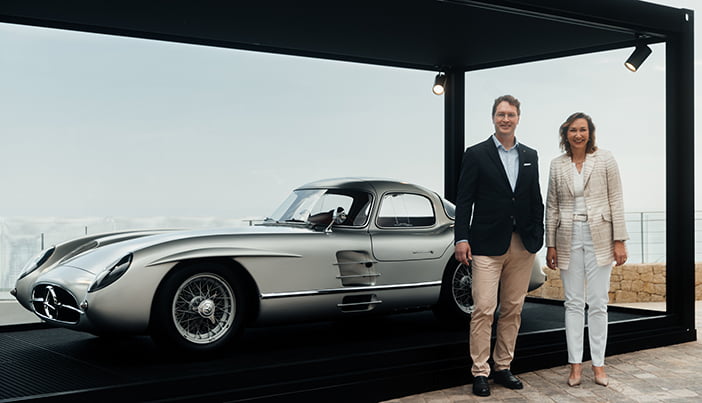
+++ On August 22, the morning after car lovers in Carmel, California, had swallowed their last drop of Champagne and heard the final hammer fall at the annual AUCTIONS in the foggy coastal enclave, number-crunchers were already hard at work tallying the week’s cull. All told, more than 1.200 cars sold across 5 auction houses brought in $469 million, an increase of nearly 19% over the previous record, in 2015. The auction houses celebrated, crowing about selling $22 million Ferrari 410s, $10 million Mercedes-Benz 540Ks, and $9.2 million Hispano-Suizas wrapped in rose-hued wood. But what the results from the world’s most famous used-car lots mean for the market the rest of the year is rather more complicated. “A potential recession, higher interest rates, war in the Ukraine and post-Covid behavioural shifts: all were in mind”, says Juan Diego Calle, the chief executive officer of Classic.com. “The industry is clearly resilient to whatever is happening broadly. But going forward, it’s a mixed bag”. Those volatilities mentioned do affect how cars are bought and sold globally, but the collectible car market is more complicated than just cause and effect. The truth is that macroeconomic factors don’t affect classic car buyers (or the vehicles they want) equally. Not even close. The buying mood for the fall will depend on the contents of that proverbial mixed bag. Prewar vehicles (that is, cars made before World War II) will remain strong till the end of the year, says Bryon Madsen, chief strategy officer for RM Sotheby’s. In Carmel, the auction house offered a handful of prewar cars with multiples of the same make/model, all but one of which sold, demonstrating that the market for Packards and Duesenbergs is reasonably strong. “We feel this trend will continue through the end of 2022”, Madsen says. So will the stellar performance of blue-chip regulars like the bombastic Italian racers that won gruelling endurance races in the 1950s and their exotic progeny. “Ferrari, for instance, has a pretty steady value line”, says Dave Magers, CEO of Mecum Auctions. “Economics having an impact on a particular brand like that, I don’t think it makes much of a difference. And in the last 22 months, uncertainty in some respects has tended to drive people to buy things now, instead of later”. Other of Monterey’s highest sellers, like the 1937 Bugatti Type 57SC Atlante that sold for $10.34 million, further highlighted for forecasters that the top of the market is still flush with cash. Expect to see the same at upcoming auctions, Calle says, and what is a truism in all but the absolute worst market conditions: “Great cars will continue to sell for great money”. There are plenty of fall auctions from which to choose: Bonhams has its annual Goodwood, England, sale on September 17; RM Sotheby’s has a sale in Marshall, Texas, on September 22; Broad Arrow has a sale in Gloversville, N.Y., on October 14; and Mecum has a sale in Las Vegas on November 10, to name a few. Those who know say the best lots will continue to pull strong numbers, especially those in Europe. “Given the euro and the US dollar hitting parity for the first time in 20 years, it has been harder for European buyers to tap into markets outside the euro zone”, Madsen says. “RM Sotheby’s has 3 upcoming auctions in Europe and 3 auctions in the United States. Given that these sales are located in local markets, in Switzerland, Germany and the United Kingdom, we believe each local market is appropriately sheltered from some of these effects”. Just beware of aberrations, insiders say. No sale demonstrates the strong buying attitude for the ultimate holy grail cars more than the Mercedes-Benz 300 SLR Uhlenhaut Coupé that sold at auction in May. The one-of-one gullwing racer obliterated the previous world record for a car sold at public auction when an unknown buyer purchased it for $142 million. “For Mercedes to be able to say that, not just in theory but in unequivocal reality, the most valuable car in the world is a Mercedes—that is a powerful statement that puts a lot of people, other people, in their place”, Simon Kidston, who facilitated the sale, said at the time. But the unprecedented sum comes with one caveat: It is likely “unrepeatable”, he added. “Does it now mean that every gullwing roadster or 540K is worth more? I don’t think so,” he said. “The allure of the Uhlenhaut Coupé does not extend to every Mercedes”. Then there’s the other side of the scenario. While sales of the most significant, most expensive multimillion-dollar vehicles will stay strong for the rest of the year, close observers of the summer auctions will have noticed a general slowdown in the sales pace for midtier cars: those worth more than 6 figures but less than a half-million dollars. No-sells in Carmel included a 2003 BMW Z8 bid up to $400,000; a 1937 Delahaye that reached $290,000; and a 1967 Jaguar E-Type that didn’t make it past $150,000. What’s more, appetites for the cheapest entry-class of cars have slowed, too. At the Mecum auction, lots including a 1968 Chevrolet Impala (bid to $22.000), a 1972 Datsun (bid to $40.000) and a 1997 Mercedes-Benz SL 600 (bid to $10.000) all failed to sell. Analysts have even observed lower sell-through rates at both live and online auctions throughout the summer. In August alone, overall sell-through rates were 16.3% lower than in August 2021, according to data from Classic.com. Experts are characterizing the cooling as a healthy correction rather than a dangerous drop. It brings additional benefits for buyers, especially those in middle markets who may indeed be affected by market volatility. Autumn pricing will be more predictable than in earlier months, when the general tendency toward wildly erratic sales skewed perceptions of actual market values. “For a while it seemed like buyers were on a frenzy to buy whatever they could get their hands on”, Calle says. “Prices kept rising, often with no rhyme or reason”. By now, the Covid-19-boosted urge for some collectors to grab at anything they could buy has passed. “There could be a question if some of the basis of a strong market is from remaining pent-up demand for buy and sell after 2,5 half years from the pandemic, but it seems this driver [has]cooled off prior to Pebble Beach”, Madsen says. Even better, market cooling in the next few months will lead sellers to be more flexible with their reserves (the minimum price for which they’re willing to sell the vehicle) or do away with them altogether. That means buyers can afford to be more selective with their wish-list purchases. “To be clear, prices are not dropping, they are merely stabilizing”, Calle says. “Relative to other asset classes, that is actually good news”. +++
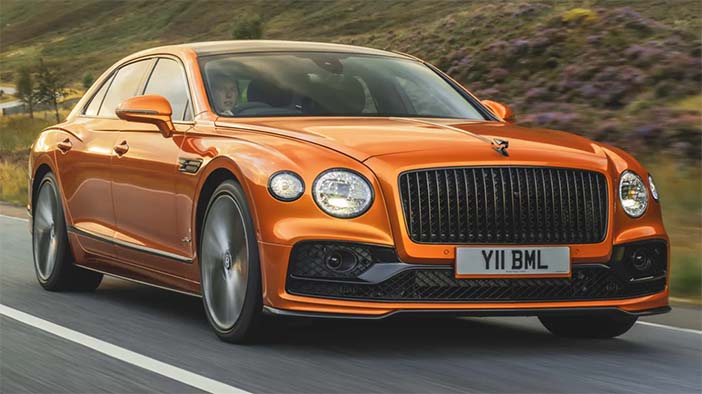
+++ BENTLEY has unveiled “one of the last models to feature the iconic W12 engine”. It’s called the Flying Spur Speed, and it acts as a direct replacement for the standard W12-powered Flying Spur, which went out of production in May 2022. Unlike its Continental GT Speed cousin, however, this Speed is no more powerful. Under the bonnet is the same 6.0-litre W12, producing 635 hp and 900 Nm of torque as in the standard car. This means the performance figures are unchanged, with a 0-100 kph time of 3.8 seconds and a top speed of 333 kph. Once again, the 12-cylinder engine powers the rear wheels alone most of the time, with the front wheels driven only when required by traction levels. The chassis also mirrors the setup of the Speed’s predecessor, with the standard fitting of three-chamber air suspension and a 48 volt powered active anti-roll system. An all-wheel steering system meanwhile turns the rear wheels in the opposite direction to the fronts at lower speeds for better manoeuvrability, and in tandem with them at higher speeds for improved agility. Finally on the chassis front are the biggest iron brake discs fitted to any road car (matched by the Continental GT) at 420 mm in diameter for the front pair. While the driving experience will be shared by the outgoing W12 Flying Spur, the Speed at least does plenty to differentiate itself from the older car aesthetically. There’s a darker tint for the front upper and lower grilles, plus the front and rear lights. The Speed rolls on a new and unique set of 22 inch alloy wheels available in various finishes including gloss black and silver, with an alternate design offered as an option in the same size. Also on the options menu is the ‘Styling Specification’, which adds a front splitter, side skirts, rear diffuser and boot lid spoiler all made from carbon fibre, and ‘Blackline Specification’, which switches all the exterior chrome brightwork for gloss black trim. Inside, it’s possible to clad all of the touchpoints in Dinamica Pure, which is made from 73 percent recycled polyester. There’s a greater level of interior choice available, with 15 leather colours offered, up from five. Veneer options include Piano Black, Crown Cut Walnut and Dark Fiddleback Eucalyptus. The digital instrument cluster now includes new graphics, which Bentley says are inspired by “luxury chronographs”. All occupants will be able to enjoy heated, ventilated and massaging seats, and plenty of electrical adjustment: 24-way in the front and 14-way in the back. Pricing hasn’t yet been revealed, but I expect a slight rise compared to the figure charged for the discontinued W12. +++
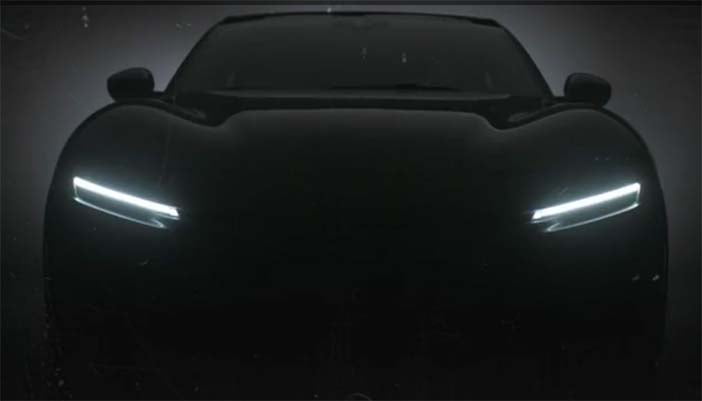
+++ We are only one week away from discovering the FERRARI of SUVs as the Prancing Horse took to Twitter to share a teaser image hiding the debut date in plain sight. Squint your eyes or brighten up the shadowy photo and the debut date is revealed: 13 September. The high-riding model from Maranello was originally announced 4 years ago when the Italian marque presented its 2018-2022 roadmap. The Purosangue is now ready for prime time. Already confirmed to get a naturally aspirated V12 engine, Ferrari’s belated answer to the Lamborghini Urus will have limited availability as it won’t exceed 20 percent of the firm’s total annual deliveries. Bear in mind the fabled supercar maker has refrained from labelling the Purosangue as an SUV, preferring instead to call it an FUV (Ferrari Utility Vehicle). Spy shots have suggested it’ll look more along the lines of a large hatchback with limited ground clearance. The Purosangue will be the first widely available 4-door Ferrari considering the forgotten 456GT Venice estate was limited to just 7 examples. From the few details released thus far, we know it’ll have air suspension and all-wheel drive while sitting on a platform engineered to accommodate a hybrid powertrain. The FF/GTC4Lusso’s spiritual successor will use a dual-clutch automatic transmission and offer a four-seat interior with more room than the previous shooting brakes. Ferrari is fashionably late to the SUV party as its Purosangue will have to face some stiff competition coming from the likes of the Aston Martin DBX and Bentley Bentayga Speed. McLaren has avoided going down this road until now, but Woking’s new CEO is open to the idea of a supercar on stilts. The list of high-end marques without an SUV in their lineups keeps getting shorter with each passing year. Following its hotly anticipated world premiere next week, the Ferrari Purosangue will be in the hands of early adopters in the first months of 2023. +++
+++ The goalposts for the coming 7th generation FORD MUSTANG have been moving for years. Seems the latest adjustment has led to a missed extra point for Ford. In 2017, then-CEO Mark Fields told dealers there’d be a hybrid version of the current, 6th generation Mustang on the market come 2020. In 2019, a change of CEO didn’t stop news that the hybrid Mustang would be built in Ford’s Flat Rock, Michigan, assembly plant. In summer 2021, execs told dealers there’d be a hybrid trim for the 7th Mustang generation on the market come 2025. Fast forward one year to a few days ago, and everything’s upended again. But now, industry analyst AutoForecast Solutions says the hybrid pony car is dead and the Mustang Mach-E is to blame. With the battery-electric crossover offsetting the ICE Mustang’s carbon emissions, a hybrid model wasn’t necessary. The new plan would see the internal-combustion Mustang run for about 5 years, then be replaced by an all-electric model built on the Mach-E’s platform. The present Mach-E sits on Ford’s Global Electric (GE1) architecture, which is a heavily modified version of the C2 platform that serves everything from the European Ford Focus and Kuga to the American Bronco Sport and the Chinese Lincoln Zephyr. Going back to AutoForecast Solutions’ commentary from May 2021, Ford will launch the GE2 platform around 2023, it will support a next-generation Mach-E at some point, and it will provide the bones for the all-electric Mustang around 2028. The S650 Mustang debuts at this month’s Detroit Auto Show. The car isn’t expected to get a long-rumoured all-wheel-drive configuration, instead continuing as a rear-wheel-drive sports coupe. The AWD mechanism had been rumoured to be part of a V8-hybrid setup that gave two e-motors the duty of turning the front axle. With the death of the hybrid, it seems, so dies the all-wheel performance. The duration of the coming Mustang’s life cycle seems to be about 5 to 7 years. The all-electric coupe shows in 2028, perhaps as a 2029 model. Ford has told suppliers it’s stretching the product’s lifecycle from 6 to 8 years, all but ensuring this will be the final gasoline-powered Mustang before an expected switch to battery power around 2030. Whenever it happens, the streets are going to run bubbly with all the Bud Light and White Claw poured out for that fallen steed. As others have noted, looks like the Mustang will have the title of combustion-powered pony car to itself for its swan song. The Challenger quits gas next year, the Camaro is expected to get on the wagon in 2024. Anyone who wants to say they were there at the beginning of the end should make plans to be in Detroit in about a week. +++
+++ AvtoVAZ, RUSSIA ’s biggest automaker, increased its share of the local market last month despite failing to overcome a decline in annual sales, while Chinese companies also took advantage of an exodus of western companies. Almost all automakers working in Russia stopped production in the country after president Vladimir Putin’s invasion of Ukraine led to sanctions that crimped supplies of parts. AvtoVAZ, which resumed production in June, boosted market share of its Lada brand to 43.4 percent in August from 17.5 percent a year earlier with 18.087 units sold. August sales of automobiles and light commercial vehicles in Russia declined by 62 percent against the same month a year earlier compared with a decline of 75 percent in July, according to data published Tuesday by the Association of European Business that exclude some manufacturers. Month-on-month they rose by almost 29 percent to 41.698 units. China’s Great Wall boosted sales of its Haval brand by 26 percent and increased its share of the market overall to 7.5 percent versus 2.1 percent the previous year. While sales of Geely Automobile Holdings declined by 8.1 percent, its share increased to 4.8 percent. +++
+++ The VOLKSWAGEN TIGUAN will receive a significant style overhaul next year, bringing the popular SUV in line with the design language of the smaller Golf and Polo. Expected to launch in 2024, a prototype of the new Tiguan showed a completely new front end with sharper headlights, a much larger front grille and a redesigned front splitter. Indicators have also been added to the Tiguan’s wing mirrors, while the SUV retains its distinctive three-spoke chrome detailing at the nose. The rear end, meanwhile, largely resembles the existing Tiguan, save for bulkier bodywork. The prototype was largely camouflaged with a black, line-obscuring livery, but it’s clear to see the new Tiguan will feature a wheelbase larger than the current car but still smaller than the 7-seater Tiguan Allspace. A visible exhaust muffler and rear quad exhaust decoys show that the Tiguan will retain internal-combustion power for this generation, before its inevitable switch to an electric powertrain. The 2024 model will likely retain the same powertrains as the current Tiguan, which is on sale with a selection of petrol, diesel and plug-in hybrid powertrains with up to 245 hp. A Volkswagen spokesperson did confirm a potential launch date of 2024. The model’s visual refresh comes after Volkswagen design chief Jozef Kaban claimed the firm would move towards a friendlier design direction, producing more vehicles that “smile”. “We will be trying to do all cars with more emotion. It depends on the product, as not every car can have such a positive, friendly character, but one thing is clear: you will see more and more steps towards more expressive Volkswagen design, and not just on EVs”, Kaban told last month. Kaban went on to say that Volkswagen would avoid angry faces on the majority of its models, saying “aggressive fronts don’t work”. +++