+++ A new joint venture formed by Sony and HONDA plans to introduce a premium electric vehicle later this decade, and the automaker’s U.S. dealers are anxious to be part of the sales process. Sony Honda Mobility said on Thursday it was aiming to deliver the first of the unnamed EV by 2025, starting in the United States, and will sell them online. The success of Tesla at selling EVs without franchised dealers is putting pressure on established automakers to overhaul their retail networks. That leaves dealers across most brands concerned about their place in the changing world and whether profits will be squeezed. The online aspect of the Sony Honda plan, as well as the lack of details around how the vehicle will be sold and serviced, has raised questions with the Honda and Acura brand dealers. Many nonetheless expect Honda to work through the existing retail network. “These issues are certainly a concern”, said Brian Benstock, general manager and vice president of a Honda and Acura dealership in Queens, New York. “The best path forward is with the dealers. We have a role automakers can’t replicate”. Benstock is also on the Acura national dealer advisory board and has spoken with Honda officials about the new vehicle. “There’s no way that Honda wants to hurt their existing dealer body”. Some dealers questioned why Honda would even consider trying to work outside the current U.S. sales network given its national reach. Honda has about 1.100 Honda dealers and 270 Acura dealers. A Honda spokesperson referred questions about the joint venture to the new company. Sony Honda spokesperson Mai Nagadome said there are still a lot of details to finalize, but selling through the dealers has not been ruled out and customers would feel uneasy without some kind of after-sales service process. “The cost of continuing to develop (internal combustion engine) products along with EVs and autonomous tech and software for the next generation vehicles is proving to be quite the challenge”, said Peter Hennessy, dealer principal of Atlanta-based Hennessy Automobile Companies, which includes a Honda store. “I get teaming up with Sony, but it should be done in conjunction with the dealer network, not outside it”, he added. Sony Honda Mobility officials promised the vehicle, to be built at one of Honda’s Ohio plants, will include advanced driver-assist features and a new software system developed by Sony that offers cloud-connected services that generate recurring revenue. They were the first details on the venture’s efforts since the project was launched in June. A concept of the vehicle will be shown at the CES technology show in Las Vegas in January. Honda has been very secretive about the Sony joint venture, according to some dealers, but others suggest that is simply because the timeline is so far out. Privately, some dealers warn a move to circumvent the dealer network could potentially violate their franchise agreements, but also acknowledged the use of a different brand could be a way to avoid that risk for Honda. Sony Honda officials declined to say under what brand the vehicle will be sold. Mike Law, who runs eight import brand stores for LaFontaine Automotive Group, including a Honda store in Dearborn, Michigan, feels the heavy investments required around EVs favor using existing dealers. “As much as maybe some people want to push the dealers out, I believe the consumers still enjoy the process of the purchase”, he said. +++
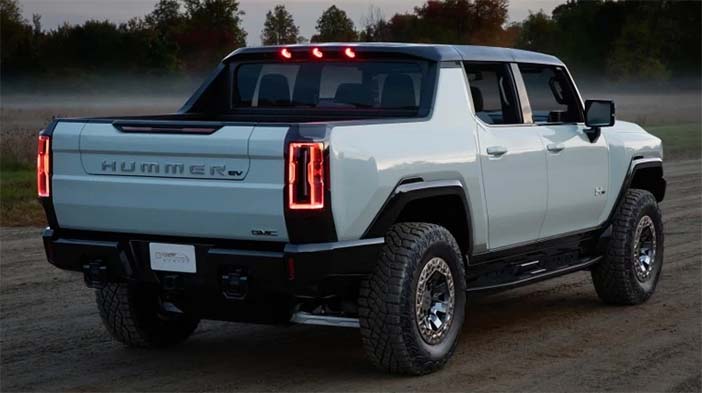
+++ The HUMMER electric pickup hasn’t stopped raising eyebrows since General Motors pulled back the curtain on the behemoth in Spring 2021. It’s huge, not all that efficient and unbelievably expensive, but now I’m learning how much replacement parts cost for the new EV. A taillight replacement for the vehicle costs thousands to replace. General Motors confirmed pricing, quoting a one-side replacement cost of $3.046. That adds up to more than $6.000 to replace both, so I hope your insurance is solid if you ar going to own one. Why would a taillight housing cost that much? Part of the cost comes from the fact that GM couldn’t parts-share its way through the design of a $100.000 flagship electric SUV, but most of the price comes from the complexity of the lights. The Hummer offers elaborate lighting sequences that require microchips and other components, all of which cost money. There’s also the fact that the Hummer EV is too new for General Motors to take advantage of its usual economies of scale in mass-produced vehicles. General Motors recalled the Hummer EV earlier this year for issues with the taillights. Though the problem was software-related, GM had to replace the entire light units because the software controlling them was actually embedded in the lights. It’s true that there are very few vehicles that are tall and large enough to impact the Hummer’s taillights, but we hope the owners of those vehicles never have to file an insurance claim to replace one. +++
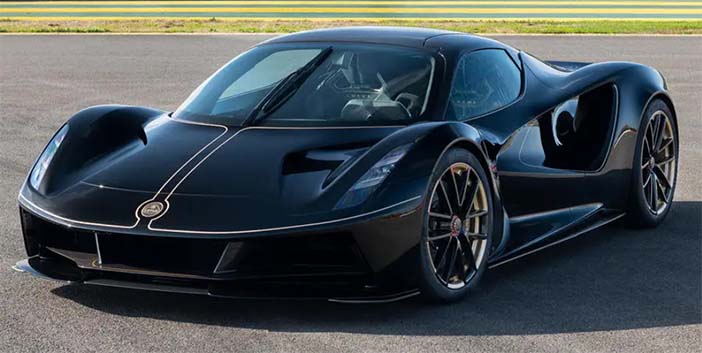
+++ LOTUS has revealed an ultra-limited variant of its electric hyper car that pays homage to the firm’s legendary racing driver Emerson Fittipaldi on the 50th anniversary of the Brazilian’s Formula 1 world championship victory. The special-edition Evija Fittipaldi is the most recent car to come from the firm’s bespoke Advanced Performance division. It features a hand-painted, black and gold colour scheme resembling that of the famous Lotus Type 72 race car, as well as several other unique design features. Each car is equipped with a set of black and gold ‘Type 72’ wheels. The car has anodised centre lock surrounds, colored red on the right and green on the left. The brake calipers are also finished in black and gold. Decals celebrating the 1972 title victory feature around the car, while ‘8’, the number used on Fittipaldi’s car during that race reason, has been printed onto the B-pillar. The 2.011 hp Evija also gains a bespoke interior, with black leather upholstery and gold stitching. The roof liner stitching is also exclusive to the special-edition model, as are the gold finishes to the air vent surrounds, start-stop button and pedals. A hand-tinted plan view of the Type 72 has been etched onto the model’s carbonfibre roof and the Evija’s rotary dial has been hand-crafted from recycled Type 72 aluminium, meaning each of the eight cars has its own piece of F1 history. The car was launched at an event featuring Fittipaldi, Jenson Button and Lotus directors Simon Lane and Clive Chapman, among others. Fittipaldi said: “It’s fantastic to be back at Hethel for such a special occasion. “I’ve really enjoyed being a part of this project and it’s been a wonderful experience revealing the car to some of the new owners. Having the opportunity to drive both the Evija Fittipaldi and my championship-winning Type 72 Formula 1 car on the test track at Hethel has been an incredible experience”. Just 8 Fittipaldi edition Evijas will be built at the British firm’s Hethel factory, but Lotus says each car has already been sold, for an undisclosed price. Deliveries will begin next year. Emerson Fittipaldi won 5 grands prix across 1972/73. Director of Lotus Advanced Performance Simon Lane said the model celebrated Lotus’ F1 heritage. “The word ‘legend’ is often overused, but this project has brought together the Lotus Evija hypercar, Emerson Fittipaldi, the Type 72 race car and our brand’s celebrated Formula 1 heritage. No argument, that is 4 legitimate legends, all collaborating to deliver a truly unique hyper car and a world premiere that was a real ‘pinch yourself’ moment”. +++
+++ MAZDA is taking a different approach to electrification than much of the industry. Rather than go full steam ahead with new EV models, the brand released one “light” EV in the MX-30 and is working on plug-in hybrid and hybrid powertrains while developing 3 new EVs by 2025. The CX-60 is powered by a turbocharged 3.3-liter inline-6 with a 48 volt mild hybrid system. It’s rated at 280 hp and 450 Nm of torque. +++
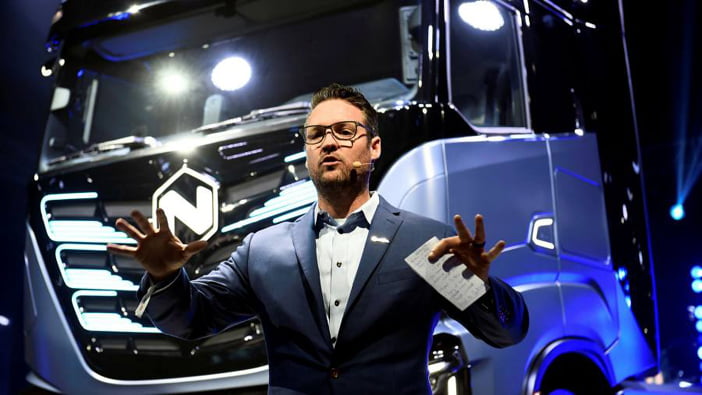
+++ NIKOLA founder Trevor Milton was convicted of fraud for misleading investors in the electric truck company, a stunning downfall for the door-to-door salesman turned billionaire who promised to revolutionize the auto industry. Milton, 40, was found guilty Friday of one count of securities fraud and 2 counts of wire fraud by a federal jury in Manhattan, in a boost to the U.S. Justice Department’s efforts to crack down on corporate crime. He faces the possibility of years in prison. It’s been a wild ride for the charismatic entrepreneur, whose fortune has declined to the hundreds of millions since the surge in Nikola shares when the company listed its shares in June 2020. Milton, who remains the company’s biggest individual shareholder, founded Nikola in 2014 and built it into a company valued at $34 billion when it went public, more than Ford at one point. The meteoric rise of the startup, which had no revenue at the time, came amid a wave of electric vehicle companies going public through special purpose acquisition companies, or SPACs, starting 2 years ago as investors scoured the landscape for the next Tesla. Going the SPAC route allowed them to market their companies based on future projections of performance rather than actual financial results. Some of the biggest names on Wall Street poured money into the sector. After Nikola’s listing, ordinary investors started to take notice of Milton’s vision as well, with the company much discussed online just as Elon Musk’s has been. While Nikola’s initial focus was on heavy commercial trucks, it branched out to power sport and consumer EVs. It was all supercharged by celebrity endorsements from the likes of the Diesel Brothers’ Heavy D, who promoted the Badger pickup, a product that never made it beyond the renderings stage. Prosecutors argued that Milton enticed retail investors to buy Nikola shares by making false statements about the company’s products and capabilities in numerous interviews on podcasts and TV, sharply exaggerating Nikola’s capacity to manufacture trucks powered by hydrogen fuel cells as well as its ability to produce the fuel itself. It was “lie after lie after lie”, assistant US attorney Jordan Estes told the jury in her closing argument on Thursday. “His lies may have been on social media, but make no mistake: This was an old-fashioned fraud”. Milton’s lawyers called the case a “prosecution by distortion”, contending that their client never meant to deceive potential investors and that, in any case, his statements weren’t material, or important enough to influence those investors’ decisions. Milton was generally upbeat as he arrived at court in a suit and tie to sit with his lawyers. At times there were dozens of people in the courtroom, with his family and friends packing the first two rows behind the defense table. In his own closing, which brought Milton’s wife to tears, defense attorney Marc Mukasey asked the jurors to “imagine the nightmare it is for Trevor, at 40 years old, to have his life hang in the balance” because of an overzealous prosecution. There were lighter moments, too. In the tense vigil during jury deliberations on Friday, Mukasey took a few practice golf swings with a phantom club. During the trial, which kicked off with opening statements on September 13, the government called a dozen witnesses. It started with Paul Lackey, a former Nikola contractor whose allegations of fraud helped spur the criminal probe. Lackey, an engineer at the electric-drive systems company EVDrive, said he gave Nate Anderson’s Hindenburg Research information in exchange for a share of its profits from shorting the company. The short-seller’s September 2020 report called Nikola an “intricate fraud” that, among other allegations, overstated the capabilities of its earliest test trucks. Nikola shares tumbled. The government called other Nikola insiders to the witness stand. The defense called Harvard Law School professor Allen Ferrell, an expert on economics and the stock market, who told the jury that traders mostly shrugged off statements Milton made between the time his company went public and the time he resigned. +++
+++ STELLANTIS is expected to see its vehicle production in Italy fall for a fifth year in a row in 2022, mainly due to stoppages caused by a prolonged crunch in chip supply, the FIM-CISL union said on Friday. Based on data for the first 9 months of the year, FIM-CISL estimates Stellantis, the owner of brands including Fiat, will produce fewer than 650.000 vehicles by the end of the year in its Italian plants, down from 673.574 in 2021. That would mean a shortfall of around 200.000 units compared to potential generated by orders already booked, the union said in its quarterly report on Stellantis production in the country. Ferdinando Uliano, FIM-CISL head for automotive, said the chip shortage was the main reason for the production drop but problems were also occurring with other parts, without giving further details. The chip problem “will also affect 2023”, Uliano said, presenting the report. “The war in Ukraine, the halt to Russian gas supplies can only further worsen the problem of the procurement and costs of raw materials”, he added. A total of 235 working days were lost between January and September due to production stoppages according to the report. “We have not yet recovered to pre-pandemic levels”, Uliano said. In the first 9 months of 2022, Stellantis production in Italy fell 2.4% year on year to 515.380 vehicles, FIM-CISL said. That was a slightly smaller drop than in the first half, when disruptions in the transport industry also hit output. Production of light commercial vehicles at Stellantis’ Sevel plant in central Italy (Europe’s largest van assembly facility) fell 27.5% year on year. Car production, however, rose 14.1% in the same period, helped by the new Alfa Romeo Tonale and Maserati Grecale models, production of which started in the Pomigliano and Cassino plants at the end of the second quarter. +++
+++ VOLKSWAGEN deliveries were up just over 10% in the third quarter as supply chain troubles eased but still down 12.9% overall this year at just over 6 million vehicles, the carmaker said on Friday. September saw 20.7% growth in deliveries boosted in particular by China, where Covid-19 lockdowns held up production in the first half of the year. The carmaker’s output reflects a broad recovery across the auto industry in recent months from a first half plagued by supply chain troubles due to the war in Ukraine and shutdowns at Chinese factories because of its coronavirus restrictions. BMW deliveries in the third quarter were just slightly below last year’s with 6.6% growth in sales in September, and Mercedes-Benz deliveries were up 20% in the third quarter. Overall, Volkswagen’s deliveries were down in every major region this year, with Europe hardest hit, followed by the Middle East and Africa. China saw the lowest drop at 7.5% and a strong recovery in September with deliveries a third higher than the same month last year. All-electric cars made up 6% of all deliveries, totaling 366,400 vehicles. Around two thirds of all-electric deliveries were in Europe with the remaining third primarily in China, where Volkswagen is fighting domestic competitors and Tesla for a bigger share of the domestic electric car market. +++
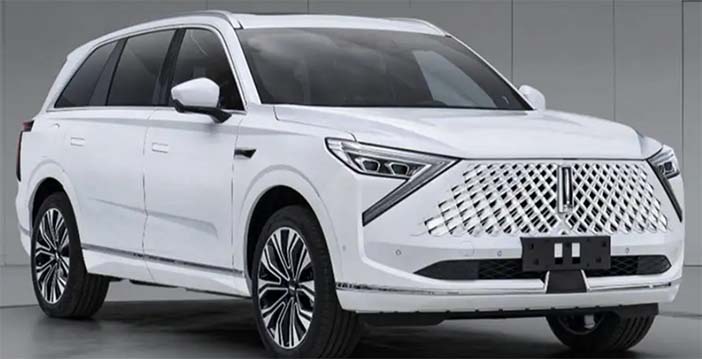
+++ A new SUV from Chinese car maker WEY has been exposed in registry filings released by the country’s Ministry for Industry and Information Technology. Expected to take the name Wey 80 into production, the new seven-seat model is due to go on sale in China during the first half of 2023 before heading to export markets in the second half of next year. The Wey 80 is based on parent company Great Wall Motor’s Lemon platform; a structure that also underpins sibling brand Haval’s new H6 SUV, with which it shares much of its mechanical package. Sporting a highly distinctive front end with flamboyantly styled headlights and a frameless grille integrated into a large front bumper assembly, the latest Wey measures 5.105 mm in length and boasts a wheelbase of 3.050 mm, making it the largest model yet from the Baoding-based company, which was founded in 2016. Images included in the registry filing reveal that Wey has developed a series of different grille patterns and tail-light treatments that buyers are expected to be able to order. Power for the 80 comes from Great Wall Motor’s PHEV DHT drivetrain with a turbocharged 1.5-litre 4-cylinder petrol engine and gearbox-mounted electric motor. In the Haval H6, they develop a combined 32 bhp and 520 Nm of torque. A 34.0 kWh lithium ion battery is also claimed to provide the Haval H6 with an electric range of up to 200 km. The battery can be charged by the petrol engine and externally via either an AC or DC charger. Official figures supplied by Wey to China’s Ministry for Industry and Information Technology for the 80 put its overall range at 1.200 km. Although it has yet to be officially confirmed, the appearance of sensors within the front wings suggests the 80 will be the first Wey model to feature a lidar-equipped autonomous driving system with level three functionality. Sibling brand to Great Wall Motor’s Ora, Wey has regularly indicated an intention to establish a European sales network, most recently in an official statement made at the Munich motor show. +++