
+++ The moose test doesn’t lie, and there’s no way to fake it. One might think that dedicated performance vehicles have an advantage in the tricky high-speed manoeuvre, but as we’ve seen before, that’s not always the case. The latest moose test features the AUDI RS3 . RS models are most decidedly performance-oriented, and the current RS3 is a gem with 400 hp driving all 4 wheels. It rides on a stout, tuned suspension and this particular RS3 is fitted with the RS plus package that offers further upgrades, notably adaptable suspension and ceramic brakes among other things. It grips the tarmac with Pirelli PZero tires that are actually a bit wider in the front for better handling balance. In all, it sounds like the RS3 should whip through the moose test without issue. 77 km/h is the target speed for the test, which mimics a series of emergency lane change manoeuvres. The Audi keeps its composure during multiple runs, but surprisingly, it can’t meet the benchmark speed. The RS3 musters a best of 75 km/h, which is certainly close but technically a below-average performance. It’s worth noting that the car is never unruly, and the driver mentions how flat and controlled it feels throughout the test. At higher speeds, it just can’t quite get through the cones without clipping one or two. The RS3 fares better in a follow-up slalom test. Even without using launch control, the driver quickly gets up to speed and the car flows smoothly through the transitions. The result is a slalom time of 23.1 seconds, slotting just behind the Polestar 1 as the second-fastest time recorded. An explanation isn’t given for the Audi’s failure to reach the target speed for the moose test. The video shows a fair amount of understeer on the second lane change, but testers praise the RS3’s overall mannerisms regarding dynamics and safety, including how the understeer is managed. +++
+++ The 8 Series hasn’t quite lived up to the heritage left by the legendary E31 and you can immediately see that by the small investment BMW made with the product’s Life Cycle Impulse earlier this year. It doesn’t make sense to spend big money on a product that doesn’t generate sufficient sales volume to warrant the investment. Another relevant and more recent example is the Z4 as the roadster received the mildest of facelifts. While the soft-top convertible is rumoured to bow out in 2025, the 8 Series could live to see a third generation. The model line will survive, but in a simplified form. The coupe and cabrio are believed to be heading toward retirement, with only the Gran Coupe surviving. Interestingly, the most practical body style of the trio is reportedly going to lose its petrol and diesel engines. Codenamed G77, the next 8 Series Gran Coupe could come exclusively in electric form. BMW plans to kick off production sometime in 2026 and stick to the rear-wheel-drive-based CLAR platform used by the current ICE-powered model. Despite carrying the figure “8” in its name, the swoopy saloon will serve the role of bridging the gap between next year’s i5 and the already-revealed i7. Although BMW is working on a dedicated electric platform dubbed “Neue Klasse”, sources close to the Munich automaker believe it might be too early to build the 8 Series on the NE architecture. As a refresher, the first models on the all-new hardware are slated to arrive from 2025 with a saloon and an SUV in the 3 Series segment. There will be an overlap of many years for the Neue Klasse and CLAR platform before BMW will eventually drop the latter. Selling an 8 Series only with electric power from 2026 would represent a bold move considering there a lot of people aren’t ready to make the switch to EVs yet. High-ranked officials from the company have said repeatedly the ICE’s demise shouldn’t be rushed since the infrastructure is not ready for the electric onslaught. +++
+++ The DACIA JOGGER hybrid will arrive next year as the Romanian firm’s first electrified UK model – and it’s likely to be the cheapest hybrid MPV on the market. Due on sale in early 2023, it will be powered by the same electrically assisted 1.6-litre petrol engine used by the Renault Clio E-Tech and Captur E-Tech, and will be showcased for the first time at the Paris motor show later this month. This means the Jogger hybrid is likely to bring total outputs of 140 hp and 250 Nm, supplementing the petrol unit’s output with 2 electric motors: one a small e-motor used as a starter-generator and the other effectively a beefed-up alternator. Both electric motors are charged via recaptured energy stored in a small, 1.2 kWh battery that can also be used to make electric-only running possible for short distances. In the Clio, this powertrain pushes the car from 0-100 kph in 9.9 seconds and to a top speed of 180 kph. The heavier, 7-seat Jogger is unlikely to match those figures, but it should be quicker off the mark than the existing Jogger, which uses a 1.0-litre 3-cylinder engine good for 110 hp and 200 Nm. Dacia has previously confirmed that there are no plans for a plug-in hybrid version of the Jogger at this stage, although the flexibility of the platform means that one could be offered in the future. +++
+++ The first car woke Jennifer King at 2 a.m. with a loud, high‑pitched hum. “It sounded like a hovercraft”, she says, and that wasn’t the weird part. King lives on a dead-end street at the edge of the Presidio, a 1.500-acre park in San Francisco where through traffic isn’t a thing. Outside she saw a white Jaguar I-Pace backing out of her driveway. It had what looked like a giant fan on its roof (a laser sensor) and bore the logo of Google’s driverless car division, Waymo. She was observing what looked like a glitch in the self-driving software: The car seemed to be using her property to execute a three-point turn. This would’ve been no biggie, she says, if it had happened once. But dozens of Google cars began doing the exact thing, many times, every single day. King complained to Google that the cars were driving her nuts, but the K-turns kept coming. Sometimes a few of the SUVs would show up at the same time and form a little line, like an army of zombie driver’s-ed students. The whole thing went on for weeks until last October, when King called the local CBS affiliate and a news crew broadcast the scene. “It is kind of funny when you watch it”, the report began. “And the neighbours are certainly noticing”. Soon after, King’s driveway was hers again. Waymo disputes that its tech failed and said in a statement that its vehicles had been “obeying the same road rules that any car is required to follow”. The company, like its peers in Silicon Valley and Detroit, has characterized incidents like this as isolated, potholes on the road to a steering-wheel-free future. Over the course of more than a decade, flashy demos from companies including Google, General Motors, Ford, Tesla, and Zoox have promised cars capable of piloting themselves through chaotic urban landscapes, on highways, and in extreme weather without any human input or oversight. The companies have suggested they’re on the verge of eliminating road fatalities, rush-hour traffic, and parking lots, and of upending the $2 trillion global automotive industry. It all sounds great until you encounter an actual robo-taxi in the wild. Which is rare: 6 years after companies started offering rides in what they’ve called autonomous cars and almost 20 years after the first self-driving demos, there are vanishingly few such vehicles on the road. And they tend to be confined to a handful of places in the Sun Belt, because they still can’t handle weather patterns trickier than Partly Cloudy. State-of-the-art robot cars also struggle with construction, animals, traffic cones, crossing guards, and what the industry calls “unprotected left turns,” which most of us would call “left turns”. The industry says its Derek Zoolander problem applies only to lefts that require navigating oncoming traffic. It’s devoted enormous resources to figuring out left turns, but the work continues. Earlier this year, Cruise, majority-owned by General Motors, recalled all of its self-driving vehicles after one car’s inability to turn left contributed to a crash in San Francisco that injured two people. Aaron McLear, a Cruise spokesman, says the recall “does not impact or change our current on-road operations”. Cruise is planning to expand to Austin and Phoenix this year. “We’ve moved the timeline to the left for what might be the first time in AV history”. McLear says. Cruise didn’t release the video of that accident, but there’s an entire social media genre featuring self-driving cars that become hopelessly confused. When the results are less serious, they can be funny as hell. In one example, a Waymo car gets so flummoxed by a traffic cone that it drives away from the technician sent out to rescue it. In another, an entire fleet of modified Chevrolet Bolts show up at an intersection and simply stop, blocking traffic with a whiff of Maximum Overdrive. In a third, a Tesla drives, at very slow speed, straight into the tail of a private jet. This, it seems, is the best the field can do after investors have bet something like $100 billion, according to a McKinsey & Co report. While the industry’s biggest names continue to project optimism, the emerging consensus is that the world of robo-taxis isn’t just around the next unprotected left. That we might have to wait decades longer, or an eternity. “It’s a scam”, says George Hotz, whose company Comma.ai makes a driver-assistance system similar to Tesla’s Autopilot. “These companies have squandered tens of billions of dollars”. In 2018 analysts put the market value of Waymo , then a subsidiary of Alphabet, at $175 billion. Its most recent funding round gave the company an estimated valuation of $30 billion, roughly the same as Cruise. Aurora Innovation, a startup co-founded by Chris Urmson, Google’s former autonomous-vehicle chief, has lost more than 85% since last year and is now worth less than $3 billion. This September a leaked memo from Urmson summed up Aurora’s cash-flow struggles and suggested it might have to sell out to a larger company. Many of the industry’s most promising efforts have met the same fate in recent years, including Drive.ai, Voyage, Zoox and Uber’s self-driving division. “Long term, I think we will have autonomous vehicles that you and I can buy”, says Mike Ramsey, an analyst at market researcher Gartner Inc. “But we’re going to be old.” Our DRIVERLESS FUTURE is starting to look so distant that even some of its most fervent believers have turned apostate. Chief among them is Anthony Levandowski, the engineer who more or less created the model for self-driving research and was, for more than a decade, the field’s biggest star. Now he’s running a startup that’s developing autonomous trucks for industrial sites, and he says that for the foreseeable future, that’s about as much complexity as any driverless vehicle will be able to handle. “You’d be hard-pressed to find another industry that’s invested so many dollars in R&D and that has delivered so little”, Levandowski says in an interview. “Forget about profits—what’s the combined revenue of all the robo-taxi, robo-truck, robo-whatever companies? Is it a million dollars? Maybe. I think it’s more like zero”. In some ways, Levandowski is about as biased a party as anyone could be. His ride on top of the driverless wave ended in ignominy, after he moved from Google to Uber Technologies and his old bosses sued the crap out of his new ones for, they said, taking proprietary research along with him. The multibillion-dollar lawsuit and federal criminal case got Levandowski fired, forced him into bankruptcy, and ended with his conviction for stealing trade secrets. He only avoided prison thanks to a presidential pardon from Donald Trump. On the other hand, Levandowski is also acknowledged, even by his detractors, as a pioneer in the industry and the person most responsible for turning driverless cars from a science project into something approaching a business. 18 years ago he wowed the Pentagon with a kinda-sorta-driverless motorcycle. That project turned into Google’s driverless Prius, which pushed dozens of others to start self-driving car programs. In 2017, Levandowski founded a religion called the Way of the Future, centered on the idea that AI was becoming downright godlike. What shattered his faith? He says that in the years after his defenestration from Uber, he began to compare the industry’s wild claims to what seemed like an obvious lack of progress with no obvious path forward. “It wasn’t a business, it was a hobby”, he says. Levandowski maintains that somebody, eventually, will figure out how to reliably get robots to turn left, and all the rest of it. “We’re going to get there at some point. But we have such a long way to go”. For the companies that invested billions in the driverless future that was supposed to be around the next corner, “We’ll get there when we get there” isn’t an acceptable answer. The industry that grew up around Levandowski’s ideas can’t just reverse course like all those Google cars outside Jennifer King’s bedroom. And the companies that bet it all on those ideas might very well be stuck in a dead end. All self-driving car demos are more or less the same. You ride in the back seat and watch the steering wheel move on its own while a screen shows you what the computer is “seeing”. On the display, little red or green boxes hover perfectly over every car, bike, jaywalker, stoplight, etc. you pass. All this input feels subliminal when you’re driving your own car, but on a readout that looks like a mix between the POVs of the Terminator and the Predator, it’s overwhelming. It makes driving feel a lot more dangerous, like something that might well be better left to machines. The car companies know this, which is why they do it. Amping up the baseline tension of a drive makes their software’s screw-ups seem like less of an outlier, and the successes all the more remarkable. One of the industry’s favorite maxims is that humans are terrible drivers. This may seem intuitive to anyone who’s taken the Cross Bronx Expressway home during rush hour, but it’s not even close to true. Throw a top-of-the-line robot at any difficult driving task, and you’ll be lucky if the robot lasts a few seconds before crapping out. “Humans are really, really good drivers, absurdly good”, Hotz says. Traffic deaths are rare, amounting to 1 person for every 100 million miles or so driven in the US, according to the National Highway Traffic Safety Administration. Even that number makes people seem less capable than they actually are. Fatal accidents are largely caused by reckless behavior: speeding, drunks, texters, and people who fall asleep at the wheel. As a group, school bus drivers are involved in one fatal crash roughly every 500 million miles. Although most of the accidents reported by self-driving cars have been minor, the data suggest that autonomous cars have been involved in accidents more frequently than human-driven ones, with rear-end collisions being especially common. “The problem is that there isn’t any test to know if a driverless car is safe to operate”, says Ramsey, the Gartner analyst. “It’s mostly just anecdotal”. Waymo, the market leader, said last year that it had driven more than 20 million miles over about a decade. That means its cars would have to drive an additional 25 times their total before we’d be able to say, with even a vague sense of certainty, that they cause fewer deaths than bus drivers. The comparison is likely skewed further because the company has done much of its testing in sunny California and Arizona. For now, here’s what we know: Computers can run calculations a lot faster than we can, but they still have no idea how to process many common roadway variables. People driving down a city street with a few pigeons pecking away near the median know (a) that the pigeons will fly away as the car approaches and (b) that drivers behind them also know the pigeons will scatter. Drivers know, without having to think about it, that slamming the brakes wouldn’t just be unnecessary; it would be dangerous. So they maintain their speed. What the smartest self-driving car “sees” on the other hand, is a small obstacle. It doesn’t know where the obstacle came from or where it may go, only that the car is supposed to safely avoid obstacles, so it might respond by hitting the brakes. The best-case scenario is a small traffic jam, but braking suddenly could cause the next car coming down the road to rear-end it. Computers deal with their shortcomings through repetition, meaning that if you showed the same pigeon scenario to a self-driving car enough times, it might figure out how to handle it reliably. But it would likely have no idea how to deal with slightly different pigeons flying a slightly different way. The industry uses the phrase “deep learning” to describe this process, but that makes it sound more sophisticated than it is. “What deep learning is doing is something similar to memorization”, says Gary Marcus, a New York University psychology professor who studies artificial intelligence and the limits of self-driving vehicles. “It only works if the situations are sufficiently akin”. And the range of these “edge cases”, as AI experts call them, is virtually infinite. Think: cars cutting across 3 lanes of traffic without signaling, or bicyclists doing the same, or a deer ambling alongside the shoulder, or a low-flying plane, or an eagle, or a drone. Even relatively easy driving problems turn out to contain an untold number of variations depending on weather, road conditions, and human behavior. “You think roads are pretty similar from one place to the next”, Marcus says. “But the world is a complicated place. Every unprotected left is a little different”. Self-driving companies have fallen back on shortcuts. In lieu of putting more cars on the road for longer, they run simulations inside giant data centers, add those “drives” to their total mile counts, and use them to make claims about safety. Simulations might help with some well-defined scenarios such as left turns, but they can’t manufacture edge cases. In the meantime the companies are relying on pesky humans for help navigating higher-order problems. All use remote operators to help vehicles that run into trouble, as well as safety drivers (“autonomous specialists”, Waymo calls them) who ride inside some cars to take over if there’s a problem. To Levandowski, who rigged up his first self-driving vehicle in 2004, the most advanced driverless-car companies are all still running what amount to very sophisticated demos. And demos, as he well knows, are misleading by design. “It’s an illusion”, he says: For every successful demo, there might be dozens of failed ones. And whereas you only need to see a person behind the wheel for a few minutes to judge if they can drive or not, computers don’t work that way. If a self-driving car successfully navigates a route, there’s no guarantee it can do so the 20th time, or even the second. In 2008, Levandowski kludged together his first self-driving Prius, which conducted what the industry widely recognizes as the first successful test of an autonomous vehicle on public streets. Levandowski was aware of how controlled the environment was: The car was given an extremely wide berth as it made its way from downtown San Francisco across the Bay Bridge and onto Treasure Island, because there was a 16-vehicle motorcade protecting it from other cars and vice versa. The car did scrape a wall on its way off the bridge, yet he says he couldn’t help but feel amazed that it had all basically worked. “You saw that, and you were like, ‘OK, it’s a demo and there are a lot of things to work on’ ”, he recalls. “But, like, we were almost there. We just needed to make it a little better”. For most of the years since he built his first “Pribot”, Levandowski says, it’s felt as though he and his competitors were 90% of the way to full-blown robot cars. Executives he later worked with at Google and Uber were all too happy to insist that the science was already there, that his prototypes could already handle any challenge, that all that was left was “going commercial.” They threw around wild claims that investors, including the Tesla bull Cathie Wood, built into models to calculate that the industry would be worth trillions. Once again, this was a bit of self-hypnosis, Levandowski says. The demos with the sci-fi computer vision led him and his colleagues to believe they and their computers were thinking more similarly than they really were. “You see these amazing representations of the 3D world, and you think the computer can see everything and can understand what’s going to happen next”, he says. “But computers are still really dumb”. In the view of Levandowski and many of the brightest minds in AI, the underlying technology isn’t just a few years’ worth of refinements away from a resolution. Autonomous driving, they say, needs a fundamental breakthrough that allows computers to quickly use humanlike intuition rather than learning solely by rote. That is to say, Google engineers might spend the rest of their lives puttering around San Francisco and Phoenix without showing that their technology is safer than driving the old-fashioned way. In some ways the self-driving future seemed closest and most assured in 2017, after Levandowski went to Uber and Google sued them. Google accused Levandowski of taking a work laptop home, downloading its contents, and using that information to jump-start his work at Uber (although he doesn’t deny the laptop part, he’s long disputed that its contents found their way into anything Uber built). The lawsuit was destabilizing but also validating in a way. Google’s $1.8 billion claim for damages suggested it had done the math based on just how imminent the fortunes to be made from driverless technology were. “People were playing for this trillion-dollar prize of automating all transportation”, Levandowski says. “And if you think it’s really just a year away, you take the gloves off”. Uber had promised to defend Levandowski if he was sued, but it fired him in May 2017, and he faced an arbitration claim in which Google sought to recoup hundreds of millions of dollars. During the 2018 trial, with Google struggling to prove Uber had used its trade secrets, the company settled with Uber. It got about $250 million in Uber stock, a fraction of what it had initially sought, plus a promise that the ride-hailing company wouldn’t use Google’s driverless technology. The fallout continued for Levandowski in 2019, when federal prosecutors announced that a grand jury had indicted him on 33 counts of trade secrets theft. Soon after, the deal his new company, Pronto.ai, had been negotiating with a truck manufacturer (to try out Pronto’s more modest driver-assist feature for trucks) fell apart. “It turns out a federal indictment does cramp your style”, he says. An arbitration panel also ordered him to pay Google $179 million. He stepped down as Pronto’s chief executive officer, turned the company over to its chief safety officer, Robbie Miller, and declared bankruptcy. As part of a deal with prosecutors, in exchange for the dismissal of the other 32 counts, Levandowski pleaded guilty to one and was sentenced to 18 months in federal prison in August 2020. Because of the pandemic, the sentence was delayed long enough that he never served a day before his pardon, which came on the last day of the Trump presidency. According to a White House press release at the time, the pardon’s advocates included Trump megadonor Peter Thiel and a half-dozen Thiel allies, including Arizona Senate candidate Blake Masters and Oculus founder Palmer Luckey. Levandowski says that he and Thiel have some mutual friends who spoke up for him but that they never talked until after the pardon was announced. He says he doesn’t know why Thiel took up his cause, but Thiel’s antipathy for Google is legendary, and pardoning Levandowski would’ve been an opportunity to stick a thumb in the company’s eye. Earlier this year, Levandowski reached a settlement with Uber and Google over the $179 million judgment that will allow him to emerge from bankruptcy. The idea that the secret to self-driving was hidden on Levandowski’s laptop has come to seem less credible over time. A year after Uber fired him, one of its self-driving cars killed a pedestrian in Phoenix. (The safety driver was charged with negligent homicide and has pleaded not guilty; Uber suspended testing its cars on public roads and added additional safety measures before resuming testing. The company was never charged). Uber sold its self-driving unit to Aurora, the now-struggling upstart, in 2020, when times were better. In September, Waymo claimed, based on the results of a simulation, that its vehicles are safer in some circumstances than humans. Back in the real world, the safety figures are much less conclusive, and Waymo is basically where it was 5 years ago (Waymo disputes this). Levandowski says his skepticism of the industry started around 2018. It was a little more than a year after Elon Musk unveiled a demo of a Tesla driving itself to the tune of Paint It Black. Levandowski checked the official road-test data that Tesla submitted to California regulators. The figures showed that, in that time, the number of autonomous miles Tesla had driven on public roads in the state totaled, wait for it, zero (Tesla hasn’t reported any autonomous miles traveled in California since 2019. The company didn’t respond to a request for comment). Although Levandowski says he admires Tesla, is impressed by its driver-assistance technology, and believes it may one day produce a truly self-driving car, he says the lack of progress by Musk and his peers forced him to question the point of his own years in the field. “Why are we driving around, testing technology and creating additional risks, without actually delivering anything of value?” he asks. While Tesla has argued that its current system represents a working prototype, Musk has continued to blur the lines between demos and reality. On September 30 he unveiled what looked like a barely functional robot, promising it would unleash “a fundamental transformation of civilization as we know it”. 6 years after it began selling “full self-driving” capabilities, Tesla has yet to deliver a driverless car. Levandowski, for his part, has been spending time in gravel pits. For more than 100 years, mining companies have been blasting rocks out of the hills near Santa Rosa, and crushing them into gravel bound for driveways, roads, and drains. Levandowski sometimes refers to Mark West Quarry, where Pronto has been operating its driverless trucks since last December, as a “sandbox”, and it’s easy to see why. The dusty mine features life-size versions of the Tonka toys you’d find in a child’s playroom. Yellow excavators knock enormous boulders down from a terraced cliffside into the mining pit, where front-end loaders pick up the stones and place them in 50-ton dump trucks to be carried to the crusher. “An 8-year-old boy’s dream”, Levandowski says as the boulders rattle through the crusher, which spits the smaller pieces out onto piles. The mine work started as a sort of backup plan; a way to bring in revenue while Pronto got trucking companies comfortable with using its driver-assistance technology in their long-haul semis. Now, Levandowski says, construction sites are Plan A. Pronto took the same basic system it had used on the semis and built it into a self-driving dump truck, adding cameras, radar, and an onboard computer. Because connectivity is spotty at mine sites, the company created its own networking technology, which it spun off as a separate company, Pollen Mobile. “With mining we’re doing driverless, but controlling the environment”, says Pronto chief technology officer Cat Culkin. BoDean, the company that owns Mark West Quarry, is one of a half-dozen clients that pay installation fees to retrofit dump trucks with sensors, plus hourly fees for use. Neither Levandowski nor BoDean will say how much Pronto charges or how much it’s taking in. Here’s his new vision of the self-driving future: For nine-ish hours each day, 2 modified Bell articulated end-dumps take turns driving the 200 yards from the pit to the crusher. The road is rutted, steep, narrow, requiring the trucks to nearly scrape the cliff wall as they rattle down the roller-coaster-like grade. But it’s the same exact trip every time, with no edge cases (no rush hour, no school crossings, no daredevil scooter drivers) and instead of executing an awkward multipoint turn before dumping their loads, the robot trucks back up the hill in reverse, speeding each truck’s reloading. Anthony Boyle, BoDean’s director of production, says the Pronto trucks save four to five hours of labor a day, freeing up drivers to take over loaders and excavators. Otherwise, he says, nothing has changed. “It’s just yellow equipment doing its thing, and you stay out of its way”. Levandowski recognizes that making rock quarries a little more efficient is a bit of a comedown from his dreams of giant fleets of robotic cars. His company plans to start selling its software for long-haul trucks in 2023. And hopefully, in a few decades, all his old boasts will come true: driverless cities with cushy commutes, zero road fatalities, and totally safe road naps. But for now: “I want to do something that’s real, even if that means scaling back the grandiose visions”. +++
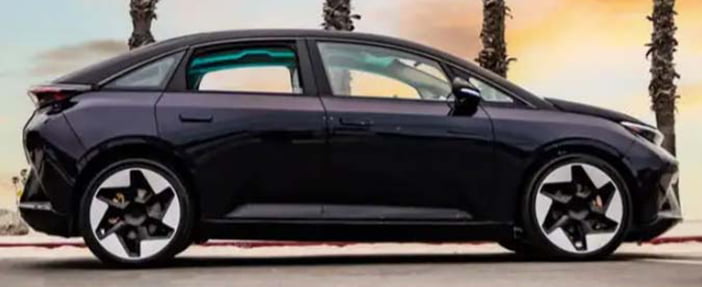
+++ California start-up Independent Electric Vehicles (Indi EV) has signed a deal with FOXCONN to produce prototype versions of the Indi One, a new crossover, at the electronics giant’s Ohio factory. The deal means the Indi One, which opened for customer orders at the New York motor show earlier this year, will be built alongside a host of other electric cars including the upcoming Fisker Pear, Foxconn’s own Luxgen n7 and Model B, and the Lordstown Endurance pick-up. “The Indi One is a unique vehicle, and it demands the highest quality of automotive craftsmanship as well as consumer electronics manufacturing and engineering”, said Shi Hai, Indie EV founder and CEO. “Partnering with Foxconn, the world’s leader in consumer electronics, during this exciting time in their entry into electric vehicles means that Indi One drivers will lead the way into the future of personal transit”. The first Indi One has been reserved by William Bridge, CEO of sustainability NGO Global Green USA, whose star-studded honorary board includes Leonardo DiCaprio, Yoko Ono and Robert Redford. Indi EV was founded in 2017 and has been developing the One (which is sized between a Tesla Model Y and Model X) for more than 3 years. Prototypes are being tested ahead of a planned start to production in mid-2023, with crash testing currently under way. Indi EV will build the car in the US, with several sites reportedly under consideration. The base-model One, with a 75 kWh battery and an estimated 370 km range, will retail at $45,000 (about €60.000 in the Netherlands). A €92.000 premium model gets a 95 kWh pack and 480 km of range. It will be sold initially in North America but most of the One’s systems have been designed for global homologation, according to head of design Andre Hudson. It’s intended that the car will reach European and Asian markets at a later date. Key to the premium model is a high-powered Windows computer known as the vehicle integrated computer, which is clearly visible through a panel in the bonnet. It’s central to the One’s positioning as a “digital toolbox”. As Hudson puts it: “We believe that the future of EV technology is going to be measured more in processing power than horsepower”. The car’s VIC, 5G connectivity, microphones and cameras (3 inboard-facing, 2 outboard) enable it to function as a mobile workspace; as a hub for capturing, editing and uploading content; or as a platform for video games that employ AR or VR. In the last case, the gameplay can move in sync with the movement of the vehicle, which is said to eliminate the nausea sometimes associated with VR. Indi is developing its own games for passengers to play as well as opening the system up to third-party developers. Despite the focus on infotainment, the 4-wheeldrive Indi One is no slouch, accelerating from 0 to 100 kph in a claimed 4.3 seconds for the premium model, which has 470 hp and a top speed of 210 kph. The air-suspended chassis is one of many areas of the car where Indi has tapped into the expertise of external consultants and suppliers, such as Tata and seating specialist Faurecia. +++
+++ LEXUS is making a handful of changes to the LC for the 2023 model year. Again offered as a coupe and as a convertible, the firm’s range topper gets an updated suspension system and a new paint color, among other changes, and it costs slightly more than the 2022 model. The most significant changes for 2023 are invisible to the naked eye. Lexus notes its engineers optimized the front and rear suspension to “enhance ground contact feel, linear steering response, and steering effectiveness in the high cornering G range”. While the LC is more of a grand tourer than a track-ready sports car, these updates should make it more engaging to drive on a twisty road than the 2022 model. Buyers who prioritize handling can order an optional Sport Package that bundles a limited-slip differential, Yamaha performance dampers, performance brake pads, and Alcantara upholstery. While the package isn’t new, it gains 21 inch forged alloy wheels for 2023. The only other visual change is a new color called Cloudburst Gray. It bumps the number of available colors up to 9. Finally, every 2023 LC offers a 10-year subscription to the company’s connected services. The drop-top LC also benefits from these updates, and it receives a lighter soft top as well as an optional feature called Climate Concierge that adds a few weeks to convertible season by keeping each passenger’s upper body warm. The function can even direct warm or cold air to the back of the driver’s hands. Lexus is not making mechanical changes to the LC for 2023. Power for the LC 500 comes from a naturally-aspirated, 5.0-liter V8 rated at 464 hp and 530 Nm. It spins the rear wheels via a 10-speed automatic transmission, and it sends the coupe from 0 to 100 kph in 4.7 seconds. While that’s the LC Convertible’s only engine option, the coupe is also offered with a gasoline-electric hybrid powertrain built around a 3.5-liter Atkinson-cycle V6 and rated at 359 hp. It shifts through both a CVT and a 4-speed automatic. +++
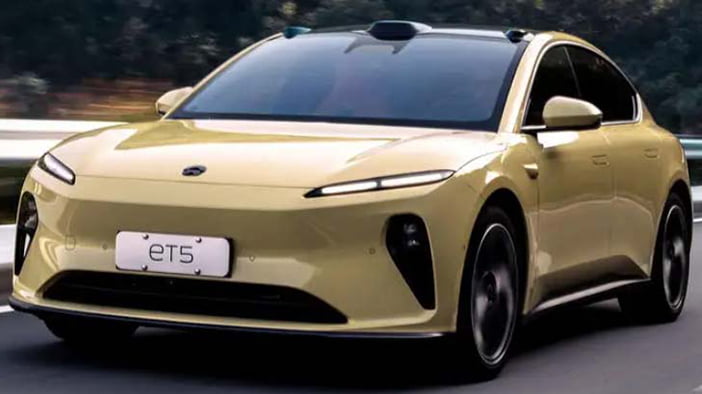
+++ Growing Chinese premium EV brand NIO will make its European debut next year, company founder and CEO William Li said at Nio’s launch in Germany on Friday. The brand will launch with its mid-sized Nio ET5 saloon, a rival to the Tesla Model 3, and other models more suited in size to the European market, Li said. “I think smaller cars like the ET5 and another scheduled for production”, Li told, without naming the additional model. Nio will also introduce battery swap stations in Europe to allow owners to change their batteries in around 5 minutes, giving the brand a useful selling point if it can install a decent-sized network. Cars will be exclusively leased, either for a fixed period or via a more flexible subscription model that will enable customers to hand back their vehicles with as little as a month’s notice. The subscription model has proven successful for Chinese brand Lynk&Co, owned by Geely, in establishing itself in select mainstream European markets. Nio launched its brand globally in 2016 at an event in London but it restricted sales initially to China. The brand’s move to Europe last year started in Norway, where it also built the first battery swap station. Friday’s launch in Berlin marks the brand’s expansion not just in Germany but also Sweden, the Netherlands and Denmark. Deliveries of the ET7 large saloon car will begin in October in Germany, with the EL7 large SUV and ET5 following in March. No prices have been disclosed yet. The EL7 was renamed from the ES7 in China following a lawsuit from Audi, which argued that Nio’s naming strategy for its SUVs using the ES lettering sounded too similar to its S-badged sports range, which are also coupled with numbers for cars such as the Audi S7 and Audi S8. The Nio models for European markets are all built on the brand’s new NT2 platform, which combines high-tech software and sensors to give the cars the ability to drive autonomously in certain scenarios, the brand said. No timeframe was given for homologating the cars for low-speed highway hands-free driving in Germany to follow the Mercedes S-Class and EQS. The ET7 features a lidar sensor unit prominently above the windscreen, flanked by two cameras. Nio had sold just under a quarter of a million vehicles as of 30 September, the brand said, the majority in China. Sales in Norway stood at around 1000, it said. Li said Nio is in talks with other brands about using the company’s battery swap platform and has even built prototypes for some car makers, although he didn’t name them. The company offers a range of battery sizes that fit into the same underfloor space to allow customers to swap in the size they need. An ultra-long-range 155 kWh version is expected to be added to the battery swap stations in China in the first quarter next year, the company said. +++
+++ The new RENAULT 5 will arrive in 2024 with a 136 hp front-mounted motor, which should provide it with similar performance to today’s Zoé. Priced from around €29.000, the 5 has been confirmed to receive the new ePT-100kW motor, built at the Cléon engine factory which has produced powertrains for compact Renault models since the early 1960s. The factory already produces the more potent ePT-160kW motor used by the Renault Mégane E-Tech Electric, and Renault has said it will be building more than 1 million EV units per year by 2025. The firm has also confirmed plans for an ePT-200kW (272 hp) motor to start rolling down the line in 2027 but hasn’t yet said which model will receive this. It has been developed in partnership with engineering firm Valeo and is said to contain no rare metals. The 5 was first shown as a concept at the Munich motor show last year. Set to be part of a major new plan to revive Renault’s fortunes, it will sit on the Renault Group’s new CMF-BEV platform for small electric cars. Company boss Luca de Meo said the use of the new platform and revamped battery tech will enable the firm to sell the 5 for about 33% less than a current Zoe. Renault has also confirmed that the new 5 will use new powertrain technology and nickel-cobalt-manganese (NCM) batteries, which it claimed will dramatically reduce the cost per kWh. The company added that the 5 will have a range of around 400 km. The 5 Prototype takes styling and design cues from the Clio’s predecessor that Renault produced from 1972 to 1996. It’s set to be 1 of 14 new models, including 7 EVs, that the French brand will launch by 2025. It will also be joined by a new version of the Renault 4, called the 4ever. The French firm originally revealed the new 5 concept during the unveiling of the Renaulution plan devised by de Meo last year, hailing it as a key part of Renault’s push for 30% of its sales to be of electric vehicles by 2025. De Meo, who during his time at Fiat was key in reviving the 500, said: “I know from experience that reinventing a cult products lights a fire under the whole brand. This is a cult vehicle at a price many can afford. And this is only the beginning for the whole Renault brand”. The 5 is an electric-only model, with a design that features numerous references to various versions of the original 5, including the cult classic Supercinq and R5 Turbo versions, albeit given a modern EV twist. The front headlights are modelled on the original design, while there’s a front-mounted EV charging port located where the radiator grille was placed on the original. Renault design chief Gilles Vidal said: “The design of the Renault 5 Prototype is based on the R5, a cult model of our heritage. This prototype simply embodies modernity, a vehicle relevant to its time: urban, electric, attractive”. The showcase features wider rear wheel arches and a red stripe livery that nods to the R5 Turbo hot hatch, hinting at the prospect of a high-performance version of the new model. Indeed, performance brand Alpine confirmed that it is working on its own version of the 5, which will arrive shortly after the standard car, using the same 220 hp powertrain as the Mégane E-Tech Electric. +++
+++ TESLA made a bold move by removing the radar in its cars in favor of its new camera-based vision-only Tesla Vision approach. People said it was a bad idea and couldn’t be done, but it didn’t take long before safety organisations tested the vision-only features and approved them. Now, Tesla has announced that it will move forward even further with the vision-only setup, by eliminating ultrasonic sensors from its cars. Much like the situation with the removal of radar, Tesla will certainly face some pushback here. Its cars’ safety features will also need to be retested and approved all over again since the systems will be working differently. This means its cars will likely lose various awards and/or recommendations until after they’re proven to work as intended without the ultrasonic sensors. Tesla’s original Autopilot suite featured 8 cameras, forward-facing radar, and a host of ultrasonic sensors. The company insists that if a car is going to drive like a human, it needs to “see” the world around it and then react accordingly. Tesla has also noted that the various technologies can contradict one another and that it has learned that when paired with AI and a neural network (essentially the brain), camera-based vision appears to have the most success, and it can see so much more than any human. Tesla just announced this week: “Today, we are taking the next step in Tesla Vision by removing ultrasonic sensors (USS) from Model 3 and Model Y. We will continue this rollout with Model 3 and Model Y, globally, over the next few months, followed by Model S and Model X in 2023”. Much like the removal of radar, Tesla is starting with the Model 3 and Model Y. It will begin removing the USS from its flagship Model S and Model X vehicles next year. The USS were especially helpful for shorter-range object detections. For example, they helped the car with Autopark and collision warnings. However, if the car can “see” the world around it, render it, and analyse distances, Tesla could argue that the sensors are creating unnecessary redundancy. Tesla went on to explain that it’s using software and its neural network to replace the data provided by the USS with that of data collected via its vision-based system. The company shared that “this approach gives Autopilot high-definition spatial positioning, longer range visibility and ability to identify and differentiate between objects. As with many Tesla features, our occupancy network will continue to improve rapidly over time”. During the transition period, Tesla notes that certain features, including Park Assist, Autopark, Summon, and Smart Summon, will either be limited or inactive. Once the company can prove performance parity without the USS, it will restore the features. +++
+++ VOLVO is set to take a big step towards full-electrification in 2022, with the launch of a ground-up EV replacement for its XC90. The new model is dubbed the EX90, and it’ll be unveiled in full on 9th November before going on sale next year. Spy shots of a prototype indicate an evolutionary design over the XC90, but the EX90’s tech suite will far surpass its predecessor. The Swedish firm has confirmed that bi-directional charging will be available, allowing the EX90 to power external electrical devices and feed energy back into a home. The system will also be capable of charging other electric Volvos, and the firm’s charge management software could reduce energy costs for the user by charging during periods of low demand. When energy demand is high, the car can also sell energy back to the grid, although these features will depend on particular market rules. As per Volvo’s focus on safety, the new EX90 will also feature plenty of advanced equipment to protect pedestrians, cyclists and other road users, as well as occupants, and according to Joachim de Verdier, head of Safe Vehicle Automation at Volvo: “We believe the EX90 to be the safest Volvo car to ever hit the road. We are fusing our understanding of the outside environment with our more detailed understanding of driver attention. When all our safety systems, sensors, software and computing power come together, they create a preventative shield of safety around you – and you won’t even know it’s there until you need it”. Systems to be offered on the EX90 as a result include a new Lidar set-up (light detection and ranging) which uses a scanning laser light to detect objects ahead. Volvo claims the tech can pick up a tire lying in the road up to 120 meters ahead of the car’s path, for example, while it can pick up pedestrians up to 250 meters down the road. This detection method works at highway speeds as well as in daylight and at nighttime; unlike a camera-based system light is not required for the Lidar to work, so the level of protection offered is the same regardless of driving conditions. With Lidar Volvo claims accidents with severe outcomes can be reduced by up to 20 per cent, with overall crash avoidance improved by 9 percent. In the EX90 the Lidar system is accompanied by 5 radars, 8 cameras and 16 ultrasonic sensors. The latter includes parking sensors, for example, while much of the other tech will still be used for pedestrian detection and lane keep assist, plus convenience features, such as surround-view when parking and semi-autonomous adaptive cruise control. The EX90 will also be fitted with plenty of interior safety technology, including a driver understanding system that features 2cameras trained on the driver to understand their concentration and attention levels. The tech observes a driver’s eye-gaze patterns, measuring how much time is spent focusing on the road. Volvo believes a driver can actually focus too much on the road ahead and suffer from cognitive distraction, focusing on their thoughts and not the task of driving. Obviously too little attention paid to the road shows that they are visually distracted, potentially by a mobile phone or another device. Combined with a capacitive steering wheel sensor that knows when the driver is gripping the wheel, the gaze monitoring tech will look to build a bank of driver behavior data and intervene in a manner of different ways when needed. This could be by a simple warning that grows in volume depending on the severity of the danger ahead sensed by the system, or the car can even bring itself to a stop by the side of the road and activate the hazard warning lights if no driver action is received. The EX90’s exterior sensors will be incorporated in a new body, with the patent drawings showing Volvo’s now signature ‘Thor’s hammer’ headlights. The rear bumper and C-shaped light design clearly reference the outgoing XC90 but look sharper and more modern, while the new car’s overall proportions are very similar to the current XC90. As per the all-electric powertrain offering, the EX90’s grille has been blanked off to reduce drag, with the new car based on Volvo’s new SPA2 platform that features a fully flat floor to house the car’s battery. Specifics on the propulsion system and a target range have not yet been revealed. It was originally thought that the new car could be called ‘Embla’. However, Volvo changed its CEO in March this year, with Briton Jim Rowan taking over. This could have been a key factor behind the brand’s U-turn on the car’s name; Volvo has also trademarked EX60, EX40, ES60, ES90, EV60 and EV90, potentially for all-electric version of its smaller SUVs and its saloon and estate models. As such, there will be no pure petrol or diesel-powered versions of Volvo’s next big SUV that will rival cars such as the Audi Q7, BMW X5 and Volkswagen Touareg in the large SUV segment. Indeed, by 2025 Volvo is aiming for 50 percent of its sales to be of fully electric models. The new EXC90 will introduce a new-generation interior for Volvo. As per the Concept Recharge that previewed this new car, the EX90 will still use a portrait-style central touchscreen, but the panel will be integrated into a much more minimalist environment. The 15 inch central display will run a new-generation software called VolvoCars.OS, and will sit on a floating style dashboard; the pure electric powertrain and underfloor batteries make a central tunnel unnecessary, opening up further space inside the cabin and boosting practicality in the process. We’ll see the new EX90 unveiled at the beginning of November this year, but full details on the new car’s powertrain, platform and other advanced technology could be drip-fed by Volvo before the covers come off the new car in autumn. +++