
+++ AUDI says the latest Q7 is the first production model to earn a perfect score in Euro NCAP’s Post-Crash Safety category, hitting 100 percent in an assessment that most automakers barely register in their marketing. The large SUV also earned the organization’s overall 5-star rating, so buyers get 2 separate verdicts bundled under 1 badge. One measures how the Q7 protects people in a crash. The other measures what happens in the minutes right after.
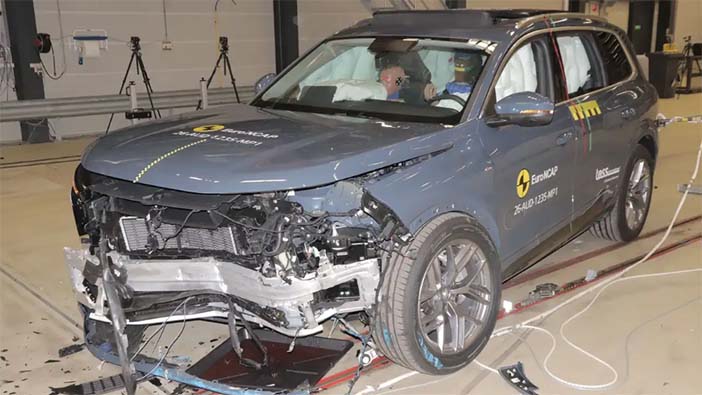
Post-Crash Safety is its own Euro NCAP category, separate from the crash-test dummies and structural scores that usually dominate headlines. It covers whether the rescue chain gets alerted automatically, whether the vehicle hands over useful data, and whether responders can get occupants out fast and safely. Audi’s connect emergency call system can trigger that rescue chain on its own after a serious crash, transmitting the legally required occupant and impact data along with extra vehicle and location details. No phone call, no waiting for a bystander to notice. Assessors also scored the Audi Q7 on physical access: door unlocking and opening after impact, whether the electronics still function if low-voltage power fails, and how easily the seat-belt buckles release. The Q7 posted the maximum result across all of those criteria. Audi also supplies vehicle-specific rescue data sheets and rescue guides, documents that tell firefighters and paramedics exactly where the battery, fuel lines and structural reinforcements sit before they start cutting metal. A first hit is rarely the only danger. The Q7’s multi-collision brake detects a relevant collision, then automatically brings the vehicle to a standstill, applies the parking brake and switches on the hazard lights without driver input. That sequence is built to cut the odds of a second, often worse, impact as an SUV rolling into traffic after the driver is stunned or incapacitated is a real and documented risk. The driver can still override the automatic braking if needed. None of this changes how the Q7 performs in the actual crash. That’s a separate 5-star result covering occupant protection, pedestrian safety and standard driver-assistance systems, measured well before the post-crash category even starts its clock. The Q7 that earned this Post-Crash Safety score has a flexible 3-row interior with space for up to 7 people. It sits in a pricing bracket that already overlaps 3-row rivals that have not yet gone through the same Post-Crash Safety protocol. +++
+++ General Motors won’t pull the plug on the combustion-powered CORVETTE anytime soon, but a separate version with a plug (pun intended) and no petrol engine is still in the cards. The only question is when. According to the man in charge of engineering the iconic American sports car, battery power will eventually become part of its future. Tony Roma, GM’s executive chief engineer for Corvette and Performance Cars, recently reaffirmed the company’s commitment to a fully electric Corvette. He acknowledged that an EV is inevitable, even if the bowtie-emblazoned company isn’t ready to spill the beans on its development timeline. “The electric cars are the end game, so someday there will be an electric Corvette, and I think that’s what Mark was trying to say”. He was referring to comments GM President Mark Reuss made in 2022, when the executive announced plans for an electric Corvette alongside the then-upcoming E-Ray. More than 4 years later however the battery-powered sports car still hasn’t materialized. Roma isn’t backing away from the idea, but he also isn’t putting a date on the calendar. “Someday we will fully electrify Corvette. But not today”, he added. In other words, the electric Corvette is still happening, but don’t hold your breath waiting for it to arrive at a Chevrolet dealership. When Reuss first teased an electric Corvette, speculation quickly turned to whether the car could arrive during the current C8 generation. That hasn’t happened, and with the mid-engine sports car now well into its life cycle, the next-generation C9 seems like a more plausible candidate.
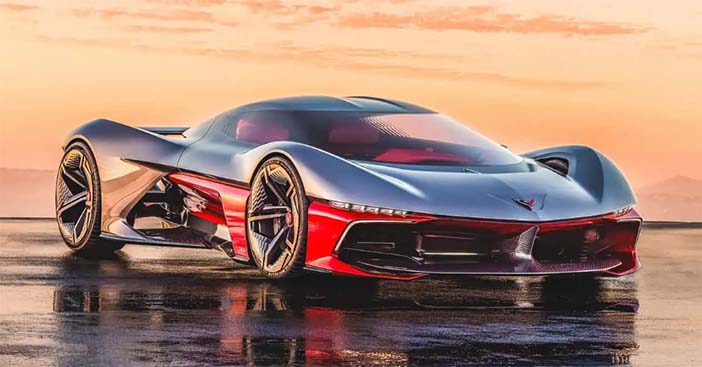
That’s merely an educated guess, though, as GM hasn’t confirmed which generation will get the all-electric treatment. It would make sense to sell the EV alongside the gas-powered Corvette rather than replace it, especially since electric supercars haven’t exactly caught on. Meanwhile, the automaker remains tight-lipped about the project. For now, Corvette fans will have to settle for electrification in a different form. The E-Ray introduced hybrid power to the lineup, pairing a naturally aspirated 6.2-liter V8 with an electric motor that drives the front wheels. The result was an all-wheel-drive Corvette that delivered instant electric torque without ditching the traditional V8. Chevrolet has since pushed the hybrid formula further with the ZR1X, which pairs a twin-turbocharged 5.5-liter V8 with an electric motor for a combined output of 1.250 horsepower. The Grand Sport X also joins the line-up for 2027, bringing electrification to another corner of the range. These models show how GM can use electric motors to improve performance while keeping gasoline power at the heart of the Corvette experience. A fully electric model, by contrast, would represent a much bigger departure for a nameplate synonymous with V8 power and an unmistakable exhaust note. Before anyone starts writing an obituary for the Corvette’s V8, Roma didn’t say GM plans to abandon combustion engines across the entire lineup. His comments leave plenty of room for gasoline-powered and hybrid models to coexist with an eventual EV. That’s hardly surprising. GM has invested heavily in expanding the C8 family, from the electrified E-Ray and Grand Sport X to the increasingly outrageous ZR1 and ZR1X. There’s little reason to believe Chevrolet will suddenly abandon that formula just because an electric model is coming. The bigger challenge will be making a battery-powered Corvette feel special enough to deserve the badge. Instant torque and blistering acceleration are obvious selling points, but a Corvette is about more than straight-line speed. As with any performance car transitioning to an EV, weight, handling, driver engagement and the emotional connection between driver and machine will be important hurdles to overcome. Other sports-car makers are approaching the electric question differently. Porsche, for example, has reiterated its commitment to keeping the 911’s combustion engine alive forever, with CEO Michael Leiters explicitly saying there will never be a fully electric version. Chevrolet will eventually have to decide how an electric Corvette fits alongside its gasoline-powered siblings, assuming the two continue to share showroom space. Perhaps the EV will sit at the top of the range as a technology showcase, or maybe it’ll open an entirely new chapter for America’s most famous sports car. For now, those are just possibilities. Roma’s message is straightforward: GM sees electric cars as the end game and even the Corvette won’t be exempt forever. The V8 still has plenty of life left, but the clock is ticking toward an electrified future. Just don’t ask GM when it’ll arrive. +++
+++ New FIAT boss Arnaud Belloni has said Euro NCAP crash safety ratings are no longer important for manufacturers because “customers don’t get it any more”. The Italian brand is currently developing an entry-level small EV that could meet the European Union’s new E-Car regulations for cut-price machines. To keep costs down, such models could be fitted with fewer safety and semi-autonomous driver assistance features, which would be likely to result in lower scores in the European safety test scheme. Asked whether producing an entry-level E-Car means accepting a lower Euro NCAP score, Belloni said: “I don’t know how to be politically correct here, but Euro NCAP, it is existing but customers don’t get it any more. They are totally lost and it’s because of Euro NCAP changing the rules every 2 years, so what was a 5-star car a few years ago becomes a 3-star car and then a 2. I’ve worked in this industry for 35 years and Euro NCAP has been there almost from the beginning. And I can tell you very few manufacturers are taking it really seriously. They don’t drive strategy based on your rank. Customers don’t know because they are lost, so it’s not important”.
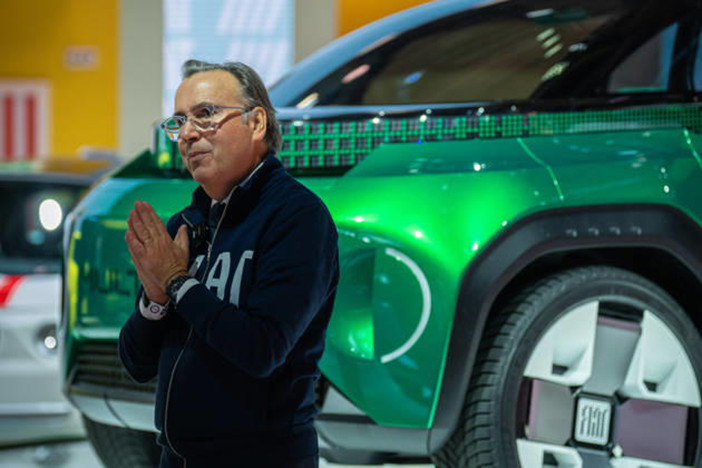
Belloni added that customers trust that new cars are inherently safe. He said: “Everybody’s clever. A consumer is clever and there are a lot of regulations everywhere to regulate your life every day. People understand that manufacturers are doing their best to improve the safety on board or reduce CO2 emissions. This industry has massively evolved more than any other industry in the last 30 years, and customers realise that”. +++
+++ JAGUAR knows its radical reinvention won’t please everyone, but the British luxury brand insists it had little choice but to start over. After years of struggling to compete with BMW, Mercedes and Audi, the company decided that simply refreshing its existing portfolio wouldn’t cut it anymore. Instead, Jag is moving upmarket with an exclusively electric lineup aimed at a wealthier clientele. Speaking about the risky decision, managing director Rawdon Glover told that Jaguar’s old business model wasn’t profitable or growing. Competing in the premium-volume segment dominated by the German trifecta had become increasingly difficult. “We had created some brilliant products, some were best in class, but the competitiveness in that sector was too much for Jaguar to cut through. When we had to make a decision as to what was next for Jaguar (what cars we would make, which sectors to compete in), we could have carried on as we were or rip up the rulebook and give Jaguar a fresh start. The former was never an option if Jaguar was to survive”. In other words, Jaguar could build good cars and still struggle to make the numbers work. The brand had earned plenty of recognition over the decades, but that affection wasn’t translating into the sales volumes needed to sustain the business. Glover told that doing the same thing all over again no longer made sense: ‘It wasn’t sustainable for us to continue as we were. A lot of brand management is small, little changes. It’s about tweaks here and there. This wasn’t one of those changes. It really needed to be a big step”. Rather than continue fighting for customers in a crowded segment, Jaguar wants to compete at the high end of the luxury market. The idea is to sell fewer vehicles at significantly higher prices, using distinctive designs and more exclusive positioning to stand out from the competition, as the Type 01 grand tourer shows. That strategy explains why Jaguar has effectively abandoned its entire previous lineup ahead of the new electric GT’s arrival. Sedans like the XE, XF and XJ are now a thing of the past, and the same goes for the F-Type sports car and the E-Pace and F-Pace SUVs. Even the already electric I-Pace had to go to make way for the new-era Jaguar, whose cars will bear little resemblance to the old guard. The new direction represented by the Type 01 is a considerable gamble. Moving upmarket means Jaguar will target a much smaller pool of buyers, while its unconventional design language risks alienating traditional customers. However, the company believes its previous approach left it stuck in a segment where it couldn’t compete effectively on either scale or profitability. Jaguar’s decision to reinvent itself has attracted plenty of attention, not all of it positive. The new branding and marketing campaign triggered a fierce online backlash, while the Type 00 concept divided opinion with its radically different styling. The subsequent production model has also sparked controversy over its flamboyant design.
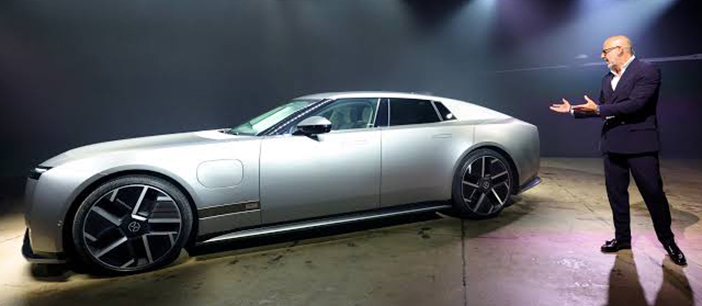
Ultimately, Jaguar is betting that a clean break with the past will give it a better chance of building a sustainable business. That doesn’t mean the new strategy is guaranteed to work, especially as the company prepares to charge substantially more for cars aimed at a narrower audience. Still, Jaguar’s argument is straightforward: doing what it had been doing wasn’t working, so it had to try something different. Whether customers embrace that vision is another matter entirely. The Type 01 will need to do more than turn heads if Jaguar wants to prove that killing off its ICE-powered line-up was the right move. As things stand, Jaguar says more than 50.000 people are interested in the electric GT, but it’s too early to tell how many will actually buy one. For what it’s worth, the company says 80 percent of potential buyers are new to the brand, broadly in line with a projection Glover made last year, when he estimated that around 85 percent of customers would be buying a Jaguar for the first time. +++
+++ Toyota has filed a patent application describing a way to fake a manual transmission in an electric car. The timing lines up with the all-electric LEXUS LFA , which is expected to arrive in 2027. The system uses torque control instead of a clutch. It could end up connected the LFA Concept’s steering wheel paddles. The application lays out how an EV can mimic the jolt of a sequential racing gearbox without any clutch pedal at all. Lexus has not confirmed the tech is headed for production. The patent application outlines a system that shapes electric motor torque over a set period to recreate the feel of changing gears, even though an EV has no gears to change. Instead of a conventional transmission, software manages how power reaches the wheels and when.
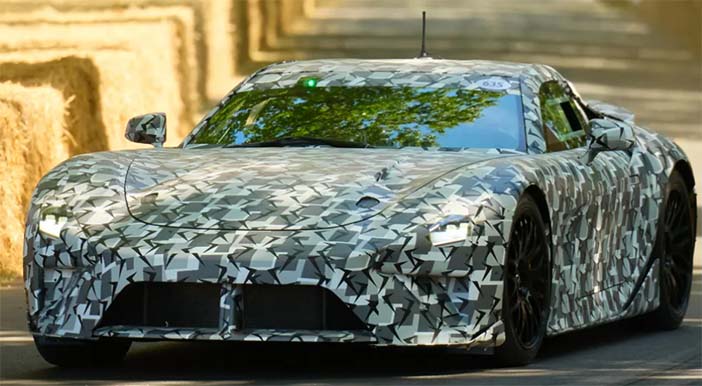
Toyota’s filing explains the thinking plainly: operating a clutch can be troublesome for drivers accustomed to automatics and most EV buyers will probably have had little to no experience with a real manual. That line reflects earlier ideas. Prior patent work referenced a simulated manual with a pseudo clutch pedal, and it flagged that layout as potentially inconvenient for drivers who had never used one. Dropping the pedal also has a performance upside. The patent notes that cutting the clutch out of the equation allows for quicker shifts. It more closely replicates how a real sequential gearbox behaves on track. The mechanism itself centers on a temporary torque cut. During a simulated shift, the system drops motor torque to zero, then restores it. Sometimes it briefly overshoots the target figure to imitate the snap of a clutch re-engaging under load. Drivers would reportedly get selectable profiles, including sport or race modes, that change how aggressive those torque cuts feel. A race setting could sharpen the simulated shift bite, while a milder mode might smooth it out for daily driving. Hyundai already sells something similar. The Ioniq 5 N’s N e-shift feature uses comparable torque manipulation paired with paddle shifters and Porsche has filed patents covering related territory. Toyota is not chasing an unproven concept. Lexus has already shown steering-wheel paddles on the LFA Concept unveiled in 2025, first as the Lexus Sport Concept at Monterey Car Week and the Japan Mobility Show. That concept recently appeared in Australia for the Melbourne Cup Carnival, still without official power, battery or range figures attached. +++
+++ Call me Nostradamus, but I believe AI will spell doom for many jobs in the coming decades, if not within years. We’ve already seen how quickly the technology has evolved and it’s becoming increasingly difficult to dismiss the possibility that machines will eventually replace people in many professions we once considered safe. The automotive industry is no exception. SKODA ’s head of exterior design is a case in point, admitting he’s genuinely shocked by how good the technology has become. Karl Neuhold told that he’s experimented with AI himself and was impressed by what it could accomplish with very little input. ‘I’m shocked by how good it is. I use it myself and I’m so surprised by a simple sketch that, in seconds, gives you versions you couldn’t have rendered better yourself”. Neuhold sees AI as a way to speed up the creative process, letting designers explore ideas that would otherwise take much longer to visualize. A rough sketch can now produce several polished renderings within seconds, helping teams communicate ideas faster and more efficiently. His message to fellow designers is clear: adapt or risk falling behind. In his view, sketching alone will no longer be enough to remain competitive. Designers must learn to incorporate AI into their workflows rather than ignore it. There’s a catch, however.

If a smaller team can produce more designs in less time, automakers may eventually need fewer people working in their design studios. Neuhold acknowledges that possibility and is particularly concerned about what it means for aspiring designers. If AI can produce professional-quality renderings almost instantly, young creatives could find it harder to get their foot in the door and develop the skills needed to build a career. “Do we even need that many people anymore? Unfortunately, no. That’s really tough for young designers right now; how are they supposed to become professionals? The quality of AI is astonishing, unbelievable”. It’s a dilemma: experienced designers can become more productive, but fewer entry-level opportunities could leave the next generation struggling to gain experience. If junior designers don’t get the chance to learn on the job, the industry could face a talent pipeline problem further down the road. Despite his enthusiasm for the technology, Neuhold isn’t suggesting that aspiring designers should abandon traditional skills. When evaluating job applicants, he still encourages them to bring hand-drawn sketches to demonstrate their creativity. That’s an important distinction. Generating a convincing image is one thing; coming up with an original idea that fits a brand’s identity, meets practical requirements, and appeals to customers is another. Automotive design involves far more than producing an attractive picture, from getting the proportions right to incorporating sensors, lighting systems, and other technical elements that require passing a multitude of regulations. Another bigger question is who owns the ideas AI produces. If designers can generate dozens of concepts with a few prompts, automakers will have to figure out how to protect their intellectual property and ensure their cars don’t start looking increasingly alike. After all, rival brands have access to the same tools, which could make it harder to establish a distinctive design identity in an increasingly crowded market. Ultimately, Neuhold believes designers must understand what people want from their cars and find ways to surprise them. AI might make the journey from sketch to finished rendering dramatically faster, but someone still needs to decide what the car should look like in the first place. For now, designers who learn to use AI could gain a significant advantage over those who don’t. But for young talent hoping to break into the industry, the bigger challenge may be finding someone willing to give them their first opportunity. +++
+++ A new TOYOTA COROLLA is coming with a radical design and a refreshed interior. The Japanese automaker reportedly also has big plans for the powertrain, separating the car’s electrical architecture into 4 groups. This departs from the current trend, where automakers like Tesla are moving toward a centralized computer architecture that enables software-defined vehicles. This puts all vehicle controls, features and systems on a single hardware platform, greatly reducing the wiring needed. Toyota will divide its electrical architecture into driver-assist technology, cabin controls, body electronics and motion control. This will allow Toyota to tailor each system to the vehicle’s powertrain and features. Toyota’s new electrical architecture will let it offer the next-generation Corolla with several powertrain types. The most likely option is a traditional hybrid, but Toyota will also offer a pure internal combustion version, along with a battery-electric vehicle and plug-in hybrid, depending on the market. In Europe, I expect hybrid Corolla hatchbacks and wagons to mix with plug-in hybrid and battery-electric versions.
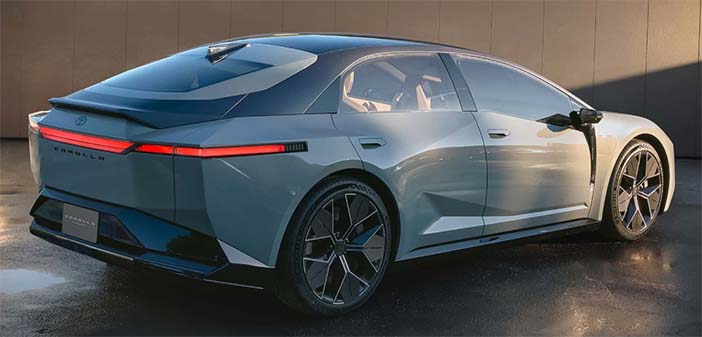
The Japanese automaker has already revealed that it is developing a new family of 1.5 and 2.0-liter inline-4 engines, with the smaller one likely powering the compact model. Toyota claims the engines will be lighter and more efficient than the current ones. Toyota teased the next-generation Corolla a year ago with a radical concept car that’s a complete departure from the current model. The Corolla concept features stunning 21-inch wheels, a descending beltline and frameless doors. I doubt the next Corolla will look as radical as the concept, but it does preview Toyota’s intentions. The current, 12th generation Corolla is nearly a decade old, with production starting in 2018. Toyota will likely reveal the 13th generation Corolla sometime next year. If the production car looks anything like the concept and packs fuel-efficient powertrains, the Corolla will likely remain a popular option. +++
+++ VOLVO has started building the EX60 at its Torslanda plant in Sweden, but the electric SUV is barely trickling into US showrooms. The automaker’s reported output sits at 200 vehicles per week, a fraction of the original plan. Dealers who expected meaningful inventory this year are being told to wait. Early units have landed stateside, but Volvo has reportedly warned its US retail network that real volume will not show up until well into 2027. Volvo aimed to build around 2.000 EX60s per week when it kicked off series production at the upgraded Torslanda factory in late April. That target would have supported an initial US first-year goal of 7.000 vehicles, according to dealer guidance. Reality has fallen far short. Output has reportedly run at roughly a 10th of the original pace leaving US dealers with only a handful of vehicles to sell while demand for the SUV builds.
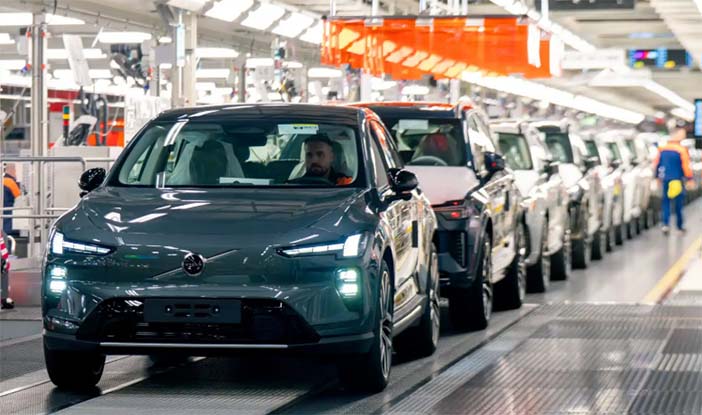
Volvo spokesperson Jacquelyn Johnson said short-term supply would stay limited and that many vehicles already allocated to US dealers are expected to arrive early in 2027. That is a notably softer timeline than the thousands of vehicles buyers were promised for this year. The EX60 carries real weight for Volvo’s American ambitions. It is central to the brand’s push toward 200.000 annual US retail sales by 2030, a goal that gets harder to hit every month the SUV stays scarce on dealer lots. Industry reporting traces the bottleneck to problems integrating the high-voltage battery pack with the body and to electric-motor production at Torslanda. Volvo has not disclosed a detailed technical root cause for the slowdown. The EX60 is also Volvo’s first model built on its new megacasting architecture, which uses a single large casting for the floor structure produced in-house at the plant. New tooling on this scale often runs rough in its first months and that appears to be playing out here. Nothing ties the slowdown to safety or quality concerns with the EX60 itself. The issue is getting battery packs and motors built and matched to the car at the volume Volvo originally planned. Volvo dealers should expect the trickle to continue through the first half of 2027, with meaningful supply only in the back half of that year. The EX60 now has to carry more of the electric load in the US as the EX40 stays on sale as a 2026 model but is slated to leave the market after this generation. +++