
+++ ALFA ROMEO has shown the logo of a limited-run supercar, potentially called 6C, which it will launch this year. The emblem appears briefly at the end of a recent Alfa Romeo Instagram video, and is the first official glimpse of the firm’s upcoming halo model. Alfa boss Jean-Philippe Imparato recently told that the project could be announced as soon as March 2023. “When you visit the museum of Arese, you see so many ideas from our past”, said Imparato. “Yes, we are working on something ‘few off’ (as in the firm would only make a few of them in a limited run) for Alfa Romeo”. It is not yet known what form the car will take, be it petrol or electric, but Imparato hinted that it would be a bespoke Alfa model rather than shared with another Stellantis brand or model, such as the Maserati MC20. “It’s 1969 since the last time Alfa Romeo was stamped on a chassis”, he said, adding it would be “a cool thing” to do it again. He said the model would not just be a track car, but one that could still be driven everyday despite its likely price and positioning. “It could be iconic, super-sexy and recognisable as an Alfa Romeo at first sight. It’s not done yet, but it’s ongoing. The positioning is ongoing. We have so many fans asking for something special”, he said, before adding that he hoped to be able to give an answer to them in March next year. His description suggests it could even stray into hypercar territory, with a suggestion that the price could run into the hundreds of thousands. Imparato said this limited-run car is parallel to Alfa’s core range of models. This new range of cars has been signed off until 2027 after the return of Alfa to the black in 2021 and the first half of 2022. 1 model per year will be launched. Beyond 2027, it has presented a product plan to its parent Stellantis until 2030, and each year of success between now and then will allow a subsequent model to be signed off. “Each year, we will lock the next five years of the product plan with Stellantis”, he said. The new range kicks-off with the launch of the 280 hp Tonale Plug-in Hybrid SUV. This will help cut Alfa’s CO2 emissions by 40%, which “allows us to develop”, said Imparato. This year will also see the launch of revised versions of the Giulia and Stelvio. When asked if Alfa planned SUVs in the future bigger and smaller than the Tonale, Imparato said “yes and yes”. It’s understood the smaller SUV will come in 2024, as an all-electric Alfa Romeo sister car to the Jeep Avenger, although the Alfa would be greatly overhauled with a very different set of capabilities. The larger SUV is understood to be a replacement for the Stelvio, also electric and due around 2026. These 2 will be sandwiched by a replacement for the Giulia in 2025, which will be the first model in Stellantis to be based on the group’s next-generation electric architecture. “It has 5G and new era technology that will bring to market something special”, said Imparato on this new platform, which will also bring a highly advanced new software suite and capability to Stellantis. The Giulia replacement would be seen as Alfa’s core sports model, said Imparato, which gives a likely flavour to its dynamic potential and positioning. To that end electrification provided “good news” for the Giulia, a further hint at its likely power and performance. All future Alfas would also be considered for the Quadrifoglio treatment, he added, saying that it would be a “yes/no” decision taken per model as to whether “it deserved a Quadrifoglio” version. Beyond those models up until the Stelvio replacement in 2026, Imparato hinted multiple options and bodystyles were on the table for the brand, including roadsters, saloons, and hatchbacks. “With the EV switch, it opens so many opportunities for me for top hats from a design point of view”, said Imparato, in reference to how wildly different bodystyles can be built on top of common skateboard chassis electric car architectures. “The best way for EV is for a Duetto, the sound of silence”, he said in a further hint at plans for a reborn Spider, something he also spoke of his desire of doing earlier this year. “It opens sedans, it opens a C-segment hatchbacks, so many interesting things we know”. After 2025, all core Alfas will be electric and all models it sells by 2027 will be electric, an indication that the Tonale will be the last Alfa launched with conventional internal combustion engines. “Alfa will switch from zero [electrified cars]to zero [emissions]the fastest”, said Imparato. He welcomed the switch in general to electric cars, and said that there was “no plan b” for Alfa other than what he has developed. “On questions of legislation, on global warming and the global ecosystem, there is no alternative”, said Imparato. “That’s why we want to be part of the game”. Imparato said Alfa would also reveal its future motorsport plans by the end of June next year. It will end its current works Formula 1 entry with Sauber at the end of 2023, the Swiss team instead planning a future with Audi from 2026. “We have a very good relationship with Sauber, and they’re the best ally in F1. Our focus is on 2022 and 2023. In parallel, we are studying the future, and the next steps and decisions will be in the economic context worldwide. We’ll stay in motorsport, the intention is to stay”. +++
+++ For a long time, it seemed like general wisdom held that ELECTRIC vehicle owners should also keep a vehicle powered by an internal combustion engine, just in case. But a new survey suggests that people who do own the 2 types of vehicles don’t really need both. Zap-Map, a U.K.-based EV charging station mapping service, asked 4.300 EV drivers about their driving behavior. It found that, among those who had both an EV and an ICE vehicle, the battery-powered vehicle was used for the majority of trips. “Our survey has shown for several years now that once you go electric, you don’t go back”, said Melanie Shufflebotham, Zap-Map’s COO. “This year we’ve gone further to show that drivers who haven’t quite let their conventional car go yet still choose to drive their electric”. This was especially true for shorter trips, as you might expect. Among the 1.300 people surveyed who owned both an EV and an ICE vehicle, 71 percent chose electric propulsion for a green daily commute. When it came to drives to do the shopping, to go out to a restaurant, and to do the school run, they used the EV 85 percent of the time. That, of course, makes sense, since those drives tend to be well within the range restrictions of the majority of electric vehicles, and so require no special planning. Even on longer trips, though, owners still preferred their EVs. Zap-Map found that these drivers take the electric vehicles on journeys of 160 km or more 67 percent of the time. Even more surprisingly, drivers with access to both an EV or an ICE vehicle opted for the electric one the majority of the time (55 percent) when they were embarking on a long, cross-country trip, that would require them to use public chargers. The survey results are “an endorsement for EVs that even when the option is open to take the fossil fuel car, drivers are very happy to stick with electric”, said Shufflebotham. “Anyone who still on the fence about going electric, perhaps not sure if 2023 is the year to do so just yet, this should be clear evidence that it’s time to take the plunge!” +++
+++ The fifth-generation LAND ROVER RANGE ROVER made its debut in October 2021. Based on Jaguar Land Rover’s MLA-Flex platform, the SUV is a luxury cruiser with available 5- and 7-seat versions, as well as a new plug-in hybrid powertrain. It has never been designed with speed and agility in mind, however, and this easily explains its relatively bad results in the moose test. The P440e version of the Range Rover was put through the infamous moose test just recently. This is the less powerful plug-in hybrid variant, which has a 3.0-litre turbocharged engine under the bonnet supported by an electric motor. The combined output of the system is 440 hp and 620 Nm of torque. A massive 38.2-kilowatt-hour battery pack provides an all-electric range of more than 100 kilometres on a single charge. This particular example of the SUV rides on Pirelli Scorpion Zero all-season tires in size 285/45 R22. This is surely not the grippiest rubber for the heavy family hauler we can think of and this probably affects negatively the results of the moose test. The first attempt at 76 kilometres per hour ends quickly with a spectacular loss of traction for the Range Rover and it is clear that the maximum speed at which the manoeuvre can be made is significantly lower. The weight of the vehicle is obviously a huge factory here but its very aggressive electronic stability system also makes it impossible for the SUV to go around the cones. After several more failed attempts, the testteam finally manages to do the exercise without hitting any cones at a speed of just 63 kph. At this velocity, the understeer is much less noticeable and overall, the SUV feels stable and fully controllable. Even at this speed, however, the ESC comes into action very intensively and reduces the speed of the front wheels. +++
+++ NORWAY is at the forefront of electrification and just achieved another milestone on its road towards zero-emission transportation. Already 20 percent (or 1 in 5) passenger cars in the country are all-electric. In Norwegian capital Oslo, the share of battery-electric cars (BEV) is even higher at over 33 percent. That’s an amazing result as other countries will require at least several years to achieve such a level. There are still not that many countries where the share of new BEVs is above 20 percent, not even talking about the BEV fleet share. In Norway, the vast majority of new car sales are BEVs. In the case of Norway, several factors must be considered to understand why the process progressed so quickly. First of all, Norway is a wealthy country. Secondly, Norwegians are very conscious of environmental topics. And finally, the country quickly applied a full package of incentives for all-electric cars, including 0 percent VAT tax. Because internal combustion engine cars are significantly taxed, and have been for a long time, BEVs were absolutely unbeatable. The article says that according to the Norwegian Electric Vehicle Association, within less than 2 years from now (so before 2025), the share of BEVs in Norway will increase to 30%. For reference, the move from 10% to 20% took 3 years. On the other hand, there are areas in the country where adoption of electric cars is much slower. For example, in Finnmark county in northern Norway, the share of BEVs out of the total fleet is 4.7%. It could be related to a more challenging (colder) environment, less dense charging infrastructure or maybe even the lower purchasing power of customers, compared to the capital (which usually is the wealthiest place in a country and more new cars are sold in general). This year, almost 90% of passenger cars sold in Norway are rechargeable. After the first 11 months of the year, 118.525 new plug-ins were registered, which is almost 88% of the total (78.3% BEVs and 9.6% PHEVs). Most recently, the Tesla Model Y set the new all-time record of annual sales for any car model in Norway. It’s expected that in 2025 the country only new zero-emission cars to be sold in Norway, which actually means that even plug-in hybrids will gradually disappear from showrooms soon. Several more years down the road and the ageing internal combustion engine fleet, (including non-rechargeable hybrids and plug-in hybrids) might be significantly reduced. +++
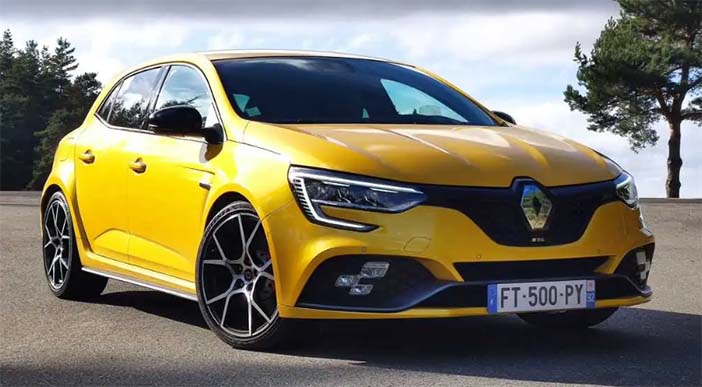
+++ Since the Mégane was introduced back in 1995, RENAULT has used the moniker for a variety of compact models. There have been hatchbacks, estates, saloons and even convertibles with fabric and metal roofs. Fans of the French brand will also remember the Mégane Scenic, while the latest take on the popular nameplate is an electric SUV. Of all the derivatives, the RS has been by far the most exciting. In 2023, it’ll be retired. Renault Japan has announced a limited-run Megane RS Trophy will break cover at the Tokyo Auto Salon next week. The company with the diamond logo doesn’t go into any details about the hot hatch, but it could effectively be the last Renaultsport-badged model ever. In 2021, Renault Sport changed its name to Alpine Cars. The writing is on the wall for the Megane RS as an exec from the company’s Australian branch has already announced the production run will come to an end in late 2023. As for the special edition, rumor has it the car is called “Megane RS Ultime” to signal it’s the last hurrah for the iconic VW Golf GTI rival. However, the car’s name is not officially known at this point. It’s not expected to be as radical as the Trophy-R since the changes are believed to be only cosmetic. The turbocharged 1.8-litre petrol engine shared with the Alpine A110 is likely to make an identical 300 hp and 420 Nm of torque delivered to the front axle via a dual-clutch, 6-speed automatic transmission. The 2023 Tokyo Auto Salon is scheduled to take place January 13-15 at the Makuhari Messe convention center. Production of the Megane RS Ultime will be limited and I’m expecting an asking price of close to €80.000 in the Netherland. The Megane lineup of cars Europeans grew up with is on its deathbed as Renault will sooner or later discontinue the ICE-powered models and sell only the Megane E-Tech Electric. Ford will be doing the same with its Focus considering a decision has already been made to end production in 2025. With Stellantis going purely electric in Europe by the end of the decade, it means the clock is ticking for the petrol-fuelled Opel/Vauxhall Astra and Peugeot 308. +++
+++ As the year draws to a close, things are looking rough for TESLA with regard to the stock market. Despite that, the electric vehicle brand is touting its many wins during 2022. One of those is the expansion of its Full Self-Driving technology to some 285,000 vehicles in North America. That’s a win, and a disappointment depending on how you look at it. In a series of posts on Twitter, Tesla laid out its accomplishments over the last year. On top of ramping up production at Giga Texas and Giga Berlin, it’s reached a milestone of 500.000 solar panel and solar roof installations too. It’s even achieved a new record output of 4680 battery cells in a week equal to more than 1.000 cars. Perhaps none of that is as big as the news that more than 285.000 Tesla vehicles now have Full Self-Driving Beta enabled across North America with those users having paid from a few thousand dollars a few years back to $15.000 now. A year ago, that number was just 60.000 cars. As of the third quarter of this year, it was 160.000 cars. That means that the ramp-up of Full Self-Driving adoption is happening fast, for now. That’s great news for Tesla because more data could mean better updates to autonomous Full Self-Driving technology. Depending on how efficiently it’s sorting through that data and leveraging it for software improvements it could also mean faster updates to FSD Beta as well. Undoubtedly, it’ll increase the number of unique and tricky situations that the software has to handle in the real world, all of which generate data that the team at Tesla can then use to improve the feature. At the same time, the ramp-up needs to continue for some time if it’s ever going to reach CEO Elon Musk’s predictions. In April, he said that he expected around 1.000.000 cars to have FSD Beta by this time. Even if the take-up rate continues at this blistering 78 % pace, Tesla still won’t have a million FSD Beta users until the middle of next year. Regardless of when that milestone is reached, Tesla has a number of challenging issues surrounding FSD to solve. +++
+++ In the UNITED STATES , the Inflation Reduction Act angered America’s allies as it included production and sourcing requirements that benefited electric vehicles made in North America with North American components. Officials from Japan, South Korea and the European Union have been pressuring the Biden Administration for changes and it appears their campaign has worked as the U.S. Department of Treasury released a white paper on the anticipated direction on “critical minerals and battery components requirements, and the process for determining whether vehicles qualify under these requirements”. While the government cautioned this “preliminary information is not proposed guidance”, the paper effectively calls for expanding tax credit eligibility. In particular, it says the “critical mineral requirement will be met if the percentage of the value of the critical minerals in the vehicle’s battery that were extracted or processed in the United States, or in any country with which the United States has a free trade agreement in effect”. The latter is a notable change and it could mean a number of EVs with batteries made overseas would be eligible for a $3,750 credit. The paper went on to say the Treasury and the Internal Revenue Service (IRS) expect Australia, Bahrain, Canada, Chile, Colombia, Costa Rica, Dominican Republic, El Salvador, Guatemala, Honduras, Israel, Jordan, South Korea, Mexico, Morocco, Nicaragua, Oman, Panama, Peru and Singapore to qualify. Japan and European countries are notably absent, but the paper noted “Treasury and the IRS expect to propose that the Secretary may identify additional free trade agreements for purposes of the critical minerals requirement going forward and will evaluate any newly negotiated agreements for proposed inclusion during the pendency of the rulemaking process or inclusion after finalization of the rulemaking”. The paper’s release comes days ahead of EV-specific changes that go into effect on January 1st. However, things aren’t going smoothly as the sourcing requirements were recently postponed and the IRS released a flurry of last minute updates today. +++