
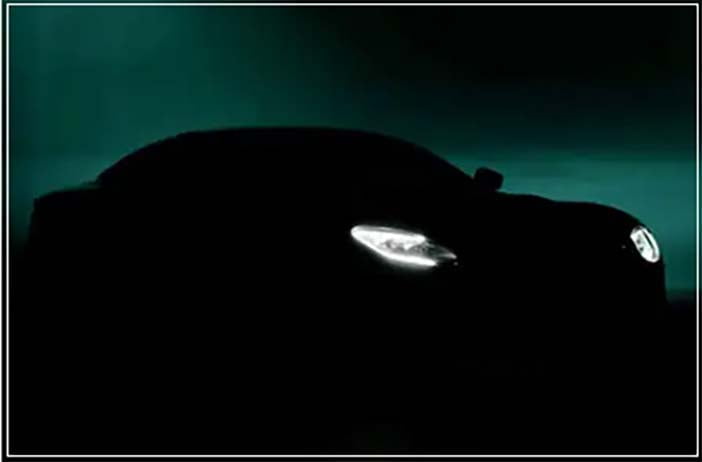
+++ ASTON MARTIN will imminently reveal the final ever iteration of its famed DBS grand tourer, ending production of one of its most historic monikers with an uprated, ultra-limited special edition. Named the Aston Martin DBS 770 Ultimate, the powerful 2-door coupé has been previewed as the “flagship to surpass them all” with improved driving dynamics and exclusive design features. It will likely be positioned to rival the similarly conceived Ferrari 812 Competizione, an uprated version of the 812 Superfast and the quickest and most powerful road-going Ferrari yet built, producing 830 hp and 700 Nm. Just 499 examples of the DBS 770 Ultimate will be built after Aston Martin reveals the model “in early 2023”. Based on the existing DBS, the special edition is likely to feature an adapted version of the model’s existing 5.2-litre twin-turbocharged V12 engine, boosting power from 725 hp to 770 hp. It will become the second most powerful production car the firm has yet built, until the arrival of the 950 hp Aston Martin Valhalla supercar, which will also go into production in 2023. It will sit just above the 760 hp Aston Martin One-77, the 725 hp DBS Superleggera and the 707 hp Aston Martin DBX 707 in the power stakes. The Aston Martin Valkyrie will still top the firm’s line-up with 1.180 hp. There’s no indication of pricing yet, but the DBS Superleggera was launched with a €500,000 price back in 2019, and the DBS 770 Ultimate will command a larger fee, due to its exclusivity and increased performance. +++
+++ An ELECTRIC CAR explosion awaits in 2023, and it’ll be packed with tech. 2022 was the year that electric vehicles entered the mainstream. Not everyone has one, but buying an EV no longer makes you an outlier. Driven by policy initiatives from governments and billions of dollars in investment from automakers, it’s safe to say the EV industry has begun to take shape. Over the next year, that landscape will develop beyond the foundations of 2022. Here are some best guesses for what you can expect. 1) There will be a race to sell U.S.-built EVs in the first quarter: The Inflation Reduction Act, which the Biden administration passed in August, has already had a huge effect on the EV industry as automakers work to onshore their supply chains and factories. But with certain aspects of the IRA’s EV tax credit rules now to be delayed until March 2023, I’m expecting to see EV sales take off in the first quarter of the year. Under the bill, eligible EVs could qualify for a $7.500 tax credit if they meet the requirements of being built in North America and having sourced critical battery materials from the U.S. or free trade agreement countries. Those rules were meant to go into effect on January 1, but the Treasury Department has delayed guidance on the critical materials rule until March. And it’s a good thing, too. While automakers in 2022 scrambled to set up factories in the U.S., most critical materials still come from China, so they need time (likely years) to set up new supply chains. The delay means that a whole host of North American-built cars will now be eligible for the full refund, at least for the first 3 months of the year. The biggest winners will probably be Tesla and General Motors, whose sales caps under the previous EV tax incentives will be waived in the new year. But others like Ford, Nissan, Rivian and Volkswagen have all got a lineup of NA-built EVs that are ready to reap the benefits. 2) Even more EV models and sales: Electric vehicle sales in 2022 were pretty much dominated by who you’d expect: Tesla’s Models S, Y and 3, Chevrolet’s Bolt and Ford’s Mustang Mach-E. In the backdrop, nearly every automaker, be it a legacy OEM or a startup, unveiled a slew of impressive EVs for the 2023 market. Most of them were geared toward the luxury consumer, though. In the next year, we’ll see even more new models come out that are priced much more affordably. In addition, expect the sheer number of new EVs on the market to pick up as new factories come online. McKinsey predicts legacy automakers and EV startups will produce up to 400 new models by 2023. All the new models coming out will give Tesla a run for its money, predicts Shahar Bin-Nun, CEO of Tactile Mobility, an AV sensor tech company. Bin-Nun says he expected Tesla to still dominate the U.S. EV market in 2023, but that Ford, Hyundai and Kia will follow closely behind as they ramp up their lineups and production capacities. We can also expect the market for secondhand EVs to creep up in 2023, which will make it much easier for those with lower incomes to afford a zero-emission vehicle. 3) The software-defined vehicle will really take hold: Every automaker has been talking about the “software-defined vehicle” throughout 2022 as a concept that’s inherently linked to the electric vehicle. In 2023, we’ll really get a chance to see what that means. General Motors, for example, will launch Ultifi early next year, its end-to-end vehicle software platform that promises OTA software updates, cloud connectivity and vehicle-to-everything communication. Ultifi will be the place where drivers can purchase apps, services and features; it’s an example of how automakers are increasingly trying to personalize vehicles to the individual’s needs. This personalization will likely lead to an increase in subscription-based services in the car, says Will White, co-founder of Mapbox, a provider of online maps. “We’ll also continue to see high demand for convenience-based services like in-car payments, where consumers will have a credit card on file in their app that pays for everything automotive-related”, said White. On the back end, the software-defined vehicle will also dance with the metaverse. In 2022, a range of automakers, including Jaguar Land Rover, Nio, Polestar, Volvo and XPeng, announced plans to build software-defined vehicles on Nvidia’s Drive Orin system-on-a-chip. Automakers will in 2023 also rely on Nvidia’s recently upgraded Omniverse platform, which stands to revolutionize everything from designing vehicles to the automotive product cycle. Using tech like this, automakers will increasingly build digital twins of both their vehicles and their production facilities in order to simulate anything from software upgrades within the vehicle to crash tests to factory efficiencies. 4) More investment into getting charging right: J.D. Power analysts are expecting the market share of EVs in the U.S. to reach 12% next year, which is up from 7% today. If narrowing the scope to consumers that actually have access to EVs, that market share actually looks more like 20%. Whatever the number, the fact remains that we’ll be seeing millions more EVs hit the streets in the U.S. next year. That means all of the ancillary services needed to keep them running will need to step up. In 2023, expect to see investment (from government, utility and private firms) into charging infrastructure, energy storage and energy transmission. 5) EV charging sucks because it hasn’t found the right business model: Ensuring the EV transition is a smooth one isn’t just about building more EV chargers, although granted, that’s a really important piece. Maintaining chargers will also be prioritized next year. A separate J.D. Power study earlier this year found that not only is availability of public charging still an obstacle, but often when you do find a charger, it’s broken. We predict there’ll be some tech, either from upstarts or existing EV charge players, that helps manage maintenance, servicing and upgrades for chargers. In that same vein, all throughout 2022, every few months there’s some startup or utility company crying out that the electrical grid will never be able to handle all of the electric vehicles we’ll see in 2023. They’re probably right. So alongside energy management infrastructure, we expect to see more vehicle-to-grid software. There were a few pilots in 2022, many of which were focused on V2G technology at home. Ford’s F-150 Lightning pickup truck is among a few vehicles that have promised to be able to power your home in the event of an outage. But we think as more fleets go electric, we’ll start to see those pilots happening in commercial settings at a wider scale. 6) The rise of EV fleets: We already saw many fleet operators begin to adopt EVs in 2022, as they aim to reach whatever carbon emissions goals they’ve set for themselves. Hertz, for example, plans to buy 65.000 Polestar vehicles, 100.000 Teslas and 175.000 General Motors vehicles over the next couple years to reach its goal of having 25% of its fleet electric by the end of 2024. In 2023, those purchases will only ramp up, particularly as commercial EV makers get their production lines up and running. GM’s BrightDrop, for example, has recently launched its CAMI Assembly plant in Ontario, which is expected to produce 50.000 of its Zevo delivery vans by 2025. BrightDrop has already secured over 25.000 reservations from customers like DHL and FedEx that are working toward net-zero goals. Another commercial EV company, Canoo, plans to buy a vehicle manufacturing facility in Oklahoma City in order to ramp production of its Lifestyle Delivery Vehicle and bring those EVs to market next year for committed customers like NASA and Walmart. +++
+++ The second-generation MASERATI LEVANTE will follow the MC20 Folgore to market by the middle of the decade, swapping from combustion to electric power in a bid to take on the BMW iX and Mercedes-Benz EQS SUV. It is expected to be the final entry into Maserati’s first fleet of EVs, after Folgore versions of the Grecale, GranTurismo, GranCabrio, MC20 and next Quattroporte, and is tipped to ride on a specially adapted version of Maserati sibling firm Alfa Romeo’s Giorgio platform, as used by the ICE and EV versions of the Grecale and GranTurismo. In an interview, Maserati CEO Davide Grasso hinted at the importance of the electric Levante and suggested that its development will benefit heavily from synergies between Stellantis’s 14 brands. He said: “We’re hitting on all cylinders on that programme, and it’s something that gets me really excited, because we really see the opportunity we have as part of a very large group, which makes innovations one of the first priorities. So I’m very excited about the way that programme is starting to take form”. The Quattroporte Folgore saloon could be the first Maserati to use an upgraded battery pack with increased energy density for more miles per charge, which would then be deployed in the Levante as well. While precise technical details remain under wraps, the Levante Folgore is expected to be exclusively 4-wheeldrive but offer a choice of powertrains, potentially capped by a 7460 hp tri-motor system lifted from the GranTurismo, which would provide it with the necessary shove to rival dedicated electric sports SUVs like the Lotus Eletre. Today’s Levante, launched in spring 2016 and not in line for any further significant updates before it bows out, is available with a choice of a mild-hybridised 4-cylinder petrol engine or conventional V6 and V8 petrol powertrains. +++
+++ The MASERATI MC20 FOLGORE will arrive in 2024 as the flag-bearer for a brigade of electric sports cars, pairing traditional mid-engined styling and handling with whip-crack acceleration and outstanding usability. In a rare exclusive interview, Maserati CEO Davide Grasso outlined his expectations and hopes for the MC20 Folgore, which is one of six EVs Maserati will launch by 2026 as it gears up to phase out combustion engines. Above all, revealed Grasso, Maserati aims to substantially boost performance over the existing V6-engined MC20 without losing its character or sense of engagement. “The type of acceleration you get from an electric car is different from an ICE car”, said Grasso. “But absolutely from a handling standpoint and from a speed standpoint, the electric MC20 will be, to our knowledge, the first super-sports car that’s fully electric”. Grasso refused to be drawn on more specific performance and technical details (“the programme is still going full steam; it’s a bit too early for me to start sharing”). But he suggested the difference in character between the V6 and EV versions of the new GranTurismo will be a good indicator of how the MC20 variants will be told apart: “Once we’ve launched the Granturismo in Folgore and ICE forms, I think you’re going to have a sense (driving both those cars) of how that could be translated in the MC20 Folgore versus MC20 ICE”. The MC20 will be the third Maserati made available as an EV, following the GranTurismo and Grecale in 2023. The next-generation Quattroporte saloon and Levante are set to be electric-only from launch. The MC20 was conceived from the off to accommodate both ICE and EV hardware, so the Folgore will be structurally very similar to the existing car, rather than sit on an adapted version of the platform used by Maserati’s larger EVs (itself derived from sibling firm Alfa Romeo’s Giorgio platform). Grasso said: “That uniquely Maserati approach of using a platform for both versions and developing a platform that allows the maximum type of performance and handling and the characteristic and unique handling that Maserati can provide has been a characteristic of the programme strategically”. The most potent ICE version of the GranTurismo extracts 550 hp from its V6 (75 hp less than the same-engined MC20), while the EV boosts output to a substantial 760 hp. If the MC20 Folgore mirrors that output, it would represent a substantial rise that, together with a huge 997lb ft of torque, should yield a drastic improvement in off-the-mark acceleration. Importantly, though, the GranTurismo Folgore carries nearly 500 kg more than the V6 car, so a priority for the MC20 Folgore will be mitigating the impact of that added heft, particularly if it’s to match the acclaimed dynamics of the existing car, as Grasso hopes. It’s anticipated that the MC20 Folgore will use the same 3-motor drivetrain, with 2 motors on the rear axle and 1 at the front, to allow for rear- or four-wheel drive as required. The MC20 Folgore will be visually nearly identical to the V6 MC20, albeit with subtle tweaks to aid aerodynamics. Earlier preview images of the MC20 Folgore’s monocoque suggest that Maserati will position the batteries behind the seats in the name of optimised weight distribution and a low centre of gravity. Lotus and Porsche have chosen this format for their upcoming electric 2-seat sports cars in order to preserve the characteristic agility of their ICE models, with the added benefit that it allows for familiar proportions and packaging. Meanwhile, though, the GranTurismo Folgore uses a T-shape battery running between the rear wheels and down the transmission tunnel, so it remains to be seen which arrangement will make it to production. No doubt the MC20 Folgore will be capable of charging at speeds of 270 kW, like the Granturismo, and if it uses the same 83 kWh battery pack, it could offer a range of more than 480 km per charge. From launch, the MC20 Folgore will essentially exist in a class of one. Today’s most potent EV offerings (the likes of the Lotus Evija and Rimac Nevera) occupy the ultra-rarefied hypercar segment, while electric equivalents to today’s traditional mid-engined supercars have yet to materialise. Ferrari plans to launch its first EV in 2025 but has yet to offer any details of its market positioning or shape, while the first EVs from Lamborghini and McLaren are likely to take the form of high-riding 2+2 grand tourers, due towards the end of the decade. Honda has confirmed plans for an electric NSX successor but not confirmed a launch date, while Alfa Romeo’s upcoming limited-run supercar could still use a high-output V6. Grasso said that he was “extremely excited” about Maserati being the pioneer of the electric super-sports car segment, but he added: “It’s not about being the first, it’s also about being the best in terms of performance”. Grasso was asked: Could Maserati expand its line-up as it electrifies? He answered: “We have a sports saloon, we have a large SUV, we have a D-segment SUV, we have a Grand Tourer now, which is a sports coupé if you will, and we have a super sports car. So we’re going to have 5 nameplates. And with a brand like Maserati, the goal is more about continuing to fine-tune, finesse and perfect these models and continue to make sure that the consumer experience the quality, the design appeal, the emotional appeal, the performance and the luxury experience is unparalleled”. Q: Is the Grecale as mainstream as Maserati can go? A: “One interpretation of ‘mainstream’ is to try to please everybody, and that’s not negative. Because if you sell ‘essential’ apparel, being mainstream is absolutely the right thing to do. But we’re not selling basic apparel, we’re selling cars, and luxury cars at that. So in terms of all-around use, the Grecale is ‘everyday exceptional’. I struggle to see the word ‘mainstream’ coupled with Maserati, but the Grecale is everyday exceptional”.Q: You aim to ultimately achieve profit margins of 20%. Will personalisation play a crucial role here? A: “You will see more and more our Fuoroserie programme taking on a life of its own. But we’ve also invested in manufacturing capabilities, so you will see that it’s important for our margins, and then again: it’s a result. Because the core of that move lies in the fact that it’s all about the customer. And the modern luxury customer is willing to pay more to have personalised objects, if you will, that distinguish himself or herself from the rest. Sometimes the personalisation is a matter of comfort, sometimes it’s a matter of aesthetics, sometimes it’s a matter of performance, sometimes it’s all of the above. So we’re building the capabilities, and we will deliver those with some remarkable results”. +++
+++ MERCEDES is recalling nearly 125.000 coupe and sedan models to address a potential defect with their sunroof panels that may allow them to detach from the vehicle while in motion. Broadly speaking, the campaign covers various 2001-2011 C-Class, CLK, E-Class, and CLS models, including AMG variants where applicable. Per Mercedes, the vehicles included in the campaign may have shipped with inadequate bonding between the glass panel and sliding roof frame, which may allow them to separate. “Due to a production deviation at a supplier, glass panels might have been bonded without proper application and/or ventilation of the primer (bonding agent)”, the automaker said in its defect notice. “The correct usage of the primer is necessary in order to ensure the specified strength of the bonded joint. In this case, the adhesion of the bond might deteriorate gradually over time. Therefore, the specified durability requirements of the bond would not be guaranteed. As a consequence, a separation of the glass panel from the vehicle cannot be ruled out. This could increase the risk of a potential accident and/or injury for other road users”. Mercedes says that owners may notice increased wind noise or visible gaps between the panel and mechanism as it begins to fail. The company will reimburse those owners who have already had this problem addressed outside of the factory warranty and new parts will be provided for those whose vehicles show signs of degraded bonding. Look for notices to be distributed by the end of February, 2023. +++
+++ Earlier this month, Volkswagen Group CEO Oliver Blume outlined his vision for the group to shareholders at an extraordinary meeting. Part of his vision involved remaining CEO of the PORSCHE brand, a dual role that a couple of large shareholders at the meeting questioned. Now, in an interview, Blume outlined his vision for Porsche. Answering a question about the evolution into electrification, Blume said the entire lineup will offer a combination of ICE, hybrid and battery-electric powertrains. The Cayenne and Panamera have hybrid and ICE motivations, the Macan is going electric, the Taycan is already there. Adhering to a similar breakdown of flagships retaining combustion, Blume said Porsche will add “a very sporty hybridization to the 911” as the 718 twins shift to electrification. For those just joining the program, there have been rumors about a 911 hybrid for at least 14 years. In 2009, spy shots of a 911 with a polygonal bulge on the hood and now-familiar lightning stickers published; the car said to make no noise as it sped away. The Stuttgart automaker ruled out a 911 hybrid in 2014, reconsidered it in 2017 and confirmed its eventual arrival, CEO Blume saying in 2018 it would be the “most powerful 911 we’ve ever had” before reports of second thoughts about a power output that would shade every Turbo and third thoughts in 2020 about the engineering being “really difficult.” considering the 911’s form factor and mission. At that time, the hybrid was reported to arrive in 2023. That won’t be happening, but it sounds like we’ll find out soon how all the ideas and arguments settle into production form. Blume stressed again that the company wants to keep an internal combustion engine in the 911 for as long as possible, and sees not only hybrids, but also developments such as synthetic fuels as a possible means to extend the run. What 2023 will bring is more special editions. Car noted Porsche has several anniversaries next year, Blume noting 2023 will mark the 60th anniversary of the 911, the 75th anniversary of the company, and the 80th birthday of Wolfgang Porsche, son of Ferdinand “Ferry” Porsche and grandson of Ferdinand Sr. There will eventually be more off-road special editions, too. Blume described the 911 Dakar’s 2.500 unit supply as a way to test the market. With all of those sponged up (as everyone knew they would be) “the door is open” to consider a range of more rugged 911 variants that can serve customers and more remote parts of the world. Blume again confirms an expansion to the model range “with a very luxurious SUV”: an all-electric entry on the coming SSP platform to sit above the Cayenne. +++
+++ If you want to predict how much TESLA ’s cheapest car will cost at any given time, you just have to know one thing: the average price paid for a new vehicle in the US. Only $300 or so separates the 2 figures, on average. It’s been that way from the start, according to a new analysis of pricing data compiled by Bloomberg. When the Model 3 went into production in 2017, Elon Musk touted a $35.000 starting price that almost exactly mirrored the $34.944 average cost of a new vehicle at the time. 5 years and a burst of inflation later, a Model 3 costs $46.990, versus the $47.692 average in the US. Tesla’s floating-price strategy is unique among car companies. It was made possible by Musk’s rejection of two century-old traditions: First, he eschewed the franchised dealership model, putting Tesla in control of the final price paid by customers. Second, he’s bucked the industry norm of setting prices at the start of each model year, then mostly keeping them static. Tesla changes prices frequently, often multiple times a year. As electric vehicle demand soars and established manufacturers chase after Tesla, carmakers including Ford and Volvo are beginning to move toward more centralized control over EV sales and pricing. Musk’s strategy also will be under more scrutiny than ever before after several quarters of disappointing deliveries has led some analysts to question whether Tesla will need to cut prices in order to keep growing as quickly as it’s projected. Every year, beginning around August, car manufacturers lock in features and prices for each vehicle they sell. The 2023 Toyota RAV4 Prime, for example, starts at a manufacturer’s suggested retail price of $41.590, and prices for the various versions of the sport utility vehicle are unlikely to change again until the 2024 model year. Dealerships will offer incentives, charge additional fees, cut deals or haggle over options and financing, but the MSRP stays steady. This annual season for setting vehicle prices dates back to a mid-1930s policy to stabilize jobs for the holiday shopping season during the Great Depression. Old traditions die hard. In Tesla’s early days of Model S and Model X production (from 2012 to 2016) the company justified many of its mid-year price changes by offering new features or performance upgrades. It might, for example, increase the battery range of a base model by 28 km, or offer a discounted model with certain options disabled by a software lock. By the time the Model 3 reached mass production in 2018, however, all bets were off. Pricing sometimes changed week to week, with or without changes to the model lineup. At times, this didn’t go over well with customers. Musk still gets chided for selling the Model 3 at the $35.000 price that he hyped only briefly before taking it off the menu. Over time, though, consumers seemed to accept that Tesla prices are always subject to change. This has given Tesla flexibility to boost demand by dropping prices, or adjust to parts shortages by outbidding competitors and passing the added cost on to customers. Ford and Volvo are trying to move in a similar direction. The basic rules of how US dealerships conduct business were created by Henry Ford more than a century ago and later codified into law in most states. One of those rules is that while manufacturers set the recommended price, only dealerships can negotiate the final terms with customers. This has become a problem as demand for EVs outstrips manufacturers’ ability to build them. Early last year, reports started popping up of dealerships charging thousands of dollars over the price for models including Hyundai’s Ioniq 5, or even tens of thousands extra for Ford’s F-150 Lightning. Such extreme markups are negotiated by dealerships, with no financial benefit to the manufacturer, and can undermine trust in the brand. In September, Ford CEO Jim Farley met with dealer representatives and issued an ultimatum: they would have to agree to no-haggle pricing and make significant investments in charging infrastructure, or at the end of 2023, they’ll lose the right to sell any of the company’s electric vehicles. Dealers had until November of last year to decide, and almost two-thirds signed on. Volvo is making similar moves, announcing last year that all of its electric cars will be sold online, with transparent, non-negotiable prices. As has been the case with Ford, the changes have put some dealers on edge. Mid-year changes to prices have always been rare among traditional automakers, according to Ivan Drury, an analyst at Edmunds. Consumers want to feel like they’re getting a good deal, so prices are intentionally set a smidge high, with incentives then used to bring the price down to whatever the market will support. This rule of thumb that new cars were almost always sold at a discount has been turned on its head since the pandemic. With demand strong and manufacturers unable to keep up because of widespread supply chain issues and higher costs of raw materials, automakers largely withdrew their incentives, saving hundreds of millions of dollars. Some dealers created new fees and tacked on mandatory services. For at least 6 consecutive months last year, the average US consumer actually paid more than the regular price; the first time that’s happened since Edmunds started tracking prices 20 years ago. The inversion lasted until November, when more of the new 2023 prices kicked in. Transparent, no-haggle pricing is ideal for manufacturers when demand is high, but less so in a downturn. At those times, dealers want negotiating flexibility in order to move cars off their lots. “That’s why they have targeted the dealership changes literally only for the EVs”, Drury said of automakers. “Because that’s where they see the demand, and where they see it continuing for years”. Ford flexed its new EV pricing control by changing the price of its new electric pickup truck, the F-150 Lightning, 3 times last year. The base model now sells for almost 50% more than its debut starting price of just under $40,000. The prices of many EVs remain stuck in the stratosphere because manufacturers are still struggling to keep up with demand. Most of the bestselling models have waitlists, with some customers waiting as long as six months or more to get new cars and trucks. Last year, Tesla raised prices or changed its model offerings on a half-dozen occasions. During its second-quarter earnings call in July, Musk acknowledged the swings were unusual. “We’ve raised our prices quite a few times. They’re frankly at embarrassing levels”, the chief executive officer said. “But we’ve also had a lot of supply chain and production shocks, and we’ve got crazy inflation. So I’m hopeful, and this is not a promise or anything, but I’m hopeful that at some point we can reduce the prices a little bit”. As wait times lengthened early and midway through last year, Tesla even halted sales of 2 of its most desired models: the Long Range Model 3 and the Standard Range Model Y. “Waitlist is too long”, Musk said of the Model 3 in August. “Will enable again as we ramp production”. There’s no word yet on when that might be. Wait times for most Tesla models have virtually evaporated in recent months as the company has increased production at its newest factories near Berlin and in Austin, Texas. Musk also has flagged several macroeconomic headwinds hitting demand. Tesla even pulled out some old-school incentives to juice sales, offering $7,500 to US buyers who took possession of their new vehicles before January 1, when new federal tax credits took effect. Deliveries still fell short of expectations, with the company handing over 405.278 vehicles in the last 3 months, well shy of the 420.760 average estimate compiled by Bloomberg. Musk is also raising expectations for a new entry-level model, which he said in October will slot in below the Model 3 at roughly half the cost. 2 years ago, he said the smaller Tesla would cost around $25.000. If the Model 3 price history is any guide, that target will end up being aspirational, and may need some inflation-based adjusting. On Monday, the company said the generation 3 platform will be on the agenda for an investor day it’s scheduled for March 1. Customers also are waiting for updated pricing on the delayed Cybertruck, the pickup the company plans to start delivering in the coming months. When Tesla began taking reservations for the vehicle in 2019, the all-wheel drive version was priced at $50.000; almost exactly the average price paid for a large truck that year. The average large truck today goes for more than $56,000. With Tesla continuing to dominate the US market for electric cars, competitors will want to account for the price of these vehicles when setting their own prices, but they’re almost certain to find a moving target. +++