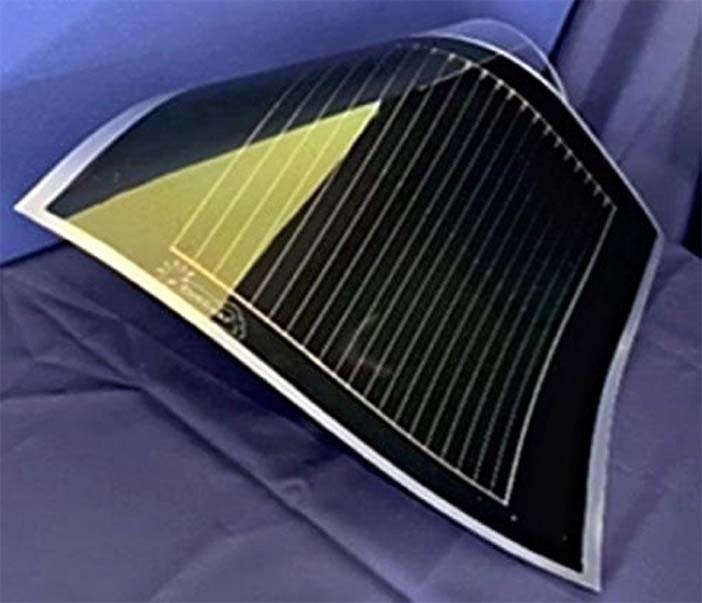
+++ Toyota and Enecoat Technologies, a Japanese start-up company from the Kyoto University, announced today that they will jointly develop perovskite photovoltaic cells and strive to put it on the roof of pure electric vehicles and other parts (as BENDABLE SOLAR CELLS ) by 2030. Toyota currently provides optional services for installing photovoltaic cells on the roof for some new energy models. Under normal weather conditions, the panel can generate the electricity needed to drive about 1.200 kilometers per year. Toyota and Enecoat have started the joint research and development of vehicle panels in May. The current power generation efficiency is basically the same as that of silicon panels, but it is expected to increase by 50% in the future. This is also the first time that Toyota has disclosed a joint research and development plan with external companies on perovskite photovoltaic cells. Masuda Taizo, head of Toyota Renewable Energy, said that if perovskite panels are installed on parts other than the roof of the car, such as the hood. Theoretically, the power generation can be increased to 3 times the current amount at most, that is, it can support a driving distance of 3.600 kilometers. The annual mileage of ordinary private cars is about 10.000 kilometers, which means that one-third of the electricity consumption can be provided by solar energy. Kato Naoya, president of Enecoat, said that compared with silicon, the manufacturing process of perovskite photovoltaic cells is less, which is expected to reduce costs. At the same time, this kind of battery panel is also easy to bend, which is more suitable for the more complex shape of the car body. However, there are still many challenges in the automotive application of this technology. For example, the mass production of large panels of tens of centimeters required for vehicles has not yet begun. At the same time, the impact of body vibration and rain on battery durability is also a problem that needs to be considered and resolved. According to data from Japan’s Fuji Economics, the global market size of perovskite photovoltaic cells will reach 1 trillion yen (currently about 50.5 billion yuan) by 2035, or 31 times that of 2022. At present, companies such as Sekisui Chemical Industry, Kaneka and Toshiba are all striving for early commercial use, and Chinese companies are also actively exploring this market. +++
+++ The HYUNDAI MOTOR GROUP (Genesis, Hyundai and Kia) forecasts to announce strong earnings results in the second quarter of this year on the back of robust sales in North America. Daishin Securities released a report in which it wrote: “Hyundai’s sales in North America are expected to continue expanding, contributing to the increased attractiveness of the company’s stock. Second-quarter sales would reach approximately 41 trillion won, surpassing the consensus estimate by 11 percent”. Analyst Kim Gwi-yeon said: “Even with ongoing concerns about exchange rate uncertainties impacting Hyundai’s performance, the company can secure an annual profit capacity of 12 trillion won, assuming a decline in the exchange rate”. Kia is also expected to show solid growth driven by expanding sales in the U.S. Kim stated that Kia’s operating profit for the second quarter of this year is estimated to be around 3.4 trillion won, surpassing the consensus estimate of 16 percent and demonstrating 6 consecutive quarters of positive performance. Kim added that even with an exchange rate increase, the estimated impact on profits would be around 1 trillion won, ensuring an annual profit capacity in the tens of trillions of won. Shinhan Securities believes that Hyundai can achieve both growth and profitability by maintaining its competitiveness, as it raised its target for electric vehicle (EV) sales by 2030. “Hyundai has raised its target for EV sales in 2023 to 2 million vehicles, a 7 percent increase”, Shinhan Securities analyst Jung Yong-jin said. “This upward revision mainly reflects the expected increase in EV sales in the United States. Furthermore, with the Hyundai Motor Group’s dedicated EV factory in Georgia, known as Hyundai Motor Group Metaplant America (HMGMA), set to start operations in mid-2024, the momentum for EV sales is expected to strengthen”. Hyundai’s investment plan shows a strong emphasis on electrification. Out of a total investment of 109.4 trillion won planned over the next 10 years, 35.8 trillion won will be allocated to EV-related investments. This represents a significant increase compared to last year’s investment plan, which allocated 19.4 trillion won to electrification out of a total investment of 95.5 trillion won over 9 years. The plan includes the establishment of a joint venture for secondary batteries and strengthened sourcing of raw materials and components, leading to a more detailed EV supply chain management system (SCM). +++
+++ LUCID MOTORS will pursue more deals to sell its luxury electric vehicle equipment as it looks to grow its technology supply business, its top executive said on Wednesday, adding its recent deal with Aston Martin is just the start. The American EV firm will provide Aston with technology including a rear drive unit with twin motors, battery modules and software for integrating systems under the agreement with the British luxury carmaker announced on Monday. The parts will come from Lucid’s plant in Arizona. “This deal really kicks off that wing of the Lucid Group’s business”, CEO Peter Rawlinson told. Rawlinson said last month Lucid was in talks on licensing and selling its powertrain technology, but declined to provide details on timing and potential partners. Lucid’s initial focus will be on providing high-performance, ultra-high voltage technology that would not be suitable for the mass-market, reflected in the Aston Martin deal, Rawlinson said. However, he continued, its business licensing out parts should grow as the company moves to more mass-market models. It plans a model to compete against Tesla’s mass-market option, Model 3, for the second half of the decade. A growing business supplying technology to others would help Lucid, which like rival firms has been struggling with mounting losses, tightening cash reserves and a price war sparked by Tesla. Lucid’s push to be a supplier to other carmakers is similar to that of Croatian electric sports car maker Rimac, which has also supplied parts to Aston Martin and is working to provide parts for more mass-market models. “Do we ever want to make a $25,000 car because that’s what it’s going to take to change the world?” Rawlinson said. “I’m not sure if we want to be in that business, but licensing our tech to a company that could do that makes more sense”. Aston Martin and Lucid share a common shareholder in Saudi Arabia’s Public Investment Fund (PIF), but Rawlinson said the Saudi wealth fund played no role in the deal. “Aston Martin had options and they chose quite independently what they felt is the best technology available on the planet”, he added. +++
+++ NISSAN shareholders re-elected its chief executive and other board nominees on Tuesday at an annual meeting that came days after revelations of a split among senior management and allegations of corporate surveillance. The Japanese automaker is investigating claims that CEO Makoto Uchida carried out surveillance of his deputy Ashwani Gupta. The turmoil recalls the turbulent period that led up to and followed the ouster of former head Carlos Ghosn, fanning concerns that in-fighting could distract from a badly needed turnaround. The shareholder meeting was the first since Nissan reached a new deal with alliance partner Renault, negotiations about which deepened tension between Uchida, who has pushed for the deal and Gupta, who had reservations about some terms, sources have said. The surveillance accusations were made in a letter to independent directors by a senior Nissan adviser and will need to be addressed by the new board. There were no questions by shareholders about the claims at the shareholder meeting. Details about the letter were only published on Saturday. Christopher Richter, deputy head of research at brokerage CLSA, said the discord at the top and the long drawn-out talks about the Renault alliance have distracted management from the primary business of making and selling cars. “It feels like they are stuck on neutral while a lot of their key competitors are pushing the accelerator pedal to the metal”, he said, noting that rival Toyota was making big announcements about EVs and solid-state batteries. Nissan and Renault have yet to finalize the terms of the deal announced in February, under which Nissan would take a stake of up to 15% in the electric vehicle unit Renault is spinning off, and Renault would reduce its 43% stake in Nissan. Gupta, who was chief operating officer and was seen as a likely future CEO, did attend the shareholder meeting though Tuesday was his last day at the company. News in May that he would not be nominated for another board term had come as a shock to investors. His departure was announced last week. When a shareholder asked how Gupta viewed his time at Nissan, Uchida answered by saying the executive had contributed greatly to projects starting with the formulation of a midterm plan. Gupta did not reply to the question. The company did not name a new Chief Operating Officer to replace Gupta when it announced its executive lineup on Tuesday. Other key positions remain unchanged. The meeting also highlighted shareholder frustration over Nissan’s share price, prompting an apology from Uchida that the stock price is lower than in the past. The support from shareholders for the 10 board nominees, including IBM veteran Brenda Harvey as an outside director, was widely expected given the strength of support for management among Japan’s individual investors. Shareholders on Tuesday also rejected a proposal by an individual investor for higher dividends this financial year that was opposed by the board. +++
+++ Shareholders of Nissan on Tuesday approved a revamped management that diminishes the influence of its biggest shareholder and alliance partner, RENAULT , as the Japanese automaker seeks to rebalance its rocky partnership with the French company. At their annual general meeting in Yokohama, the shareholders approved a company proposal to nominate 10 directors, including current CEO Makoto Uchida. The proposal did not include the reappointment of Chief Operating Officer (COO) Ashwani Gupta, a former Renault executive who stepped down Tuesday. The company said it will not appoint a new COO to replace Gupta. The Indian executive became COO at Nissan in December 2019 after serving as COO at Mitsubishi, another alliance partner. Among other directors, Masakazu Toyoda, chair of the nomination committee, and Jenifer Rogers, a legal expert, also stepped down, while Brenda Harvey, hailing from IBM Corp, was newly appointed, reducing the total number of directors to 10 from 12. The decision came as Nissan tries to gain more independence from Renault, which currently holds an over 40 percent stake in the Japanese company. The 2 companies in February agreed to make their mutual cross-shareholdings equal at 15 percent in a deal that would change the decades-old capital alliance. A final agreement has yet to be reached, however, despite their initial plan to conclude a deal by the end of March this year. The departure of Gupta, announced earlier this month, surprised many in the industry as he was seen as a candidate for future Nissan CEO. Infighting among its executives is said to be behind his decision to leave the company. Nissan initially said he decided to leave to pursue other opportunities, but in response to increased media attention, the automaker said it has asked a third-party body to examine the matter. “Nissan is always plagued with scandals”, said a 73-year-old shareholder from Tokyo who attended the annual meeting. “I wonder if its corporate governance is really functioning”. Prior to the vote on directors, U.S. proxy advisory firm Glass Lewis had advised shareholders to vote against the reappointment of Uchida, saying the company is not doing enough to address issues related to climate change and that he should be held responsible. +++
+++ TOYOTA said Thursday its global output of vehicles for May rose 33.4 percent from a year earlier to 847.000 units, a record high for the month, helped by an easing of semiconductor shortages that arose during the coronavirus pandemic. Output in Japan surged 72.2 percent to 248.287 units, while overseas production grew 22.0 percent to 598.713 units, also a high for May, according to the world’s largest automaker. Production in China declined amid the need to comply with stricter vehicle emissions standards, but the impact was offset by firm output in North America and Europe on the back of a rebound from the impact of semiconductor shortages seen the previous year, Toyota said. Global sales increased 10.1 percent in May to 838.478 units, up for the 4th month in a row. Exports gained 46.7 percent to 141.774 units, with demand high from countries such as Indonesia and the Philippines, where economic conditions were strong. Major car models also sold well in India, according to the Japanese automaker. Sales inside Japan, including mini vehicles, increased 35.1 percent to 116.954 units, rising for the fifth consecutive month. The company plans to manufacture and sell over 10 million units globally for the first time in the year through next March. Total worldwide production by Japan’s 8 major automakers, including Toyota, was up 28.0 percent in May from a year earlier to 2.08 million units, according to their data. Nissan logged an 18.5 percent increase to 274.551 vehicles, helped by robust domestic production. Honda saw a rise of 34.7 percent to 329.066 units, backed by solid output in the United States. Subaru’s global output grew by 25.0 percent to 80.354 vehicles, while that of Suzuki rose 8.3 percent to 272.032 units partly on the back of growth in its Indian production. Global sales by the 8 manufacturers rose 15.1 percent to 2.02 million vehicles, with gains seen by all except Mitsubishi. +++
+++ XPENG ’s new pure electric coupe SUV called the G6 is officially launched on the Chinese market with a price range of 209.900 – 276,900 yuan (48.000 – 64.000 euro in the Netherlands). The G6 features an 800 Volt high-voltage silicon carbide (SiC) fast-charging platform. Delivery will start in July of this year. Based on the SEPA 2.0 architecture, the size of XPeng G6 is 4.753 x 1.920 x 1.650 mm, and the wheelbase is 2.890mm. In terms of appearance, the A and D pillars are connected via a fastback design. Its coefficient of drag is as low as 0.248. Additionally, the XPeng G6 provides a variety of rim styles to choose from, the maximum size can reach 20 inches. In terms of power, XPeng G6 is available in single-motor and dual-motor versions, offering 3 cruising ranges of 580 km, 700 km and 755 km (over-optimistic Chinese forecasts). The single-motor version has a maximum power of 300 hp and a peak torque of 440 Nm. The dual-motor version has a maximum power of 490 hp, a peak torque of 660 Nm and an 0 – 100 km/h acceleration time of 3.9 seconds. Its 87.5 kWh ternary lithium battery pack produces the mentioned cruising range of up to 755 km. The comprehensive power consumption per 100 km is as low as 13.2 kWh. In addition, with XPeng’s 4S charging pile and 800 Volt 3C fast charging technology, it only takes 19 minutes to charge from 10% to 80%, and the battery life can reach 300 km after charging for just 10 minutes. In terms of safety, the G6 is equipped with XPeng’s advanced driving assistance system, which comes with 31 sensors including 2 lidars, 12 ultrasonic sensors, 5-millimeter wave radars and multiple cameras. Coming to the interior, it has a 10.2 inch lcd instrument panel and a 14.96 inch central control screen with a built-in Xmart OS 4.0 in-vehicle infotainment system that supports voice interaction. The airconditioning outlet outputs windless cold air; XPeng claims that this reduces the discomfort caused by the airconditioning airflow to the driver and passengers. The center console also comes with a dual-fast charging wireless charging pad. Furthermore, a small number of physical buttons are retained on the double-spoke steering wheel and the doors. Lastly, the backrests of the rear seats can be adjusted. The rear seats can also be folded down to increase the truck storage space. +++
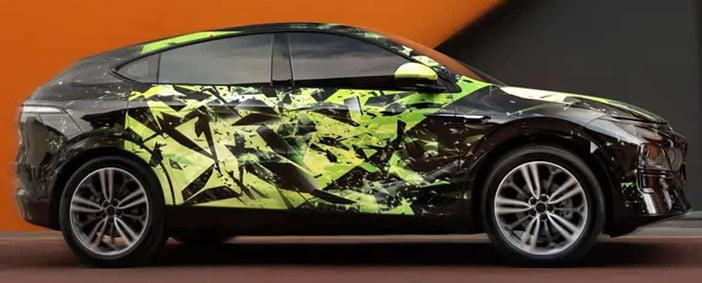
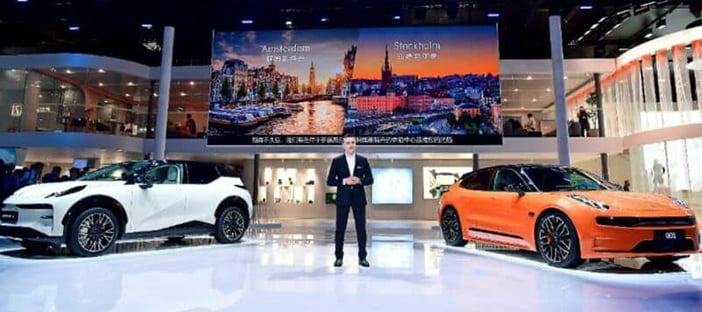
+++ The ZEEKR 001 and X are now open for reservation for customers in the European market, according to Zeekr Europe’s official website. These 2 models will first be launched in Sweden and the Netherlands, and delivery is expected to begin this year. Part of the Geely family, Zeekr only focuses on premium electric vehicles. In the Netherlands, the starting price of Zeekr 001 and Zeekr X is 60.490 euros and 45.490 euros, respectively. In Europe, Zeekr adopts a direct-to-customer sales model. Its first official brand stores will open in Stockholm and Amsterdam before the end of this year, then subsequently throughout Western Europe by 2026. Previously, Zeekr announced the launch of its European official website (www.zeekr.eu) at the 2023 Shanghai Auto Show and opened the first batch of pre-orders for Zeekr 001 and Zeekr X to selected European customers. +++