
+++ Auto executives aren’t as confident in ELECTRIC CAR adoption as they once were, but they’re largely blaming their concerns on all sorts of market dynamics and supply chain snafus, rather than consumers. In a survey of more than 900 auto industry execs published in December, KPMG found that respondents think only 37% of new vehicle sales in the US will be electric by 2030. That’s a dramatic drop from this same time in 2021, when surveyed executives expected 62% of car sales in the US would be electric vehicles (EVs) by 2030. The Biden administration has said that it’s targeting EVs to make up half of all vehicles sold in the US by that year. In June, the trade group representing virtually every major automaker urged the White House to “ease up” on emissions rules to ensure China doesn’t gain “a stronger foothold” in the US market. Since KPMG’s last survey’s optimistic results, the industry has grappled with a variety of roadblocks. Requirements set forth in this summer’s climate bill make it harder to qualify for EV incentives. Battery prices have risen and electric vehicle prices continue to climb, hitting an average cost of $65.041 in November. For comparison, a new gas-powered car cost about $48.681 that same month. KPMG said the results of its 23rd annual executive survey indicate that EV expectations are becoming more realistic, which could be driven by production issues and affordability challenges. One industry-wide point of optimism centers on pricing. Some 82% of execs surveyed believe that in the next decade, EVs can be adopted widely without subsidies, indicating costs could go down. The survey results come 2 days after Toyota’s CEO came under fire for comments that indicate he’s not all that sold on EVs just yet. “That silent majority is wondering whether EVs are really OK to have as a single option”, Akia Toyoda said. “But they think it’s the trend so they can’t speak out loudly”. The KPMG survey also reported that 76% of respondents said inflation and high-interest rates will impact their business in 2023. The industry is seeing some of that manifest through end-of-year consumer’s car-buying trends. The industry has already committed $526 billion into electrification through 2026, according to firm AlixPartners. KPMG found the industry is generally feeling good about that spending and more, with 83% of auto executives confident the business will see profitable growth in the next 5 years. That’s substantially up from 53% last year. +++
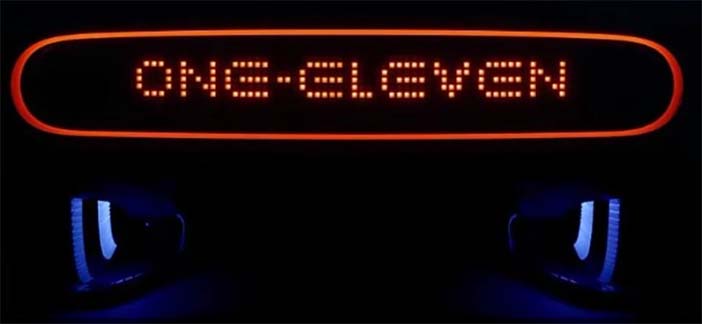
+++ MERCEDES-BENZ has gone on social media to tease what appears to be a revival of the C-111. The experimental cars built between 1969-70 were meant to showcase the German automaker’s latest technology. Now, a new version will soon arrive to define a new level of luxury. The original C-111 had an aerodynamic wedge shape, gull-wing doors, and a mid-mounted engine. The original versions used a 4-rotor Wankel engine that reportedly took the car to a top speed of 300 kph. However, after a couple of prototypes, the rotary mill was abandoned and subsequent examples used diesel and gasoline engines in a variety of cylinder configurations. A total of 16 were built, and despite some high-profile appearances at international auto shows, the C-111 never made it to production. Clues that the teased car is a C-111 revival include a distinctive shade of ochre that recalls the original. There’s also a digital rear graphic with twin round taillights that hearken back to the prototype. If that’s not convincing enough, a video shows the same rear panel spelling out “One Eleven” with LEDs. The images come from the desk of Gorden Wagener, the chief design officer at Daimler. Accompanying captions ask, “Are you ready for the reimagined icon?” and “Are you ready for Iconic Luxury?” Ignoring the overuse of the word “iconic,” it seems that the car will point the direction for Mercedes-Benz’s next era of automotive extravagance. I can’t imagine that the new C-111 would come equipped with a rotary engine, 5-cylinder diesel or even a twin-turbo V8, all of which were fitted to various iterations of the original car. Instead, one of the images posted by Wagener offers a clue, with the digital pixels spelling out H243, the chassis code for the EQA. So expect, perhaps unsurprisingly, an electric powertrain. No additional details were supplied, not even a date for when we can expect a new C-111 to be revealed. Or maybe it’ll be something completely out of left field like the Avatar-movie based Pandora car. +++
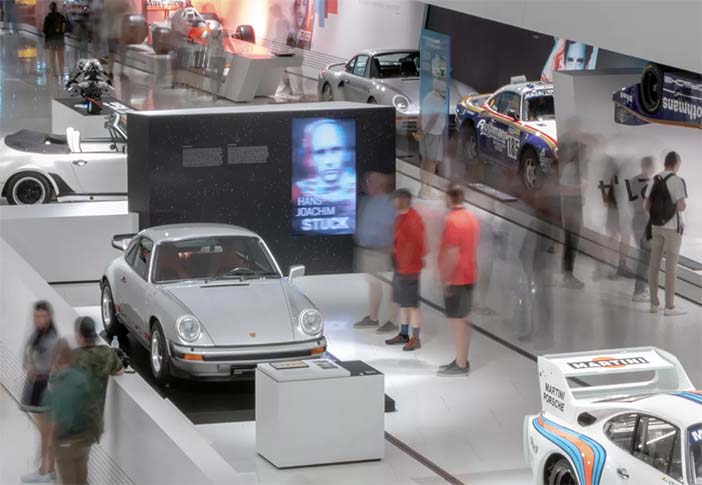
+++ PORSCHE turns 75 in 2023 and the automaker has a multitude of celebrations planned, including at the company’s Stuttgart museum where it wants to take visitors on a journey from the automaker’s past to its present (and even maybe give a hint at what tomorrow holds) through a special new exhibition. Called ‘Driven by Dreams. 75 Years of Porsche Sports Cars’, the exhibition is naturally crammed with vehicles from Porsche’s seven and half decades in business. But what makes it different is that it attempts to highlight the people behind the brand and its most famous cars. Those people include, of course, Ferry Porsche, who dreamed up the very first Porsche 356 ‘No. 1’ Roadster that hit the road in June 1948. But there are plenty of other important names to learn about, including Max Hoffman, who helped make Porsche a hit in America, Franz Xaver Reimspieß, the man responsible for the famous Porsche crest, and Peter Falk, who helped engineer the original 911. Motorsport heroes including legendary engineer Norbert Singer, racer Hans-Joachim Stuck and rally ace Walter Röhrl also get the exhibition treatment, but even if those names mean nothing to you, there’s one big reason to pay the museum a visit, because between June 20 and July 2 the firm’s new Mission X electric hypercar concept will be on display. “Like the universe, the Porsche company is dynamic and always changing”, says Achim Stejskal, Head of Porsche Heritage and Museum. “For the special exhibition celebrating the anniversary we’ve modified the museum more comprehensively than ever since it was opened in 2009. Seeing the feats of engineering and the many ideas from the past 75 years, and using them to shape the future, makes the importance of heritage more topical than ever”. And don’t worry if you can’t make it to Germany. Porsche has plenty of other anniversary celebrations going on around the world during 2023, including at July’s Goodwood Festival of Speed, where its 75th birthday will be commemorated with a giant sculpture on Lord March’s front lawn and plenty of cars to drool over and see flying up the famous hill. +++
+++ TESLA ’s price war is spilling over out of the electric vehicle market as Elon Musk’s car company continues to slash prices. Musk has dropped the prices on Tesla models 6 times since the start of the year, kicking off a price war with mainstream car brands like Ford and GM. So far, Tesla’s pricing strategy has been seen through the lens of the EV market and Musk’s efforts to protect Tesla’s spot as the number one seller of electric vehicles in the US, but now Tesla’s vehicles are priced more comparably with the entire vehicle market. For example, after Tesla’s latest price reductions last week in the U.S., the Model Y now starts at $46.990. Add on the $7.500 EV tax credit and you can now purchase a Model Y for around $42.500. That’s about $5.200 cheaper than the average price paid for any vehicle in the US in March. To make things even worse for competitors, all Model 3 and Model Y vehicles now qualify for the full tax credit, too. “For so long people have seen price and infrastructure as the limiting factors for buying an EV and Tesla has just blown that out of the water”, Martin French, managing director at consultancy Berylls, said in an interview. “They’ve just said” ‘we can offer you a vehicle at about $40.000 and by the way, you can use our Supercharger network’ “. In addition to pricereductions, Tesla has been dangling special offers like free charging for new customers. It’s the latest move for Tesla into the mass market this year. Musk has said the company is aiming to build 2 million vehicles this year, doubling 2022 production. Tesla went into 2023 with bloated inventory: the opposite problem most of its competitors were facing. Musk spun this problem into an advantage by lowering the prices at the same time others were still charging well above sticker price on dealer lots. As a strategy for boosting demand, Tesla’s price cuts appeared to be working in the first quarter, reporting a 36% increase in deliveries during that period. The move had some analysts and investors worried that Tesla could cede its industry-leading profit margins for bigger sales volumes. And their fears proved to be true: Tesla reported lower margins for the first quarter. “We’ve taken the view that pushing for higher volumes and a larger fleet is the right choice here versus a lower volume and higher margin”, Musk told analysts as they grilled him and other executives about the softness. For now, he seems to have calmed their nerves. Tesla shares are up more than 131% since January 1st, easily outpacing the benchmark S&P 500 index. +++
+++ TOYOTA ’s shareholders have voted to back Akio Toyoda as the chairman of the board and rejected a proposal demanding greater transparency in its lobbying efforts. The results are big wins for Toyota, which faced pressure from a contingent of its major investors. The climate resolution was the first shareholder proposal made before Toyota‘s annual general meeting in almost 20 years. They point to anxieties about the automaker’s environmental and technological position, as well as its leadership. The 2 measures were related to Toyota’s resistance to electric vehicles. The Japanese behemoth has been slower than many of its competitors to dive into the growing market for electric vehicles. Although the recommendation to vote against Toyoda’s chairmanship was nominally related to the lack of board independence, most believe that it had more to do with his EV skepticism. While Toyota continues to argue that electric vehicles aren’t the only path to a carbon-neutral future, its lobbying efforts suggest a more complex position. In 2020, the automaker was among the largest contributors to American congress members who objected to certifying the 2020 election and who (by and large) are climate skeptics. These lobbying efforts and more prompted (among others) the Danish pension fund AkademikerPension, to push the automaker to be more transparent about its political activities. However, the resolution was expected to fail after Toyota’s board recommended that shareholders vote against it. Meanwhile, Toyoda enjoys general support from the Japanese people, Tadashi Imai, an individual shareholder, said. The grandson of Toyota’s founder, he was re-elected to the position of chairman last year with 96 percent support. Under its new CEO, Koji Sato, the company has announced a range of EV promises, including the development of solid-state batteries by the end of the decade. It has also announced that it will produce a range of EVs in the near future, and will introduce production measures that will bring it more in line with other automakers. +++
+++ TOYOTA GAZOO RACING has begun testing its first battery-powered prototype and company chairman Akio Toyoda is personally involved in development work to ensure it meets expectations. Talking during the recent Le Mans 24 Hours, in which the firm finished second to Ferrari after winning the previous 5 events, Toyoda revealed that his baseline expectations for the car are that it must be at least as good to drive as current combustion-engined models, which include the GR 86, GR Supra, GR Yaris and GR Corolla. Toyoda, who is nicknamed ‘Master Driver’, said: “The starting point is not what powertrain the car has, but how fun it is to drive regardless of that powertrain. I actually had the opportunity to test drive a BEV GR we are working on recently. I don’t know if that car will make it onto the market yet, but the first priority of making these kinds of cars is that they need to be fun to drive, no matter what powertrain they use”. Consequently, Toyoda also suggested that the car will be developed to have many characteristics of combustion-engined cars, including having a clutch, gearbox and even making a sound to mimic engine noises. Toyoda has long championed the aural delight of driving a car quickly and has cited its importance when promoting the company’s involvement in developing hydrogen combustion technology for motorsport, and potentially road car, applications. “The biggest difference to other BEVs we are developing is that, when you are in the GR BEV, you can actually hear the engine noises, even if you can’t smell gasoline”, said Toyoda. “There is also a manual transmission and also a clutch. If you put someone in the car and asked them to drive it and guess the powertrain, they probably wouldn’t be able to tell you”. Toyoda’s reference to the manual gearbox adds credence to suggestions the GR model could be co-developed with a Lexus equivalent, as last year the upmarket firm revealed early details of a manual transmission project it was working on for future BEVs. The firm’s chief engineer, Takashi Watanabe, outlined that the gearstick and clutch wouldn’t be connected directly to the motor, but they would simulate shifts by adjusting the torque settings of the electric motor. He also suggested that it could be programmed to allow the car to roll back on a hill, or even potentially emulate a stall, to ensure poor driving is punished. That concept was showcased in a promotional video, which also revealed a test car making simulated engine sounds that were pumped into the cabin, but inaudible from outside the car. “We would want to make sure we continue to offer products for enthusiasts”, said Watanabe at the time. Underlining the prototype nature of the GR test car, and how its development showcases the company’s willingness to take on new ideas, Toyoda said: “Whether it makes it to the market or not, what the company is trying to do is explore the idea of what it is that we shouldn’t lose in a car even if it becomes BEV. I can proudly say that this is an example of how Toyota has changed into a company where members can look into an idea that sounds interesting, create a car from their ideas and then show it for test drives”. However, Toyoda added that the car would look like a BEV from the outside, suggesting that it is likely to be based on an all-new model rather than a bespoke car. In 2021, the firm pledged to launch 15 new BEVs by 2025 and hit 1.5 million BEV sales by 2026. Last year, Toyota sold 26,000 BEVs after its first model, the BZ4X, was recalled for a safety issue. It is likely the GR BEV would make use of battery advances that were announced separately earlier this week. Although Toyoda did not comment on the possibility, a statement from Toyota revealed that the company will start making cars using next-generation lithium ion technology from 2026 and that a “technological breakthrough” with energy-dense solid-state battery technology means that a further step change in performance could potentially be possible from 2027-28, resulting in mass-market cars with a range of up to 1.200 km per 10-minute charge. However, it is anticipated that the solid-state technology will initially carry a significant price premium. This makes it far more likely to appear first on a halo model, such as a production version of the Electrified Sport concept: a successor to the legendary Lexus LFA hypercar. While the Lexus LFA cost around €500.000 in the Netherlands when it was launched in 2009 (a relative bargain given its performance capabilities at the time and current valuations of pristine cars of €1.500.000), it is anticipated the Electrified Sport will cost at least €600.000 new. In contrast, GR models have so far focused on the more affordable end of the market and taken inspiration from mainstream cars rather than being bespoke models. Given that, a car under development now would be likely to use the latest, more affordable, lithium ion technology. It is expected that solid-state technology will cascade into models across the firm’s ranges as prices come down and more mainstream applications are developed. However, the potential for using smaller batteries to achieve high performance and range is seen as a crucial advantage for the technology in hot EVs of the future. +++
+++ VOLKSWAGEN has made a firm commitment to prioritize revenue growth to support its investments in future technology. As part of this strategy, the company intends to streamline its lineup by reducing complexity, which unfortunately includes discontinuing the Arteon. The automaker announced the new measures at its works meeting in Wolfsburg. Dubbed “Accelerate Forward | Road to 6.5”, the performance program’s main goal is to achieve a return on sales of 6.5 percent and to improve earnings to €10 billion by 2026. “The program is the number one priority for the entire Board of Management”, said CEO Thomas Schäfer. “Achieving this in 2026 is very ambitious, but feasible if we pool our efforts. This will enable us to safeguard jobs, finance our future from our own resources and continue to invest in new vehicles and technologies, in the modernization of our plants and in staff training”. VW is clear that this will require the implementation of a number of money-saving efforts in its administration, R&D, material costs, vehicle construction and its product offerings. The program is being led by a Project Management Office that is in the process of being set up, and will avoid cutting wages or initiating layoffs, according to Daniela Cavallo, the chairwoman of the General Works Council. For customers, that will mean fewer vehicles and options from the VW brand. The automaker wants to reduce the number of variants it offers, cut red tape, and optimize the yield of its MQB (internal combustion) and MEB (electric) platforms. That will mean cutting low-volume models like the Arteon, and focusing on core vehicles, Schäfer said. Although previous reports suggested that it would be replaced by the likes of the ID.7, the executive has officially put the final nail in the coffin of the sleek, internal combustion sedan. In addition, VW will reduce the number of configuration options for its vehicles. For instance, the ID.7 will have 99 percent fewer options than the 7th generation Golf had. The project management office will lay out all of the measures it plans to implement as part of this program in September, and it is expected to go into full swing by October 2023. +++
+++ If VOLVO ’s newly announced vow to go all electric by 2030 sounds unimpressive to you, that’s because a lot of automakers want to make it sound like they’re doing the same, but actually aren’t. The Swedish automaker is eschewing the small print, and promising not to sell another ICE vehicle after 2030. Whereas other automakers have made promises to be carbon-neutral and to electrify their entire lineups in the near future, many of those announcements have caveats. For instance, Mercedes has said that it will have an all-electric lineup by 2030, but allows that it may have to continue selling internal combustion vehicles in some markets that aren’t ready for EVs on an infrastructure level. Others are only committing to electrifying their entire lineup, meaning that every model they sell will have a battery, but the vehicles themselves could range from EVs to hybrids. Volvo previously made a similar pledge, but it has now committed to going electric only. “Volvo will not sell a single car that is not full-electric after 2030, regardless of market”, Bjorn Annwall, Volvo’s chief commercial officer, told. “There’s no ifs, no buts”. That could potentially cost it in markets that aren’t ready for EVs, but it could also cost it others, like the U.S. Although there’s a big push to electrify, projections suggest that EVs will only make up a minority (27 percent) of the market’s sales by 2030. “There might be a few markets where we lose a little bit of sales”, said Annwall. But “we would give up a lot of growth if we didn’t focus on battery vehicles. Last time I looked, that’s a very strong growing market, and ICE is a shrinking market”. Meanwhile, Volvo’s CEO, Jim Rowan, asked why his company should invest in “old technology”. He, too, admitted that going EV only may cost sales in the short term, but claimed that Volvo will “gain a lot more than we sacrifice”. Still, 2030 is years away, meaning that Volvo’s existing internal combustion vehicles will continue to receive attention. Annwall said that the company’s existing lineup will still get “a bit of love”, but that Volvo is “not investing in their base technology.” Updates will be reserved for their tech and design, not their engines. +++