+++ Late last month, ALFA ROMEO unveiled its first coachbuilt supercar in years, and it has been enough of a success that the followup act is already being planned for 2026. In fact, the 33 Stradale was just the first of many supercars that the brand is planning. The 33 Stradale was unveiled in late August and took its design inspiration from the mid-century model of the same name. Limited to 33 examples, the company’s Bottega department will be allowed to continue working on highly limited, historically-inspired models for as long the division remains profitable. “The first car has been proved a really good exercise for us, for the Alfisti and for our customers”, Alejandro Mesonaro-Romanos, the head of design at Alfa Romeo, told. “And we want to continue”. It’s not exactly a surprise to the automaker that the 33 Stradale was a success, though. The company was betting on it to be a winner, so while it was working with the first car’s clients, it asked them what they would be interested in buying next, since it figured that a high proportion would be repeat customers. The customers all wanted a historically resonant model to come next, and the company now has 4 classic models to choose from for its next project, according to Cristiano Fiori, the head of the Bottega department. Although he did not reveal what they were, it is suggested that the Giulia TZ is among the front runners. Its famous “Coda Tronca”, or truncated rear end, made it a design icon and helped it cut through the air more efficiently. Moreover, we know that Alfa Romeo has been thinking about the design feature, because it has said it will incorporate it into future models. In addition, the Alfa Romeo Montreal and the Giulietta SZ are also said to be under consideration. As is the wedge-shaped Carabo concept, which could offer Bottega designers a little bit of design variety. “There are exercises in the past that have been very looking forward-looking”, Fiorio said of the Carabo. However, “we have to do something that will be well perceived by clients”, suggesting that the team has a particular period of history in mind. All future models created by the department will be limited to 50 or fewer examples. Fiorio argued that if you make more than that, the car stops being special. While the 33 Stradale was based on the same platform as the Maserati MC20, it is not clear if other models will be, too. Although entirely new models will take some time to create, Fiorio suggested that Bottega plans to launch new products every year. That may mean that a special-edition variant of the 33 Stradale is still to come, while we wait for the next classically inspired homage to be created. +++
+++ GENERAL MOTORS boss Mary Barra was forced to defend her $29 million compensation package in the context of a strike with her company’s unionized workers. The executive explained that her 34 percent increase in compensation over the last 4 years was based on the company’s performance. Barra argued in a recent interview that a significant portion of her pay is simply based on how the company is performing. However, her 34 percent increase in pay hasn’t been matched by the compensation for UAW workers, and GM’s proposed contract offers significantly less than that. Although GM did make a historic 20 percent wage increase offer, that was half of the 40 percent the UAW was targeting. Moreover, UAW president Shawn Fain claimed that the offer came only after GM had labor board charges filed against it for “refusing to bargain in good faith for the previous 6 weeks”. The UAW argues that their demands are based on increasing executive pay. On average, pay across the Big Three’s CEOs has increased by 40 percent over the last 4 years, it claims. Meanwhile, new workers make less today than they did in 2007, despite the high rate of inflation. While Barra argued that “when the company does well, everyone does well”, the UAW counters that the sacrifices made in the wake of the 2008 recession have not been paid back and that the record profits being made in the automotive industry are being distributed to executives and investors, not workers. “We know firsthand what it’s like not to be able to afford the cars we produce”, said Fain. “We know what it’s like to live paycheck to paycheck, while the companies we work for make out like bandits”. In addition to the UAW’s demands for salary increases, it is also asking for the end of tiered wages and benefits, the re-establishment of cost-of-living allowances, defined pensions, and retiree healthcare, as well as the right to strike over plant closures, among others. While Barra and Ford CEO Jim Farley argue that a 40 percent salary increase for workers would put their companies in financial dire straits, they haven’t answered why their pay should accelerate so much faster and by so much more than their workers. +++
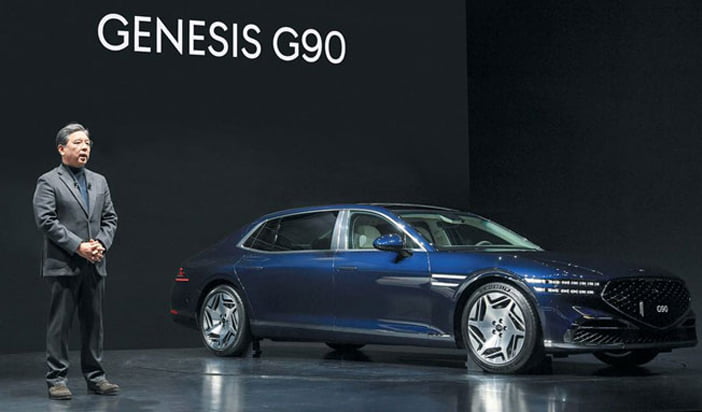
+++ GENESIS became its own brand in late 2015, officially stepping out as Hyundai’s luxury division. Looking back through the eyes of history, it appears that decision was a successful one. As of August, the South Korean company officially surpassed 1 million vehicles sold globally. I’d love to tell you exactly what vehicle that was, but sadly, that information is unavailable. I contacted Genesis in hopes of getting some details, but a company spokesperson said there wasn’t specific info regarding the special machine. For that matter, there isn’t even general information, and the company didn’t celebrate the millionth machine’s birthday with any pomp and circumstance. Apparently, they’re too busy building new cars to enjoy some cake. I do know that the milestone occurred in August. In a press release, Genesis confirmed 1.008.804 vehicles sold on the world stage since the company’s formation. The vast majority (690.177 to be specific) are to customers in its home market of South Korea. The remaining 318.627 are in other markets, led by the United States at over 225.000. Curiously, the best-selling Genesis vehicle thus far is not an SUV, but the G80 saloon. Of course, the luxury brand launched with the G90 saloon (photo) in South Korea and followed up with the G80 in 2016. The G70 sedan arrived just a short time later and that’s how it stayed for a while. It took Genesis 4 years to finally enter the SUV fray with the GV80 in early 2020. The GV70 followed late that year, with the all-electric GV60 rounding out the primary lineup. Of course, we now have electrified versions of the GV70 and G80 in the mix, and with the influx of models in the last 3 years, Genesis sales have increased substantially. Whereas it took the company over 5 years to sell half a million vehicles globally, the other 500.000 sales were clocked in just 2 years. “Genesis has been taking audacious steps to create original experiences for customers since launch, achieving remarkable growth along the way”, said Global CEO Mike Song. “Our brand will continue to build distinguished luxury experiences that have never been seen before”. On that front, I’ve seen spy photos of a facelifted GV80 in the works. The GV80 Coupe Concept that debuted earlier in 2023 is headed to production, and every new Genesis model introduced beyond 2025 will be purely electric. +++
+++ Carmakers, which have invested billions on electric vehicles, slammed GREAT BRITAIN ’s move to delay a 2030 ban on the sale of new petrol and diesel cars, saying it would disrupt supply chains and slow the transition to greener cars. Following weeks of speculation over the key net zero pledge, Prime Minister Rishi Sunak said on Wednesday he would push back the ban by 5 years to 2035, with the aim of easing the financial burden on households. Automakers, which had already made key investment decisions in line with the 2030 target (brought forward 3 years ago from an earlier 2035 target) called for more policy certainty and less confusion. Kia, which has plans to launch 9 electric vehicle (EV) models in Britain over the next few years, said it was disappointing to see a change in a policy the industry was working and investing towards. “Today’s announcement alters complex supply chain negotiations and product planning, whilst potentially contributing to consumer and industry confusion”, a Kia spokesperson said. The car industry has also bemoaned the lack of clarity over the government’s zero emission vehicles (ZEV) rules, which calls for an increasing proportion of a manufacturer’s sales to be ZEVs in the run up to the ban. “We urgently need a clear and reliable regulatory framework which creates market certainty and consumer confidence, including binding targets for infrastructure rollout and incentives to ensure the direction of travel”, a Volkswagen spokesperson said. Analysts and executives also said the government’s flip-flop meant Britain risked losing recent momentum in the adoption of greener transport, put off car buyers thinking of switching to EVs and disrupt plans by electric charge-point operators. “This delay will also put investment in EV infrastructure at risk, not to mention the wider market including battery, solar and green energy initiatives”, said Adrian Keen, the chief executive of public charging network InstaVolt. Sunak presented the policy shift as aligning Britain with the European Union’s similar 2035 ban on new petrol car sales but an EY analyst said the 2 markets were “not like-for-like”. “The United Kingdom does not offer the same demand-side incentives or infrastructure environment as many EU jurisdictions”, Maria Bengtsson said. However, Toyota said it welcomed the move as it helps the industry and consumers adapt and that it “recognizes that all low emission and affordable technologies can have a role to play in a pragmatic vehicle transition”. Prior to Sunak’s speech, Ford, which has a global $50 billion commitment to electrifying its cars, criticized the reported policy shift over what it called the “the biggest industry transformation in over a century”. “Our business needs 3 things from the British government: ambition, commitment and consistency. A relaxation of 2030 would undermine all 3”, Ford chair Lisa Brankin said. +++
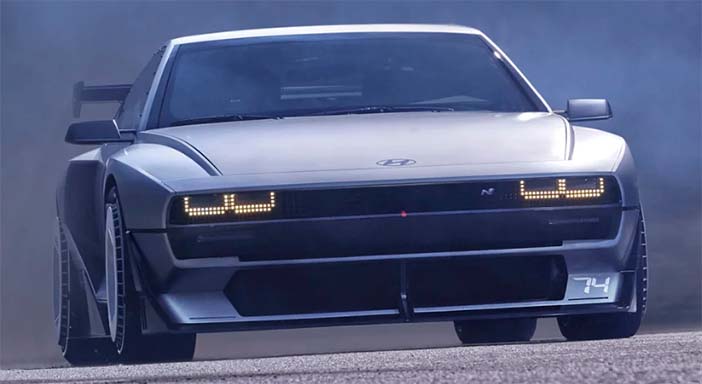
+++ HYUNDAI used ‘N-Day’ in 2022 to show 2 N-flavored concepts. The first was the RN22e, an Ioniq 6 sedan turned into a rolling widebody testbed for features like performance-focused regenerative braking and N Sound+ synthetic audio effects. No one remembers it, because the second concept was the N Vision 74, a hydrogen-powered fancy that turned the original 1974 Pony Coupe Concept into a concentrated retro-modern sports car with classic, chiseled lines. The biggest question asked about it was: “Hydrogen?”. The second-biggest question asked about it continues to be, “What will it take to build it?” Even Hyundai execs have publicly stated they want this car, it’s possible they’ve finally found a way to do it. Hyundai has applied to trademark the term “Hyundai N74” in Europe on September 13. Does that mean there’s a hot silver flash of N coming soon? Not necessarily. But the step represents more serious intent than anything we’ve seen since the reveal. At the Canadian International Auto Show in February of this year, Till Wartenberg, Hyundai’s VP of N Brand management and Motorsport, told: “My personal wish is to produce this vehicle. It’s at first probably an investment, but if we could see this vehicle really out there and people buying it, I would be very happy”. In May, Hyundai Group chief creative officer Luc Donckerwolke told about the possibility of building the car: “Absolutely. We are serious about this. This could come into production. We have the platform. It’s a motorsport platform”. Otherwise, nothing. The patent category cited in the application covers “automobiles; sports cars and electric vehicles”, among others. If something does hit the market, we suspect it will forgo hydrogen as an energy source but stick with batteries. Now that there’s a paper trail, I won’t be surprised to see a more production-ready concept shown in the months ahead. My position on the matter hasn’t changed since May: “Pony up, Hyundai. Build the N Vision 74”. I’d only like to add: just price it right. +++
+++ NISSAN was caught testing a sportier version of its Ariya at the Nürburgring this week, prompting speculation as to whether a full-blown performance model is coming down the pipeline. If so, will Nissan call it a Nismo, or will it carry new branding intended to divorce it from the company’s sportier internal-combustion models? Let’s start up front, where this prototype is wearing a somewhat pronounced lip spoiler with a smoothed-out lower fascia above it, rather than the usual open-mouth design of the standard Ariya. The sensor/camera pods normally recessed within the air curtain cut-outs on the front bumper have also moved inboard slightly; possibly to allow for increased airflow through the openings themselves. The shape of the front bumper and fenders is also different enough to make the Ariya’s black plastic flares seem less pronounced on the prototype. It’s hard to tell at this stage whether the body is actually wider, necessitating narrower fenders to keep the overall width the same, or if the wider front bumper is creating an illusion. There’s not a ton to see on the flanks. The rocker covers appear to be of a similar design to those we’ve seen on production models, so there’s nothing glaring to report there. The wheels don’t appear to be lifted from any existing models, and the lightweight, multi-spoke design suggests performance aspirations. The most pronounced differences can be spotted in the rear. The spoiler atop the rear hatch appears to carry over from the standard car, but the pronounced lip that extends from the belt line around the base of the rear glass is new, as is the larger “shelf” on the diffuser integrated into the rear bumper. Nissan hasn’t said anything public about its performance aims for this new crossover, so for the time being we’re in the dark on what might be propelling it. For that, we’ll just have to hang tight. +++
+++ TESLA is enjoying the highest brand loyalty among US automakers, Citi analysts concluded early this year. While the brand continues to bask in a high loyalty rate, its rivals are luring a small percentage of its buyers, wrote S&P Global Mobility in its recent report. Among electric cross-overs, the Tesla Model Y has a 37.3 percent loyalty rate, while the Ford Mustang Mach-E is second at 18.5 percent. While 70.5 percent of Model Y owners buy another EV, the rest of them defect to petrol-powered SUVs and trucks, S&P reported. That’s partially due to the large gulf in pricing between the Model Y and Tesla’s luxury EVs: Model S and Model X. The upcoming Cybertruck could potentially plug this gap. After Ford slashed the prices of the F-150 Lightning in July 2023 to a starting MSRP of just under $50.000, CEO Elon Musk tweeted that it was still “somewhat expensive,” hinting that the Cybertruck might undercut Ford’s electric truck. Some Model S buyers also defect to non-Tesla vehicles. The luxury electric saloon is now over a decade old and loyalty rates naturally decline when a vehicle ages, as per the report. 3.4 percent of Model S buyers switch to the Lucid Air, followed by the Rivian R1T at 1.8 percent, Mercedes-Benz EQS at 1.6 percent and Rivian R1S at 1.2 percent. Remember that these are small migration numbers. On a larger scale, Tesla continues to rule to roost. Nearly 60 percent of Model S owners purchase another Tesla, while a whopping 72.8 percent of Model 3 owners also return to the brand. A previous S&P study stated that 28.6 percent of Tesla buyers switched directly from legacy carmakers like Honda and Toyota. That said, the latest study is based on 12-month rolling data through June 2023, and might not be applicable to older buyers. +++
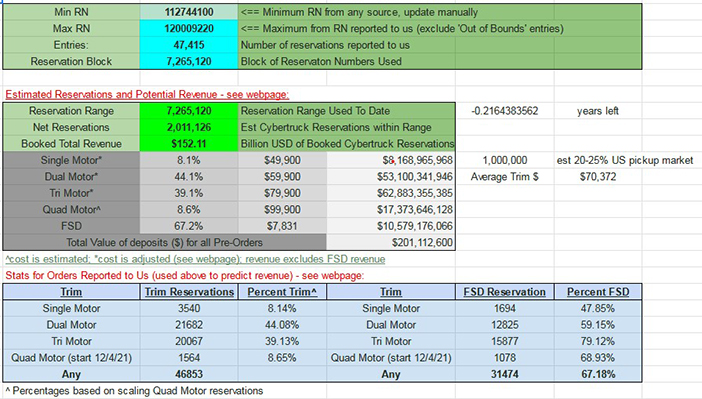
+++ The TESLA CYBERTRUCK is one of the most talked about electric vehicles in recent history, with daily posts on forums and Reddit showing prototypes and so-called release candidate (RC) units roaming the streets of the United States ahead of the pickup’s expected debut sometime later this month. It’s arguably a controversial vehicle, with its angular design splitting internet opinion-givers into 2 camps, seeing how one could either love or hate its unconventional look, but that seems to have helped Tesla when it comes to getting a boatload of reservations, at least according to a crowdsourced tracker. As per the publicly available that also lists over 47.000 self-reported reservations, Tesla has received an estimated 2 million pre-orders for its first-ever pickup truck, with most of the prospective customers going for the dual-motor and tri-motor versions, while the single-motor and quad-motor versions have less than 10 percent each in the grand scheme of things. Almost 70 percent of those who plan on getting a Cybertruck also have a Full Self-Driving (FSD) purchase in mind, as revealed by the document. It’s worth noting that the numbers aren’t exact, with the authors of the spreadsheet saying that there’s some clever maths going on behind the scenes to come up with the results, adding that several corrections have been made over time. Furthermore, it’s interesting to note that even with a rather small $100 refundable deposit, Tesla managed to rake in a massive $200 million from pre-orders for the Cybertruck alone, allowing it to invest the money into the pickup’s development; if the numbers prove to be correct, that is. Moreover, it’s expected that not all reservation holders will follow through with an order after the first units of the Cybertruck are delivered, but even if 80 percent of the pre-orders are cancelled, that would still leave Tesla with 400.000 customers. The same crowdsourced tracker estimated that the all-electric pickup had reached 1 million pre-orders in May 2021, with the number going up to 1.25 million in August 2021 and 1.3 million in November 2021, 2 years after its unveiling. The Tesla Cybertruck is expected to go on sale during a special handover event sometime this month, according to Elon Musk. +++