
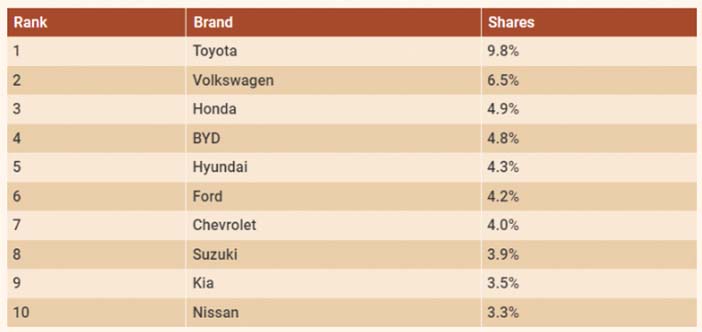
+++ Total global car sales across 37 major markets in August reached 5.55 million units, according to statistics from TrendForce. Amid this dynamic market, the month’s top-10 car sales brands were Toyota, Volkswagen, Honda, BYD, Hyundai, Ford, Chevrolet, Suzuki, Kia and Nissan. Chinese automaker BYD has surged ahead, surpassing Ford to claim the position of the world’s 4th-largest auto brand in August car sales. Notably, BYD’s performance has remained robust despite weakened demand in China’s auto market. In August, BYD reported a 5% month-on-month increase in car sales. The company’s market share trailed third-place Honda by just 0.1 percentage point. The global market performance for August unveiled a mixed picture. While BYD’s car sales were on the rise, Ford experienced a 6.7% month-on-month decline in sales, causing the American automaker to drop to 6th place. As a key player in the global automotive landscape, China continued to drive robust performance in its automobile market in August. According to data from the China Passenger Car Association (CPCA), a total of 1.92 million new cars were sold during the month. Regarding market dominance within China, BYD emerged as the top-performing auto brand for the month, securing an impressive 11.98% market share by selling 230.077 vehicles. Volkswagen maintained its second-place position as the second best-selling brand in China, with total sales reaching 195.548 cars, corresponding to a 10.18% market share. Toyota claimed the third spot, with 155.491 vehicles sold, equivalent to an 8.1% market share. Honda closely followed in 4th place, recording sales of 102.105 vehicles and capturing a 5.32% market share. Changan rounded off the top-5, selling 82.243 cars, which accounted for a 4.28% market share. At present, BYD’s share continues to rise. In the last 12 months, BYD exported more than 150.000 vehicles outside China. BYD analysts believe BYD’s export volume will reach 250.000-300.000 cars this year. +++
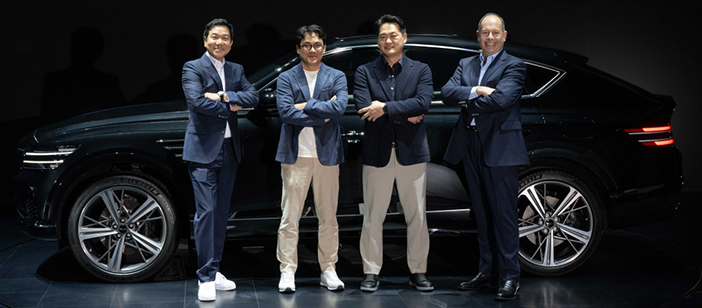
+++ The Hyundai Motor Group has unveiled updates to its high-end brand GENESIS ’ sport utility vehicles, the GV80 and GV80 Coupe, in Korea. “Our latest design masterpieces, the new GV80 and GV80 coupe, will play a key role in further establishing Genesis as a truly original Korean luxury brand”, said Graeme Russell, Genesis chief brand officer, during a press conference. “Building upon our foundation here in Korea, our global momentum is growing stronger. In only 8 years, we have launched a complete lineup of sedans and SUVs and established a presence in 17 markets around the world, with nearly 60 Genesis experience spaces across all regions”, he added. The brand’s first flagship SUV, the GV80, has been given a facelift after 3 years and 9 months, with upgrades to its design and convenience features, according to Ahn Se-jin, director of the Genesis Project 2. The car’s double-meshed radiator grille, which was added to the Genesis’ signature crest grille, boasts a more elegant image compared to the previous model. The headlamp adopted a cutting-edge Micro Lens Array technology, which was used in the G90 sedan. Presenting simplicity in the driver’s seat, the car has a 27-inch OLED wide display that combines the cluster and dashboard for the first time. Instead of using physical buttons, the models’ Audio, Video, Navigation or AVN keyboard and controller panel both adopted touchscreen controls. In response to customer feedback, the GV80 allows for separate air conditioning controls for the first, second and third rows. It also reduces road noise during driving by using 22-inch sound absorbing tires. The GV80 Coupe, the first Genesis coupe SUV model, embodies strength and athleticism with a sporty finish, Hyundai said. It was developed based on the GV80 with a powerful design upgrade to expand the customer base from traditional SUV lovers to those with distinctive taste. “The upper and lower body of the car forms a one-piece silhouette that is elegant and robust. GV80’s signature parabolic line, combined with a coupe, redefines the concept of an athletic car”, said Genesis design director Yoon Il-heon. The car is powered by the new 2.5 turbo S-Super Charger, a high-performance engine, and offers the Sport+ driving mode that was available for the G80 Sports sedan. Genesis was launched in 2015 with the ambition to challenge global premium car brands such as Mercedes-Benz and BMW. It has since played a key role in boosting Hyundai’s profitability with a value-added product portfolio. Until July this year, the brand has sold over 1 million units across 10 models (5 sedans, 2 SUVs and 3 electric vehicles) at home and abroad. The first Korea-made luxury SUV, the GV80, in particular, has reached more than 170.000 units in global sales since its launch in 2020. +++
+++ A Russian company will purchase HYUNDAI ’s manufacturing plant in St. Petersburg, which has been dormant since March 2022, Russian media reported, citing its industry minister. The deal will include a 2-year option for the South Korean automaker to repurchase the facility, according to Tass and Ria news agencies. “We have already formed all decisions on Hyundai’s acquisition. A local company will be the purchaser”, Russia’s deputy prime minister and industry and trade minister Denis Manturov was quoted as saying during an industrial exhibition in Kazakhstan. “As far as Hyundai is concerned, it plans a buyback option, though considering the president’s decree, it is limited to 2 years”, he added. The St. Petersburg plant, launched in 2010, suspended operations in March 2022 due to challenges related to component supplies. It had manufactured Solaris, Creta, Kia Rio and Kia Rio X-Line models with an annual capacity of over 200.000 units. In response to recent reports on the sale, Hyundai said earlier it was considering multiple options regarding the plant. +++
+++ KIA ’s electric onslaught continues apace: soon after the wraps came off the bold new EV5, the Korean brand has been spotted testing a much smaller and more city-focused electric SUV, likely to be called the EV3. It is the smallest model yet seen in Kia’s EV-badged range of bespoke electric cars, and will leave room for a future EV4 between it and the Sportage-sized EV5. The early signs suggest that this is a B-segment (compact) model in the vein of the existing Niro EV and Soul EV, which would leave space above for an EV4 closer in size to the Xceed. Given that the Niro was only recently renewed and is likely to remain on sale in its current form until around 2028, the EV3 will serve as an indirect successor to the Soul EV, which was last significantly updated in 2019. Certainly, its chunky silhouette, short overhangs and upright glasshouse look to position it as a logical replacement for the quirky, boxy crossover. Unlike the Soul EV, the EV3 will use a bespoke electric Hyundai Motor Group platform, which will allow for better range, charging times and functionality. Indeed, riding on an EV-specific platform will make for tangible improvements in cabin space and packaging over the electric Soul, which is based on the same platform as the petrol-engined version that’s still sold in certain markets. Possibilities include the introduction of a hidden storage cubby under flat-folding rear seats and a bench-style front seat, as in the EV5, and it’s highly likely that the front end houses a small ‘frunk’. The EV3 is obviously more overtly geared towards urban use than the bold, 4×4-inspired EV5 and EV9. However, it will (as dictated by Kia’s new Opposites United design ethos) adopt similarly blocky styling, chunky plastic cladding, distinctive LED light signatures and a bold ‘tiger face’ front end. The EV3 will also get striking flat-faced wheel designs, which appear to have been designed to promote aerodynamic efficiency while injecting a hint of rugged appeal. Importantly, Kia parent company Hyundai Motor Group has confirmed that from 2025 it will begin launching models atop its new eM platform for passenger EVs (at the same time as launching a range of ‘purpose-built’ commercial vehicles on a separate EV architecture called eS). Details remain unclear on how exactly the eM platform will be differentiated from the e-GMP structure used by Hyundai’s and Kia’s latest EVs, but it’s highly likely that the 2 will coexist for several years, with the eM potentially being rolled out as a replacement for the adapted combustion car platforms used by the current Niro EV and Soul EV. The company said the eM was “being developed specifically for EVs across all segments and will provide a 50% improvement in driving range on a single charge compared to current EVs”, adding: “The eM platform is also being developed to support Level 3 or higher autonomous driving technology and over-the-air software-update features”. This suggests that any cars on this platform (likely to include the EV3) could get more than 640 km of official range. It hasn’t yet been confirmed whether the eM will accommodate 800 Volt rapid-charging hardware, though. Notably, the EV5 revealed recently uses a 400 Volt system, although that figure applies to the Chinese-market model, to be built locally, and it’s possible that Kia could also build the EV5 elsewhere for sale in other global markets, using bespoke underpinnings with different attributes. Being sized to take on the Fiat 600e, Jeep Avenger, Mini Aceman and Volvo EX30 will make pricing core to the EV3’s positioning, and it stands to reason that Kia could keep its pricing accessible by reserving top-level charging and performance for its larger, more expensive EVs. A crucial development for the eM platform will be the introduction of a new standardized approach to component sharing across model lines. The Hyundai Motor Group said: “By standardizing the batteries and electric motors, for example, which currently vary across each EV model, the company will flexibly apply common components to each vehicle, thus efficiently expanding its line-up”. Furthermore, a new integrated vehicle controller unit will make for “more systematic and efficient” software upgrades for each car and allow Hyundai and Kia to better tailor each of their models to specific global markets, with bespoke features and varying performance. The EV3 is one of 11 new EVs scheduled to be launched by 2027 under Kia’s Plan S electrification strategy and is expected to be unwrapped late next year ahead of a launch in 2025. +++
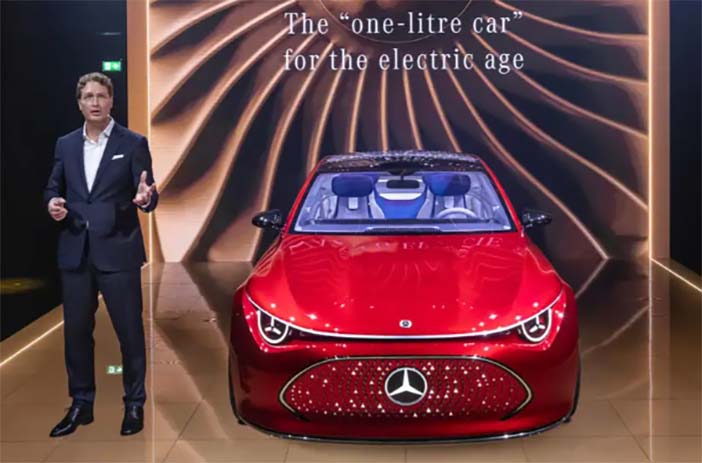
+++ The recent reveal of the MERCEDES-BENZ Concept CLA, a new model with eyebrow-raising efficiency stats that is clearly intended to take on the Tesla Model 3, marked the start of the next chapter in the firm’s ambitious electrification plans. It’s the latest step in the German maker’s evolution from the company that invented the combustion engine to a zero-emission manufacturer. I caught up with Mercedes-Benz Cars boss Ola Källenius recently to hear his view on the brand’s heritage, Chinese rivals, electrification and autonomous driving. Question: How committed is Mercedes to electrification? Answer: “The destination we’re travelling towards is zero-emission mobility, and we have absolute strategic clarity at Mercedes where we’re going with our decarbonization strategy, Ambition 2039. 10 years before the 2050 objectives of the Paris climate agreement, we want to decarbonize the whole value chain: suppliers, operations, the product and the product in use. We are investing double-digit billions of euros into new generations of EVs and new technology. That journey is a marathon and not a sprint. It feels like running sprints (one after another), but the distance is a marathon. You cannot always expect a linear development in every market at every point in time. So into the next decade, we need tactical flexibility with regard to electrified high-tech ICE vehicles that we also offer. We’re in the very good position that our assembly plants are flexible between the two. But make no mistake: strategic clarity, technical flexibility”. Q: Are you worried about new Chinese EV rivals? A: “In a transformation as big as this one, which is a technological and industrial transformation of Herculean size, it’s natural that new entrants will enter the market. That’s to be expected wherever they come from: the West, the East, Europe. Over the last decades, we have seen lots of arrivals into the European and US markets (the Japanese in the 1980s and ’90s, then the Koreans) so it’s natural that the Chinese want to go abroad”. Q: So how will you beat Chinese competitors and other rivals here in Europe? A: “If you look at the sum of the parts of the Concept CLA, it’s hard to find any car that can beat that. The quest since Gottlieb Daimler and Karl Benz to break new ground and push the boundaries of technology is very much in our DNA today as it was more than 130 years ago. At the same time, I always like to think about Mercedes as the perfect blend of what’s going on on the high-tech side and all the other values. No company has a longer, deeper safety pedigree than Mercedes. You can go to an insurance company or safety rating agency and pick up some stars. We always say one star is enough: the Mercedes star. We do a whole range of tests nobody else does. We crash our vehicles, we crash competitor vehicles and we have a feeling for what works and what doesn’t. Then there’s the way the car rides and drives. And where some people see an air vent, we see a piece of jewellery. The designers spend hours to get it aesthetically just right: it works, it directs air, but it’s just perfect. All of those things that make a Mercedes-Benz a Mercedes-Benz come on top. It’s not just about what’s happening on the EV drivetrain or the infotainment”. Q: What is your view on e-fuels for mass market usage? A: “I see battery-electric vehicles as the ones scaling up on the new passenger car side. As for carbon-reduced fuels, all the way to zero-carbon fuels, aviation will need them, along with areas such as shipping. On the path to 100% zero-emission vehicles being sold, there is still going to be a car parc of 1.5 billion to 2 billion existing ICE vehicles. If you want to lower the burden of those vehicles, carbon-reduced fuels make sense. But windmill to wheel, the efficiency of an EV is 70% greater than e-fuel. Plus, I have not yet seen an industrial-scale effort to take CO2 out of the atmosphere, which you need to make it truly circular. To make those fuels really circular, you need to take millions of tons of CO2 out of the atmosphere. It’s not an easy task. It’s not an inexpensive task. I think it’s way into the 2030s before that is industrialized. Whereas BEV is happening now”. Q: How important is autonomous driving to Mercedes? A: “We have super-sophisticated Level 2+ systems that are getting better and better, but with the clear distinction that it is the driver that is responsible. I see exciting developments there. Now, Mercedes is the first manufacturer to take baby steps into autonomous driving where it’s actually the computer driving: it’s responsible and it takes liability. That’s a big jump. We introduced Highway Drive Pilot in Germany and now the US in the S-Class and EQS, and we’re looking at increasing it. It only works at lower speeds, but in traffic you can turn it on and read your WhatsApp messages or whatever you want to do. That is like when you land on the moon and put a flag there. Once you’re there, you start thinking: ‘Should we build a moon station?’ That’s what is going on now, looking at how we can increase the envelope in more driving situations”. +++
+++ Reports on September 22 suggested that NIO is considering raising 3 billion dollar from investors due to expanding losses, with the financing potentially occurring in the first half of next year. However, Nio has denied these claims, stating that the reports are untrue. +++
+++ The UNITED AUTOWORKERS are walking off the job at an additional plant each at General Motors and Ford, but will spare Stellantis after last-minutes concessions by the Chrysler parent, union president Shawn Fain said on Friday. Here are the reactions from close observers of the auto industry: Arthur Wheaton, director of labor studies at Cornell’s School of Industrial and Labor Relations: “The world is watching pretty closely and so far, it’s still overwhelmingly on the side of the UAW. What Shawn Fain wanted is a tit for tat: If you’re good for us at the table, we won’t mess with you. If you’re bad with us at the table, we will escalate the strike. So I think it’s having its desired effect”. Sam Fiorani, vice president of global vehicle forecasting at AutoForecast Solutions, says: “It shouldn’t affect volumes too much. It’s another warning to the OEMs, they haven’t hit the meat of the profits. These are popular vehicles, but the targeted strike is not really digging into the finances of these companies. The strike costs the union a lot of money. It’s $500 per worker per week. With the additional 7.000 workers at the 2 plants in today’s expansion, we are talking about over $12 million a week out of the strike fund. If they were to take into the bigger vehicles, the fallout would be huge as they would spread across powertrain plants, stamping plants, everything else that would come down if they were to tackle the pickup trucks or full-size SUVs”. Daniel Ives, analyst at Wedbush Securities, says: “This UAW debacle strike trajectory is like watching a slow moving car crash take place on black ice in our view. The UAW strike is now getting nastier with both sides digging in the trenches in what could be a long and drawn-out battle between the UAW and the Detroit auto stalwarts. This is a defining period for Detroit and the future of the auto industry as we firmly believe that if General Motors, Ford, Stellantis accept anything close to the deal on the table the future will be very bleak for the U.S. auto industry. If the Detroit Three took this current deal, we estimate the average EV vehicle will go up in price by 3.000 to 5.000 dollar to pass these costs onto the consumer and would ultimately be a torpedo to the future business models of the 313 area code”. +++