
+++ The AUDI E-TRON GT will receive a host of eye-catching styling revisions as part of a mid-life facelift which could include the arrival of a new RS variant with as much as 760 hp. Planned for launch towards the end of 2024, the Tesla Model S rival was spotted undergoing its final stages of testing in Germany with very little camouflage covering its bodywork. Spy photographer’s images suggest that the design of the e-Tron GT will be brought more in line with the all-new Q6 e-Tron, which SUV is set for launch in February 2024. It will also follow in the footsteps of the Porsche Taycan, its Volkswagen Group sibling, in gaining more aerodynamically optimised front and rear bumpers, a revised front grille and new alloy-wheel designs. Unusually for a facelift, the front and rear light designs appear to remain the same. At the rear, the diffuser is much more prominent, with large side blades channelling air at either side of the bumper. The side profile remains largely the same, save for redesigned side skits. Judging by the muscular brake set-up and additional cooling apertures at the front, the range-topping RS e-Tron GT could be made even more powerful. It could pack the same 760 hp powertrain as the Porsche Taycan Turbo S, bringing about a 115 hp increase over the current RS e-Tron GT, which produces 645 hp and dispatches 100 kph in 3.3 seconds. Among the regular powertrain options, there’s little to suggest that Audi will overhaul the 93kWh battery used by the standard car, but it will likely feature a series of efficiency updates to improve on its 480 km range. The e-Tron GT is also likely to receive some significant interior updates, also in line with the Q6 e-Tron. Such changes would include Audi’s new “human-centric” MMI infotainment system, which focuses on digital functionality and ease of use. +++
+++ Pricing for the DACIA BIGSTER (which will arrive in 2025 to kick-start the brand’s ambitious push into the crucial C-segment) will start below €40.000, according to CEO Denis Le Vot. Speaking at the launch of the next-generation Duster, Le Vot confirmed it will be priced well below its rivals. “It’s not going to start with a 4”, he said. He added: “Less than 10 years ago, you bought something for €33,000, and then you go to the same dealership for your new car and they say the new car is €40.000-something thousand. Then lots of people will say: ‘Oh, no, I’m not doing that. It’s too expensive’. This is where Dacia makes sense, because we’re coming with, in the case of a C-crossover, the Bigster, and it’s not going to start with a 4”. Le Vot also said that the Bigster will be a “4.6 meter long full-size SUV with 5 seats”, placing it in direct competition with the new Peugeot 3008 and Volkswagen Tiguan. Expanding in this market, in which it currently sells only the 4.3 meter long Duster, will help the Romanian value brand to build on its rapid growth in Europe. Devised as a rugged but road-focused rival to the likes of the Peugeot 5008 and Skoda Kodiaq, the Bigster will be the largest and most expensive model in the Dacia portfolio when it is launched in early 2025. But it will still embody the same value-for-money ethos as its Duster, Sandero and Jogger siblings; a characteristic that Dacia bosses highlight as a key tenet of the brand’s appeal. The Bigster will be based on the same CMF platform as its similar-size Renault Group siblings, the Nissan X-Trail and Renault Austral, and is being engineered from the off with an outright focus on affordability. “We know that pricing for customers is key, so pricing can’t be just a consequence of the technological choices we make”, said the brand’s sales and marketing boss, Xavier Martinet. “It has to be an input in the product before asking our product planning and engineering colleagues”. Just as the Sandero and Duster are comfortably among the most affordable models in their market segments, so too will the Bigster look to capture a significant market share by undercutting established rivals. When asked how the lower pricing of the Bigster would be possible, Le Vot previously said: “Our recipe is super-clear. We’re making the essential car. We design cars with zero superfluous content: no screen when we can put no screen, no electronics when we can put no electronics, no ADAS when we can put no ADAS”. This is a formula that Dacia has already applied to great success with its latest models. It posted a 6.8% global sales uptick in 2022, with 573.800 units, making it the third best-selling brand to private customers in Europe. While stripping back the amount of kit fitted to the Bigster will be instrumental in keeping its price low, it is the use of existing Renault Group hardware that really enables Dacia to minimise its development costs and thereby the final price. In keeping with the brand’s emphasis on simplicity, the Bigster will be available with only a small selection of trim levels, but it is expected to match its Nissan and Renault relations in offering a choice of either pure-combustion or electrified power. The latter will most likely be derived from Renault’s E-Tech full-hybrid system, as used by the Jogger Hybrid and the next-generation Duster Hybrid. Four-wheel drive will no doubt be an option as well. “We are taking the assets from the group, and we’re lucky that we don’t have to pre-invest, that we don’t have to be a front-runner”, said Le Vot, before confirming that Dacia will “continue leveraging the asset by introducing two new models just after the Bigster”. He refused to confirm further details, though. While Dacia is looking to dramatically expand the scope of its car offering, a return to the lucrative light commercial vehicle market isn’t on the radar of Le Vot, partly because parent company Renault is already a big player in this sector. “Well, I don’t know how we differentiate. That’s why we stopped”, he said laughing, referring to the panel-sided variant of the Dokker that was taken out of production in 2021. Le Vot explained the considerations that must be made to cater to a buyer in this segment: “What is a mid-size van? What is the multi-energy of a mid-size van that permits me to go to the countryside but still at the same time enter the city etc? And the line between all these is kind of moving. I would say even undefined”. +++
+++ New car registrations in EUROPE increased by 14% year on year in October, with demand led by a growing appetite for electric cars, according to industry analyst Jato Dynamics. More than 1 million cars were sold across 28 European markets, with 15% of that total (some 150.000) being battery-powered. The uptick in electric car registrations is largely down to Tesla, BMW and SAIC sales, according to Jato. However, Felipe Munoz, Jato’s global analyst said: “The increasing demand for electric cars is more a response to the range of deals on offer and the increase in supply, rather than competitiveness in price and the variety of models available”. Tesla registrations tripled in October 2023 (compared with October 2022) due to the continued sales success of the Model Y and Model 3. For the month of October, Volkswagen was the best-selling brand, with 97.406 units sold. The best-selling model was the Dacia Sandero, accruing 22.335 sales. MG owner SAIC recorded a 66% increase in registrations with 8.841 units. MG 4 sales were 1.6 times higher than those for the Volkswagen ID.3. Registrations for EVs increased dramatically in Finland, Luxembourg and Denmark. However, sales in Croatia, Ireland and Germany were down. The top-5 best-sellers for October were the Dacia Sandero (22.335), Fiat/Abarth 500(e) (15.426), Renault Clio (15.408), Toyota Yaris Cross (15.401) and Peugeot 208 (15.032). Europe’s top1-10 best-sellers so far in 2023 are: 1. Tesla Model Y (209.503; +144% year on year), 2. Dacia Sandero (196.121 sales, +21%), 3. Volkswagen T-Roc (175.169 sales, +16%), 4. Peugeot 208 (171.871; -4%), 5. Renault Clio (164.576; +48%), 6. Opel/Vauxhall Corsa (161.576 sales; +16%), 7. Volkswagen Golf (150.020; 0%), 8. Toyota Yaris Cross (147.994; +34%), 9. Abarth/Fiat 500 (144.438 sales; +5%), 10. Dacia Duster (130.404; +6%). +++
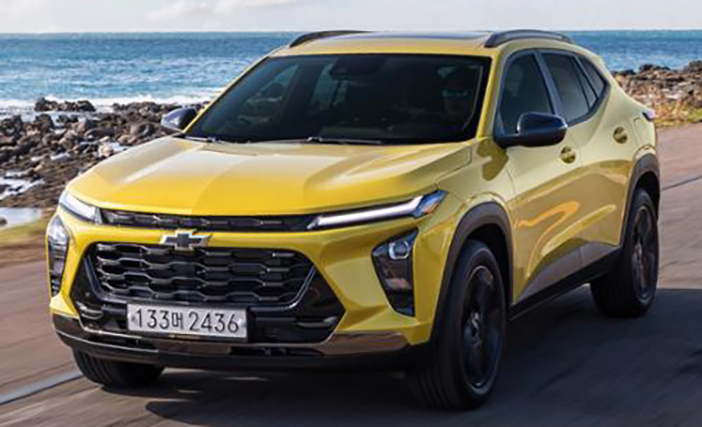
+++ GENERAL MOTORS KOREA logged robust export sales in October, taking up nearly 20 percent of the nation’s total automobile exports, industry estimates showed Monday. Out of the total 225.391 Korea-made vehicles exported in October, 42.623 units or 18.9 percent were accounted for by GM’s 2 popular SUV models: the Chevrolet Trailblazer and the Trax (photo). GM Korea’s numbers mark the third-largest share of automobile exports after Hyundai (46 percent) and Kia (31.9 percent). Renault Motors Korea and KG Mobility, formerly SsangYong Motor, accounted for 1.9 percent and 1.2 percent, respectively. The GM figure also represents a 87.5 percent surge from the same period last year, reflecting the company’s rapid overseas expansion. In February, the company expanded its foray into the US market by starting to manufacture the Trax at its Changwon plant in South Gyeongsang Province. Between January and October, the company exported a total of 337.114 units, claiming a 14.8 percent share of Korea’s automobile export volume. Over the cited period, the Chevrolet Trailblazer topped the list, with a cumulative export volume of 176.123 units, while the Trax ranked 4th with 137.700 units. If this trend continues, industry watchers predict that the Trailblazer could become the top exported model of the year. +++
+++ GENESIS is intensifying its rivalry against BMW and Mercedes-Benz to grab a larger share of the Korean luxury vehicle market, as luxury cars guarantee higher margins amid an industry slowdown caused by global economic doldrums, according to data and industry officials. According to Genesis, the luxury car brand began selling the GV80 Coupe in South Korea last month. Its launch came amid growing domestic popularity for high-end SUVs. Genesis expects the new model to extend the brand’s earlier success driven by the flagship GV80. Data showed that the GV80 is outperforming its counterparts manufactured by luxury carmakers from Germany. According to market tracker Car Is You, GV80 sales came in at 19.664 for the first 9 months combined this year, surpassing the sales figures for the Mercedes-Benz GLE and BMW X5. Sales for the 2 flagship SUVs here reached 4.909 and 3.798, respectively. The Hyundai Motor Group is poised to strengthen the competitiveness of Genesis’ value-added luxury segment in a bid to tackle the currently unfavorable market conditions. But there are still obstacles ahead, as sales for Genesis’ electric models fell behind its rivals. The sales figure for Genesis Electrified G80 sedans between January and October this year reached 938, according to the car market tracker. But sales of its competitor, Mercedes-Benz EQE, came in at 1,895 during the same period. “Shortly after Genesis made its debut in 2015, a number of market insiders raised doubts whether Genesis will be able to rise enough to compete with overseas luxury carmakers, but the woes are gradually being cleared away, as shown from its rapid sales growth,” an industry official said. “But it still requires more time for Genesis to reinforce its position due to the lack of history. One big difference from eight years ago is that few raise such concerns, and most critics now accept the brand as a reliable luxury carmaker”. The pace of Genesis’ growth is noteworthy, compared to other luxury car brands. Genesis sold 530 vehicles in the first year of its launch, but sales soared over 100.000 in 2020 and 200.000 in 2021. As of the end of the first quarter of 2023, sales of Genesis cars accounted for 5.4 percent of Hyundai Motor Group’s global sales. Meanwhile, it took 32 years for Lexus to reach 5 percent out of the total sales for its parent firm, Toyota, since Lexus made its debut in 1989. +++
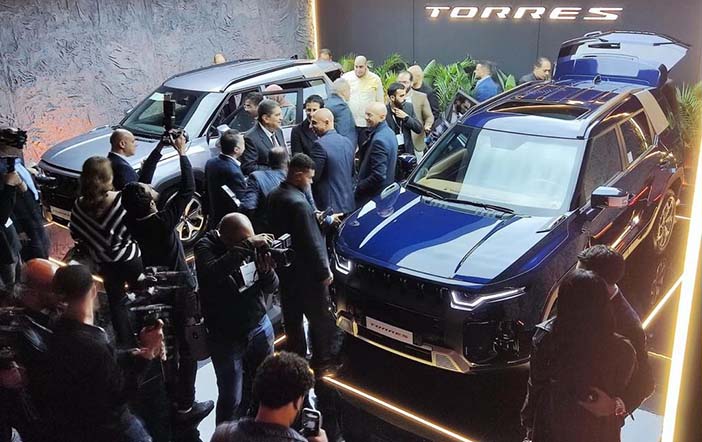
+++ KG MOBILITY is hoping to finish 2023 strong to end the year with a profit for the first time since 2016 on strong sales overseas and the automaker’s bestselling SUV model Torres. According to a regulatory filing, the Korean carmaker has logged accumulative revenue and operating profit of almost 3 trillion won ($2.32 billion) and 42.4 billion won, respectively, in the first 3 quarters of this year. The revenue from the period of January to September saw a 24.6 percent jump on year. The automaker had sold 96.399 vehicles as of September, up 19.8 percent from the previous year and the most since accumulated figures from the first 3 quarters of 2019. Domestic sales posted 50.984 sold, while overseas sales recorded 45.415. In particular, KG Mobility turned in its biggest third-quarter profit in 10 years, selling 31.254 vehicles from July to September. Of the sold vehicles, almost 20.000 were exports; up 59.6 percent on-year. “We recorded profits for three consecutive quarters since the first quarter due to the expansion of product lineup such as the launch of Torres and product enhancement models”, a KG Mobility official commented. “As the Torres EVX, which was launched in September, especially drew high expectations from the market, we will expand sales and improve the financial structure through aggressive marketing strategies in both the domestic and overseas markets as well as strengthening global market approaches”. KG Mobility’s Torres, the flagship SUV launched in July 2022 and the automaker’s first new model in 3 1/2 years, offered a much-needed boost for revival. The automaker has sold 40.648 Torres vehicles through October this year. The SUV is the bestselling model among all KG Mobility vehicles in the first 10 months of the year. Based on the popularity of the Torres in the domestic market, the automaker has released various models of the SUV, such as the Torres Bi-Fuel, which uses both gasoline and liquefied petroleum gas, Torres TX, a leisure model, and Torres Van, a 2-seater with much more loading space. KG Mobility hopes to accelerate its future strategies with new models. The automaker is expected to debut a coupe-style SUV and an electric pickup truck next year. On top of that, the company plans to release an electrified follow-up model of the Korando, tentatively named KR10, in 2025 and another EV follow-up model of the Rexton called F100 in 2026. The automaker is also focused on expanding its presence in the global market as it continues to explore export opportunities in various regions such as Africa, Asia, Europe and the Middle East. KG Mobility is building a knock-down plant in Vietnam. The knock-down approach in the auto industry indicates an automaker’s local assembly and manufacturing with exported parts. Having signed agreements with Vietnamese FUTA Group’s Kim Long Motors, KG Mobility plans to begin mass production at the local plant next year. The automaker is also speeding up the ongoing knock-down project with Saudi National Automobiles Manufacturing, as it inked a memorandum of understanding on establishing a supply chain of parts providers in October this year. In November, KG Mobility showcased the Torres in Egypt for the first time, making a foray into the African market. The automaker began selling the SUV in Europe in July this year. KG Mobility Chairman Kwak Jae-sun vowed to nearly triple the automaker’s annual units sold, laying out goals to sell 320.000 cars in 2026, with 200.000 of them being exports, on a press conference in September. “All members of the company are trying to make a new company with brand new determination”, he said. “We will never bear the dishonor of a red company in terms of structure”. +++
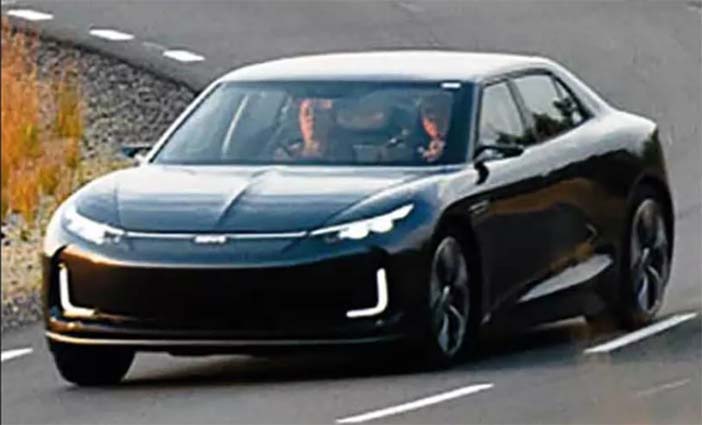
+++ The NEVS EMILY GT , a 1.000 km electric saloon developed by engineers from Saab, has taken a step closer to production after the project was bought by Canadian start-up EV Electra. The striking EV was revealed to the world by NEVS engineers in April, after the Swedish firm was placed in “hibernation mode” by its Chinese owner, Evergrande Group. NEVS acquired the rights to many of Saab’s assets when the storied brand entered bankruptcy in 2012 and is based in Saab’s old home city of Trollhättan. In a statement, NEVS boss Nina Selander hailed EV Electra’s acquisition of the Emily GT (as well as the Pons autonomous pod) as a “realisation of shared dreams” and a “profound moment”. The joint statement added that EV Electra will soon begin assembling its first cars at a factory in Turkey. EV Electra founder and CEO Jihad Mohammad said: “We will have cars coming out of Trollhättan again. We did this acquisition fully aware that we will need to back it all the way through development to mass production. I’m a firm believer in in-house production and strong balance sheets. I also believe Trollhättan has the personnel that can make our visions come true. The acquisition of the Pons and Emily projects signifies a pivotal milestone in our pursuit of innovation and sustainability. We’re thrilled to embark on this journey”. The NEVS Emily GT is a 4-door, 5-seat electric car rivalling the Mercedes-Benz EQS and Tesla Model S. It is claimed to be capable of driving more than 1.000 km between charges, thanks to a huge 175 kWh battery. Battery capacities of 140 kWh and 105 kWh were also in the original plans, as was 11 kW wireless charging via a pad connected to a fixed hub. In-wheel motors making 122 hp are mounted at each corner, giving the Emily GT 488 hp in total. Each motor sandwiches a drive unit between the alloy wheel and the aluminium brake disc, reportedly giving finer control of torque vectoring. Such was the extent of the vectoring that the car can turn without using the steering wheel. An air suspension system with active dampers was utilized to counteract the negative effect on ride quality caused by the increase in unsprung weight from the in-wheel motors. A high-performance variant of the Emily GT was also in the works, with planned outputs of 660 hp and 2.200 Nm. This would cut its 0-100 kph sprint time down from 4.6 seconds to 3.2 seconds. It has yet to be announced whether EV Electra will change these specifications. The styling (which bears a strong resemblance to the final Saab 9-5) is reported to have been penned by an unnamed Italian and refined by former Saab designers. NEVS’ owner, the Evergrande Group, originally signed off a run of 20 prototypes. However, Evergrande (which made its fortune as one of China’s most prolific property developers) hit financial problems in 2020, and only 6 were built. In April, Emily programme director and former Saab engineer Peter Dahl told Swedish publication Carup: “Everything is in place to take it further into production. The prototypes are completely drivable, except that the airbag and auto-braking systems are missing”. Dahl said the project was about a year and a half away from completion. Evergrande put NEVS into “hibernation” in April, having failed to secure a buyer. Of the Swedish firm’s 340 employees, 320 were laid off. That month, Polestar signed a lease for part of Nevs’s Trollhättan factory. The Volvo spin-off will use the facility as an R&D base for its future EVs. +++
+++ European automotive lobby group ACEA has called for the introduction of special regulations for SMALL URBAN CENTRIC ELECTRIC VEHICLES to create a version of Japan’s kei car segment. Kei (short for keijidosha) is a specific category of cars in Japan whose small size and 660 cc maximum engine displacement are regulated by the government to force car makers to design vehicles more suitable for cramped urban environments. “The kei car is a perfect example of the kind of things we should be able to do”, said Luca de Meo, Renault Group CEO and ACEA president, at a presentation to outline a new manifesto designed to persuade law makers to soften some of the more onerous European Union regulations coming down the line. Small electric cars in this proposed new category should have a reduced purchase tax, lower road tolls, easier access to city centres and not be subject to the same parking restrictions as regular cars, de Meo said. +++
+++ STELLANTIS is working on hydrogen combustion engines as one of four different solutions to zero-emissions driving, CEO Carlos Tavares has said. Tavares was speaking at the opening of the Symbio hydrogen fuel cell factory in Lyon, France. Symbio is an equally owned joint venture between Stellantis, automotive supplier Forvia and tyre maker Michelin. Stellantis (which owns 14 car makers, including Alfa Romeo, Citroën, Jeep, Peugeot and Opel) is trying to diversify the number of drivetrains available under European Union decarbonisation rules. “Hydrogen injection is one of the four technologies we’re working on”, Tavares said after the plant opening. He criticised legislators for their “brutal” methods to move car makers away from fossil fuels and steering them towards EVs. “Now the dogmatic thinking is being hurt by reality, because if you aren’t affordable, then people can’t pay for it”, he said. Stellantis is diversifying its drivetrain options to cater to those customers for whom EV charging is a drawback. “The real competition is starting between fuel cell, EVs, hydrogen internal combustion engines and even synthetic fuels”, Tavares said. “We will see in the next few years what is going to be the best solution for the citizens”. Burning hydrogen in combustion engines has been seen as the easiest solution for zero-emissions driving, especially among commercial vehicle makers, given the lack of disruption to supply chains it would cause compared with BEVs or FCEVs. Petrol engines need to be modified to accept hydrogen, but much of the same mechanism remains. The hurdles then are establishing a refuelling network and making green hydrogen at scale. Tavares didn’t say which vehicles would be offered with hydrogen combustion engines, but Stellantis has already begun selling its K0 range of mid-size vans (think the Opel Vivaro) with a hydrogen fuel cell option. Stellantis will also offer a hydrogen fuel cell version of the Ram Heavy Duty pick-up truck in the US in late 2026 or early 2027, Tavares said. Hydrogen tanks are easier to package in a van, while the lesser weight of a fuel-cell or hydrogen-combustion van compared with a battery-electric one would allow for a greater payload. Toyota has demonstrated hydrogen combustion engines in both Toyota Yaris and Toyota Corolla race cars running in Japan, while the Renault Group has showcased one in the Alpine Alpenglow supercar concept. Hydrogen and synthetic-fuel combustion engines are favoured by motorsport concerns as they move to zero-carbon fuels, because they retain the sound of current race cars. The idea is also being heavily promoted by European producers and suppliers of heavy-duty vehicle as they look for ways to reduce disruption to their businesses. A consortium called the Hydrogen Engine Alliance, comprised of the likes of Daimler Truck, Claas, Isuzu, JCB, MAN and suppliers such as Bosch, BorgWarner and Dana, has been established to better make the case for the ICE route. Hydrogen combustion engines aren’t considered fully zero-emissions, because of the NOx created by the combustion, but this can be reduced using the same AdBlue treatment as used in diesel engines. They use more fuel than fuel-cell equivalents but are much cheaper to produce. Stellantis’s fuel-cell vans currently cost more than €100.000 without subsidies, commercial vehicles boss Xavier Peugeot told recently. Tavares said governments need to subsidise the purchase of fuel-cell vans at a rate of €30.000-40.000 per van for the next “3 to 5 years” to bring the cost down to the level of battery-electric alternatives and stimulate the market. “The price depends on the cost and the cost is something that we need to work on. So far, it’s not there”, he said. Costs are coming down, though. Toyota has said its next-generation fuel cell technology to be commercialised in 2026 will bring “significantly reduced costs”, albeit without saying what the current cost is. +++
+++ TOYOTA recently revealed the FT-Se concept as a preview of GR’s first EV and has detailed a number of initiatives on which it’s working to ensure that electric sports cars are suitably engaging. However, it hasn’t put a timeframe on their arrival and has voiced no plans to phase out its petrol cars. Now GR manager Masahito Watanabe has said that all-out electrification isn’t a priority for the sub-brand, pointing to Toyota’s highly publicised efforts in recent years to develop hydrogen-combustion technology as a potential lifeline for its piston engines. “We still think the internal combustion engine has some potential and, as we do so, we will of course be trying to comply with all the applicable rules according to the regions in each country”, he said. “But we don’t want to give up. It’s not over just yet, because if you look at the internal combustion engine, there’s still hydrogen combustion that can be a part of that zero-emission line-up, so I think that’s going to continue. As you see in the FT-Se, we still see high possibility for battery EVs, but what we want to do is pursue the multi-pathway [approach]that we’ve been seeing in motorsports and sports cars in general”. Toyota’s multi-pathway approach manifests in a product plan that includes 15 battery electric cars by 2026 but still leans heavily on hybrid technology in a bid to provide maximum choice for consumers. It also remains committed to hydrogen fuel cell technology, although is shifting its FCEV focus from passenger cars to heavy goods vehicles, as well as ships and power storage. The potential for hydrogen to play a role in Toyota’s sports car strategy is clear too. Watanabe said: “We still believe that there’s a lot of potential to be had from the hydrogen combustion engine itself. But we know that the infrastructure is woefully insufficient. This is a common issue across many different countries and we completely appreciate that. What that means is that we won’t be able to commercialise hydrogen combustion engines right at this moment. But look at some of the movements put forward in Europe, the US and Japan. And this isn’t just governments; private companies are working towards increasing the hydrogen infrastructure. So we’re looking out for that. What we want to do in the end is provide as many options as possible to our customers. So we will continue to develop the hydrogen internal combustion engine as part of that”. Watanabe didn’t give any clues as to what a new combustion-engined GR car could look like, nor when it might arrive. A new version of the GR Supra was spotted testing at the Nürburgring recently and widely reported to be a hardcore ‘GRMN’ variant equipped with the 460 hp straight-6 from the BMW M2. But when asked for confirmation of these reports, Watanabe went only so far as to suggest the spotted prototype is some sort of “evaluation model”. He did, however, reiterate Toyota’s aim to eventually build a road-going version of Gazoo Racing’s upcoming GT3-spec race car, shown in concept form last year. “But at this moment, I can’t really say anything about when”. Gazoo’s new GT3 racer is set to hit the track in 2026, and the road-going version is reported to be in line to succeed the Lexus RC F coupé. No details of its engine have yet been revealed. +++