
+++ Britain will make the makers, rather than the owners, of self-driving cars legally liable for any crashes under a framework for developing AUTONOMOUS VEHICLES (AV), the government said on Tuesday, in a move welcomed by insurers and AV startups. King Charles said the government would bring forward an Automated Vehicles Bill as he set out the government’s legislative agenda for the forthcoming parliamentary session, after one promised last year did not materialize. “My ministers will introduce new legal frameworks to support the safe commercial development of emerging industries, such as self-driving vehicles”, Charles said in a speech to lawmakers. Tara Foley, head of UK and Ireland operations for global insurer AXA, said this would add “multiple benefits for the UK economy, road safety and green jobs. For insurers, it also provides crucial clarity for establishing liability for self driving”, she added. Companies had said Britain could lose out on investments, and startups would carry out testing elsewhere unless promised laws regulating AV technology were passed before the next general election, expected next year. “The new primary legislation for self-driving vehicles gives us the confidence to continue investing in R&D and growing our talent base here in the UK”, said Alex Kendall, CEO of AV startup Wayve, which has raised around $260 million from investors, including Microsoft. The government said the bill would protect users and promote safety in the AV industry. “While the vehicle is driving itself, a company rather than an individual will be responsible for the way it drives”, the government said. Self-driving industry experts have said national regulatory frameworks and establishing legal liability are crucial to winning public acceptance of autonomous vehicles and for insurers to provide coverage. The bill will establish processes to investigate incidents and improve the safety framework, and will also set the threshold for what is classified as a self-driving car. In the U.S. market, where states have led the way in testing self-driving cars, California regulators last month ordered General Motors’ driverless car unit Cruise to remove its vehicles from state roads, saying it had misrepresented the technology’s safety. Paul Newman, founder of Oxford-based AV software firm Oxa, which has raised about $225 million from investors, said the UK’s proposed framework would unequivocally avoid a repeat of Cruise’s situation in Britain because it clearly delineates responsibilities. “There’s an inevitability to this technology”, he said. “This a fantastic opportunity to get out in front and … create frameworks to build public trust”. +++
+++ BMW forecasts strong 4th quarter sales and said its order book was filled into the first few months of next year, with executives adding they saw no need to cut prices as some rival automakers have. Vehicle availability was improving as supply chain bottlenecks eased, though higher material and logistics costs persisted, particularly for labor, the German car manufacturer said. Third-quarter results were largely in line with expectations and delivered in a more optimistic tone than some competitors, which warned of a subdued market environment curbing demand. Pressed on whether BMW felt the need to cut prices to boost electric vehicle demand, particularly in China where a battle for market share has raged this year, chief executive Oliver Zipse said this approach was not in BMW’s playbook. “We have no interest in sinking prices to gain market share. That’s not our strategy. And as you can see, we are managing to grow substantially even with very acceptable prices”, he said. The premium carmaker has forecast an annual margin on earnings before interest and taxes (EBIT) in its cars division of 9.0%-10.5% and is on course to hit that target with a 10.3% margin so far this year, it said. Higher-priced and fully electric cars boosted quarterly revenues above expectations of 8 analysts to 38.5 billion euros, but group net profit fell 7.7% after last year’s figure benefited from a one-off boost when BMW took majority control of its Chinese joint venture. The company saw some slight relief in raw material prices in the quarter versus last year but nonetheless felt an impact of 200 million euros from the net balance of currency and raw material positions, chief financial officer Walter Mertl said. Materials and logistics costs remain high, with a notable negative impact across the first nine months of 2023 due to factors including high labor costs from partners, he added. In a statement, BMW made no mention of high interest rates or inflation weighing on growth, in contrast to competitors such as Mercedes-Benz and Porsche. Fully electric sales hit 15.1% of total sales in the third quarter, outstripping BMW’s end-year target of 15%. Models from the upper price segment, like the 7 Series, the updated X7 and the X5 plus X6 models, are also driving sales growth. Free cash flow for the automotive business so far this year came in at 5.7 billion euros, near the full-year forecast of 6 billion. +++
+++ Electric vehicle sales and demand might be stalling in parts of the United States as a whole, but don’t tell that to CALIFORNIA . The California New Car Dealers Association reported that through the first 9 months of the year pure battery electric vehicle (BEV) sales accounted for 21.5% and were 22.3% in Q3. A year ago the figure stood at 16.4% year-to-date and was only 9.1% in 2021. When hybrid and hydrogen fuel-cell vehicles are included with BEVs, the figure jumps up 35.4% for all vehicles sold year-to-date in California. Not surprisingly this means petrol-powered sales are falling in the state: ICE market share (including diesel vehicles) was 64.6 percent so far this year, down from 71.6 percent in 2022 and 88.4 percent in 2018. California is known as the vanguard for automotive trends in the country, with shifts in preferences and government policy eventually spreading to the rest of the country. While the state’s BEV share hits over one-fifth of vehicles year to date, overall in the US the figure stands at 7.4%. Note that California’s regulatory agencies have banned the sale of gas-powered vehicles starting in 2035. Not surprisingly, when digging deeper into the sales data Tesla’s Model Y and Model 3 dominate BEV sales in the state, at 103.398 and 66.698 respectively, with Tesla’s overall market share of BEV sales hitting 62.9%. In fact the Tesla Model Y was the top selling vehicle overall in California, followed by the Model 3 and the Toyota RAV4 (40.622) and Toyota Camry (39.293). While good news for Tesla, its overall market share has slipped from 71.8% last year. BEVs from brands like Chevrolet, BMW, Mercedes and Hyundai have been slowly eating into Tesla’s market share. Overall in the state, Toyota is the sales king with 15% of overall sales, followed by Tesla at 13.5% share. Interestingly, in Q2 Tesla narrowly edged out Toyota for top sales in the state, before sales swung back to Toyota in Q3. That being said, Tesla’s sales in the state climbed by 38.5% year to date, while Toyota’s actually shrunk by 0.7%. Time will tell if Tesla popularity with the state’s car buyers improves and it can overtake Toyota for the 2023 crown, or if other EV-makers can offer better products at better prices to lure California’s EV-hungry buyers from Tesla’s draw. +++
+++ The United Auto Workers’ president says there could be a nasty fight ahead to organize workers at FORD ’s jointly-owned electric battery plants, after the company declined to join its competitors in agreeing to ease the unionization process. “Stellantis and GM agreeing to these terms, in effect buys them labor peace as we move forward”, UAW head Shawn Fain said in an interview. At Ford, in contrast, he said, “that could get ugly”. Ford declined to comment. Because the automakers partnered with South Korean firms to mount the joint ventures, those plants are considered separate entities, not governed by the master contract that determines wages and benefits for auto workers. But terms in the tentative agreements will allow current General Motors and Stellantis employees to be “leased” to their joint ventures, while remaining employed by the Detroit firms, Fain said. That way they don’t take a pay cut. The 2 companies have also agreed to a “card check” process to make it quicker and easier for new workers at those joint ventures to unionize, according to Fain. And if they do, he said, they will then be covered under the existing master agreement. New employees at the joint ventures will get 75% of the pay rates in the master agreement, the UAW president said, but the union will aim to eliminate that gap when it renegotiates the deal in 2028. “The key thing was getting it under the master”, he said. During the strike, Ford chief executive officer Jim Farley accused the UAW of “holding the deal hostage over battery plants” as the automaker resisted bringing its joint-venture operations under the union’s master agreement. Ford has said it will allow its hourly workers to transfer into its wholly owned electric truck assembly plant under construction in Tennessee and the battery plant it has planned in Marshall, Michigan, which it paused while negotiations unfolded. With EV demand waning, Farley last week said Ford would delay construction of 1 of its 3 joint venture plants, a proposed second battery plant in Kentucky, as the automaker pushes back $12 billion in planned EV spending and throttles back ambitious production plans for plug-in models. Under the tentative agreements with the Big Three, union members will get 11% raises as soon as the new contracts are ratified. Over the life of the contract, the automakers agreed to give a 25% wage increase and a restoration in cost-of-living allowance, which takes top pay up 33% over that time, as well as giving new workers a faster progression to the top wage of $42 an hour. By the time the Big Three contracts expire in 2028, Fain said, he’s confident the UAW will have organized workers at all the Big Three joint ventures that are up and running, and will have brought them under the master agreement. He’s also aiming to organize the Big Three’s competitors, including Tesla, whose CEO, Elon Musk, is staunchly anti-union. The UAW’s record-breaking deals at the Big Three are already drawing interest from non-union workers, and forcing non-union firms like Toyota to hike their pay, Fain said. “That’s the effect of the having a thriving vibrant UAW that’s actually doing the right thing and fighting for the workers”. +++
+++ LUCID said on Tuesday it now expects to produce 8.000–8.500 vehicles this year from its earlier projection of more than 10.000 units. The company said it was cutting production forecast “to prudently align with deliveries”. The company reported third-quarter revenue of $137.8 million compared with analysts’ estimates of $183.8 million. Revenue for the July-September period stood at $1.34 billion, compared with Wall Street estimates of $1.33 billion. The company reported a net loss of $1.37 billion for the third quarter, compared with a loss of $1.72 billion a year earlier. Cash and cash equivalents at the end of the September quarter were $7.94 billion, compared with $9.26 billion in the preceding 3-month period. Lucid cut prices of its Air range of luxury sedans earlier this week for a limited time ahead of the holiday season, amid stiff competition and slowing demand for electric vehicles (EV). High-interest rates have hit demand for EVs, and auto manufacturers, led by the world’s most valuable automaker Tesla , have responded by cutting prices. The Elon Musk-led automaker has cut sticker prices multiple times this year to fend off new lower priced electric vehicles from eating into its depleting market share. The EV price war has forced companies to prioritize sales over margins and has brought down the average price of EVs to $50.683 in September. Lucid slashed the price of its Air model by $7.500 to $10.000. The price cuts are on top of a round of cuts Lucid announced back in August. Tesla has cut the prices of its Model S, Lucid Air’s closest competitor. Lucid had previously cut prices for its cars in August as the company burned through cash as it ramped up production in a tough economy. However, backing from Saudi Arabia’s Public Investment Fund has given the company, which is set to report its third-quarter results on Tuesday, a liquidity boost over some of its other cash-crunched peers. +++
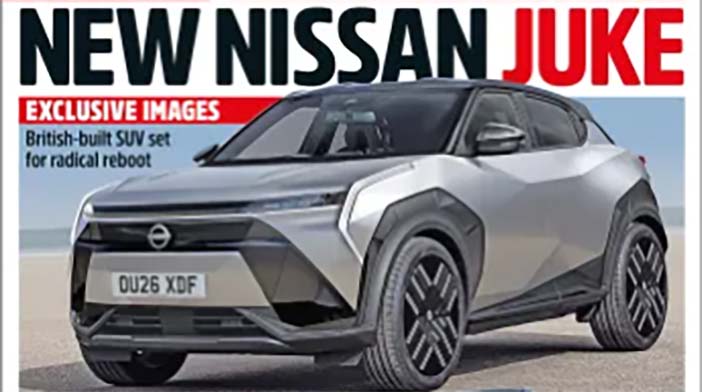
+++ NISSAN went big at this year’s Tokyo Motor Show, revealing a range of concept cars that paint a strong picture of the brand’s future, hinting at upcoming model plans, too. Among them was the Hyper Punk, a small crossover that points directly to the forthcoming Juke EV. While the Tokyo concept is a bit bigger than what will eventually see the light of day as a successor to the current petrol Juke, it has plenty of styling cues that should make production, many of which are shown here in this images. Nissan recently announced it would go fully electric by 2030, and that it will launch only new EVs in Europe. A target of 19 fully electric cars by the end of the decade has been set, so a few of the Tokyo cars will likely make production. Bold design has been a key attribute of the Juke since the first model launched in 2010, and this looks set to continue. The sharp, angular surfacing of the concept is still visible in the image, and the Juke’s chunky, squat stance is emphasized by darkened wheel arch extensions. The hidden rear door handle remains, and at the rear, we should see some influence from the Ariya (and Hyper Punk) with a lightbar. The new Juke will target the same B-segment rivals as the current car, while sitting below the next Leaf (set to morph into a crossover) in the Nissan line-up. As such, it will be eyeing up the latest Jeep Avenger and Hyundai Kona, as well as the forthcoming Kia EV3. Nissan’s partnership with Renault means the 2 manufacturers will share EV technology. The upcoming Renault 5 and Nissan Micra will use the same CMF-B EV platform, likely with a choice of 40 kWh and 52 kWh batteries for up to 400 km of range. The Juke is also likely to sit on this architecture, but its loftier positioning, both in stature and price, may mean Nissan has to find a way to offer larger batteries for more range. The maker plans on launching its first EV with solid-state batteries by 2028, but I expect the Juke EV to use nickel manganese cobalt (NMC) from launch. Gilles le Borgne, Renault’s chief technical officer, said: “The next Leaf, the next Juke, the next Micra, the Renault 5 Electric and the R4ever will stick to this chemistry”. Although a single motor mounted on the front axle seems the most plausible set up for the Juke, a dual-motor variant could also be in the works. We first heard of this when the idea of an electric Juke surfaced in 2021. Nissan Europe’s general manager for product planning at the time told us the Juke could use the Ariya’s e-4Orce electric four-wheel-drive system. The extra power afforded by another motor could even pave the way for the production of a hot Juke Nismo EV. With the next-generation electric Micra supermini sitting below the Juke at around 4 meters long, and the forthcoming replacement for the Leaf already confirmed as a crossover to undercut the Ariya, it’ll be important for Nissan to keep the Juke’s footprint to around 4,2 meter. However, an EV platform should make it roomier inside, with seating for 5 and a decent boot. +++
+++ Cars are more expensive than ever before and that means buyers should be looking to make the best purchase decision possible. One of the biggest single factors people shopping for a new car should consider is RESALE VALUE . After all, we know that cars depreciate over the years, but some cars retain a lot more of their original value than others. Electric vehicles are all the rage, and listening to some news programs would have you believe they’re taking over the world. While that might be true in some places, EVs are still a small percentage of the overall market, and some automakers have revised their sales outlooks due to waning demand. A new study from iSeeCars shows that used EVs also depreciate faster in the United States than petrol vehicles, returning the highest percentage drops in value over 5 years of any major vehicle type. The study also analyzed vehicles that held their values the best, and the list of top models is notably free of EVs. The average 5-year depreciation in 2023 in the United States is 38.8 percent, an almost 11 percent improvement since 2019. Electric vehicles depreciated the fastest, at 49.1 percent over 5 years, but hybrids lost value at a much slower rate, dropping 37.4 percent. Consumers’ attitudes toward EVs could play a role. Market analyst Karl Brauer said: “The disparity between electric vehicles and hybrids is worth noting, with EVs the worst group at holding their value and hybrids among the best. Some manufacturers have reduced or even abandoned the hybrid market in favor of EVs, but these figures suggest consumers still appreciate a hybrid’s combination of higher fuel efficiency and zero range anxiety”. The vehicles that held their 5-year values best include the Porsche 911 (Average 5-year depreciation: 9.3%), the Porsche 718 Cayman (17.6%), the Jeep Wrangler (20.8%), the Honda Civic (21.5%), the Subaru BRZ (23.4%), the Chevrolet Camaro (24.2%), the Toyota C-HR (24.4%), the Subaru Crosstrek (XV; 24.5%) and the Toyota Corolla (24.5%). Bauer notes that the number of sports cars on the list reflects a “spike in demand for ‘fun’ cars during the pandemic lockdowns, and demand for them remains strong in the post-pandemic world”. While cars with great resale value are good for buyers shopping for new vehicles, cars with the worst resale value might be attractive to those buyers more interested in getting a good deal on a used car. While the old saying that cars lose a massive chunk of their value as soon as they’re driven off the dealer’s lot might not be entirely true these days, most new vehicles steadily lose value as they age and are used. The models that lose value the fastest over 5 years include: Maserati Quattroporte (64.5% depreciation), BMW 7 Series (61.8%), Maserati Ghibli (61.3%), BMW 5 Series Plug-in Hybrid (58.8%), Cadillac Escalade ESV (58.5%), BMW X5 (58.2%), Maserati Levante: 57.8% (Jaguar XF: 57.6%) and Audi A7 Sportback (57.2%). While sports cars dominate the list of slowest-depreciating vehicles, luxury cars accounted for all of the top-10 fastest-depreciating models. The lack of representation of electric vehicles in the slow-depreciating vehicles list, shows there’s a disconnect between what automakers are building and what people actually want. +++
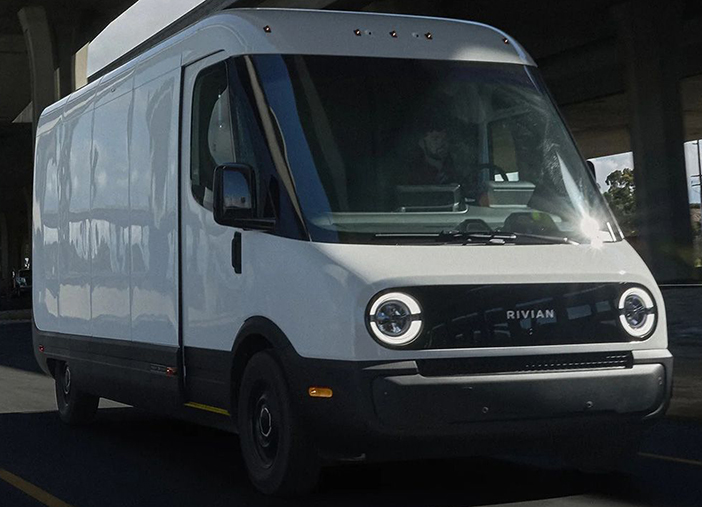
+++ RIVIAN reported better-than-expected third-quarter revenue on Tuesday and raised its production forecast for the full year by 2.000 vehicles to 54.000 units. The electric-vehicle maker also said it will end its exclusivity deal to largest shareholder Amazon for its electric delivery van, opening the door for more customers around the world. Rivian added it was speaking with more customers who are interested in the Rivian Commercial Vehicle platform, which underpins its electric delivery vans, and reiterated its commitment to fulfilling the order of 100.000 vans to Amazon by 2030 (photo). The company had previously said sales of its higher-priced SUV have been strongly outpacing R1T and has started to realize the effects of its price hikes from March last year, improving the average selling price of its vehicles. Rivian had reported third-quarter deliveries above market expectations last month. The company has stayed away from cutting prices and has instead taken to making its Enduro powertrains in-house to reduce its dependency on suppliers and slash costs, a move widely appreciated by investors and analysts. +++
+++ TESLA ’s massive valuation has put it among the biggest firms making up the backbone of the U.S. stock market this year. It’s also the biggest underperformer in that group, and there are signs Wall Street’s excitement is fading. The EV behemoth stands out as the only 1 of the 7 biggest companies in the S&P 500 Index (a group that also includes Amazon, Microsoft, Apple, Alphabet (Google’s parent company), Meta (Facebook’s parent company) and Nvidia) whose estimated profit for 2024 has declined significantly from where it was a year ago. Tesla shares have been the worst performer in the group by a significant margin, since the third-quarter earnings season kicked off in mid-October. The stock sank fast after the company’s chief executive officer Elon Musk dialed back growth expectations amid slowing demand and dour forecasts from other automakers. For the most recognizable EV brand and the largest pure-play EV-maker globally, the slowdown means further scrutiny on Tesla’s premium market valuation of about $690 billion; a level that leaves little room for error. Its share of bullish analyst ratings is at the lowest since April 2021, reflecting growing skepticism. “The outlook for EV demand is a big problem for Tesla”, said Matt Maley, chief market strategist at Miller Tabak + Co. “Their continued price cuts are taking their toll, so lower demand is only going to exacerbate this issue”. Shares of the company traded at 56 times their forward earnings as of Thursday’s close, compared with the mid-single-digit multiples of legacy auto companies General Motors and Ford. More importantly, Tesla’s price-to-earnings ratio is significantly higher than that of even its other mega-cap counterparts. Analysts on average now expect Tesla’s 2024 earnings to be about 40% lower than what they were estimating 12 months ago. For the other 6, the estimates have either risen over the same period or fallen very slightly. Bullish investors on Tesla are “still looking out to mid-decade and not the current demand environment”, to focus on the next car, the self-driving technology and the humanoid robot Optimus among others, Cowen & Co. analyst Jeffrey Osborne said in an interview. He added that valuing such longer-term potentials are challenging given the current economic uncertainty. “I have a hard time being bullish on things beyond cars, especially technologies that don’t work yet and may never work, particularly the full-self-driving software”, Osborne added. The cornerstone of Tesla’s valuation remains the EV business, where risks have been climbing fast. Rising interest rates have driven up car-ownership costs, squeezing consumers at a time of high inflation, and EVs being a new technology are suffering the most. Musk’s aggressive push to lower the price of Tesla’s cars hasn’t been seen to significantly boost demand. Tesla’s lower-than-expected 2024 growth trajectory could be due to that broader slowdown in adoption, Deutsche Bank analysts Tim Rokossa and Emmanuel Rosner wrote in a recent note. The second wave of EV consumers may require a much cheaper starting price, and could be waiting for larger infrastructure (such as a charging network) to be built out. “Although US consumers will start benefiting from $7.500 in EV incentive credit at point of sale as of January 1st, we fear that this alone might not be sufficient to accelerate the demand curve in the US in the near term, especially given in a record high interest rate environment”, the analysts wrote in a client note on Tuesday. Despite that, believers in Tesla are keeping their faith in EVs’ longer-term potential, since most experts and analysts see electric cars as the future of the auto industry. And while competition to dominate that market will be intense, these investors are betting on Musk’s ability to keep the company ahead of the rest. “EVs have some big problems, but Tesla is way beyond just an EV company because of Elon Musk”, said Matthew Tuttle, chief investment officer and CEO at Tuttle Capital Management. “Elon allows for a higher multiple than you would have if Tesla was just an EV company”. Tesla shares have rebounded this week after the post-result selloff. The stock traded up as much as 2% right after the market open on Friday in New York. +++
+++ TOYOTA is now doubling down on building out its battery capacity in the US. Last week, the automaker announced it will be expanding its investment at its North Carolina battery manufacturing plant (TBMNC) by nearly $8 billion, an investment that will also add approximately 3.000 new jobs. Toyota says this new investment brings its total outlay to the upcoming facility to $13.9 billion, with 5.000 jobs created in total. The Liberty-based plant will make batteries for Toyota’s EVs and PHEVs. Toyota says 8 additional production lines will now be added to the 2 previously announced lines, with the ability to create 30 GWh annually by 2030. Assuming a 50 kWh battery size, that would mean an annual capacity of 600.000 EV battery packs a year. Toyota says the plant will begin manufacturing batteries by 2025, and by that time it expects to have an “electrified” option for every Toyota and Lexus vehicle globally. The Japanese automaker said it currently offers 26 “electrified” options, more than any other automaker. Toyota gets to this number by counting all the numerous hybrid options it offers across products like the Prius and RAV4 Plug-in Hybrid, for example. Toyota only offers 2 pure EVs at the moment: the BZ4X and its twin, the Lexus RZ. Toyota’s about-face comes after a change in leadership late last year. Akio Toyoda stepped down as president in April 2023, handing over the reins to Koji Sato, who became the new CEO. While Toyoda became chairman of the board, the change in managerial leadership was made to boost Toyota’s efforts in EVs. Toyoda was considered an EV skeptic, or at least someone who thought the EV transformation would take some time. “Just like the fully autonomous cars that we are all supposed to be driving by now, EVs are just going to take longer to become mainstream than the media would like us to believe”, Toyoda said at the automaker’s annual sales meeting in Las Vegas last year. That being said, Toyota’s new CEO believes EVs are still vitally important for the Japanese automaker as it builds out its game plan for the future, though he is cautiously optimistic. “Battery EVs are the missing piece”, Sato said last week at the Tokyo auto show. “But we are not going to launch something imperfect just because there’s a deadline. We will ensure they are developed to perfection”. With rivals like Ford and General Motors pulling back on EV and battery expansion plans in the US, Toyota’s latest move could be considered a head-scratcher, though it could be said Toyota had been falling behind in EV investments and needed to catch up to its competitors. Perhaps a slight slowing in EV demand here in the US will give the Japanese automaker the time it needs. +++
+++ In the UNITED STATES , 2 influential Democratic U.S. senators urged the Energy Department to take steps to boost U.S. battery manufacturing and next-generation battery research, citing China’s dominance and export controls. Senate Intelligence Committee chair Mark Warner and Energy Committee chair Joe Manchin cited experts saying that the United States is “10 to 20 years behind Asia in commercialization of battery technology”, and noted that China accounts for more than 75% of battery cell production. “The U.S. must become a leader in manufacturing batteries and battery components, while securing our supply chains for the materials that make up those components”, the senators wrote in a previously unreported letter, citing China’s decision last month to restrict exports of graphite, critical to manufacturing battery anodes. China dominates the global EV battery supply chain including production of graphite: the single largest component. The letter noted the United States produced less than 10% of lithium-ion batteries in 2022 and said demand is expected to grow over seven times by 2035. The letter wants a committee briefing by December 1st. on ongoing research and development of next-generation battery technologies. Lithium-ion batteries, the Pentagon has said, are crucial to thousands of military systems from “handheld radios, to unmanned submersibles and to future capabilities like lasers, directed energy weapons and hybrid electric tactical vehicles”, the letter noted. China accounts for 70% of the global production of lithium-ion batteries, the letter said, noting of five critical minerals required for most lithium-ion batteries, China “controls between 60-100% of the mining or refining for these minerals”. The letter also said “it is critical that the U.S. lead in next-generation battery technology and alternative chemistries” and coordinate with the Department of Defense and other national security agencies “to support procurement of innovative, U.S.-developed energy storage technologies”. A spokesperson for Energy Secretary Jennifer Granholm did not immediately respond to a request for comment. +++