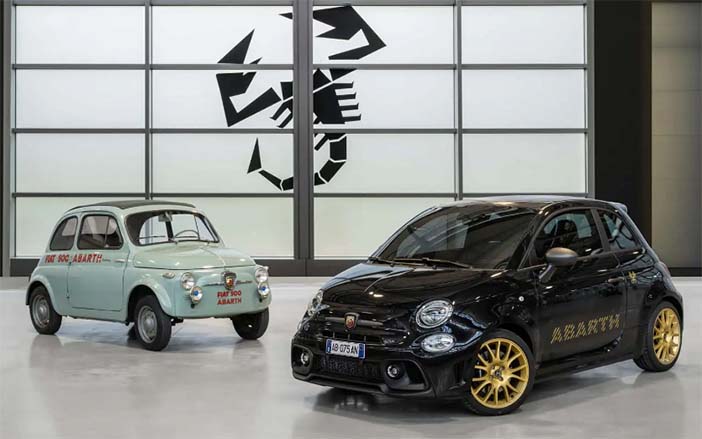
+++ ABARTH is in the midst of a transitional phase. In fact, the Scorpion-fronted brand is continuing its electrification with the 600e. This follows in the footsteps of the 500e by focusing even more on power and driving experience. However, the brand has not forgotten its origins and is not yet ready to retire its combustion engine models. Proof of this is the launch of the 695 75th Anniversary, a special edition designed to celebrate the 75th anniversary of the brand’s birth. The ’75th Anniversary’ (the price of which has not yet been announced by Abarth) is available in just 1.368 examples, a number that refers to the famous 1.4-litre T-Jet engine with a displacement of 1.368 cc. This engine is equipped with a Garrett GT 1446 turbocharger that delivers 180 hp and 250 Nm of torque at 3.000 rpm. Top speed is 140 mph, while acceleration from 0 to 100 kph takes 6.7 seconds and is accompanied by the sound of Record Monza exhausts. Equipped with Koni FSD shock absorbers, this special edition features a unique livery, with a distinctive touch represented by a dedicated logo visible inside and out. The roof features the scorpion symbol, while the sides feature exclusive piston-shaped stickers. Other equipment includes gold Abarth logos, tinted rear windows, 17-inch gold alloy wheels and a high-performance braking system with ventilated and drilled 305×28 mm discs and black Brembo calipers. The interior of the 695 features a dashboard covered in black alcantara and new carbon seats made in collaboration with Sabelt. The latter feature special stitching and the “75th Anniversary” logo. The Abarth’s equipment includes a 7-inch DAB radio, a 7-inch TFT digital screen and CarPlay and Android Auto connectivity, as well as automatic climate control, Beats audio system and navigation system. In addition, the limited edition offers extended connectivity with Mopar Connect features, which include My:Assistant, My:Remote Control, My:Car and My:Journey. +++
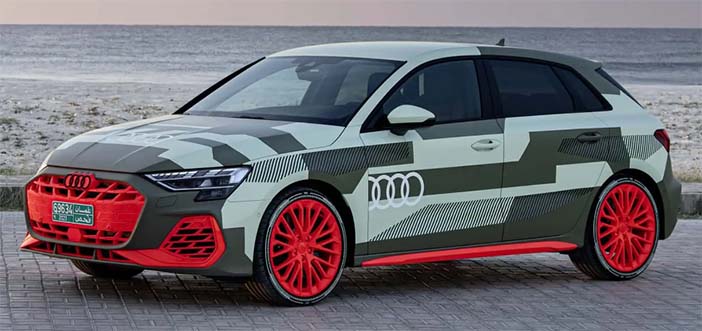
+++ The AUDI A3 is preparing for a mid-career restyle. To confirm the imminent debut of the revamped Sportback and Saloon, Audi shows the first camouflaged photos of the prototypes of the S3, the sporty version of the range. The curious thing is that the 5- and 4-door Audi S3 restyling prototypes are announced with several mechanical updates, which is not too common for a restyling. In fact, the cars sporting the typical Audi Sport livery hide an updated version of the well-known 2.0-litre TFSI 4-cylinder turbo petrol engine under the bonnet, which reaches 333 hp (+23 hp compared to the outgoing model) and 420 Nm of torque (+20 Nm). The upgraded engine of the new Audi S3 is mated to a 7-speed dual-clutch automatic transmission, with shifting times halved when accelerating at full throttle. Perhaps even more important is the addition of a rear splitter inherited from the RS 3. Although it does not have a dedicated drift mode, the new hardware should make the S3 more fun when pushing hard into corners. Drivers are likely to feel more confident behind the wheel thanks to better grip achieved with optimal torque distribution between the 2 rear wheels. With great power comes great responsibility, which is why Audi have fitted the S3 facelift with bigger brakes on the front axle. The 18-inch steel discs are 357 mm in diameter and have been made 4 mm thicker to 34 mm. The front discs are embraced by new twin-piston calipers and are fitted with larger pads to provide a greater friction surface. Audi has worked with Falken on a new set of 235/35 tyres that are more grippy for the 19-inch wheels. In addition to more powerful brakes, the front axle features a new MacPherson strut bearing and stiffer swing arms. Thanks also to the evolution of the progressive steering system and tuned dampers, the German luxury brand claims that the S3 is now sharper than ever. The full reveal is scheduled for 2024, when Audi will present the entire updated Audi A3 family. Logic tells us that the engine range should mirror that of the recently unveiled Volkswagen Golf. The RS 3 will also receive changes, perhaps with more power from the 5-cylinder engine without resorting to electrification. The Ingolstadt brand has hinted that the 2.5-litre TFSI could be modified to make more power than the current 400 hp. +++
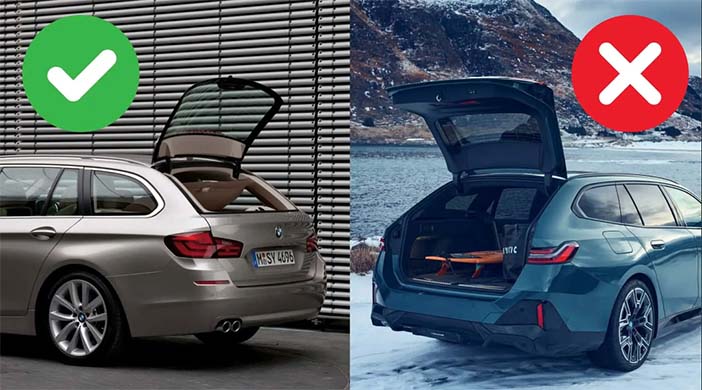
+++ Europe is the last bastion of wagons. The long-roof formula remains popular on the Old Continent, so much so that I’m spoiled for choice since there’s great variety. BMW did the math and decided it was worth launching another 5 Series Touring. However, the G61 is not as practical as it could have been since it has lost one handy feature. Ever since the original E34 Touring, including the uber-rare M5 pictured below, the 5 Series wagon has allowed owners to open the rear glass independently of the tailgate. It’s particularly useful for when you quickly want to throw small stuff in the cargo area without having to open the entire tailgate. Well, you won’t be able to do that anymore with the new 5er estate since that feature is sadly now gone. The E34, E39, E61, F11, and the G31 all had it, but the lineage ends with the G61. Why? Here’s what Alexander Schmuck, Product & Technology Communications Manager at BMW North America, told me: “The reason for the rear window not opening separately has to do with the lean, sporty, aerodynamically design of the rear end of the vehicle and the sloping roofline. Including a mechanism for opening the window separately in the tailgate would have been at the expense of interior volume in the trunk area”. Ok, so the official answer from BMW is that installing the necessary extra hardware would’ve eaten into the cargo area. That does make sense but we’re certain it’s a sacrifice some people would have been willing to make. After all, the new 5 Series Touring has a cavernous luggage area that can swallow 570 liters or 1,700 liters after folding the rear seats. While on some cars on sale today practicality takes a hit depending on the powertrain, that’s not the case with the latest wagon from Bavaria. All gasoline, diesel, plug-in hybrid and electric versions offer an identical sized luggage compartment. It has the exact same length, width, and height. Of course, one must wonder whether part of the reason why it’s been dropped has to do with cost cutting. It’s a plausible explanation considering it hasn’t exactly been a popular feature, so why bother? In fact, the latest 3 Series Touring almost didn’t have it. The car’s Product Manager Stefan Horn told in 2019 when the G21 came out that BMW engineers had to convince the higher-ups from Munich to keep the independent glass opening: “It’s a bit of a hidden thing. We argued we should keep it, but we need customers to know about it, or it will die”. Fast forward to 2024, it’s dead. Well, in the 5 Series Touring. The smaller wagon (including the M3 Touring) still has this party trick at the back. The older E46, E91, and F31 generations had it as well. Chances are deleting that small button at the base of the rear wiper is unlikely to be a deal-breaker for those who are interested in the new 5 Series Touring. With a new M5 wagon (G99) on the way, the new 5er wagon is a desirable car. Those planning to switch to an EV can now buy the i5, complete with a sporty M Performance version called i5 M60. +++
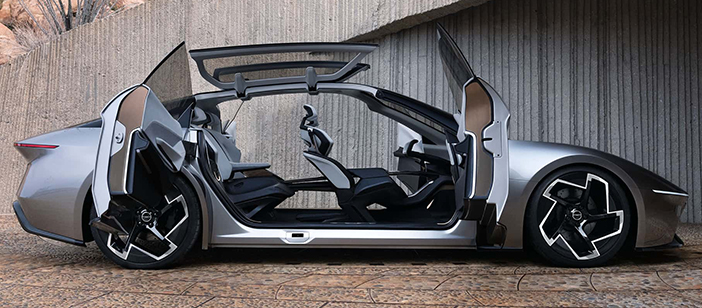
+++ As a surprise, CHRYSLER presents the Halcyon, a very low concept with the nose only 10 cm above the ground, front and rear doors opening at 90 degrees and a cabin without a B-pillar. The objective? To anticipate a hypothetical car of the future, based on the new STLA Large platform and connected to humans at a technological level, thanks to the introduction of artificial intelligence. As expected, the platform on which the Chrysler Halcyon is designed is the new STLA Large of the Stellantis Group. The basic configuration is the same one on which the forthcoming electric Dodge Charger Daytona will also be based. Just like the latter, the Halcyon is also equipped with an 800 volt architecture, according to the company’s statement at this early stage. The bodywork then has numerous aerodynamic devices, including a large passage at the front where air is directed through the grille and over the bonnet. I mentioned that the Halcyon is equipped with artificial intelligence. According to the company, in fact, this large concept is equipped with Level 4 autonomous driving, thanks to the steering wheel and pedals that can retract completely, allowing the driver to simply be a passenger for the journey. A stargazing mode that changes the opacity of the top glass and reclines the seat to allow the driver to peer into the heavens is also available. At the front there is also a large transparent pillar-to-pillar screen, while an all-screen head-up display has been included to provide information to those inside, whether they are driving or not. Finally, powering it all is a lithium-sulphur battery of unknown capacity. Chrysler talks about the Halcyon stating that this concept makes extensive use of artificial intelligence for a customisable driving experience, in which the car is able to ‘prepare’ itself for driving, taking into account everything from weather conditions to the daily calendar (which is linked to the car). The company’s vision, in this regard, is to create a legitimate and personal link between the car and the driver. Biometric scanners, in fact, are able to recognise the person as they approach the car and, once inside, the car can play soothing sounds and set everything to the latest preferences. Chris Feuell, CEO of Chrysler, commented: “Halcyon presents innovative and sustainable mobility solutions that embrace technology and deliver value to customers while ensuring ‘Harmony in Motion’ “. +++
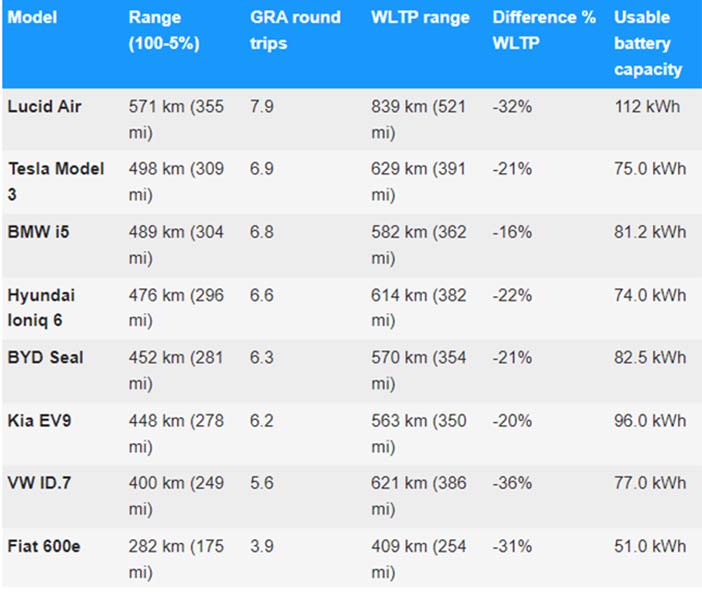
+++ The range of an ELECTRIC VEHICLE can lend to the joys and sorrows of those who drive or would like to drive an electric car. The kilometers that can be covered on a full battery charge are in fact the main argument of both supporters and opponents of emission-free cars. I have therefore decided to present to you a comparison of eleven current electric cars. We will check how far they can actually drive before they run out of power. The location of the 2024 super test is Rome’s Grande Raccordo Anulare (GRA), officially known as the A90 motorway, where 11 electric cars from different countries were tested. The common testing ground is the GRA, which is 68.2 kilometers long and encircles the city of Rome like a ring. In the test, the cars were driven on the outer carriageway; the one that runs anti-clockwise. A speed limit of 130 km/h applies on the GRA, which is reduced to 110 km/h on some sections and in tunnels. However, the traffic, which is always very heavy, means that it is rarely possible to adhere to the Highway Code. The test cars were all driven with the airconditioning set to 22 degrees in auto mode, with the windows closed and the ‘Normal’ driving program. Only the driver sat in each car, who was connected to our leading crew car via radio. To minimise the effects of rush-hour traffic jams, the test began at 10:30 am. The outside temperature fluctuated between 10 and 14 degrees Celsius. All cars drove in convoy until they had reached a battery charge level of 5 percent. When they reached this level, they stopped the test and left the scene to go to the nearest charging station to recharge. The 11 cars selected for the 2024 fuel consumption test have recently been on the market and represent various alternatives on the list of locally emission-free cars. Here they are: BMW i5, BYD Seal, Fiat 600e, Hyundai Ioniq 6, Jeep Avenger, Kia EV9, Lexus RZ, Lucid Air, Tesla Model 3, Toyota BZ4X and Volkswagen ID.7. The cars in the test travelled between 571 and 243 km. The Lucid Air, the car that travelled the furthest before the battery capacity reached 5%, completed 7.9 laps on the GRA. It relies on a battery with a real-world capacity of 112 kWh, very favorable aerodynamics and tires specially developed for electric models, such as the Pirelli Elect. It is followed by the Tesla Model 3 and the BMW i5 with 498 and 489 kilometers respectively. As it is easy to guess, the distance travelled increases with the size of the battery. With deviations from the specified range in the WLTP homologation cycle of between 16 and 40 percent. The BMW i5 performed best, travelling 489 km (6.8 laps of the GRA) instead of the stated 582 km with 81.2 kWh of real capacity. On average, however, the actual range was around 28% lower than the stated range, regardless of the model. This is due to the unrealistic characteristics of the homologation cycle: The accelerations are very gentle, the test is carried out on a chassis dynamometer under ideal climatic conditions (fixed temperature of 23°C) and the test duration is only 23 kilometers. All the vehicles tested were fitted with summer tires (with the exception of the Lucid Air, which is fitted with all-season tires). The Lexus RZ which was tested did not yet have the 2024 software update, which Lexus claims should improve the model’s efficiency. The range was generally in line with the battery capacity. But what about overall efficiency? It’s clear that there are other variables to consider with this factor. A car that has more energy available can easily cover a greater distance, but you also need to consider how much it consumes to cover a given distance to make a more comprehensive assessment. In this particular ranking, the Tesla Model 3 was the most efficient vehicle: 15.1 kWh/100km, confirming the efficiency of the American brand’s vehicles. It was followed by the Hyundai Ioniq 6 with 15.5 kWh/100km and the BMW i5 with 16.6 kWh/100km. Slightly further down the list are the brand new Fiat 600e with 18.1 kWh/100km, the Chinese BYD Seal (18.3 kWh/100km), the Jeep Avenger (18.5 kWh/100km), the VW ID.7 (19.3 kWh/100km) and the American super saloon Lucid Air from 19.3 kWh/100km. The list is completed by the giant Kia EV9 (21.4 kWh/100km), the Toyota bZ4X (25.7 kWh/100km) and Lexus RZ (26.3 kWh/100km). Conclusion: Perhaps the most interesting data from the 2024 test is that of the vehicle that travels the furthest on a full battery charge. The Lucid Air, which travelled almost 600 km. An important result, albeit far from the average customer: over 800 hp, weighing around 2.4 ton and costing over €220.000 in the Netherlands. In terms of efficiency, however, the performance of the Tesla Model 3 and the Hyundai Ioniq 6 stand out. Cars that are very similar in terms of shape, drive and technology. +++
+++ Like much of the rest of the world, GERMANY previously provided tax incentives to citizens purchasing electric vehicles. However, in December, the nation’s government abruptly decided to end the incentive program, and in the aftermath EV sales have cratered. Compared to December 2023, sales of new electric vehicles were down 54.9 percent, while sales of plug-in hybrids were down 19.6 percent in the first month of 2024. On the other hand, the markets for vehicles with internal combustion engines were up more than 9 percent: +9.1 percent for petrol, +9.5 percent for diesel. The small rebound of ICE vehicles wasn’t enough to prop up the automotive market, which shrank by 11.7 percent as compared to December 2023. Although the sudden end of tax incentives undoubtedly made the drop in EV sales more acute, it’s not the only reason for falling sales. The decline in sales started in December, prompting experts like Constantin Gall, the managing partner at EY for Western European markets, to suggest that there are underlying issues contributing to this downturn. “The weak economy, high financing costs and considerable geopolitical tensions are leading to a reluctance to buy on the part of both private individuals and companies”, Gall told. While he admitted that the lack of incentives will be a challenge for automakers, he added that “all in all, 2024 is likely to be a difficult year for the automotive industry”. That is starting a price war in Germany, where companies like Volkswagen, Tesla and BYD have all announced price cuts on electric models. With the outlook for the German economy still grim, analysts anticipate that the price cuts will continue into 2024, which could be difficult for smaller EV companies to bear. Germany’s automotive association, the VDA, forecasts a 2% growth in the global passenger car market in 2024, reaching 77.4 million cars, nearly matching the pre-pandemic level of 78.8 million. However, the association predicts a 1% contraction in Germany’s car market for the same year, with sales dropping to 2.82 million cars, down 25% from pre-pandemic levels. In particular, electric vehicle sales are projected to dip by about 9% in the upcoming year, despite a 19% surge in production. Fortunately, Germany remains one of the world’s largest automotive exporters, which may offer some relief to automakers amid the challenging outlook for the industry. +++
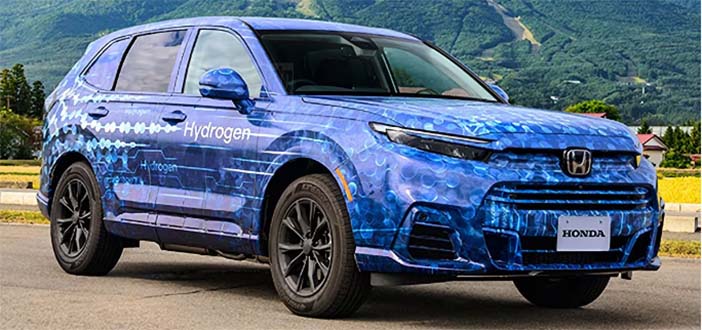
+++ HONDA has unveiled its hydrogen fuel cell-powered CR-V, scheduled to go on the market in Japan later this year. Of course, it’s not entirely unveiled, because the prototype wears a molecules-morphing-into-circui
+++ STELLANTIS chairman John Elkann has denied rumors of a merger with Renault, in response to speculation in the European press about a possible union of the 2 carmakers under the aegis of France. In a statement issued, Mr Elkann said: “There are no plans to merge with other manufacturers”. He reiterated Stellantis’ commitment to a plan to bring together the Italian government and all the players in the automotive industry to meet the challenges of the electric transition. Speculation about the merger intensified after the Italian newspaper Il Messaggero suggested that the French government, Renault’s largest shareholder and holder of a stake in Stellantis, was considering a merger between the 2 groups. France is said to be considering such a union in order to strengthen its position in the automotive sector and to face growing competition from China and Germany, as the Italian publication reports. As a result of this speculation, Renault shares were reported to have risen by more than 4% on 6 February, boosted by media speculation about the possible merger, but trimmed their gains to 1% after Mr Elkann’s comments. Following the withdrawal from Russia, which was Renault’s second largest market at the time, and the scaling back of global cooperation with Nissan, the French carmaker was seen as a potential merger and acquisition target. The recent downturn in the electric vehicle market led Renault to cancel plans to float its electric vehicle and software unit, Ampere, once again intensifying speculation. Despite its financial recovery in recent years, Renault retains a relatively low market value of just over €10 billion. By contrast, Stellantis is considered one of the most profitable groups in the automotive industry today, with a market value of over €85 billion. European analysts are already questioning the logic of a possible merger between the 2 entities. The interpretation is that Europe would not be the priority for any potential merger activity between Stellantis and the French company, arguing that Renault does not offer significant scale in other parts of the world. Such an operation would therefore come up against antitrust obstacles. Carlos Tavares, CEO of Stellantis, commented last week on the challenges facing the automotive industry, including the rise of Chinese manufacturers, EU efforts to phase out combustion engines and onerous union contracts, highlighting the increasing likelihood of mergers and acquisitions. Tavares said Stellantis was preparing for an era of consolidation in the automotive industry. +++
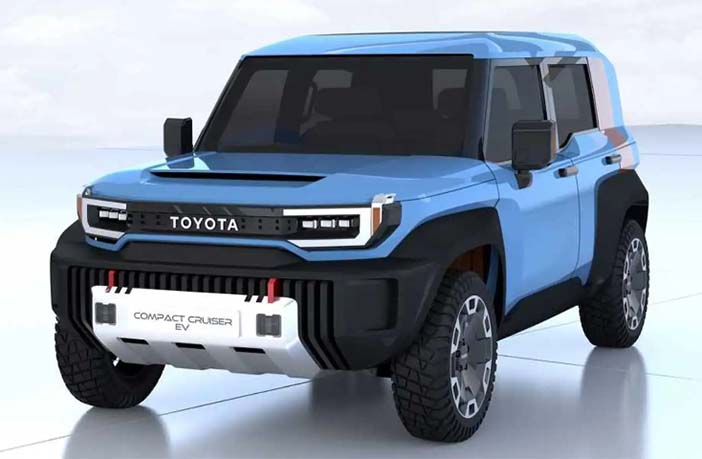
+++ Now that the new Land Cruiser has become more exclusive than ever, TOYOTA could do with a small sturdy SUV for a much lower and more affordable price. Well, as rumors suggest, during 2024 the Japanese brand will unveil a 4×4 rival to the Suzuki Jimny, which until now has been known as a ‘mini Land Cruiser’. Indeed, it will also have a retro look and will be based on the Compact Cruiser EV concept car. But no, don’t think it will be 100% electric, because rumours suggest it will be powered by a hybrid system (whether plug-in or not, I don’t know). The bad news is that it has not yet been specified whether it will be a global vehicle or whether we Europeans will be left in the lurch. This will be a ‘real’ 4×4, developed from a robust chassis of beams and cross-members. It will have a 5-door body and could be around 4.35 meters long and 1.86 meters wide. These dimensions would be equivalent to those of the ‘long’ Jimny, which is not sold on our continent. The fact that it is a hybrid would be a great advantage in some European countries such as Spain, as it would enjoy the Eco sticker or even Blue 0 sticker emission categories. Surely, many would prefer it not to be plug-in so as not to have to acquire a charging point for home and buy it cheaper. There is talk that the first region to receive this vehicle will be Southeast Asia, as the ‘mini Land Cruiser’ will be built in Thailand. Incidentally, it will be based on the Japanese brand’s modular platform, i.e. TNGA. I don’t yet know what 4WD claims it will have. Will it have connectable all-wheel drive with a reduction gearbox and 2 rigid axles like the Jimny? Hopefully we will be able to answer these questions soon. If it arrives in Europe, Toyota’s SUV will have a big advantage over the Jimny in that it can be registered as a passenger car and not as a commercial vehicle, so it will have rear seats. +++