
+++ The AUDI R8 began with the R8 Le Mans endurance racer and the V10-powered Lamborghini Gallardo, plus a touch of Iron Man, and it ends with Vegas Yellow, unexpected demand, and 17 years of influence on the super sports car world. Audi warned us in October 2022 that the 2023 model year would be the R8’s last, promising just 2.000 production units for the year, among them 333 examples of the celebratory R8 V10 GT RWD. But something happened on the way to the end of the line at Bollinger Hofe, the factory where Audi builds the R8: demand for the car jumped, so Audi extended production for a few months. Now, with all of the latecomers satisfied, the guy who’s been standing by the light switch can finally turn it off. The ultimate R8, a V10 Performance Quattro Edition Coupe, drove out of the facility last week, the Vegas Yellow paint hiding a 620 hp V10 with an 8.700-rpm redline and a cabin designed for all-day comfort. Speaking of which, the R8 is headed for a life of comfort as part of the Audi’s private collection. The car is going to Audi Tradition, which is sometimes referred to as a museum but is more like the manufacturer’s private collection of pristine examples of its history. Audi Tradition isn’t open to the public, but overseers in that department fly cars around the world to attend events and, occasionally, run them hard. This year, Audi Tradition’s attending more than a dozen events; it showed up to Amelia Car Week earlier this month and will take something(s) loud to the Goodwood Festival of Speed. There is an Audi museum as well, one that welcomes anyone who buys a ticket. Audi Tradition also has an app with rolling digital exhibits and info on the public and the private stuff. I know no more about what’s coming to replace the R8 (if anything) than I did 18 months ago. The consensus has been there’s something electric headed for the top spot and I still believe that’s the smart money. Audi insiders say the supercar has not yet been officially signed off but is very much underway, and won’t be called R8 nor look like the R8. The car is codenamed Rnext and has been pushed back to 2029. However, it’s anyone’s guess how shifting regulations, fluctuating demand and the resulting pullback on electric powertrains has affected the chances, the powertrain and the timeline of an R8 successor. +++
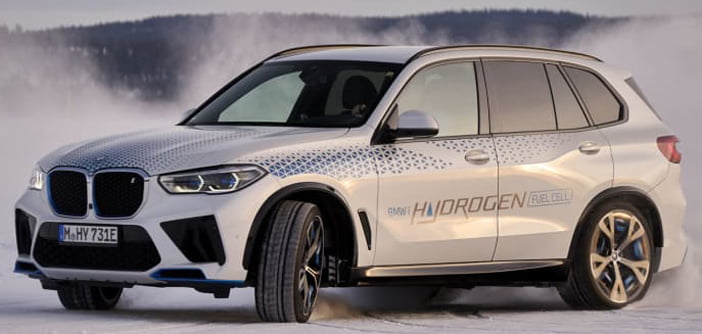
+++ BMW still assumes that not all markets worldwide will have the necessary framework conditions for all customers to transition to pure electromobility in the coming decade. Consequently, a range of products with highly efficient conventional drive technology will still be needed to meet people’s individual mobility requirements, while contributing to CO2 reduction in the transport sector. Hydrogen fuel cell technology is also expected to account for a growing percentage of the drivetrain mix from the second half of the decade onwards. The BMW Group is systematically pushing forward with development of this technology as an additional option for sustainable individual mobility and (depending on market requirements and how conditions develop) could envision a potential production vehicle in the second half of the decade. A pilot series of the iX5 Hydrogen was presented to media from around the world for the first time in 2023. Since then, the fleet has been deployed with great success for demonstration and testing purposes among various target groups. With its high-performance fuel cell and optimized power battery, the drive system in the iX5 Hydrogen is unique worldwide. The gaseous hydrogen needed to supply the fuel cell is stored in two 700-bar tanks made of carbon-fibre reinforced plastic (CFRP). Together, they hold 6 kilograms of hydrogen, which gives the iX5 Hydrogen a range of 504 kilometers in the WLTP cycle. Refilling the hydrogen tanks only takes 3 to 4 minutes so, with just a few, short stops, the BMW is still able to ensure typical BMW driving pleasure, even over long distances. +++
+++ Electric startup FISKER says the talks it was holding with a major automaker have broken down, leaving the company’s future in doubt. Fisker has been hoping to secure additional funding and other assistance from Nissan, but that door has now closed and there aren’t many left to try. Shares in Fisker, which slumped even further in recent weeks as the firm revealed it was looking for help and had appointed advisors to prepare for bankruptcy, fell again to just 9 cents on the latest news. But trading in the stock has now been suspended while Fisker readies a statement about its plans. Neither Fisker or Nissan had officially acknowledged that the Japanese automaker was the suitor Fisker was trying to woo in the hope of gaining financial assistance, help building EV platforms to expand its model range and access to a manufacturing facility in North America. Fisker’s only production model, the Ocean, is built by contract firm Magna Steyr in Austria. Fisker stock hit a high of $28.50 in February 2021 but was trading at $6.23 last October and has fallen sharply since. In January of this year it fell below $1, earning the automaker a notice from the New York Stock Exchange that if it’s stock didn’t climb back up to a minimum of $1 within 6 months the company would be delisted. Fisker says it will ask investors to vote on a reverse stock split proposal at a shareholder meeting on April 24, but that’s still several weeks away. A reverse stock split involves merging existing stock to create a smaller number of more valuable shares. Adding to the pressure is Fisker’s admission that it now won’t be able to meet all of the conditions necessary to access $150 million of desperately-needed cash it had provisionally secured by selling convertible notes. Fisker announced the mini bailout last week at the same time it confirmed it would be temporarily halting production of the Ocean. Slow sales of the SUV, in part due to a general slowdown in the EV market, but also because of buyer uncertainty over Fisker’s future, means it had built up too much stock. The company’s cause wasn’t helped by a negative revue from Consumer Reports, which criticized the Ocean heavily for feeling unfinished. +++
+++ It’s shaping up to be a comeback year for HYBRID cars, and that’s partly because they’re now nearly as good as conventional vehicles, according to a Ford executive. “Hybrids now have very few compromises compared to their gas alternatives”, Andrew Frick, head of Ford’s the Detroit automaker’s gas and hybrid vehicle division, told. Hybrids have a traditional engine that charges batteries to power one or more electric motors, which makes them more efficient than petrol-only vehicles. Many do not need to be plugged in like EVs, although some models can also be charged like one. Frick’s comments come as demand for hybrid vehicles soars, partly due to drivers’ worries about charging electric cars. Those concerns have dented sales of EVs in recent months. Another benefit of hybrids is that they’re a lot cheaper than their fully electric rivals. Cox Automotive expects 14% of the 15.7 million new vehicles sold in the US this year to be hybrids, higher than the 10% market share for EVs. There are about 70 hybrid models to choose from and they’re often significantly cheaper than electric cars. Hybrid car sales growth in January was 5 times that of EVs, according to data from Morgan Stanley, with Ford emerging as one of the major beneficiaries of that trend. Sales of Ford hybrids jumped 37% in the first 2 months of 2024, with the hybrid version of the Maverick pickup truck leading the charge. About 60% of the customers are new for Ford, product development operations chief Jim Baumbick told. That’s far higher than the figure for other models. “I know that hybrids will play a role for an extended time”, he said. “For us, the freedom of choice and democratizing the technology for customers to select what’s best for how they live their lives is really important”. Toyota, which pioneered hybrids with the Prius, has also benefited. The Japanese carmaker reported an 84% increase in hybrid and EV sales in February and recently topped a poll of the brands most considered by EV buyers, even though it only sells one fully electric car. This week, the White House gave automakers more time to ramp up EV sales following pressure from the industry and unions. The Environmental Protection Agency issued the strictest limits to date on tailpipe pollution from vehicles sold between 2027 and 2032. They could see EVs claim a share of up to 56% of new car sales; a big jump from 7.6% in 2023. +++
+++ The KIA EV9 has got raving reviews and it could be named World Car of the Year and World Electric Vehicle later this week. Those titles would be a big honor, but Kia isn’t slowing down as they’re developing a high-performance variant known as the EV9 GT. Recently spied undergoing testing on the Nürburgring, the prototype has ditched heavy cladding for a more form-fitting camouflage wrap. The model will closely resemble the EV9 GT-Line as it has a familiar front bumper with vertical intakes. The déjà vu design continues further back, although the prototype wears digital side mirrors. More notably, the model rides on 5-spoke wheels that aren’t aerodynamically optimized. They also appear to cover an upgraded braking system, which features yellow calipers out back. Speaking of the rear, it appears to carryover from the GT-Line untouched. However, the production model may incorporate some changes to help distinguish the 2 trims. The cabin should be familiar and include a 12.3-inch digital instrument cluster, a 12.3-inch infotainment system and a 5-inch climate display. We can also expect stainless steel pedals and SynTex seats with GT logos. Kia has been tight-lipped about the performance variant, but the current EV9 GT-Line has a dual-motor all-wheel drive system with a combined output of 385 hp and 700 Nm of torque. This enables the SUV to accelerate from 0-100 km/h) in 5,3 seconds, before hitting a top speed of 200 km/h. The model also has a 99.8 kWh battery pack that provides an range of 505 km. That being said, the EV9 GT will likely take a cue from the EV6 GT. The latter model has a dual-motor all-wheel drive system producing 585 hp and 740 Nm of torque. +++
+++ NISSAN has presented a new strategic plan called The Arc. The manufacturer wants to achieve cost parity between EVs and combustion engines by 2030 and increase sales of electric cars by 1 million over the next 3 years. To promote competitiveness, Nissan announced that it will reduce the cost of its next generation of electric cars by 30 percent compared to the Ariya and achieve cost parity between EVs and combustion engines by 2030. Specifically, the costs of vehicles based on existing models in the family could be reduced by 50 percent. In addition, introducing modular production will reduce production time per vehicle by 20 percent. The goal is to increase annual sales by 1 million units by the end of the 2026 financial year and increase the operating profit margin to over 6 percent. To achieve this, Nissan plans to launch as many as 34 new electric drive models worldwide by 2030; 7 more than previously planned. 16 of the planned electric models will be launched in the next 3 years. In addition, electrified cars will account for 40 percent of the global model mix by the 2026 financial year. By the end of the decade, this figure will be as high as 60 percent; 5 percent more than previously planned. The new plan The Arc consists of 2 parts: Firstly, Nissan wants to take the aforementioned measures to “ensure volume growth through a tailored regional strategy and prepare for an accelerated transition to EVs”. In a second step, the Japanese company wants to financially support the transition to electric mobility through “smart partnerships, enhanced EV competitiveness, differentiated innovations and new revenue streams. “According to Nissan, it aims for a sales potential of 2.5 trillion yen from new business opportunities by the 2030 financial year”. This is currently the equivalent of around 15.3 billion euros. Other concrete measures for the 2026 financial year include increasing sales in China to 1 million vehicles and to 600.000 vehicles in Japan. Nissan also wants to electrify 70 per cent of its product range in Japan and launch 8 new New Energy Vehicles in China and 6 new models in Europe. The manufacturer also wants to position India as an export hub. 3 new vehicles will also be launched there. In addition to new electric models, Nissan will launch 14 new combustion models over the next 3 years. For the US and Canada, for example, Nissan emphasizes that new e-Power and plug-in hybrids will be introduced there. A total of 7 new models are planned for the North American market. According to the Group, the new plan will be “a bridge” between the business plans “Nissan Next” (2020-2023) and “Nissan Ambition”, which outlines the manufacturer’s long-term vision. “The Arc plan shows our path to the future. It illustrates our continuous progression and ability to navigate changing market conditions”, said Nissan CEO Makoto Uchida. “This plan will enable us to go further and faster in driving value and competitiveness. Faced with extreme market volatility, Nissan is taking decisive actions guided by the new plan to ensure sustainable growth and profitability”. +++
+++ POLESTAR ’s entry-level model, the 2, competes above the entry-level cars offered by German rivals in terms of pricing and positioning. Thomas Ingenlath, the firm’s CEO, told that the idea of expanding the range toward the bottom is attractive, but unlikely to happen soon. He explained Polestar doesn’t need to stretch as far down as its rivals. “There would be space for a smaller car. Having said that, when I see how much rivals consider if they should continue to compete in these segments, I think it is better not to introduce a smaller car”, he told. “I mean, even the 2 for us will be something special to keep because it’s a big stretch. With the 5, the 3 and the 4, it’s quite a stretch to have as well the 2. For us, the 2 is actually doing what an A1 does for Audi. There’s the question of what kind of brand do we aim for”, he told “Our brand, it’s just simply that much more on the exclusive corner”. It sounds like Polestar wants to position itself closer to Porsche, which doesn’t compete in Europe’s small hatchback segment and has no answer to, say, BMW and its 2 Series Gran Coupe. This makes sense: Polestar lives under the same roof as Volvo, which competes more directly against the German mainstream luxury brands. Beyond the brand image and the need to steer clear of automotive cannibalism, there’s the issue of getting your priorities straight. “It’s such a joyful thing to design and create something like an entry-level car. But, for the moment we are really busy. Bringing out the portfolio, thinking then about how to refresh it and how to keep it alive. We have to be very careful in not getting distracted by going too broad. We have to be successful with every car and every project and concentrate on that”, Ingenlath said. +++
+++ Last year, RIMAC chief Mate Rimac began talking about his ideas for the Project 3 Mobility (P3M) division he created as a separate arm within Rimac. In development for more than 5 years and about as far as one can get from the 7-figure hypercar space and still be talking about a car, Rimac’s idea centers on an electric robottaxi that “could change the way people move around cities”. Reports in January said P3M planned a concept reveal this year of “a car but a completely different type”. The CEO logged on Instagram to post the first teaser, a stop-motion bit with a short soundtrack by the American rapper Common. The most unexpected aspect of the tease is that the cutout shape traipsing through the frame definitely looks like a regular car. The caption at the end of the vid asks us to “Stay in the looooop!”, a tagline that would make sense for a driverless vehicle on a set route or geofenced in a central downtown area. We hope there’s a story behind the flying cat, too. In the U.S., much of the autonomy focus has been on getting driverless vehicles to work just like the vehicles we drive now and within existing infrastructure. Rimac’s take is, “We think that a lot of people are missing the bigger picture and focusing on some of the building blocks, like the autonomous driving system itself. We believe maybe that’s not the differentiator itself, that there are some other differentiating factors within the ecosystem of autonomous mobility”. Project 3 Mobility is also said to be working up “chargers, storage hubs, and parking spaces” as part of the ecosystem. Project 3 has a website now, championing the company’s aspirations of “redefining urban mobility” and “building an urban ecosystem for autonomous, safe and effortless movement”. A funding round in February raised another 100 million euros; another step toward the $535 million euros P3M believes it will need for market launch. The first robottaxis are scheduled to roll out on Rimac’s home streets of Zagreb, Croatia in 2026, followed by the United Kingdom and Germany in 2027. +++

+++ TESLA has cut production at its plant in China amid sluggish growth in electric-vehicle sales and intense competition in the world’s biggest auto market. The US carmaker earlier this month instructed employees at its Shanghai facility to lower production of both the Model Y and Model 3 by working 5 days a week instead of the usual 6 1/2. +++