+++ Chinese State-owned First Automobile Works (FAW) will join Nio’s BATTERY SWAP ALLIANCE as its 7th member. FAW owns the Hongqi brand, which recently revealed a version of its Hongqi E-HS7, a SUV with battery swap support. FAW is the second-largest member of the ‘Big Four’, the 4 largest Chinese state-owned automakers. The other three are SAIC Motor, Dongfeng Motor and Changan Automobile, of which the last one is also a member of the alliance. The current members of Nio’s battery swap alliance are GAC Group, Geely Holding, Chery Automobile, Changan Automobile, JAC and Lotus Technology (majority owned by Geely Holding). FAW would be the 7th member. Previously, Nio’s CEO and co-founder William Li stated that the Nio-led alliance has 7 members, including Nio, and more will join in the future. Li also hopes that Nio will have 10.000 swap stations in the future if more members join, which would be enough to support 10 million vehicles. Nio currently has 2.416 swap stations in China and about 40 in Europe. About 1.000 of them are 3rd and 4th generation which supports Nio’s brand Onvo. Last year at the Shanghai Auto Show, Hongqi revealed an E001 all-electric sedan with battery swap support. However, since then, no news has come regarding this car. This week, the Chinese regulator under the Ministry of Industry and Information Technology (MIIT) revealed the list of homologation fillings, which included the Hongqi E-HS7 with battery swap applying for a sales license in China. Aside from Hongqi, which is its flagship brand, FAW also owns Bestune, which focuses on electric budget city cars. Moreover, FAW is Volkswagen’s major joint venture partner in China, producing the ID electric modelseries in a 50:50 shared plant. FAW recently accelerated its electrification plans and announced last year it plans to launch 15 NEV (New Enery Vehicles) models in the next 4 years and reach an accumulated NEV production target of 1.45 million units by 2025. +++
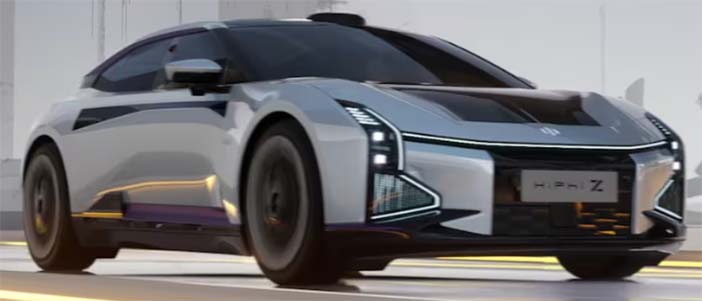
+++ HIPHI has been rescued by iAuto through a comprehensive strategic cooperation agreement. The plan sees the investment of 1 billion dollar into Human Horizons, the owners of the Chinese HiPhi brand. Cooperation between the 2 parties will allow HiPhi to resume production to fulfill sales orders. Also according to the very vaguely worded press release it will allow “cooperation related to equity restructuring and mergers and acquisitions, technology and research and development, engineering cooperation, brand and marketing integration at home and abroad, supply chain and manufacturing integration and a series of cooperation covering the vehicle business sector”. The deal seems to involve the creation of a comprehensive restructuring plan using the 1 billion first round of funds. Both parties are trying to complete the compliance transaction process before the release of the 2024 semi-annual report. Human Horizons will be receiving support from iAuto in the form of funds, technology and orders. The big question is: who are iAuto? According to the press release, they are a leading automotive platform incorporated under the State of Delaware, USA. However a search for the company uncovers very little digital footprint with the presumed website for the company displaying an “Our Website is Currently Undergoing Maintenance” sign. Allegedly founded by a group of financial investment and advisory professionals with extensive experience in the automotive industry the company seems to focus on clean energy vehicles. The press release makes a number of lofty statements regarding the goals of the company. In addition the company holds patents related to low-temperature controllable fusion variable modules in micro-turbine generators, along with something referred to as a super drive system which is meant to have five times better performance than a conventional drive system. HiPhi has been struggling for survival since February when production halted. Founder Ding Lei at the time said that realistically there was only a three month period to turnaround the company. Much speculation surrounded Changan taking over the company but this appears to have come to nothing. +++
+++ HONDA reaffirmed its commitment to electric vehicles Thursday, saying it will invest 10 trillion yen ($65 billion) through fiscal 2031 to deliver EV models around the world, including the U.S. and China. “Honda has not changed its belief that EVs are the most effective solution in the area of small mobility products such as motorcycles and automobiles”, the Tokyo-based company said in a statement. By 2030, battery EVs and fuel cell EVs will make up 40% of Honda’s global auto sales, and it will have global production capacity for more than 2 million EVs, it said. The so-called “0 Series”; a key part of Honda’s EV strategy, will be a totally new EV series created from “zero”, chief executive Toshihiro Mibe told reporters in an online presentation. The 0 Series will be introduced in North America in 2026 and then rolled out globally, with 7 models launched by 2030. In China, Honda will introduce 10 EV models by 2027, with 100% of its auto sales there EVs by 2035. “We will become a frontrunner in changing lifestyles to attain sustainability goals, not wait for someone else to tackle them”, Mibe told reporters. Despite some talk of a slowdown in electric vehicles in some markets, the move toward EVs remains solid in the long run, becoming dominant in the latter half of the 2020s, according to Honda. Honda’s determination to pursue battery and fuel-cell EVs appears to contrast with Toyota’s more varied or multiple powertrains approach, focusing on hybrids and other models that still have engines. Honda is keeping hybrids in its lineup as it ramps up output of EVs, beefing up battery production, and making them thinner, aiming for zero accidents, Mibe said. Of the 10 trillion yen investment in the works, about 2 trillion yen will go into research and development on software and another 2 trillion ye into setting up comprehensive EV value chains in key markets such as the U.S., Canada and Japan. About 6 trillion yen ($39 billion) will go into “monozukuri”, or “the art of making things” in Japanese, such as the construction of next-generation EV production plants and EV model development, the company said. Mibe stressed Honda’s various partnerships, such as the one on developing EVs and intelligent driving technology with Japanese rival Nissan, announced earlier this year. Honda announced Wednesday it signed a deal with IBM to work together on computer chips and software for future vehicles, meeting the upcoming demand for better processing and lower power consumption. “We are steadily and surely moving ahead to be prepared for electrification”, Mibe said. Honda is slashing its full-time production workforce in China amid slumping sales in the market, with some 1.700 employees or over 10 percent of the total staff having applied for voluntary layoffs, sources familiar with the matter said Wednesday. GAC Honda Automobile, a joint venture between Honda and Chinese state-owned automaker Guangzhou Automobile Group, began soliciting for the early exit scheme earlier this month amid an intensifying price war in the world’s largest auto market, where electric vehicles account for more than 20 percent of new car sales. The final figure for voluntary retirement is not yet fixed, the sources said. Japanese carmakers, often seen as slow to embrace EVs, are struggling to maintain their presence in the global market amid stiff competition with rivals such as Tesla and BYD. The market share of Japanese automakers in China stood at 12.2 percent in the January-April period this year, down sharply from 23.1 percent in 2020, according to the China Association of Automobile Manufacturers. In contrast, the share of Chinese automakers soared to 60.7 percent in the first 4 months of this year from 38.4 percent in 2020. In April, new vehicle sales of Honda in China fell 22.2 percent from a year earlier, while those of rivals Toyota and Nissan decreased 27.3 percent and 10.4 percent, respectively. Last year, Mitsubishi decided to withdraw from the Chinese market amid declining sales. +++
+++ When Toyota introduced the world’s first HYBRID vehicle in 1997, it made a loss on every Prius it sold. Decades later, booming sales in the category are delivering a much welcome cash boost. The world’s largest auto manufacturer recently reported annual operating profit of ¥5 trillion ($32 billion), the first time any Japanese company reached that threshold, with an industry-topping margin of 11.9%. Hybrid sales jumped 32% to 3.59 million units, accounting for 1 out of every 3 cars Toyota sells. With the shift to battery-electric vehicles clearly taking much longer than anticipated, consumers are voting for hybrids with their wallets. That gives Toyota, Honda and other carmakers with hybrid line-ups an opportunity to gather up cash that can then be reinvested in the long transition to fully-electric cars. The profitability of Toyota’s hybrids versus petrol-engine cars are “now the same, and in some cases more for some models, which means that the more we sell, the more they will contribute to profitability”, Masahiro Yamamoto, an operating officer in the accounting group, said at Toyota’s post-results briefing on May 8. The cost to manufacture hybrid vehicles is now a 16 percent of the level compared with when the Prius debuted. Toyota forecasts 4.48 million hybrid vehicle sales in the current fiscal year through March 2025, giving the company a decent chance of reaching its goal of 5 million units ahead of its goal for next year. Honda has also improved the profitability of its hybrids, CEO Toshihiro Mibe said at the carmaker’s earnings news conference on March 10. Excluding EVs, Honda’s 4-wheeler business should be able to post an operating profit margin of around 8% this fiscal year, according to the CEO. The low profitability of the unit has been an issue for years; the margin stood at 4.1% last year, following a ¥16.6 billion loss in the prior period. Hybrids are “very competitive, including on the cost front”, he said. Honda is now targeting hybrid sales of about 1 million units this fiscal year, up from approximately 800.000 in the latest period. Mibe said he’s laying the groundwork and working with suppliers to build capacity to 2 million units annually, in anticipation of greater demand. Nissan is also seeking to capitalize on the hybrid boom. In its medium-term management plan announced in March, the Japanese carmaker said it’s planning to introduce models employing its proprietary “e-Power” hybrid technology in the U.S. market in fiscal 2026. It’s not just Japanese automakers leaning more toward hybrids. Ford is planning to double production of hybrid versions of its F-150 pickup and lower prices to match the gasoline model. South Korea’s Hyundai reportedly has plans to enable its EV plant being built in Georgia to also be able to manufacture hybrids. Even Japan’s smaller automakers are following the trend. Mazda president Masahiro Moro said last week that carmaker plans to develop hybrids using its SkyActive engines to deliver improved performance for its CX-5 models. “The media, investors and dealers are all talking about ‘hybrids’ “, Moro said. “The perception has changed dramatically”. +++
+++ JAPAN ’s legacy automakers are jumping on the big-tech bandwagon as they race to revive waning interest among Chinese consumers. In recent weeks, Toyota said it would partner with Chinese technology giant Tencent Holdings on areas including artificial intelligence, cloud computing, big data and social media connection. Meanwhile, Nissan will collaborate with Baidu on AI, including smart cockpits. The tie-ups highlight the pressure facing foreign carmakers to win back ground they’ve lost to Chinese companies, which are able to quickly roll out tech-centric offerings that meet the needs of increasingly selective local consumers. For Japanese manufacturers, that’s meant cutting back production and staffing or, in the case of Mitsubishi, pulling out of China altogether. As a result, Japanese brands are falling further and further behind. “The buzz these days is software-defined vehicles”; an area in which Chinese automakers are well ahead, said analyst Tatsuo Yoshida. “For Japanese companies, there’s no time to lose”. Still, it’s likely to take years for the alliances to bear fruit as discerning Chinese consumers require more than just minor tweaks to existing models to win them over. And not only are Japanese companies competing with Chinese automakers (BYD can turn a concept car into mass production in as little as 24 months) they’re now competing with tech firms themselves. “We’ll have to continue enduring for several years until we have more battery EVs to offer”, Toyota chief financial officer Yoichi Miyazaki said last week, referring to the price war. Chief Executive Officer Koji Sato said the company plans to expand AI-related investments, and this year will focus on building a strong foundation for software-defined vehicles. Toyota is also looking to make more of its EV offerings. At April’s Beijing auto show, it showcased 2 new models developed with Chinese partners including its joint venture with BYD. That includes the BZ3C, a crossover battery EV targeting Gen Z consumers, and the family-oriented BZ3X electric SUV. Honda has also launched a new series, Ye, in China. Nissan plans to roll out eight new-energy vehicles in China, including 3 branded with its own marque. CEO Makoto Uchida said in March that the company wants to start exporting cars produced in China from 2025, with the aim of shipping 100.000 vehicles annually. While he didn’t say where the cars would be sent, analysts have predicted the cars may make their way to Asian countries given the challenges of getting China-made vehicles into the U.S. and Europe. With no signs of demand slowing for Chinese EVs, Japanese carmakers are looking to adapt their strategies to win over the world’s biggest auto market. “We have to change our ways to compete with companies like BYD”, Nissan CEO Makoto Uchida said in March. +++
+++ JEEP ’s lineup is known for its Trail Rated capability, but the entry-level Avenger need not apply as it’s front-wheel drive only. That’s about to change as the all-wheel drive 4xe version will be introduced soon. Previewed by a concept in 2022, the production model follows in the footsteps of the standard Avenger but adopts a roof rack that hints at its rugged nature. There doesn’t appear to be any other major changes, but the SUV could be equipped with new wheels and meatier tires. While that remains to be seen, a previous teaser sketch hinted at a lightly revised front end. It featured a partially blocked off lower air intake as well as bright lime green accents. The latter stand in contrast to the traditional blue accents that typically signify a 4xe variant. Spy photographers didn’t get a look inside, but the cabin should carryover from the standard model. As a result, we can expect a minimalist interior with a 7- or 10.25-inch digital instrument cluster and a 10.25-inch infotainment system. As announced earlier this year, the Avenger 4xe will have an eco-friendly powertrain that consists of a 136 hp engine, 2 electric motors (29 hp each), a 6-speed dual-clutch transmission, and a 48 Volt mild hybrid system. That’s a lot of components, but they’ll give the Jeep all-wheel drive as well as the capability to drive in full electric mode at low speeds. The automaker has also said “power looping” technology allows for “all-wheel drive traction regardless of the battery charge status, delivering a seamless and confident driving experience across the most challenging diverse terrains”, We can expect to learn more about the Avenger 4xe in the coming months and Jeep has previously said orders will open by the end of the year. +++
+++ Yesterday, Nio boss William Li together with Alan Ai (Ai Tiecheng), president of ONVO , gave a press conference where they talked frankly about the Onvo brand and its position relative to Nio along with plans for the 2 brands. One Easter egg revealed is that Onvo’s second model would be a larger SUV seating 6 or 7 people. Unfortunately little else was revealed about the car other than that it would meet the needs of families. The car will unlikely reach production before mid-2025 at the earliest. The Onvo brand intends to put 100 directly operated stores into operation by the time the first Onvo L60 cars are ready to reach stores in September. William Li at the end of last year said that the plan was to open 200 Onvo stores by the end of 2024. Onvo will not have an equivalent of the Nio House which acts as a kind of clubhouse for Nio buyers and nor will Onvo buyers have any right to use Nio Houses. The brand is considering methods such as franchising to increase the number stores to help with market penetration. Currently, the Nio brand sees 70-80% of its sales to buyers in first-tier cities. For Onvo the expectation is that penetration to second, third and fourth tier cities will be much better. This will also accelerate siting battery swap stations in these cities which will in addition help existing Nio users when they travel. Onvo cars are compatible with both the third and fourth generation swap stations although the 60 kWh and 90 kWh battery capacities of the Onvo L60 are different to those in Nio models. There are currently in the region of 1000 third and fourth generation stations across China. More information was also revealed about Nio’s strategy for the two brands and the forthcoming third brand codenamed Firefly. The company emphasized that the goal was not to be cheap but to sell more. For Onvo, this has meant reducing to a single motor, going from 4 to 1 Orin X intelligent driving chips, removing Lidar and reducing the size of the base battery pack. These changes alone help reduce costs by around 45.000 yuan ($6.200). Furthermore, changes implemented to the production process have helped reduce costs. Nio emphasized that by having different brands it could reach the needs of different customers and that it was common business strategy among the European car groups. Volkswagen reaches very different customers with a Bentley to those who buy a Skoda. Alan Ai said yesterday that orders received for the L60 to date have far exceeded expectations. Previously, William Li has claimed the Onvo would outsell the Xiaomi SU7. The Onvo L60 was penned by former Bentley designer Raul Pires, and adopts the ‘Way Up’ design concept. It rides on the new NT3.0 platform which is a 900V silicon carbide platform. Sensors consist of several 8-megapixel high-definition cameras, 4D imagining radar and four 360-degree cameras. The high definition cameras have a maximum forward detection range of 687 meters. The vision based intelligent driving system will be available from the commencement of deliveries later this year. Inside the L60 has a 17.2-inch 3K control screen with 12.000 nit brightness. It also benefits from a 13-inch head up display. +++
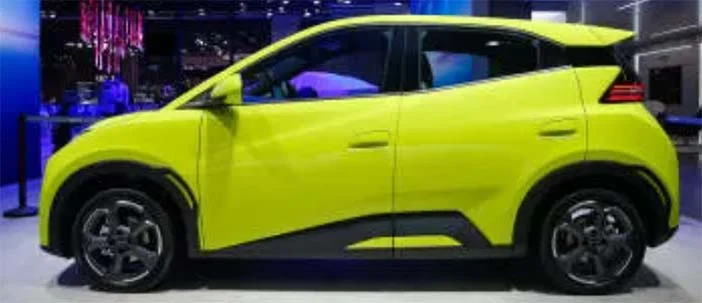
+++ A tiny, low-priced electric car called the SEAGULL has American automakers and politicians trembling. The car, launched last year by Chinese automaker BYD, sells for around $12,000 in China, but drives well and is put together with craftsmanship that rivals U.S. electric vehicles that cost 3 times as much. A shorter-range version costs under $10,000. Tariffs on imported Chinese vehicles will keep the Seagull out of America for now, and it likely would sell for more than $12.000 if imported. But the rapid emergence of low-priced EVs from China could shake up the global auto industry in ways not seen since Japanese makers arrived during the oil crises of the 1970s. BYD, which stands for “Build Your Dreams”, could be a nightmare for the U.S. auto industry. “Any car company that’s not paying attention to them as a competitor is going to be lost when they hit their market”, said Sam Fiorani, a vice president at AutoForecast Solutions near Philadelphia. “BYD’s entry into the U.S. market isn’t an if. It’s a when”. Politicians and manufacturers in the United States already see Chinese EVs as a serious threat. The Biden administration on Tuesday is expected to announce 100% tariffs on electric vehicles imported from China, saying they pose a threat to U.S. jobs and national security. The Alliance for American Manufacturing says in a paper that government subsidized Chinese EVs “could end up being an extinction-level event for the U.S. auto sector”. Earlier this year, Tesla CEO Elon Musk said Chinese EVs are so good that without trade barriers, “they will pretty much demolish most other car companies in the world”. Outside of China, EVs are often pricey, aimed at higher-income buyers. But Chinese brands offer affordable EVs for the masses, just as many governments are encouraging a shift away from gasoline vehicles to fight climate change. Inside a huge garage near Detroit, a company called Caresoft Global tore apart and reassembled a bright green Seagull that its China office purchased and shipped to the U.S. Company president Terry Woychowski, a former chief engineer at General Motors, said the car is a “clarion call” for the U.S. industry, which is years behind China in designing low-cost EVs. Woychowski said he was left wondering if U.S. automakers can adjust. “Things will have to change in some radical ways in order to be able to compete”, he said. There’s no single miracle that explains how BYD can manufacture the Seagull for so little. Woychowski said the entire car, which can go 405 kilometers per charge, is “an exercise in efficiency”. Higher U.S. labor costs are a part of the equation. BYD also can keep costs down because of its battery-making expertise: largely lithium iron phosphate chemistry used in consumer products. The batteries cost less but have lower range than most current lithium-ion batteries. America is still learning to make cheaper batteries, Woychowski said. BYD also makes many of its own parts, including electric motors, dashboards and bodies, using its huge scale (3 million vehicles sold worldwide last year) for cost savings. It designs vehicles with cost and efficiency in mind, he said. For instance, the Seagull has only one windshield wiper, eliminating one motor and one arm, saving on weight, cost and labor to install. American automakers don’t often design vehicles this way and incur excess engineering costs, Woychowski said. The efficiency means weight savings that add up, allowing the Seagull to travel farther per charge on a smaller battery. So Detroit needs to quickly re-learn a lot of design and engineering to keep up while shedding practices from a century of building vehicles, Woychowski said. The Seagull still has a quality feel. Doors close solidly. The gray synthetic leather seats have stitching that matches the body color, a feature usually found in more expensive cars. The Seagull tested by Caresoft has 5 airbags and ESP. A brief drive through some connected parking lots by a reporter showed that it runs quietly and handles curves and bumps as well as more costly EVs. While acceleration isn’t head-snapping like other EVs, the Seagull is peppy and would have no problems entering a freeway. BYD would have to modify its cars to meet U.S. safety standards, which are more stringent than in China. Woychowski says Caresoft hasn’t done crash tests, but he estimated that would add $2.000 to the cost. BYD sells the Seagull, also called the Dolphin Mini, in Latin American countries for about $21.000. The higher price includes transportation and reflects higher profits possible in less cutthroat markets than China. BYD told last year it is “still in the process” of deciding whether to sell autos in the U.S. It is weighing factory sites in Mexico. The company isn’t selling cars in the U.S. largely due to 27.5% tariffs on the sale price of Chinese vehicles when they arrive. Donald Trump slapped on the bulk of the tariff, 25%, when he was president, and it was kept in place under Joe Biden. Trump contends that the rise of EVs backed by Biden will cost U.S. factory jobs, sending the work to China. The Biden administration has backed legislation and policies to build a U.S. EV manufacturing base. Some members of Congress are urging Biden to ban imports of Chinese vehicles altogether, including those made in Mexico by Chinese companies that now would come in largely without tariffs. Ford CEO Jim Farley, has seen Caresoft’s work on the Seagull and BYD’s rapid growth, especially in Europe. He’s moving to change his company. A small “skunkworks” team is designing a new, small EV to keep costs down and quality high, he said earlier this year. Chinese makers, Farley said, sold almost no EVs in Europe 2 years ago, but now have 10% of the EV market. It’s likely they’ll export around the globe and possibly sell in the U.S. Ford is preparing to counter that. “Don’t take anything for granted,” Farley said. “This CEO doesn’t”. +++
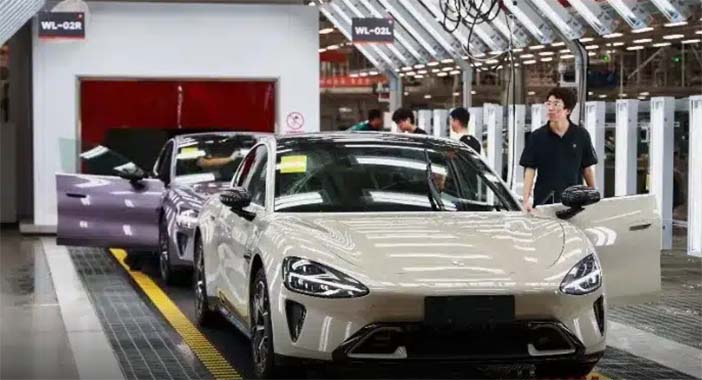
+++ XIAOMI will start double shift production in June in its Beijing plant, local media reports. The operation hours will increase from 8 to 16 hours daily, and the monthly production capacity will increase to nearly 20.000 vehicles. Earlier today, Xiaomi announced that it delivered the 10.000th Xiaomi SU7. The deliveries of the EV sedan started on April 3, meaning the consumer electronic giant delivered 10.000 cars in less than 40 days. Lei Jun, Xiaomi CEO and founder, previously said that the Beijing factory can produce 40 units of the SU7 per hour, translating into 1 car every 76 seconds. Based on this calculation, when the second shift is implemented, the production capacity will increase to nearly 20.000 units, Cailian reports. Moreover, Xiaomi increased orders from some of its suppliers by 80% as one type of component increased from 10.000 sets per month to 18.000 per month. Xiaomi also started recruiting workers for the second shift in early April, Cailin report concludes. TheXiaomi SU7 was launched on March 28, and since then, the locked-in orders have surpassed 100.000 units, making the car basically out for the rest of the year. The delivery times for 3 SU7 models are: standard 29-32 weeks, Pro: 30-33 weeks and Max: 33-36 weeks. The second phase of the Xiaomi Beijing plant will start construction later in 2024 and be finished by 2025. It will bring an additional 150.000 annual production capacity, bringing the total plant capacity to 300.000. Xiaomi also goes all out with opening new stores and showrooms. By the end of 2024, it plans to build additional 219 stores in 46 cities across China. “We are still working hard to increase production capacity and ensure that we complete the delivery target of 100,000 units this year”, Lei Jun once again emphasized Xiaomi Motors’ plan for this year. +++