+++ Future ALFA ROMEO models, including the next-generation Giulia and Stelvio, will end a long brand tradition by featuring centrally mounted number plates, due to new pedestrian safety regulations. A significant number of the Italian firm’s models feature offset number plates mounted on one of the front wings. The tradition started with the 1955 Giulietta Spider, and continues today with the current Giulia, Tonale and Stelvio. The offset placement enables Alfa’s triangular ’scudetto’ grille to be seen unobscured. The recently launched Junior features a centrally mounted plate, and the firm’s design chief Alejandro Mesonero-Romanos confirmed that would be the same with the electric Giulia and Stelvio replacements that will be revealed in the coming years, and future models beyond that. “We cannot put the number plate on the side any more because of the homologation regulations for pedestrian safety”, said Mesonero-Romanos. The change relates to changes made in the European Union’s new General Safety Regulations to better protect pedestrians in the case they are struck by a car. “Some die-hard Alfisti, who think an Alfa Romeo isn’t an Alfa Romeo unless it has the numberplate on the side won’t be happy, but there are plenty of beautiful Alfa Romeos in history which have the number plate in the middle: I own an Alfetta and a 1968 Giulia which have a central plate and look beautiful. “This will allow us to have symmetry anyway, so I am happy – I’m one of the guys who likes the plate in the middle”. The next-generation Stelvio is due to be launched next year with the Giulia following in 2026, and both models sitting on the new STLA Large electric platform. Mesonero-Romanos confirmed that the design of both models has now been finalised and signed-off, adding that they “are fantastic. It’s what people would expect from a Giulia in terms of sportiness, with a super-cool fastback profile, and I don’t tell you anything else now”. Mesonero-Romanos did confirm that the next-generation Giulia and Stelvio would feature a “fresh interpretation” of the scudetto, although he wouldn’t detail how it would be altered to accommodate a front number plate. But he did confirm that, because of the lack of radiator cooling requirements for the electric powertrain, it will feature a closed-off graphical design similar to the zoomed-in 3D effect logo used on the Junior. “Putting the logo in a big size shows we are proud of it, and it’s a modern interpretation graphically, it’s pretty strong to have it in a big size”, he added. “when you look at sneakers and things, everyone is making big logos, and it’s nice as long as it’s subtle. If it was pink it would be too much. “With Alfa function and design always go together: the next generation of cars will have a closed logo because they will be electric cars, and we cannot have the function of the Scudetto as it was when it was conceived”. Alfa Romeo is one of the few mainstream manufacturers to currently offer offset plate on its models, although they have been a feature of other vehicles ranging from the Mitsubishi Lancer to the Bugatti Chiron. +++
+++ Most of the major manufacturers have already revealed technology road maps for the next decade that involve a steady move away from ICE to pure-electric drivetrains. Anyone who’s ever visited a modern engine plant will appreciate just what a huge task that must be and how no manufacturer would take the decision lightly. There’s more to it than simply the cost and a shift in strategy: there are cultural implications too. Skills built up in the industry over 100 years for the development of complex ICE powertrains will be replaced by a different set altogether. AUDI ’s facility at Gyor, Hungary, is billed as the largest powertrain plant in the world and it’s where the firm is producing all the electric drivetrains for its new Premium Platform Electric (PPE), developed with Porsche for larger cars. The plant makes both the drive motors and axles for Audi’s own cars and the motor side involves a complete shift away from traditional powertrain manufacturing. The casting and machining of engine blocks, boring cylinders and then assembling the dozens of moving parts has given way to, on the face of it, the mechanically simpler alternative of the stators and rotors of electric motors. Audi says it has made 500.000 electric motors since 2018, and although there may be fewer moving parts in the end result, there are still lots of parts to assemble. There are 15 automatic bending machines to make the U-shaped ‘hairpin’ windings that in modern motors replace the continuous lengths of wire in traditional windings. Each stator (which forms the coils of a motor surrounding the revolving rotor with its permanent magnets) comprises 140 meter of copper wire in those hairpin windings, which are joined into continuous lengths with 235 laser welds. More pressings and fewer bolted fasteners than combustion engines mean more robots can be used for assembly. The electric powertrains are elegantly modular and torque output for different vehicles is changed simply by making the motors longer or shorter. Torque at the wheels and maximum speed are varied by changing the ratios of the gear pairs in what, by comparison with ICE, are simple transmissions. There might be a perception at consumer level that EV technology is still in its infancy, but it has already evolved in the past few years and is moving fast. Audi says these new PPE motors take up 30% less space in the car than earlier ones and are 20% lighter. The hairpin winding technique allows for a ‘fill factor’ (new jargon comes with new technology) of 60% compared with 45% for conventional windings. That means more windings in the same space, equating to more torque from the same-size motor. Oil-cooled rotors have improved efficiency too, with losses caused by drag reduced by 50%. The power-to-weight ratio for PPE motors is now 60% higher than for Audi’s first-generation electric motors. So on the face of it, while electric motors may sound dull compared with internal combustion engines, a peek under the skin reveals they’re anything but. +++
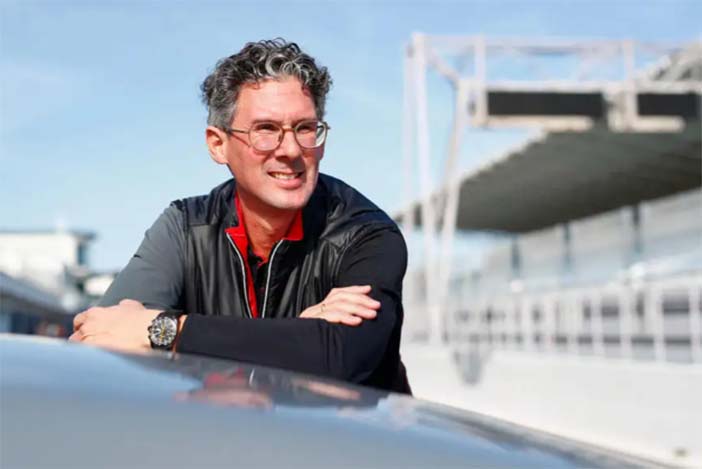
+++ BENTLEY has named Porsche vehicle development chief Frank-Steffen Walliser as its new boss, succeeding Adrian Hallmark, who in March announced a shock switch to Aston Martin. The German, who helped to bring some of Porsche’s most famed modern sports cars to market, such as the 918 Spyder, will take up the post of chairman and CEO from 1 July. Hallmark, who left Bentley with immediate effect in March, is expected to start his new role as Aston CEO “no later than 1 October 2024″, the brand has previously said. Gernot Döllner, boss of Bentley parent company Audi, said: “In Frank-Steffen Walliser, Bentley is getting an experienced engineer with distinct product and technology expertise and entrepreneurial experience”. +++
+++ A third diesel engine will be added to the drive system line-up for the BMW 2-series Active Tourer from July. With its maximum output of 163 hp and peak torque of 400 Nm, the engine for the new 220d Active Tourer (fuel consumption, combined: 4.5 – 4.9 liter / 100 km; CO2 emissions, combined: 117 – 128 gram / km in the WLTP cycle) is positioned between the 2 diesel units already available for the compact all-rounder. Thanks to 48 Volt mild hybrid technology, the 2.0-litre 4-cylinder engine stands out with both its instantaneous power delivery and high efficiency. The drive system’s electric motor takes the form of a crankshaft-driven starter generator integrated into the 7-speed Steptronic transmission with double clutch. Generating an extra 20 hp, it can either supplement the output of the combustion engine or ease the load on it, as the situation demands. The new 220d Active Tourer accelerates from to 100 km/h in 8.3 seconds, on to a top speed of 220 km/h. A particularly fine balance between driving pleasure and fuel consumption has already made the 163 hp diesel engine a popular choice in the BMW X1 when channelling its power through all 4 wheels (courtesy of the intelligent all-wheel-drive system xDrive). And from July 2024 this unit will be available in front-wheel-drive configuration too. A member of the BMW Group’s latest generation of modular engines, it will also make its debut in the X2, likewise driving the front wheels. It powers both the new X1 sDrive20d (fuel consumption, combined: 4.5 – 5.1 liter / 100 km; CO2 emissions, combined: 118 – 133 gram /km in the WLTP cycle) and new X2 sDrive20d (same figures). Both acceleratie from 0 to 100 km/h in 8.5 seconds. The top speed of the 2 models is 210 km/h. From next summer, standard equipment for the 2-series Active Tourer, X1 and X2 will expand to include seat heating for the driver and front passenger, M High-gloss Shadow Line trim and the option of using the Personal eSIM. Meanwhile, the Parking Assistant Professional has been added to the options list. It enables automated entry into and exit from parking spaces from outside the car as well using a smartphone and the My BMW App. This option also includes the Manoeuvre Assistant, which allows the customer to carry out extensive manoeuvres covering a distance of up to 200 metres each; again from outside the car with a smartphone. It is also possible to quickly switch between control methods, meaning that once a parking or general manoeuvre has commenced, it can be halted at any time and then resumed again either from inside the car using its control/operation system or from outside with a smartphone. The functionality of the Parking Assistant Professional can also be downloaded over the air from the BMW ConnectedDrive Store as part of BMW Digital Premium. This is possible in cars specified with BMW Operating System 9, BMW Parking Assistant Plus and Comfort Access. In addition, the Innovation package available as an option for the 3 compact models will now also contain the Driving Assistant, which optimises comfort and safety with the help of the Speed Limit Info function, the Steering and Lane Control Assistant, Active Cruise Control and the automatic Speed Limit Assist. The optional Comfort package has been expanded to include active seats and electrically operated seat adjustment with memory function for the driver and front passenger. In cars specified with the M Sport package and the M Performance variants of the X1 and X2, the interior and exterior mirror package includes an M-specific logo projection in the entrance area to the car. The telephony with wireless charging option will now include an illuminated smartphone tray for the 2 Series Active Tourer as well. +++
+++ One of the biggest worries would-be EV owners have is something called range anxiety: finding a charging station before your battery runs out on a long drive. Well, China EV giant BYD seems to have made some progress on this front, at least for hybrids. It unveiled a new hybrid powertrain that’s capable of allowing a car to travel more than 2.000 km without recharging or refueling. The upgrade means some of BYD’s dual-mode plug-in electric hybrid cars can manage the equivalent of New York to Miami, or Munich to Madrid, on a single-charge and full tank. The milestone marks BYD’s latest achievement in slashing fuel consumption over 5 generations of hybrids since their first debut in 2008. +++
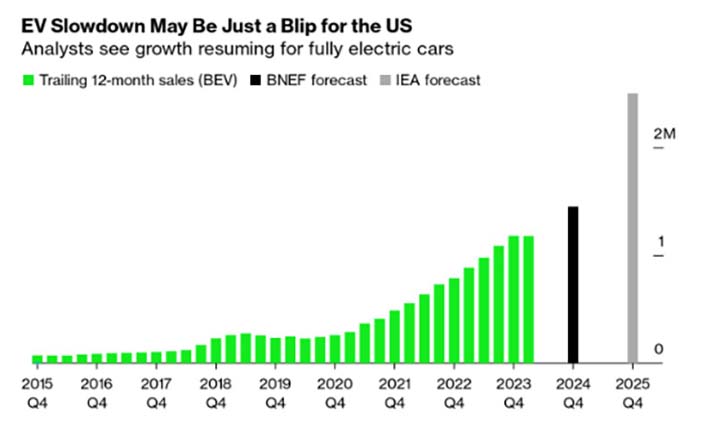
+++ For ELECTRIC VEHICLE makers in particular, and humans hoping to escape the worst of global warming in general, there may not actually be a reason to panic about EV sales just yet. Sure, sales were flat in the first quarter, Ford dramatically scaled back expansion plans and Elon Musk fired 10% of Tesla’s employees. But for every sign of a slowdown, another suggests an adolescent industry on the verge of its next growth spurt. In fact, for most automakers, even the first quarter was a blockbuster. 6 of the 10 biggest EV makers in the US saw sales grow at a scorching pace compared to a year ago; up anywhere from 56% at Hyundai-Kia to 86% at Ford. And a sampling of April sales came in hot, too. +++
+++ The 500e is due to receive a new generation of battery that FIAT hopes will make the EV more attractive to potential customers. I assume the new powerpack will boost the 500e’s 321 km maximum range, especially with the impending introduction of cars like the new Mini Cooper SE and Renault 5 E-Tech, both of which are capable of nearly 400 km on a charge. +++
+++ JEEP is about to undergo a period of huge change, as it makes full use of the technology and scale of its Stellantis parent company. This will lead to the creation of a whole new generation of models, starting in Europe with a brand-new Compass. Led by recently installed CEO Antonio Filosa, Jeep’s grand plan will arrive with both electric and combustion powertrains and with varying levels of off-road ability. But no vehicle will let go of its fundamental character, informed by the iconic Wrangler. In Europe, the Compass will kick off the rejuvenation, because it’s one of the most popular vehicles in its segment. Due later this year, the reborn small SUV will be new from the ground up and is set to share its STLA-Medium platform with models such as the new Peugeot E-3008 and Opel Grandland. This means the Compass will be built on an EV-native platform, with the option of mild hybrid and plug-in hybrid engines available alongside. Size-wise, the Compass should fit somewhere between the Peugeot and Opel, with boxy styling and a strict 5-seat layout. Despite the car having to share certain fundamental proportions with other STLA-Medium models, such as the scuttle height and crash structures, there’s flexibility in the rest of the platform to allow Jeep’s designers to keep the Compass in line with the company’s all-American styling. The new Compass should be boxier and more upright than the current model, with fewer curves and a more aggressive stance. This will likely include the availability of 2 distinct exterior design options, as found elsewhere in Jeep’s range, with a basic offering and a more rugged ‘Trail Rated’ model. It’s this second derivative that will push the styling more in Jeep’s general direction, with a taller ride height, off-road tyre options, better approach and departure angles, and more rugged materials and finishes to the bumpers. Inside, I expect the new Compass to have a brand-new look, plus various tech elements borrowed from elsewhere in the group. With Peugeot the sole adopter of the widescreen i-Cockpit layout, I expect the use of a 16-inch widescreen set-up introduced in the new Opel Grandland to feature. This will sit alongside a typical Jeep-like interior, with plenty of ‘Easter egg’ design surprises and a spread between rugged and luxurious trim options. But Jeep’s product revolution won’t stop with a new Compass, because models that have already been revealed for the US market will also make their way to Europe. This includes the Range Rover Velar-sized Wagoneer S, which will be based on the STLA-Large platform and be aimed more directly at premium rivals such as the Porsche Macan and the Audi Q6 e-Tron. In 2025 we’ll see the larger Jeep Recon, also based on the STLA-Large platform, and a direct rival to the Land Rover Defender. It’ll come with far more off-road capability and a little of the Wrangler’s utilitarian charm, including having detachable doors. Both of these models have already been revealed to the public, with a production-ready example of the Wagoneer S expected to be unveiled in the coming weeks. As with the Compass, both will be EV native, but with the fluctuating popularity of electric drive, the STLA-Large platform will give Jeep the flexibility to offer combustion-powered variants. Beyond this, Jeep has started work on the next-generation Renegade; a model that’s been a success in Europe. The current model’s used a platform dating back to the ancient Alfa Romeo Giulietta, but the new car is expected to sit on a more suitable architecture and come with the next generation of Euro-focused design. The Renegade will complete the lower end of the line-up alongside the Avenger, which recently has been revealed with a 4-wheeldrive set-up to sit alongside the existing EV, petrol and mild-hybrid options. Of course, these models all sit surrounding the iconic Wrangler. The heavy-duty 4×4 will continue in its current form for the foreseeable future, but work has begun on a future Wrangler that will use both combustion and electric powertrains, in a bid to retain its crown as the brand’s most capable model.Jeep CEO Antonio Filosa reckons it’s the future electric Wrangler that will stand head and shoulders above the rest of the range as the brand’s most hardcore off-road model. That makes it core to his vision of Jeep’s future. +++
+++ JLR (Jaguar Land Rover) will build Range Rover and Range Rover Sport models in India, the first country outside of the United Kingdom to produce the brand’s luxury SUVs. The move will help the British marque fulfil growing demand from Asian buyers. Currently, neighbouring China is JLR’s biggest retail market, with 104.123 sales last year (up 14.4% year on year), and India one of its biggest growers, with an 81% year-on-year increase (4.436 sales). Currently built at only JLR’s Solihull Plant, Range Rover and Range Rover Sport models will be assembled (expected to be from knock-down kits) at parent company Tata Motors’ Pune plant, located near Mumbai in western India. The plant has been assembling other JLR models for more than a decade, starting with the Land Rover Freelander 2 in 2011. +++
+++ Car makers are sharply divided over whether to offer LEVEL 3 (L3) AUTONOMY as they weigh up the cost versus reward of allowing their cars to take control from the driver for limited periods amid a wider technology race. Right now, only BMW and Mercedes offer L3 hands-off, eyes-off autonomy in their flagship limos, and then only in Germany and select states in the US at traffic jam speeds. More, however, are scheduled to join their ranks, with a total of 25.000 global sales of L3-enabled vehicles in 2024 rising to more than one million in 2026, according to the latest global L3 autonomous vehicle forecast by Counterpoint Research. +++
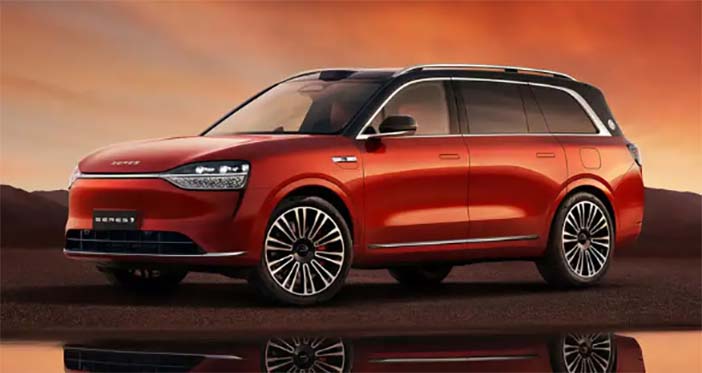
+++ Chinese car firm SERES is gearing up to expand its activities in Europe, having premium brands like Audi, Mercedes-Benz and Tesla in its sights. It currently sells the 3 on specific European markets, but later this year it will add 3 new SUVs: the 5, 7 and 9, all offering a selection of battery-electric and range-extender powertrains. The 5 is positioned to rival the Tesla Model Y and Volkswagen ID.4. In electric guise, it has a 76 kWh (usable capacity) lithium-iron-phosphate (LFP) battery pack. This yields ranges of up to 480 km in single-motor cars, according to the WLTP test cycle, while dual-motor cars cut this to 450 km. In either case, the bulk of the 5’s power comes from a permanent-magnet synchronous electric motor, sending 272 hp and 350 Nm through the rear wheels. That gives it a 0-100 kph time of 7.1 seconds. Dual-motor cars add an AC synchronous motor to the front axle, upping outputs to 495 hp and 680 Nm, cutting the 5’s sprint time down to 4.5 seconds. Both versions can be charged at up to 100 kW, affording a 30-80% top up in as little as 30 minutes. The 5 is also offered with a pair of range-extender powertrains, using a turbocharged 1.5-litre petrol engine and a a 40kWh nickel-manganese-cobalt (NMC) battery. The single-motor, rear-wheel-drive REx puts out 265 hp and 350 Nm, and completes the 0-100 kph sprint in the same 7.1 seconds as the BEV. Its electric-only range is rated at 180 km (WLTP). Although the dual-motor REx is slightly less powerful than the dual-motor BEV, with 485 hp, it accelerates more quickly, hitting 100 kph in 4.4 seconds. In any case, the 5 tips the scales at more than 2 tonnes. The lightest version, the single-motor REx, is 2.220kg. The dual-motor REx weighs an extra 115 kg. The BEV versions are another 15 kg heavier than the equivalent REx. Arriving at the same time as the 5 is the larger 7, a 6-seat SUV positioned as a rival for the likes of the Land Rover Discovery. It’s offered exclusively with REx powertrains with the same 40 kWh battery and 265 hp rear motor as in the 5 REx. The dual-motor version, however, swaps the AC motor at the front of the 5 for a permanent-magnet motor similar to that on the rear axle. That gives the dual-motor 7 combined outputs of 440 hp and 670 Nm and a 0-100 kph sprint time of 4.8 seconds. Its WLTP electric-only range is 135 km in single-motor form and 140 km in dual-motor form. European specifications for the 9 SUV have yet to be announced, but it’s longer and taller than its siblings and offers the same mix of BEV and REx powertrains. It will arrive in Europe after the 5 and 7. Seres believes its cars can capitalise on untapped demand for advanced digital services and accompanying updates that can transform a car’s functionality throughout its lifespan. “We aim to redefine luxury with technology, with intelligence”, its foreign markets boss, Jiaxi You, told. “The smart cockpit, for example: you can talk to the cars and activate autonomous driving or the navigation assistant. That’s a highlight of the vehicles. We’re mainly focused on 2 areas: the smart cockpit and ADAS (advanced driver assistance systems)”. Those driver aids, You claimed, are “only restricted by the regulations”. Referring to the SAE levels of autonomy, You said the cars are “very near L3”, meaning they can take full control in preset conditions. You added that he believes Seres’ advantage to be in how quickly it can update each car over the air, compared with European rivals. He said: “When we do have a new software version, we can push this to our customers by an over-the-air (OTA) update. The software evolves itself week by week. We keep collecting inputs and feedback from our customers to improve our product constantly”. He claimed that “it’s much more agile than traditional development”, with “dedicated people for overseas markets” allowing Seres to tailor new features to a specific region’s tastes. “We keep a close eye on the customer feedback for different scenarios”, You continued. “If there’s a bug fix, you will get that instantly overnight, but if there’s a product upgrade, new features, new functions, we will [bundle]that to avoid OTA too much over time”. You also believes that the lack of physical buttons inside Seres’ cars (they only feature switchgear on the steering wheel for critical controls) isn’t a concern. He explained: “A few years ago in China, all cars were also equipped with physical buttons. The more buttons you have, the more premium the vehicle is: it’s usually that way. The idea right now is that’s the role of a touchscreen. You have to make the user experience the best you can; we learn a lot from our customers to keep optimising the experience of the touchscreen. I think the voice control will become a major interaction between you and the vehicle, because we’re already over the technology gap; it doesn’t bother you any more”. Seres has yet to set numerical targets for its European expansion. It instead acknowledges that building a brand is difficult and, like compatriots BYD and GWM, will partner with established dealer franchises to get its cars in front of customers. Asked whether Seres could face similar challenges to those other new brands, You said it wasn’t just an issue of brand awareness but also of trust. “Our strategy is to take care of our customers by providing great products and best-in-class services”, he explained. “We plan to stay, and we plan to stay long”. You wouldn’t be drawn on which brands Seres is targeting with its European expansion, but noted that in China, “in the ranking of luxury brands, right behind Mercedes-Benz, BMW, Audi and Tesla, it’s our car”. +++