
+++ FORD announced Thursday it would invest $3 billion to expand production of its “Super Duty” pickup trucks at a Canadian factory, at which it has previously pushed back plans for electric vehicles. The announcement gives the U.S. carmarker a third manufacturing center in North America from which to produce the giant pickup trucks, which have been a major profit driver in recent years. Under the plan, the Oakville Assembly Complex in Ontario will manufacture up to 100.000 more units of the vehicles, with production commencing in 2026. Ford plants that produce the trucks in Kentucky and Ohio are operating at “full capacity”, Ford said. The vehicles are often used by emergency response officials, as well as in the mining, utility and construction industries. Oakville had previously been slated to produce Electric Vehicles (EV), but in April Ford announced it plans to push back a new 3-row electric vehicle from 2025 to 2027, part of a wave of announcements by automakers delaying EV investments because of slower than expected growth in the American market. Ford, which has emphasized investments in hybrid vehicles, said the Oakville plant when finished will be a “fully flexible plant,” implying it could produce EVs down the road. The company also said it “remains committed to developing a growing and profitable electric vehicle business, including three-row electric utility vehicles”. “Super Duty is a vital tool for businesses and people around the world and, even with our Kentucky Truck Plant and Ohio Assembly Plant running flat out, we can’t meet the demand”. said Ford chief executive Jim Farley. “This move benefits our customers and supercharges our Ford Pro commercial business”. +++
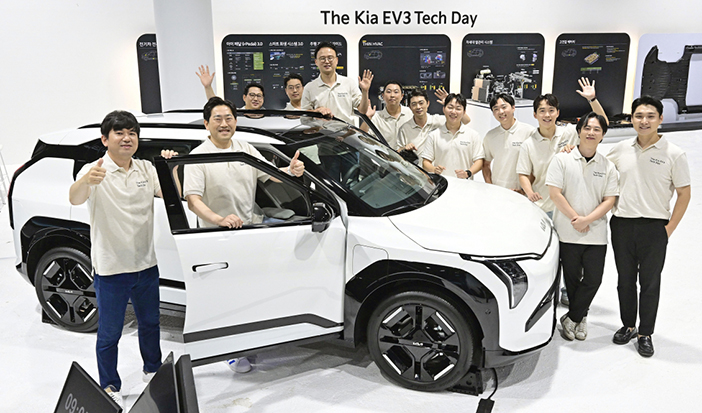
+++ KIA has demonstrated its advanced pedal and braking systems for its most strategic Electric Vehicle (EV), the EV3, letting drivers enjoy more affordable and comfortable driving with the 2 key upsides of the vehicle, the company said. The carmaker equipped the compact electric SUV with its Smart Regeneration System 3.0. The system features a combination of autonomous driving technology and regenerative braking. When drivers take their foot off the accelerator pedal, sensors automatically detect the distance from the vehicle ahead and operates the regenerative braking function, thereby decelerating the car to a safer speed, the carmaker said. Navigation information is also utilized during the process, so the vehicle reduces its speed to avoid speeding violations on the road, according to Kia, which added that this promotes economical driving in most urban environments. The vehicle also decelerates in other various circumstances, such as curves, right or left turns and intersections. The deceleration intensity can be set by each driver. Drivers can simply activate the system by pressing a paddle shift on the right side of the vehicle’s steering wheel for about a second. Previously, the automatic deceleration did not work when the speed drops below 9 kilometers per hour, but the latest version is capable of decelerating the vehicle to a complete stop, Kia said. “Drivers can feel at ease with our newest regeneration system, as it gives them an impression of semi-autonomous driving”, Shim Kyoo-bin, an engineer at Hyundai Motor Group’s vehicle drive control development team, said during the EV3 Tech Day in Seoul. “The system helps the vehicle maximize its energy consumption in city drives”, he said. Kia also equipped the EV3 with the i-Pedal 3.0, characterized by a multilateral function of the accelerator pedal which accelerates, decelerates and even stops the vehicle. The i-Pedal function can be operated across all regenerative braking stages, according to the carmaker. Drivers can set the regenerative braking intensity from level zero to three by pulling the paddle shift on the left side of the steering wheel for more than a second, the company said. This drastically reduces the frequency of stepping on a brake pedal, which will alleviate drivers’ fatigue. Kia expects the EV3 to drive the popularization of EVs, as customers can purchase the vehicle at less than 40 million won ($28,800). Few other imported EVs in the same segment offer such reasonable price options to customers. The vehicle can drive up to 501 kilometers on a single charge, according to a certification by Korea’s Ministry of Trade, Industry and Energy. +++
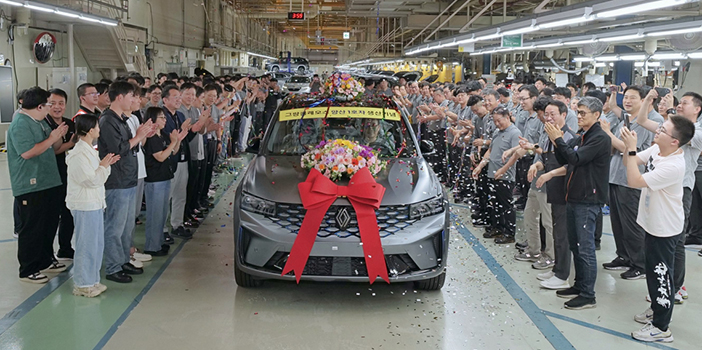
+++ RENAULT KOREA has begun the mass production of its new Grand Koleos at its Busan plant, the company said. The company held a ceremony to roll out its new Grand Koleos at the Busan plant on the previous day. The automaker plans to begin delivery of the new SUV to customers in the autumn. Renault Korea debuted the new Grand Koleos at the 2024 Busan International Mobility Show at Bexco on June 27, marking the first new car from the Renault subsidiary in 4 years. According to Renault Korea, the number of preorders of the SUV exceeded 7.000 as of last week. Despite the fact that the car’s price and gas efficiency have not been disclosed yet, a Renault Korea official said the figure showed that customers have high expectations for the new Grand Koleos. Renault Korea explained that the new SUV in the D segment is manufactured in collaboration with about 200 domestic partner firms, as the Renault subsidiary looks to continue contributing to the automotive industry ecosystem in South Korea. The new Grand Koleos features a wheelbase of 2.820 millimeters, which is the largest wheelbase among the SUVs in the same segment, according to Renault Korea. The company pointed out that the SUV offers the installation of the openR panorama screen on its dashboard, consisting of 3 displays (each 12.3 inch) that stretch from the driver’s seat to the passenger seat, which is a first for domestically produced vehicles. The automaker plans to offer a free 5G data connection for 5 years upon purchase. +++
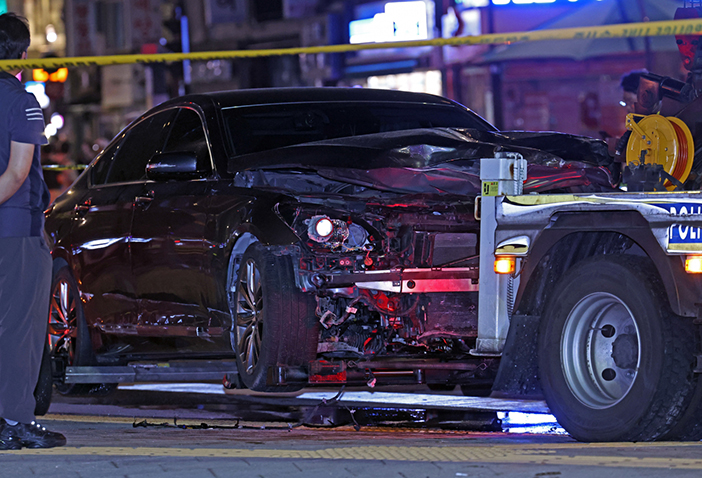
+++ Experts and company officials have recommended that South Korea increases incentives for drivers to install pedal black boxes, pointing to ongoing reports of suspected SUDDEN ACCELERATION incidents as a major social issue. Earlier this month, a driver involved in a fatal crash that killed 9 pedestrians claimed that unintended acceleration of his Genesis vehicle (photo) caused the accident. However, the absence of a pedal black box makes it difficult for him to support his argument. In many of these car accident cases, drivers claim that their vehicles accelerated suddenly and without warning, often shifting the blame to the car manufacturers. The pedal black box, a camera system that monitors the driver’s foot movements, serves as crucial evidence in these situations, helping to determine which pedals the driver was pressing during the accident. Experts argued insurers should offer incentives by cutting insurance fees to those who install pedal black boxes on their vehicles. “Insurers need to do so, as this gives them clear evidence to figure out the cause of such accidents”, said Lee Ho-geun, an automotive engineering professor at Daedeok University. But he did not support the idea of institutionalizing the mandatory installment of pedal black boxes, saying that this does not fundamentally help reduce similar accidents. “The government should not hastily push for it, as the move is far from resolving the fundamental cause of accidents from unintended acceleration”, the professor said. “No country in the world compels drivers to install them”. The remark was made in response to a proposal by some lawmakers to mandate that carmakers install pedal black boxes in all new vehicles. Rep. Lee Hun-seung of the ruling People Power Party introduced a revision to the Automobile Management Act that would require carmakers to install these devices before selling new cars. Companies failing to comply with this new rule will face fines of up to 30 million won ($21,700). The Ministry of Land, Infrastructure and Transport, the authority handling the issue, is moving to recommend automakers here and abroad to install pedal black boxes, even though the ministry does not have any immediate plans to make them mandatory. Carmakers have argued that it is too early for them to begin offering vehicles equipped with pedal black boxes. “If a majority of customers ask carmakers to launch vehicles with pedal black boxes, we will have to do so, but this is not the case for the time being”, an official from a carmaker said on condition of anonymity. On top of that, customers will end up facing a bigger financial burden when purchasing vehicles with the additional camera monitoring system, according to the official. “Even if the suspected sudden acceleration of some vehicles becomes a significant social issue, it still seems premature to mandate that most carmakers install pedal black boxes, especially considering that most other countries do not have such requirements”, the official said. According to data from the Korea Transportation Safety Authority and the National Forensic Service, there have been a total of 760 reported cases of suspected unintended acceleration since 2017, but none of these cases has been substantiated by authorities. Japan’s transport authority is scheduled to make it mandatory for carmakers to install a pedal misapplication prevention device into their new vehicles from June 2025. +++
+++ Registrations of TESLA cars in California fell 24% in the April to June period, marking the third consecutive quarter that the company posted a sales drop in its key market, indicating mounting challenges for the EV maker, according to industry data on Thursday. High interest rates and stiff competition have softened demand for electric vehicles as consumers opt for less-expensive hybrid cars. Potential Tesla customers in the United States have been shying away from buying its electric cars, partly due to CEO Elon Musk’s polarizing persona. Musk’s embrace of Republicans and outspoken comments have sparked concerns about Tesla’s brand, especially in liberal states such as California, which accounts for 10% of the company’s global deliveries. The world’s richest man publicly endorsed former president Donald Trump for the first time in the U.S. presidential race after the assassination attempt on the Republican candidate on Saturday. Tesla’s California registrations fell to 52.211 vehicles in the second quarter, according to a report by the California New Car Dealers Association. The battery electric vehicle market slipped only 1.3% during the period. In contrast, sales of hybrid vehicles surged 22% in California. “Tesla’s allure seems to be wearing off, signaling potential trouble for the direct-to-consumer manufacturer”, the report said. From January to June, Tesla saw its registrations in California slump 17%, even as distant rivals such as Hyundai, Kia, BMW, Mercedes-Benz, Ford and Rivian increased sales by double-digit percentage points. The electric-vehicle maker’s Model Y continues to be the best-selling model in the state, but its market share in the first half of the year fell to 53.4%, from 64.6% in the year-ago period. In 2021, Tesla moved its headquarters from California to Texas, and Musk said this week his other companies such as Space X and X will follow suit over his disagreement with Governor Gavin Newsom’s approval of a bill on transgender kids. Tesla, which is set to report quarterly results on Tuesday, handed over more vehicles to customers in the second quarter than analysts had expected, although deliveries were lower than a year ago. +++
+++ Former president Donald TRUMP used his nomination speech to take aim at president Joe Biden’s electric vehicle policies, vowing to action against them on his first day in office. “I will end the electric vehicle mandate on day one”, Trump said in his address at the Republican National Convention in Milwaukee. The move would result in “saving the U.S. auto industry from complete obliteration, which is happening right now, and saving U.S. customers thousands and thousands of dollars per car”, he said. While the Biden administration doesn’t actually have a mandate on electric vehicles, critics of new air-pollution limits issued by the Environmental Protection Agency in March have said they would illegally force automakers to sell EVs. Yet in the same speech, Trump said China should build EVs here. U.S. automakers fear that cheap Chinese vehicles would be what one industry group called an “extinction-level event”, so Trump’s invitation to the Chinese is seemingly a paradox. “Right now as we speak, large factories just are being built across the border in Mexico” by China to make cars to sell in the U.S., Trump said in his address Thursday night. “Those plants are going to be built in the United States and our people are going to man those plants”, he said, adding that he would otherwise slap tariffs as high as 200% on each car to prevent them from entering the country. The comments are similar to remarks he made in March at a Ohio rally welcoming Chinese auto companies to build plants in the U.S., without naming any firms. China’s largest EV maker BYD is looking to set up one of the largest auto factories in Mexico. Both Trump and Biden seek to keep made-in-China cars from entering the U.S. to protect domestic manufacturers. But the Republican candidate appears to take a more transactional approach when it comes to Chinese companies building cars here. Biden, in contrast, has broadly scrutinized vehicles with links to China, including potentially those made outside the country. The Biden administration has tried to exclude firms at least 25% owned by a Chinese government entity from benefiting from tax credits. It has also launched an investigation into cars with software made in China that could compromise the data and safety of US citizens. Trump’s remarks on EVs came just moments before he criticized what he said was trillions of dollars of wasteful spending “having to do with the green new scam”. He said he would instead direct the money to projects like roads, bridges and dams, though it wasn’t immediately clear how he would make good on the pledge. The Biden administration Infrastructure Law is already doing that. Trump has made no secret his disdain for electric vehicles, claiming they don’t work and will benefit China and Mexico while hurting American autoworkers. Biden, in contrast, has made the shift to battery-powered cars one of his top climate and industrial policies and has set a goal of having 50% of all new vehicle sales be electric by 2030. Both men want to look tough on Beijing as they head toward a potential election rematch in November. Trump referred to Covid-19 as the “China virus” during the rally, to roaring applause from the audience, as he recalled his trade negotiations with the Chinese government during his stint in the White House. +++
+++ The VOLVO XC40 has emerged as Korea’s best-selling premium compact SUV in the first half of this year. The XC40 sold 1.089 units between January and June, with its B4 Ultimate all-wheel drive trim leading in single-trim sales, according to data from the Korea Automobile Importers & Distributors Association. In second place for single-trim sales was the Mini Cooper Countryman with 945 units, followed by the BMW X1 xDrive20 with 727 units. The same XC40 model secured second position in overall trim sales within the premium compact SUV category. Only 1 trim of the XC40 is available in the Korean market, making its success even more noteworthy as it competes against multiple trim offerings from other brands. Since its global debut in 2017, the Volvo XC40 has consistently been a top performer, particularly in Europe where it has led the premium compact SUV segment for 4 consecutive years since 2020. In South Korea, the XC40 has been popular since its 2018 launch, overcoming tough competition from the Mercedes-Benz GLA, BMW X1, Audi Q3 and Lexus UX lineups of premium compact SUVs. The XC40’s success can be attributed to its combination of advanced features and competitive pricing. Despite being an entry-level model, it includes advanced safety technologies and premium comfort features, such as the integrated Tmap infotainment system. Developed in collaboration with Tmap Mobility, Korea’s leading navigation service provider, it addresses common quality issues experienced with built-in navigation systems in imported cars. Key safety technologies of the XC40 include the Blind Spot Information System with Steer Assist. BLIS encompasses Cross Traffic Alert and Rear Collision Warning, designed to detect vehicles in the driver’s blind spot and approaching vehicles from both sides. The system alerts the driver via side mirror indicators and can automatically steer the vehicle back into its lane if a collision risk is detected during a lane change. Despite these advanced features, the XC40 is affordably priced in Korea. The top Ultimate trim is priced at 54.3 million won ($39,320), which is significantly cheaper than its counterparts in the UK and US markets by approximately 20.4 million and 16.2 million won, respectively. Volvo Car Korea’s online-exclusive editions of the XC40 have also shown marked popularity. The 25 units of the XC40 Sage Green Edition launched in July last year sold out in 3 minutes, and the 44 units of the XC40 Dark Edition launched in April this year sold out in 4 minutes. Volvo Car Korea has maintained its position as the 4th-largest importer since April, with consistent monthly sales of around 1,200 units, competing closely with BMW, Mercedes-Benz and Tesla in the premium segment of the Korean import car market. +++