
+++ Former Polestar design boss Maximilian Missoni has joined BMW to lead design for ALPINA as it begins life under full BMW ownership. Arriving as part of a wide-reaching shake-up of design teams at the BMW Group, Missoni will also oversee the design of upper mid-size and luxury-class BMW models. Missoni, who was Polestar’s design chief since its formation in 2018, announced his departure from the Swedish brand last month. He was succeeded by Philipp Römers, who was previously Audi’s head of exterior design and is credited with designing cars including the previous A6, current A8 and E-tron GT, as well as the Mk7 Volkswagen Golf. Polestar CEO Thomas Ingenlath (who will leave his role in October) said: “I thank Max for his leadership and companionship during the inception of Polestar as Europe’s only pure-EV brand. Max established the innovative design standards that combine aesthetics, luxury and performance in a way that is truly Polestar. We wish him all the best in the future. At the same time, I am delighted to welcome Philipp to Polestar. Philipp’s modern approach to automotive design and experience from the luxury performance segment will really support us as we take the next step in developing our model line-up”. Römers arrives at a critical moment in Polestar’s development, as it expands from one model, the 2, to a broader line-up of luxury EVs. It’s aiming for break-even cashflow and 155.000 sales next year. Römers is likely to be charged with designing the follow-up to the 2 and facelifting the 3, 4, 5 and 6. +++

+++ Brazilian start-up Lecar will be the first car maker to use a powertrain supplied by HORSE , the joint venture between Renault and Geely. United Kingdom-based Horse, announced last July and officially formed this May, aims to become the “global powertrain leader”, with a goal of building some five million “best-in-class” petrol, diesel and hybrid powertrains per year for car makers including Nissan and Volvo. The Lecar 459 Híbrido, a crossover set to be launched in 2026, will use a range-extender powertrain centred around Horse’s 1.0-litre 3-cylinder HR10 petrol engine. Similar to how Nissan’s e-Power system works, the engine powers an on-board generator that provides charge to a battery that sends power to electric motors. Exact specifications of the 459 Hybrid have yet to be confirmed. The HR10, which has already powered light commercial vehicles in similar range-extender powertrain, has been designed to run using low-emissions petrol and ethanol flex fuels; the main fuels offered in Brazil. Horse will annually supply Lecar with 12.000 units, produced at the powertrain maker’s plant in Curitiba, Brazil. Matias Giannini, CEO of Horse parent company Horse Powertrain said: “For Horse, this is a monumental first step into providing combustion engines for passenger-vehicle range-extenders. “This deal signals our commitment to Brazil, one of the world’s most exciting automotive markets. It also signals our relentless commitment to innovation in EREVs (Extended-Range Electric Vehicles), one of the fastest-growing vehicle categories globally, and our ability to support brands and OEMs developing both EVs and combustion-engine vehicles”. Horse CEO Patrice Haettel added: “This is a significant milestone for Horse as it continues to deliver on our strategy of developing tailor-made solutions for every market”. Other car makers to push into the EREV market include Mazda and Hyundai. The latter recently became the first global car firm to commit to a broad roll-out of EREVs as it looks to bridge the gap to sluggish EV demand. +++
+++ KIA is planning to bookend its range of EVs, with an entry-level city car and a new halo model under consideration. The Korean brand has trademarked names from EV1 to EV9 for a range of models, and while it has confirmed that an EV2 will sit below the new EV3, the prospect of an EV1 has been off the table until now. But Kia president Ho-sung Song confirmed on a Car of the Year testdrive of the new EV3 that an electric city car to replace the Picanto in the longer term was the “next, next target” as Kia seeks to bring down the cost of EV technology. Such a car would need to cost below €20,000 and would not be possible before the end of the decade. Until then, Kia is working to lower the cost of electric cars in €5.000 increments: the EV3 is €35,000 in Europe and the 2026 EV2, a new supermini-sized model, will be below €30.000. In time, the cost of those models could drop as battery technology becomes more affordable, at which point the possibility of a sub-€20.000 city car becomes viable. Song said targeting the €15.000-€20.000 city car segment was “very difficult, very challenging” for any car maker regardless of the powertrain, and making it electric only made it harder. “Our next target is an EV model starting from €30.000”, he said. “This is what we’re preparing to offer customers. Still, we think we need sub-€25.000 in our EV cars and maybe we can leverage around €20.000. But that cannot happen in the next 2 years”. At the other end of the range, Song said a brand-building model like the previous Stinger GT but with an electric powertrain was under consideration to offer a similar halo effect to the company’s line-up. “That kind of model is under study”, he said. “What kind of model can help build the brand? This is what we are now studying”. The versatility of electric skateboard structures such as the E-GMP architecture used to underpin the likes of the EV6 and EV9 make such a car more viable in the electric era due to the greater commonality of components with other models in the range. As such, all-wheel drive from a dual-motor layout and more than 600 hp would be possible for such a flagship. More generally, Song said that while demand for electric cars in Europe outwardly appears “sluggish”, the general trend is that Europe is “getting stronger” and he “does not worry long term” about EV uptake. Song said incentives are still needed to boost demand in the short term and the recent volatility was a product of incentives being removed in countries such as Germany. “In the meantime, most car manufacturers are trying our best to reduce the cost of EVs to provide a better price to our customers”, he said. While development investments in hybrid models have recently increased at Kia, Song said the majority of investments are in electric cars and this remains the direction of travel for the company. He also confirmed that solid-state batteries remain under development at Kia and the outlook for the technology is “in every aspect quite better” than today’s alternatives, although no date has been put on its showroom arrival. +++
+++ The rich want their transmissions back. Established automakers and newcomers alike have been rolling out new car models designed to recapture a visceral connection to driving; the MANUAL TRANSMISSION . Monterey Car Week, an annual automotive orgy in August, was full of them. Pagani revealed a 6-speed transmission in its $3.4 million Utopia roadster; Tuthill Porsche introduced the GT One, a version of Porsche’s 911 GT1 that offers a 6-speed manual setup. Aston Martin Lagonda’s $2 million Valour, released in July, likewise pairs a 6-speed transmission with its 705-horsepower engine. +++
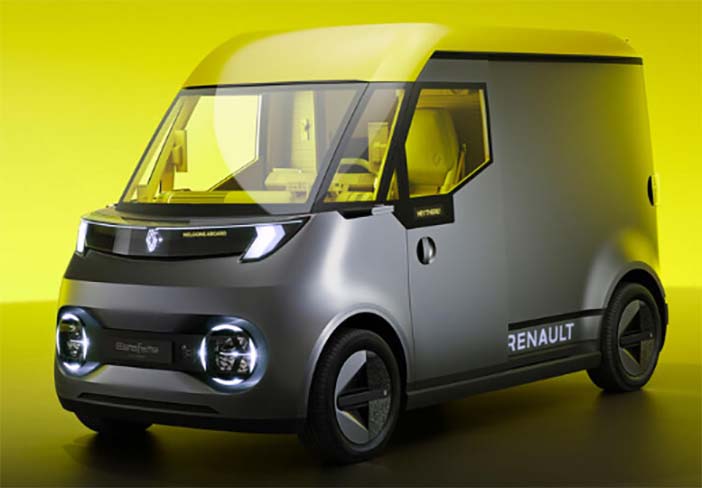
+++ RENAULT has revived the Estafette as a high-tech, city-focused load-lugger called the ZFlexEVan. The new concept previews the debut model from the French company’s tie-up with Volvo Trucks, called Flexis, and it has been designed to stand out from the aggressive-looking diesel vans on the market. It inherits its twin round headlights and soft curves from the Estafette, which (combined with a striking grey and yellow livery) are intended to brighten up European city streets, according to Renault. “Vans will no longer be anonymous shapes. They will be endearing, expressive and come in eye-catching pop colours”, said Sandeep Bhambra, chief designer of concept cars for Renault’s electric car spin-off Ampere. Although the ZFlexEVan is longer than a BMW 3 Series, at 4.87 meter, its turning circle is on a par with that of a Renault Clio. It is also distinctively tall: at 2.59 meter, it stands even higher than a Ford Transit. This is intended to allow a driver to walk the length of the van, from the cockpit through to the cargo bay, without crouching. “We were trying to get every second out of interaction between the driver and the van, because every 30 seconds that you save in a delivery we estimate is worth an extra 1% profitability for the logistics operator”, Renault Group chief Luca de Meo explained in April. Renault has yet to detail the ZFlexEVan’s powertrain beyond it being electric, but it has confirmed the van is its first software-defined vehicle. This means that, like a smartphone, it can be extensively customised through the car’s on-board operating system. Renault suggested, for example, that a van retrofitted with fridges in the cargo bay could have its dashboard reprogrammed to display the temperature of those fridges. It also said the van could be updated over time to improve its range, on-board safety systems and connectivity (such as to fleet management systems). This will make it 30% cheaper for companies to run than existing vans, Renault claimed. The ZFlexEVan will go into production in 2 years, and it’s possible it will even adopt the Estafette name. Renault refers to it as both the “Estafette 4.0” and the ZFlexEVan, suggesting a retro-inspired reworking of its van line-up (similar to that under way with its road cars) is on the cards. The new van will spearhead Flexis’ plan to dominate the European van market. Announcing the partnership with Volvo Trucks in April, De Meo said: “This is the Tesla of the commercial vehicle in a way. That’s the way you have to see it”. +++
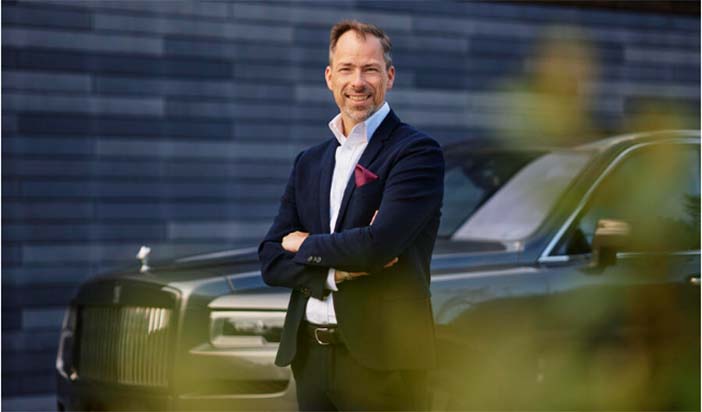
+++ Domagoj Dukec is moving from BMW to ROLLS-ROYCE to take over as director of design from Anders Warming, as part of a dramatic overhaul of the BMW Group’s design operations. Warming has steered Rolls-Royce’s design department for 3 years, having previously worked under Chris Bangle at BMW and then been appointed chief of design at Mini. Cars launched under his stewardship include the electric Spectre, the refreshed Cullinan plus Phantom and the Droptail. Warming is moving to become head of the BMW Group’s global Designworks operation, which takes a more overarching view of future mobility across the company’s entire portfolio. Warming’s and Dukec’s new roles are among several significant changes for BMW Group Design, with director Adrian van Hooydonk rearranging the teams “to meet changing demands for future-oriented design”. Ex-Polestar designer Maximillian Missoni, who has overseen the styling of each of the Swedish brand’s production EVs and concepts, has been hired to lead the design of upper mid-size and luxury-class BMW models, including those from the recently acquired Alpina brand. Mini head designer Oliver Heilmer will take over the design of the smaller and mid-size BMW cars, including from the M performance division. He will be replaced at Mini by Holger Hampf. Rolls-Royce CEO Chris Brownridge hailed the “substantial and lasting” impact that Warming has had on the brand and said “his wealth of experience and creativity have instructed our future aesthetic direction”.
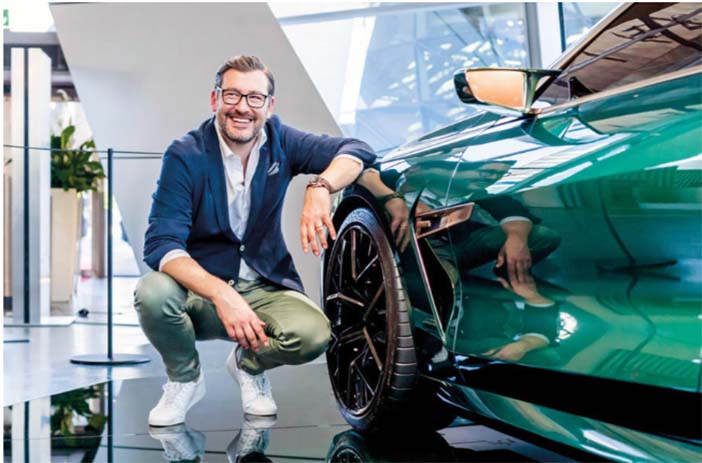
Dukec is well known as the long-time design chief at BMW, under whose stewardship the brand has completely overhauled the look of its cars, most notably embracing substantial new grilles for all its cars; a move that Dukec has acknowledged as “polarising” but “brand-shaping”. He has been at BMW for more than 14 years and has served in various high-ranking positions, including as design director for the BMW i electrified sub-brand and then in the same role for the M performance division. Before arriving in Munich, he was a senior designer for Peugeot and Citroën at the PSA Group, after starting his career in the late 1990s as an exterior designer at Volkswagen. He will assume “overall responsibility for all design topics” at Goodwood, including the expansion of the highly lucrative Bespoke division. Rolls-Royce hasn’t yet indicated what its next production car will be, following the launch last year of the Spectre, but it’s working on an update package for the Ghost and will be turning its attention to future EVs as it looks to go all-electric from 2030. +++
+++ Sales of battery-electric vehicles in the UNITED STATES have moseyed along for much of the year but registration data only now reported from July reveals a significant spike that allowed Tesla to snap a 5-month losing streak and other brands to also report positive growth. Data from S&P Global Mobility reveals that new EV registrations jumped 18% in the US in July. A total of 118.273 new EVs were registered in the US that month compared to 100.620 in July 2023. This led to an increase in the EV share of the light-vehicle market to 8.5%, up from 7.6%. Tesla remains the undisputed leader of the segment. In July, no less than 57.134 new Tesla vehicles were registered in the United States, representing a 1.2% increase compared with the same month a year earlier, in part thanks to the arrival of the Cybertruck. The carmaker had a 48% share of all new EV registrations, a drop from the 56% share it had previously. EV registrations jumped for plenty of other manufacturers, too. For example, 9.504 EVs from Ford were registered in July, as 67% increase. Registrations at Chevrolet also rose by 25% to 5.901, those at BMW jumped 27% to 5.483, Kia’s EVs grew 62% to 4.810 units, Rivian registrations spiked 35% to 4.545 and Nissan reported a 108% increase to 3.496 vehicles. It wasn’t good news for all brands, though, as Hyundai experienced a 14% dip to 5.385 units, but when combined with Kia and Genesis, it retained its position in second place behind Tesla. Mercedes sold only 2.775 EVs and Volkswagen did een worse with 2.080 registrations. Volvo scored a paltry 519 sales. According to S&P Global Mobility analyst Tom Libby, “The results are a combination of good performance by EVs that have been in the market for a while and the addition of several new models”. Additionally, generous EV incentives are helping to boost sales. “The caveat is that at full price, these EV products will not sell”, Libby noted. “They are being heavily incentivized to put their price point near internal combustion vehicles. If the incentives were pulled off, I think sales would drop tremendously”. +++