
+++ ASTON MARTIN has issued its second earnings warning in as many months and is now looking to raise cash. The shortfall is blamed on a “minor” production delay for its limited-edition Valiant sports car, which means only half of the 38 planned models will be delivered by the end of the year. As a result, it today announced that expected earnings for 2024 have fallen to 235 million euro, down on last year’s 260 million euro. The British firm is now looking to raise 175 million euro of extra cash, issuing new debt and shares. +++
+++ The race is over and we have lost. As far as lithium-ion battery technology goes, CHINA has won. They set their sights on a product that they could excel at and now they own it. China has pursued a position of supremacy in the lithium-ion battery space since 2001, when the country made it a cornerstone of its Five Year Plan. After “inviting” their many joint venture partners into China and learning how to properly manufacture vehicles, there was a realization that they would not be able to out-innovate the Americans and Europeans when it came to internal combustion engine (ICE) vehicles. This led to major government support for the development of an EV battery industry starting in 2009. This was something that the “foreigners” were not pursuing. From 2009 to 2023, the Chinese government poured a substantial $230 billion into both batteries and EVs. This took the form of inexpensive land, tax breaks and other incentives. Top Chinese battery producers like CATL, BYD, CALB and Gotion have reaped the benefits and dominate the battery market, in China and elsewhere. In addition to the manufacturing of EV batteries, China has gained control of the entire EV battery supply chain. This includes materials found on its home turf as well as supplies on other continents. Here’s one example: Partially or completely Chinese-owned firms will produce over 90% of Africa’s entire lithium supply for the next 10 years! To make things worse, China’s EV battery production capacity already exceeds world demand by around 400%. This helps to explain how the Chinese can price their EVs so low: all of the materials going into the battery have been subsidized by their government. This gives them a pricing advantage, which when combined with the industry’s overcapacity, now has them shipping their EVs all over the world to various export markets. While it’s pretty much game over as far as liquid electrolyte lithium-ion batteries go, we should not give up. We should be building our own lithium-ion battery plants and supply chains so that we can provide our EV industry with a stable source of batteries that cannot be cut off for political reasons. We should realize that lithium-ion batteries are reaching their performance limits and it’s time to go beyond them. Moving forward, the real action is at the next level of EV battery development. And that’s solid-state batteries, for which we have not yet ceded development to the Chinese. It’s the best way to preserve our auto industry for the future. The next generation of solid-state EV batteries are the answer to many troubling issues we must live with in today’s electric vehicles. These solid-state batteries will charge faster, have more energy density and thus be lighter, and will be much safer than today’s lithium-ion cells, eliminating the possibility of thermal runaway. Even better, solid-state batteries need no graphite, which China has near-total control of. Just imagine an EV with 1.600 km of range, a 5-minute charging time, normal weight and low fire hazard. That would solve most of our EV adoption problems! In order to reap a commercial advantage from the development of solid-state EV batteries, we must provide more funding for R&D, accelerate the commercialization of products that come out of the lab, and provide a protected environment (such as military-related projects) in which these batteries can be made ready for mass production as soon as possible. The next race for solid-state batteries is on and we are not the only ones running in it. In addition to a Chinese-sponsored consortium including battery maker CATL and automaker BYD, Japan’s Toyota, Nissan and Honda, and Korea’s Samsung are also hotly pursuing solid-state batteries. The big challenges facing all solid-state battery developers are making them at large scale while bringing the cost down. QuantumScape has already a deal with the Volkswagen Group. But there’s not much time: Samsung is planning for 2027 production, while Toyota and Nissan are shooting for 2028. Honda is building a solid-state battery demonstration production line, with production planned sometime during the final half of the decade. It’s now or never. The Chinese have eaten our lunch where lithium-ion batteries are concerned, but we still have a chance to grab the lead in the solid-state battery race. The clock is ticking… +++
+++ JAGUAR is going to extreme lengths to deal with a fire risk problem on its recently-axed I-Pace. The British automaker has agreed to buy back 2.760 examples from the 2019 model year sold in the US to get the situation resolved, at least in its customers’ eyes. The problem relates to concerns about batteries overheating and potentially catching fire, something that has been an issue with the I-Pace for several years now. Previous recalls have applied software-based fixes but data revealed that some 2019 cars that have received the remedy are still suffering thermal overloads. To date, 3 of the Jaguars have caught fire despite receiving a software update. In August, Jaguar told owners to park outside and away from buildings and announced that another code update would limit the car’s to an 80 percent charge as a temporary fix. A “permanent remedy is under development”, the company said at the time, and this month I learned that the permanent remedy means Jaguar dipping into its pockets to buy back almost 3.000 cars. The good news for Jaguar is that the I-Pace has suffered from horrific depreciation, so the bill, while still huge, isn’t going to be as big as it could have been. And we imagine a large proportion of the affected owners will be glad to see the back of their trouble-prone cars, even if they are great to drive and they end up with less to spend on a new car than they were hoping. Ordinarily, a story about a carmaker having to buy back thousands of 5-year-old EVs due to a safety issue would be a PR disaster for the automaker involved. But after having been subjected to a week of ridicule over its attempts to rebrand, Jaguar execs are probably delighted that an I-Pace recall has nobly offered to deflect some of the attention. Jaguar is relaunching itself as an electric-only Porsche and Bentley rival and will show a concept version of the first of 3 new models on December 2. To underline the shift, Jaguar has killed off its entire current model line and come up with new logos and branding that were met with derision and confusion online. +++
+++ LAMBORGHINI has no plans to follow Aston Martin and Bentley in delaying its first electric car, but will keep its three new hybrid models on sale for as long as possible. In an exclusive interview boss Stephan Winkelmann said he was confident that the firm’s previously outlined electrification strategy was “the right one”, because when it comes to launching EVs, “it’s not about innovation, it’s about coming at the right time”. “When we decided to do the first step of our strategy, to have all the line-up new and hybridised, this was a big effort for the company”, he said. “For the last 4 years, we have worked very hard on this and now we see that this was (you never know, but) the right decision. Therefore we think that to be very focused on a step-by-step approach on [electrification]was the right decision”. Winkelmann’s comments come after other low-volume car makers (including Aston Martin, Bentley and Ineos) pushed back their debut EVs in light of low demand for electric cars. Lotus, meanwhile, has backtracked on plans to go all-electric and will launch a new range of range-extender hybrids, while Porsche is looking to extend the lifecycle of its current petrol cars in response to low EV uptake in the premium segment.
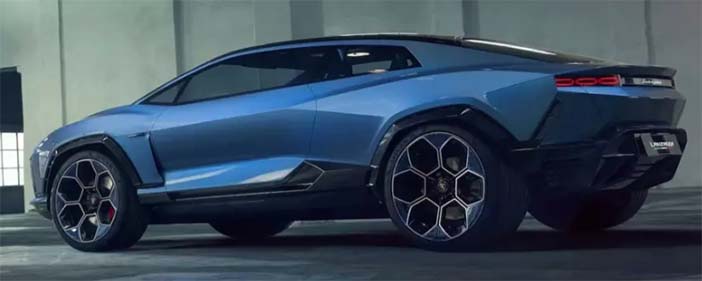
Winkelmann said that because Lamborghini’s first EV (developed from the segment-bending Lanzador concept of last year) is an all-new model, rather than a replacement for any current car, there is less risk of it impacting the company’s sales volumes – and it could even increase them. “We have enough time to decide if we need to accelerate or delay the introduction of the electric cars”, he said. “So far, we are not thinking about delaying anything: we said we want to have our first electric car by the end of this decade, and this is something which we will continue to foster, because we said it has to be an additional car: a fourth model. “It’s an additional model: a new body style, a new type of car in general, so it’s also going to attract new customers to Lamborghini”. The company is therefore sticking to its plan to launch the production version of the Lanzador by 2030. Nonetheless, Winkelmann acknowledged that the curve of EV uptake is not “as steep as forecasted” and said this is “even more” true for the super-sports car segment in which Lamborghini operates, so the company’s strategy to “stay hybrid as long as possible is really the right one”. Following the launch of the Hurácan-replacing Temerario with a new electrified V8 engine, Lamborghini’s 3 existing model lines are now fully hybridised and Winkelmann said the company won’t reverse its decision to go all-electrified, even if synthetic fuel proves a viable means of cleanly powering combustion engines in the future. “I don’t think that battery technology is going to step out of our cars, because at the end of the day, it is something which helps the performance, not inhibits performance”, he said. “And battery technology will evolve, and if we stay hybrid, this is going to help the performance of the cars even more”. The performance benefits of electrification are clearly helping Lamborghini’s customers to make the jump to hybrid power. The Revuelto, with its battery-assisted V12 engine, is sold out “well into 2026”, and the new Urus SE plug-in hybrid SUV is spoken for through to the end of 2025. With the Hurácan still in production, Winkelmann would not be drawn on a number of orders for the Temerario but said “we have a lot of interest and already a lot of orders”. While the Temerario is down 2 cylinders on its predecessor, it has a larger engine than its V6-engined rivals, the Ferrari 296, McLaren Artura and Maserati MC20, and Winkelmann suggested that size advantage, plus the attractive aural bonus of a 10,000 rpm redline, will be a significant selling point for Lamborghini’s new entry-level model. “When you buy a Lamborghini, it’s about the fulfilment of a dream or a childhood dream and therefore it’s a very emotional decision. And what we have to always be capable of doing is to have a balance between achieving the desire of our clients and, on the other hand, having a lasting business case for the company. “We cannot do the things for just one year; it has to last over a decade, mainly. And therefore it’s very important that our engineers are clever enough to put together the thresholds of what the outer world is giving you with the desire of our clients”. +++
+++ LOTUS won’t launch any new model lines for the next 2 years, instead shifting focus to the launch of new range-extender hybrid models in response to waning demand for electric luxury cars. The brand’s new European CEO, Dan Balmer, previously a high-ranking Aston Martin executive and alumni of BMW and Rolls-Royce, confirmed the hiatus on new product launches in his first appearance in the role, following the exit of Mike Johnstone earlier this year. Following the launch of the Eletre SUV in 2023 and the Emeya saloon this year, Lotus was expected to add a Porsche Macan-sized electric crossover, known as Type 134, in 2025; but this car has been put on hold as the company focuses on achieving “stability” by “getting right-sized” and “understanding the markets we compete in”. +++
+++ Chinese newcomers OMODA and Jaecoo have teamed up with a leading insurer-backed organisation in a bid to avoid the aftersales issues that have plagued insurers and customers since their compatriots started entering the UK market. In what is said to be an industry first, the strategic partnership between the Chery-owned duo and Thatcham Research has been created to support the design and development of existing and future models in areas concerning safety, security and sustainable and economic repair. It comes after scores of Chinese-made cars were rejected for policies by UK insurers or written off because a lack of replacement parts made simple repairs too costly. Ensuring good parts availability, facilitating faster repairs and installing more effective security measures pay dividends in terms of lower insurance costs and more satisfied customers, said Thatcham. However, it continued, while Chinese car makers understand the principles of vehicle homologation and the safety standards demanded by Euro NCAP, they pay less attention to ease of repair, because car insurance in China is based on tariffs set and subsidised by the government. Furthermore, the low labour costs in China mean Chinese insurers can afford to have lightly damaged large vehicle structures removed and replaced rather than repaired, as they would be in the UK. In a move expected to be followed by other Chinese brands, Omoda and Jaecoo have taken several steps to make their UK-bound models more insurable. These include redesigning the rear bumper structure of the Omoda 5 to make it easier to repair, reducing one-piece structures like front wings and body sides to more easily repairable sub-assemblies and creating more detailed and accessible body repair guides. The 2 brands have also expanded technical support for their dealers and are currently training 100 technicians, they said. In addition, they have amassed a parts inventory worth €3.5 million and forged a partnership with logistics giant DHL to provide next day delivery from a ‘centre of excellence’ in Rugby. “Where more established car makers might say ‘we will make that change at the facelift ’, Omoda and Jaecoo have made many changes within just a few days and sometimes even overnight”, said Thatcham’s head of automotive, Ben Townsend. “We’ve never experienced that speed of reaction”. In addition, a Thatcham certified locking wheel device will be applied to all UK-bound Omoda and Jaecoo cars at the factory, the keyless entry and start system will be protected from relay attack devices and a double-locking system will be applied. Townsend added: “We recently met 25 car makers in China with plans to market their vehicles here and elsewhere in Europe, so I expect [this partnership]won’t be the last”. +++
+++ Governor Gavin Newsom is positioning California as a foil to Trump’s plan for a far-right policy shift, laying the groundwork for resistance on everything from deportations to regulation rollbacks. On Monday, the Democratic governor delivered a plan that squarely touches on Elon Musk’s TESLA : a rebate for electric-vehicle buyers if Trump repeals a federal subsidy. Notably, the proposal includes market-share limitations that would leave out popular Tesla models. The exclusion marks another turn in the fraught relationship between Newsom and Elon Musk, Trump’s wealthiest donor. +++
+++ The TOYOTA GR SUPRA is retiring after 6 years with a track-honed, 435 hp special edition with a heavily revamped chassis, aggressive new styling cues and a race-inspired cockpit. The current generation Supra was launched in early 2019 as the fifth iteration of Toyota’s flagship sports coupé, sharing its underpinnings and powertrain with the BMW Z4 roadster, alongside which it is built by Magna Steyr in Austria. The Supra’s revival after 2 decades was a passion project of petrolhead Toyota chairman Akio Toyota, who said: “Even though Toyota had no plans to make a new Supra, just like a lot of other die-hard Supra fans around the world, I secretly wanted to make it”. It has been offered in its current generation with a choice of 2.0-litre 4-cylinder and 3.0-litre 6-pot BMW engines, both with either a manual or automatic gearbox.
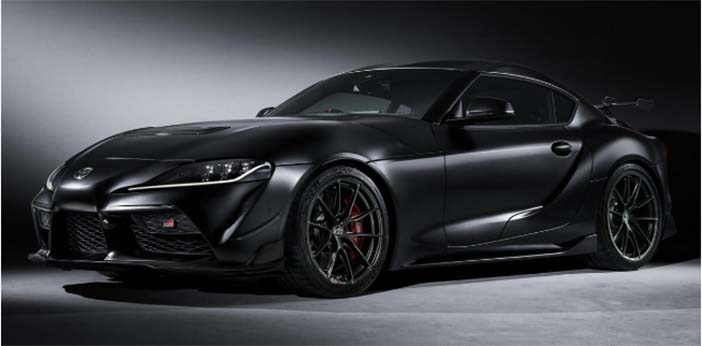
The run-out A90 Final Edition, limited to just 300 units globally, is based on the range-topping 3.0-litre car but with power output boosted to a whopping 435 hp (more than a Porsche 911 Carrera) and torque to 580 Nm. Toyota has not revealed what those increases have done for performance, but the uptick should be enough to take the 0-100 kph time down below 4.0 seconds to make it one of Toyota’s fastest road cars yet. The extra power has been liberated by revisions to the airflow system, a new low-back-pressure exhaust catalyst and ECU mapping tweaks. Further mechanical modifications include a new baffle plate in the oil pan to stop oil starvation in track use, added cooling measures and an Akrapovič backbox for a “powerful engine sound”. Meanwhile, uprated brake pads clamp new drilled discs, while the Supra GT4 track car donates its adjustable KW dampers and strengthened rear subframe “to improve limit-pushing performance” in the corners. The power steering has been made more direct, too, and the camber axle has been changed front and rear to improve grip. That’s in addition to the fitment of new Michelin PS 2 tyres that are 10% wider than the standard items. The Final Edition is marked out by a purposeful, track-flavoured styling overhaul that’s headlined by a chunky carbonfibre rear spoiler, wind-cheating canards and a sizeable cooling vent on the bonnet that signals the heavy power increase. The cabin gets carbonfibre Recaro buckets trimmed in Alcantara (red on the driver’s side) as well as carbonfibre trim elements and red seatbelts to mark it out from the standard Supra. Toyota hasn’t announced how many examples of the Final Edition will come to the Netherlands, nor how much it will cost, but it will no doubt command a healthy premium over the outgoing standard car, which topped out at €104.595 euro.
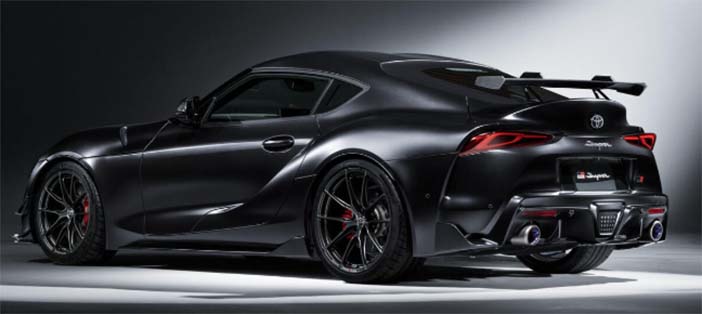
The standard 3.0-litre Supra, meanwhile, has been lightly tweaked for the final phase of production, gaining subtle styling tweaks and an optimised differential. It’s due in various global markets from spring next year, but Toyota hasn’t clarified exactly where, nor for how long it will be available. The firm said that although the Final Edition will be the final road-going iteration of the Supra, Toyota “will continue to hone the Supra through motorsports activities going forward”. +++