
+++ The debut of BMW ’s next-generation electric cars is getting closer and closer, and with the imminent arrival of the first models built on the Neue Klasse platform, the Bavarian carmaker is about to experience a key year. This was said by CEO Oliver Zipse himself, who said that a new era will open up for the group in 2025. He said this during a speech in Berlin, pointing out that “with the new electrics we are laying the foundations of mobility for the next decade”. Blume stated that with the Neue Klasse, BMW is really raising the bar higher. “2025 is the ideal year for new cars”, he explained, “because it allows us to quickly introduce next-generation technologies. We have a new architecture and this has opened up completely new possibilities, allowing us to accelerate on electric mobility”. Moreover, the market is not so scary. The fact that sales of electric cars in Europe, including Germany, have been unsatisfactory from 2023 onwards is no cause for great concern. “Our electric cars are selling more and more”, said Blume, “and zero-emission mobility will be our main growth engine for the coming years. The cars of the Neue Klasse family will play a key role in this. Speaking of which, 2 models will arrive in 2025: a SUV in the same segment as the X3 and a sports saloon of the same size as the 3 Series. In short: the aim is to start at the heart of the range in order to achieve consistent volume results straight away. Blume also explained that BMW is thoroughly reorganising its production network to meet future challenges. It is doing so both with the new plant in Debrecen, Hungary, where the Neue Klasse will come to life, and with the modernisation of its factories in the USA, where a Gigafactory for batteries with cylindrical cells will be set up alongside the historic Spartanburg site (which is preparing to go electric). The idea is to consolidate its presence in all markets and capture a considerable share of the electric car market in Europe, America and China. “Worldwide, BMW has a market share of between 3 and 4 percent”, said Blume. If we can get to 4 percent in China, which with its 23 million vehicles is by far the biggest market, that would be a great success. So far, so good, at least on paper, but there is no shortage of problems. Blume is critical of the policies adopted in the Old Continent. “Europe, for example, should create conditions to promote economic growth and progress. Instead it places barriers such as the ban on combustion engines from 2035 which goes in the opposite direction”. BMW goes in the opposite direction and tries to propose an advanced technological mix. “Starting in January, we will refuel all turbodiesel vehicles produced in Germany with HVO100 before delivery to dealerships”, Blume said. It will be a kind of first factory refuelling that will demonstrate to customers that HVO100, while having 90 per cent less overall CO2 emissions, is a perfect substitute for diesel. Then, in 2028, a fuel cell car will come on sale. BMW is developing it together with Toyota (a leader in the field of hydrogen). But there will be only one imperative: “all cars coming will be 100 percent BMW, in terms of style, quality and driving dynamics”. +++
+++ The new HONDA PRELUDE hybrid coupé will feature a unique simulated gearbox when it is launched in 2026 as part of an effort to ensure it offers driving thrills. The Japanese firm will revive the long-running model after a gap of more than 20 years, and the new version is set to serve as a halo product for its electrified technologies. The new Prelude will be based on the Civic and have a 2.0-litre powertrain that uses Honda’s e:HEV hybrid system. The complex set-up of that system effectively prohibits a manual transmission being fitted, so Honda will instead introduce a new S+ Shift system. Honda says the new system will “simulate the sound and feel of quick automatic gearchanges”.
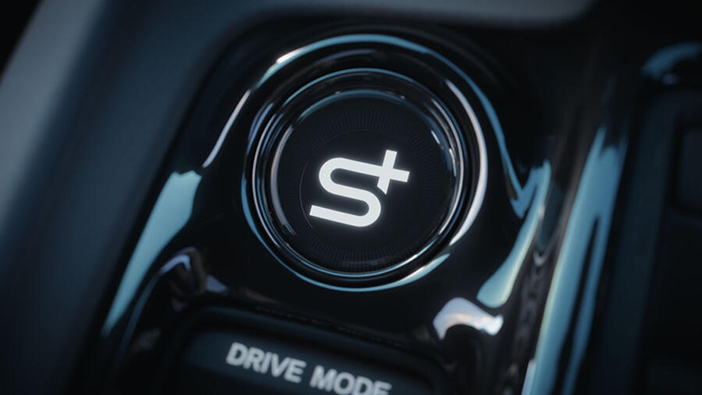
Hans De Jaeger, the firm’s Europe senior-vice president, said this will “not only deliver exceptional efficiency, but also the fun-to-drive performance for which this model is known”. Honda’s e:HEV system primarily uses an electric motor to propel the wheels, and while the petrol engine can drive the wheels directly at higher speeds, it serves largely as a generator to charge the battery. This removes the need for traditional gearing. The new S+ Shift builds on the Linear Shift Control system applied to Honda’s current e:HEV models. The firm says it will have the ability to maintain the “optimal engine RPM for the particular driving conditions”, and fully utilise power generated by the engine as driving force, rather than to charge the motor. That, in turn, will improve the response time of the motor. With the S+ Shift activated, Honda says drivers can then shift gears using a paddle shifter, which will offer a “sharp upshift feeling, providing feedback that resonates with all of the driver’s senses”. The firm added that quick gearshifts will be enabled by the coordination between the engine and electric motor. The system will also work with Honda’s Active Sound Control system to “enhance engine sound quality” by playing engine sound in sync with the engine’s RPM through the speakers, which Honda claims will “stimulate all of the driver’s senses”. The S+ Shift name references the “sports spirit” of Honda models including the S800, S2000 and Type S. The system is likely to serve in a similar fashion to the one on the electric Hyundai Ionic 5 N. Reports that the new Prelude would sport a simulated transmission emerged earlier this year and project leader Tomoyuki Yamagami added fuel to the rumours when he refused to rule out the idea in an interview in October. Speaking then, Yamagami said: “When you’re in charge of developing the Prelude, you understand everyone has a lot of expectations of a coupé”. Asked at that time about the reports of a manual gearbox, he said: “It’s very hard to answer that. Let me say that I own 3 cars and 2 of them have a manual transmission: one is an Accord Type R, the other a 997 (Porsche 911) because I’m a big fan of manuals. I really love manual vehicles, and I can only say that it would be something I’d like for the Prelude. With a manual transmission, it would be a very fun vehicle to be with”. Honda has previously offered a traditional manual gearbox on the Civic and Insight hybrids, although it was connected to an earlier, more conventional hybrid powertrain. Already revealed as a show car, the Prelude was recently spied testing in the German countryside. Although it’s covered in a camouflage wrap, it’s clear that the styling of the show car will be carried through to production. +++
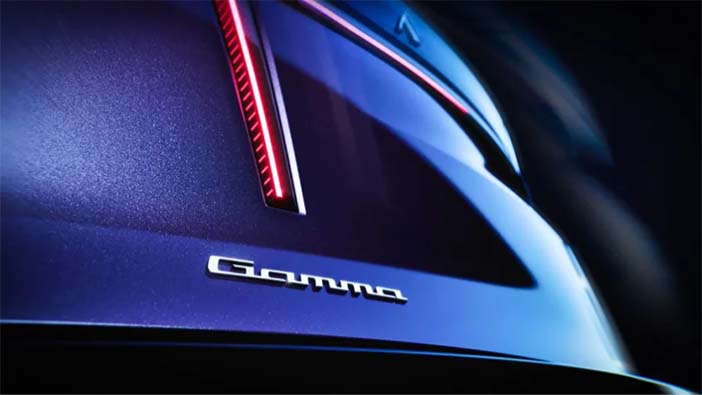
+++ While we knew the forthcoming LANCIA GAMMA flagship would be offered in pure-electric guise, the Italian firm has announced that a hybrid version will be launched, too. The new model will form part of an expanded Lancia line-up alongside the recently launched Ypsilon and the upcoming Delta in 2028, as the brand embraces electrification. It’s been 40 years since the last Lancia Gamma rolled off the line in Turin. The new model will still be built in Italy, although at parent company Stellantis’ factory in Melfi, with production likely to start in 2026. Luca Napolitano, Lancia CEO, said: “By producing it at the historic Melfi plant, we are strengthening our connection to Italy’s rich automotive heritage and advancing our vision for an electrified future. Gamma will showcase the best of what Lancia stands for: innovation, style and a relentless pursuit of excellence”. The Gamma will utilise the STLA Medium platform, an architecture that has already been put into use by the Peugeot E-3008 and Opel Grandland. Lancia initially just had all-electric power in mind for the Gamma, and it’s not yet known what powertrain will be used for the hybrid, although both the 3008 and Grandland come with a 1.2-litre 3-cylinder turbocharged mild-hybrid. The Gamma will be positioned as Lancia’s flagship, potentially as a fastback or a saloon, although an SUV bodystyle is also possible. It will be 4.7 metres long and likely offer more than the 700 km of EV range afforded by the Peugeot E-3008 (when fitted with the larger 97 kWh battery). Single and dual-motor powertrains are possible, given those STLA Medium ‘multi-energy’ underpinnings. A hot HF version will be offered on the Gamma as well as the Ypsilon and Delta. HF has traditionally been Lancia’s sportier trim level and while the Ypsilon will get a straight HF version, the Gamma and Delta will be badged HF Integrale, although we’ll have to wait and see what performance upgrades that will entail. We’ve already seen a teaser image of the new Gamma, although all this showed was the badge and part of the slender rear light cluster. However, Napolitano provided a clue as to what to expect when he said: “The new Lancia Gamma represents a milestone in our journey towards the future. It embodies our brand’s commitment to sustainability and high performance, while celebrating the unmistakable elegance that has defined Lancia for decades”. As a more premium marque in the Stellantis group, I expect the Gamma will be pitched against the likes of the BMW i4 (and upcoming Neue Klasse sedan), Mercedes CLA EQ Technology and the Audi A6 e-Tron, if Lancia sticks to a lower-slung body style. +++
+++ Not a day passes without talk of Stellantis and its brands, in search of new blood after the resignation of Carlos Tavares. Today, it is the turn of MASERATI , one of the most distressed brands, for which “a plan of its own is needed”. This was said by Jean-Philippe Imparato, Chief Operating Officer for Europe at Stellantis, after meeting with the Ministry of Made in Italy. Maserati therefore does not remain off the radar, although there is a lot of work to be done, and according to the French manager ‘Santo Ficili, the brand’s number one, is working on it’. A plan that will have to start from the negative numbers for 2024, which could see Maserati under 10.000 units sold. Numbers that tell of a profound crisis for Maserati, with models that have now been retired and new models (especially electric cars) unable to get off the ground or lagging behind. Like the new Quattroporte, planned for 2025 and postponed to a date yet to be determined. For 2025, therefore, the only model should be the MC20 Folgore, the sports coupé in a 100% electric version. For now, there have been no hints or teasers. We will see. The previous plan also envisaged the arrival of the new Ghibli and Levante, traces of which have been lost. The meeting with the unions was an opportunity for Imparato to reiterate what he said a couple of days ago, especially the commitment of Stellantis in Italy, starting with Mirafiori. “We will not go towards the extinction of Mirafiori, because we will have a new car, the Fiat 500h, and if we have a new car we cannot go towards extinction. We have to bring a product and so we will also have to bring people, workers, with a view to generational change. There is no doubt in my mind about the continuity of the business”. This objective has, however, left the unions lukewarm. “The change of pace at Stellantis must be determined with concrete news on investments and new production”, said Ferdinando Uliano, secretary general of Fim-Cisl. “Our opinion has not changed since yesterday and is negative, although we understand the difficulties that Stellantis is going through with the change of CEO. What they told us today cannot be enough and, probably, what they will say at the Mimit table will not be enough”, declared Rocco Palombella, Uilm secretary general, instead. +++
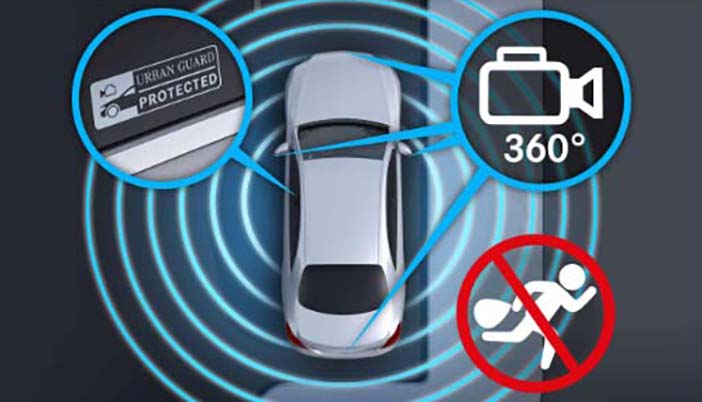
+++ Car theft is on the increase. This is borne out by the figures from the many trade associations and companies specialising in anti-theft devices, which produce very detailed reports every year on where and when most thefts occur. But how can this phenomenon be avoided as much as possible? By equipping yourself with a good anti-theft device, capable of constantly monitoring your car’s surroundings and autonomously contacting the police if necessary. MERCEDES has developed the new Guard 360° package for just this purpose. Here’s how it works. Presented on 11 December in Rome, the new Guard 360° system developed by Mercedes combines the experience gained over the years in developing the German manufacturer’s anti-theft system, which has always been an essential accessory for anyone buying a car from the Stuttgart-based manufacturer, with the effectiveness of the latest generation 360° camera system that all of the brand’s new generation cars can be equipped with. To go into more detail, the new system developed by Mercedes includes an anti-theft alarm system, anti-disassembly protection with an optical and acoustic warning signal if a change of position is detected, volumetric protection of the passenger compartment with an alarm if movement is detected inside the car, and theft notification with detection of parking damage. As planned, from 2024 everything will be enhanced by the 360° camera parking pack which, as well as being a very useful accessory for parking manoeuvres, is able, in the event of a break-in, vandalism or impact by other road users, to automatically take 5 photos around the car, storing them as possible documentary evidence. In fact, the Guard 360° system means that several dashcams are always active around the car, avoiding after-sales installations with non-original wiring. At the presentation of the system in Rome, Sebastian Guayacan, Product Manager Digital Extras, Charging & EVA2 of Mercedes-Benz Italy, commented: “Thanks to this system of devices, in addition to the anti-theft function with volumetric protection of the passenger compartment, anti-moving protection and audible alarm in the event of a collision or break-in, an alert is automatically sent to the owner’s smartphone, via the Mercedes-Benz app, with a theft report. In this case, following the appropriate authentication procedures, the alarm call is transferred to the authorised service partner, Vodafone Automotive, which transmits the car’s location data directly to the police. Investigations can then begin immediately, increasing the chances of getting the car back into the hands of its rightful owner quickly. For security reasons and in order not to interfere with police operations, once the procedure has started, all location functions visible to the customer via the app are inhibited”. Prices and availability of the system may vary from one model to another. To find out more, visit your local dealer. +++
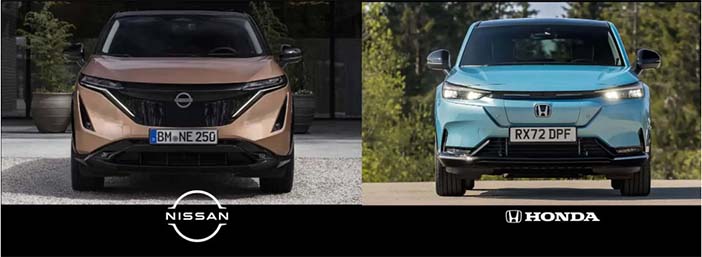
+++ Honda and NISSAN are preparing to start negotiations on a possible merger. Such a deal, which could eventually expand to include Mitsubishi (Nissan is the largest shareholder with a 24 percent stake), would create an automotive rival to Toyota, effectively consolidating the Japanese auto industry into 2 camps. It would also provide Honda and Nissan with more resources to compete with larger peers after downsizing long-held global partnerships with other carmakers: France’s Renault for Nissan and General Motors for Honda. The move toward a merger would follow a decision by the 2 companies earlier this year to work together on electric vehicle batteries and software. A merger would create a group worth over 50 billion euro with an annual production of 7.4 million vehicles. In terms of sales, the resulting group would be the third-largest car manufacturer in the world after Toyota and Volkswagen, according to the news agency. As said, the 2 Japanese companies had already agreed to jointly develop electric cars in March. However, Nissan’s growing problems have now made closer cooperation even more urgent. Nissan has to cut 9.000 jobs and 20 percent of its production capacity worldwide in order to save around 2.5 billion euro. In November, it was even said that Nissan only had 12 to 14 months to achieve a turnaround. The reason for the plight is apparently falling sales figures in China and the USA as well as an 85 percent drop in profits in the second quarter. But Honda is also in trouble. At this car manufacturer, the financial situation is said to be deteriorating and electric car sales are not meeting targets. The electric car market in Japan is still in its infancy with only 87.000 vehicles sold in 2023. This makes exports all the more important, with China likely to play a key role as the world’s largest electric car market. However, a price war is raging there, driven by Tesla and BYD, in which the Japanese brands could be crushed. Honda and Nissan are now looking for ways to reduce their costs. Increased cooperation or even a merger could make this possible. Reports suggest it could be a difficult pill to swallow for the Japanese government because it would be likely to result in significant domestic job losses under any rationalisation plan. Nissan is also part of an alliance with Renault, a relationship that would also have to be unpicked. The picture is further clouded by reports, yet to be confirmed or denied, that Foxconn, the manufacturer of the iPhone has also approached Nissan with a view to taking a majority stake in the firm. +++
+++ NORWAY set a goal in 2017 of eliminating sales of fossil-fuel-powered cars by 2025. At the time, it seemed like little more than a feel-good fantasy to soften the image of a government led by Erna Solberg, a conservative advocate of oil production. But as the deadline approaches, it turns out that the Nordic country will come within a whisker of actually meeting that milestone. +++
+++ SOLID-STATE BATTERIES have long been touted as the technological breakthrough that electric car makers are striving to bring to market. Finally, it looks like 2025 could mark a crucial step on the technology’s path to becoming ready for production. These next-generation batteries are regarded as a holy grail for EVs because they offer greater capacity and more range than similar-sized lithium ion packs used today. Those batteries are composed of an anode and a cathode at opposite ends of the cell, with a physical ‘separator’ preventing them from touching, and a gel-like liquid in the middle. In a solid-state battery, the make-up is simplified. The liquid is replaced by a solid block, which is lighter than its counterpart and can carry more energy within the same capacity. The solid element is also less reactive than the liquid, so it’s much less likely to ignite if punctured or heated. This means fewer ‘redundant’ safety systems are required. The removal of a liquid element is also expected to mean the end of range drop-offs caused by high or low temperatures and the introduction of higher charging speeds. Solid state is important to car makers because it enables more flexibility. For example, smaller and lighter EVs can be launched with comparable electric ranges to today’s models, while larger vehicles will be able to offer a much longer range from similar-sized packs. The technology is already being tested around the globe, although it is still a few years from widespread adoption. In China, which is one market at the forefront of the technology, SAIC-owned IM Motors currently offers its L6 saloon with a semi-solid-state battery; a halfway house to a full-solid-state battery that uses a more viscous, gel-like electrolyte than the liquid in a lithium ion cell. This pack allows an extra 33 kWh of battery capacity to be crammed into the same space as an equivalent lithium ion pack. That equates to a 28% improvement in the car’s range to a total of 1.000 km, according to Chinese homologation testing. It’s not just IM Motors. Rival Nio launched a semi-solid pack for its ET7 saloon earlier this year, which offers more than 1.050 km of range per charge. Stellantis will begin road testing semi-solid packs made by start-up Factorial in 2026, using a fleet of modified Dodge Charger Daytonas. The company said it will prioritise its biggest cars from the likes of Alfa Romeo, Jeep and Maserati, based on the STLA Large platform, for the cells. Just weeks ago, Honda opened a pilot production line for full-solid-state batteries at its research and development base in Tochigi, Japan. It will use the line to test a variety of different materials and manufacturing processes, such as “roll-pressing” electrolyte layers together to speed up production and improve output. Production testing will begin in January and the cells are scheduled for use in Honda’s hybrid and electric cars during the latter half of this decade. Last year, Toyota claimed to have made a technological breakthrough with the electrolyte’s durability, it being prone to cracking under high forces. The firm is currently working to develop a mass-production method for the cells and is eyeing a 2027 or 2028 launch. They’re claimed to yield a range of over 1.500 km, and a 10-80% recharge in less than 10 minutes. Nissan has been vocal in its ambition to launch a car with a full-solid-state battery in 2028. This could well be the next-generation GT-R supercar, but whichever form it takes, it will have been designed to make the most of the technology. “When you commit to something like solid state, you have to change the whole mechanism and architecture of the vehicle”, said David Moss, the company’s senior vice-president for research and development in Europe. A pilot production plant is scheduled to open next year and engineering work on the cells is expected to be finished in 2026. BMW received pilot cells from American company Solid Power last year but shortly afterwards was reported to have said that we’re unlikely to see them in a road car before 2030. Frank van Meel, CEO of the M division, has previously tipped them to be key in creating lightweight electric performance cars. Mercedes’ tech chief, Markus Schäfer, has questioned whether solid-state batteries are needed, despite the firm’s tie-up with battery maker Factorial. Earlier this year, he said they “may not be necessary”, owing to the progress made with lithium ion cells over the past few years. The brand previously said it wanted solid-state packs in its mainstream cars by 2030. The Volkswagen Group, the world’s second-biggest car maker (after Toyota) is working to upscale the technology developed by American start-up Quantumscape, with a licence agreement to produce up to 80 GWh of Solidstate cells (or a million cars’ worth) annually. There’s no timeline yet but, given the scale, it’s possible that a solid-state battery could be reserved as a flagship technology for the next Golf. That car is due in 2028, which would align VW with the plans of various other manufacturers. +++
+++ A change of technology is in the offing for Tesla, but also for XPENG . Like Tesla, the Chinese brand could be abandoning Lidar sensors in its future models in favour of more powerful cameras. These first glimpses come straight from China, with patents filed by Xpeng showing some of the content that will be found on the restyled G6 and G9 SUVs. A prototype of a new Xpeng model (presented in October as the P7) without Lidar, but equipped with Eagle Eye technology with new cameras and sensors, was spotted last July. According to the aforementioned documents filed with China’s Ministry of Industry and Information Technology (MIIT), the G6 and G9 SUVs could also adopt Xpeng’s Eagle Eye technology. In the latest MIIT catalogue, each Xpeng model was the subject of a 3-page documentation, with details of 3 items of equipment for each, but without any reference to Lidar sensors. Generally speaking, the G6 will be 5 mm longer than the version currently on sale, and should abandon the twin-engine option in favour of three single-engine variants. The dimensions of the G9 will remain unchanged and it will continue to be sold with single- or twin-engine propulsion options. Along with Tesla, Xpeng remains one of the few electric vehicle manufacturers to adopt pure vision cameras in favour of Lidar. Xpeng has yet to confirm that Lidar will be removed from these new models, so we’ll have to wait for the official launch to find out more. But what could be the reasons for abandoning Lidar? In addition to technological developments linked to cameras, it’s possible that the brand has rationalised its equipment (and range, as in the case of the G6) to reduce production costs. +++