
+++ BMW has topped the chart for the most cars recalled in the United Kingdom in 2024, with 650.000 communications sent out to owners advising of a potential problem. However, more than half a million of these recalls were notices to BMW owners alerting them to the same airbag issue. BMW was warning of the possibility that, if an aftermarket ‘M sport’ steering wheel upgrade was fitted to their car, it might need replacing as part of the fall-out from the global Takata airbag saga that has already affected millions of cars from multiple manufacturers worldwide. BMW has confirmed that only a vanishing minority of owners will have had M Sport steering wheel upgrades of this type, and that it was acting out of ‘an abundance of caution’ because it has no way of knowing who those drivers are. Initially, owners received letters asking them to upload a picture of their steering wheel to a BMW website, so they can be contacted individually if a suspect wheel is spotted. Next up in the 2024 recall chart, which comes from data released by the British Driver and Vehicle Standards Agency (DVSA) is Mercedes-Benz, which was forced to call in a total of 339.972 cars. The majority, 314.515, were recalled for a potential steering fault, with the DVSA stating: “On affected vehicles the backup function of the steering software might not meet specifications. As a result the steering power support might be impaired and a loss of steerability cannot be ruled out”. It applied to large numbers of A-Class cars, but also the CLA, GLA, GLB, B-Class and EQA and EQB. Also getting a mention in the Mercedes recall rundown are EQE and EQS models as: “the software of the battery management system might lead to a shutdown of the high voltage system in specific situations resulting in an unannounced loss of propulsion”. Oops. The third carmaker in the 2024 recall chart is Kia, with a total of 185.698 vehicles affected. The bulk of the manufacturer’s recall issues relate to a problem described by the DVSA thus: The HECU hydraulic electronic control unit of affected vehicles equipped with Anti-lock Brake Systems (ABS) and Electronic Stability Control (ESC) could leak internally and cause an electrical short over time. In extreme cases the HECU could overheat with a possible risk of an under bonnet fire”. That was sent out to owners of vehicles including the Carens, Rio, Soul and Sportage. Audi and Land Rover were almost neck-and-neck in 4th and 5th places, with 172.999 and 172.473 recalls respectively. The bulk of Audi’s recalls related to the Takata airbag issue affecting the A4 and A6, while Land Rover recalled multiple models to install a software enhancement “to further increase vehicle security”. Then comes a big jump to VW at 6th in the chart with 82.379 recalls, while Vauxhall, Ford, Honda and Hyundai make up the rest of the top-10, each with more than 50.000 recalls. Volkswagen’s 2024 record includes almost 80.000 Golfs, Arteons and Passats with a faulty heat shield that could cause brake cylinders to melt, while Vauxhall’s tally includes more than 50.000 drivers contacted because their Corsa F may not meet emissions standards due to a faulty valve or fuel line. Ford’s total includes software updates for large numbers of Kuga and Transit models, Honda had a problem with abnormal brake feel on its CR-V, HR-V and Jazz, while Hyundai’s biggest recalls related to a potentially defective charging unit on the Ioniq 5, and short-circuiting ABS control units on some of its i40s. +++
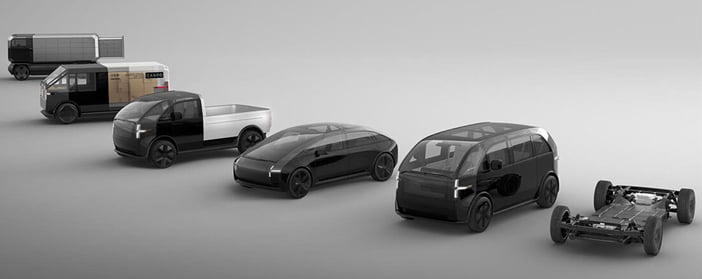
+++ Another EV startup has hit the skids. Following the recent downfalls of Lordstown Motors and Fisker, both of which each filed for various degrees of bankruptcy protection, CANOO announced that it would file for bankruptcy and cease operations immediately. After years of promises and prototypes, Canoo is officially out of juice. Even its public website seems to have been shut down, as it now redirects to the investor page, signaling the end. Founded in 2017 as Evelozcity, the company rebranded to Canoo in 2019, unveiling its “Lifestyle Vehicle” prototype. But, as is all too common with EV startups, Canoo couldn’t escape the fatal flaw of burning through cash faster than it could raise it. The company generated zero revenue in 2022 and only about $900.000 in 2023, roughly a third of which come from the state of Oklahoma, which bought 3 locally made electric vans. In the meantime, Canoo piled on well over $900 million in losses between 2022 and mid-2024: $488 million in 2022, $303 million in 2023 and another $118 million in the first half of 2024. In its bankruptcy filing, Canoo revealed it owes money to fewer than 49 creditors, with liabilities ranging from $10 million to $50 million, while claiming to have less than $50,000 in assets. Canoo’s financial troubles were hardly a secret. Just weeks before filing for bankruptcy, the company furloughed workers and shut down operations at its Oklahoma facility; a site that, according to a former employee, never produced a single vehicle. All of this, despite the company’s earlier promise to create 2.000 jobs in the state. Canoo had desperately hoped to secure a financial lifeline from the U.S. Department of Energy’s loan program, but those efforts were unsuccessful. Next, it cast its net internationally, but found no takers there either. Even with high-profile partnerships, including Walmart, Canoo couldn’t secure the financial backing it so badly needed. Now, the company heads toward liquidation, with a court-appointed trustee overseeing the process. Canoo will work with the Delaware Bankruptcy Trustee to manage the remaining assets. Tony Aquila, Canoo’s Chairman and CEO (and one of its largest investors), had some final words for the employees: “We would like to thank the company’s employees for their dedication and hard work. We know that you believed in our company as we did. We are truly disappointed that things turned out as they did”. As for the customers who placed $100 deposits when Canoo was still planning to sell electric vehicles to the public, it’s unclear what will happen to them. However, TechCrunch reports that some have already started receiving refunds. And then, of course, there’s the burning question of what happens to the $1 million Oklahoma invested in Canoo as part of a broader $100 million performance-based incentive package. As of Friday night, there’s still no answer. +++
+++ EURO NCAP , which assesses the safety of cars sold in Europe, tested 44 different models. Almost all of them achieved 5 stars, the maximum score, with cars excelling in 1 or more of the 4 areas tested: adult safety, child safety, pedestrian safety and the use of driver assistance systems. But which were the safest cars put to the test over the past year? Taking the top step of the podium was the Mercedes E-Class. A premium saloon packed with top-class safety features. Let’s see which other cars join it in the Euro NCAP 2024 rankings. While the Mercedes E-Class saloon takes the title of the safest car of 2024 (best performer, as Euro NCAP puts it), the ranking also takes other categories into account: compact SUVs, electrics, family cars and large SUVs. In the first category, the winner is the Zeekr X, a Chinese electric crossover belonging to the Geely Group. A premium model with prices in line with those of its most famous competitor, the Tesla Model Y. In fact, in the Netherlands it is sold from €44.990, exactly €1,000 less than the best-selling car in Europe in 2023. And this is no coincidence. The Zeekr X also took home the title of safest electric car. The family cars, on the other hand, are a draw with the Skoda Superb and Volkswagen Passat. The results are not surprising as the 2 models are closely related in many respects, from the platform (Volkswagen’s MQB-EVO) to the safety systems. Finally, among the large SUVs, it is the Mazda CX-80, the Japanese manufacturer’s high-riding flagship, that excels. The fact that a car almost 5 metres long and with a stiff base price is super safe, is hardly surprising. Especially when you consider that you can get practically anything from the latest generation of driver assistance systems to the ability to detect an impending collision by activating the seatbelt pretensioner. These are features that normal city cars or small cars can only dream of. So the 5 stars accompanied by high ratings in adult occupant safety (92 percent), child safety (90 percent), pedestrian and cyclist safety (84 percent) and safety systems (87 percent) are almost taken for granted. The same applies to the Volkswagen Passat and Skoda Superb. Prices well above average for models that are valid in all respects, but which in fact represent a niche in registrations. Looking, for example, at the ranking of the bestselling cars in Italy in 2024, they do not appear in the top 50, while in the highest positions are much smaller models such as the Fiat Panda, Dacia Sandero and Jeep Avenger. None of these reach 5 stars. +++
+++ Things are not going so well for Audi, BMW and Mercedes. What was, a few years ago, the industry’s role model is now a worrying case. Although their situation is not as desperate as that of some of their mainstream rivals from Europe, the United States and Japan, there is a clear trend shift that needs to be carefully analysed. In 2024, the 3 brands from GERMANY together sold 5.79 million units (excluding Mini, Rolls-Royce, smart and Mercedes vans) or 5.4 percent less than global deliveries in 2023. This is the fourth lowest annual sales level in the last 10 years for the 3 brands, behind only 2020 (pandemic year) with 5.77 million units, 2022 with 5.72 million units and 2015 with 5.58 million units. Last year’s total was almost 500.000 units lower than the 2019 record of 6.29 million units. In other words, the world’s most powerful premium car brands lost half a million units in sales from before the pandemic to now. This is a large amount of cars that must cause concern, especially when considering production capacity. However, the situation is not equally dramatic for all 3 brands. BMW, for example, has just recorded its third best year ever with 2.20 million units. It has managed to keep its annual volumes above 2 million units since 2016. Not so for Mercedes, which was the leader among the 3 brands between 2016 and 2020, but then started to record declines from 2022. This brand lost 355.000 units between 2019 and 2024. Audi also has its own problems. Although it recorded a record in 2023 with 1.89 million units, it has not yet fully recovered after the pandemic. Last year, its overall volume decreased by 12%, the biggest drop among the 3 brands. The total volume was 1.67 million units, lower than the units sold during the pandemic years 2020 and 2021, with 1.69 and 1.68 million units respectively. The lack of new cars in the last 2 years had a negative impact on sales of the Four Rings brand. In the past, China allowed Audi, BMW and Mercedes to have global dominance. Their cars were a benchmark for the country’s fast-growing affluent class. As Germany became increasingly reliant on the Chinese economy, so did its major car manufacturers, including the Volkswagen brand. This relationship worked until the pandemic hit the global markets and, as the world struggled against the blockades, China quietly began to upgrade its car brands. Soon, a large part of the Chinese population shifted from foreign to local car brands. This shift was also triggered by the accelerated transition to NEVs (new energy vehicles) and the improvement of software and batteries of Chinese car manufacturers. As a result, they now have a market share of more than 60 percent at home, at the expense of the lower sales of all non-Chinese manufacturers, with the exception of Tesla. In 2024, sales in China fell for all 3 German brands, partly due to the lack of competitive electric cars in their range. Audi delivered 650.000 car in China in 2024 (-7%), BMW 702.000 (-13%) and Mercedes 648.000 (-11%). Together, they delivered 1.999.000 cars in China (-10%). Will they be able to catch up and ‘modernise’ their current image in front of China? +++
+++ HONDA is exploring how to take its Type R brand into the EV arena, with the much-loved performance badge yet to translate to electric powertrains. Speaking at the unveiling of the first two so-called 0 Series EV prototypes at CES in Las Vegas this month, Toshihiro Akiwa, head of the Japanese firm’s BEV Development Centre, said it’s not a simple process. “A battery and motor have different characteristics so we can’t come up with something exactly the same as before”, said Akiwa. “As an EV, how can we provide the joy of driving? We haven’t given up of course, but it’s not just about power, it’s about the sound, vibration, acceleration and the human experience. These are the joys of driving”. The 2 0 Series cars, a large saloon and a mid-sized SUV, hit production in 2026 as the first of seven cars to be spun off Honda’s new EV platform, but the firm is yet to divulge any plans for performance versions, despite the EV motors set to run up to around 490 hp. The latest-generation regular Civic is a 184 hp hybrid, but the Civic Type R, currently the only model in the UK to wear the Type-R badge, is a traditional 2.0-litre petrol engine boasting 329 hp. The performance electric vehicle market is slowly beginning to emerge, with Hyundai first to prove it’s possible to make engaging fast EVs with the Ioniq 5 N, while the Alpine A290 comes to our roads this spring. Prior to the Hyundai and Alpine, fast EVs have in the main simply been more powerful versions of regular electric cars, with little or no chassis, braking or engineering upgrades to accompany the extra power. +++
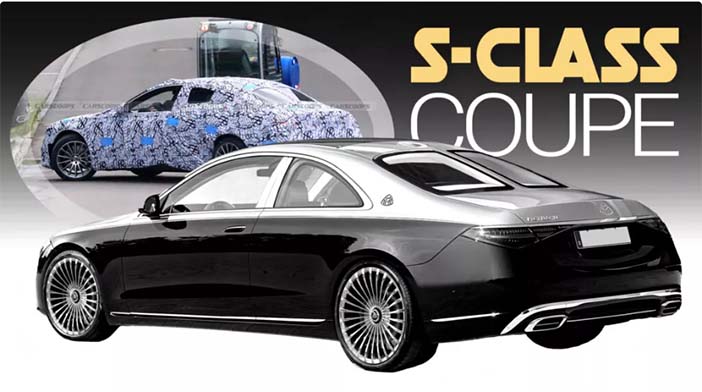
+++ Two-door luxury coupes may be a dying breed, but it seems MERCEDES isn’t ready to let the concept fade away just yet. New trademark filings with the European Union Intellectual Property Office (EUIPO) hint at the possible return of the S-Class Coupe, this time in ultra-exclusive Maybach and AMG configurations. The trademarks, filed by a Swiss company called Robu Aktiengesellschaft, point to a coachbuilt project that could bring the elegance of a flagship sedan into a 2-door format. While the Mercedes S-Class Coupe was discontinued in 2020 due to lackluster sales, the appeal of a luxurious, highly exclusive land yacht evidently hasn’t disappeared. For deep-pocketed customers, the allure of a modern two-door S-Class may have inspired this effort. If these trademarks are anything to go by, the latest S-Class is about to get a dose of the sleek, coupe cool factor it’s been missing. Both Maybach and AMG versions seen in these patents appear to share a similar profile, characterized by elongated front doors and a reworked roofline. The greenhouse design has been adjusted to complement the 2-door bodystyle, though it doesn’t seem to replicate the frameless window design of the last S-Class Coupe. The first trademarked design sports the unmistakable bodywork of the Mercedes-AMG S 63 E Performance, complete with its aggressive bumper intakes and signature quad tailpipes. The badging on the profile reads “V8 Biturbo E Performance”, suggesting this coupe may inherit the 802 hp plug-in hybrid powertrain from the 4-door AMG S 63 sedan. However, the bi-tone paint job and multi-spoke wheels hint at Maybach-inspired opulence rather than pure AMG aggression. The second design leans even further into luxury. This Maybach-branded coupe incorporates signature chrome accents, bespoke badging, and most notably a split rear windscreen, reminiscent of the Vision Mercedes-Maybach 6 concept from 2016. Powering this opulent creation could be the twin-turbocharged 6.0-liter V12 engine found in the Maybach S 680, which delivers 630 hp. These trademarks aren’t entirely unprecedented. Robu Aktiengesellschaft, the entity behind the filings, has dabbled in this space before. In 2021, the company trademarked the Bussink GT R SpeedLegend, an AMG GT R-based speedster produced in a limited run of five units by HWA, Mercedes-AMG’s longtime partner. If the same playbook is being followed here, the S-Class Coupes may emerge as ultra-exclusive, coachbuilt creations either produced independently or under Mercedes’ own Mythos program. There’s even been chatter that Maybach aims to expand into the coachbuilt segment, crafting one-off or limited-edition cars for its most elite clientele. But exclusivity comes at a cost: with the extensive design changes evident here, expect these conversions to carry staggering price tags. Currently, 2-door luxury coupes are a rare breed. The Rolls-Royce Spectre, a fully electric entrant, and the sportier Bentley Continental GT dominate the segment. If the Mercedes-Maybach and AMG Coupes materialize, they could inject some much-needed diversity into this niche. Meanwhile, it’s worth pointing out that Mercedes and Maybach continue to develop mid-cycle updates for their S-Class sedans, which are expected to debut later this year. Alongside the standard models, spy photographers have captured images of a heavily camouflaged prototype that might just be the S-Class Coupe. While the rear doors and greenhouse are obscured, it appears to have a distinct roofline compared to the four-door sedan, sparking speculation about the possibility of a new body style. +++
+++ Global sales NEW ENERGY VEHICLES ( electric vehicles (EVs) and plug-in hybrid electric vehicles (PHEVs) ) surged in 2024, exceeding 17 million units, representing a substantial 25.6% jump compared to the previous year. December alone set a new milestone, with sales climbing to a record-breaking 1.9 million units. But it’s not all smooth driving, as data from Europe shows the devastating effects of withdrawing EV subsidies. If Donald Trump removes similar incentives in the United States, the same impact could be felt locally. According to figures from Rho Motion, 17.1 million EVs and PHEVs were sold worldwide in 2024. A significant portion of this growth can be credited to China where cars with a plug continue to surge in popularity. In fact, out of the 17.1 million units sold globally, no less than 11 million of them were sold in China, representing a 40% increase over the prior year. Plug-in hybrids saw a particularly sharp rise in popularity in China, with sales skyrocketing by 81%, compared to a more measured 19% growth for fully electric vehicles. Extended-range EVs are also gaining traction, driven by demand for better convenience and practicality. In North America, EV and PHEV sales increased by approximately 8.8%, reaching a combined total of 1.8 million units. December was an especially strong month, with 185.000 vehicles sold across the U.S. and Canada, setting a new monthly record. Not every region saw such rosy growth. In Europe, EV sales declined by 3%. This is primarily because of the removal of subsidies in Germany, which has had a flow-on effect for much of Europe. The rest of the world accounted for 1.3 million EV and PHEV sales, representing a 27% gain. According to Rho Motion, the “EV market in the US will be tested in 2025”, if the incoming Trump administration axes the $7.500 federal EV tax credit and relaxes EPA emission standards. “What is clear is that Government carrots and sticks are working”, data manager Charles Lester said. “In North America, the 9% growth can mostly be attributed to consumer subsidies. Meanwhile, the removal of subsidies in Germany had a devastating impact on the whole European market, if the US follows suit, we may see the same there”. +++
+++ As if the potential merger between Honda and Nissan wasn’t complicated enough, it’s worth remembering that NISSAN is already part of a long-standing alliance with Renault and Mitsubishi. According to a new report, Honda is worried about Renault’s potential influence on its planned merger and has asked the ailing Nissan if it could buy out the French firm’s stake. Renault currently owns a 35.7% stake in Nissan worth approximately $3.6 billion. The brand has been notably absent from talks between Honda and Nissan, and has only said it will “consider all options based on the best interest of the Group and its stakeholders”, leaving Honda in a sticky situation. According to a report cited by Bloomberg, Honda has asked Nissan if it would be able to acquire Renault’s stake. Unnamed sources suggest Honda is worried Nissan could be subject to undesirable foreign influence if a third party snaps up the French brand’s shares during negotiations. Nissan buying up Renault’s stake could be difficult. It had cash and cash equivalents of around 1.52 trillion yen ($9.8 billion) at the end of 2024, and more than a third of that would be needed to buy Renault’s share. Given how much Nissan is already struggling financially, it’s unclear if it can justify such an expense unless it stages a remarkable recovery. In late December, former Nissan and Renault boss Carlos Ghosn said Renault may be open to selling its share directly to Honda. The local government is eager for the merger Nissan, Honda, and Mitsubishi brands so that they remain under Japanese ownership. The threat of Taiwanese company Foxconn expressing interest in buying Nissan may have encouraged Japan’s Ministry of Economy, Trade, and Industry (METI) to push Honda into the merger. Even so, Nissan still has plenty of hurdles to clear before the deal can be made official. According to a recent report, it may need to triple its profit by the 2026 financial year to prove to Honda that it could be a solid partner. If it can’t do this, the merger may not happen. +++