
+++ ALPINE will crown its electric sports car line-up with the A310: a 2+2 tourer that will put the French firm toe to toe with the likes of Porsche, Maserati and Lotus. Tipped by the marque to be “an icon of future sports cars”, the new EV will arrive in 2028 and serve as a flagship for an expanded all-electric Alpine line-up. The firm’s new range will include the recently launched A290 hot hatch, the upcoming Tesla Model Y-sized A390 and coupé and drop-top versions of the next-generation electric A110; a car that will replace its combustion sibling, which will bow out of production later this year. The line-up will be rounded off before the end of the decade by 3 more EVs, which are thought to be larger, E-segment models that Alpine will use to break into the American market. The new A310 takes its name from a radically styled 4-seat coupé from the 1970s. The company will position it as a more practical alternative to the upcoming A110 EV, in effect mirroring the relationship the 718 Cayman and the 911 have within Porsche, a brand whose success Alpine is looking to replicate. Alpine marketing director Bruce Pillard has previously told: “The A110 is limited in volume because it’s a 2-seater and we know that adding 2 more seats in a car will make a huge difference”. A key selling point for the A310 will be its lightness, made possible by the new Alpine Performance Platform (APP). The scalable architecture will be used first by the A110 EV next year and has been developed exclusively for Alpine’s future sports EVs. More mainstream models (such as the A290 and A390) will use variations of platforms from the Renault Group, which owns Alpine. Renault Group CEO Luca de Meo has claimed the APP will allow the electric A110 to be “lighter than a comparable car with a combustion engine”, despite the penalty incurred by weighty battery packs. For reference, the current A110 is one of the lightest cars in series production, at 1.102kg; a billing the brand wants its cars to retain in the electric era. Innovative power management software, in the form of active torque vectoring, will also be used to give the “driving dynamic of a lightweight car” and counteract the dynamic penalty of a several-hundred-kilogram weight gain, said Alpine CEO Philippe Krief. The Frenchman, known for his work as an engineer on such acclaimed sports cars as the Ferrari 458 and Alfa Romeo Giulia Quadrifoglio, said Alpine is committed to the A310 and its range mates remaining true to the dynamic principles that have defined the brand and the 4-cylinder A110, such as agility. Pillard said these measures are necessary to make the A310 “an icon of future sports cars” and a “true Alpine”. Outright performance will be another key pillar of the A310’s positioning. It will adopt the same tri-motor set-up (one at the front and two at the rear) as the forthcoming A390. Alpine’s most powerful car to date is the 350 hp limited-run track-focused A110 R Ultime but its upcoming electric sports cars are likely to surpass that and be capable of far quicker 0-100 kph times. However, design boss Antony Villain said recently that Alpine’s future models aren’t “about just driving straight”, so the A310 is unlikely to be endowed with full-bore supercar levels of power, at least in its standard form. Visually, the rakish A310 will adopt a similar front end to the A390. Previewed in concept form, the SUV ushers in a new era of Alpine design language, with a distinctive wraparound light bar, a sharply pointed nose and a Le Mans-inspired central fin at its rear. Notably, the A390 also has wheels that light up blue when the car’s torque vectoring is activated – a feature that could also make its way onto the A310 as Alpine seeks to explore ways of making muted electric car driving more exciting for onlookers. However, unlike other driver-focused EVs such as the Hyundai Ioniq 5 N, the A310 won’t emit artificial engine noises or simulate gearchanges. Krief has previously told that Alpine’s EVs should not sound like they have a combustion engine. He added: “This is fake. This is really fake. I don’t like fake things like that”. Instead, the A310 is likely to emit a distinctive sound created from the noise the electric motor makes, as in the A290 hot hatch. “We could find something that is not the same but similar”, said Krief. “It is very easy to do that”. +++
+++ BYD is believed to have surpassed Honda in global new vehicle sales in 2024, marking the first time that the Chinese electric vehicle giant beats the second-largest automaker in Japan. BYD is growingly rapidly in the Chinese market thanks to its low vehicle prices, while Honda is struggling there, illustrating how the EV maker is changing the dynamics of the automobile industry. BYD’s global sales jumped 41.3 pct in 2024 from the previous year to 4.27 million units. The company is expanding its presence in Japan, where it plans to release a plug-in hybrid this year. Honda’s global vehicle sales are believed to have fallen short of 4 million units last year. Japanese automakers lag behind in the Chinese market, where sales of so-called new energy vehicles including EVs have been growing in recent years on the back of government support. Honda posted a 10th straight month of year-on-year sales decline in the Chinese market in November. Nissan, that has been in merger talks with Honda, is also faltering there. Catching up in the EV race is a key challenge for both Japanese automakers. The decision by Honda and Nissan to start merger discussions is part of efforts to reduce the cost of electrification, including by sharing vehicle software. +++
+++ HONDA and Nissan both saw global vehicle sales stagnate or fall in 2024, underscoring the need for the pair to combine and arrest their sliding market shares. Honda’s sales slipped 4.6% to 3.8 million units last year, as production dropped 11% to 3.7 million vehicles. Sales at smaller Japanese rival Nissan decreased 0.8% to 3.3 million for the 12 months, while output declined 8.7% to 3.1 million units. Annual data released by each automaker reinforced why Honda is looking to build scale by absorbing Nissan; a deal that would create a new global heavyweight capable of competing at the highest levels of the world’s automobile industry; at least in theory. Individually, the pair can’t match the 4.3 million cars sold last year by Chinese behemoth BYD, but together they might stand a chance. Honda and Nissan announced in December that they plan to unite both brands under a single holding company. If Mitsubishi Motors also decides to join, the trio would have a combined capacity to sell around 8 million cars every year, as they did collectively in 2024. Those sort of numbers would put the trio within striking distance of Toyota, which sold 10.8 million cars last year, or Volkswagen, which delivered 9 million. But the partnership is hardly a done deal. Given Nissan’s financial crisis, Honda made clear that stability on either end is a prerequisite for any sort of alliance. There’s some doubt whether the moves Nissan has already announced to streamline its operations are enough. Nissan’s plans to eliminate work shifts and trim its staff via buyouts at a pair of assembly plants in the U.S. provided a taste of its overarching strategy, but its apparent refusal to close factories can make it difficult to appease Honda. In China, where both companies face intense competition from local players as well as Tesla, Nissan’s sales fell 12% last year, while output slumped 14%. Honda fared worse, with a 35% drop in production and a 30% decline in sales. Nissan’s performance in 2024 was slightly better in North America, where its lack of hybrid options has seen customers leave its cars collecting dust in showrooms. Its sales were up 2.8% but production dropped 13.3%. Representatives from Renault, which owns 36% of Nissan, meanwhile flew to Japan this week to voice concerns over the tie-up and express their wish that the value of Renault’s stake be fully recognized. In November, after a disastrous set of quarterly earnings, Nissan announced plans to cut 9.000 jobs and slash production capacity by 20%. Poor sales in the U.S. and China forced the carmaker to lower its annual profit outlook for the 12 months that will end March 31 by 70%. The following month, Honda outlined a deal to combine with Nissan in what amounts to a takeover of the battered automaker. The two said they aim to put forward a framework for the deal around the end of January and finalize the deal in June before the holding company’s shares begin selling in August 2026. +++
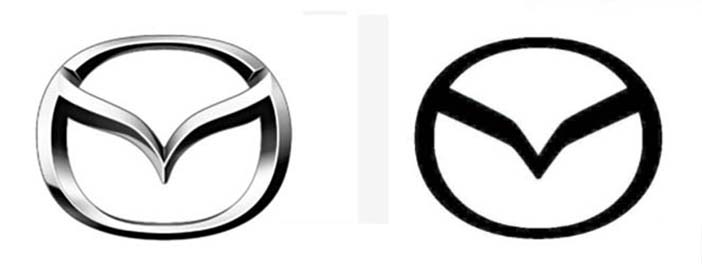
+++ MAZDA plans to change the emblem on its vehicles for the first time in 28 years. The emblem will retain its current shape, but the design will be simplified. The new emblem will be used on all models to be launched in the future. The new emblem will not alter the current shape of the M, the start of the company’s name, surrounded by an ellipse, but it will have a flat design with less 3-dimensionality. The current emblem has been in use since 1997. The corporate logo will likely be changed to the same design. +++
+++ MITSUBISHI is considering not joining the planned merger between Nissan and Honda, and instead focusing on strengthening cooperation with the 2 firms, a source close to the matter said Friday. The development reflects Mitsubishi’s fears of losing management control if it joins the Nissan-Honda merger under a holding company. The Tokyo-based firm is a Nissan partner and has strength in Southeastern Asian markets such as Indonesia and the Philippines. Doubts over the synergistic effect of a merger between Honda, Nissan and Mitsubishi, at a time when competitiveness in the auto industry shifts toward development of electric vehicles and software, areas where all 3 automakers struggle. “At this stage, we are considering various possibilities, and we have not decided on a specific direction”, the Tokyo-based automaker said in a statement Friday. President Takao Kato told reporters in Tokyo: “Nothing has been decided”. Honda and Nissan, Japan’s second- and third-largest carmakers by volume, announced late last year they would launch talks to merge under a holding company in 2026, which would create the world’s third-largest auto group by volume to compete with U.S. and Chinese electric vehicle manufacturers. They said at the time that Mitsubishi would decide by the end of January whether to join the merger. Combined sales of Honda, Nissan and Mitsubishi Motors topped 8 million vehicles in 2023, compared with 11.23 million vehicles at Toyota’s group and 9.24 million at Volkswagen. Honda and Nissan aim to conclude negotiations in June 2025. Each company would continue operating under its own brand within the holding company, which would be listed in August 2026. While the merger involving Mitsubishi would have helped gain leverage against Chinese rivals in Southeast Asia, among other merits, some inside Honda and Mitsubishi have voiced wariness about Nissan’s progress of its business turnaround, a condition Honda has set to realize the merger. Nissan in November said it will cut 9.000 jobs worldwide and reduce its global production capacity by 20 percent as it reported a more than 90 percent drop in net profit in the April-September period. +++
+++ NISSAN plans to downsize production at a subsidiary plant as part of restructuring domestic operations. The Shonan Plant in Hiratsuka is run by its subsidiary Nissan Shatai, which manufactures commercial and other vehicles. The automaker is expected to slash hundreds of jobs. Nissan announced it was cutting 9.000 jobs worldwide last year, but this is the first time it has revealed specific restructuring measures for Japan. The automaker will stop producing the AD, a van currently manufactured at the Shonan Plant, around November. At the start of this month, Nissan notified its business partners of the plan. In recent years, sales of the van have gone down as it loses ground to its rival vehicle by Toyota. The plant’s annual production capacity is 150.000 units and it currently produces 2 models, the AD and NV200 Vanette. Nissan will consider cutting the production of the NV200 Vanette as well. Nissan plans to globally slash 3.000 jobs directly related to production and 6.000 clerical or non-production related jobs due to its declining performance. The downsizing of the plant is part of the plan. In Japan, the focus is on whether departments at the headquarters will be restructured. In December, Nissan and Honda announced they had started talks on a business merger. However, Honda president Toshihiro Mibe said that implementing a restructuring plan by Nissan is an absolute requirement for the merger. In response, Nissan is speeding up efforts to come up with specific measures for restructuring. Nissan is slashing production at its U.S. plants and offering buyouts to factory workers there as part of the Japanese automaker’s urgent efforts to return to profitability. The move is part of Nissan’s plans, announced 2 months ago, to slash 9.000 jobs globally, including in China, after it racked up a quarterly loss due to sinking sales and ballooning inventory. At Nissan’s plant in Smyrna, Tennessee, one production line will maintain 2 shifts, while the other line will consolidate to 1 shift. The Smyrna plant makes the Murano, Pathfinder and Rogue SUVs and the Infiniti QX60 luxury model. In the Canton plant in Mississippi, which makes the Altima sedan and Frontier pickup, Nissan is reducing the speed on one line and consolidating another. In the Decherd plant in Tennessee, which makes engines, shift adjustments will be more gradual. Some will be maintained while others will be reduced by one shift, it said. When it announced its recovery plan in November, Nissan didn’t give details on where the job cuts might come. The workforce reduction of 9.000 people amounts to about 6% of its more than 133,000 global employees. The company also plans to slash its global production capacity by 20%. Nissan, based in the port city of Yokohama, said the latest offers count toward its overall job reduction plans, and are designed to make its operations more efficient and flexible. “Nissan is taking urgent measures globally to turnaround its performance and create a leaner, more resilient business capable of swiftly adapting to changes in the market”, the company said in a statement. Separately, Nissan and Honda are working to form a joint holding company to integrate their businesses, planned for 2026. Nissan and Honda announced in March they will work together on electric vehicles. In August, they said that partnership was broadened. They plan to have a definitive agreement by June. Nissan is set to release its October-December financial results on February 13. Nissan stocks jumped 2% in Tokyo trading after the reports about the U.S. plans surfaced. +++
+++ RENAULT wants a premium for its stake in Nissan if Honda takes over control of the rival Japanese automaker, according to people familiar with the matter. Representatives for the French carmaker, which owns 36% of Nissan, flew to Japan earlier this week to voice concerns over how a tie-up may be structured, the people said, declining to be named because the talks are private. Renault wants to ensure that Nissan’s value is fully recognized irrespective of the exact nature of a combination, they said. While Honda and Nissan executives have called the planned transaction a merger, the drawn-out deal effectively amounts to an acquisition of Nissan. Honda would take the lead in forming the new entity and nominate a majority of its directors. “As main shareholder of Nissan, Renault will consider all options based on the best interest of the group and its shareholders”, said a spokesperson for the company, declining to comment further. Honda and Nissan are struggling to keep up in an increasingly competitive global car industry. They’re contending with ascendant domestic automakers in China, which is pulling ahead of Japan as the world’s largest car-exporting nation. A tie-up is meant to help the companies with greater scale and synergies. Renault’s Nissan shareholding is a holdover from its longstanding alliance that also includes Mitsubishi Motors. The two companies partially unwound their 25-year strategic partnership amid mounting rivalries and mutual suspicion. The looser ties opened up the possibility of alternative partnerships even as Renault and Nissan continue to work together on joint vehicle projects in India and Latin America. +++
+++ Claims of revolutionary breakthroughs in battery technology come and go on a frequent basis. But it looks as though STELLANTIS has turned a corner with lithium-sulphur technology, which promises to halve the cost per kWh, improve rapid-charging speed by 50% and weigh significantly less. Stellantis says the new batteries are “targeted” to power its vehicles by 2030. The technology is being developed in collaboration with Texas-based Zeta Energy, which was founded to develop lithium-sulphur batteries in 2014 and has been working on them ever since. The key thing with the new battery is the amount of energy it can store for its weight, known as the gravimetric energy density. Energy density figures for lithium ion batteries vary depending on the type of battery and the ingredients used in them. The choice of ingredients also has a bearing on its environmental credentials and sustainability. Two of the most common types of battery today are lithium-iron-phosphate and nickel-manganese-cobalt. The advantage of an NMC battery is higher energy density while LFP batteries are considered to be intrinsically safer and longer-lasting and use cheaper, less environmentally harmful elements. Lithium-sulphur promises the best of both worlds and requires no nickel, manganese, cobalt or graphite. The main differences lie in the chemistry of the cathode (positive electrode) and anode (negative electrode) in each cell. All existing lithium ion EV batteries have graphite-based anodes, with cathodes consisting of the materials that give each different type its name. The Zeta Energy cathode is based on sulphurised carbon materials. The company says it is stable and gives better performance than existing metal-based cathodes. The other major part is the anode. One of the earliest prototype lithium batteries had a lithium metal anode that in theory allows ultra-fast charging and high energy density. One of the problems is that lithium metal anodes grow dendrites, which are like tentacles that reach out towards the cathode. Eventually these deadly structures penetrate the separator membrane between the two electrodes, causing a short circuit and destroying the battery. The lithium-sulphur battery has metallic anodes but they consist of vertically aligned carbon nanotubes (imagine microscopic carbon drinking straws standing on end and packed with lithium ions), which don’t produce dendrites. Given that a battery pack can be 40% of the cost of an EV, the new battery has the potential to make EVs substantially cheaper. Meanwhile, Stellantis has just announced a €4 billion joint venture with CATL to build an LFP factory in Zaragoza, Spain. The new plant will help underpin its existing dual chemistry approach of using both LFP and NMC batteries in its cars. +++
+++ SUZUKI plans to expand exports of its passenger cars from India to Japan, Europe, Southeast Asia and other regions, president Toshihiro Suzuki has said. “We will take advantage of the economies of scale in India and use this country as an export base”, Suzuki said at a press conference in New Delhi on Thursday. Suzuki began manufacturing in India in 1983 when Toshihiro’s father, Osamu Suzuki, who died last month, was president. Suzuki has a 40% share of the Indian market. The carmaker, which has 3 plants in India, plans to increase its annual production capacity from about 2.35 million units to about 4 million units by fiscal 2030 by building a new plant. “We want to earn foreign currency through exports and cooperate in India’s development”, he said at the press conference held before the opening of an auto show in New Delhi on Friday. +++
+++ The TOYOTA Group sold more cars than any other automaker for the fifth consecutive year in 2024 while China’s fast-growing BYD surpassed Honda, Nissan Motor and Suzuki in vehicle sales for the first time, industry data showed Thursday. The Toyota Group, which includes minivehicle maker Daihatsu and truck manufacturer Hino, sold 10.82 million units in 2024, down 3.7 percent from a year earlier, the Japanese company said, adding that a high level of sales was supported by robust demand for hybrid vehicles. Arch rival Volkswagen sold 9.03 million cars in the year. The Hyundai Motor Group, which includes Kia Corp, delivered around 7.23 million units. BYD sold 4.27 million cars globally last year, 41.3 percent more than a year earlier and overtaking Honda’s 3.81 million, Nissan’s 3.35 million and Suzuki’s 3.25 million vehicles, in a move that underscores the rapid growth of China’s leading electric vehicle maker that has offered cheap products. Toyota alone sold 10.16 million cars, down 1.4 percent after it was hit by a vehicle certification scandal in Japan, following which it briefly halted production of some models. Domestic sales fell 13.8 percent to 1.44 million units. By region, the automaker’s sales in North America saw a 4.3 percent rise to 2.73 million cars, while European sales logged a 3.6 percent increase to 1.17 million units amid brisk shipments of such models as the RAV4 and C-HR. Sales in China fell 6.9 percent to 1.78 million vehicles amid stiff price competition. Sales of hybrid vehicles rose 21.1 percent to 4.14 million vehicles, lifted by increasing demand in key markets such as North America and Europe amid a cooling boom for EVs globally. The company’s EV sales grew 34.5 percent to 139.892 units. The group’s global production fell 7.8 percent to 10.62 million vehicles, with Toyota’s output falling 5.1 percent to 9.52 million cars. The automaker halted production of popular models, such as the Yaris Cross, following the scandal in which it admitted to not fully following government standards in vehicle testing. Total global sales by Japan’s eight major automakers in 2024 fell 1.1 percent from a year earlier to 24.53 million units while their worldwide production slid 6.6 percent to 24.10 million. +++
+++ President Donald TRUMP signed an executive order promising to eliminate what he incorrectly labels “the electric vehicle mandate” imposed under former President Joe Biden. His order on Monday is consistent with pledges Trump made on the campaign trail to end what he calls a “preposterous” focus on EV’s by Biden and other Democrats. The order, along with other steps expected in a second Trump administration, could slow U.S. efforts to address climate change, much of which is caused by burning gasoline and diesel fuel that emit carbon dioxide and other planet-warming greenhouse gases. Here is a look at Trump’s actions and what happens next. Trump’s order said he would “eliminate the electric vehicle (EV) mandate” and promote true consumer choice, which is essential for economic growth and innovation, by removing regulatory barriers to motor vehicle access; by ensuring a level regulatory playing field for consumer choice in vehicles.” While there is no Biden “mandate” to force the purchase of EVs, the Democratic president’s policies were aimed at encouraging Americans to buy them and car companies to shift from gas-powered vehicles to electric cars. Trump’s order, called “Unleashing American Energy”, also said his administration would terminate “where appropriate, state emissions waivers that function to limit sales of gasoline-powered automobiles, and by considering the elimination of unfair subsidies and other ill-conceived government-imposed market distortions that favor EVs over other technologies and effectively mandate their purchase by individuals, private businesses, and government entities alike by rendering other types of vehicles unaffordable”. Language in the order and others issued by Trump on Monday indicate he is likely to seek to repeal a $7,500 tax credit for new EV purchases approved by Congress as part of Biden’s landmark 2022 climate law, as well as roll back Biden-era Environmental Protection Agency rules to tighten limits on greenhouse gas emissions and other pollution from passenger and commercial vehicles. Trump has also promised to end a federal exemption that allows California to phase out the sale of gas-powered cars by 2035. The federal waiver is important not only to California but also to more than a dozen other states that follow its nation-leading standards on vehicle emissions. Trump’s order Monday was reminiscent of action taken during his first term in the White House, when he rolled back tough vehicle emissions standards set under Democratic then-President Barack Obama. In the executive order, Trump also put an immediate pause to billions of dollars in funding allocated for EV charging stations appropriated through the climate law, known as the Inflation Reduction Act and the bipartisan infrastructure law approved in 2021. Biden had set a goal of creating 500,000 such chargers by 2030. As of late last year, there were 214 operational chargers in 12 states that have been funded through the federal laws, with 24,800 projects underway across the country, according to the Federal Highway Administration. A total of more than 203,000 publicly available charging ports are operating across the U.S., with nearly 1,000 being turned on every week, according to the agency. This is more than double the number available in 2021. While in office, Biden set a goal for half of all new vehicles sold in the U.S. by 2030 to be electric and dedicated funding to EV charging infrastructure through the National Electric Vehicle Infrastructure Formula and the Charging and Fueling Infrastructure Discretionary Grant programs. Under the former president, the EPA created tailpipe limits to curb planet-warming emissions from passenger vehicles. The final rules are the most ambitious standards of their kind in the nation. Still, automakers could meet the EPA’s limits with sales of EVs as low as 30% in 2032, along with more fuel-efficient gasoline-powered vehicles. Also under Biden, the U.S. National Highway Traffic Safety Administration set standards on fuel-efficiency requirements, which required new vehicles sold in the nation to average about 38 miles per gallon of gasoline in 2031, up from about 29 mpg in 2024. Both sets of rules inherently incentivized automakers to electrify their lineups for American car buyers. Though the pace of EV sales growth in the U.S. slowed last year, EVs accounted for 8.1% of new vehicle sales, up from 7.9% the year before. While the cost of EVs has slowly come down as the auto industry scales manufacturing of the vehicles and expensive battery prices improve, they still cost more upfront than traditional gasoline-powered cars. Even before Monday’s order, some automakers have pulled back ambitious plans to go electric. Ford nixed plans for electric three-row SUVs in lieu of making them gas-electric hybrids; General Motors delayed production at an EV battery cell plant. Temporarily, sales of EVs could skyrocket as car-buyers rush to take advantage of existing tax credits encouraging electrified car purchases. But the order also means the U.S. could have a more challenging time meeting emissions reductions goals in the long run. Light-duty cars and trucks are responsible for more than half of the U.S. greenhouse gases from transportation, and the sector itself is a major contributor to the nation’s overall emissions. Any action to roll back or revise regulations is likely to face legal challenges from environmental groups and others. “These clean car rollbacks will burden Americans with a Trumpfecta of higher prices, more pollution and weaker competitiveness,” said Dan Becker, director of the Center for Biological Diversity’s Safe Climate Transport Campaign. “Trump’s attacking the biggest single step ever taken to fight climate pollution”. +++