
+++ The AUDI Q2 has been a strong seller since the first model arrived in 2016, but regardless of its success, the curtain will soon fall on this premium, combustion-powered small cross-over. However, as the brand takes another step towards electrification, a new entry-level electric car, which is likely to be called the Q2 e-Tron, is set to take the outgoing car’s place. Slotting in below the Q4 e-Tron, the incoming model will target a starting price of €40.000 in The Netherlands, placing it squarely in the sights of existing rivals such as the Volvo EX30 and Alfa Romeo Junior Elettrica. It also means a future for small Audis is back on the cards, after the firm announced that the production of the petrol-powered A1 and Q2 will end this year. Audi chief executive Gernot Döllner told me: “We won’t step out of these segments; we will end production of the A1 and Q2, and there will be no successor to the A1, but we will see a car that will enter production next year that is our entry BEV model”, confirming plans for the new baby electric cross-over. I expect the new Q2 e-tron to be revealed in the second half of 2026 with sales starting in early 2027. If this is the case, the model will arrive too soon to take advantage of Volkswagen Group’s new Scalable Systems Platform (SSP). Instead, Audi will use the same MEB (Modular Electric Drive) underpinnings as a broad range of current EVs across the Volkswagen, Cupra and Skoda brands, most recently deployed on the Czech firm’s Elroq. This is also the base for Audi’s larger Q4 e-Tron, and is used by Ford on the Capri and Explorer, too. Although insiders say the firm’s new design boss Massimo Frascella has joined early enough to influence the upcoming car’s looks, following his switch from Jaguar Land Rover last year, the Q2 e-Tron is likely to stick closely to the recognisable Audi family face. Frascella’s first big statement about Audi’s design future will be revealed in September with a concept set to hint at a new TT. The new Q2 e-Tron is likely to be around 150 mm shorter and a little bit lower than its Q4 e-Tron SUV sibling. Boot space will also be down on the bigger car’s 520-litre maximum capacity. Reflecting the Q4 e-Tron’s powertrain line-up, the entry cars are likely to get a 204 hp motor and smaller 63 kWh battery, although the newest addition to the line-up is likely to launch with a 286 hp motor and a larger 82 kWh battery, which should see it offer an official range figure in excess of 560 km. The Q2 e-Tron is also set to come with Quattro 4-wheeldrive and a higher level of tech than its family peers. Audi is trying to shift its brand upmarket and chase profit and quality of business over outright quantity, which has led to the demise of the A1 and Q2 models. Although they ranked consistently among the brand’s top four sellers in Europe, smaller cars don’t sell well in the USA or China, 2 major Audi markets. Globally, the Q7 outsells the A1, and Audi makes significantly more money per vehicle on the large SUV. The all-new SSP architecture currently under development is likely to underpin the next EV in Audi’s plans, with an A3-sized electric car said to be under development. SSP will also be the base for the replacement for the Volkswagen ID.3, tentatively called ID.Golf, as well as Skoda’s planned entry into the family car market with an Octavia-sized EV. But those cars are still at least a couple of years away. +++
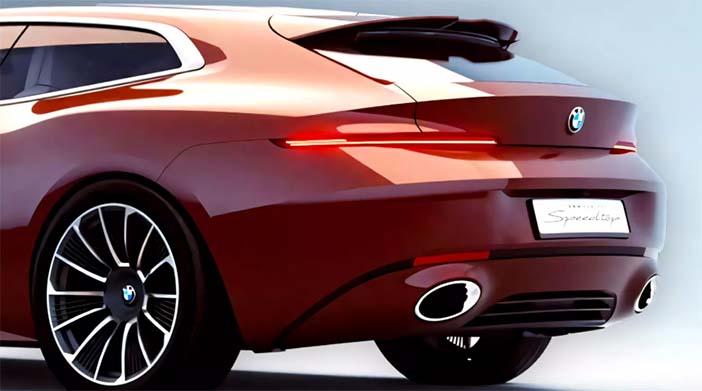
+++ It’s been a year since BMW unveiled the stunning Skytop concept, and in recent months, the car has been spotted during testing ahead of its expected limited production run. Now, BMW appears poised to reveal a shooting brake version of the handsome 2-door, and what appear to be official images have already surfaced online ahead of its world premiere this weekend. In an age where surprise reveals are rare, this one slipping out early doesn’t come as much of a shock. +++
+++ BYD will move production of its new Dolphin Surf urban EV from China to its new factory in Hungary at the end of this year. This will make BYD one of the first Chinese companies to build its cars in Europe and is in contrast to Leapmotor’s recent decision to renege on its plan to build the European-market T03 in Poland. BYD executive vice-president Stella Li said: “Our goal is for customers to think of BYD as a European brand”. +++
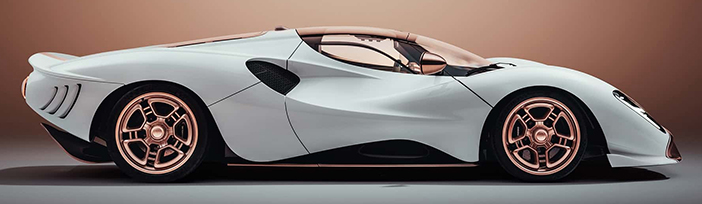
+++ The revived DE TOMASO brand burst onto the scene in 2019 with its beautiful P72 prototype. But in the 6 years since, we hadn’t heard much from the Italian automaker as to when the production version would finally hit the road. Today, that changes. De Tomaso is revealing its first road-going P72 and promising deliveries later this year. And much like the prototype, De Tomaso’s first production car looks absolutely lovely. The production P72 doesn’t stray far from the original prototype visually, which is great news. The design was inspired by the 1965 De Tomaso P70, a collaboration between founder Alejandro De Tomaso and Carroll Shelby. This particular model is finished in a bright white paint job with rose gold striping, mirror caps, accents, and matching wheels. The wheels even bear a similar resemblance to those found on the original P70. The P72’s curvaceous lines drape over a monocoque chassis formed from a single, continuous piece of carbon fiber, which also extends to the front and rear subframes. There’s no bonding, no welding; De Tomaso says its chassis sets a “new benchmark” for structural purity. Speaking of purity, the P72’s interior is proudly gimmick-free. There are no screens, no infotainment system. Simply a cockpit-like interior designed to let owners focus on the task at hand: driving. Hand-stitched white leather and exposed carbon fiber cover most surfaces, while a stunning arrangement of tactile, machined aluminium gauges line the dashboard—all finished in rose gold, naturally. That even extends to the exposed shifter. The P72 is powered by a supercharged 5.0-liter V8 that De Tomaso says was developed exclusively for this vehicle. The company said previously that the engine was derived from a Ford Coyote V8 and tuned by Roush, which we assume is still true. And by all accounts, it sounds fantastic. Here, that V8 makes 700 hp and 800 Nm, routed through a 6-speed manual transmission to the rear wheels. De Tomaso doesn’t publish figures like a 0-100 kph time or a maximum speed, but the company notes that the P72 wasn’t engineered for “top-speed dominance”. The De Tomaso P72 doesn’t have drive modes, but the pushrod suspension does come with 3-way manually adjustable dampers that allow the driver to customize the car to their preferred driving style. “The P72 was our promise to faithfully revive a historic marque”, says CEO Norman Choi. “This first production-specification vehicle embodies everything we stand for: a mechanical soul, timeless beauty, and a driving experience that rises above modern convention. It is our echo through time, now made real”. The De Tomaso P72 begins deliveries later this year, but the company hasn’t officially released details on pricing yet. That said, don’t expect it to be cheap. +++
+++ ELECTRIC VEHICLES could spell the end of independent vehicle rental companies, a leading family-owned firm has warned, amid a wider backdrop of waning demand for EVs generally among hire companies. Kendall Cars, a rental group with 14 branches and a fleet of 1.500 vehicles, says businesses like it are closing partly because of the high insurance costs associated with electric cars. Group managing director Mark Kendall said: “Like a lot of smaller hire companies we self-insure our cars to keep our rates low, but EVs are high risk, and a lot of hire companies are giving up because they calculate that as their proportion of EVs increases, they won’t be able to afford to cover them. “The national rental firms are stepping in by ignoring the retail market and renting the vehicles to business customers, who put them on their company insurance. But rental firms like ours can’t survive by ignoring retail customers”. Underlying Kendall’s comments is a lack of enthusiasm in general for EVs among rental firms, which are also worried about the high cost of installing chargers and limited rental demand. His prediction that firms will close won’t please car makers, which sell thousands of cars to the rental sector and regard it as a convenient safety net when other areas of the market are depressed. For example, in 2024 there were 228.000 rental vehicles on the road, an increase of 21% since 2020. Rental has always been a release valve for car makers wishing to sell cars, and although there is some demand for EVs, it remains low. The main issue is installing chargers. This is expensive for rental firms and there are no financial or tax incentives for their customers to choose an EV over a petrol or diesel car. Kendall agrees that charging his EVs is a costly headache. He said: “We’ve just installed four expensive charge points at our Wimbledon branch but, elsewhere, when customers return our EVs with very little charge (as many do) we have to drive to a charge point, which costs us time and money”, He added: “To encourage customers to recharge their cars, we’ve had to impose a surcharge when the battery’s return level is below 50 percent”. Kendall’s experience of rental EVs raises other issues. Like many independent rental firms, his company buys its cars new for cash and the aim is to resell them later for a good price. But that’s not possible with EVs, he said: “We can get good discounts on new electric cars, a lot more than for the petrol and diesel vehicles we also buy, but they lose a lot of money very quickly. For this reason, I prefer to buy used ones”. However, Kendall’s biggest challenge is keeping rates competitive at a time of rising costs. “We’ve had to increase our rates by 5% but that’s nothing compared with the increases in operating costs and new car prices that we’ve had to absorb”, he said. “To help boost revenue, for the first time we’ve introduced a collision damage waiver fee”. This challenge has been seen Europe-wide, according to Tom Dickinson, head of commercial at Zest, a car hire broker. He said: “Rental prices haven’t kept pace with the rising costs of purchasing, maintaining and repairing vehicles, as well as increasing operational expenses”. Dickinson warned that holidaymakers need to watch out for expensive add-ons as rental firms battle to keep rates down. He said: “For example, across 11 major airports, the average daily vehicle rental this year is €55 compared with €65 in 2024. While this may appear beneficial to consumers, to compensate for lower rental prices some car hire companies may resort to aggressive upselling of insurance and upgrades or infl ate damage and repair charges. Holidaymakers should book their rental with reputable companies offering proper insurance cover to protect their excess” +++
+++ Back in 2013, FERRARI made the decision to split with longtime external design firm Pininfarina. The move was surprising, given the decades of collaboration and legendary products from the brands. In the years since, Ferrari has grown its own design center, Centro Stile, into a hub for the brand. In an interview with Motor1, design boss Flavio Manzoni reveals how the split went down, and how Ferrari evolved in a post-Pininfarina environment. Though the last Pininfarina-designed Ferrari, the F12berlinetta, didn’t end production until 2017, it was during the development of the LaFerrari when the company decided to part ways with Pininfarina. Manzoni told both his internal team and Pininfarina were tasked with presenting a design pitch for the car, with upper management to pick which they preferred. Management picked Manzoni’s design, marking the end of Pininfarina-badged Ferraris. “At the beginning it was very, very tough for Pininfarina because after more than 60 years of collaboration they had to accept the idea that Ferrari wanted to create its in-house design center”, Manzoni told. “But it was also necessary, because Ferrari was the only car manufacturer in the world without any internal design center, which was a bit strange, and also risky”. The decision wasn’t influenced by opinions in design alone. The very act of building a modern performance car forced Ferrari to take a hard look at the way it designed vehicles. “The other problem was that the level of technical complexity of the cars was increasing a lot”, Manzoni said. “So it was necessary to work as a team with synergy, not with the designers working somewhere else and with engineers in Maranello. The presence of the design center in the in the factory is really important because there are meetings everyday with engineers, aerodynamicists, economists, etc. to converge, step by step, on the best shape possible, considering the incredible performance and objectives that a new Ferrari has to have”. Manzoni has been with Ferrari since 2010, responsible for leading the company’s in-house design studio since its inception. But once Pininfarina stepped aside, even he was nervous to take on the immense task of designing all future Ferraris. “The beginning was difficult, a lot of pressure”, he told. His hard work has paid off, obviously. Since Ferrari went public in 2015, it’s grown to nearly nine times its IPO value. The company sells more cars than ever, thanks in part to the Purosangue, its first SUV, released in 2023. The Italian carmaker is also planning to release its first electric vehicle in 2026. While Manzoni didn’t share specifics, he expressed excitement towards working with new technology. “Any project is a challenge,” Manzoni said. “Every time there is an opportunity to work on a new technology, for example, all the hybrid Ferraris are new in terms of layout of the components, we had an opportunity to make something different. There’s always an opportunity to promote innovation and progress”. +++
+++ LOTUS is poised to offer a V8 option for its Emira sports car as the company looks to expand the appeal of its sole combustion-engined model. The Geely-owned company is committed to offering a higher-powered version of the Emira, CEO Feng Qingfeng told investors on the company’s recent earnings call. “We are currently investigating the feasibility of the V8”, he said. Currently, Lotus offers V6 and 4-cylinder turbo options for the Emira. Both offer 400 hp but Feng ruled out boosting the power of the V6 because the Toyota-sourced unit won’t comply with upcoming Euro 7 emissions regulations. Lotus had intended to phase out the V6 in favour of the Mercedes-AMG-supplied 4-cylinder unit, but the 6-cylinder has been enduringly popular in the US, the world’s largest sports car market, prompting the investigation into fitting a bigger engine. The Emira is built in Lotus’s plant in Hethel, United Kingdom, and last year hit a sales record of 5.272 deliveries. “The US is an incredibly important market for us for the car. It always has been. So we’re looking at the market demand for the product going forward”, Hethel boss and new CEO of Lotus Cars in Europe Matt Windle told. Windle didn’t confirm the V8 but did say the company is looking into other power options. “It’s a very, very competent product that we probably haven’t exploited to its full already, so we are looking at all the options”, he said. Supplier AMG could be tapped for the V8. “There are some opportunities with the current supplier of engines, so we’re looking at it”, Windle said, without naming the Mercedes division. AMG also supplies its 4.0 twin-turbo V8 to Aston Martin for fitment into cars such as the Vantage and DBX. However, it remains to be seen how much adaptation the mid-engined Emira’s compact frame would require in order to accommodate a larger engine. The potential launch of a new V8 Lotus would be the first for the company since it dropped the Esprit V8 from its line-up in 2004 after a run of 8 years. Feng’s announcement that the company is considering a V8 came in response to a question from a US dealer who suggested the company should offer a stripped-down, high-power V6 that would be quick enough to challenge the Porsche 911 GT3. The 510 hp 911 GT3 is considerably more expensive than the Emira V6, thus giving Lotus the chance to raise its average selling price and help reverse company losses. Lotus has halted shipments of the British-built Emira to the US after the new 25% tariff was applied in April, meaning that no cars are currently heading to a market that last year accounted for a fifth of all Lotus sales. Lotus cancelled sales of the Eletre and Emeya in the US after the country imposed 145% tariffs on Chinese-built goods. The deal recently agreed between the UK and US to lower tariffs on UK-built goods to 10% has helped Lotus, but Windle has yet to restart shipments to the US as he waits for the details. “The headline numbers have gone out there, but actually the specifics behind it still haven’t been clarified”, he said. “There’s product that’s ready to ship, but what we don’t want to do is jump the gun and end up getting clobbered”. Lotus had intended to replace the combustion-engined Emira with an electric sports car but it is currently assessing the market before giving it the green light. “Is the market ready for an electric sports car? I don’t really know the answer to that yet”, said Windle. +++
+++ NISSAN is undertaking a massive cost-cutting agenda after losing billions in recent years due to sales falling short of investments. While the new product roadmap centers on the usual suspects, crossovers and SUVs, there’s still hope for fun cars. The Z is soldiering on and could one day be joined by a new Silvia. Better yet, a next-generation GT-R is also in development. Yes, Godzilla will return, eventually. Speaking last month at the New York Auto Show, Nissan USA’s chief product planner confirmed: “The GT-R will be back, without a doubt”. Now, another high-ranking official is reinforcing that statement. Arnaud Charpentier, VP of Product Marketing Strategy, told that the company is actively working on a new supercar: “There are people working on this. When, how, honestly, this we don’t know. But today, we don’t just need to make a sports car, but to do one with a powertrain that we foresee [working]in the coming years. If it is electric or electrified, it needs to remain a sports car. But if you end up with the same performance as an EV SUV, this is an issue”. Whatever direction Nissan takes with the R36, Charpentier says the flagship must “reinvent the notion of a sports car”. It’s been about a year and a half since the company hinted that the next GT-R might be fully electric. The Hyper Force concept, an ultra-angular supercar with 1.360 horsepower, was described by Nissan Europe’s VP of design, Giovanny Arroba, as “a tangible dream to achieve by the end of the decade”. As you can see, various Nissan executives are eager to talk about a new GT-R, even if its release remains far off. They’re not alone. Nissan North America’s senior vice president and chief planning officer, Ponz Pandikuthira, has suggested the R36 could be twinned with a third-generation Honda NSX. The next GT-R may also go electric since an “NSX-type” EV has already been confirmed to arrive later this decade. Nissan’s new boss, Ivan Espinosa, is an enthusiast who drives his Z to work every day. His predecessor, Makoto Uchida, described him as a “real car guy”. Espinosa is also keen to bring back the Silvia, giving us reason to hope for either a new GT-R or a more accessible sports car. Still, we need to stay realistic. Nissan is cutting 20.000 jobs, closing 7 factories, eliminating 6 vehicle platforms, rebadging several Renault models, pausing development on some products, and reducing parts complexity by 70 percent. How does a niche product like a sports car fit in in this grim context? It’s not as though the Z is a major commercial success that would encourage executives to greenlight another performance model. The struggling Japanese automaker clearly has bigger priorities and isn’t likely to favour a GT-R or a Silvia at the expense of a high-volume SUV. Nissan is also developing mainstream models that must come first. Sure, a new supercar would boost Nissan’s image and draw more people into showrooms, but the bean counters are more inclined to play it safe with volume-driven vehicles. +++
+++ We knew this day would come, so don’t be too sad that PORSCHE is about to pull the plug on its 718 duo. The current generation Boxster and Cayman have been on their deathbeds since last year, when the sports cars were retired from Europe due to stricter cybersecurity regulations. The rest of the world will also lose Zuffenhausen’s entry-level performance machines later this year. Porsche Cars North America’s head of Product Communications, Frank Wiesmann, told me that the 4th generation Boxster and Cayman (982 series) have entered their final months of production. The last units are scheduled to be built in October. While the main Zuffenhausen plant has been assembling the cars since 2016, some production was moved in 2022 to Osnabrück, where Volkswagen will continue building the oddball T-Roc Convertible until 2027. 2024 marked the final full year of production for the mid-engine coupe and convertible, with sales rising 15 percent to 23.670 units. In the first quarter of 2025, shipments fell 22 percent to 4.498 vehicles, unsurprising given the 718’s discontinuation in the European Union and other markets following EU legislation. It’s worth noting that the Boxster RS Spyder and Cayman GT4 RS continued in those regions, as the special editions were exempt from the rules due to their limited production runs. Although discontinued models are almost always replaced quickly by next-generation versions or different vehicles, Porsche is taking time with the 718’s (indirect) successor. The fully electric Boxster and Cayman are still being developed, so the EVs won’t launch this year. During the Annual General Meeting, CEO Oliver Blume said that the silent sports cars will arrive in the “medium term”. He added that both will be “even more dynamic, even more powerful, with a pure driving experience”. Porsche has admitted its previous goal of having EVs account for 80 percent of annual sales by 2030 is no longer feasible. Even so, that doesn’t change the fact that the ICE Boxster and Cayman are being phased out. However, Zuffenhausen is applying a different strategy to the rest of its line-up. The Cayenne will coexist with the upcoming EV variant well into the 2030s. The Panamera will also retain its gas engines into the next decade. The twin-turbo 4.0-liter V-8 is being reengineered to comply with Euro 7 regulations and will continue into the 2030s. The first-generation Macan will be retired in 2026, leaving only the electric second-generation model on sale. It died last year in the EU for the same reason Porsche was forced to pull the plug on the 718s. However, Porsche is exploring a new petrol-powered crossover to replace the original Macan, launched 11 years ago. If approved, the unnamed model would arrive near the end of the decade with pure internal combustion-engine and hybrid powertrains. Additionally, Porsche is even considering adding combustion engines to vehicles initially intended to be fully electric. Last November, the company’s former Chief Financial Officer, Lutz Meschke, mentioned that surprising possibility: “We are currently looking at the possibility of the originally planned all-electric vehicles having a hybrid drive or a combustion engine”. During this week’s meeting, Blume also mentioned that the electric line-up “will continue to grow as planned”. His statement indicates that the large, 3-row SUV first announced a few years ago is still in development, despite EV sales falling short of Porsche’s earlier projections. +++