
+++ AUDI has released its first quarter 2025 results, reporting revenue of €15.4 billion, which was an increase of 12.4% from the same corresponding period in 2024. This was primarily because of a better mix, along with higher battery electric vehicle (BEV) sales. This was despite hurdles such as intensifying competition, a weaker global economic outlook and geopolitical volatility. Operating profit came to €537 million for the first quarter of the year. Return on sales was 3.5%, mainly impacted by higher costs of goods sold, provisions for the CO2 regulation and a higher BEV share. Net cash flow was €61 million negative. Audi delivered 46.371 electric cars globally in the first quarter of the year, which was a surge of 30.1%. In France, these electric vehicles experienced a 169% surge in demand. Demand jumped 120% in Switzerland. EV sales soared 87% in the Netherlands, while Norway recorded an increase of 64%. In Audi’s domestic market, Germany, electric cars experienced an increase of 59%. Total Audi deliveries came to 383.401 vehicles in the first quarter, which is a 3.4% fall compared to the same quarter in 2024. Gernot Döllner, Audi’s chief executive officer (CEO), said in the earnings press release on Volkswagen Group’s website: “The first few months of 2025 saw us take decisive steps towards repositioning our company. This includes the agreement for the future concluded between company management and the works council in March, which aims to increase productivity, speed and flexibility at our German sites. The year will continue to be very challenging due to the global economic conditions. But Audi has started to execute its strategy and is delivering on it. Our model initiative is now, step by step, coming onto the global markets. We are particularly encouraged by sales and order intake for our new electric models”. Jürgen Rittersberger, Audi’s chief financial officer (CFO), also said: “Our key figures for the first quarter clearly show that we must improve our efficiency and competitiveness and are therefore pushing ahead with the transformation of Audi with our full strength”. He added: “The agreement for the future has set the right course. Together, we will tackle the challenges and the necessary changes and bring Audi back to the forefront”. Coming to the outlook for the whole year, the Audi Group estimates that revenue will come to somewhere between €67.5 billion and €72.5 billion, while the operating margin is likely to be between 7% and 9%. Net cash flow is expected to be between €3 billion and €4 billion this year. The company said in the earnings press release: “Against the backdrop of the present high volatility, the financial implications of import tariffs, particularly in the United States, cannot be conclusively assessed. The financial repercussions of the agreement are currently being evaluated, as certain parts of the agreement are still being worked out. As a result, the forecast does not yet include these 2 factors”. Audi’s deliveries of fully electric models surged 50.4% in the first quarter of 2025, compared to the same quarter last year, at 25.129 units. In Germany, Audi delivered 8.640 units of fully electric vehicles, which was a jump of 59%. Overall Audi brand deliveries in Europe, excluding Germany, fell 3% to 112,707 units in the first quarter of the year. In Germany, Audi deliveries rose 4.8% to 48.447 units in the first 3 months of the year. The company also experienced its best first quarter ever in Poland, Croatia and Austria in terms of deliveries across all drive types. North American deliveries (excluding Mexico) dropped 2.1% to 48.599 units, mainly because of several models going through a generational change at the moment. In China, deliveries came up to 144.471 units in the first quarter of the year, which was a drop of 7% compared to the same quarter last year. This was mainly because of higher competition in the domestic Chinese market. As such, Audi is working on quickly growing its electric vehicles portfolio and strengthening its Chinese operations with models tailored to local consumers, as well as tie-ups with local partners. +++
+++ BMW ’s Neues Klasse architecture will underpin a range of new products. The iX3 electric SUV debuts this summer, followed by the i3 sedan and touring sometime shortly after. But those are just the first new models. BMW is also preparing an i2, but unlike the current 2 Series lineup, a new rumour suggests this new one will be a 4-door sedan. The i2 will serve as an entry-level model, prioritizing roominess and usability alongside the i1 hatchback, also in development. BMW currently offers 3 versions of the 2 Series: coupe/convertible, Active Tourer and Gran Coupe, so pruning the variants to just one body style would be a big change. This isn’t the first time I have heard about the i2. A report from September 2022 alleged that BMW was preparing to begin i2 production in July 2028, but that might no longer be the case. The i2 won’t go on sale until 2030, which is still 5 years away. And timelines are always changing behind the scenes. According to the report, the i2 is not expected to replace the gas-powered 2 Series coupes. However, the company also supposedly has no plans to launch a successor with an internal combustion engine. That could spell the end of the much loved M2, with its small size and available manual transmission. When the i2 does go on sale, it’ll utilize BMW’s sixth-generation battery technology. The new packs utilize cylindrical-shaped cells, which the automaker claims can increase range and charging speed by 30% while generating fewer emissions during manufacturing. It’ll be rear or all-wheel drive, too, which should keep the fun alive. +++
+++ CHINA is dominating the EV game, but is not giving up on combustion engines yet. Great Wall Motor recently unveiled a twin-turbo 4.0-liter petrol V8 for high-end vehicles and is also developing a 3.0-liter 6-cylinder diesel. At the top of its line-up will be a supercar, which GWM claims has been developing for the past 5 years. Although the company is virtually unknown in the performance car world, it apparently has Ferrari in its sights. In an interview, the automaker’s Chief Technology Officer boldly claimed the mystery sports car will be better than a Ferrari. However, Wu Huixiao also admitted that GWM is learning from its rivals in its ambitious attempt to outdo the Prancing Horse. A high-performance model would be a major departure for a company best known for pickup trucks and SUVs. You may also recognize GWM’s sub-brand Ora and its oddly named Funky Cat electric hatchback, which was later rebranded as the Ora 03. During the interview, Wu revealed that GWM brought a Nürburgring expert to China to gain insights into the challenging German track. However, development hasn’t been without setbacks. Wu acknowledged issues with carbon fiber tub production and said cost reduction remains a challenge, which is one of the reasons the project has yet to be officially revealed, despite being five years in the making. As for what will power the supercar, the V8 mentioned earlier seems unlikely. Wu suggested it’s too large, without confirming whether GWM is adapting a smaller existing engine or building a new one entirely. The company currently offers a twin-turbo 3.0-liter V6 in the Tank 700 as part of a plug-in hybrid system delivering 516 hp. There’s also the Tank 500 Hi4-Z with a bonkers 851 hp from a PHEV setup that combines a 2.0-liter 4-cylinder engine with 2 electric motors. The mention of Ferrari’s SF90 Stradale hints that GWM’s new model will likely be a plug-in hybrid as well. China already has a growing segment of fully electric performance cars, including the BYD Yangwang U9 and GAC Aion Hyper SSR. To compete with both domestic and international rivals, Wu claimed GWM “must build a car that will spike adrenaline, cause an explosion of hormones, and dopamine”. Interestingly, Chinese reports claim GWM Chairman Jack Wei was spotted driving a Ferrari SF90, reinforcing that the company is aiming high. Still, even if the car ends up being faster and more affordable, it won’t carry the prestige of something from Maranello. Then again, that might not matter much in today’s Chinese market, where local brands are gaining ground by offering tech-packed EVs with longer ranges, often at significantly lower prices than their Western counterparts. Outside of China, a high-end sports car would be a tough sell, even at a far lower price. We don’t see many Ferrari loyalists canceling their orders for a GWM, BYD, etc. +++
+++ It’s been a hot topic for a few years and while the technology and its implementation have certainly progressed, I still wonder about the role augmented or FAKE ENGINE NOISES have to play in electric cars. For starters there’s the wonderful Hyundai Ioniq 5 N, which has shown how useful audible communication of a car’s gearing and speed can be in an otherwise silent EV. Most of us need that extra layer of feedback while driving (especially if you’re driving spiritedly), to help process what the car is doing, whether that’s real-time deceleration or acceleration. The Ioniq 5 N does this effectively, although it falls short of the mark in its aim to mimic the i30 N’s build-up to its 8.000 rpm rev limit. Indeed, while fake engine sounds and gearshifts can certainly boost driver engagement, I’ve yet to come across an EV (or an EV’s speaker system for that matter) that can convincingly mimic a combustion engine. Recently, I got wind of BMW’s HypersonX system that’ll arrive on its upcoming Neue Klasse models. However, the “unique soundscape”, as BMW calls it, won’t try to recreate combustion-engine noises. It’ll go down a different route with “tones from nature” and “structures from the worlds of art and science”, whatever that means. BMW does say HypersonX will “embody the pleasure of driving for which BMW is renowned”, but I understand why they’re not trying to recreate a vibrant straight-6 through a set of speakers. First off, the purists will be lying in wait to scold whatever BMW attempts, and secondly I just can’t see how sound development will progress in a couple of years to allow it. Then there’s the big one: Ferrari. The firm behind some of the best-sounding engines in the automotive industry submitted a patent this week for ‘audio files’ in its inaugural EV, due later this year. Ferrari does quite nobly point out the extra levels of driver involvement you get with engine noise, but going beyond this to somehow replicate ‘historical’ Ferrari engine and exhaust notes will be equal parts fascinating and worrying. If Ferrari, coming from a country that gave us Bocelli and Pavarotti, fails, then what hope do the rest have? If Ferrari’s audio partner, Bang and Olufsen, has been officially tasked with boosting the new EV’s sound, then it’ll have quite the task on its hands. +++
+++ The incoming electric MERCEDES-BENZ CLA , the German brand’s game-changing EV that promises a 787 km range, is unable to use any 400 Volt DC charger; a common standard across Europe. This means the third-generation CLA, based on the German firm’s new MMA electric car platform, is incompatible with many older 50 kW units and most Tesla Superchargers currently in operation. This is because it lacks a DC-to-DC voltage booster, meaning it can only fast-charge at stations that supply 800 volts; typically found on newer HPC (high-power charging) networks that can charge at speeds almost double that of 400 Volt. The omission of a 400 Volt DC converter is thought to be a cost-saving measure, the likely thinking being that the majority of customers will charge their CLA mostly at home via an AC connection. There, 400 Volt AC flows into an onboard charger and is converted into 800 Volt DC internally for battery use. Mercedes confirms the charging limitation with the message “charging at 400 Volt charging stations is not possible”. Backing its decision, a spokesperson for the car maker told that “the share of 800 Volt DC fast-charging stations in the entire charging network is constantly increasing” adding that drivers will only be “directed to a compatible charging station” via the navigation system. “The update of available and compatible charging stations works almost in real time”, it said. Asked if there would be a paid option to fit a DC converter for the European market, the spokesperson said: “We cannot comment on this now”. Rival car makers have taken a different approach. Hyundai and Kia equip their E-GMP-platform EVs, including the Ioniq 5 and EV6, with internal voltage boosters to allow 400 Volt – 800 Volt conversion, enabling charging even from older DC stations. Meanwhile, Porsche and Audi use a split-pack battery strategy with their PPE-platform EVs, such as the Macan Electric and A6 E-tron, dividing the battery into two 400 Volt sections for charging (albeit at reduced speeds). Mercedes has chosen not to implement either solution in the CLA EV sold in selected European markets. There is still a DC-DC converter onboard, but it’s only used to supply 12 Volt power to auxiliary systems such as seat heating and infotainment. While 400 Volt chargers are being replaced by 800 Volt chargers across Europe, many 400 Volt chargers still remain, particularly in countries such as Norway, where the EV charging infrastructure was established much earlier than in other countries. Reports suggest the new CLA EV to be sold in Norway will be fitted with the DC-to-DC booster, but it remains unclear if this will be included on models offered in other European countries. Mercedes’ Belgian and Dutch online configurators make no mention of the charging limitation. +++
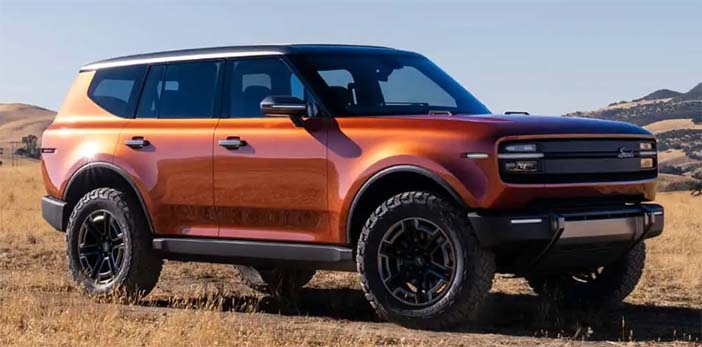
+++ Although range anxiety is gradually becoming less of a problem as technology progresses, it remains a significant concern when shopping for a large truck or SUV. Weight is the main enemy of efficiency and, consequently, range. That’s why some automakers are promoting a stop-gap solution until battery technology becomes fully viable for long-range, heavy-duty vehicles. A range-extending gas engine is a temporary fix to unlock those precious extra miles. SCOUT ’s new models will primarily be EVs, but there will be an option for a range extender. The engine will be manufactured in Mexico and dubbed “Harvester” as a nod to the long-defunct company that originally built the Scout. Volkswagen Group’s chief financial officer Arno Antlitz disclosed this detail during the first-quarter earnings call. He also noted that the engine will skip turbocharging. The4-cylinder engine will be sourced from the VW Group’s plant in Silao, Mexico, which has been operational since 2013. Previously, Scout CEO Scott Keogh described the range extender as a “good, high-output, 4-cylinder, small engine”. As for its placement, the turbo-less unit will be mounted behind the rear axle. Scout’s Senior Director of Strategy commented that the ICE is “so far away you don’t hear it, you don’t feel it, so you still get the sensation of driving a quiet, small electric vehicle”. The body-on-frame Terra pickup and Traveler SUV are projected to cover 560 km in standard guise. With the Harvester option, they’re expected to reach the 800 km mark, but with only 240 km of pure electric range. While the standard models will come with an estimated 120 kWh battery pack, the Harvester-equipped versions will use roughly half that capacity. In terms of performance, Scout estimates the Terra and Traveler will accelerate from 0 to 100 kph in 3,5 seconds. Adding the range extender will increase that time by a full second. The 4-cylinder VW engine won’t drive the wheels directly; its sole purpose is to serve as a generator, recharging the battery on the go. Scout is far from the first to adopt a gas engine as a range extender in an EV. The Chevrolet Volt and BMW i3 offered similar setups as early as the 2010s, and the upcoming Ram 1500 Ramcharger will use a larger V6 in the same role. Scout’s parent company, VW, plans to offer range extenders in China first, before bringing the technology to Europe. Although Scout debuted its new models last October, series production won’t begin until late 2027. The Terra and Traveler will be assembled at a new $2 billion factory in Blythewood, South Carolina, which is expected to create over 4.000 jobs. Up to 200.000 vehicles could be produced annually, an ambitious goal that Antlitz believes could be achieved, thanks in part to the Harvester version. These Scout models won’t really clash with an existing Volkswagen product, considering that the first- and second-generation Amarok are not sold in the United States. The recently announced first-gen model replacement is unlikely to get a US visa either. Additionally, VW doesn’t have an off-road, body-on-frame SUV in its portfolio. +++
+++ In the UNITED KINGDOM , electric and plug-in hybrid cars continued to grow in popularity last month, despite a broader drop in the number of new cars registered. New car registrations fell from 134.274 in April 2024 to 120.331 last month, a year-on-year drop of 10.4%. Electric car sales continued to look healthy, increasing by 8.1% year-on-year to 24.558. The Renault 5 was the best-selling EV for retail buyers in its first month on sale. The Ford Puma is, 4 months into 2025, still clinging on to the number-1 spot with 18.241 units sold. Next came the Kia Sportage (16.380), the Nissan Qashqai (13.989), the Vauxhall Corsa (13.852 units), the Nissan Juke (12.373), the Volkswagen Golf (12.348), the MG HS (11.016), the Volkswagen Tiguan (10.664), the Volvo XC40 (10.612) and the Hyundai Tucson (8.715). +++
+++ Every year, automakers issue hundreds of recalls in the U.S. for everything from malfunctioning turn signals that pose almost no risk to lethal airbag malfunctions that could kill vehicle occupants in a crash. Small recalls rarely if ever get covered by the press unless it’s something as bizarre as last week’s recall of the much ballyhooed and long-awaited VOLKSWAGEN ID.BUZZ . The strangest part of this recall and stop-sale effort covering 5.637 vans built between September 18, 2024 and February 11, 2025, is the third-row bench seat. Although it has 2 seat belts and 2 headrests, the seat is wide enough for 3 passengers. The calculated width of the seating surface exceeds the maximum specified for 2 passengers, according to NHTSA documents, making the seat noncompliant with federal safety requirements, Walsworth wrote. First of all, it’s hard to imagine a regulation requiring an auto manufacturer to install a certain number of seat belts based on the size of the seating surface. Occupant sizes can vary quite widely. Secondly, it’s hard to imagine an automaker as large and sophisticated as VW, or the ID.Buzz seating supplier, Faurecia Autositze, with their legions of engineers, to miss something like this. The NHTSA documents say the supplier notified Volkswagen on February 12 about the “potential non-compliance” and the automaker began investigating. No injuries or accidents have been reported, but it’s a good bet some VW executives have lost some sleep over this one. +++
+++ VOLVO is seemingly always at the forefront when it comes to technology in vehicles. It makes some of the safest cars on the market, and uses a slick Google-sourced Android interface to run its infotainment system. That makes Volvos a great place to spend time, so long as you’re willing to put up with a few quirks. Volvo updated most of its vehicles built from 2020 onward with the company’s new infotainment software, which includes a fresh interface that makes the overall user experience even more pleasant. While there are some big upsides, I still have complaints. The heavily updated 2025 XC90 is among the first vehicles to receive Volvo’s new infotainment system from the factory. To go alongside those software changes, the company installed a new 11.2 inch portrait-oriented touchscreen in the center of the dash. Unlike the previous XC90, this screen looks like it was slapped on the dash, rather than installed neatly within it. It’s an inelegant solution, though, I suspect buyers won’t mind. Bigger is better, after all. The screen itself looks new and high-quality, with bright colours and plenty of detail. Volvo says it increased the pixel density by 21 percent, resulting in a crisper display. And it shows; map details are easy to read, while the menus are simply navigated through large, well-marked buttons. Under the screen is a sparsely populated set of physical buttons for the defroster, hazard lights, and, thankfully, volume. There aren’t any physical buttons for the climate control, which sucks. In their place is a row of digital controls permanently displayed at the base of the screen for adjusting things like temperature and fan speed. Above that sits a “contextual bar,” a row of options that changes depending on the situation. The bar will display things like music controls if you’re using the Maps function, so you don’t have to leave the navigation system to pause your song, for example. In the case of this plug-in hybrid XC90, there’s also a drive mode button in the same bar that allows for easy access to changes in the steering, suspension, and the hybrid system. Between the song controls and the drive mode button is a multi-colored Google icon marked “Google Assistant”. Activate it by pressing the icon or simply saying “Hey, Google”. The assistant can adjust the temperature, text loved ones, or ask for directions. And like any AI assistant, it will answer virtually any question you ask it. Wondering which city is the capital of New Zealand? Now, your Volvo can tell you (it’s Wellington, by the way). It’s a gimmicky feature, sure, but sometimes it’s nice to simply command the car to take me home or turn on the seat heaters without having to navigate through the touchscreen, especially since the screen itself can be laggy and slow to respond when given a series of quick inputs. It’s not mid-2010s touchscreen slow, but it’s not far off, either. There’s an even bigger problem here, though: No wireless Apple CarPlay. Even in the year of our lord, 2025, this Volvo XC90’s infotainment system requires a wired connection with your phone to project CarPlay onto the center screen. That is simply unacceptable, especially when this car’s all-electric sibling, the EX90, gets wireless CarPlay standard. Despite needing a wire, I had CarPlay running for the majority of my time with the XC90. It’s nicely integrated into the touchscreen and easy to use. When you have a navigation app like Waze running, the car will even project the map and directions onto the 12.3-inch digital instrument cluster, a feature all new cars should have. When there’s no actual map displayed on the cluster, it looks a bit plain. It’s not very customizable either, which is a shame, considering it’s just a screen that can be programmed to show virtually anything. Again, I’m not sure customers will really mind. This is a Volvo after all, not a Lamborghini. It doesn’t need to be flashy. For being in a car that’s a decade old, Volvo’s infotainment system is impressive. It feels like a new thing, with big, bright screens and many modern capabilities. It’s just a few small flaws away from being truly great. Sharpen the screen’s response time and add wireless CarPlay, and you’ve got yourself a true winner. +++