
+++ AUTONOMOUS DRIVING and the technology behind it played a significant part at this year’s Shanghai motor show. For over a decade, the industry has believed that there won’t be a sudden leap from conventional cars to fully automated self-driving cars. Instead, it has expected ADAS features to gradually increase in sophistication until they become capable of taking over control of the car. Currently, the focus for car makers and suppliers is the transition from Level-2 to Level-3, as laid down by the SAE’s 6 levels of driving automation. Up to Level-2 (like the latest adaptive cruise control with steering input and lane-keeping), the driver is always ‘driving’ when assistance features are engaged. But at Level-3, the car is doing the driving unless it asks the driver to take back control. In reality, the lines are blurred and the industry is talking about Level-2+ and Level-2++, which are creeping rather than leaping to Level-3. According to Volkswagen, which showed its latest AI-powered ADAS features in Shanghai, Level-2+ is expected to be in over 80% of Chinese vehicles by 2030 and Level-2++, which handles urban as well as highway driving, in 75% of new vehicles. Volkswagen is bringing Level-2+ to the road this year and Level-2++ with Urban Navigate on Autopilot (NoA) will be launched next year. ZF has developed several ‘transitional’ Level-2 features as well. For example, its Level-2 coDrive has 360 degrees camera perception to enable hands- and feet-free driving as well as automated lane-changing. It has already lined up a product called coPilot, which covers Level-2+ to Level-4 and includes automated overtaking, all-round sensing of the environment, garage parking and route learning. Continental showed 2 solutions, called Luna and Astra. Luna is an entry-level system with ADAS features and parking functions. Astra supports more advanced level two-plus-plus driving functions and can cope with a wide range of scenarios. It also has NoA, which, says Continental, can cope with China’s complex urban road environment and covers narrow road detour avoidance and left and right turns where there are no traffic lights. It can also deal with on/off ramps. Behind the tech are its intelligent driving sensors, including sixth-generation radar and cameras. It has a single-radar autonomous emergency braking solution that meets China’s standards and it’s introducing an AI-powered night-vision camera. Given the popularity of autonomous driving in China, the scale of the market should help speed its development. +++
+++ CADILLAC has expanded its electric lineup more than ever, but shifting consumer interest in the States could complicate its all-EV ambitions. As demand for electric vehicles tapers off, the company may need to revisit its goal of becoming an EV-only brand by 2030. The final quarter of this year could be especially challenging, since the federal EVs tax credit is scheduled to end, likely making both new and used electric models less accessible to many buyers. GM’s flagship brand has undergone a dramatic transformation over the past couple of years. It first launched the all-electric Lyriq and more recently, it’s been followed up by the electric Optiq and the Vistiq. Additionally, Cadillac wants to once again become the ‘Standard of the World’ with the Celestiq. It has also launched 2 electric versions of the Escalade, known as the IQ and IQL. Even with these investments, Cadillac is approaching the market with cautious adaptability. According to global Cadillac vice president John Roth, the brand is staying open to adjusting its powertrain strategy as needed. “It’s really important in this continuously evolving marketplace to make sure that you’re meeting customers where they are”, he said. “The auto industry is never a straight line, and so to put absolutes in the marketplace, you’ve got to have some flexibility to pivot when it makes sense to do so”. More manufacturers are acknowledging that both gasoline and electric models need to be available side by side, with consumers ultimately setting the pace for the transition. Roth confirmed that GM is actively working on plans for the 4th quarter to prepare for the end of the tax credit. While Cadillac has grown its fleet of EVs, its range of ICE models has shrunk dramatically. The company recently halted production of the XT4 and the XT6 is set to follow later this year. The XT5 is expected to remain in the line-up only through 2027. Meanwhile, the factory that currently produces the CT4 and CT5 sedans is being converted to focus exclusively on EVs. This shift could eventually leave the Escalade as the last petrol-powered Cadillac standing. +++
+++ The early success of the new Bigster proves that DACIA can find new customers in different market segments and gives it more freedom for the future, its sales boss has said. Dacia has sold 17.329 examples of the new C-segment SUV, its largest ever model, in the first half of 2025, with more than 38.000 orders being placed. Notably, 88% of those orders are of high trim and powertrain specification. That number contributed to Dacia’s overall global sales of 356.084 in the first half and helped offset declines in sales for its best-selling Sandero (151.948, -7.8%). +++
+++ New car registrations in EUROPE fell 4.4 percent in June and 0.3 percent over the first 6 months of 2025, but those aren’t the stats that stand out in the latest industry figures from Jato. The ones that grab the attention concern the stratospheric growth of Chinese brands who have already leapfrogged some historic Western names and are coming for more in the second half of this year. In total, Chinese brands saw sales increase 91 percent to 347.100 in H1, and they now account for a substantial 5.1 percent of the European car market. That puts them just behind Mercedes on 5.2 percent (they actually outsold Mercedes in June) and ahead of Ford on 3.8 percent, and if those stats haven’t caused your jaw to hit the floor I don’t know what will. Leading the charge of those Chinese brands is BYD, whose EV sales jumped 133 percent in June and 143 percent in H1, when it sold 41.300 electric cars, putting in 12th place on the list of most-registered EV brands. In the same period 13th placed Cupra shifted 37,400 EVs and Ford only moved 35.200. But it wasn’t only EV sales that helped the Chinese grab such a big chunk of the European car market. Plug-in hybrids from BYD, Jaecoo and Omoda proved very popular, BYD’s Seal U tying with the Volkswagen Tiguan in the race to become Europe’s best-selling PHEV in June. The Chinese weren’t the only winners in H1. Also celebrating were the Volkswagen Group, whose sales were up 3 percent, Renault (up 6 percent), BMW (up 4 percent) and Ford (up 6 percent). Wherever there are winners, though, there have to be losers, and H1’s wooden spoon recipients include Tesla (-33 percent) and Stellantis (-9 percent). Dacia’s Sandero was Europe’s best-selling car overall with 128.800 registered, but it was down 11 percent and has the added pressure of its Renault Clio cousin snapping at its heels; its sales increased 7 percent to 122.500. Third place went to Peugeot’s 2008 and a brace of VWs (T-Roc, Golf and Tiguan) grabbed the next 3 spots. But there was no sign of the Tesla Model Y. Sales of the one-time best-selling car in Europe dropped 33 percent to 68.800, meaning it didn’t even break into the top 10, though it was down only 13 percent in Q2 as a result of a spring facelift. But in the same period overall EV sales for all brands boomed by 25 percent to 1.2 million, helping make Jan-June the first ever 6 month period in which more than 1 million EVs were registered. +++
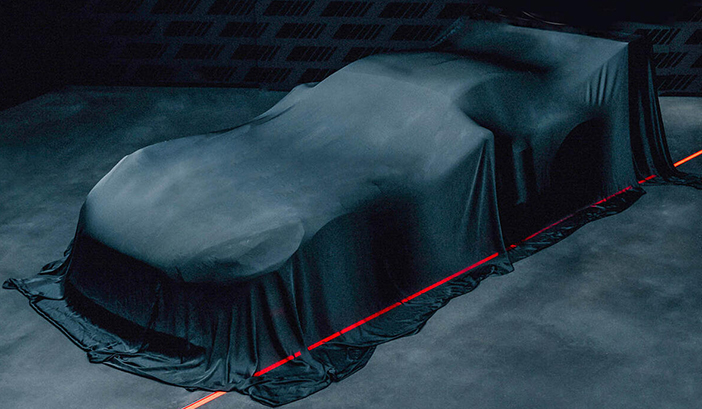
+++ MERCEDES-AMG is readying a V8-powered, track-honed rival to the Porsche 911 GT3 RS, created to set new record lap times. It will be previewed by the new Concept AMG GT Track Sport, based on the second-generation AMG GT that was launched in 2023. While work is under way on creating the first electric AMG GT for launch in 2027 ( previewed by the recent 1.360 hp Concept GT XX), the announcement confirms that AMG isn’t yet done with combustion power. The new flagship GT is likely to be a successor to the AMG GT Black Series of 2022, which produced a staggering 730 hp from a highly modified version of AMG’s twin-turbocharged 4.0-litre V8. In the announcement, AMG didn’t provide any technical details of the new concept but confirmed it previewed an “expansion of the GT series” that would be powered by a V8. Given the GT Black Series was the most powerful series-production V8 ever, expect the production version of this concept to push beyond it and claim that title. The most powerful variant of the second-generation GT range at present is the 612 hp track-focused Pro. Preview images shown of the new concept reveal its track-bred pedigree. It has a huge GT3-esque wing, a chunky front diffusor and wide front and rear tracks. Given these are the first images we’ve seen of the concept, it’s likely that a full unveiling will take place at September’s Munich motor show. +++
+++ 2025 is shaping up to be a real downer for Tesla, MUSK and the EV maker’s investors after a dismal second-quarter report. We’ve already heard most of the reasons: Musk’s polarizing political activities, disappointing U.S. consumer adoption of EVs, the impending loss of retail tax credits and an aging product line-up. But another factor in Tesla’s deteriorating outlook is the rapidly disappearing subsidy it gets from legacy internal combustion engine competitors that purchase U.S. emissions credits to avoid fines. If you dig into Tesla’s second-quarter earnings report, there is a line showing Tesla’s regulatory credits dropped by half to $439 million from the same quarter last year. Even in the first quarter, Tesla still collected $595 million from competitors with combustion line-ups. It’s a good bet this income will be heading toward zero soon because under the Trump administration’s new policy, automakers will no longer have to pay penalties for emissions compliance. Granted, Tesla is still by far the most valuable automaker on Wall Street and generates more than $22 billion in revenue per quarter, so the importance of the regulatory credits isn’t what it used to be. But those who have followed Tesla from the beginning know this income stream provided Musk with a financial lifeline during the lean times. Morgan Stanley analyst Adam Jonas is one of them. His report today wasn’t bullish. “Tesla’s outlook continues to lack any specific targets on revenues or margins”, it said. “Elon Musk warned that the next few quarters may be ‘rough’ given changes in demand and the regulatory environment, including lower profit from the sale of ZEV credits. There was no attempt to sugar coat the market headwinds for EVs through the remainder of the year”. +++
+++ RENAULT has confirmed that the new 6th-generation Renault Clio will be revealed imminently, with September’s Munich motor show a likely venue for the supermini’s debut. Currently the best selling car in Europe in its facelifted fifth-generation form, the next Clio is set to go on sale early next year with one of its biggest overhauls in generations. Renault has not confirmed a precise reveal date, but has announced details of a ‘pre-show’ unveiling for the new supermini, which would suggest it will be the the French firm’s headline unveiling in Munich on 8 September. Renault has revealed an important new model at every European motor show since the pandemic, including the Renault 5, 4, Twingo, Turbo 3E, Scenic and Mégane. While it will also bring a host of new design cues, such as a more prominent nose and twin-decked lip rear spoilers, the 6th–generation Clio is set to ditch pure-petrol engines and go hybrid-only. Under the skin, the next Clio is an all-new car rather than a development of the current model, which was introduced in 2019. However, it uses an upgraded version of that car’s CMF-B platform aimed at improving efficiency and reducing costs. The new Clio will be powered by an evolution of the existing hybrid powertrain, in which an atmospheric 4-cylinder engine and 2 electric motors put out a combined 145 hp and 200 Nm. This is set to become the sole powertrain option, in part because of stringent fleet emissions targets being rolled out across the European Union. From next year, car manufacturers in the EU will be required to hit an average of 93.6 g/km of CO2, down from 95 gram this year. This forces manufacturers to drop powertrains that do not feature electrical assistance, such as the current Clio’s TCe 90 turbocharged 3-pot, due to their higher carbon emissions. For reference, the TCe 90 puts out 120 g/km, whereas the E-Tech is rated at 96 gram, a reduction of 20%. Axing the pure-petrol engine would therefore provide a significant cut to Renault’s fleet average; crucial, given the EU’s fleet emissions targets will only become stricter in the coming years, hitting 49.5 gram/km in 2030. Renault has now decided not to offer the new Clio with a battery-electric powertrain, however. Limiting the number of combustion-engined cars that manufacturers can sell means they will prioritise their most profitable models. Renault will most likely limit (and could even end) Clio sales in some European countries because the closely related Captur makes more money from an equivalent number of sales. A decision is unlikely to be made until 2025, given the car is at least a year away from hitting showrooms. As well as its environmental impact, cost is a key consideration in the development of the new Clio. Vanel said maintaining the current car’s positioning is crucial as the brand introduces a range of new (and more expensive) electric cars to ensure it does not abandon a significant proportion of its customer base. “We are not moving directly towards 100% electric”, said Vanel. “We are doing it step by step, to have this transition with hybrid cars so that we remain an affordable brand”. +++
+++ Renault Grand design boss Gilles Vidal has moved to STELLANTIS to become the group’s head of design for Europe. In his new role, Vidal will oversee the creative direction of all Stellantis’s European brands, with models spanning segments from city cars to vans. Vidal moved to Renault from Peugeot in 2020 and has been a key figure in what could be seen as one of the most impactful periods, especially in design terms, in Renault’s history. During his tenure, model launches included the bold new 4 crossover and 5 supermini, as well as the updated Clio, currently Europe’s best selling car of 2025. +++
+++ TESLA will launch a cheaper variant of the Model Y in a bid to increase sales after posting one of its worst ever quarterly sales declines. In January, Tesla boss Elon Musk to launch a range of “more affordable models” by this summer in a bid to broaden its appeal. Rather than an entirely new model, this has instead amounted to a stripped-out version of the American EV brand’s best-seller. Production is scheduled to begin from around August or September. Musk hasn’t said whether other affordable models, such as a new Model 3, are planned. Nor has he provided more information, such as which markets the new Model Y would be sold in, target volumes or a target price. Tesla hopes the new base model wil especially help to incentivise sales in the United States, where current $7500 government electric car grants are due to be stopped as part of president Donald Trump’s rollback of emission mandates. The new model announcement has come after Tesla posted heavy losses in the second quarter of 2025. Musk warned that the trend is set to continue in what is expected to be one of Tesla’s most challenging periods. The key pull-out from the EV maker’s second quarter earnings, released on Wednesday night, was a 16% dip in income to $1.17 billion. Tesla blamed this on a 13% decline in sales, a reduction in its average model selling price and an increase in operating expenses. Most importantly, revenue from electric car credits, bought by other manufacturers to hit mandated emissions targets (which Tesla has hugely profited from previously) has dropped by 51% (or $441 million) since the second quarter of 2024, including $154 million since the previous quarter alone. This has been driven by Trump’s winding down of electric car regulations in the US, meaning car makers no longer need to hit certain EV production targets and therefore have no need to buy credits. The revocation of former president Joe Biden’s legislation (which mandates that by 2030, 50% of all new cars sold in the US must be electric) is due to take effect in the coming months. As such, Musk told reporters on the earnings call that Tesla “probably could have a few rough quarters; I’m not saying we will, but we could”. This year has been difficult for Tesla. Despite introducing an updated version of the Model Y earlier this year, it has struggled in China (previously one of its most significant markets) due to tariff tensions and sales drops linked to Musk’s ties with Trump. While Tesla seemingly has no other mainstream models in the pipeline, a buoyant Musk said he expected a wave of revenue to come from the brand’s upcoming self-driving technology, such as its robotaxi service (currently tested in Texas) and vehicles such as the Cybercab. It has also invested heavily in the development of humanoid robots. “Once you get to autonomy at scale in the second half of 2026, certainly by the end of next year, I think I’d be surprised if Tesla’s economics are not very compelling”, said Musk. +++
+++ Compact SUVs have become the bread and butter of global line-ups, and few exemplify that better than the TOYOTA COROLLA CROSS . Built to suit a broad range of markets, it also faces a unique challenge in China, where regulations require foreign automakers to sell locally-made variants through separate joint ventures. That’s how the Frontlander came to be, a and is essentially a Corolla Cross sibling exclusive to GAC Toyota.
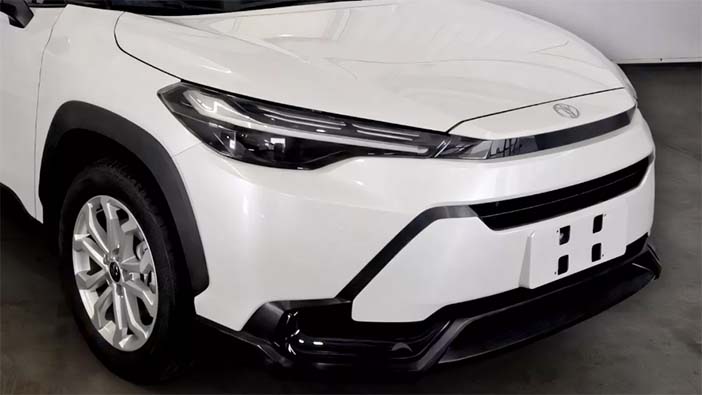
Now, both models are preparing to launch facelifted versions, bringing updated styling and familiar powertrains. In China, the Corolla Cross is manufactured by FAW Toyota, while the Frontlander is assembled by GAC Toyota. Both refreshed versions have surfaced early, thanks to filings with China’s Ministry of Industry and Information Technology, offering a preview ahead of their official market debuts. While FAW’s Corolla Cross inherits the styling from the recently facelifted global-spec model, GAC’s Frontlander has its identity up front. The sharp nose looks similar to the GR Sport trim of the SUV, but the lower portion of the bumper swaps the massive grille for an EV-inspired design. A body-coloured insert enhances aerodynamics, leaving just a small opening for the cooling intakes. This is paired with a prominent lower section finished with glossy trim accents. The leds look identical to those found in higher-spec Corolla Cross trims in other markets, although entry-level models are treated with carry-over headlights. The rest of the bodywork appears to be identical to the outgoing Frontlander. I don’t have photos of the interior yet, but it safe to assume that it will gain an updated digital cockpit. The Frontlander measures 4.490 mm long, 1.825 mm wide and 1.625 mm tall, with a wheelbase of 2.640 mm. These measurements are identical to the facelifted Corolla Cross, which means the new SUV has gained 5 mm compared to the pre-facelift version. As with its predecessor, the compact model will be available with self-charging hybrid powertrain options in Europa. Toyota hasn’t announced a release date yet, but the updated Frontlander is expected to arrive in showrooms soon. Current models are already sold at a discount, suggesting that the facelifted models are just around the corner. The Corolla Cross was originally launched in 2020 and has since grown into one of Toyota’s most successful models. In 2024, it ranked as the world’s third best-selling vehicle with 859.000 units sold, marking an 18 percent increase over 2023. That places it ahead of the Corolla, though it still trails the larger RAV4, which continues to lead global sales. +++
+++ VOLVO design chief Jeremy Offer (left on the photo) has resigned after 2 years. His resignation comes just months after the departure of former Volvo CEO Jim Rowan, who was instrumental in his appointment. Both executives had come into the car industry as outsiders: Rowan was previously the chief of Dyson and Offer had spent 6 years as the lead designer for now-defunct van start-up Arrival. In a statement, Volvo said Offer tendered his resignation to spend more time with his family; he had had to commute between the United Kingdom and Volvo’s base in Gothenburg, Sweden. Nick Gronenthal, head of automotive design for Volvo (right on the photo), has been appointed as the brand’s interim head of design. A long-term successor for Offer has yet to be decided, but it seems that former Polestar CEO Thomas Ingenlath (recently appointed to an advisory role overseeing design for Volvo parent firm Geely) will be key in making the decision. Håkan Samuelsson, who was recently reappointed CEO of Volvo, told that Ingenlath’s input will be “highly valued” at Volvo and that “he will help” to coach its designers. “He can give me some tips also on what I should do – or not do”, added Samuelsson. +++