
+++ ALPINE continued its growth in the first half of 2025 with 5.015 registrations; up by 85% compared to the first half of 2024. The A290 boosts the brand’s sales with 3.699 registrations worldwide. The very first Alpine city car, elected Car of the Year 2025, recorded 2.327 registrations in France. In the 2-seater sports coupé market, Alpine confirms its leading position in Europe with 1.181 registrations for the A110 (46% market share). In 2025, the brand will have nearly 200 Alpine Stores with a new store opening in Ireland this summer. +++
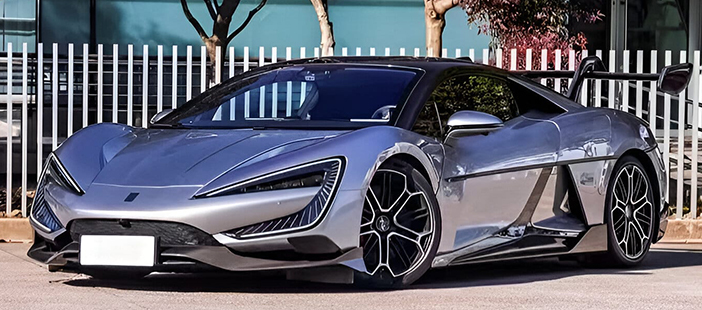
+++ BYD has finally confirmed plans to launch its high-end Yangwang brand in Europe, more than 2 years after introducing it in China. Yangwang is the Chinese company’s high-end marque, sitting above the core BYD line-up and the new Denza premium brand with a range of tech-heavy, high-performance flagship models that are pitched as rivals to the likes of Bentley, Porsche and Ferrari. The brand was launched in 2023 with the Yangwang U8: a huge range-extender luxury SUV that packs more than 1.000 hp, outpaces the BMW M3, can turn 360 degrees on the spot and floats on water. That was followed shortly after by the U9 (photo): an electric supercar that cracks 384 kph and can use its fully hydraulic suspension to jump on the spot or drive on 3 wheels. Both cars have been on sale in China for around 2 years, but despite showing both models at the Goodwood Festival of Speed last year, BYD did not officially confirm plans for a European roll-out. But now, BYD vice president Stella Li has told that “our plan is that we will bring Yangwang into Europe”, following the launch of the Audi-rivalling Denza marque early next year. She stopped short of giving full details, but said the U8 and U9 are earmarked for European sale, as well as “more cars coming” including the U7 super-saloon: a quad-motor Lotus Emeya rival with 1.250 hp and 1.700 Nm for a 0-100 kph time of 2.9 seconds. The move will make BYD the first Chinese manufacturer to enter Europe’s top-rung luxury market, though it remains unclear whether the company plans to significantly undercut the likes of the Bentley Bentayga and Ferrari 296 on price. The costs of converting the Yangwang cars to right-hand drive, and exporting them to Europe where BYD’s EVs face a 17% tariff, will mean they are likely to command a significant premium here compared to China. +++
+++ In the first half of 2025, DACIA ’s global sales (356.084 units) slightly declined compared to the first half of 2024 (-0.7%), due to Duster in Turkey now being sold under the Renault brand. However, it still holds a market share of 4.1%. With 151.948 vehicles sold worldwide in the first half of 2025, the Sandero remains the best-selling model in Europe this year, across all customer channels. The Sandero has been the best-selling vehicle to retail customers in Europe since 2017. With 108.510 units sold worldwide, the Duster remains the No. 1 SUV sold to retail customers in Europe. The 3rd generation of Duster has recorded nearly 200.000 orders since its launch a year ago. The Spring recorded 19.452 salesin the first half of 2025, an increase of 62.5% compared to the first half of 2024. In total, more than 180.000 customers have become Spring owners since its launch, which remains the most accessible 100% electric offering on the market.
The Jogger recorded 42.381 sales worldwide, down compared to the first half of 2024, as the non-SUV C-segment is also in decline. The Bigster, for which orders have been open since January 2025, has recorded a remarkable performance since its launch with 17.329 units. For this model, 69% of sales are in the hybrid 155 engine and 88% in the highest trims (Extreme and Journey). Finally, the Bigster is a real asset for customer acquisition with 80% of its French customers coming from competitors. In Europe, Dacia’s sales increased by 1.1% with a total of 308.957 registrations and a market share of 4.5%. The brand maintains its 9th place in the market. Furthermore, Dacia strengthens its position on the European podium of retail customer sales, thanks to its 5 models, and with the best market conquest and loyalty rates. The brand continues its electrification and recorded 23.5% of its registrations in electrified engines in the first half of 2025, up by 14.4 points compared to the first half of 2024. Hybrid vehicles represent 17.2% of its sales, up by 11.8 points, notably thanks to the successful Duster hybrid. Spring sales increased bringing the share of electric vehicles to 6.2% of Dacia’s total sales (+2.6 points vs H1 2024). +++
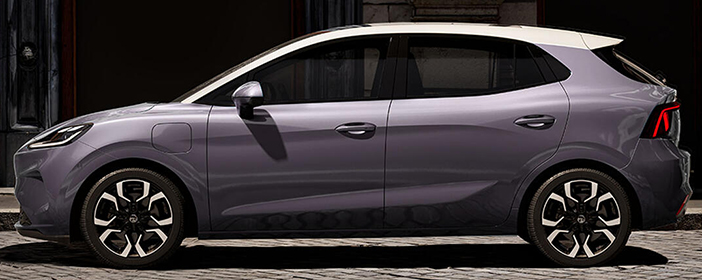
+++ MG is expected to bring the new 4 to Europe imminently after its design was registered with European legislators. The second-generation hatchback went on sale in China in March, and it is markedly different from the car it replaces: it is bigger, sports a new, Cyberster-inspired design and gets a new cabin which mirrors that of the new and technically related S5. Given that the 4 is already one of the brand’s best sellers here, and that production of the first-generation car (which is built alongside its successor) will soon end, the new model’s arrival is expected soon. However, when that will be is yet to be determined. Compared with the current 4, the second-generation EV has grown in size to bridge the gap between the existing 4 and the S5. It’s 4.4 meter long, compared with 4.3 meter long for the first-generation model, and the wheelbase has grown by 45 mm to 2.75 meter. The new 4’s styling draws heavily on that of the Cyberster, the 3 hatchback and the S5, with thin headlights up front and arrow-shaped brake lights at the rear. Filings with Chinese authorities state it has a single electric motor with 163 hp, which is down from 1670 hp, but it weighs in at 1.485 kg; a marked reduction from the current 49 kWh car’s 1.620 kg. Power is drawn from a lithium-iron-phosphate battery of undisclosed capacity, which is likely to give a range comparable with the 350 km offered by the existing entry-level 4. +++
+++ The RENAULT brand shows a growth in its global sales of +2.7% compared to the first half of 2024 with 808.413 vehicles sold worldwide. Outside Europe, the brand grew by 16.3% compared to the first half of 2024, in a market up by +4.7%, driven by the commercial success of the vehicles from the Renault International Game Plan 2027. Renault is the leading French car brand worldwide, with 36% of its sales now made outside Europe. In Latin America: sales up by 24%, notably thanks to the Kardian. In Brazil, sales increase by 8.8% and in Argentina by +96.7%. Renault ranks No. 1 in Colombia with a 14.6% market share. In Morocco: sales up by 48%, benefiting from the launch of the Kardian. In South Korea: sales up by 150% thanks to the Grand Koleos. The model has also just been launched in Mexico under the name Koleos, continuing its global deployment. In Europe, the brand gains a rank and becomes the second brand, with a market share of 6.7%. Clio is the best-selling vehicle in Europe across all channels. In a market down by 1.0%, Renault grew by 8.4% and achieved the strongest sales growth among the top-15 brands. Renault continues its electrification strategy with 2 engine offerings. For electric vehicles, sales increased by 57% in a European market up by +24,9%, driven notably by the Renault 5 E-Tech, the best-selling B-segment electric vehicle in Europe with nearly 49.000 vehicles sold since its launch. Renault is the leading brand in France for electric vehicles. Regarding hybrid offerings, Renault confirms its second place in the European hybrid (HEV) market. The brand recorded a growth of more than 36%. The full hybrid E-Tech technology now represents more than 41% of Renault’s sales, and the brand is approaching the symbolic milestone of one million full hybrid E-Tech vehicles sold. In the C and higher segments, which represent 40.1% of the sales mix in the first half of 2025 (+0.4 points), and notably in the C-SUV and D-SUV segments, the Renault brand is accelerating (+52% compared to the first half of 2024), driven particularly by Austral, Espace and Rafale. In the second half of the year, Renault will continue to build on its solid foundations with new launches. In Europe, the brand will continue its electric offensive with the €25,000 version of Renault 5 E-Tech and the commercial debut of Renault 4 E-Tech. In hybrids, Renault launched the facelifted versions of Austral and Espace in the spring and introduced two new-generation full hybrid engines this summer, including the new 160 E-Tech full hybrid engine, which equips the Captur and Symbioz. Internationally, the brand will benefit from the launch of Boreal, unveiled on July 10, which deployment in more than 70 countries will begin at the end of 2025 in Brazil. At the same time, New Koleos and Kardian will continue their expansion into new markets. +++
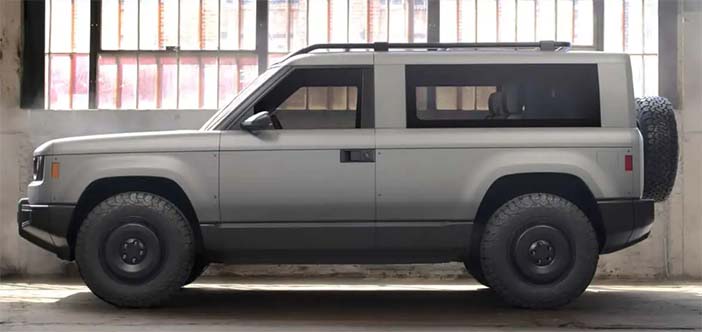
+++ Jeff Bezos-backed SLATE AUTO is making noise in the Detroit 3’s backyard with aggressive hiring and manufacturing plans for its bare-bones electric pickup expected to be priced in the mid-$20,000 range. We’ll see about that, but in the meantime, the company’s head count has swelled to about 250 at its suburban Detroit headquarters. Slate is filling 90 more positions as it gears up to launch production in Indiana, CEO Chris Barman told. To keep costs down, the radically simple pick-up is stripped to bare bones: gray body panels, no radio or infotainment system, crank windows and knobs and buttons as opposed to touch screens. It’s marketed as a blank slate to be customized by the owner. The 2-seat truck can be converted into a 5-seat SUV (photo) and owners can buy wraps to customize the exterior, Nagl wrote. With $700 million raised and 100,000 reservations booked, this concept shows promise. Slate will start production in a 1.4 million-square-foot former printing plant in Warsaw, Indiana, with a launch expected toward the end of 2026. Still, we’ve seen a plethora of well-financed startups in the EV space fail, while others not named Tesla continue to burn cash. As always, execution will be crucial for this venture to succeed, especially with such a low price point. It doesn’t help that EV tax credits will be long gone before the first Slate Auto rolls off the assembly line. +++
+++ Word association time: what comes to mind when you think of SUBARU? Easy: a blue and yellow Impreza flying sideways down a rally stage, somewhere around (or possibly just beyond) the limit. Here’s something that doesn’t come to mind, though: electric vehicles. With the heavy cost of electrification and an influx of cut-price Chinese manufacturers, these are difficult times for even the largest car makers operating in Europe. And for the smaller ones struggling for every sale they can get, it’s enough to make you wonder: why go to the trouble? Subaru Europe boss David Dello Stritto understands why you might ask that. “You could think: ‘Okay, we’re selling around 30.000 cars a year in Europe and we’re doing around 700.000 in the US, so why bother?’ ” says Dello Stritto. “That would be a fair question”. Yes, Subaru is far more successful in markets where its utilitarian 4x4s are more in vogue and electrification is less of a hot topic, and its one-time great rallying rival, Mitsubishi, drastically scaled back its efforts in Europe years ago. But with all the commitment of Colin McRae on the ragged edge, Dello Stritto says: “I’ll tell you what, Subaru has said repeatedly they have no intention of leaving Europe. They want to stay in Europe”. He notes that Subaru couldn’t shift its European sales to the saturated American market (which already accounts for around 75% of the brand’s volume) and it’s struggling in China against domestic firms. But, most importantly, there’s pride at Subaru about being a global company. So Subaru wants and needs to be present in Europe, but that creates a challenge. While large manufacturers can now hedge their bets and spread their resources between developing electric and combustion lines, smaller ones such as Subaru can’t. It’s partly why its early EV efforts, the Solterra and the forthcoming E-Outback (known in the US as the Trailseeker) and Uncharted, have been co-developed with Toyota. “We have no choice”, says Dello Stritto. “We have to migrate from what we have today to a full battery-electric vehicle line-up in Europe as soon as possible. This is the vision”. Subaru’s goal is to boost global sales from 976.000 last year to around 1.2 million by 2030, with around half of those cars being electric. Yes, fully electric: the firm has developed a full-hybrid powertrain (badged e-Boxer), but it isn’t looking at plug-in hybrid or range-extender EV technology. It can’t afford to. Europe will be important to hitting those EV targets, but uneven growth in EV sales and recent changes to European legislation have caused tremendous uncertainty. Asked how he expects the European EV market to develop in the next year or so, Dello Stritto says: “That’s a tough one, and I haven’t got a crystal ball. But in the case of Subaru, we haven’t got that many options. We haven’t got the options that, say, Toyota and Hyundai have got. We’ve got one mild-hybrid powertrain at the moment. Subaru is transitioning directly to EV, and the next step is to gradually increase the proportion of full EV we sell in each country”. Dello Stritto is well aware that doing this will require changing some people’s mindsets. “We need to roll up our sleeves and find a way to transition to EVs”, he says. “I have to convince long-standing loyal Subaru buyers that it’s okay not to have a boxer engine any more, and WRX fans are saying ‘thanks but no thanks’. I’m not taking no for an answer. It will take time, but we’re seeing mentalities change a bit”. It’s worth reflecting on the technologies and vehicles that have long underpinned Subaru’s line-up: longitudinally mounted engines of four horizontally opposed cylinders and permanent all-wheel drive. They led to a line of specific cars that served a specific purpose, helping secure Subaru a small but loyal following. Of course, in the early 1990s, longitudinally mounted engines and all-wheel drive also proved ideal for top-tier rallying. The road-going Impreza WRX and its successors transformed the image of the brand. For a period of time, just about the coolest performance car you could buy was a rally-honed Japanese saloon. The trouble is that unless you’re really on the hunt for a cost-effective, solid, dependable go-anywhere, all-wheel-drive estate, you probably haven’t thought much about Subaru since those heady days of McRae, Burns and Solberg. The WRX STI, the successor to those high-performance Impreza road cars, has long since vanished from showrooms and the current line-up (Crosstrek, Outback, Forester and Solterra) is big on no-nonsense ruggedness but short on performance heritage and brand prestige. It’s a range that has netted steady rather than spectacular results in showrooms but enough for Subaru to sustain itself with a niche audience. Buyers are loyal: many are on their fifth or 6th example and studies suggest Subaru buyers hold onto their cars far longer than average. Still, those figures contrast to the US, where 667.725 sales made Subaru the 8th-biggest marque last year, ahead of Volkswagen. While Subaru of America has invested in motorsport, it’s far less integral to the popular image of the brand as it is here, as the possibly apocryphal tale that many Americans thought Colin McRae was only a video game character suggests. But Dello Stritto doesn’t think the brand’s US success is purely a legacy issue. “Subaru hasn’t always been successful in the US”, he says. “They were struggling because their models were too expensive and they couldn’t control their dealer network, who were discounting cars because they couldn’t sell them. “That doesn’t help the brand. They changed all that, adjusted their pricing and marketing strategy with a real outdoors focus. But it wasn’t just marketing: they were very good at identifying clusters of customers who wanted a car that looked a bit different and did what they needed”. That’s partly why Subaru is particularly strong in rural states, where its all-wheel-drive tech is useful, and with more liberally minded people. “They targeted very specific groups, but we don’t have those groups in Europe”, says Dello Stritto. “We had the petrolheads. The success of Subaru in the US is about volume, which we don’t have in Europe. But it depends on the country: in Switzerland, you will find lots of Subarus in the mountains. But in the Netherlands, it’s a struggle for awareness. There are people who know Subaru but associate it as a sporty brand, and the models we can give them aren’t as sporty as they used to be. But what we do have (and we’re so lucky) is a very loyal group of customers who will keep on buying our cars for their safety and capability”. In theory, electrification and the wholesale technology change (farewell, boxer engine) offers an opportunity for Subaru to reset its values. But instead the plan is to use EV technology to double down on them. The brand’s first EV, the Solterra, was essentially a rebadged BZ4X built by Toyota as part of a wider partnership. But, notably, Subaru offers its version only with a dual-motor, all-wheel-drive powertrain. The recently revealed E-Outback sits on the same Toyota-developed platform but features more Subaru parts and technology and will be built by Subaru itself. Unlike the Solterra, it features identically sized electric motors on each axle; an arrangement developed by Subaru to offer better all-wheel-drive capability. The new Uncharted is a more rugged reworking of Toyota’s C-HR+ and Subaru has several more EVs in the works, some developed in partnership with Toyota and some developed entirely in-house. While the US remains the early focus, Dello Stritto says that Europe’s wants are being taken into account in future planning. Intriguingly, electrification also offers Subaru a way to reconnect with its performance heritage. The brand currently sponsors the World Superbike Championship, with a Solterra being used as the course car. Dello Stritto admits that many bike racing fans “hate electric” but claims they’re being won over slowly. And he is also adamant that Subaru will embrace performance again in the future, potentially with a return of the STI badge for sporty versions of its current models. “With an EV, you’ve got the power and performance and you’ve got an all-wheel drive system”, says Dello Stritto. “We’re working on more sporty models, and electrification allows us to do this. Let’s face it: it’s nice to have that prospect of a future WRX STI: super-fast, gold wheels, blue colour. This is what we want, at the end of the day”. Electrification is challenging the whole automotive industry, but for smaller car makers that don’t have the luxury of hedging their bets, it’s particularly acute. To thrive in the future, Subaru will have to reinvent everything it’s known for while still embracing the core values it has long stood for. +++
+++ VOLVO reports a group operating profit 10.0 billion Swedish crowns for the second quarter of 2025. The result reflects a continued challenging environment for the automotive industry, but the 18 billion Swedish crowns cost and cash turnaround plan is fully on track and the company is confident about more positive effects from the programme. The result is impacted by the previously announced one-off non-cash impairment charge of 11.4 billion Swedish crowns, as Volvo is adjusting the financial assumptions for the EX90 and ES90 platform because of market circumstances, the impact of import tariffs on ES90 and EX90 profitability and previous delays for the EX90. Additionally, the result is impacted by the one-time restructuring cost of 1.4 billion Swedish crowns, linked to the previously announced reduction of 3.000 headcounts. Excluding the items affecting comparability, Volvo reported an operating profit of 2.9 billion Swedish crowns and an operating profit margin of 3.1 percent. In terms of retail sales, the company sold 181.600 cars in the second quarter, a drop of 12 percent compared to the same period in 2024. For the first 6 months, sales are down 9 percent compared to the first half of 2024. Revenues came in at 93.5 billion Swedish crowns and the group profit of 10.0 billion Swedish crowns (translated into an operating profit margin of -10.6 percent). “The market continued to be challenging as well”, said Håkan Samuelsson, president and CEO of Volvo. “Demand remains under pressure from the macroeconomic environment, tariff-related uncertainties and tougher competition. However, our turnaround actions are starting to show results. In a market with headwinds we made a clear improvement of free cash flow, and our profit margin excluding items affecting comparability was slightly higher”. Earlier this year the company launched a 18 billion Swedish crowns cost and cash turnaround plan. This is starting to have an impact with the full effects coming in 2026. The plan supports the company’s strategic direction which rests on three pillars: profitability, electrification and regionalisation. Looking at profitability first, the turnaround plan is on track. The reduction of 3.000 positions globally is going into execution, and approximately 1.100 people have already left Volvo. Together with spending cuts this will lower its indirect cost base and establish a leaner and more efficient organisation. In terms of direct cost reductions, the company has started to execute on several actions to reduce material costs. One element is to utilise more synergies within the Geely group by collaborating on procurement. Another synergy area is to develop new car models together especially for the China market. Volvo has also effectively implemented cash actions including a reduction of working capital and a reduced investment pace. The company’s investment volume will ease off as planned as Volvo has made almost all major investments related to its new product architecture. This will deliver significant future cost reductions and performance improvements thanks to mega-casting, cell-to-body battery technology and more efficient, in-house developed e-motors. The first car on this new architecture is the all-new, born-electric EX60, a car for the company’s important best-selling segment. It will deliver improved performance and lower product costs necessary for Volvo’s continued transformation towards full electrification. Most analysts expect demand for fully electric cars to continue growing and to outgrow traditional combustion engine cars by 2030. Consequently, most of the company’s development efforts remain firmly focused on electrification. Meanwhile, Volvo will also refresh its plug-in hybrid (PHEV) cars to offer an attractive bridge solution for customers and areas where charging infrastructure still is weak. The company will soon launch its first extended-range PHEV, the all-new XC70, and start production during the third quarter. It is an answer to a growing demand for such powertrains and it will first be offered in China where Volvo sees big opportunities for this car. The XC70 is a good example of regionalisation, the third pillar. With globalisation in retreat, Volvo is adapting to a more regionalised world. The company is empowering its 3 key regions to be more adaptive to regional requirements and customer preferences to be able to accelerate profitable growth. Volvo is implementing a new governance model for its China operations, with a clear regional performance, operational and decision-making responsibility. In the Americas, a dedicated governance model will also be introduced. To increase the utilisation of its Charleston plant and to reduce the effects of import tariffs, Volvo will introduce assembly of the best-selling XC60 in the US. In Europe, the company recently announced plans to build the new Polestar 7 in the new Kosice plant under construction in Slovakia. It will be the second car to be built in Kosice, following a yet-to-be-announced next-generation Volvo model. While 2025 will remain challenging, the company’s 18 billion Swedish crowns turnaround plan is fully on track. Volvo has seen a positive effect already in the second quarter and is confident about further positive effects from the programme. Commercially the company will keep a sharp focus on driving sales, including ramping up sales of the EX30 and the born-electric cars in the 90 Series. The EX30 is now made in the Ghent factory which reduces the impact of tariffs and the EX90 is ready to meet the requirements of demanding premium customers after significant upgrades of its software. The ES90 all-electric sedan is ready for the market this autumn and the XC70 will take Volvo into a new growing segment for long-range PHEV cars. Development of the EX60 is fully on track and will strengthen the company’s all-electric line-up next year as it enters the largest and most popular fully electric segment. This will strengthen its position and underpin its growth potential in the EV market. When market sentiment picks up, Volvo expects to be well positioned for profitable growth, with a future-proof product line-up as well as a leaner and more efficient organisation. +++