
+++ FORD is said to plan a $370 million investment in India to churn out new engines as the US carmaker resuscitates a factory it shut down 4 years ago. The Maraimalai Nagar manufacturing site in the southern Indian state of Tamil Nadu will be retooled to make high-end engines for export markets with an annual capacity of over 200.000 units. The move comes just as Trump has made boosting domestic manufacturing (especially where the automotive industry is concerned) a signature policy goal. Ford caught flack from the Republican during his first term for a plan to increase output outside the US, but more recently won praise from the White House after announcing major investments at its domestic plants. +++
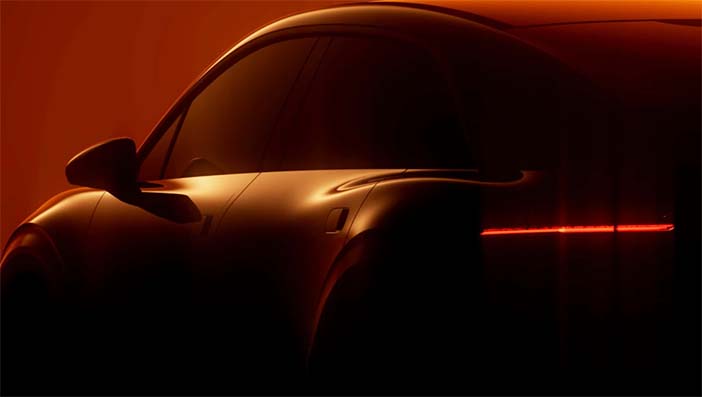
+++ Despite their high prices and occasionally buggy software, there’s still a lot to love about the cars from LUCID . Think of the Gravity and Air as the Tesla Model X and Model S with more style, upgraded and without the Elon Musk baggage. But those cars are all expensive. Fortunately, the startup brand has been open about its intent to expand outward to more accessible market segments. That starts with a mysterious model that it says will cost just under $50,000 and is currently referred to as “Project Midsize”. Now we’ve got the closest look yet at Lucid’s midsized project, this time from Lucid itself. The image was released today alongside Lucid’s announcements about new developments in autonomous vehicle technology, including plans to deliver Level 4 driverless vehicles over time by leveraging Nvidia chips and software. Of course, this is just a teaser image. The full design is shrouded in darkness and hidden behind a similarly obscured Lucid Gravity. Still, there’s a lot we can learn. The midsize EV is clearly a crossover. Like the Gravity, it looks relatively low-slung in proportion. The roofline looks coupe-like, with what seems to be a really high-mounted rear window, akin to this car’s likely direct rival: the Tesla Model Y. The taillights are skinny, while the Lucid script logo occupies quite a bit of real estate on the rear fascia. When we turn up the brightness on the teaser, we get a hit of the car’s glass. The D-pillar glass is downturned, similar to what we’ve seen on the Gravity, but slightly different from the last teaser we got from Lucid. Interestingly, the door handles on the Midsize crossover don’t appear to be totally flush, like the Air and Gravity. Perhaps the Lucid has seen the writing on the wall for electronic door handles, given the increased scrutiny they’ve faced globally in recent months. This is a very important project for Lucid. The Gravity and Air are good cars, but expensive and thus volume-capped. Lucid is looking to the midsize models to unlock far more scale and a much broader customer base, just like Tesla did with the Model 3 and Model Y. Lucid plans to start production of this model by late 2026, with a starting price of around $50,000. The car itself is said to have some breakthroughs in cost compared to the Air and Gravity, namely lower-cost motors that should help the company get its costs down. Also, like Lucid’s existing Gravity, the midsize EV will benefit from Lucid’s new partnership with Nvidia for assisted driving features. Of course, Lucid is facing an incredibly crowded EV crossover market. Since Lucid announced its intention to enter the not-as-expensive crossover market, everyone’s figured out how to make one of their own. Audi, BMW, Cadillac and Mercedes-Benz have competitors that are already on sale. Similarly, Lucid sees the midsize project as part of its big push in Europe; there will face not only the same EV competitors as in the U.S., but also very competent EVs from China. And we can’t forget about the Rivian R2, one of the most important EVs to go on sale next year. Rivian’s cheaper EV SUV will be priced directly against the Lucid (at $45,000) and should go on sale roughly at the same time. Lucid is facing some tough competition. But this seems like an interesting entry into that field. The Lucid Air and Gravity are generally good vehicles. If we can get a cheaper car that has the aspects of those models, then it’s a win in my book. +++
+++ NISSAN will build an all-new Skyline with rear-wheel drive, a manual transmission and looks inspired by some of the nameplate’s most iconic iterations. The news comes as Nissan grapples with an extensive reorganisation, which has happily led to a refocus of the brand’s models, and by extension the rebirth of this iconic name plate. The bad news for us is that this car is likely to only find its way its home roads in Japan, but we can live in hope Nissan might change its mind. It’s also worth remembering that Nissan disconnected the Skyline moniker from GT-R back in 2007, so this isn’t a new R36 GT-R – that’ll come later, and to international markets. Technically, the Skyline never actually went off-sale in the Japanese domestic market. In fact it was a car we saw in Europe briefly as the Infiniti Q50. In Japan the existing model has been on sale for well over a decade, meaning it’s well overdue for a refresh, and something much more dramatic than that current saloon is coming. Speaking at the Japan Mobility Show, Nissan’s global design director Alfonso Albaisa told that the new Skyline would be inspired by past models, but without falling into being a retro cliche. Instead, this modern, 4-door, fastback-shaped model will firmly look forward with just a few references to one of the Skyline’s most iconic eras. “Think back to the car of 1968 or 1970. That expressive shape. Iconic”, Albaisa told. This points towards the 1968-1970 era of GT-R, which changed from a traditional 3-box shape to a fastback style. “Think big, wide, and blocky. Agressive and not retro”, he continued. While these somewhat cryptic teasers don’t reveal a huge amount, expect a much more distinctive design than many of its current models. “The Nissan Z is on one side, the GT-R is on the other and the Skyline will sit somewhere between”. What’s less certain is exactly what underpinnings the new Skyline will run on. While the car will be all-new, it’s very possible that, like Nissan did with the latest Z sports car, the Skyline will run on the same basic platform as the current model, but come with substantially different sheetmetal and a brand new interior. +++
+++ OPEL will launch a hot GSE version of the current Corsa next year, building on the new Mokka GSE that has already hit the roads and seeking to inject excitement and emotional appeal into the German brand. Although an all-new Corsa is due to be revealed next year, the GSE will be based on the existing model, helped by its close relationship to a couple of models that already use the same powertrain. Using the Mokka GSE’s recipe, and that of the forthcoming e-208 GTi from Stellantis stablemate Peugeot, as well as the Alfa Romeo Junior Veloce, the Corsa GSE will have a 280 hp front-mounted electric motor, which will be good for a sub-6-second 0-100 kph time. Uprated set-ups for the suspension, steering and chassis can also be expected, along with beefier styling ,especially the front and rear bumpers. Following the Mokka GSE’s lead, there will also be bigger wheels and GSE sports seats. The range won’t be great, however, with those other cars with the same 54 kWh battery and 280 hp motor quoting an official 340-360 km. +++
+++ The automotive industry is once again at the mercy of SEMI-CONDUCTOR CHIP supply, with the European Automobile Manufacturers’ Association (ACEA) declaring car firms are getting ready for “imminent assembly line stoppages”. ACEA is the main European carmarkers’ lobbying group, with members including BMW, Mercedes, the Volkswagen Group, Nissan and Toyota. ACEA director general Sigrid de Vries said: “Our members are telling us that part supplies are already being stopped due to the shortage. This means assembly line stoppages might only be days away”. One of the main reasons for the sudden concerns surrounding semiconductor chips comes from the situation regarding leading microchip manufacturer Nexperia, which is based in the Netherlands. Nexperia was partly-owned by the Chinese government and has manufacturing operations in China, but due to “serious managerial shortcomings” the Dutch government took control of the company last month. The fallout from the move saw the Dutch courts replace Nexperia’s CEO Zhang Xuezheng with a non-Chinese executive, and this caused the Chinese government to respond by banning the export of Nexperia’s products. This dispute around Nexperia’s ownership has raised concerns about the “availability of semiconductor products critical to the European industry”, according to the firm. The ACEA says the industry is currently “working through reserve stocks”, however, those supplies are “rapidly dwindling”. It also says that many alternative suppliers exist, although it will take months for them to build up the necessary capacity. The Volkswagen Group is one of the car companies that relies on chips from Nexperia. In a statement, the firm said: “Vehicle production at the Wolfsburg, Emden, Zwickau, Osnabrück and Dresden sites is secured for the coming week.” However, VW added that it’s “in close contact with stakeholders in light of the current situation”, and that “short-term effects on production cannot be ruled out”. Among the other firms that source chips from Nexperia either directly or indirectly are Nissan, Volvo, Honda, Mercedes and BMW. In light of the potential issues facing the automotive industry with chip shortages, a Nissan spokesperson said the company is “assessing the situation and will take appropriate measures as needed”. As cars become more software-orientated, chip shortages become increasingly problematic. For example, the original Volkswagen Golf had around 30 semiconductors, while the current model has around 8.000, and the all-electric ID.7 has roughly 10.000 more. Volkswagen Group and Rivian Technologies recently announced a partnership that will result in a “secure supply” of “high-tech semiconductors”, although this will be for cars produced in the future, rather than any current models. In a statement, the VW Group said it is “currently examining alternative sourcing options in order to minimise possible effects on its supply chain”. There could be a lifeline in future with the US and China currently negotiating a new trade deal that will lower tariffs and supply of rare-earth metals. potentially indirectly affecting the wider global car industry. However, this isn’t likely to have any immediate bearing on Europe’s automotive manufacturing status. The previous semiconductor shortage, which started during the Covid pandemic, was exacerbated by geopolitical factors and affected most electronic goods – from PlayStations to washing machines. Chip shortages caused several car firms to halt production – factories such as MINI’s Oxford plant, Renault’s Flins factory in France and even General Motors’ facilities. +++
+++ The next TOYOTA COROLLA is planned to offer a fuel cell powertrain (in addition to hybrid, ICE and EV options) as the Japanese manufacturer doubles down on hydrogen as “the energy of the future”. Toyota has remained a vocal and committed supporter of hydrogen propulsion as other large vehicle manufacturers have backed away from FCEV technology to focus on lower-emission ICE powertrains and new-generation BEVs. It’s one of just two manufacturers with an FCEV car on sale today (the Mirai, sold alongside the Hyundai Nexo) and has said it remains “fully committed” to rolling out hydrogen propulsion to its next-generation cars as part of its ‘multi-pathway’ approach to decarbonisation. In line with that ambition, Toyota is working on a new-generation FCEV powertrain, said to be 20% more efficient than that in the current Mirai, and is working on a plan to build car and HGV fuel cells on the same line to cut costs. The boss of Toyota’s hydrogen division, Mitsumasa Yamagata, acknowledged that hydrogen propulsion remains a niche solution but predicted that it will play an increasingly important role as combustion is phased out. “Maybe the pace seems slow, but it is true that we are steadily making progress”, he said. As a statement of intent, he confirmed that “we are developing a hydrogen-based powertrain” for the next-generation Corolla, which has been previewed with a striking concept and already confirmed to offer plug-in hybrid, hybrid, pure-combustion and battery-electric power. But work was still under way to ensure the concept’s architecture could accommodate a fuel cell without any extensive redesign work. “As you see from its beautiful proportions, we need a very smart powertrain. We are developing a hydrogen-based [system]for Corolla by reducing the cell size so that it can be much more compact,” Yamagata said, adding that the priority was to ensure the systems fit “beautifully” into the new architecture. Beyond the technical compatibility of hydrogen fuel cells, however, the primary inhibitor to driving uptake of FCEV cars is the lack of fuelling infrastructure; a shortcoming that won’t be addressed while there are no vehicles to use it. Yamagata outlined a solution for this ‘chicken and egg’ situation that involves increasing the amount of FCEV lorries on the road to lay the foundations for a more developed hydrogen refuelling network that can then be cost-effectively adapted for FCEV cars. He noted that there are a number of hydrogen stations in Europe already (almost 300, according to official figures) but said almost all of them are for FCEV cars, of which there are very few examples on the roads. “However, the movement to change heavy-duty trucks to hydrogen is now accelerating, so the current challenge is how we can actually convert the passenger vehicle hydrogen infrastructure into a heavy-duty truck hydrogen infrastructure”, he said. “We think it’s an opportunity for us, because if the trucks use a lot of hydrogen, the price of hydrogen will decrease”. Yamagata estimated that the average FCEV lorry uses around 120 times more hydrogen than an FCEV car. He highlighted a recent proposal from Europe’s Hydrogen Council (of which Toyota is a member) to establish a hydrogen fuelling station every 200 km on the region’s motorway network and said this could be key to making the powertrain a more viable solution for commercial and passenger vehicles. Plus, because HGVs usually operate on fixed regular routes, the infrastructure can be concentrated on specific locations to give optimum coverage of a wider region, rather than clustering them all together and leaving large parts of the network uncovered. However, Yamagata said, it’s important that industry bodies, petrol companies, legislators and politicians work together to bring the idea to fruition. If different organisations and regions begin rolling out hydrogen infrastructure separately, “we cannot enjoy the economic scale, and the hydrogen price would not decrease, and people would be left out of an excellent idea”. One other challenge in using HGVs as the basis for a springboard for the development of an FCEV car refuelling network is that HGVs use more energy-dense liquefied hydrogen; cars take it in more space-efficient petrol form. Yamagata said, though, that it’s “completely 100% possible” to supply hydrogen in both states at the same refuelling sites, minimising the amount of locations needed and reducing installation costs. +++
+++ The VOLKSWAGEN GROUP will continue with significant restructuring efforts in order to remain competitive after recording what its financial boss called an “unsustainable” drop in profits for the first 9 months of 2025. The German giant, whose brands include Audi, Porsche and Volkswagen, posted a 58% drop in profits to €5.4 billion; down €7.4 billion year on year, leaving it with a pre-tax profit margin of 2.3%. “This is not sustainable for our business model, in particular in light of the ongoing volatile political situation and market environment”, CFO Arno Antlitz told journalists on Thursday. +++