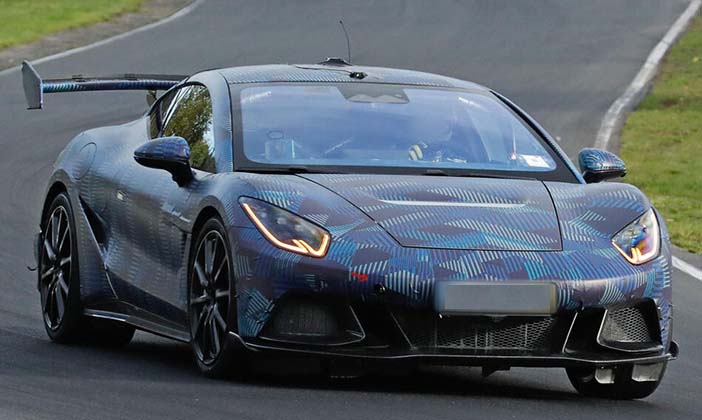
+++ AUDI will bring back the RS6 Limousine as part of its next-generation A6 line-up, and spies have caught it testing. It means the company will be offering its high-performance model in a second body style alongside the Avant for the first time since the C6 generation was killed off in 2010. The news comes as the brand readies its next generation of plug-in hybrid RS models, starting first with the RS5 next year, and an RS6 coming in late 2026 or early 2027. The decision to offer a 3-box variant of the RS6 might seem surprising, but it tallies with the fact that the sleek Audi A7 Sportback won’t be renewed for a new generation. This means there will be no RS7 Sportback to fulfil the demand for a large 4-door RS model, which is still a more popular body style in global markets than the European-focused Avant. As with the Avant, though, there are some hefty changes to the body and chassis for the new saloon. The body on the caught prototype is wider than the already chunky A6 saloon, giving the car a very aggressive stance. The arches don’t just hide wider axles, but bigger wheels, too, which are expected to match the existing model’s 22 inch designs. The test car also looked to be running carbon-ceramic brakes and I expect other high-end suspension tech such as air suspension, rear-wheel steering and even a new generation of Audi’s cross-linked hydraulic dampers. The design of the new RS6 will be just as aggressive as on former models, dominated up front by huge air intakes to help feed the Audi’s powertrain. At the rear, the company has fitted a small ducktail spoiler on the bootlid, which will help the aerodynamics as well as balance the design of the rear bumper. This will integrate a very large diffuser section and two huge exhaust outlets that are mounted closer together due to the complex exhaust system. What I don’t yet know is what sort of plug-in hybrid powertrain will be installed in the car. As with the RS6 Avant, there has been an ongoing discussion about whether this model will feature a V6-based powertrain (as is expected on the smaller RS5) or a larger V8 system. Original reports suggested it would be the former, leaving the ultimate performance from an RS6 to come from a future all-electric e-Tron model. But over the course of the car’s development, things have changed. A re-jig of Audi’s EV plans means the electric RS6 e-tron has been scrapped in its initial form. Lessons have also been learned from outside Audi, with arch-rival AMG seeing slow sales of its downsized hybrid models. By contrast, the RS6’s main competitor, the BMW M5, is selling in higher numbers than ever with its plug-in hybrid V8 powertrain, and given that a Touring variant is also available, it’s eating into Audi’s dominance in the ultra-high-performance estate market. +++
+++ BYD could bring its new Racco kei car to Europe if the European Union’s mooted E-car category for small cars increases the viability of such models. BYD revealed the Racco at the Tokyo motor show last month as a statement of intent to establish a foothold in a market served almost exclusively by domestic manufacturers such as Honda, Suzuki, Toyota, Subaru and Mitsubishi.
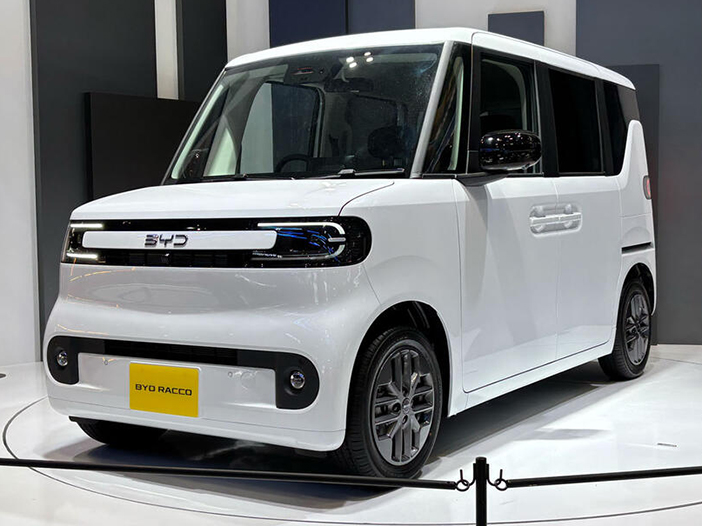
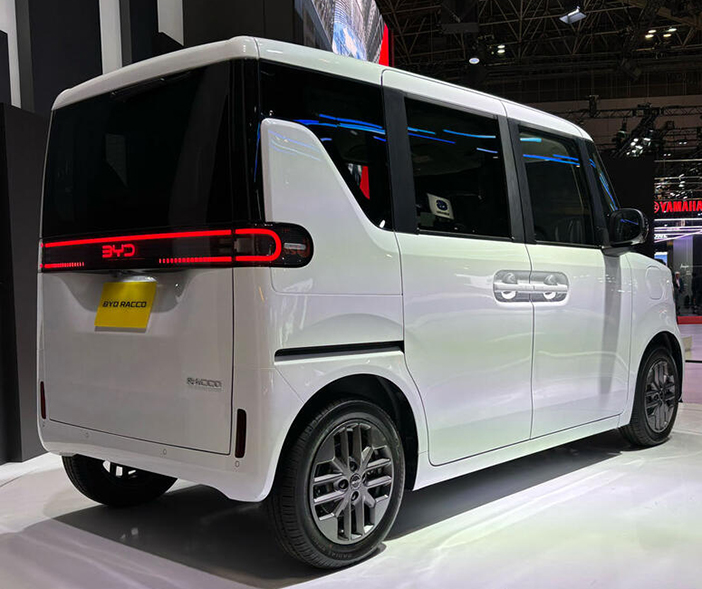
Designed and engineered to meet the kei car class regulations of Japan, where it’s initially set to be sold exclusively, the Racco measures 3.4 meter long, 1.475 meter wide and 1.8 meter tall and has similarly boxy, straight-edged proportions to its Japanese rivals. It has a 20 kWh battery, said to be good for 180 km of range and charging at up to 100 kW, which powers a single motor of undisclosed strength on the front axle. The Racco is a landmark external entry into a segment that represents almost a third of car sales in Japan, which has historically favoured homegrown marques. BYD has sold fewer than 7,000 cars there since launching in 2022, compared with 11.000 in September 2025 alone in the United Kingdom. There is much scrutiny over whether cracking the fiercely competitive kei car market could be key to BYD’s future success in Japan, but now company vice-president Stella Li has suggested the Racco could ultimately play an important role globally as a new entry model. “In Japan, we are already launching a kei car; we will be very interested to follow the EU regulation”, she said. “If there’s some space, we can bring that car here”. The EU regulation Li referred to is the E-car category that European Commission president Ursula von der Leyen recently said she was working to establish in collaboration with domestic manufacturers, as part of a drive to usher in a new generation of “small, affordable cars”. The move comes in response to various manufacturers’ assertions that the constant onslaught of new regulations and mandatory technologies have made small cars too expensive to produce for the EU and thus priced a large proportion of the European public out of the new car market. Precise details of the E-car class (the ‘E’ stands for ‘European’, ‘environmental’ and ‘economical’) remain to be outlined, but the framework is widely viewed as a crucial step in reintroducing small, cheap cars to the region – and has been compared to Japan’s longstanding kei car class.
Dacia recently revealed the kei-esque Hipster concept as a vision of the sort of car that could be produced if small car regulations are relaxed, suggesting it could ultimately go on sale for less than 17.000 euro. And Honda will launch the Super-N, an adapted version of its N:One electric kei car, in European next year, although it has yet to confirm plans for a wider European launch. If BYD eventually deems Europe a hospitable environment for the Racco, it could slot in as a new entry-level EV underneath the Dolphin Surf, giving the firm a rival to the Dacia Spring and Leapmotor T03. However, Li added that a European launch of the Racco was “not a topic” of immediate focus for BYD, which is investing heavily in expanding its range of hybrids in all segments in the face of faltering demand for EVs in Europe. +++
+++ The character of a car marque often reflects the people leading it. That has certainly been the case with CUPRA since it was expanded from a Seat performance badge into its own brand 7 years ago. Cupra’s showy, almost brash styling is in tune with the manner of former boss Luca de Meo, who created the brand during his time at the helm of Seat, and his successor, Wayne Griffiths. Both were very different leaders but shared an ability to draw attention, exactly what a new brand such as Cupra needed to make an impact. Griffiths abruptly departed Seat-Cupra at the start of April, and for the past 6 months Markus Haupt has held the reins as CEO, initially on an interim basis, stepping up from his role as the firm’s production and logistics boss.
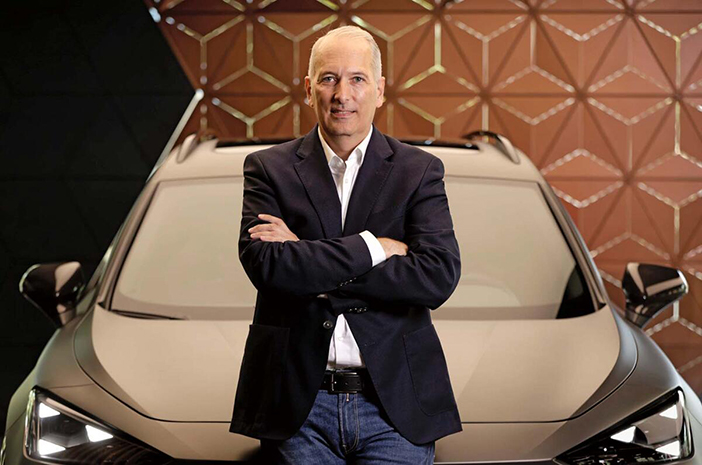
On first impression, he’s a very different leader from his predecessors, not least because his background is in engineering and logistics rather than sales or marketing. But he sounds genuine when he says he’s “passionate” about Cupra and his enthusiasm shows when I talk to him. A German of Spanish descent, Haupt trained in Spain and spent the first 10 years of his career at Seat before moving around Volkswagen Group brands in a variety of roles. He helped to prepare Seat’s Martorell plant to build the Audi Q3, led logistics for the group’s A0 small car platform, worked on VW’s EV projects and ran VW’s plant in Spain before rejoining Seat-Cupra in 2022. “When I returned, I found something completely different”, he tells. “2 brands, lots of success, and the image of Cupra was growing and growing”. Part of the reason for putting Haupt in charge is likely to have been to reduce distractions during an important year for Cupra. The firm has been what Haupt calls “the clear leader” of the Volkswagen Group’s critical project to develop 25.000 euro ‘urban EVs’ on the MEB Entry platform. The Cupra Raval, Skoda Epiq and Volkswagen ID Polo plus ID Cross will all be built in Barcelona by Seat SA, the parent firm of the Cupra and Seat brands. In total, 10 billion euro has been invested in the project, which, notes Haupt, is “the biggest industrial investment in corporate history in Spain”. Beyond the industrial significance for Seat SA, the urban EV project is huge for Cupra. The Raval will be its 7th and smallest model yet and should help drive volume. Crucially, insists Haupt, the Raval will reflect Cupra’s premium performance brief and represent “100% of our DNA. The chassis is lowered, we have sporty suspension and more precise steering”. Growth plans involve both further product line expansion and launching into new markets. Plans to enter the US have been shelved and the focus shifted to the Middle East. “We have lots of feedback from this region from fans, dealers and investors”, he says. “The region is growing in terms of finance and it’s the logical next step”. The recently revealed Tindaya concept will enter production early next decade as the brand’s biggest model yet, sitting on the VW Group’s new SSP platform. Haupt describes the radically styled vehicle as “the maximum we can get out of our design DNA” and says a D-segment SUV “is a step we need because it would fit into markets such as the Middle East, Turkey and Mexico. “We need a portfolio that allows us to be present in different markets. We’ve launched 7 cars in 7 years and we need to keep growing. We’ll always be exploring if there’s room for more, and in the future we’ll explore more segments, different cars and new markets”. Although Cupra is growing, the future is less clear for Seat, but Haupt insists the 70-year-old brand still has a bright future and “is the perfect complement to Cupra, addressing completely different customers in different markets. And we are investing in Seat”. Updated Ibiza and Arona models are imminent and Haupt says having 2 brands adds valuable flexibility. In early September, more than 5 months after he assumed the interim role, Haupt was named permanent CEO of both Cupra and Seat, with company president Thomas Schäfer (also CEO of Volkswagen) citing Haupt’s efforts in readying Martorell to produce the small EVs as making him “the ideal leader” for the firm. Haupt, for his part, is excited about the future. “We have a wonderful board and team who are engaged and motivated”, he says. “Being the leader of this company, together with my team, is an honour for me. My heart feels this company”. +++
+++ DENZA will reveal a new flagship sports coupé at the Goodwood Festival of Speed next summer, before launching it in Europe the following year. Denza is Chinese giant BYD’s answer to BMW and Mercedes-Benz and will come to Europe next year with the Z9 GT shooting brake, D9 luxury MPV and B5 SUV, before adding the ‘Z’ supercar shortly after as a halo model. The brand revealed a concept previewing the ‘Z’ at the Shanghai motor show earlier this year, revealing that it will be a performance-focused electric 2-door in the vein of the Porsche 911 and Mercedes-AMG GT. Technical details were thin on the ground, but Denza said it has steer-by-wire technology, magnetorheological suspension and a driver-focused, tech-heavy cockpit that majors on advanced technology. Features likely to be carried over from the Z9 GT include the ability to ‘crab walk’ and ’tank turn’, and it’s possible the ‘Z’ could take that car’s tri-motor powertrain and ramp up output beyond its 980 hp. Shortly after the concept’s unveiling, prototypes of the production car were spotted at the Nürburgring, sparking speculation that a lap record attempt and possibly a European launch were on the cards and now BYD executive vice-president Stella Li has confirmed that it will come to the Netherlands. Asked if the ‘Z’ could play an important role as a brand-building halo model for Denza in Europe, Li replied: “We’d like to invite you to Goodwood…”, before confirming the car would be displayed there in July and then head to showrooms. The concept was called the Z, but Li said the final name for the production car remains “confidential” and could be different. It will play an important role in cementing Denza’s premium and performance credentials in Europe, with Li touting the brand’s emphasis on technical capability as an edge over established marques. “If you think about other brands, when they launch a new premium car, they just make the engine more powerful and the interior design more emotional; there is no fundamental revolution”, she said. By contrast, Li touted the Z9’s ability to tank-turn, drift, drive semi-autonomously, accelerate from 0-100 kph in 2.7 seconds and ‘flash charge’ at super-high speed as testament to Denza’s technical superiority – which will be a key marketing pillar for the brand. “This is using technology to really redefine elegance”, she said. “For an emotional connection, this is what we have. We will make people say ’this is the car I really want to try”. +++
+++ Electric vehicle charge speed has to keep developing until it matches the time needed to refuel a petrol car, even if only to give drivers reassurance rather than because they actually need the functionality. That’s according to the boss of HYUNDAI ’s new European development centre, Tyrone Johnson. “The expectation from customers is that it will take 3 minutes to fill a car, the same as it does with an internal-combustion engine”, Johnson told. “It’s maybe perception rather than reality, but they worry about range anxiety and whether they will suddenly need to drive 300 km. The goal is to get to the same speed as cars with a petrol or dieselengine”. Johnson also said that people who can’t charge at home need to know they can quickly replenish their EV. He believes the challenge for manufacturers, however, is to deliver fast charging without just adding more batteries, which increases weight and reduces space inside electric cars. The managing director of the new Hyundai Motor Europe Technical Centre, which has been built at a cost of 200 million euros, also called for patience in establishing a bullet-proof charging infrastructure. “The traditional car industry has had over 100 years to develop something as simple as filling a car with fuel, and there are still some rare occasions where the fuel filler won’t fit in the car”, he said. “EV is a gigantic challenge and what we are expected to deliver is immediate. Give us a minute – it will work, but as an industry it’s going to take a minute”. To charge at the rate being targeted will require a step-change in battery tech, with even Europe’s fastest-charging car on sale, the Porsche Taycan, only capable of hitting a speed of up to 320 kW. In the lab, Hyundai is working on 400 kW charging tech that offers potential efficiencies that mean longer ranges can be achieved without requiring larger batteries but could also bring charge times down closer to a traditional petrol fill-up. +++
+++ The all-new, second-generation JEEP RENEGADE is set to arrive within the next 2 years, and I have the inside track on the off-road-obsessed brand’s rival to the beloved Dacia Duster. There’s only been one iteration of the Renegade so far, launched back in 2014, and it’s still clinging to its place in showrooms but now feels very dated. Its role as the entry-point to the Jeep’s line-up was also stolen by the even smaller (and generally much better) Avenger that launched in 2022 and has since led to a tripling of the brand’s sales in some European countries. So a Mk2 Renegade is long overdue. Thankfully, last summer, Antonio Filosa, Jeep’s CEO at the time, who’s now head of the whole Stellantis group, announced that work on the next-generation model was underway. He revealed it would finally arrive by 2027, and confirmed there will be an electric version priced from 34.000 euro in Europe. However Filosa didn’t share anything else about the car. Now, I’ve sat down with Jeep’s head of product planning in Europe, Marco Montepeloso, for an exclusive interview to find out more about everything the brand has in the pipeline. Montepeloso hinted that the next-generation Renegade will be roughly the same size as the current model: “Personally, I really think there is space in the market between the Avenger and the new Compass, so we think that there is an opportunity”. For context, the Avenger measures 4.08 metres long, while the new Compass is 4.55 metres tip to tail. If the new Renegade does bridge the gap between the two, it will measure about 4.3 metres; about the same as the latest Duster. The new Opel Frontera is about the same size, too. When asked if this could cause the Renegade to cannibalise its baby brother’s sales, or vice versa, Montepeloso quickly fired back: “This is not something new. We have sold the Avenger and the Renegade together over the last 3 years, and the great performance of the Avenger has been with the Renegade there side-by-side. “Looking at the customer analysis, there is a clear difference between a four-metre-long car that is mainly addressing the needs of compactness of some of our European customers, and a bigger 4.25 to 4.3-metre-long vehicle that addresses more the needs of young family that maybe start having some kids or have a very active lifestyle. These are the sort of people who need to bring more stuff, so they need more space in the second row, more boot space”, he said. “So I don’t see a risk of cannibalisation. There are, to me, clear differences in customers and this is the reason why there is a big opportunity between the Avenger and the Compass for the Renegade in the future”. Montepeloso also emphasised the importance of Jeep’s new philosophy of “Freedom of Choice”. Like many other brands, Jeep wants to offer customers a wide selection of powertrains, so they can choose the one that suits them best. “It’s absolutely a pillar of our strategy in Europe”, the product boss told me. “If you want to be relevant in all markets, you need to have a wide offering of powertrains to adapt to the different needs of the market. “We need to stick with this philosophy”, he continued, “We need to give our customers this freedom, it’s key for sales. And I also think we need to stay flexible at this stage towards any potential evolution of the regulations in Europe”. We know for sure there will be a pure-electric version of the next Renegade, but we’re confident there will be a variety of hybrid options available, too. The majority will be front-wheel drive, but at least one 4-wheel-drive version is likely, with 4x4s still proving a fundamental part of the Jeep brand. Underneath, the next Renegade will use the new STLA Small platform that will serve as the replacement for the CMP/e-CMP architecture the Avenger sits on. It will be introduced in 2026 by the next Opel Corsa and Peugeot 208; we know this platform can accommodate both hybrid and electric powertrains, with EVs able to offer more than 480 km of range. We’ve not seen any prototypes or teaser images of the new Renegade yet, but being a Jeep, it will be a butch and boxy SUV with a 7-slot grille, squared-off wheelarches, very short overhangs and plenty of chunky cladding. Like the current model, the new Renegade won’t be designed to go rock crawling through Utah’s Moab desert, but off-road ability is still important for a Jeep. Short overhangs not only help to maximise interior space, but give SUVs better approach and departure angles when tackling rugged terrain. Similarly, higher-than-average ground clearance will help deliver a lofty driving position, but also benefit wading depth and the car’s ability to tackle any obstacles. In recent years, Jeep has made some big leaps forward when it comes to interior design, quality and technology, and I expect to see this trend continue with the next-generation Renegade. I suspect it will have a similar interior to the latest Compass, meaning it’ll include big clear dual displays, lots of chunky physical controls and materials picked for their durability. The new Renegade won’t be the most luxurious of small SUVs, but should suit the brand’s rugged image. I expect the new Jeep Renegade will split the difference between the Avenger and Compass when it comes to pricing, too, so it should start at around 34.500 euro. +++
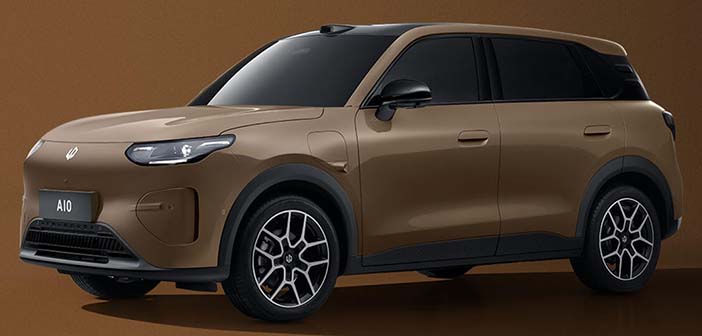
+++ The LEAPMOTOR A10 has been revealed ahead of its public debut, expected to take place at the Guangzhou motor show later this week. A pair of pictures released by the Stellantis-backed Chinese firm reveal it to be a short, chunky crossover with styling distinct from that of its larger siblings, the B10 and C10. Technical details remain under wraps, but its naming and the images suggest it will be positioned below the B10, which is priced from 27.995 euro in the Netherlands. For reference, the B10 employs a 218 hp rear-mounted electric motor and a 67.1 kWh lithium-iron-phosphate (LFP) battery, officially yielding a range of 430 km. These figures are expected to be reduced in the A10, given its likely lower positioning in the brand’s line-up, instead rivalling EVs such as the Citroën ë-C3, Hyundai Inster and Renault 5. Notably, the A10’s roof is fitted with a lidar sensor box, suggesting it could offer some form of advanced driver assistance functionality. The A10’s interior has yet to be revealed but is likely to feature the 14.6 inch infotainment touchscreen used in the B10, C10 and B05 hatchback revealed at the recent Munich motor show. Leapmotor plans to have a 6-car line-up in Europe by the end of next year. It already sells the B10, C10 and T03, while the B05 is set to follow early next year. Autointernationaal.nl previously reported that those will be joined by a B-segment crossover positioned below the B10, likely the A10, and another B-segment model that isn’t an SUV. +++
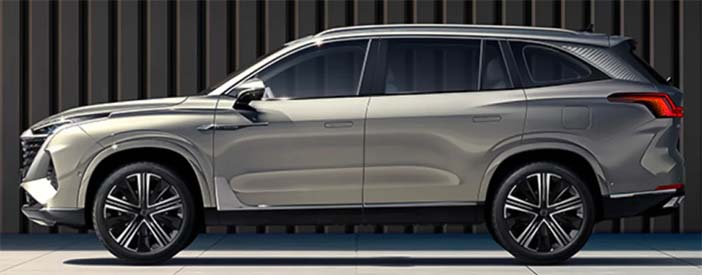
+++ Meet the new MG S9 : MG’s first 7-seat SUV, which will serve as its rival to highly rated family haulers like the Skoda Kodiaq, Peugeot 5008 and Kia Sorento. The car is already available in Australia as the ‘QS’. However, we didn’t hear it would be coming to Europe from anyone at MG. Instead, the news was announced by Euro NCAP when it released the results of its crash tests on the S9 PHEV, showing the car being smashed to smithereens before the car company even had a chance to tease the new name. This has all happened just a month after Euro NCAP accidentally revealed the new S6, again, before the car manufacturer could make any announcements about this electric SUV itself. At least the MG S9 has received the maximum 5-star crash-safety rating from Euro NCAP, plus 84 percent and 85 percent scores for adult and child-occupant protection, 74 percent for vulnerable road users, and 77 percent in the safety assist category. All those results are on par with its key rivals, although the Skoda did score slightly higher in some areas. The only other detail we can discern from Euro NCAP’s report is that the S9 will feature a 1.5-litre petrol engine, suggesting it will use the same plug-in hybrid system as the HS PHEV. If true, the petrol engine will be paired with a single e-motor and a relatively large 24.7 kWh battery that in the HS PHEV delivers a pure-electric range of up to 120 km. The MG S9 should arrive in Europe sometime in 2026, but exactly when isn’t clear yet. Although we don’t have to wait to find out more about it because, as I said, the car is already on sale down under. MG says it offers “true seating for 7, not just a 5+2 set-up”, which you’d hope given that, at 4.98 metres long, the MGS9 is more than 200 mm longer than the already very spacious Skoda Kodiaq. Its 2.92-metre wheelbase is also about 120 mm longer than the Skoda’s, and the second row of seats can slide forward to provide more cargo space. According to MG, there’s 203 litres of boot space available with all the seats in place, 517 litres with the third row folded down and 1.052 litres when all but the front seats are down. Up front, the dashboard is almost identical to that of the latest MG HS, with the 12.3-inch central touchscreen and 12.3-inch driver’s display housed in a single panel, and a row of physical shortcut buttons beneath. However the QS gets wood-effect trim on the dashboard and centre console, similar to a Volvo XC90. Considering that the plug-in hybrid MG HS starts from 40.836 euro in the Netherlands at the time of writing, the 7-seat MG S9 PHEV is likely to cost from around 44.500 euro, which would allow it to undercut the Skoda Kodiaq and Peugeot 5008. +++