
+++ The direction of a car brand can shift quickly when a new design chief takes the reins, and AUDI is right in the middle of that transition. As of mid 2024, Massimo Frascella has stepped in as the company’s new design boss, succeeding Marc Lichte, who spent a decade shaping every current model in the line-up. Under Frascella, Audi is preparing to roll out an entirely new design language, first previewed last year with the dramatic Concept C, an early glimpse at a 2-door model intended to succeed the TT, though that plan is not without its problems. It will be several years before existing Audi models with their controversial designs will be replaced with new ones penned by Frascella, but these renderings provide us a hint of what a future A6 sedan from Audi could look like with him at the helm. Of course, it’s been less than a year since the current-generation A6 was introduced, so a new one won’t be released until the next decade. To give the A6 a fresh new look, key elements of the Concept C were used and transplanted onto a sleek 4-door.
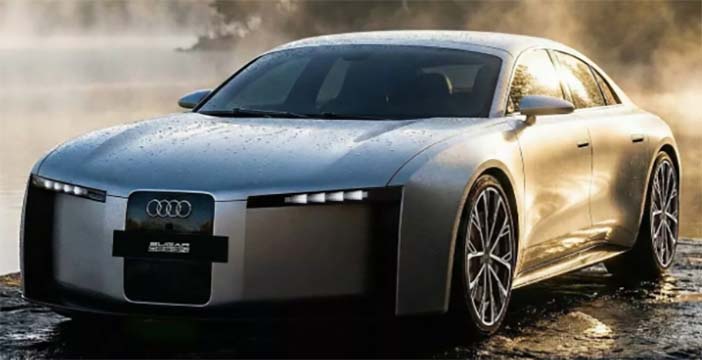
The front of Audi’s most recent concept is no doubt its most controversial angle, sporting a tablet-shaped black grille that departs dramatically from the familiar singleframe design that has defined the brand for years. Here, that grille is paired with the same narrow LED headlights seen on the Concept C, alongside more traditional vertical air intakes. I’m not convinced the front of this futuristic A6 is any better than the current one, but I do really like the sultry shape of the sides with newly-designed doors, different quarter panels, and a revised belt line.
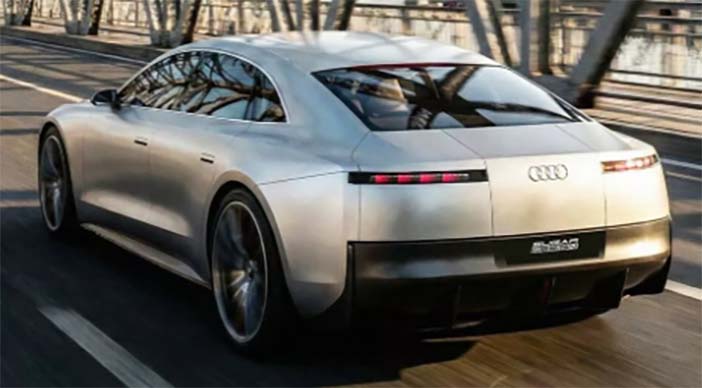
If the next generation A6 borrows as heavily from the Concept C at the rear, it could feature slim horizontal taillights and a blacked out lower bumper and diffuser section, echoing the concept’s graphic approach. Last month, Frascella confirmed that all future Audi models will have a grille inspired by the Concept C, but acknowledged tweaks will be made to the fascias of each, ensuring they stand out and don’t all look identical. How Audi’s new design philosophy develops over the coming decade will be interesting to see, but it does appear to be on the right track. +++
+++ I’ve reported extensively on Chinese automakers’ growing presence in North America, Latin America, Europe and elsewhere. Without a doubt, stakeholders in those markets are watching CHINA with either trepidation, high hopes of cashing in or just mere curiosity. China is perceived by many as an unstoppable force of cutting-edge technology, unbeatable cost and relentless overseas conquest. But take a look at China’s domestic car market. At this point in time, it’s sputtering. BYD, the world’s top EV maker and the boogeyman of old-guard automakers around the globe, saw domestic deliveries plunge 53 percent to 110.000 in January. Passenger vehicle sales in January fell 13 percent at Geely, 33 percent at Changan and 40 percent at Chery, according to MarkLines, a global automotive research portal. +++
+++ 2 new electric hatchbacks will make 2026 a pivotal year for CUPRA , as it seeks to kick on from delivering its 1-millionth car and setting a new annual sales record of 328.800 units (up 32 percent). Not bad for an 8-year-old car company. I’ve spent some exclusive time with new CEO Markus Haupt to discuss how Cupra got here, and what’s coming next. He’s winding down at the end of a huge day: the official opening of its battery assembly plant at Seat-Cupra’s HQ in Martorell, Barcelona. He’s been glad-handing the president of Catalonia and Spain’s minister for industry, as well as Volkswagen group bigwigs. It’s an emotional moment for the executive, whose family moved to Barcelona when he was 8 and who started his career at Seat in 2001. As head of production and logistics, he steered the 4-year mission to create the battery facility on a cliff towering over the 600.000-capacity assembly plant. Finished packs (some 1.200 per day initially) will then abseil down a tunnel to the line below, where they’ll be fitted to the Volkswagen ID.Polo and the Cupra Raval. The sporty Spanish supermini carries a huge weight of expectation. Affordable, made-in-Europe EVs are still relatively rare, and Spain (where cost-conscious cars dominate the market) is lagging behind the electrification average, along with Italy. Could the Raval power Cupra’s electric mix from 24 percent last year to one-third? “The Raval must bring us up, because it’s the only way that we are complying with our CO2 objectives”, says the boss. “In cities, where emissions are even more important, we are really confident this car can be our gamechanger”. The Seat-Cupra boss is very clear that the European Commission and individual countries must enact policies that promote decarbonisation, and stick with them. He cites the just-announced Spain Auto 2030 as a good example, with its mix of EV subsidies, charging infrastructure support and EV awareness campaigns. “We want to impose the speed of transition together with governments, but customers are not accepting that speed. This is the biggest issue. I think Europe is maybe creating confusion for the customer: in some countries, you have aid to buy an electric car on Tuesday; on Wednesday, you wake up and it’s gone. Also, electricity prices are changing rapidly. All this affects buyers’ confidence to choose an EV”. Pushing for EV adoption is one of Haupt’s key priorities for 2026, along with delivering the new electric cars. “We are coming also with the Born facelift”, he confirms. This will refresh the front and rear ends, implant Cupra’s latest triangular headlamp pattern and (crucially) introduce a lower-cost, lithium iron phosphate (LFP) battery pack. This should help profitability and also give Cupra more flexibility to compete with Chinese EVs’ aggressive pricing. But the all-new Raval is an even bigger deal. It’s a member of Volkswagen group’s ‘electric urban car family’ along with its ID.Polo sister hatch, and 2 small SUVs, one from Volkswagen (ID.Cross), the other the Skoda Epiq. By spinning 4 cars off one components set and industrialising the production and battery assembly in Iberia, Volkswagen has saved hundreds of millions euro in development costs. “Our margins in electrified cars are not as good as in full combustion cars”, explains Haupt. “So one of the things we will concentrate on in 2026 and ‘27 is to improve the competitiveness to reduce the cost”. The great news will be lower prices for consumers: when the cheapest LFP versions are rolled out, the Raval will start around €28.000; some €7.000 cheaper than the current Born’s list price. Expect these entry-level cars to have around 132 hp, though Cupra is launching with higher performance versions: 211 hp Dynamic and 226 hp VZ Extreme, to match its sporty positioning. These cars have sports suspension, quick steering and NMC batteries for “more power, more range” says the boss, with up to 450 km in Dynamic trim. “It’s super sporty, with a go-kart feeling”, reckons Haupt. The Raval will be the first urban EV to market (even ahead of dominant Volkswagen) with the world premiere in March and Dutch deliveries scheduled for September.
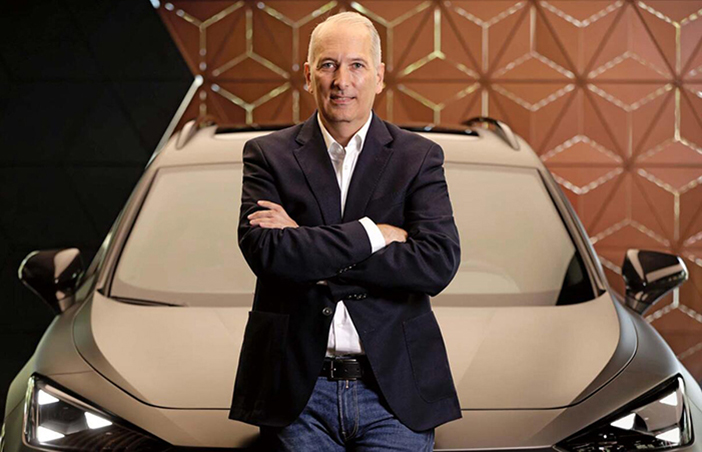
The new model-planning that outlined the urban EV strategy is incredibly tight. “This is one platform for different cars, but we need to go in different ways to not go to the same customer”, explains Haupt. “We thought a hatchback gives you a much more sporty vision than an SUV, fitting better to what we want at Cupra”. But could Cupra also launch a sportier take on the Epiq or ID.Cross? “We have a limited investment capacity”, says the softly-spoken boss in his hybrid German-Spanish accent. “The Raval is a €3-billion investment, and now our efforts need to concentrate on making it a success story, together with the rest of the portfolio and the facelifted Born. But we will keep looking to determine which are the right models for the future”. One model that’s almost certain to come is the flagship Tindaya, but this SUV could be a long wait. “The Tindaya is not a dream: it’s something that we want to make reality”, says the boss. Cupra presented the wild-looking, 4.72 meter-long SUV concept at last autumn’s Munich Motor Show. In what way does it represent Cupra’s future? “First: it’s the new design language for Cupra, which you will see in future models coming”. Though the boss admits it hasn’t influenced the revised Born. “Secondly, while this is a show car, we will try to maintain as much as possible and go to a serious model with it. It’s part of our plans”. Haupt predicts the likely introduction is around 2030, when the Volkswagen Group’s all-new SSP vehicle platform is ready to underpin it. The show car featured a range-extender hybrid powertrain, with the 1.5-litre petrol engine charging the battery, which feeds motors front and rear for a punchy 496 hp. Is this powertrain feasible? “In this changing environment, the best choice is to develop the car to be able to be flexible in terms of powertrain. It could be a pure EV, it could also have a range extender or combustion. We don’t want to define ourselves now, because things are changing so fast”. Cupra conceived the Tindaya as a breakout car to launch the brand in North America. But the uncertainty caused by President Trump’s tariffs triggering a demand for more group US production capacity (with Porsche and Audi no doubt ahead of Cupra in the queue), has put the plan on ice. “Did we say ‘bye, bye’ to the US completely?” asks the boss. “No. We just postponed the decision. We’ll wait to see developments over the coming years”. It’s not the first time Cupra has been burnt by geopolitical issues: the Tavascan is built in China, and the Spanish had to lobby hard to successfully overturn European import duties on the EV. Haupt was head of VW Group’s production planning in 2018, when then-Seat boss Luca de Meo was hatching the plan for a spin-off premium brand to tackle the Spanish outpost’s chronic unprofitability. “I know the story very well, because I was based in Wolfsburg and they came to see us. Some people said: ‘Okay, these guys are completely crazy!’ It was a very brave decision”. And it’s been a resounding success, with Cupra growing from 15.000 cars in 2020 to almost 330.000 last year. And, significantly, Cupra overtook Seat in sales. Haupt thinks Cupra’s success is based on its eye-catching designs, high-quality car platforms shared with other Volkswagen Group brands and brand “ecosystem with music, with sports, with culture”. Cupra’s brand promise is to offer ‘tribe’ members access to sports events and gigs, often hosted at its urban stores which it dubs ‘city garages’. The upshot is a buyer with an average age of 43, and minimal cannibalisation of Audi, claims the boss. “They come from BMW, from Alfa Romeo. Maybe this is something the group was missing: a different car with good technology”. Consultants Interbrand reckon Seat’s spin-off brand is worth €2 billion. “We would never have expected that 5 years ago. ‘7 years, 7 models, 1 million cars’: I think this is an amazing story. And now we need to keep up the momentum”. +++
+++ The FORD FIESTA went out of production in 2023, and we all presumed it was the last we would ever see of the iconic supermini. But, wait! Just over 2 years later Ford announced a new electric-car platform sharing alliance with Renault and this has opened the door for the beloved Fiesta’s return. The deal, announced in early December 2025, enables Ford to use Renault’s AmpR Small electric-car architecture that already underpins the Renault 5, Renault 4, Alpine A290 and Nissan Micra, as well as serving in the reborn Renault Twingo, which is set to arrive later this year. It will also allow Ford access to Renault’s battery and motor technology, granting the US brand much-needed scale in the European small-car segment. All this means that Ford is set to produce 2 new models: a small hatchback to revive the Fiesta nameplate and a small crossover. Both will be designed by Ford and have unique bodies, rather than being rebadged and lightly restyled versions of the Renault models, like the new Micra. The new Ford Fiesta could arrive as soon as 2028. Because it will share the Renault 5’s platform, I expect the dimensions will be similar to that car’s, but the Fiesta is likely to have a sharper, more dynamic look as this suits Ford’s design themes better. The new Fiesta will also have their own bespoke chassis-tuning in a bid to deliver the brand’s trademark engaging driving dynamics. Ford has already used this blueprint to differentiate its Explorer and Capri from the Volkswagen ID.4, which is based on the same architecture. “We’re very confident that we can completely differentiate the customer offering”, Ford of Europe president Jim Baumbick told. “Ford will lead on the development of the design and things like the ride, steering, handling and braking to inject the uniquely Ford DNA, to support our brand positioning”. He added that the differentiated designs had already been shared with key dealers and other stakeholders to get their buy-in. Knowing plenty about the AmpR Small platform gives us a good idea of what might power a future Fiesta. The Renault 5, for example, is offered with a choice of 40 kWh and 52 kWh batteries; the latter boosting range to a possible 400 km on the WLTP test cycle. The bigger-battery car gets a more powerful 150 hp motor good for 0-100 kph in less than 8 seconds. The deal is all about economies of scale and getting access to a competitive platform and its manufacturing base: the new Fiesta and its electric sibling will be assembled at Renault’s ‘ElectriCity’ complex in Northern France. It’s also about moving fast: Renault is proud of having set-up a brand-new R&D centre In China which enabled it to develop the 2026 Twingo in under 2 years. Ford will clearly benefit from the French firm’s learning as it’s said the first vehicle from this deal will be on the market in 2028; a similar timeline to Twingo. Jim Farley, president and CEO of Ford, said: “The strategic partnership with the Renault Groep marks an important step for Ford and supports our strategy to build a highly efficient and fit-for-the future business in Europe. We will combine Renault Group’s industrial scale and EV assets with Ford’s iconic design and driving dynamics to create vehicles that are fun, capable, and distinctly Ford in spirit”. François Provost, CEO Renault Group said: “Renault Group is proud to announce a new strategic cooperation with Ford. This shows the strength of our partnership know-how and competitiveness in Europe. In the long term, combining our strengths with Ford will make us more innovative and more responsive in a fast-changing European automotive market”. Sharing the Renault Group’s EV know-how could well see the return of Ford’s hallowed ST badge. A Fiesta ST based on the Alpine A290 hot hatchback is a possibility, with that car getting an uprated e-motor sending up to 220 hp to the front axle. The A290 has a thoroughly revised chassis too, with uprated brakes, tuned suspension with revised geometry and a wider track width. The deal with Renault is focused on B-segment small cars, said Jim Baumbick, where Ford is already present with the Puma Gen-E model. It’s built in Romania and powered by motors assembled in Ford’s British Halewood plant. The second EV is therefore unlikely to replace the Puma Gen-E. “I see these 2 vehicles as an augment to Puma”, said Baumbick. So it’s likely Ford plans to push into the affordable EV segment by launching a baby crossover paired with the Dacia Spring replacement, or reviving the Ford Ka using the Renault Twingo as a base. Ford currently partners with Volkswagen for its bigger, ‘C-segment’ cars, the Explorer and Capri. The execution slightly differs from the Renault partnership because Ford has installed VW’s MEB platform in its Cologne plant, rather than tap into its partner’s industrial base. So don’t expect the larger of the Ampere platforms, known as AmpR Medium, which underpins Renault’s Megane and Scenic, plus the Nissan Ariya and Alpine A390, to revive the recently axed Ford Focus as a Volkswagen ID.3 rival. +++
+++ The JEEP AVENGER is heading for a mid-life update, now confirmed by pre-production prototypes of a new version testing in the Arctic. The smallest Jeep created quite a stir on its arrival back in 2022, as the first all-electric model from the famous US brand. But sales never quite reflected this initial excitement, and even with hybrid and all-wheel-drive off-road versions being added to the range, the Avenger has not made much of an impact. The new Avenger will retain its CMP platform, which is shared across a number of small, B-segment models from the vast Stellantis conglomerate. While flexible, thanks to its ability to support both hybrid and EV powertrains, it’s now struggling to keep up with rivals. This is something Jeep needs to address. We can only speculate about specific upgrades for the Avenger, but there will have to be improvements to the existing electric model’s 54 kWh powertrain in order to remain competitive with new challengers such as the Volkswagen ID.Cross and Skoda Epiq, both of which are just around the corner. Exterior styling changes are likely to be subtle, with no substantial revisions to the main body. Even the lights look unchanged, although I do expect there to be some alterations to the Avenger’s front grille and bumpers at both ends. Inside, however, there will definitely be updates. Although this prototype’s dashboard is covered, we can see the top edge of what looks like a much larger central touchscreen than the current car’s slimline unit. We don’t yet know whether this will be integrated into a new dashboard, or sit neatly in the existing one, but it should bring some extra digital punch to the relatively rudimentary set-up of the current model. While these may seem like minor changes, so quickly is this part of the market advancing that elements such as a larger screen and styling tweaks are critical to keeping a model competitive; something that’s especially important for the Avenger, given that it’s Jeep’s highest selling model in Europe. Timing hasn’t been confirmed, but I expect to see the new model arrive in October for a debut at the Paris autosalon. +++
+++ MAZDA has a new infotainment system that ditches the commander knob it launched over a decade ago for a massive touchscreen instead. At the time, Mazda Connect was the company’s approach to controlling the infotainment screen in a way that “was developed to be a less distracting and more intuitive in-vehicle operating system”.
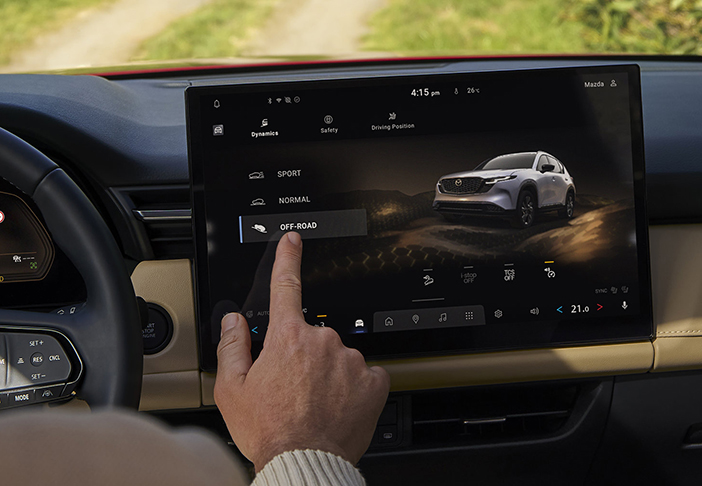
Now, it’s gone. Even without a knob, though, the new Mazda Connect with Google Built-In, which debuts in the new CX-5, doesn’t abandon that philosophy, according to Matthew Valbuena, Mazda’s project manager of in-vehicle technologies and human machine interfaces. As Valbuena tells, the CX-5’s new technology aims to keep drivers focused. “Mazda’s driving philosophy remains the same”, Valbuena says. “We are focused on minimizing driver distraction”. Mazda does this by giving drivers multiple ways to control various vehicle functions, with the steering wheel and voice recognition playing major roles in that experience. The wheel has dedicated buttons for the available 360-degree camera, M-Drive, and media source selector, which Mazda displays in the gauge cluster along with the current track whenever it’s changed. HVAC controls are on the touchscreen, unfortunately, but at least they’re always pinned to the bottom of the screen. That said, you can also use your voice while keeping your hands on the wheel and eyes on the road. Valbuena compared the company’s 2 infotainment systems to the iPod Classic and iPod Touch. “Both can do the same things, but the iPod Touch has greater flexibility and can do more things than the iPod Classic”, he said. And it’s that future flexibility of the Google-based system that appealed to the automaker, given that so much has changed in infotainment since 2013. Mazda Connect and its dial debuted before the launch of Android Auto and Apple CarPlay, 2 touch-based operating systems, and integration issues arose when Mazda added those features. Neither was designed to be used with a dial, and the second-generation Mazda Connect that launched in 2019 lacked touch capability. After receiving feedback, the automaker fixed this with the CX-60, but the infotainment landscape and consumer expectations continued to evolve. Google Built-In is also touch-based while providing access to over 350 in-vehicle apps, and Mazda did not want the hardware to constrain the vehicle’s capabilities. “Trying to control that great variety of apps with a singular command knob would be very difficult”, Valbuena said. So, Mazda tried to find a balance true to its philosophy. “Even though our approach to the solution may be different than what we have done previously, the goal is the same: it’s how do we give the driver the connectivity and the features they are looking for, but in a safe way that does not distract their driving”, he added. Mazda also wanted to lower the learning curve for using its infotainment system. With a majority of adults owning a smartphone, they’re accustomed to touch-based systems. “We didn’t want to have this super complicated user experience that required reading a massive owner’s manual”, Valbuena said. “We wanted that kind of jump in and go and discover, and this system delivers that”. Valbuena wouldn’t elaborate whether this new system will roll out to other models. Mazda, like other automakers, doesn’t discuss future product plans. But he did say that consumers “will see both Mazda Connect and Mazda Connect with Google Built-In for quite a while, but the option is there”. The company is confident in its new system, introducing it in its best-selling vehicle first. Valbuena believes that “consumer sentiment will bolster the demand for this to propagate through the lineup”. +++