
+++ BENTLEY ’s “urban SUV” has been spied on multiple occasions, but the automaker hasn’t said much about it. That’s slowly starting to change as the company gears up for a debut later this year. In an interview, Bentley Americas CEO Mike Rocco revealed a teaser campaign is in the works and the SUV will eventually arrive in the Dutch showrooms in the third quarter of 2027. That’s a ways off and the automaker is still fine-tuning pricing. While nothing is set in stone, Rocco implied the model, which is expected to be called the Barnato, will likely be priced on the “lower end” of its lineup. Bentley doesn’t exactly advertise pricing, but the Bentayga V8 starts around €320.000 in the Netherlands and the new model will likely be a lot cheaper. Regardless of the final number, Bentley seems pretty confident in the crossover despite lackluster EV sales. As Rocco explained, “A lot of work, a lot of research has gone into this vehicle”. This includes consumer clinics, where 80% of people who saw the model said they would buy it. The executive also suggested the SUV won’t necessarily be defined by its powertrain. Instead, people will embrace the fact that it’s a new Bentley which is street-focused. We’ll learn more about the vehicle later this year, but the Barnato will ride on the PPE platform that underpins the Audi A6 and Q6 e-trons as well as the Porsche Macan and Cayenne Electric. The latter features a 113 kWh battery pack, a 390 kW DC fast charging capability and outputs of 441 hp, 666 hp and 1.155 hp. Speaking of the Cayenne Electric, pricing starts at €109.900 euro and climb to €171.500 for the Turbo variant. Prices of the Barnato will probably start at €200.000 euro. +++
+++ Brazil has put China’s BYD on a registry of employers who have subjected workers to conditions similar to slavery, after a 2024 scandal in which Chinese workers were said to have been victims of human trafficking and abusive contracts. +++
+++ Until quite recently, GEELY has been something of an automotive shadow in the Netherlands; a background entity known mainly for its ownership of a number of familiar car makers. Volvo, Polestar, Lotus and Lynk & Co are among its portfolio of brands, and they have received substantial investment (with varying degrees of success). But in China, Geely is a prominent firm in its own right it has been making cars there since 1998, and it appears to have more resources at its disposal than some small countries. Geely Auto launched itself in the Netherlands last week, aiming itself squarely at the mass market with a two-pronged BEV and PHEV approach. The Dutch business is currently building itself up, but back in China its HQ in Hangzhou employs 6.000 people alone and is a hive of activity. Geely has a huge spread of brands covering luxury, budget, sport and even motorcycle sectors. Having so many fingers in so many pies means the firm has bases of operation all over the world in Sweden, Italy, Germany, the United Kingdom and more that can be used for design, engineering, development and manufacture. In China its factories are many and they’re huge. It might not come as a big surprise that a car firm’s manufacturing facilities are extensive, but there’s large, and then there’s what Geely has going on. A tour of its Linhai facility was mindboggling: the massive plant has an annual output of 300.000 cars and room to expand if desired, and its job is solely to build the Starray EM-i. It’s all hustle and bustle, but it’s not necessarily humans that are busy; the automation on display is eerie. It’s not a huge stretch to imagine that the human element of the Geely construction equation will be mostly gone in the not-too-distant future. To put its scale in perspective, Geely sells more than 50.000 EX2s (badged locally as the Xingyuan) per month in China alone, with more going elsewhere, soon to include the Netherlands. For comparison, Mini sold 162.789 Coopers (3-door, 5-door and Convertible) globally in 2025. There’s a price difference, sure, but it’s an eye-opening number. Last year, Geely sold 4.1 million vehicles globally. Building the cars is one thing, but developing them is another. Alongside its global R&D facilities, Geely has built itself a new safety centre and wind tunnel complex at a cost of more than €230 million. Many car companies have wind tunnels, but most don’t have 3 in the same building. Geely has one for 250 kph gusts, temperature ranges of -40deg C to +60deg C, and sun and rain simulation; one for 200 kph gusts and altitude simulation of more than 5.200 metres; and the third as a spare. In the same building you will find climate rooms to bake, soak and freeze cars to see what happens to them. Geely isn’t keeping all of that to itself, though it says the facilities will be ‘shared’ with others. On the same site is a new state-of-the-art safety testing facility. There you will find a range of crash test dummies designed to simulate all the members of a family, a room with various run-ups to simulate crashes, spaces to test ADAS sensors and even a cybersecurity test room that looks charmingly like a Bond villain’s lair. Geely is giving all the right messages about sustainability, too. “We’re very sustainable,” says Ash Sutcliffe, Geely Holding’s global PR chief. “Nothing gets wasted in China; if anything can be reused, it will be reused. I think our cars have about a 97% recyclability rate. Once the car reaches end of life, we take it all back and put it back into the system”. A cynic would roll their eyes and say ‘of course they’d say they’re sustainable…’ but the air around the Linhai factory, while still a little hazy, was nowhere near as smog-like as it can be elsewhere in China. Geely’s scale shouldn’t be a surprise, but touring its mammoth facilities is still instructive. The rate at which Geely can react to changes, deploy resources and build cars is quite something. And in the same breath that something should be a concern for car makers in the West. The message is clear: Geely is coming and it isn’t expecting to fail. +++
+++ It’s safe to say that HONDA is in a bit of a pickle. It recently cancelled 2 of its own electric vehicles, the 0 SUV and 0 Sedan, along with the Acura RSX revival. It will book up to $15.8 billion in losses, and that’s not all. The 2 Afeela-badged EVs it had been developing with Sony are also dead on arrival. It’s an alarming sign of how some traditional automakers are struggling to create a profitable business case for electric cars. But the issues go deeper than just EVs. As with most long-running nameplates, Honda is having a hard time remaining competitive in China. Sales have collapsed in just a few years, from a peak of 1.62 million in 2020 to only 640.000 units in 2025. Only about half of its manufacturing footprint is being utilized, well below the 70–80 percent typically needed in the automotive industry to turn a profit. For 2026, annual output is projected to drop below 600.000 units. Honda CEO and president Toshihiro Mibe recently travelled to China to gain insight into how domestic companies are churning out so many products in such a short timeframe. After visiting an auto supplier factory in Shanghai, he made a stark remark: “We have no chance against this”. You might have heard about “China Speed” and how local automakers can develop a brand-new model in 2 years or less. By comparison: legacy brands often need twice as long, and sometimes even more, to engineer a new product. With an astronomical number of companies developing vehicles at a record pace, it’s no wonder it feels like China is launching a new car every other day. Chinese suppliers are not only able to match this pace but also do so with cost efficiency that the industry’s biggest names can only dream of. Mibe’s statement shouldn’t be seen as an admission of defeat, however. Upon returning from China, Honda’s CEO told suppliers, “We must act quickly” to accelerate development. To that end, Honda is restoring its independent R&D division by relocating thousands of engineers to a newly established engineering subsidiary. It is expected to operate with greater autonomy than in the past 6 years, when development was centralized, and headquarters called the shots. Whether this added creative freedom will turn things around remains unclear, though it’s reasonable to assume that major decisions will still be made at HQ. Honda’s leadership isn’t alone in sounding the alarm across the supply chain. In an October 2025 interview with CBS, Ford CEO Jim Farley didn’t mince words either: ‘They have enough production capacity in China with existing factories to serve the entire North American market, put us all out of business’. Similarly, former Toyota CEO Koji Sato recently told suppliers during a meeting with representatives from 484 companies that unless things change, the company’s very existence could be at risk: ‘Unless things change, we will not survive. I want everyone to acknowledge this sense of crisis’. When Toyota, the world’s largest carmaker for the 6th consecutive year, makes such statements, the gravity of the situation is unmistakable. China has become an automotive juggernaut and a force to be reckoned with, not just within its borders but across global markets. Take Europe, for example, where BYD has a 1.8 percent share of total sales through the first 2 months of the year. According to registration data published by the European Automobile Manufacturers’ Association (ACEA), SAIC stands at a Nissan-matching 1.9 percent, well ahead of Honda at just 0.5 percent through February. +++
+++ The JAECOO 7 was the Unitec Kingdom’s best-selling new car in March, beating regular chart-toppers the Ford Puma, Nissan Qashqai and Kia Sportage. A total of 10.064 examples of the Chinese SUV were registered last month, compared with 9.193 Pumas, 8.718 Qashqais and 7.310 Sportages. Such a performance in what is typically the strongest month of the year for sales (as buyers look to get a car with a new numberplate format) has propelled the Jaecoo 7 into second place for the year so far, with 15.569 registrations. That puts it just behind the Puma, with 16.128. The ‘7’ is notable for its meteoric rise, as the debut model from a brand that is new to the United Kingdom. Jaecoo, owned by Chinese giant Chery, began selling cars here only in January 2025 yet has already outperformed long-established manufacturers so far this year. Those include Citroën, Mazda and Mini, among others. March was also a record month for registrations of electric cars, at 86.120 examples. This however means their sales still trail the 33% target set by the government’s zero-emission vehicle mandate for 2026, with a market share of 22.4%. SMMT chief Mike Hawes warned that the ongoing war in Iran could cause disruption: “Much of March’s performance will be from orders placed before the start of the Iran conflict, which threatens to raise the cost of living, undermining consumer confidence”. This situation could work in favour of EVs, though. With fuel prices surging due to the conflict, dealers trading in used EVs are signalling a dramatic rise in interest. This could also bring greater sales of new EVs if the war continues for an extended period. Alongside EVs, registrations of hybrids and plug-in hybrids also rose fast, with the latter up 46.9% year on year to 49.671. Meanwhile, sales of pure-petrol and pure-diesel cars dropped by 6.1% and 11.4% respectively. +++
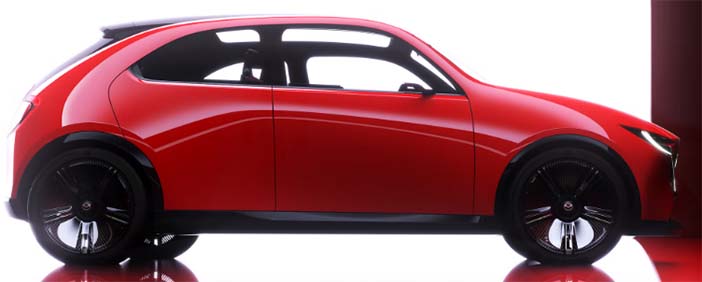
+++ It’s been 5 years since MAZDA discontinued the CX-3 and about 1 year since it killed the ‘2’. Sadly, the company has no plans to bring either model back. In an interview, Vinesh Bhindi, Mazda’s Australian boss, told that “there will be newer generation models”. They just might not arrive anytime soon. Bhindi added, “There is a priority list”, like the new CX-5, but Bhindi acknowledged the need to refresh the 2 compacts. “I mean, I wish we had endless R&D resources that could do everything at once, but that’s not the case”, he told. It is unlikely that the 2 new Mazda compacts will arrive before 2027. When the next-generation Mazda 2 and CX-3 models arrive, which currently share the same platform, both will likely borrow styling cues from the X-Coupe concept, a 5-door compact hatchback. It debuted wearing an evolution of Mada’s Kodo design language. Inside, the concept featured a driver-focused cabin with a flat-bottom steering wheel and no large dashboard screen. It looked sporty and fun, much like the current 2. We will likely learn more about Mazda’s 2 smallest offerings in the years to come. +++
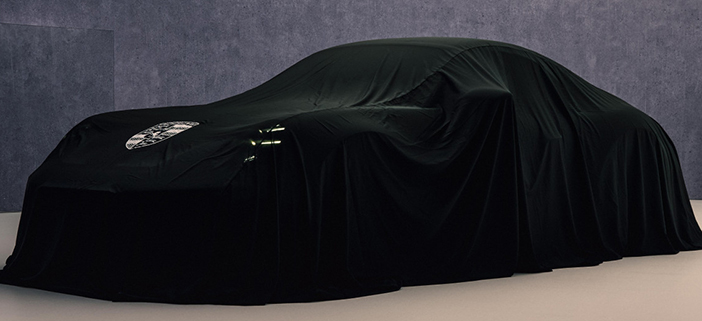
+++ PORSCHE has locked in April 14 for the debut of a new 911 variant. Yes, another one. All we’ve been given is a single teaser, which naturally leaves the door wide open for speculation to do its thing. The leading theory points to something called the 911 GT3 Sport Cabriolet. It’s a name that sounds slightly odd, even by Stuttgart’s already expansive naming standards. Officially, Porsche describes it as a “particularly fun sports car from Zuffenhausen”, set to appear in an “entertaining film” shot in Tenerife. Picking the Canary Islands for the reveal does seem to point straight toward a convertible, just as the latest rumors suggest. Over at Porsche enthusiast forum Rennlist, speculation has already settled into something close to consensus. The expectation is a GT3-derived package pairing the familiar high-revving engine with a manual gearbox, a soft top, and its own take on aero. For some purists, putting a GT3 badge on a cabriolet crosses a line. Others see it differently, arguing a GT3 Sport Cabriolet could slot in as a Speedster alternative, without the eye-watering development bill that usually comes with it. Earlier spy shots show a lightly camouflaged 911 Cabriolet wearing a widebody setup that looks awfully close to the limited-run 911 S/T from 2023. That car, you’ll remember, mixed the GT3 RS’s 4.0-liter engine with a 6-speed manual, sprinkled in plenty of CFRP and tuned everything for the road rather than the circuit. The teaser itself is vague, showing a 911 hidden under a cover. Even so, you can just make out the led headlights, a more aggressive front bumper, and a clean rear end with no fixed wing in sight. As it stands, the 992.2 generation already covers a lot of ground, including the Carrera, Touring, S, 4S, GTS, Targa, Turbo, Turbo S, GT3, and GT3 Touring. There’s still room to grow, though, with talk of a GT3 Sport Touring ,a new iteration of the 911 Dakar, an updated GT3 RS, and even another GT2 RS sitting at the top of the pile. We won’t have to wait long for answers. Porsche is set to pull the covers off the new model during a livestream on April 14. +++
+++ VOLKSWAGEN is looking at plugging the gap left by the retiring Touareg with an electric equivalent so the brand can continue to offer a flagship to higher-end customers, sales boss Martin Sander has confirmed. The current combustion-engined SUV will bow out in just a few months after 24 years on sale as the firm focuses on higher-volume and lower-cost models. However, Sander said there remains a gap in the market for upmarket cars that don’t carry a premium badge, which the Touareg and Phaeton (discontinued in 2016) were designed to serve. Sander said: “We are the brand for the people, and that’s what our name stands for”. He added that the firm’s “top priority” would remain “creating great vehicles” that are affordable to a wide range of consumers. However, he also said: “Touareg is not huge business, but it’s got its place and this is why we are looking into opportunities for a next generation. “This market is somewhere between the volume and premium market and is for customers who want a vehicle with great design and space, and a very high level of quality and sophistication but, for whatever reason, do not want to be associated with a premium brand. “This is the Touareg target group and we’re looking into possibilities to serve these customers with a future product”. Sander said Touareg buyers “are very down-to-earth people who are affluent”, adding: “They run businesses but are low-key. They don’t want to show off. It’s not appropriate to pull up in front of their customers or at the construction site with something like a Porsche Macan”. He confirmed the new model would remain a large SUV “because 80% of that market is SUVs” and would also be a full-electric offering. Any ‘ID.Touareg’ would probably arrive after the likes of the Volkswagen ID.Golf on the incoming advanced SSP platform and could, as with today’s Touareg, use technology from premium siblings Audi and Porsche. +++