
+++ The next-generation BMW M3 is guaranteed to be the most powerful ever, because there will be a pure-electric version with quad motors capable of delivering up to 1.360 hp. However, bosses have reassured me that the legendary super-saloon will not become some unhinged, power-mad monster. It’ll still feel like an M3 should. Autointernationaal.nl recently had the opportunity to chat with Christian Karg. He’s currently the head of vehicle dynamics for the whole BMW Group, but previously spent nearly 10 years moulding BMW’s M cars, including the current M3 and M4, plus all the extra-special CS and CSL models. The softly spoken engineer is also the grandfather of the BMW M3 Touring, because he wanted to create one after owning a V10 E61 M5 Touring that he used as the family car for his 3 kids. Karg led the small, extremely passionate team that built the first prototype, so suffice to say, he knows a thing or two about making cars astonishing to drive. I quizzed him on the biggest challenges facing BMW M and its first electric product, the zero-emissions M3, and he very quickly replied: “It’s not about the horsepower. That’s a part of the game, but the preciseness of M cars, that’s what’s unique”. This supports my suspicion that while the first-ever electric M3 could theoretically deliver hypercar levels of power, it almost certainly won’t. Around 650 hp to 750 hp seems likely. That’s not that much in the world of high-performance EVs. However, BMW’s quad-motor set-up allows for incredibly precise control over the distribution of power to each wheel, for true torque-vectoring that should help make the electric M3 feel much lighter than it actually is. Karg continued: “The Chinese competitors come up with really fancy stuff: a lot of technical novelties and milestones. We can’t cover everything, so we focus on our heritage. So what is important? What BMW stands for and our promise to customers”. Returning to the subject of challenges for the electric M3, Karg said: “We test every car on the Nürgurbring, and you know there are challenges for BEVs in terms of long-term, high-peak power output. Also how to manage that in the proper way, how to manage the weight, how to make the car feel still light-footed and like a BMW M car should, all that”. One particular problem the BMW M boffins are facing is to maintain a high power output even when the car starts to run low on charge. Rival Mercedes-AMG managed to achieve a kind of ‘relentless’ performance with its new GT 4-Door, in part due to a specially designed battery pack derived from Formula One technology. Karg didn’t give anything away about what the new M3 will be like to drive; not surprising given that the M division’s activities are kept separate. But he did promise “it will be quite amazing”, although we think he was just being modest. Of course, there is also going to be a petrol version of the next M3, featuring a straight-6 engine with new ‘BMW M Ignite’ combustion technology (originally developed for the marque’s race cars) and some level of hybrid assistance to ensure it meets the latest emission standards. As with the current model, there’s going to be a Touring version too. Luckily, Karg told me, BMW still feels like a company run by petrolheads and driving enthusiasts. “It’s a wonderful thing that, in such a big company, there are a lot of opportunities to make things happen like that M Neue Klasse Concept. It’s not easy, but when you have the right people beside you, you can do a lot of good things”. BMW’s M Neue Klasse Concept, which was revealed at this year’s 24 Hours of Le Mans endurance race, gave us a clear picture of what the next M3 will look like. However, this is not the first time the brand has previewed the petrol-free future of its legendary super-saloon. It’s shown us quad-motor prototypes of an i4 countless times, and there was the insane Vision Driving Experience: a ‘rolling laboratory’, again with 4 motors that produced an ungodly amount of power, plus wheelarches so big they would make a Group B rally car blush and fans that literally sucked the car into the tarmac for unparalleled levels of downforce. Camouflaged prototypes of the electric BMW M3, which we suspect will wear the name iM3, haven’t been shying away from the cameras either. They’ve been spotted testing everywhere, from the Arctic Circle to the Green Hell of the Nürburgring Nordschleife. At least the brand is giving petrolheads the time to come around to the idea of an iM3 and/or sharpen their pitchforks ahead of its arrival next year. +++
+++ A month after the debut of the much-discussed FERRARI LUCE (the Marenello’s first electric vehicle), rumours continue to swirl. The latest report, published by Bloomberg, claimed that some dealers were pressuring customers to place orders for the Luce to avoid losing their top-client status or jeopardizing future access to Ferrari’s most exclusive limited-run models. But that’s simply not the case. Ferrari chief marketing officer Enrico Galliera directly denied those claims in an interview, offering a straightforward response. “Many rumors circulate about the Ferrari market, but this one is false. Our position has been clear from the beginning: the Luce was designed for a different type of customer, not necessarily for long-time Ferrari owners, although they are, of course, welcome to buy one”. Galliera added that such a strategy would ultimately hurt Ferrari. For one, unhappy customers would become “bad ambassadors” for the brand, spreading negative opinions and damaging Ferrari’s reputation. He also noted that dissatisfied owners might quickly resell their Luce models, hurting resale values and potentially creating a downward spiral in the used market. Asked about demand for the Luce, Galliera declined to share specific order figures but said sales are meeting the company’s expectations. He added that orders are currently split roughly evenly between new and existing Ferrari customers. According to Bloomberg, some collectors and industry insiders have suggested that buying a Ferrari Luce could improve a customer’s chances of gaining access to future limited-production models. The outlet cited several investors and Ferrari customers who spoke anonymously due to privacy concerns. One source reportedly claimed that purchasing a Luce was necessary to maintain status among Ferrari’s most important clients. +++
+++ HYUNDAI has pledged to return to affordable performance vehicles and is set to unwrap a new petrol-powered i20 N hot hatch soon. The previous performance version of the i20 was launched in 2021 as a rival to the Ford Fiesta ST, Mini Cooper S and Volkswagen Polo GTI, with 204 hp, a 6-speed manual gearbox and a mechanical limited-slip differential. It served as the entry point to a performance line-up that also included the larger i30 N, and later the electric Ioniq 5 N and Ioniq 6 N, but it was withdrawn from sale after just 3 years as Hyundai moved away from petrol sports cars. But now the comeback is on after Hyundai global R&D boss Manfred Harrer confirmed plans to “bring back entry cars on the N line-up” as a means of broadening the brand’s appeal with younger buyers. “An i20 N for Europe is a must”, he said, because “the gap is too big” between Hyundai’s previous petrol N models and their larger, much more powerful electric successors, which start at around €70.000 in the Netherlands. “We need this entry-level back for our fans”, said Harrer, adding: “We are working intensively to do this sooner rather than later”. A new version of the i20 N will face a much smaller field of rivals than did its predecessor, with the Cooper S standing as the only petrol hot supermini left on sale, other brands having backed out of this space in pursuit of reduced emissions. It will, though, be a natural alternative to a growing array of small hot EVs, including the Alpine A290, Volkswagen ID.Polo GTI and Peugeot e-208 GTi. Prototypes of the new hot hatch are already testing, said Harrer, and a launch is “not so far out”. He wouldn’t be drawn on any specifics of the new model, but said it would make sense to “use existing technology” as its basis, hinting at power coming from a version of the 1.6-litre 4-cylinder hybrid that features in Hyundai’s more mainstream models. However, he suggested that the powertrain will be heavily tweaked for performance: “I want to go to the Nürburgring and do really successful lap times, better than the existing one. But you have to work on the battery management system to get this done”. Harrer also said Hyundai is investing in making sure the new model apes the character of its pure-petrol predecessor: “It feels sporty. Don’t worry about that”. A new generation of the Hyundai i20 is being primed for an imminent launch in Europe and is likely to be derived from the new Brazilian-market model that was revealed last week, with a chunkier, higher-riding silhouette than the current car and a completely new interior. Hyundai has not said how closely related Europe’s new i20 will be, nor given any indication of timings for the standard car or a performance version. Confirmation of the i20 N’s comeback comes after N division boss Joon Park said last year that the performance sub-brand would not pursue an all-EV line-up. “The problem that we have is that there is a perception from the media and our fans that Hyundai N is only focusing on the EV world, which is not true”, he said. “We are not limiting ourselves to EVs”, +++
+++ MASERATI introduced its Nettuno V6 in 2020 with the arrival of the MC20 sports car (now the MCPura). The brand’s first in-house engine in over 20 years has since made its way to everything from the Grecale to the GranTurismo, and it isn’t going anywhere. But it will evolve. Speaking to Maserati executives during the launch of the latest 2027 models, the company confirmed that the Nettuno V6 will have a big role in its lineup over the next few years. As COO Santo Ficili says bluntly: “I am personally in love with this engine”. But as so many of its competitors have done recently, Maserati does have hybridization plans for the Nettuno V6 in the near future. Cristiano Fiorio, Maserati’s Chief Marketing Officer, says: “We do see a hybrid future for the Nettuno, because it’s another type of performance that we can get. It also gives additional value to the customer in the future”. That said, don’t expect to see a plug on any of Maserati’s future hybrid models. The company says that customers looking for plug-in electrification have the Folgore models to choose from, while future hybrids will remain traditional: “We have both low-hybridization, meaning 48 volt, and, eventually, high-voltage hybridization in our product portfolio. We are not pursuing a solution with the plug-in hybrid… So, mild hybridization, high-voltage hybridization, not plug-in hybridization”. It’s still unclear which models will get hybridization with the Nettuno engine first, but I’d expect to see that setup on the Grecale before it makes its way to the GranTurismo and other models. +++
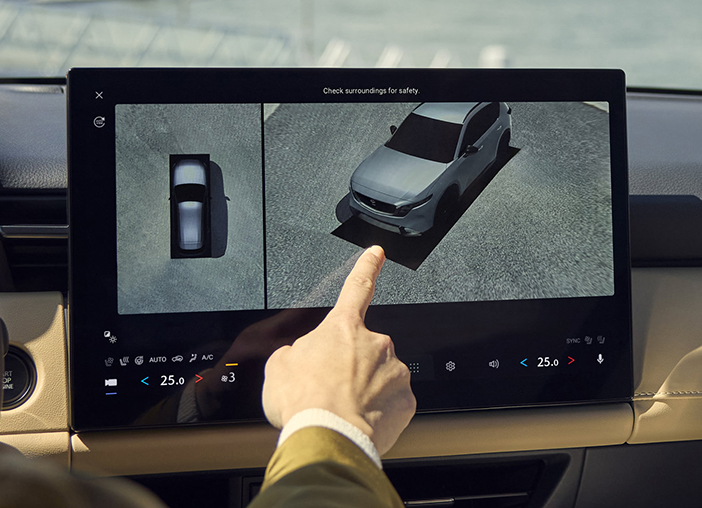
+++ MAZDA has been defending its decision to supersize the CX-5’s infotainment system ever since the SUV switched generations nearly a year ago. People didn’t necessarily have a problem with the touchscreen’s generous 15.6-inch diagonal, but rather with how the dashboard is almost entirely devoid of physical buttons. Although many have accused the Japanese company of resorting to cost-cutting, I’ve been told other factors were at play. Matthew Valbuena, Mazda’s project manager of in-vehicle technologies and human-machine interfaces, told back in February that the firm is “focused on minimizing driver distraction”. In July 2025, Tamara Mlynarczyk, manager of public affairs for Mazda North American Operations, said in a statement that the new user interface was “based on customer feedback”. Now, another official is standing by Mazda’s decision to give the CX-5 a screen-centric dashboard. CX-5 program manager Koichiro Yamaguchi explained why it’s safer to have a sizeable screen rather than traditional controls. That may sound counterintuitive, but there is some truth to the following statement: “Airconditioning, you can operate with a finger, and if we have to put the physical button, that will be at the lower position. Then the driver has to look down, and there are 15 similar looking switches. That means that you rather have to look down and select the correct button, actually, requires the driver to take his eyes off the road. So rather than that, it’s better to have this control on the screen, minimize this change distraction”. However, muscle memory means you’re likely to use buttons and knobs without having to take your eyes off the road. It takes time to learn where everything is positioned, but once you do, you can use traditional controls with minimal distraction. In Mazda’s defense, it did pin frequently used functions, such as climate settings, to the base of the screen. Yamaguchi did leave the door open for the return of more old-school buttons in future models, but said it would only happen based on customer feedback. The CX-5 is not the only Mazda to go down this road, as the 6e and CX-6e also feature minimalist dashboards dominated by generously sized infotainment screens. However, those 2 models have their roots in Chinese vehicles, and everyone knows customers in China prefer large displays. +++
+++ In the UNITED STATES , electric vehicle sales plummeted following the repeal of the Inflation Reduction Act and the $7,500 federal tax credit. This ultimately caused all EVs to be more expensive to purchase and lease, which obviously impacts sales numbers. EV registrations saw substantial declines to begin 2026. But, according to S&P Global Mobility data, the market may finally be starting to normalize. A total of 89.147 new EVs were registered in the United States during April 2026; a 9.8-percent decrease compared to the same month in 2025. That is the smallest year-over-year decline so far in 2026 by a wide margin. By comparison, EV registrations in January, February, and March 2026 were 41 percent, 37 percent and 25 percent lower than their respective months in 2025. This shows that EV sales are rebounding. “We’re seeing gradual inching up, and I think we’ll continue to see that”, explained Tom Libby, an S&P Global Mobility automotive analyst. You may continue to see headlines that EV registrations fell in April, and although that is technically true, it’s a bit misleading. A nearly 10-percent drop from a year ago is not ideal, but considering that nearly every new EV effectively costs $7.500 more to purchase or lease, it’s a tough hurdle to overcome. Using registration data has pros and cons for measuring the health of the EV market. Unlike sales, registrations are specific to the US, which is important because Tesla (the largest EV manufacturer in North America) does not break down its deliveries by region. It also helps cut through automakers that don’t report monthly sales and instead release quarterly reports. There is a lag for this data, however, which is why we are only now seeing results for April in June. From the S&P data, we can see some clear winners and losers in April with regard to EV registrations. Tesla, unsurprisingly, sits at the top with 45.800 registrations; a 13 percent increase from April 2025, likely driven by new Model Y sales. Chevrolet is a distant second with 5.890 registrations, but that is a 36 percent drop from 2025. Some other notable standouts on the list include Toyota, which saw a 225 percent increase to 3.524 registrations thanks to the arrival of new electric models: the C-HR, BZ Woodland and facelifted BZ4X. Subaru also saw a 99 percent increase to 1.959 registrations thanks to shared platform EVs with Toyota: the Trailseeker, Uncharted and facelifted Solterra. +++
+++ The VOLKSWAGEN GROUP ’s cost-cutting program is in full swing. In 2025 alone, factory costs at its German plants were slashed by more than 20 percent. By the end of the decade as many as 50.000 jobs will be eliminated across Volkswagen, Audi, Porsche and software subsidiary Cariad, with agreements for more than 28.000 employees already signed. But that’s still not enough to transform the automotive giant into a leaner, more efficient business. At the annual general meeting held this week, the VW Group outlined the next stage of its transformation process. The plan consists of eight key initiatives, with the very first focused on reducing complexity across the portfolio. Much like Toyota’s effort to streamline its sprawling lineup, the German conglomerate wants to build fewer models and variants. The goal is to place greater emphasis on high-volume products by focusing on what sells best rather than maintaining a myriad of models with middling performance. “Reduce complexity. Volkswagen wants to make navigating the range of models and variants easier and to focus even more closely on the expectations of customers in the regions. This should generate higher volumes per model”. The second initiative is a direct consequence of the first. The VW Group also plans to reduce the number of platforms and electronic architectures. Doing so will lower costs, reduce complexity and help accelerate vehicle development. The third step is closely related as well. The company aims to address overcapacity at factories where demand for the vehicles being produced no longer matches plant output. The full list is available on the company’s website, and if everything unfolds according to plan, the VW Group expects to achieve annual net cost savings of more than €6 billion by 2030. In the meantime, CEO Oliver Blume acknowledges that “the situation remains challenging” but remains optimistic about what lies ahead. While it’s still too early to say which models will survive and which are facing extinction, some casualties have already emerged. Audi recently pulled the plug on the A1 and Q2, while Volkswagen discontinued the aging Touran. In 2027, the T-Roc Cabriolet will also disappear from the lineup. However, that doesn’t mean the VW Group is slowing its product offensive. The company launched more than 30 new models last year and plans to introduce another 20 in 2026. We’ve already seen some of them this year, including the ID.Polo, Cupra Raval, Skoda Epiq and Audi A6 Allroad. Later this year, the Audi A2 will officially return as an entry-level electric model. Meanwhile, Skoda is just days away from unveiling its 7-seat Peaq electric SUV, so there’s still plenty happening on the product-planning front. +++
+++ Tesla owners may scoff at how long this took, but VOLVO owners can finally pay to charge their electric vehicles just by plugging in. The Plug & Charge feature is now available on the EX90 and it will be ready on the EX60 when that model arrives later this year, sporting up to 640 km of range. For the uninitiated, Plug & Charge is a feature that automatically initiates payment for a charging session as soon as you connect the plug. Without it, EV owners typically need to trigger a charging session by swiping a credit card on the stall or opening a mobile app for the specific charging network. Tesla Superchargers notoriously do not have screens or a method for accepting payment, which is why they rely on the Tesla app for non-Tesla vehicles or Plug & Charge for Tesla vehicles. The EX60 can natively use Superchargers because it has an NACS port, though Tesla’s V3 stations can not reach the car’s 370 kW peak charging speed. In fact, speaking at the launch of the EX60, a Volvo powertrain engineer told to expect only a 120 kW peak on a 400 volt charger since the car needs to run its rear inverter to convert the current to 800 volt. 150 kW charging on a Tesla Supercharger will come later. The EX90 can also use Tesla chargers with a CCS-to-NACS adapter. +++