
+++ Given the criticism around the FERRARI LUCE and its design, one might expect it to have a disastrous sales outlook. But so far, that does not seem to be the case. Over in China, the Luce reportedly sold out its 88 allocations immediately, which is even more noteworthy given the Italian marque’s declining market share amid the rise of several lower-cost alternatives from brands like BYD. The Luce was launched in China with a retail price of 3.988.000 yuan, or about $587.000 at current exchange rates. The Prancing Horse-branded EV arrived with “an unexpected 7% discount” relative to its European price of 550.000 euros. As mentioned, Ferrari has faced challenges in China as local brands continue to offer more affordable EVs with impressive specs. One example is the Yangwang U9, an all-electric sports car whose track-focused version, the Xtreme, clocked a sub-seven-minute lap at the Nürburgring in Germany. For the record, that was about 6 seconds faster than the Rimac Nevera. The standard Yangwang U9 is equipped with a 4-motor setup delivering 1.287 horsepower, roughly 250 hp more than the Luce. It also has a slightly quicker 0 to 100 km/h sprint claim of 2.36 seconds, compared with the Ferrari’s 2.5 seconds. All that comes at a price of just over 230.000 euros. Then again, owning a Ferrari is about prestige and status, so it is unlikely that all 88 Chinese buyers seriously cross-shopped the Luce against its alternatives. Still, it shows how many Chinese EVs are now delivering strong numbers on paper while keeping prices relatively attainable. If sales appear to be holding up despite the criticism, the more interesting test will come once deliveries begin and independent reviews are released. That should help show whether the criticism was warranted. It may also have little to do with Ferrari’s purchasing system, after the automaker denied allegations that buying a Luce would provide access to special models or move current customers up the waiting list. +++
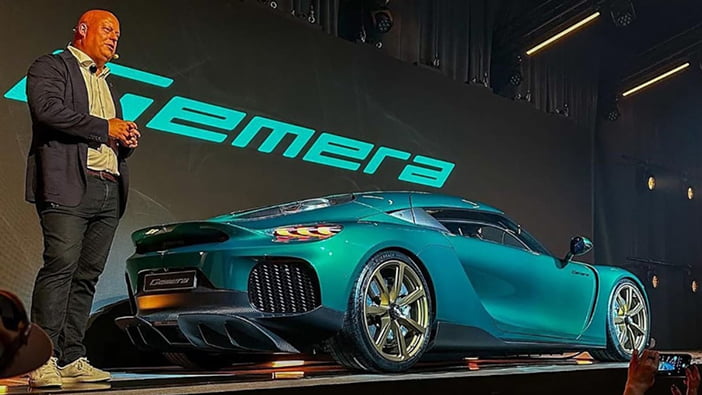
+++ When it comes to Hypercars, one of the most respected brands is KOENIGSEGG . A Swedish company built by a visionary owner has endured and thrived over the decades, outliving larger manufacturers and surviving in a cutthroat industry and an even more cutthroat segment. It isn’t just about the radical looks or the extreme speed for Koenigsegg; as a company, they also strive to push the boundaries of technology further with each new hypercar. One of its newest creations, the Gemera, has finally come off the production line, marking a special occasion for a very special model. On his Instagram page, Christian von Koenigsegg, founder of the brand, posted a video announcing that the first Gemera is finally headed to its first customer. It’s believed that the first Gemera will be shipped to Switzerland, but in the video, Koenigsegg said it will also be displayed at the Aurora Concours for everyone to see. Why display a car that was first unveiled back in 2020? Well, there are some subtle differences between the display car and the actual production unit. For the production Gemera, Koenigsegg decided to scale back some of the radical design elements. Instead of the camera-type side mirrors, conventional ones were used, while the production car now features a reworked rear wing, front splitter, and other aerodynamic parts included in the optional Ghost Package. What makes the Gemera more interesting is that it is a 4-seater, dubbed by the automaker a “Mega-GT”. When first unveiled, it was announced that the Gemera would use a 2.0-liter twin-turbo 3-cylinder plug-in hybrid. However, for the final version, it was given a 5.0-liter twin-turbo V8 paired with 3 electric motors, producing a mind-bending 2.300 hp and 2.700 Nm of torque. Power is sent to all 4 wheels via the brand’s patented 9-speed Light Speed Tourbillon Transmission (LSTT). Performance-wise, it is said to accelerate from 0-100 kph in just 2.1 seconds and reach a top speed of 400 kph. +++
+++ In the United States, the National Highway Traffic Safety Administration has formally announced the recall that has plunged LAND ROVER into crisis thanks to a stop sale order. It impacts 250.857 vehicles including the 2020-2026 Defender, 2021-2026 Discovery and 2022-2026 Range Rover. According to the government, the vehicles have a driver’s airbag clockspring connector that can corrode. This can cause the airbag to deploy improperly or not at all. In August 2025, Land Rover noticed an increase in warranty claims related to airbag warning lights. This sparked an investigation, which eventually found oxides on the pins of some returned clockspring connectors. The company also found fretting corrosion and determined this can “lead to an increased resistance in the driver’s airbag circuit, potentially resulting in the airbag failing to deploy when requested to do so”. The company hasn’t received any reports of non-deployment in the United States and an engineering analysis suggests the airbag warning light will illuminate at least 500 – 650 km before a potential non-deployment. That’s a sizable heads up and drivers should heed that warning. Interestingly, the fix is a dab of lubricant gel that will protect the airbag connector terminals. Despite sounding simple, there’s no dealer-level remedy at the moment so owners will receive an initial notification letter in August. When the lube is available, another letter will go out. +++
+++ Petrolheads pour their energy into saving the MANUAL TRANSMISSION in cars like the Porsche 911 GT3, the kind of halo machine that gets magazine covers and forum crusades. The cheap commuter cars losing their third pedal get no such defense, and they’re disappearing far faster. A study out of Japan adds a wrinkle to the argument anyway, because the case for rowing your own gears may reach past the fun of it and into the health of your brain. The research comes from Professor Ryuta Kawashima, who runs neuroimaging work at Tohoku University’s Institute of Development, Aging, and Cancer. Kawashima is no obscure academic. He built the science behind Nintendo’s Brain Age series, the puzzle games that sold millions on the promise that the mind responds to exercise like any other muscle. The study found that the physical sequence of driving a manual lights up the prefrontal cortex, the region that handles memory, attention and decision-making. Reading traffic speed, dipping the clutch, picking a gear by hand and metering the throttle all happen at once, and keeping them coordinated demands a level of engagement that holds the driver’s attention from one moment to the next. In a country aging as quickly as Japan, asking the brain to juggle those inputs every day functions as a kind of low-grade workout it would otherwise skip. Stimulating neural pathways helps preserve cognitive function in a way that riding passively in an automatic or semi-autonomous vehicle simply cannot match. Despite the benefits, cars with a traditional stick shift are far less popular than automatics in Japan. Manuals make up just 1 to 2 percent of new vehicle sales across Japan, a sliver that puts the automatic’s dominance beyond any argument. The holdouts live at the bottom of the price sheet. Entry-level kei vans and trucks like the Honda N-Van, the Daihatsu Hijet and the Suzuki Carry plus Every, along with their rebadged siblings, still pair a naturally aspirated 660cc 3-cylinder with a manual gearbox and a stripped-down spec written to hit a low number on the window sticker. Unfortunately, the mainstream has already moved on. The Toyota Corolla and Honda Civic come only with a CVT because of their hybrid powertrains, leaving the hot-hatch versions as the lone exceptions. Even the new Honda Prelude, a coupe with a sporting name to protect, arrives automatic-only and tries to paper over the loss with fake gear changes piped in to keep the driver feeling involved. The kei cars are the last line. If the automakers keep building them with 3 pedals, Japan will hold onto something the rest of the industry has spent years engineering away. +++
+++ I’ve written extensively about the next MX-5, even though the overhauled roadster is not coming anytime soon. Even though the ND generation is already over a decade old. The venerable age is usually a problem in today’s ultra-competitive market, but it’s actually an asset in the MX-5’s case. Everyone loves the diminutive, lightweight sports car for its back-to-basics formula, harking back to the analogue era. A few months back, MAZDA Europe design director and design boss Jo Stenuit revealed the new one “will take a few more years” before it hits the market. When it eventually does, it may signal the beginning of the end for the combustion engine. Car Expert cites Mazda Australia CEO Vinesh Bhindi, who reportedly heard from a company executive who arrived Down Under a few months back that the fifth-generation MX-5 will likely be the last with a petrol engine. “One of the executives who visited us early in the year said ‘yes, there will be a new one. When? We can’t comment.’ He also hinted at it possibly being the last ICE (internal combustion engine) version”. Through various voices from within the Zoom-Zoom company, Mazda has already shared some key details about the NE generation. The next MX-5 is expected to use a larger powertrain, namely a 2.5-liter unit from the Skyactiv-Z engine family. It’ll stay naturally aspirated and send power to the rear wheels through a 6-speed manual gearbox. There are plans to keep the next Miata under 1.000 kilograms, which would be an impressive feat given the increasingly long list of mandated safety features. Achieving the targeted curb weight would be downright remarkable should the new MX-5 need to incorporate some form of electrification to comply with ever-stricter emissions regulations. Whether a mild hybrid setup is planned remains unclear, but the NE may need some electric assistance to lower its CO2 levels. When should we realistically expect the new MX-5? The Skyactiv-Z engine won’t debut in a production car until late 2027 in a hybrid CX-5. That means the next MX-5 isn’t coming before 2028 at the earliest. Given the long life cycles of the NC and ND, the new one could stick around throughout the 2030s. However, I remain cautious about its future in Europe, given how carmakers must slash their CO2 emissions by 90 percent by 2035 compared to 2021 levels. Hopefully, Mazda can make the math work in the MX-5’s favor and keep it alive on the continent. That said, it currently lacks the EVs needed to offset the higher emissions from petrol cars. +++
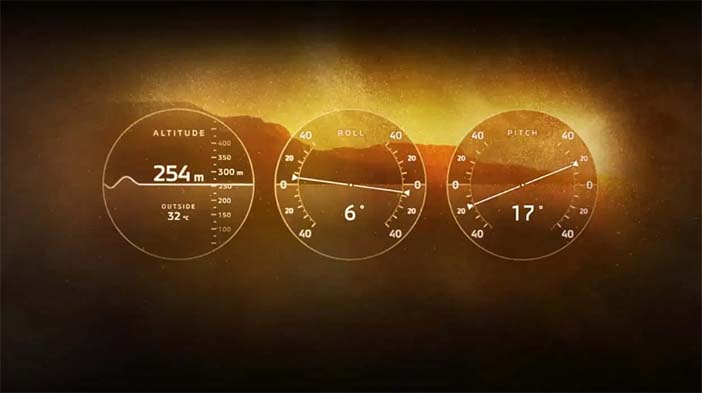
+++ It’s been precisely a month since MITSUBISHI announced the surprising return of the Pajero. It revives a moniker last used in 2021, but one with major historical significance, representing a family of highly capable off-road models dating back to the early 1980s. The fifth generation will break cover sometime this fall, and in the meantime, there’s a fresh teaser to ease the wait. The reborn Pajero will bring back a fan favorite: the Multi Meter. To keep up with the times, Mitsubishi is turning the triple meter into a fully digital setup capable of displaying a wide array of information. Aside from the vehicle’s pitch and roll angles, the driver also has access to other useful data when venturing off the beaten path, including altitude, compass heading and left-right torque distribution. Whether it’s built into the instrument cluster or the infotainment system remains unclear, but ideally, it would be a separate display that doesn’t require navigating through submenus to access. It will deliver real-time data to help drivers get out of sticky situations while tackling the rough terrain the Pajero is known to conquer. Make no mistake, the new Pajero will be a proper off-roader. It’ll borrow the ladder frame from the Triton and deliver genuine 4WD capability so it lives up to the name. Mitsubishi will honour the moniker with a true successor instead of repurposing it for an entirely different vehicle, as it did with the Eclipse. The new Pajero is just the beginning. Mitsubishi aims to roll out a series of Pajero-badged models, with subsequent derivatives likely to slot below it. It remains to be seen whether all of them will get the nostalgia-infused Multi Meter or if it’ll be exclusive to the flagship model. The latter will break cover in the coming months before going on sale in 2027. +++
+++ The long-running OPEL ASTRA has been green-lit for an 8th generation, but there’s no guarantee it will include a hatchback. The all-new car will come to market around 2029-30 and be underpinned by Stellantis’ STLA One architecture, which is also bound for the next Corsa in 2027. Opel CEO Florian Huettl confirmed that the Astra will come as an battery electric vehicle (BEV) but could offer a broader powertrain line-up. “It will certainly be BEV”, said Huettl. “But then STLA One isn’t limited to BEV only in its capabilities, so we’re currently looking at the right calibration of the powertrain offer”. There’s a big question mark over the hatchback bodystyle, though, with the C-segment market containing the likes of the Astra, Volkswagen Golf and BMW 1 Series hatches suffering an exodus of buyers to SUVs or more luxurious superminis. This almost certain means a rethink for a car that over its 45-year life has always been built in hatchback and estate form. “It doesn’t mean necessarily that the new Astra is a traditional hatchback”, Huettl confirmed, to my question asking whether the 5-door hatchback form should evolve to boost sales. “I can tell you that there will be a station wagon, because that’s what our home market [Germany] requires and this is what we will serve”. The next Astra range could be estate only, mirroring a decision taken by Volkswagen with the latest Passat. But it might mean a more crossover-style variant could be spun off the platform, with Opel/Vauxhall capable of adding a second bodystyle at a faster pace having worked hard on its efficiency to battle Chinese brands. Huettl namechecked interior space and long-distance cruising capability as key attributes for the next Astra. The facelifted version of the current car has a 58.3 kWh battery good for 450 km as a hatch. The next generation will push this well past 480 km, with STLA One delivering software-defined vehicles with cutting-edge drivetrain management to maximise efficiency, plus a ‘cell-to-body’ battery design. This saves weight by integrating the battery as a structural part. The next-gen Astra is almost sure to get a plug-in hybrid of some sort, but Opel needs to make a decision on the system. Today’s Astra PHEV has a modest battery to support the petrol engine, but range-extender (Reev) tech, where the engine is used as a generator to power the battery supplying an electric motor to drive the wheels, is also in the running. “Today, our Astra and Grandland have plug-in hybrids, and the technology has a certain part of the sales, but it is by no means at the same level of importance as the full electric or the hybrid variants”. He added: “Range extender is quite interesting because it combines an ICE engine with battery-electric technology. What is important for us here is long-distance driving and what we see on the first-generation Reev technologies is that sometimes a car may struggle to digest the 2 hours of driving on the German motorway at 130-140 kmh”. Huettl confirmed that the new Astra will be built at Opel’s Rüsselsheim plant in Germany. Stellantis is investing 1 billion euros into the factory, a new HQ in the area and a parts facility in Kaiserslautern. The next new Opel will be the 7th gen Corsa, followed by an SUV developed with Chinese partner Leapmotor. The final car due before 2030 is the new Mokka; Huettl confirmed that it’s not a priority for Opel to be part of the ‘e-car’ project, which will see Stellantis introduce a new Citroen 2CV and new Fiat Panda. +++