
+++ BMW is producing its “own natural enemy” in the electric M3, according to M division boss Frank van Meel, who claims buyers of the next-generation M3 will be lured away from the petrol variant by the EV’s superior dynamics. The M3 EV was previewed by last month’s unveiling of the M Concept Neue Klasse. This represents a total transformation of the forthcoming i3 electric saloon, with its muscular design drawing on the M division’s sporting heritage. But it will also be sold alongside a new combustion-engined generation of the stalwart super-saloon, which was recently caught testing for the first time. Its turbocharged 3.0-litre straight six has been updated to meet the Euro 7 emissions requirement without any loss of power from the current 510 hp. At the Goodwood Festival of Speed, Van Meel said: “Now we are fighting against ourselves, because with the all-electric M3 we are attacking our best-selling product, the leader in its segment. We are also working on a future generation of the petrol M3, but now we have an internal fight. We are just pushing ourselves with the 2 different powertrains and it’s a great contest”. Key to the electric M3’s engineering brief is that it will have 4 motors, but it won’t simply chase headline power and torque outputs, instead using the unusual arrangement to bolster its poise and agility in pursuit of heightened driver engagement. “It’s not about having even more power”, emphasised Van Meel. “At the end of the day, you can’t put that down to the road anyway. You need to have sufficient power at every corner of the car and we are using 4 electric motors, but you will never use it at the same time”. The BMW Vision Driving Experience prototype (pictured above), which previewed the technical capabilities of future M cars, had a 4-figure power output, but Van Meel said drivers “don’t need 1000 horsepower” on the road. “It’s like a kickboxer. You never kick with 2 legs. You can have strong arms and strong legs, but you don’t use them all at the same time. And it’s the same with 4 electric motors”. The M division is instead looking to unlock the dynamic benefit brought by having 4 motors controlled by a central computer, referred to as the Heart of Joy. It’s insane what you can do with that technology”, said Van Meel. “You can bring more agility or stability to the car. You can brake the inner wheels, accelerate the outer ones and can get out of turns in a completely different way. It’s a new era of vehicle dynamics”.
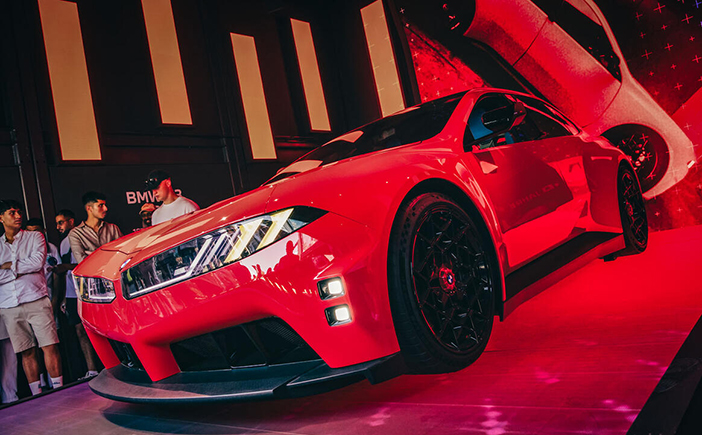
He continued: “Power is nothing without control. Of course you need a lot of power in a performance car, but you also have to control power. If you just throw out a huge amount, you will just leave 4 stripes on the Tarmac. In the best case it’s still stable but actually makes no sense”. Van Meel is confident that the new capabilities brought by the quad-motor powertrain will win over buyers in the battle between the ICE and electric M3s. He said: “There will be customers who say they want to have a combustion engine because they like the sound or the looks or cannot charge at home. That’s fully okay. But if you’re into racing or driving dynamics, you might say the electric one is the best M3”. Van Meel joked that “in case of doubt, customers can buy both”, but added that BMW will target both versions of the M3 at the same people and “the customer can decide”. As previously reported by Autointernationaal.nl, the M3 EV will also offer simulated gearchanges, but that will no longer be paired with a simulated engine note inspired by historic M cars, said van Meel. “We tried all the different sounds: we had a high-revving V10 from the M5 (pictured above); a high-revving V8 from the M3; we even tried the four-cylinder from the E30. But every sound only made sense for that specific car. If you try to put the sound in another car, the feeling is not right”. The M division will instead develop a new sound inspired by the electric motors, but this, said Van Meel, “shouldn’t be any Captain Kirk spaceship sound, because then you’re not connected”. He said the dilemma is “philosophical” and that the M division is trying to “move ahead” in replicating the “feeling” and “emotion” of an ICE car, rather than directly copying its character. More broadly, van Meel said the decision to simulate the power delivery of a combustion engine and gearbox is intended to make driving an electric M3 more intuitive. “If you’re on the track, you want to know how quick you are. You need to have some pedal feel and ratios that you are comfortable with, so that you automatically know you are driving for example 160 kph because you are in third gear, because you know the deceleration and acceleration. That’s what you want. “You can of course copy a gearbox, and it’s already quite emotional. That’s a good idea. But we want more”. +++
+++ Futuristic electronic DOOR HANDLES have been sold to us as a premium, design-savvy convenience. But now the controversial feature, which has resulted in multiple safety-related lawsuits, could be the reason regulators rewrite how every new car in America handles emergency exits. In a move that could have far-reaching consequences for the auto industry, the National Highway Traffic Safety Administration (NHTSA) has declined a request to investigate Tesla’s Model 3 door release design while simultaneously granting a separate petition. That second decision is likely to lead to new federal safety rules. The original petition centered on a 2022 Tesla Model 3. Following a serious crash, the owner claimed the vehicle lost electrical power, the electronic door operation stopped working, and he couldn’t locate the manual release. According to the filing, he ultimately escaped through a rear window after the car caught fire. The NHTSA reviewed the complaint and acknowledged the danger. The agency agreed that a vehicle with electronic door operation but no easily accessible mechanical release can create a safety risk if power is lost during an emergency.
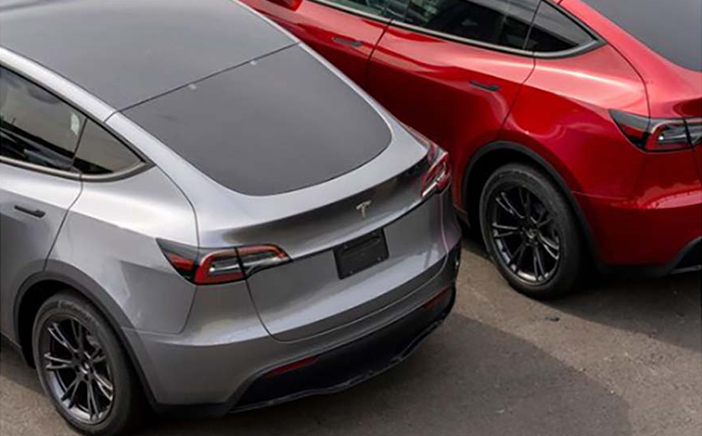
A hidden or difficult-to-find release could delay escape and potentially contribute to serious injuries or fatalities. However, regulators concluded that the issue wasn’t really a defect investigation problem. Instead, they determined it exposed a gap in existing federal safety standards. Current rules governing doors focus largely on keeping occupants inside during crashes and ensuring structural integrity. They don’t specifically address whether emergency releases must be obvious or easy to find. A separate petition asked the NHTSA to create an entirely new safety standard requiring a “robust and obvious door egress system” in all vehicles, not just Teslas. The proposal calls for mechanical releases that continue working even after total power loss and can be operated intuitively without hunting through a door panel. The NHTSA granted that petition and will now begin the rulemaking process. That doesn’t mean new regulations are imminent, but it does mean the agency believes the topic deserves formal review. The push follows several high-profile incidents involving vehicles with electronic door systems. Bloomberg reports uncovering at least 15 deaths in crashes where occupants or rescuers allegedly struggled to open Tesla doors after fires broke out. America is already late to this. China finalized its GB 48001-2026 standard last year and will require mechanical door releases on every new vehicle from 2027, while Hong Kong, which writes its own vehicle rules, has moved to ban new EVs that use electronic handles alone. Some automakers are building market-specific hardware to comply, as BMW has done with the iX3, but engineering 2 versions of the same door is expensive, and the cheaper path is to build one that satisfies the strictest rule on the books. So legislative and ultimately handle design changes look likely, but even if they’re fast-tracked, we’re unlikely to see any updates to the cars in our showrooms before 2030, Michael Brooks of the Center for Auto Safety told. +++
+++ FORD will unleash a flagship family crossover (effectively the new Kuga) in 2029 as part of a wholesale renewal of its European product line-up. The all-new car (which will share an architecture with 2 SUVs from Chinese auto maker Geely) will sit in the heart of Europe’s most popular market, C-segment midsize SUVs, where rivals typically measure around 4.5 meter long and include cars such as the Volkswagen Tiguan. The crossover is a multi-energy vehicle, offering a broad range of electrified drivetrains to appeal to diverse customers. The car will be assembled alongside an upcoming compact SUV that belongs to Ford’s Bronco family, as well as the 2 Geelys, with Ford entering a manufacturing joint venture with the Chinese group at its production hub in Valencia, Spain. “Valencia is going to be launching vehicles that are multi-energy”, explained Jim Baumbick, president of Ford of Europe at a press conference announcing the manufacturing joint venture. “We’ll start with EV first, but there are extended-range electric vehicles (EREVs) and plug-in hybrids. We think that a whole portfolio of solutions are absolutely critical to the goal of achieving net zero over time”. Partnering with Geely opens the door to Ford using petrol/electric powertrains from Horse, the joint-venture drivetrain supplier formed by its 2 partners Geely and Renault. Ford has said future vehicles such as the new crossover will be spacious and inspired by past rallying glory, with sporty designs and high performance capability. “You’re going to see a very focused passenger vehicle portfolio based around rally-bred, adventure and thrill territory”, said Baumbick. “How differentiated will the new family crossover be from its Geely cousins?”, Baumbick was asked. He answered: : “Make no mistake, the Ford product will have a completely unique body. This is not a reskin. We don’t do boring cars. This is a uniquely engineered, truly unmistakably Ford product that will be differentiated from Geely’s product and their target customers”. Partnering with Geely and pooling component sourcing will help Ford deliver new cars at a lower price for consumers. “The reason we’re co-developing is to leverage scale,” explained Baumbick. “What we’re trying to do is ensure that we can actually demonstrate the lowest possible cost while building products specifically for European customers in Europe”. The Valencia plant currently assembles the Kuga, which is set to continue in production potentially to 2028. But Ford is acutely sensitive to the power of bringing back beloved nameplates (think of how the Puma coupe’s name was revived in 2019), so it’s highly likely the Kuga name will be carried over to the new C-segment crossover. +++
+++ The KIA VISION META TURISMO CONCEPT is a sleek electric sports sedan that has us hungry for a proper successor to the sadly gone Stinger. A new video walking through the concept’s design story hints that Kia might have a second bodystyle in mind. The official footage, shot inside the design studio, shows a pair of scale models sitting next to hand-drawn sketches. They look like early variations on the Meta Turismo theme, each with a different silhouette. Next to the coupe-style sedan sits a model with a reworked roofline that reads as a futuristic shooting brake.
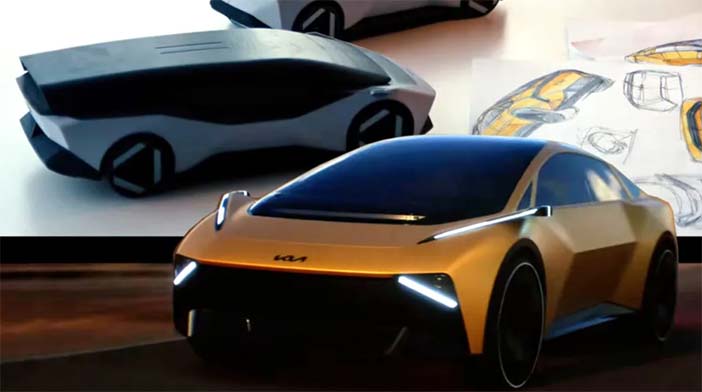
The long-roof version differs from the final concept in a few other details beyond its distinctive greenhouse, though it uses the same wheels and overall dimensions. The Meta Turismo Shooting Brake hasn’t progressed to a full-size prototype and may never leave the early ideation stage. Its appearance in the video, and in the opening image, still confirms that Kia’s designers didn’t restrict their grand touring vision to a single bodystyle. If it gets the green light for production, such a model would offer extra headroom and superior cargo capacity while retaining the striking visual impact of a low-slung GT. It would also mark Kia’s return in the estate segment after the discontinuation of the Kia Ceed SW, and the closely related ProCeed in some markets, including Europe. In the design story, Kia’s creative team shed light on the core philosophy behind the Meta Turismo project. The initial briefing tasked designers with envisioning a performance sedan tailored specifically for the “gamer generation”. According to Kia, the target group is drivers who move seamlessly between digital and physical environments. Inside, the futuristic interface includes a removable retro gaming console mounted on the side of the dashboard. There are four individual seats, with the driver’s chair styled differently from the passengers’, plus organic and sustainable materials including silk and wood. The team also noted that a cab-forward architecture let them maximize cabin space without wrecking the proportions. The Vision Meta Turismo concept broke cover in December 2025, then appeared publicly at Milan Design Week and the Busan International Mobility Show in spring 2026. Pitched as the spiritual heir to the Stinger, it swaps that car’s twin-turbo 3.3-liter V6 for a fully electric powertrain. While Kia has yet to confirm production intent, global design chief Karim Habib and europe design boss Oliver Samson have previously revealed that engineering feasibility work is already underway. The primary hurdle remains establishing a viable business case for a new halo car. Here’s hoping Kia finds one, and brings the more practical sibling along for the ride too. +++
+++ MERCEDES has launched a pair of big SUVs already this year in the form of the new GLS and the GLC, but equally important is its all-new entry-level SUV, the Mercedes GLA, which is set to be revealed on July 29. As with the outgoing car, the new GLA will continue to offer combustion engines, while a GLA Electric is set to replace the EQA in a similar fashion to the latest multi-fuel approach seen on the GLB. Sitting on Mercedes’ latest MMA architecture designed specifically for its compact models, the new GLA should bring substantial improvements in efficiency and technology compared with the previous generation, highlighted by a potential 640 km range on the longest-range electric model. Key technological changes include the switch to an 800V electrical system, plus the adoption of the German brand’s latest digital brain, making it a true software-defined vehicle.
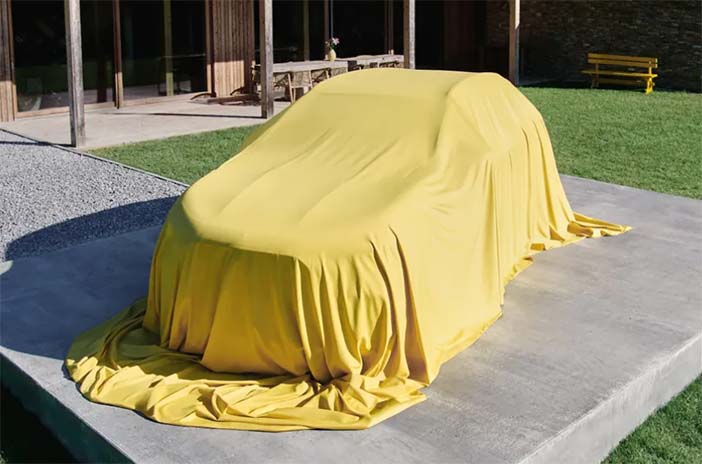
These factors promise to bring massive improvements across the driving and ownership experience. Despite the upgraded technology, the new GLA will still be the entry point for Mercedes’ latest-generation models, possibly undercutting the CLA. And as with the CLA, we don’t expect a huge difference in pricing between the hybrid and electric variants. The latest spy pictures of the GLA show smooth side surfacing that was previously hidden behind some camouflaged moulding. Some new teaser images reveal the GLA will embrace Mercedes’ recent fascination with adding as many 3-pointed stars as possible to the grille too. The EV line-up will eventually comprise 3 powertrain options, starting with the long-range GLA 250+ and a higher-performance all-wheel drive GLA 350. These will both feature an 85 kWh battery pack, with the GLA 250+ pairing this with a 268 hp rear-mounted electric motor and the GLA 350 increasing power to 354 hp by adding a second motor for all-wheel drive. A GLA 250 will join the line-up at a later date with a smaller 58 kWh battery, which will reduce the entry price for the baby Mercedes. The German manufacturer is yet to reveal the final specifications for the new model, but I expect the GLA 250+ version to split the hyper-efficient CLA and boxier GLB in terms of range. It’s reasonable to expect 640 to 670 km between top-ups for the most efficient specifications. This is some way behind the CLA’s 775 km peak range, but the car’s more upright stance and SUV-styling additions will have a detrimental effect on the GLA’s aerodynamics. The newcomer’s range will still see Mercedes out-perform its future competitors by some margin; cars such as the BMW iX1 deliver at most around 510 km on its WLTP rating, with the Audi Q4 e-tron maxing out at around 560 km. These 2 models are in line for their own updates later this year, but both will be milder facelifts rather than wholesale redesigns. The outgoing GLA-based EQA, for context, has a maximum range of 550 km, but once specified in the high-selling AMG Line trim, this figure drops to as little as 500 km. The good news is that if you’re not quite ready for the switch to EV, Mercedes will still offer a hybrid variant, too. This will share the same 1.5-litre 4-cylinder petrol engine as the new CLA and GLB, including its 48V mild-hybrid system and choice of front-wheel-drive or all-wheel-drive layouts. Peak power for these models will range between around 163 hp and 190 hp, the latter offered with the 4Matic all-wheel-drive option. Those after a high-performance variant will be taken care of, because AMG is working on more powerful models, which could be available in a 2-tier structure similar to the previous GLA 35 and GLA 45. These won’t be available in petrol form, but as high-powered dual-motor EVs. Mercedes also won’t offer any MMA products with diesel power. But the GLA’s changes go beyond its powertrains, because the electric brain that will operate them is part of Merc’s multi-billion-Euro investment in software. The MMA platform is designed around a supercomputer that doesn’t just accept more substantial over-the-air updates, but also streamlines the communication between all the car’s different functions. This could see semi-autonomous driving features added at a later date, for example. The GLA will have the same bank of screens inside the cabin as those already seen in the CLA and GLB. This will combine a 10.25-inch driver’s display with a 14.5-inch main touchscreen and optional passenger screen. As well as running Merc’s new fully online MBUX system, it also integrates the firm’s fresh AI-based voice-recognition system. Interior space should be improved over the Mk2 GLA, but given that the GLB sits so close to it in both scale and customer base, it won’t grow too much in any one direction. Electric versions should see the introduction of extra storage under the bonnet. +++
+++ The fully electric VOLKSWAGEN ID.BUZZ hasn’t found the audience VW hoped for and that has the company weighing some drastic options. One was a range-extender powertrain, an idea that died on packaging grounds. Meanwhile, VW is developing a new multi-energy architecture for its future delivery van line-up, meant to reduce complexity and cut costs. The ID.Buzz news comes from Stefan Mecha, CEO of VW Commercial Vehicles. He conceded that a combustion-engined variant had been on the table: “I would not be telling the truth if I said we have not looked at this. Is this a feasible exercise? Probably not… I think from this end, the ID. Buzz is an electric vehicle and it will stay an electric vehicle”. The van’s short overhangs and EV-only bones left nowhere to put a range extender. The MEB architecture was built for battery electric vehicles and nothing else, so shoehorning in a combustion engine would have meant an expensive redesign.
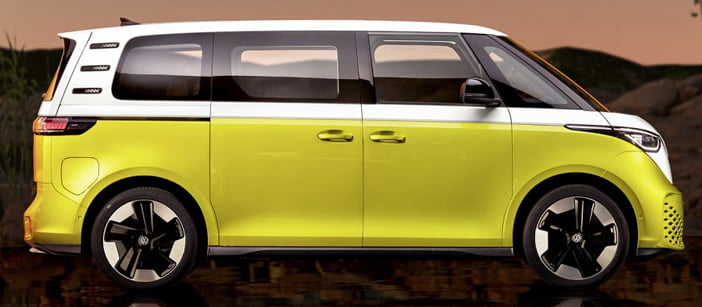
Volkswagen moved 60.700 ID.Buzz units in 2025; double its 2024 tally. North America accounted for just 6.140 of them, which is why the brand skipped the 2026 model year entirely to clear leftover stock. The EV returns to the US for 2027 with minor updates and a camping-friendly trim joining the lineup. In the same interview, Mecha laid out a structural overhaul aimed at what he calls “costly platform fragmentation” across the LCV portfolio. The company currently relies on 4 separate platforms right now. The Caddy and Multivan T7 sit on MQB, the ID. Buzz uses MEB, the Transporter T7 shares its underpinnings with the Ford Transit Custom and the Crafter has a larger bespoke chassis of its own. To streamline manufacturing and R&D, Volkswagen will retool its Hannover plant and develop a new common architecture for the next decade dubbed the Space platform. This is expected to underpin the next-generation Caddy, Multivan and Transporter lineups, and supply components for the next Crafter. Drawing conclusions this early would be premature, but the ID. Buzz faces an uncertain future given the scale of the cuts announced across the VW Group range. Mecha said commercial buyers are moving to fully electric vans more slowly than expected, leaving VW Commercial Vehicles on the hook for hefty carbon emissions penalties under European fleet rules. The Space platform was conceived as an EV architecture, but it’s being adapted to take hybrid powertrains as well. Before the new platform arrives, VW is working on expanding its electric LCV lineup next to the ID.Buzz and the e-Transporter. One is a successor to the e-Crafter that was sold between 2018 and 2022. The updated model will likely offer a significantly longer range, improving the usability of the large van to rival the Ford e-Transit and Renault Master E-Tech. The automaker is also considering a zero-emission variant of the Caddy. The current generation of the compact van debuted in 2020 and received a facelift in mid-2026, offering diesel and PHEV powertrain options. It remains to be seen whether the e-Caddy will utilize an electrified version of the MQB architecture, as seen in the discontinued e-Golf, or jump into the MEB platform. +++
+++ The VOLKSWAGEN GROUP aims to improve the quality and profitability of its cars by cutting up to half the models it sells, as part of a strategy to dramatically reduce costs and complexity. The firm posted a dramatic drop in profits in the first half of 2026, returning a margin of just 3.8%, which it says highlights the urgent need for a radical restructuring of the entire company. It plans to significantly cut its overheads by trimming up to 100.000 jobs globally and reducing the amount of crossover and complexity in its vehicle line-up is another fundamental strand of its strategy to grow margins. Giving more details of the plan, which was announced earlier this month, company CEO Oliver Blume told journalists that the firm is preparing “a major reduction of up to 50% of our product” in a bid to reduce manufacturing and development costs, while clarifying and strengthening the market positioning of its models. “We want to focus our expenditures on clear-focused products (to improve innovations, to improve technologies, to improve equipment, and to improve the quality of the single products) then to achieve higher volumes with more focused products. To achieve a higher profit margin per product: that’s the intention”.
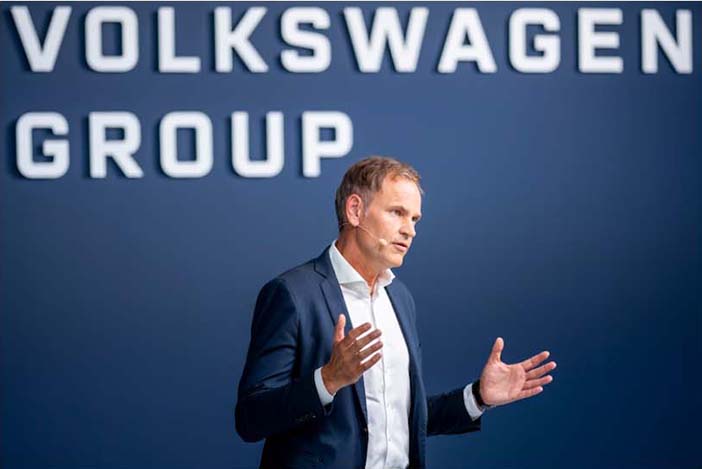
He added that the company knows it has “substitutions in some segments between the brands”, referring to the significant degree of internal competition between equivalent models from the volume brands Volkswagen, Audi, Skoda, Seat and Cupra. The Volkswagen Golf, for example, provides the basis for four other technically identical C-segment family hatchbacks from each of those sibling brands with little variation in pricing, performance or equipment. It’s the same story for the Polo, T-Roc and Tiguan: and each of the Volkswagen Group’s electric cars has at least one direct equivalent at a sibling brand, such as the Porsche Macan Electric and Audi Q6, for example. The impending rationalisation will seek to alleviate some of this intra-brand competition by “cleaning it up and reducing complexity”, according to Blume. He said the firm will start by cutting its “high number of derivatives”, referring to individual trim levels and equipment packages, which will account for the bulk of the cuts. Blume added that while the number of cars left in the resulting line-up “will still be far higher than what we see in the competition”, it will nonetheless amount to a halving of the Volkswagen Group’s portfolio. “Every remaining model shall lead its segment in driving and technology experience”, he vowed. The firm has evaluated its parts and supply chains and determined that it could “reduce the number of available equipment options by up to 75% without compromising product substance”, Blume explained, adding that increased sharing of parts like seats and windscreens will cut component complexity by up to 90%. “The customer will continue to have a meaningful choice”, he pledged. “We are cutting what is not ordered and will scale what the customer demands”. When it comes to axing entire model lines, he said that will be a “longer programme because we have our current portfolio currently in production and in the market”. Taking a car off sale before its scheduled retirement (and without a replacement) is an expensive process and leaves production lines out of action. “Step by step, we will clean it up and reduce complexity”, he said, without acknowledging recent reports that models including the Porsche Taycan, Skoda Fabia and US-market Volkswagen Jetta could be among those headed for retirement. +++