
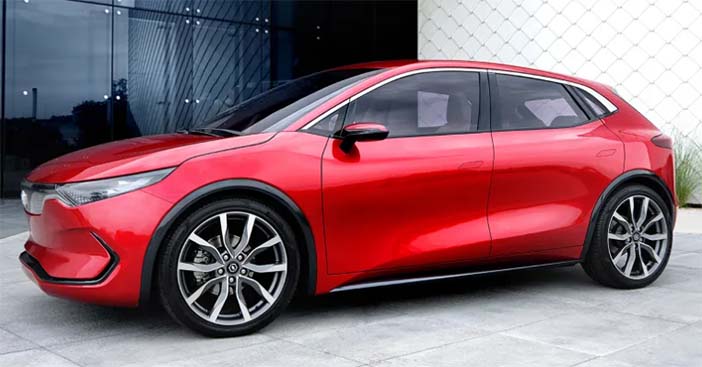
+++ Geely has been making waves in the European car market recently, owning or having a stake in Volvo Cars, Polestar, Lynk & Co, Lotus, Smart and Aston Martin. Its latest business move comes in Poland, where the Chinese giant has agreed to supply technology to new car manufacturer IZERA . Izera was launched in 2020 under the ElectroMobility Poland (EMP) brand, which is, in turn, backed by the Polish government. 2 Izera prototypes have already been revealed in the form of the Z100 SUV and T100 compact hatchback. The 2 cars were scheduled to reach production in 2023, although this may be pushed back or even cancelled with the introduction of Geely’s Sustainable Experience Architecture (SEA). We’ve already seen SEA underpin the new Smart #1 and it’ll also be used for upcoming Volvos and Polestars too. Izera says it will use SEA for multiple electric cars in future, and has confirmed plans for a compact SUV, a Skoda Octavia-sized estate and a hatchback. The platform is hugely modular, with Geely claiming it can be expanded from 1.800mm to 3.300 mm, which means it could underpin cars of a similar size to the Citroen Ami up to a BMW 7 Series. The first EMP cars based on the SEA platform are expected to be produced at the Jaworzno plant in southern Poland, which is scheduled to open in 2024. Piotr Zaremba, ElectroMobility Poland CEO said of the agreement: “The SEA architecture perfectly fits the Izera product concept. Geely is providing EMP with the highest class of industry know-how, as well as additional business opportunities. In the long run, this technology partnership will allow EMP to thrive, allowing us to heavily engage local suppliers and execute the project within the envisaged business framework”. +++
+++ GENERAL MOTORS says it expects its portfolio of electric vehicles to turn a profit in North America by 2025 as it boosts battery and assembly plant capacity to build over 1 million EVs per year. CEO Mary Barra used the pledge to kick off the company’s investor day event Thursday in New York. The profit figure includes vehicle sales revenue, benefits from emissions tax credits, and revenue from software and parts sales, she said. Barra said the company’s EV portfolio appeals to a broader range of customers than the competition. GM’s EV lineup includes plans to sell a small SUV for around $30.000, plus a luxury SUV, pickup trucks and Hummer SUVs in the next 2 years. The Detroit automaker has a goal of selling only electric passenger vehicles by 2035. GM is sticking by a pledge made by Barra to sell more EVs in the U.S. than market leader Tesla by the middle of the decade. “Our commitment is to lead the industry”, chief financial officer Paul Jacobson told reporters ahead on the investor day event. “We believe that with the infrastructure that we put in place and the vehicles that you’ll see today, we’ll be able to get there”. The profit forecast for electric vehicles seemed to be a step back from earlier predictions that a new generation of GM EVs would make money from the start. But GM said earlier predictions of immediate profitability didn’t include the capital costs of switching to the new technology. The 2025 profit prediction is on a pretax basis that includes the capital costs of building battery factories and converting internal combustion plants to electric vehicles. Jacobson said it will take time for individual electric vehicles to get to “low- to mid-single digit” profit margins in 2025 as costs are spread over more vehicles. “If you look at any individual vehicle program, there’s probably better performance than what you see in the aggregate as a whole”, he said. EV profit margins will go even higher once clean energy tax credits from the federal Inflation Reduction Act are applied, Jacobson said. Despite economic volatility and the possibility of a downturn, GM appeared a little more confident in this year’s financial results, saying Thursday it expects full-year pretax income to be $13.5 billion to $14.5 billion. That’s within the range of previous guidance of $13 billion to $15 billion. The forecast for free cash flow, the cash left after operating and capital expenses, $7 billion to $9 billion to $10 billion to $11 billion for the year. GM also said its Brightdrop commercial vehicle unit, which is making electric vans and carts, will contribute over $1 billion of revenue next year. As for the new vehicles, GM will roll out an all-electric version of the Chevrolet Corvette next year, president Mark Reuss said. “This will again set the standard of the world for performance”, he said. Reuss gave glimpses of other new or revamped GM vehicles that are coming in the next 2 years. New internal combustion vehicles will be based on the existing underpinnings, saving costs, yet allowing the company to do significant upgrades, he said. Among the revamped or new entries next year are the Chevrolet Traverse 3-row SUV, as well as a new Buick SUV and a revamped Chevrolet Trax small SUV starting around $19,000. In 2024, GM will redo the 3-row GMC Acadia SUV, making it more truck-like, Reuss said. Then it will revamp the internal combustion version of the Chevrolet Equinox small SUV in the biggest market segment in the world. For electric vehicles next year, GM will revive the Buick Electra name for a new SUV that will go on sale first in China, then in the U.S. Then comes the Cruise Origin, a multi-passenger vehicle built for the company’s ride-hailing service, and a Cadillac compact SUV. Among the 2024 EVs is the GMC Sierra full-size pickup., a full-size Cadillac SUV, and full-size Buick and Chevrolet electric cars mainly for China. Reuss also said GM is revamping the way customers buy electric vehicles, giving them the option of fully purchasing online or at the dealership and saving the company $2.000 per vehicle. Rather than dealers holding huge inventories, they would keep fewer vehicles on their lots. When a customer orders an EV, it would come from 3 distribution centers on the U.S. coasts. The centers, 2 in California and 1 in Georgia, would stock popular equipment combinations and allow deliveries in as little as four days, Reuss said. The system would automate a lot of financing and insurance costs. “This will translate into that $2,000 per unit in efficiencies and cost reductions for GM”, he said, adding that the savings would go to GM. Reuss also took a shot at U.S. electric vehicle sales leader Tesla, telling analysts that more than 11.000 Tesla owners had their vehicles serviced at a GM dealership. He said the dealer network is a big competitive advantage for service. +++
+++ Tata Motors, the owner of JAGUAR LAND ROVER , has announced the British company’s CEO is stepping down from his position. The information is really scarce at the moment but Thierry Bollore said the move is a result of personal reasons, without elaborating further. Bollore will resign from the position effective December 31, which means Jaguar Land Rover will have a new boss next year. Adrian Mardell, currently responsible for the automaker’s financial department as head of finance, will take the role of interim CEO. Mardell is currently a member of JLR’s board of directors and has been working for the company for 32 years. Bollore was appointed as JLR’s CEO in September 2020 after an 8-year stay at Renault Group. At the French manufacturer, he took the roles of executive vice president for manufacturing and supply chain, chief competitive officer, chief operating officer, chief executive officer of Renault, and others. Before that, the 59-year-old businessman spent 5 years at Faurecia, an international automotive parts manufacturer, after a 15-year career at Michelin where he finished his stay as a vice president in charge of the industry for Michelin Aircraft Business worldwide. Replacing Bollore as Jaguar Land Rover’s CEO, at least temporarily, is Adrian Mardell, who has been the chief financial officer of the company since June 2019. He has spent 30 years working in financial roles at JLR, after joining the automaker in 1990. An interesting piece of information regarding his personal life is that he is a fan of National Hunt horse racing, as well as an avid supporter of American football, specifically the Detroit Lions. More information regarding the unexpected move is likely to be revealed soon. Jaguar Land Rover hasn’t said when it will announce Bollore’s permanent successor, but we hope this will happen in the next few months. +++
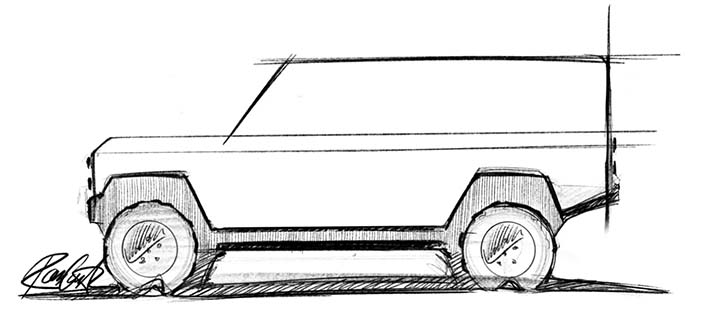
+++ Founded in 2019, Scottish firm MUNRO is almost ready to unveil its first car: the Mk1. Pre-orders of both the “Individual” and “Commerical” version are available now, with Munro expecting 50 units to be built in 2023 with production ramping up to 2.500 per year by 2027. The Mk1 will be produced at a purpose-built site near Glasgow, creating 300 new jobs. We’ve seen the car in a series of sketches and prototypes, but the final production model will be unveiled in Edinburgh on 5 December. Munro bills the Mk1 as the “world’s most capable all-electric 4×4” with the ability to navigate the most challenging terrain as well as operate for up to 16 hours on a single battery charge. Munro says the car will enable sectors such as mining, construction, agriculture, forestry, and mountain rescue to decarbonise. While the Mk1 will aim to fill the void left by the previous-generation Land Rover Defender, it will have some niche competition in the form of the rugged Bollinger B1 new electric GMC Hummer and the Ineos Grenadier. Utilising a simple ladder chassis, Munro’s creation features live front and rear axles, permanent four-wheel drive, locking differentials and 2-speed transfer case. Munro has tried to use existing brake and suspension parts, sourced from OEMs within the UK wherever possible, rather than designing new units. The body and chassis, for example, are both sourced from Ibex Automotive in Yorkshire. The benefits of this principle are 2-fold. Munro says parts-bin engineering means the car will be easy to maintain, as all of its parts are readily available. Second, it helps to minimise the car’s carbon footprint and support the UK economy. Ross Anderson, Co-founder of Munro Vehicle said: “We decided early on that we weren’t looking to re-invent the wheel. We’ve used straightforward and readily available components to minimise the cost of production and provide owners with an accessible means to maintain and repair their own vehicles. We hope that our vehicles will last longer, making them better for the environment than most other ‘consumable’ vehicles on the market”. Munro recently unveiled a new sketch of the Mk1 and it looks like it’ll stick to its design promise. Munro CEO, Russell Peterson commented: “This early sketch underlines our design commitment to build an all-terrain electric 4×4 engineered from the wheels up to provide unparalleled workhorse capability for commercial customers looking to decarbonise their fleets”. The Munro Mark 1’s powertrain features a 80.1 kWh battery pack and a permanent-magnet AC motor with 384 hp and 700 Nm of torque which, under normal driving conditions provides a maximum range of 270 km, says Munro. However, Munro also claims the battery will go further when driving at low speeds, such as plodding through a field. 100kW DC rapid charging also comes as standard, meaning the battery can be topped up from 15 to 80 per cent capacity in just 36 minutes. Munro claims the Mk1 has a maximum wading depth of 1 metre and a ground clearance of 29 cm from the axle. The Mk1’s approach angle is 88 degrees, with a departure angle of 70 degrees. For comparison: the new Defender has a 38 and 40 degree approach and departure angle respectively. Inside, the Munro will feature a wipe-down dashboard with chunky buttons and an optional infotainment system. The 4×4 will also have a maximum payload of 1.000 kg and more than 1.250 litres of luggage space, which the company says is enough for a full-sized pallet. Buyers will also be able to spec a range of optional extras, including roof racks, underbody protection panels, upgraded suspension and larger off-road tyres. Munro has previously said it will even build a 6-wheeled version on request. +++
+++ The future of the NISSAN LEAF has looked a bit grim as of late. The lineup has been dramatically reduced with just 2 trims, one with the small battery and one with the large one. And there were reports that Nissan would drop the car entirely. But according to Nissan’s director of EV marketing and sales strategy, Aditya Jairaj, the electric car that started it all at Nissan will stick around. He didn’t offer many details, since a PR representative was nearby to enforce the “no comment on future product” rule. But he said the Leaf name will remain, that “it’s here to stay”. That’s good news to us for a couple of reasons. Assuming that Nissan keeps the Leaf in the same entry-level segment into the future, this is good news for the affordable electric car market, as that will hopefully give consumers more options priced well under $40.000. It also seems like a smart move to keep a name that has some real electric history and recognition. That being said, we wouldn’t be surprised if, with the nameplate remaining, there’s a new generation just on the horizon to replace the current one. The current Leaf has been on sale since the 2018 model year, and combined with an air-cooled battery and a near-obsolete fast-charging standard (at least in the U.S.), it’s feeling pretty old compared with other competition from America and Korea. It also looks behind-the-times next to the new Ariya with other modern technologies like liquid-cooled batteries, SAE combo charger connectors and a very bold design. A new Nissan EV with technology borrowed from Ariya and priced well under $40,000 (assuming the segment placement remains) would be highly attractive and a good competitor to Chevrolet Bolt, Kia Niro and others. +++
+++ The finalists for the 2023 NORTH AMERICAN Car, Truck and Utility Vehicle of the Year Awards were announced Thursday at the L.A. Auto Show. The Acura Integra, Genesis Electrified G80 and Nissan Z made the cut in the car category. The Ford F-150 Lightning, Chevrolet Silverado ZR2 and Lordstown Endurance advanced in trucks. And the Cadillac Lyriq, Genesis GV60 and Kia EV6 advanced among utilities. The winners will be announced January 11 in Detroit. The finalists underscored the industry’s shift to electric vehicles, as all 3 utilities and 2 of the 3 trucks are EVs. The finalists were culled from a list of 26 semifinalists made up of 3 trucks, 10 cars and 16 utility vehicles that are new this year. Notables that missed the cut include the Mercedes EQE, Subaru WRX and Toyota GR Corolla in cars; while the Honda CR-V, Kia Sportage and Rivian R1S were among the utes that did not advance. The 3 trucks are the only ones eligible this year and have advanced through the voting. 50 jurors who work for media outlets across North America vote 3 times over the course of the year to whittle down the field, which was originally 47 vehicles. Jurors also test the semifinalists at an October group event in Ann Arbor. The Honda Civic (car), Ford Maverick (truck) and Ford Bronco (utility vehicle) were the 2022 winners. +++
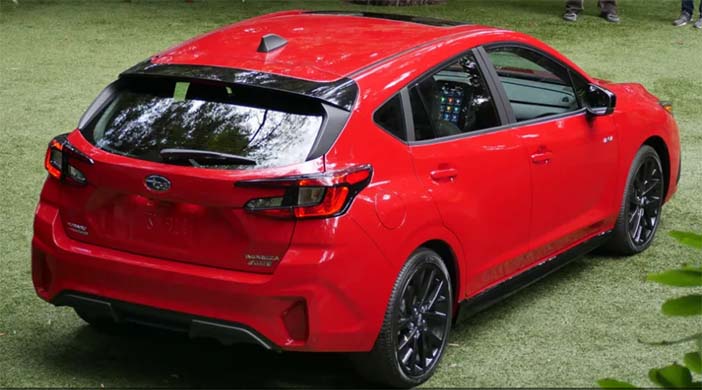
+++ The SUBARU IMPREZA has for years now been the basis upon which more interesting cars have been built. First it was the WRX and later the Crosstrek. While the WRX has drifted away from the Impreza to be its own thing, the Crosstrek continues on as a lifted Impreza hatchback and a go-to choice for those who want go-anywhere capability in a smaller, more economical package. The new Subaru Impreza is an all-new model, and while that’ll certainly mean big things for the future Crosstrek, Subaru has gone to greater efforts this time around to make sure the Impreza is its own thing rather than just a naked, lowered Crosstrek. In terms of philosophy, that means it’ll be sportier, drawing a clearer differentiation with its off-roadish sibling. There are only 3 trim levels now, and the 2 top ones, Sport and RS, err on the athletic side with a sport-tuned suspension, bigger wheels, Subaru’s SI-Drive performance management system (basically a sport mode for the engine and transmission), and sportier styling cues than both the base model and what you might’ve expected from stock Imprezas of the past. And as already mentioned, the Impreza RS makes its return to the lineup after 2 decades of sitting on the sidelines after effectively being replaced by the WRX in North America as the sportiest Impreza. Mechanically, it’s the same as the Impreza Sport trim with one key exception: the engine. Whereas the base and Sport get a carry-over 2.0-liter boxer-four good for 152 horsepower and 200 Nm, the RS gets a tweaked version of the current Crosstrek’s engine upgrade. The 2.5-liter boxer-four produces 182 hp and 240 Nm of torque, an increase of 3 Nm that comes on 700 rpm sooner. Every Impreza comes standard with all-wheel drive (shocker!) and a continuously variable transmission that lets the driver select among 8 pre-set ratios with shift paddles in the Sport and RS. Visually, the RS features lots of gloss black exterior trim and upgraded headlights, plus gunmetal interior trim, a leather-wrapped steering wheel, alloy pedals, blind-spot warning, and heated sport seats covered in black cloth with red cloth bolsters. A sunroof, power driver seat and 10-speaker Harman Kardon sound system are exclusive options on the RS. Sadly, the RS won’t be available as a coupe as it was once upon a time, and you won’t be able to get it as a sedan, either: every new Impreza is a 5-door hatchback. Interestingly, the sedan/hatchback take rate for the current-generation Impreza was 50/50, and Subaru says that if the company had unlimited resources, it probably would’ve built a sedan. It doesn’t, though, and the continued diminishment of sedan popularity probably would’ve meant that take rate wouldn’t have stayed even for long. Besides, when you factor in the Crosstrek, the needle was already skewed way in the direction of hatchback. Other key upgrades for the all-new Impreza include a 10% stiffer construction thanks to additional structural adhesives that also lower weight. Subaru says the front seats were designed for improved comfort and efforts were made to reduce particularly unpleasant sound frequencies in the cabin (getting rid of the CVT probably would’ve helped on that front, but I digress). The interior design isn’t radically different than Subaru’s tried-and-true functional aesthetic, but new infotainment systems do change things up considerably. While the base trim gets the weird dual-screen setup found in the base Outback and WRX, the Sport and RS get an updated version of the 11.6-inch portrait-style touchscreen found in those same Subarus. The graphics look a little more sophisticated (there’s less purple), but I’ll actually have to use it in motion to see if the upgrades make the jumbo touchscreen any better than it currently is (which I’d classify as “serviceable”). Elsewhere in tech land, the 2024 Impreza’s suite of EyeSight Driver Assist technologies are upgraded to operate “smoother, faster and under a greater range of conditions” and to identify pedestrians and cyclists earlier at intersections. This comes by way of an enhanced camera, updated software and a new electric brake booster. When equipped with blind-spot warning, automatic steering assist is now added. The 2024 Impreza is basically the same size inside as the outgoing model. The back seat is similarly spacious, with plenty of room for two average-sized adults to ride in comfort. The cargo area is actually just a bit smaller due to the more shapely fenders, but Subaru says it’s a difference an owner is unlikely to notice. Official dimensions weren’t available when we got to see the car in person prior to its official unveil at the L.A. Auto Show, but the current Impreza/Crosstrek has 20.6 cubic-feet of cargo space, which translates into this much real-world stuff. One thing we do know: The new Impreza has two cupholders in the cargo area big enough for a 32-ounce Nalgene bottle. Score. Should the cargo area not provide enough space, the new Impreza takes one step back and one step forward up on the roof. Roof rails are no longer available: you’ll have to get a Crosstrek for those. However, Subaru added fixed mounting points beneath little covers, which we’ve been told by Yakima are far stronger than relying on clamp-style “feet” to affix crossbars. BMWs and Porsches have had these for years. Basically, the 2024 Impreza boasts more of the versatility customers have come to expect from Subaru, but with a sportier focus. That includes its standard all-wheel drive. Perhaps that’ll be appealing to those who don’t want or need the Crosstrek’s extra ground clearance and other rugged elements (and also don’t want to pay for them). +++
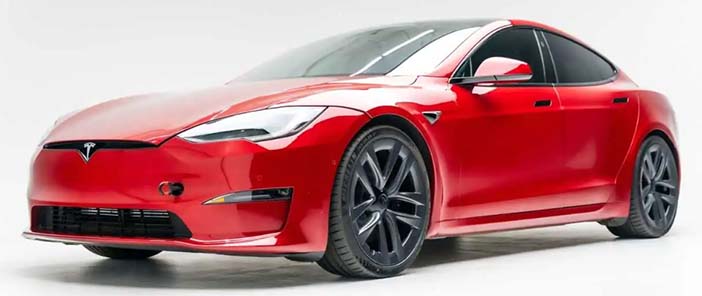
+++ The TESLA MODEL S Plaid has reportedly arrived in Europe, and it seems deliveries have started. This became somewhat clear after new Plaid owners posted various messages and images online, such as copies of the Model S’ Certificate of Conformity. A Certificate of Conformity ensures that goods can move across Europe freely. It also has important information about the product. In this case, there are some details about the Euro-spec Model S Plaid that were previously unknown. Assuming it’s confirmed that deliveries have actually started and the images are real, I now have information about the Plaid’s top speed and towing. The electric flagship saloon’s top speed is listed at 300 km/h. While the Model S Plaid is listed on Tesla’s website with a 320 kph top speed, the automaker hasn’t yet provided a software update to take it to that level. The European document also shows that the maximum top speed of 322 km/h will require the optional Carbon Ceramic Brake Kit. The kit is supposed to be available this fall for $20,000. Towing is typically different in Europe than in the US. More specifically, vehicles that aren’t officially approved to tow in the US may be approved overseas. According to the information in the Certificate of Conformity, the Model S Plaid will come standard with a factory tow hitch. It will pull some 1.600 kilograms. +++
+++ Never has VOLKSWAGEN teased a new car so early in the game, previewing Trinity in March 2021 even though the EV is not scheduled to come out until 2026. As it turns out, the original launch date might have been pushed back if we were to rely on a new report by Manager Magazin. Newly appointed VW Group CEO Oliver Blume has allegedly taken the decision to postpone the swoopy sedan until 2030. It appears the setback has to do with the software as the company’s top brass believes it won’t be ready in time. As a refresher, Trinity is set to offer 700 kilometres of WLTP range and ride on the VW Group’s new Scalable Systems Platform, which is being engineered to support a Level 4 self-driving system. According to the same report, this isn’t the only drastic decision taken by Blume as plans for the new factory has apparently been scrapped. Back in March, VW announced plans to build a new €2-billion assembly facility near the main plant in Wolfsburg to accommodate a new wave of next-gen EVs, kicking off with the 2026 Trinity. Construction of the carbon-neutral factory is supposed to start next spring according to the official announcement, but now its future looks uncertain. An internal message sent to employees about how the company is “currently taking the opportunity to look at all projects and investments and check them for viability”. However, a VW spokesperson refused to comment on the matter. The SSP architecture will no longer debut with the plant in Wolfsburg for the Trinity swoopy saloon as originally planned. As a final note, software issues have also delayed the next-generation, electric-only Porsche Macan. The initial plan was to have the zero-emission crossover on sale in 2023 but it has been pushed back by about 12 months. +++