
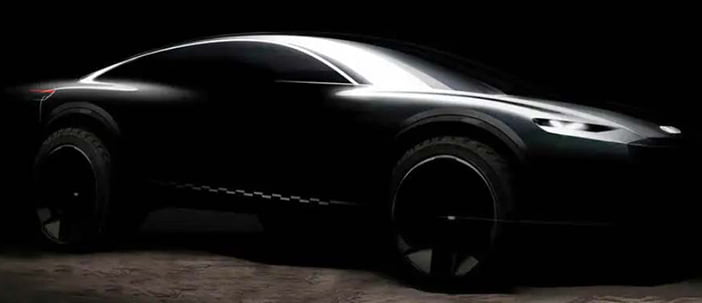
+++ The new AUDI Activesphere, a next-generation concept car with an electric powertrain and level four autonomous driving capabilities, will be revealed on 26 January. Taking the form of a rugged, off-road crossover, the surprise model will provide both on- and off-road capabilities to enable drivers to live a more active lifestyle, according to Audi. The Activesphere is the brand’s latest addition to its next-generation concept line-up, which was originally revealed as a trio of cars consisting of the shape-shifting Skysphere sports coupé, the Urbansphere MPV and the Grandsphere executive saloon. Likely to be based on the PPE platform shared by the Urbansphere and Grandsphere, the Activesphere features a raised stature and a large set of wheels, contrasting with sleek bodywork and narrow, sharply designed headlights. Those design features indicate the model will have some degree of off-road capability. Although Audi has remained tight-lipped about specific features, all 4 concepts are crammed full of next-generation technologies, including Level 4 autonomous driving capabilities and creative solutions to improve practicality, relaxation and sustainability. Audi has previewed a handful of different battery technologies for its concepts. The Urbansphere, which will be the firm’s largest car yet, is fitted with a 120 kWh battery with up to 750 km of range and can charge at speeds of up to 270kW. Battery sizes for the Skysphere have not been revealed, although Audi has said the capacity is expected to be higher than 80 kWh, offering a range of around 500 km. As for powertrains, Audi’s concepts have figures ranging from 408 hp and 640 Nm of torque for the Urbansphere, to the 726 hp and 950 Nm in the Grandsphere. The Activesphere will make its first public debut at Audi’s “Celebration of Progress” event. +++
+++ BMW has already been caught testing the next-generation X3 even though the new midsize luxury SUV won’t hit the market until closer to the middle of the decade. The prototypes we’ve seen were hiding an evolutionary design as the model codenamed G45 will ride on the same CLAR platform. It could be an entirely different story with the M version as the high-performance derivative will go purely electric. People familiar with the matter say BMW is planning to discontinue the inline-6 powered X3 M after the current generation runs its course. Its replacement is believed to ride on the BEV-first Neue Klasse architecture, which will premiere in 2025. The first electric vehicles to use the NE underpinnings will be a new i3 (3 Series Saloon) and the next-gen iX3. It’s unclear whether the range topper will be called “iX3 M” or the Munich-based company will simply stick to “X3 M”. The sporty electric flavour is earmarked for a release in 2026 or 2027, which makes sense considering the standard SUV will be launched around 2025. While the X3 will continue to have petrol engines in its lesser configurations, the swoopy X4 sibling is believed to go EV-only as an iX4 model. BMW was recently spotted hauling a quad-motor electric prototype. The modified i4 M50 wearing a colourful livery is a taste of things to come regarding full-fat M models with no combustion engine. Previous statements made by high-ranked officials from Bavaria have indicated work is underway for a hardware capable of churning out over 1.300 hp. That would be fitting for a dedicated supercar, but in the meantime, expect the familiar M models to switch from petrol to electric. An iX3 M will pack more punch than the current X3 M, which tops out with the Competition model at 510 hp and 600 Nm. An electric successor is going to need a power advantage to partially offset what will likely be a significant weight increase. The petrol-fuelled X3 M on sale today isn’t exactly a lightweight SUV (oxymoron?), tipping the scales at just over 2.000 kilograms. +++
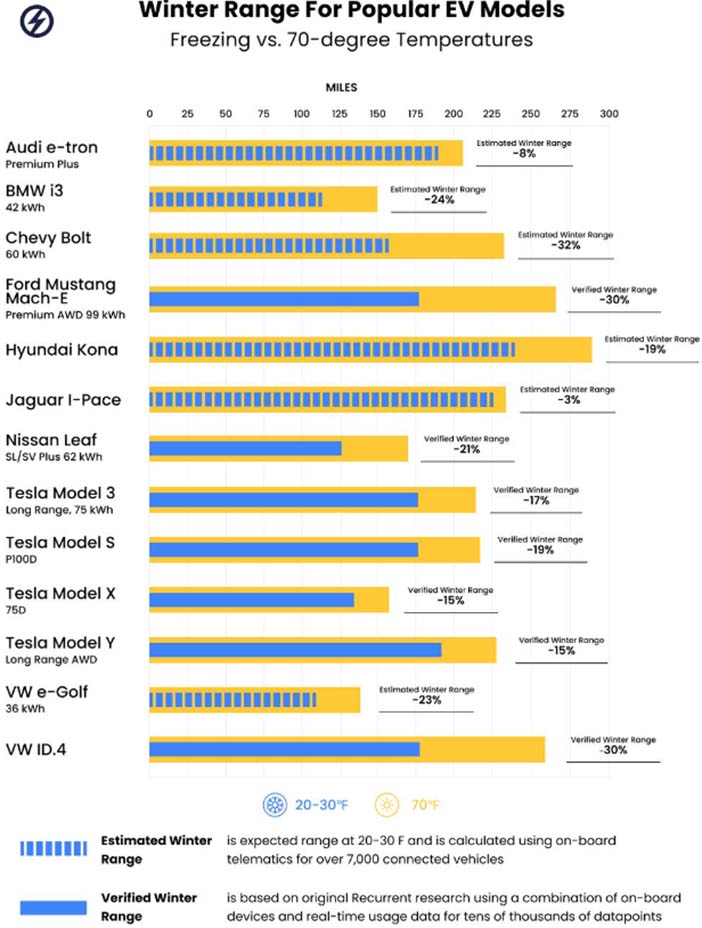
+++ There’s no doubt ELECTRIC cars lose range in cold temps. According to Recurrent, some can lose up to 35 percent of their estimated range in freezing weather. However, there are many factors involved, and every vehicle is different. No matter which EV you chose, it’s going to have fewer kilometers of range in the winter than in warmer seasons. If you live in an area that experiences cold weather often, you may want to choose your EV wisely. Not only would it be smart to get an electric car with the most range you can afford, but also one that seems to lose less range in cold temps. That said, if you just use your EV for short trips around town, it won’t likely make much difference. Recurrent points out that even though you’ll notice a loss of range in cold weather, you shouldn’t be concerned about the condition of your EV’s battery. The battery itself isn’t failing, it’s just not able to charge as quickly or produce as much range for a few reasons. Recurrent’s recent study provides a brief summary of why EVs lose range in cold weather: “Winter range loss occurs for a few reasons. We cover them in detail in our hot and cold temperature article but the two main contributing factors are chemical and mechanical. Chemical and physical reactions in the battery occur more slowly in cold temperatures. This reduces the EVs power. Cold temperatures inhibit chemical reactions and act as resistance that slows down the physical processes”, an expert said. He goes on to explain that while electric vehicles produce their own heat, petrol cars use the excess heat created by the internal combustion engine. All that wasted heat also reminds us of how inefficient a petrol car is compared to an EV, but it does help warm the car. For an EV to warm a car’s interior, there actually needs to be a power source, which pulls energy from the battery, resulting in fewer kilometers of range. With all of that said, Recurrent’s new study for 2022 highlights real-world cold-weather and winter-driving data from 7.000 vehicles and tens of thousands of various data points within its community. The new study included all Tesla’s models, the Nissan Leaf, the Ford Mustang Mach-E and the Volkwagen ID.4. Based on details from the study, Recurrent put together the following chart showing range loss in 14 popular EVs. Recurrent writes that it recently updated the winter range for many vehicles since it has now verified many more models’ cold-weather range with real-world data. While this chart gives you a solid idea of what to expect, always keep in mind that real-world EV range is impacted by many factors, and may not match up with the data in the chart. +++
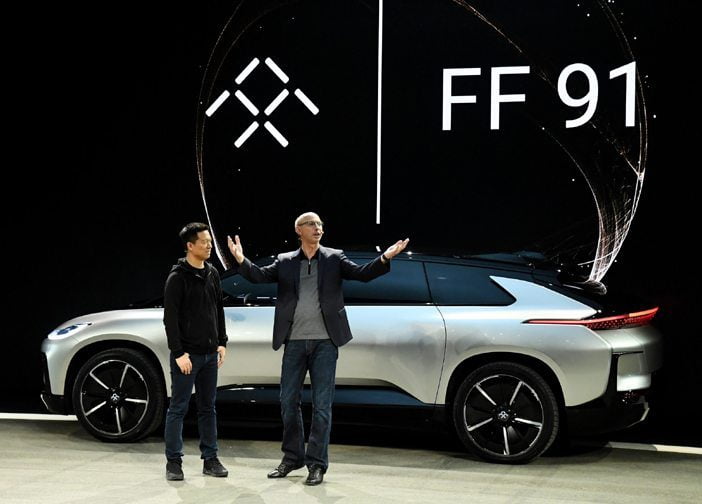
+++ Shares of FARADAY FUTURE Intelligent Electric tumbled 21% premarket on Friday after the company unveiled production plans for its much-delayed luxury electric car that hinged on securing additional financing. The company is in talks with new and existing investors to raise the $150 million to $170 million in capital needed to start production in March and deliveries a month later of the FF 91 Futurist, Faraday disclosed on Thursday. The company is one of the many EV startups struggling to launch its products as a bleak global growth outlook and a funding squeeze dented production schedules and compounded losses. The Los Angeles-based company’s shares have tanked more than 90% this year and it had $22.5 million in cash as of Nov. 30, down from $31.76 million at the end of the third quarter. “We’ve implemented a number of cash conservation measures that have significantly reduced our spending to core items that are essential to delivering the FF 91 Futurist”, interim chief financial officer Yun Han said on Thursday. The company, which said it required investors to approve an increase in the number of shares to secure the financing, is also grappling with top-level changes. Last month, the board appointed Faraday Future’s China chief executive Xuefeng Chen as its global CEO after Carsten Breitfeld was asked to resign. Meanwhile, the company said the latest generation of its car had longer range and better acceleration than rivals such as Tesla’s Model X, Mercedes Benz Maybach S and Rolls Royce Cullinan. +++
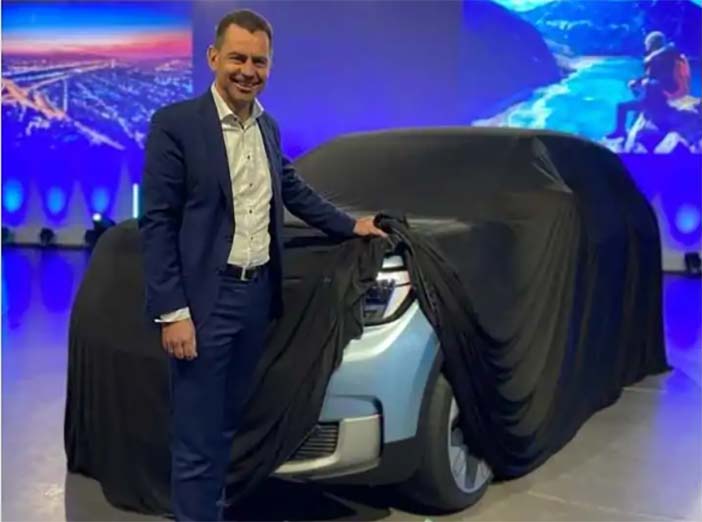
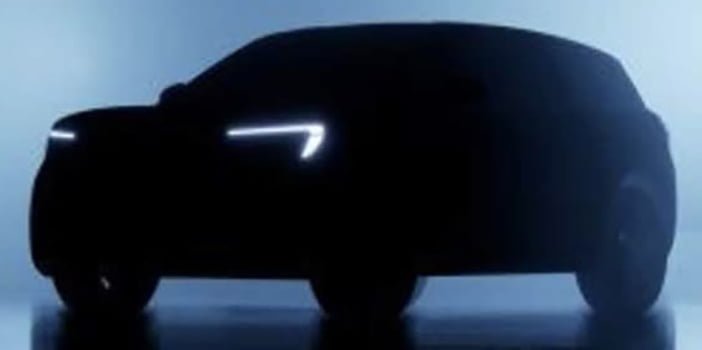
+++ The first FORD electric vehicle to use Volkswagen’s MEB platform will be revealed in March before replacing the Ford Fiesta at the firm’s Cologne production line around the middle of the year. The new EV has been kept tightly under wraps since it was confirmed in 2021, but a pair of high-ranking Ford bosses have given the first hints of its design on social media, suggesting a reveal is only a few weeks away. Martin Sander, head of Ford’s Model E electrification division, lifted the covers off part of the Skoda Enyaq rival’s front end on Twitter, saying: “Can’t wait for 2023 to arrive, when we will pull off the cover of our first electric passenger vehicle coming from Cologne”. Only a small part of the car is visible, but it is already clear that this new EV will mark a step change in the design of Ford’s European-market cars. Ford’s most successful US-market cars (the Bronco and F-150 most notably) will influence the design of its future global products. Apart from the new EV’s aero-optimised wheel designs, contrasting lower bumper and chunky headlights, everything remains under wraps, but in size and silhouette, it is evident that Ford’s new EV will be aimed squarely at cars like the Toyota BZ4X, Nissan Ariya and Volvo XC40 Recharge.
Ford’s Europe marketing boss, Peter Zillig, posted a darkened preview image of the car to his LinkedIn, similarly giving little away but revealing a charismatic led front light signature that could become a defining feature of Ford’s new-era cars. Zillig said all new Ford models will be designed according to the ‘Adventurous Spirit’ ethos, which is designed to help Ford “connect emotionally with consumers who say they know we’re American, but don’t feel we’re American”. He said: “Adventurous Spirit is meaningful because it is authentic. We’re not inventing something new. Instead, we’re channelling a strength that has helped define Ford for fast-approaching 120 years. We are tapping into something intangible, but real”. More specifically, the new MEB car will form part of the ‘Active Adventure’ model line, together with other mid-sized SUVs such as the Kuga. There are three other ‘families’ in this new age: ‘Wild Performance’ is for the Mustang line, ‘Urban Escape’ is for “statement-making models” like the Puma and ‘Ultimate Outdoor’ comprises hardcore off-roaders such as the Bronco and Ranger Raptor. Ford’s new European EVs will be built at the Cologne factory where the Fiesta is currently based. The combustion-powered supermini will bow out in July 2023 to make room on the line, and the latest teasers come just a day after Sander told that it “had to go”. “We decided to build our first high-volume electric vehicle here in Cologne. There comes the point where we need the space for construction, because we are turning the Fiesta plant into a fully battery-electric plant. This is why we had to make a decision that we have to stop Fiesta production”. It is expected that the new EV (which is tipped to revive a historic Ford moniker when it is revealed) will be similarly specified to the Volkswagen ID 4 with which it will share the bulk of its make-up. Expect a choice of rear- and four-wheeldrive powertrains, offering outputs ranging from 148 hp to 299 hp, and a pair of battery options giving around 340-480 kms of range. The model is scheduled to slot above Ford’s planned electric version of the Puma and below another new SUV, referred to as “Sports Crossover”, and to be based on VW’s ID.5. It will follow the version shown here in 2024, Ford executives said. +++
+++ The RIMAC story is a fascinating one. The eponymously named Rimac Automobili was founded by Mate Rimac (pronounced Mah-tay Ri-matz) in 2009 when Rimac modified his old E30 BMW by installing an electric motor to make his e-M3. Fast forward just a little over a decade and Rimac joined forces with Bugatti to create the joint venture Bugatti Rimac, of which Rimac Group owns 55 petcent and Mate is CEO. The rise of Rimac has been stratospheric. “It’s one of the craziest things”, says Rimac in the boardroom of Rimac Technology’s UK base near Warwick. “We talk with all the car companies. We work on big projects with some of them. When Stephan Winklemann was CEO of Bugatti, he came to us a couple of times looking to develop the next-generation car after the Chiron. It was supposed to be an electric crossover similar to what the Ferrari Purosangue turned out to be: we were going to rearrange the Rimac C2 powertrain at the time. “Then Volkswagen Group’s head of strategy called me and said he wants to talk about Bugatti. In the middle of the conversation he just blurted out ‘What do you think about taking over the company?’ I thought it’s a glitch in the Matrix or I misunderstood him. I didn’t believe it was real, so I asked him to repeat the question when he called me back months later and he said: ‘Do you want to take over Bugatti?’. When he started to talk about it, I realised actually how much sense it makes for everybody, that it’s a win-win-win situation. From that moment on, it took 2 years to do the transaction”. Rimac takes up the story on how he found Bugatti: “VW had several options, including kill the brand or sell it to someone else. But there is not one opinion within VW, it’s a lot of people with different opinions: the board, the Piech family, the Porsche family, the state. “It wasn’t an easy time, but I knew exactly what I wanted the next car after the Chiron to be and we started developing a combustion engine on our own. It’s totally bonkers what you will see next year. I think everybody will be blown away when they see what we did. We started developing a new combustion engine 2 years before we took over the company, which is something I guess nobody expected”. Rimac has a vision for Bugatti. He tells me that the Chiron successor will be something special: “It will be hypercar rearranged as a hybrid. It’s completely new, so there is not one part carried over from any car; nothing carried over from Chiron, nothing carried over from Nevera. Everything is from scratch”. But what about his baby, his own company, Rimac Automobili. With both brands set to compete in the hypercar space and Bugatti moving towards electrification, how will the two entities differentiate themselves effectively? “It’ll be different technology”, says Rimac, “but also in the approach. Bugatti is all about heritage and craftsmanship and 100 years of history. It’s a little bit aristocratic perfectionism. On the technical side we will have combustion engines for the foreseeable future, and it’s more luxury. It has to be a bit serious, too. The Bugatti thing is more turn up to the opera and then drive 400 km/h on the autobahn. It will be more beautiful, analogue instruments, kind of watch making stuff. “With Rimac we want it to be absolutely insane, bonkers, full-electric: drifting at 60km/h with a gigantic cloud of smoke behind you, autonomous drift modes, futuristic stuff. I feel like we have the perfect 2 canvases for totally different forms of hypercar. Bugatti will be going more in the direction of beautiful art (of course, performance will still be top) but it’ll be this artistic approach. Rimac will be about bending physics”. But will it always be about bending physics in the hypercar space, or will Rimac Automobili branch out further with a 4-door, 4-seat model so owners can scare more than just 1 passenger? “I think it’s a really interesting concept where you have basically a hypercar with 4 usable seats. I really like the Koenigsegg Gemera, for example, but this kind of car comes with a lot of complexities and limitations. I really like what Christian Koenigsegg, company CEO did with that car, but I don’t find currently a technical concept that goes with it that I would like. “Basically, when you do a car like that, if it’s low, the problem is with four seats you usually have very upright seating when you put people one behind the other. And then sports cars have long bonnets or rears for the engine or battery so the car becomes impossibly long. Then you have to go kind of SUV-ish for the roof height and to get the proportions, which ruins the centre of gravity. That’s the real kind of challenge with this kind of car. “I wouldn’t exclude it, I will never say we’ll never do this sort of thing, but for the moment I would do something more interesting, different with the power. We have a pretty detailed 10-year plan and I want to do cars that are very different. I’m driven by exploring technical things and I wouldn’t exclude four-seaters if there’s not too much of a compromise”. When I ask about an SUV Rimac stops me in my tracks. “No. Let’s say we don’t have a plan for a car like that. It was something we immediately stopped for Bugatti and we will go in a slightly different direction. That is a direction we will never take”. What about smaller, more affordable models? Where will Rimac Automobili be in the future? “That’s actually something I’m thinking about at the moment”, Mate replies. “Should it be more in the hypercar range or more in sports car? There are a lot of electric cars coming onto the market with super performance at a lower price point. Rivian has crazy acceleration, Tesla Plaid, performance is becoming a commodity and it’ll be interesting to see what car makers do? We are at least a generation ahead with the Nevera, so all of them will try to come to Nevera about 5 years later, but what will Lamborghini, McLaren and Aston Martin be without a combustion engine? Will all of them have four motors, 120kWh battery, 1.500+ hp and be around €300.000-400.000? I don’t know. How will we differentiate? That will be really interesting to see, but for now I would like to keep that for ourselves”. I try to tease a little more from Mate on how this avenue will develop, not just for Rimac Automobili but also the industry in general and he duly obliges by outlining what’s catching his interest in the market at the moment. “I think it’s really interesting how people are keen on traditional, analogue cars. Like when someone presents a car with a naturally aspirated V12, hydraulic steering or even no assistance, manual gearbox, carbon-fibre monocoque like the GMA T.50 – you could compare the spec sheet to something from the eighties, you know? “I was really impressed with Koenigsegg’s idea of a simulated gear shifter: wow, what an idea! I’m jealous I didn’t come up with that! Using technology to bring back the analogue feel. If they execute it as they want it’s actually so direct and even allows you to mis-shift or stall the car with the clutch. It’s not fake. Its really interesting”. Fuel cells are not tech that Rimac is focusing on though. He thinks there are interesting applications where they have their use but that any hydrogen-based tech has a fundamental flaw. “If you look at the full chain of hydrogen production, transport etc. then you have the conversion of hydrogen to electricity, which is only around the efficiency of a combustion engine. It’s like 30 percent or less, which is terrible. It only makes sense if you have abundant energy. Then you have to build up the infrastructure to use it in cars. The electricity grid already exists. Yes, you need to build charging stations, but electricity is everywhere. People don’t realise that in the last 10 years the price of batteries has dropped by 90 percent. You have enough range, charge times are acceptable. You can get all this in a typical car you can buy today, like a Tesla Model 3 or a Kia, EV6 which isn’t that expensive (relative to cars like the Nevera). “I think hydrogen may have some uses in specific applications where batteries don’t make sense, in a plane or heavy duty trucks, but for the majority of transport I’d say no”. Our conversation turns to solid-state batteries and if Rimac believes they’ll be the magic bullet they seem to be lauded as when it comes to range. He doesn’t believe they necessarily will be. “Range isn’t a problem really. Nevera has a 120 kWh battery and, well, I screwed up 2 things actually. One of them is range, because I focused on performance and I thought: ‘OK, efficiency in an electric car is a given’. “We have a big battery and range is certified for 490 km WLTP. If I took efficiency more seriously and we really took care of it as we did for performance, I think the car should have at least like 40 percent more. Maybe even 50 percent more so in Nevera, if I would do the powertrain again and some other things, I think we could have easily like 600-700km with the 120 kWh battery pack”. He tells me that’s 1 of 2 things that he “screwed up” with the Nevera, the second being weight. “It was a €180million learning experience”, he laughs. “It’s an expensive education: you learn so much, and if I were to do it again it would be so much lighter in the battery. I would do lots of things differently: getting weight out would also help increase range. “Around 140 kWh would make sense if the technology allowed it, but solid state, I wouldn’t hold my breath. We have projects going in this direction, but we still don’t see it really starting the development of a car today, and if you start today, you are on the market in 5 years. We wouldn’t go for solid state yet. Maybe as a parallel path to a traditional battery to mitigate risk, but there’s plenty of optimisation to be had with the current technology”. +++
+++ TESLA investors are growing frustrated with a falling stock price and a CEO who is splitting his time between running 3 different companies. It’s become such that Tesla’s third largest individual shareholder, KoGuan Leo, is calling for a new CEO to take over the EV maker, which would allow Musk to focus on his other ventures like SpaceX and Twitter. “Elon abandoned Tesla and Tesla has no working CEO”, KoGuan Leo tweeted on Wednesday. “Tesla needs and deserves to have working full time CEO”. KoGuan Leo amassed a 22.7 million share position in Tesla as of September, which is currently worth $3.57 billion. Leo built his stake in Tesla during the early days of the Covid-19 pandemic, when the stock traded at a split-adjusted price of about $40 compared to today’s $157. Shares of Tesla are down 55% year-to-date and the stock has erased about $225 billion in market value since Musk closed his deal to buy Twitter in late October. That decline came at a time when the S&P 500 climbed more than 3%, so investor concerns are real, and analyst Wedbush Dan Ives has called Musk’s Twitter venture a “circus” and “the twilight zone”. Despite his frustration, Leo is not selling his Tesla shares. Instead, he is planning to buy more as he believes the stock is undervalued and there’s still room for the company to grow with a laser-focused CEO. “Frankly my dear, I don’t give a damn if Elon stays or leaves Tesla. Tesla is a great company and $160/shr is cheap”, Leo said, adding that he’d like to see an operational executive similar to Tim Cook to take over the company. “Elon is a mere hired hands. He is our employee. Elon was the proud father, Tesla has grown up an now an executioner, Tim Cook-like, is needed, not Elon”, Leo tweeted. “I plan to invest more $billion bc Tesla will be the biggest company with or without Elon”. In an apparent reference to an options trade, Leo said that he will buy an additional 3 million shares at $160 per share if Tesla falls below $160 in a few weeks, but what bothers Leo is that while he’s buying Tesla stock, Musk is selling. “Today, I just put in another $500 million on the line to support Tesla stock price at $160 whereas Elon sold $35 his shares and maybe more last few days”, Leo tweeted. A few hours after this tweet, it was revealed that Musk sold an additional 22 million shares for $3.6 billion earlier this week. Incidentally, Musk’s sales in one week are roughly equal to the amount of Tesla stock that Leo owns. +++