
+++ The AUDI GROUP is following up on a strong first half of the year and reports increased delivery figures after 9 months: Between January and September, the Progressive brand group delivered around 1.405.000 Audi, Lamborghini and Bentley vehicles; 16 percent more than in the same period last year. The increase was particularly strong in the USA and Europe. Revenue rose by 13 percent to €50.4 billion in the first 9 months, while the operating profit was €4.6 billion. The operating margin was within the target corridor at 9.1 percent. Once again, the brand with the 4 rings demonstrated its strength in fully electric models with deliveries of more than 123.000 vehicles (an increase of 60 percent), demonstrating the success of the electrification strategy. “After the third quarter, Audi remains on a strong financial footing and can largely confirm its forecast for the full year”, says Audi chief financial officer Jürgen Rittersberger. “Despite a wide range of challenges, we were able to achieve double-digit growth in revenue and are within our target corridor for the operating margin”. From January to September 2023, Audi deliveries also increased by 16 percent to over more than 1.387.000 vehicles. September was also strong, with more than 175.000 cars delivered, representing an increase of 24 percent compared with September 2022. Audi also achieved strong growth for fully electric models: With more than 123.000 electric vehicles delivered, the brand with the 4 rings improved by 60 percent and for September by as much as 77 percent year on year. The Q4 e-Tron (+162 percent) accounted for a significant share of the growth. The share of electric vehicles in the brand group’s deliveries rose to around 9 percent. “Our momentum in the area of electromobility continues to pick up speed, as is clearly demonstrated by the year-on-year increase of almost 60 percent in deliveries of fully electric Audi models. In the first 3 quarters, we also delivered more vehicles to our customers overall than in the same period last year, with around 1.4 million models delivered and an increase of 16 percent despite the challenging market environment, we can be very satisfied. Thank you to all Audi employees for this strong performance!” In the first 9 months of the year, the Audi brand was on course for growth worldwide. In Europe, the brand with the 4 rings saw an increase in deliveries of 24 percent, with just under 559.000 models delivered in the reporting period. The home market of Germany played a major role in the strong performance. There, the brand delivered almost 185.000 cars, around 20 percent more than in the same period last year. Growth in electric vehicles was 24 percent. In both the United Kingdom and Italy, Audi delivered 30 percent more vehicles year on year. Performance in the USA was similarly strong, where Audi handed over just under 168.000 vehicles for an increase of more than 26 percent. The brand made particularly strong gains in electric models, with deliveries rising by 48 percent. Growth was as high as 93 percent in the third quarter alone. In China, Audi saw growth of more than 5 percent in the first 3 quarters compared with the same period in 2022, with around 522,000 vehicles delivered. The increase was particularly strong in the month of September, when the brand with the 4 rings delivered more than 72.000 cars; 25 percent more than in September 2022. Third quarter growth exceeded 10 percent compared to the same period last year. Based on the growth in deliveries, the brand group increased its revenue from January to September by 13.1 percent to €50,390 (2022: 44.561) million. The share of EU taxonomy-aligned revenue rose to 15.7 (2022: 12.4) percent. The Audi Group’s operating profit after 3 quarters reached €4.595 (2022: 6.250) million. The decrease compared with the same period last year is mainly due to negative effects of raw material hedging transactions amounting to €1.1 billion. While these had a positive effect of €0.4 billion in the previous year, they decreased the operating profit in the first 3 quarters of 2023 by €-0.7 billion. Higher material costs also had impact on the operating profit. Overall, the Audi Group achieved an operating margin of 9.1 percent (2022: 14.0 percent), which is within the target corridor. Excluding raw material hedging effects, the operating margin was 10.5 percent. Lamborghini delivered 7.744 (2022: 7.430) cars to customers in the first 3 quarters of the year, for a growth of 4.2 percent. Sales grew by 5.2 percent to €2.026 (2022: 1.926) million and operating profit by 8.4 percent to €618 (2022: 570) million. Lamborghini’s operating margin reached an impressive 30.5 (2022: 29.6) percent. Bentley delivered 10.053 (2022: 11.316) vehicles from January to September. Sales reached €2.309 (2022: 2,490) million and operating profit was €506 (2022: 575) million. The brand’s operating margin stood at 21.9 (2022: 23.1) percent. The Audi Group’s financial result fell slightly to €1.219 (2022: 1.283) million up to and including September 2023. Among other causes, the decrease is due to the Audi Group’s business in China of €669 (2022: 823) million being reflected in the figure. This was partially offset by income from interest and securities. Profit after tax following the first 3 quarters of 2023 amounted to €4.472 (2022: 5.817) million. The Audi Group’s net cash flow after 9 months was a solid €3.498 (2022: 4.579) million. In addition to the lower earnings after tax, the decline is mainly due to higher outlays, particularly for the refresh of the Group’s product portfolio. Changes in working capital also impacted net cash flow. For 2023, the Audi Group continues to expect deliveries of between 1.8 and 1.9 million vehicles and revenue of between €69 and €72 billion. The anticipated operating return on sales is expected to achieve the lower end of the range of 9 to 11 percent. Based on current planning, the Audi Group expects net cash flow to be at the lower end of the forecast range of between €4.5 billion and €5.5 billion. The ratio of research and development costs is expected to be moderately (previously: slightly) above the 6–7 percent corridor. The corridor for return on investment has been adjusted to 17–20 (previously: 19 to 22) percent. +++
+++ FISKER is negotiating with 5 carmakers over a partnership to secure additional production capacity for its vehicles, its chief executive Henrik Fisker said on Thursday. “We have 2 cars that are almost ready. We can bring them to market fast. We just need the capacity”, Fisker said. The CEO told in May he was exploring partnerships with everyone from suppliers to tech companies to scale up production. On Thursday, he said he was in negotiations with five “traditional car companies” and hoped to pick a partner in the coming months. The California-based startup has 1 vehicle on the market: a SUV called Ocean, being launched from a factory in Austria operated by a unit of Magna International. 2 further models, a pickup and a smaller SUV, are due to be released by 2025. The SUV, called Pear, will be built with Foxconn in Ohio, but further capacity is needed for both models. It has so far produced 5.000 units of the Ocean. Still, it cut its annual production target in August and adjusted pricing in October as it grappled with a slowdown in electric-vehicle demand. +++
+++ Economy cars, those that can be bought for a list price of around €20,000, are very popular in Europe, especially in times of high inflation and rising living costs. And if these economy cars are also FUEL-EFFICIENT , then the advantage extends beyond the time of purchase, as savings can be made on all journeys, regardless of whether they run on diesel, petrol or LPG. To offer a little help at the time of purchase, here is a list with the most fuel-efficient economy cars, at least those sold in most European countries with a price tag of just over €20.000. 1) Renault Clio 1.5 dCi – 4.1 l/100 km, 2) Citroën C3 1.5 BlueHDi – 4.5 l/100 km, 3) Fiat 500 1.0 Hybrid – 4.6 l/100 km, 4) Toyota Aygo X 1.0 VVT-i – 4.8 l/100 km, 5) Fiat Panda 1.0 Hybrid – 4.8 l/100 km, 6) Mazda2 SkyActiv-G 75 – 4.8 l/100 km. There are also other economical cars in several European markets which, while not boasting the low fuel consumption seen above, can save a lot of money on the road: these are LPG-powered cars. The European market does not offer any electric cars with a list price below €20.000, and only with the state incentives offered in some countries is it possible to put a really affordable ‘battery’ car in the garage. Among the cheapest electric cars, the following is a list of the most fuel-efficient. 1) Fiat 500e – 13.0 kWh/100 km, 2) Dacia Spring – 13.9 kWh/100 km, 3) Smart EQ Fortwo – 15.7 kWh/100 km, 4) Renault Twingo Electric – 16.0 kWh/100 km. +++
+++ Berkshire Hathaway said it has shed its holdings in GENERAL MOTORS as the conglomerate controlled by Warren Buffett boosted its cash pile to a record $157.2 billion. In a regulatory filing on Tuesday that described its U.S.-listed stock holdings as of September 30, Berkshire reported no holdings in General Motors, after reporting respective stakes of $848 million in June. Buffett, 93, has run Berkshire since 1965. +++
+++ “Korean cars will conquer the world”. Ju-yung Chung, HYUNDAI ’s founder, repeated it like a mantra until the day he died in 2001. The rest is history, with Hyundai Motor Group managing to climb up the carmaker rankings (where it ranks third) and also planning to jump on the electric transition by increasing production capacity at the Ulsan plant. The goal? To assemble up to 200.000 more electric vehicles per year from 2026 and to test cutting-edge production technologies. The Ulsan plant is already by far the largest in the world, with 1.4 million cars assembled by 2022. To give you an idea of what that means, in Wolfsburg, Volkswagen can assemble a maximum of 800.000 cars per year. The electric car plant will be built on an area of 548.000 m2, the foundation stone for which was laid today, 9 November, in the presence of Euisun Chung, executive chairman of the Hyundai Motor Group, and Jaehoon Chang, president and CEO of the Hyundai Motor Company (photo).
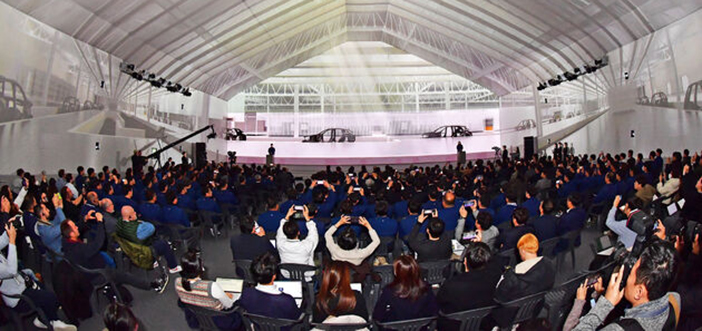
They were joined by the mayor and the first vice-minister of the Ministry of Trade, Industry and Energy, Youngjin Jang. The new plant is designed not only to increase production capacity, but to introduce new production technologies crucial to reducing costs and thus the final price to the customer. No further details were given outside the press conference, but to a specific question on whether or not so-called Hyper Casting, i.e. the process that minimises body components by stamping them with giant presses, will be adopted, the answer was as follows: “Hyundai Motor intends to apply an innovative production platform, developed by the Hyundai Motor Group Innovation Centre in Singapore (HMGICS), to secure the future of the plant and prioritize employee safety, comfort and efficiency. The platform includes smart control systems based on artificial intelligence and on-demand; environmentally friendly, low-carbon construction methods to achieve carbon neutrality and RE100 certification”. The Group’s spokesman did not confirm, but neither did he deny, the rumors that have been going for months in the Korean trade press, but it seems to be implied that the new technology that is to characterize the production process will be developed in-house without recourse to third-party suppliers, such as the Italian company IDRA that produces Tesla’s famous Giga Press. In any case, the first model to see the light of day at the new plant will be a Genesis SUV, built on the new IMA (Integrated Modular Architecture) platform, starting in the first quarter of 2026. On the sidelines of the inaugural conference, the history of the Ulsan plant was celebrated with an exhibition of models that have made the group’s history. From the first car assembled under license at the plant, the Ford Cortina, to the car that powered South Korea, the Pony (photo).
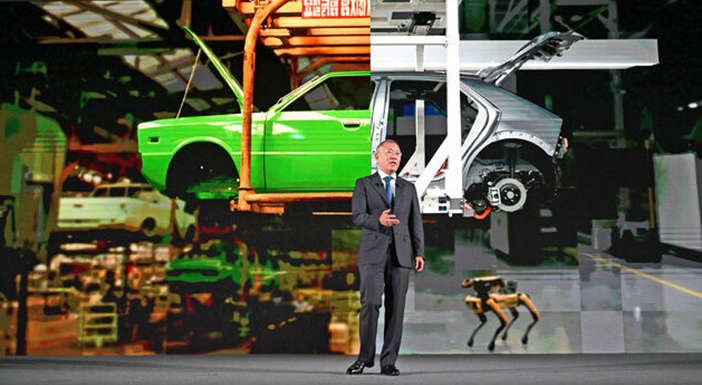
The latter, in particular, has a history linked to Italy. In fact, the Pony Coupé prototype was designed in the 1970s by the pencil of Giorgetto Giugiaro, who was among the guests of honor. The Italian designer, answering questions from journalists, also confirmed that GFG Style has resumed its collaboration with Hyundai to build concept cars. The investment in the Ulsan expansion amounts to €1.43 billion and is part of a strategy to increase domestic production of electric cars from the current 330.000 units to 1.51 million by 2030, which will be added to those assembled at the other 10 plants around the world, for a total of 3 million BEVs. In fact, all brands (Hyundai, Kia and Genesis) combined, some 30 new battery-powered models will come to market, which should enable the Hyundai Group to become one of the world’s top-3 producers of electric cars. With the Ulsan expansion, the challenge of conquering the electric car market is now an ‘official’ goal for the Koreans and part of the symbolic site where the brand’s industrial adventure began on 29 December 1967. Today the automotive world has changed, the contenders are called Tesla and BYD, but the ambitions of this company, which embodies the dream of an entire people, are exactly the same as they were fifty-five years ago. In short, all the conditions are in place for history to repeat itself. +++
+++ MERCEDES plans four platforms to carry it into an all-electric future. There’s the Modular Mercedes Architecture (MMA) for entry-level vehicles like the production version of the Concept CLA. Then there are the 3 EA platforms: MB.EA for midsize and large Mercedes passenger vehicles, VAN.EA for the commercial haulers and AMG.EA for hyper-potent stuff from the Mercedes-AMG division, the first of which is due in 2025. Engineers in Affalterbach showed what an AMG.EA brainchild could look like with the Mercedes Vision Concept from May of last year, a 4-door exuding vibes of a beefier Mercedes-Benz Vision EQXX Concept while also clearly in the AMG One family. The performance vision for the first pure-electric EV developed by AMG could bring close to 1.000 horsepower to the table, if not more. The potential output comes courtesy of axial flux electric motors developed by Yasa, a startup incorporated in 2009 to commercialize innovations made at Oxford University. In its short life, Yasa’s axial motors have appeared in the Jaguar CX-75 Concept, record-breaking electric racers at Pikes Peak, the Konigsegg Regera and the Ferrari SF90 Stradale. Mercedes bought Yasa 2 years ago, the company tasked with high-energy motors for AMG. Mercedes hasn’t spoken of figures yet, but Yasa founder and CEO Tim Woolmer has said one motor planned for AMG weighs 25 kilos and is capable of a peak 480 horsepower and 900 Nm of torque. This is the “exceptionally powerful and advanced” unit Mercedes hinted at when speaking on the sidelines of the One-Eleven Concept debut. If Woolmer’s figures are representative of the motor going in the electric AMG, that’s a possible 960 hp and 1.800 Nm, assuming AMG restrains itself to just 2 motors (1 on each axle). These aren’t heady numbers for luxury electric cars (the hybrid AMG One makes 1.060 hp, BMW’s quad-motor electric M3 prototype is rumored to be capable of 1.360 hp) and 2025 is a long way away in terms of electric developments, so AMG adding a third or fourth motor won’t raise eyebrows. Powering those motors will be a pack from U.S. outfit Sila Nanotechnologies that replaces graphite anodes in the typical lithium-ion battery with silicon. The result’s said to be less expensive and more powerful, Mercedes citing a 40% increase in density for the same battery size. Along with the AMG.EA platform’s design, AMG vehicle designers will use the battery’s benefits to draw a car that will be about as long as the AMG GT 4-Door but sit “much lower than … the EVA platform” used by the AMG EQS 53. The lowest point on the AMG GT 4-Door sits 12 centimeter off the ground, the EQS 53 limbos under that by 1 centimeyter. A car “much lower” than that is going to qualify as a reptile. The One-Eleven Concept provided clues to tech like a full-width high-def screen in AMG’s electric car. The AR headset necessary to engage with the complete vehicle interface will, hopefully, remain a few more years in the future. +++
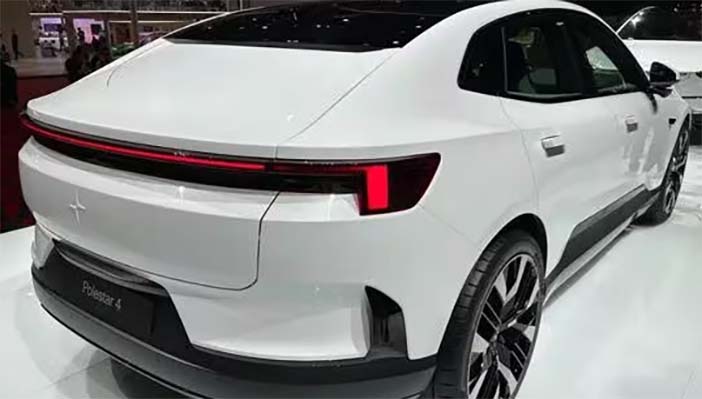
+++ POLESTAR made a choice with the 4 (photo): it eschewed the rear window entirely with the debut of its coupe-sized electric premium crossover. When it was first shown off, most of us probably handwaved away the lack of a rear window, figuring that Polestar designers were dead set on proving they weren’t Volvo by integrating a contrarian design quirk on one singular model that would fly in the face of the textbook utilitarian nature of most Volvos. Then, just this week during the brand’s first-ever Polestar Day event, it showed off the production-intent design of the 5 saloon. Like the Precept concept before it, the 5 does not have a rear window. Clearly, Polestar had committed to this new future, one in which our saloons and coupes don’t have a rear windscreen. If you need to put it in reverse, cameras (supposedly) have you covered. That all sounds, in the words of TikTok food critic Keith Lee, “unique to me”; a genteel way of saying “This is kind of stupid”. But, there’s got to be a method to the madness, right? Surely, Polestar isn’t simply cutting rear visibility and the amount of light let into the cabin solely for fashion, right? It’s a little more complicated than that. There is a reason for this rhyme. I got a chance to speak briefly with Graeme Lambert, the Design and Technology PR lead for Polestar Global, and learned that there’s more of a reason than you’d think for cutting the rear window. Yes, part of it is style; the transition to that low, striking coupe-like roofline was hard to pull off. Polestar designers wanted a low and sleek roofline but wanted the cars (particularly the 5) to actually be fairly low-slung, and have a full-length glass roof. That’s a really tall order. Designers and engineers were faced with a challenge: how do you make all of those things happen, without compromising style, or most important to the Volvo-adjacent brand, without compromising safety? Should they make the car bigger and taller, making it uglier and potentially less efficient? Compromising structural members to make that striking design happen was definitely out of the question. Instead, the team opted to rejigger how the car was designed, removing the rear window. Because the rear window is gone, Lambert says that the team was able to put the structural member that ties one side of the car to the other further back on the body. Thus, the roofline could be low, without compromising the body and chassis rigidity necessary for both solid handling, and strong crash ratings. It makes sense, though. Put aside your feelings about the Polestar 5’s lack of a rear window, and consider the design as a whole. It’s amazing how low-slung, wide, and mean the car looks. It looks legitimately svelte in the metal, unlike the out-of-scale designs seen from other manufacturers. These are cars that look small in photos but are actually surprisingly tall and imposing in person, like the Hyundai Ioniq 6. Likewise, the Polestar 4’s full-length, unbroken glass interior panel might be one of the largest and most impressive displays on the market. Lambert continued to drop more food for thought with respect to the 4 and 5’s lack of rear window. For example, in the era of thick pillars both because of design, but also because of structural concessions to y’know, make a safe and rigid body, it’s common that rearward visibility isn’t all that great on modern crossovers. So, do you really need a rear window? “How often do you really look behind you, anyway?” Lambert said. I’m not sure I agree with that sentiment, but in order to not compromise safety via reduced visibility, Polestar has replaced the rearview outward with an absurdly clear camera that sits in the same space as the rearview mirror. In theory, it should give the driver a greater field of vision than simply looking behind them through a tiny piece of rear glass. Has Polestar set a new trend of curtailing glass in the name of safety and style? We’ll just have to wait and see if anyone else follows along. At the very least, the Changan and Huawei-controlled AVTR 12 also does not have a rear window. Odds are, we haven’t seen the last of this idea. +++
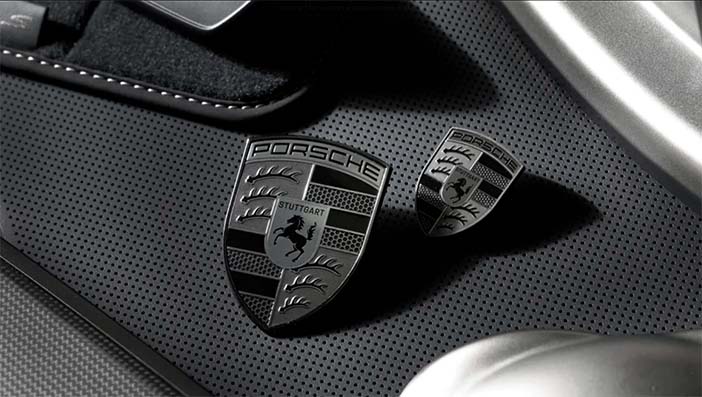
+++ PORSCHE will overhaul the ‘Turbo’ trims across its portfolio to improve consistency in aesthetics and differentiation from non-Turbo models, the company announced Tuesday. Going forward, Turbo models will be easier to tell apart from standard offerings of the same model, with emphasis being placed on the Porsche crest, which will no longer come in the standard gold color seen throughout the company’s existing portfolio. “For almost 50 years, the Turbo models have enjoyed an exalted position at Porsche”, the company said in its announcement. “To emphasize their unique standing, Porsche is introducing distinct design elements to sharpen their look and distinguish them from other models in the range”. The highlight of this shift is Porsche’s new metallic grey paint code dubbed “Turbonite”. It will replace the gold in Porsche’s crest on Turbo models and it will carry over to other trim components, both inside and out. While gold isn’t going away completely (Porsche says it creates an “elegant, metallizing effect”) a satin finish layer will mute those elements to emphasize the Turbonite finish that will be found on all of Porsche’s Turbo models, starting with the 2024 Panamera. “From now on, the Turbo versions will exhibit a consistent appearance across all model lines, one that is elegant, high-quality and very special”, said Michael Mauer, vice president of Style Porsche. Down the road, this treatment will extend to components of the front fascia, wheels (either the spokes or aero inserts, depending on the model) and will be found on the steering wheel crest in each Turbo model’s interior, Porsche says. Other interior components that may show off the new Turbonite finish include the switchgear, contrast stitching, door panel inserts and floor mats. +++
+++ STELLANTIS said it will offer buyout or early retirement packages to about 6.400 nonunion U.S. salaried employees as the auto industry faces what the company is calling challenging market conditions. The automaker, formed in the 2021 merger of Fiat Chrysler Automobiles and Peugeot SA, said it is taking the action “to protect our operations and the company”. The offers, which include what the company said is a favorable benefits package, will go to workers who would like to leave the company or retire to pursue other interests. Workers with 5 to 9 years of service would get 3 months of base pay under the offers, while those with 10 to 14 years would get 6 months. Workers with 15-19 years would get 9 months of base pay and those with 20 or more years would get a full year, the company said. Stellantis said it has about 12.700 U.S. salaried workers who are not union members. It said the buyouts will help prepare the company for the transition to electric vehicles. Stellantis made buyout offers to groups of white-collar and unionized employees in the U.S. and Canada in April. It was hoping to cut the hourly workforce by about 3.500 people but wouldn’t say how many salaried workers it was targeting. The company posted net income of just over 10.9 billion euros in the first half of the year. But it said a 44-day strike by the United Auto Workers union this fall cost it 750 million euros. +++
+++ TOYOTA is adamant that achieving zero emissions can be done without necessarily killing the internal combustion engine. While some automakers such as Porsche are investing in the development and production of synthetic fuels, the Japanese giant has a different approach. It wants to adapt the ol’ ICE and make it run on hydrogen. In fact, the turbocharged 1.6-litre engine of the GR Yaris and GR Corolla has already been tested in motorsport events. It’s not just hot hatches that have received a hydrogen-burning ICE since the HiAce has also been modified to run on hydrogen rather than petrol or diesel. The utilitarian van has entered a pilot program in Australia where a variety of local companies will use the vehicles in real-world conditions. At the heart of the workhorse is a turbocharged V6 engine borrowed from the Land Cruiser. Output is routed to the rear axle via a 10-speed automatic transmission. Speaking at the Hydrogen HiAce’s Aussie launch, Toyota said the technology would also make sense in the Land Cruiser as well as other large vehicles meant to tow and haul big cargo. In an interview, Hydrogen Factory president Mitsumasa Yamagata said: “There are possibilities to adapt hydrogen-fuelled engines into those big vehicles, including Land Cruiser. This advantage of the technology can be utilized for those vehicles including those that are used for heavy towing and heavy loading”. Toyota has been working on hydrogen-fuelled combustion engines since 2017 and introduced the tech 4 years later when a Corolla Sport competed in 4 rounds of the Super Taikyu series. In the HiAce, the ICE is drastically detuned since it only makes 163 hp and 354 Nm. In the regular Land Cruiser LC300 (which isn’t offered in Europe), that 3.4-litre twin-turbo V6 produces 418 hp and 650 Nm, so you’re sacrificing a lot of oomph when transitioning from petrol to hydrogen. The HiAce boasts 3 hydrogen tanks like the ones used by the second-generation Mirai. Interestingly, Toyota says it’s not only looking to optimize packaging to boost fuel storage but is also tweaking the combustion process and even exploring the possibility to add hybrid technology. In the HiAce, the internal combustion engine is up front while the hydrogen fuel tanks are mounted underneath the floor. These have enough juice for a limited range of less than 200 kilometres, which isn’t ideal but you got to start somewhere, right? +++
+++ A bipartisan group of lawmakers in the UNITED STATES want the Biden administration to hike tariffs on Chinese-made vehicles and investigate ways to prevent Chinese companies from exporting to the United States from Mexico. Representative Mike Gallagher, a Republican who chairs a select committee on China, the panel’s top Democrat Raja Krishnamoorthi, and Michigan Representatives Haley Stevens and John Moolenaar urged U.S. Trade Representative Katherine Tai in a letter to boost the current 25% tariff on Chinese vehicles. “It is critical that tariffs on Chinese automobiles not only be maintained but also increased to stem the expected surge in Chinese imports”, they wrote in the previously unreported letter. The 25% Chinese auto tariffs were imposed during the administration of then President Donald Trump and extended by the Biden administration. The letter said the USTR should consider launching a new Section 301 investigation into Chinese vehicles “and the harm they pose to the American automotive industry and American workers and what actions should be taken to counter (China’s) industrial strategy to dominate the global automobile market”. The letter also said the United States “must also be prepared to address the coming wave of Chinese vehicles that will be exported from our other trading partners, such as Mexico, as Chinese automakers look to strategically establish operations outside of China to take advantage of preferential access to the U.S. market through our free trade agreements”. Automakers in the United States have raised concerns about Chinese automakers. Alliance for Automotive Innovation CEO John Bozzella said in June proposed U.S. environmental regulations could let China gain “a stronger foothold in America’s electric vehicle battery supply chain and eventually our automotive market”. In September, the European Commission launched an investigation into whether to impose punitive tariffs to protect European Union producers against cheaper Chinese electric vehicle (EV) imports. The lawmakers said the United States should work with allies “to impose a coordinated response that collectively dampens demand in our markets”. The letter noted “many of the EVs exported from the PRC are made by Western brands, such as Tesla, that have significant production capacity” in China. Lawmakers noted some U.S. automakers are exporting Chinese-made vehicles to the United States, which they said underscores that the current tariff level on imported vehicles is insufficient. +++