
+++ Multiple dealers revealed that BYD plans to sell 30.000 electric vehicles annually by 2025 and have 100 dealerships in Japan. That means each dealership would need to sell 300 cars yearly. This is an ambitious plan, as Japan has always been a fortress for foreign automakers. Local manufacturers have a market share of more than 90%, and the market is still dominated by ICE cars, with plug-in vehicles having an insignificant market share. In November this year, Japan’s electric vehicle sales dropped 9% year-on-year to only 6.429 units. Still, BYD’s founder Wang Chuanfu sees an opportunity there. BYD attended the Tokyo Auto Show in October and brought even the YangWang U8 hardcore SUV for its overseas debut, sparking many headlines. During the show, Chuanfu invited dozens of dealers from all over the country to a private conference in a Tokyo hotel where he had been introducing the BYD’s Japan strategy for over an hour. BYD entered the Japanese market in July 2022 and brought 3 cars (Seal, Dolphin and Atto 3). BYD initially claimed it would rely on online sales, but Liu Xueliang, president of BYD Japan, later said the strategy was shifted toward traditional dealerships. “It is precisely because we’re in Japan, where nobody knows our brand, that we should bring people in contact with vehicles and dealers”, Liu said. “Japanese consumers are abundantly sensitive toward autos, and they would be difficult to capture online”. The Shenzhen-based automaker currently has about 50 sales points in various regions of Japan, including temporary stores. When asked why BYD aims to invest so heavily in such a difficult market as Japan, Liu answered that the company will “take what it learned in Japan and spread it across Asia and the rest of the world”. BYD delivered 2.682.636 electric vehicles worldwide in 2023 between January and November and aims to fulfill the 3 million annual target. Exports of EVs rose 149% in November to 30.629 units. In 2023 (Jan-Nov) BYD exported a total of 206.679 EVs so far. BYD ceased production of ICE vehicles in April 2022. +++
+++ DAIHATSU has said it plans to completely halt operations at all its vehicle assembly plants in Japan, in response to revelations of falsified vehicle safety tests. It is unclear when the automaker will resume operations and the suspension of production could be prolonged. Subcontractors are already affected, and Daihatsu is considering compensating its suppliers and other business contacts for the loss of revenue. The carmaker said it will continue to produce vehicles parts for which it has already placed orders for but will gradually stop production afterwards. 3 plants in Oyamazaki, Kyoto Prefecture; Ryuo, Shiga Prefecture; and Nakatsu, Oita Prefecture will suspend operations on Monday, and its main plant in Ikeda, Osaka Prefecture, on Tuesday. The engine manufacturing plant in Kurume, Fukuoka Prefecture was to be shut down on Friday. Of the 60.000 vehicles for which Daihatsu currently has orders, the automaker will cancel deliveries of the 12.000 yet to be completed. The 48.000 vehicles already completed will be delivered to customers upon request, it said. Parts suppliers have already been impacted. An auto body parts company in Okayama Prefecture was informed from Daihatsu on Wednesday that the automaker will stop ordering parts for this month. A decade or so ago, the company succeeded in starting business with Daihatsu to boost earnings, and it has expanded to the point where sales to Daihatsu currently account for about 20% of its annual sales of ¥10 billion. “We would like to increase orders from other carmakers to make up for the shortfall. But we are worried because we don’t know about orders from next month”, the company’s official said. Daihatsu purchases auto parts directly from 423 domestic companies. However, the number of companies with which Daihatsu has ties with increases even more if distribution, equipment repair and others are included. According to a survey by Teikoku Databank conducted on companies with Daihatsu-related sales of 1% or more, there are an estimated 921 first-tier subcontractors that deal directly with Daihatsu, and the number rises to 8.136 when up to fifth tier is included. Total sales amounted to ¥2.21 trillion. By location, Aichi Prefecture has the largest number of subcontractors with 2.084 companies, followed by Osaka Prefecture with 1.043, Hyogo Prefecture with 334 and Oita Prefecture with 89. “If the production suspension is prolonged, there are concerns about the impact on the local economy, including employment”, a Teikoku Data Bank official said. “The impact will be fairly large. We will consult with each of our direct contractors and consider compensating them”, Daihatsu vice president Hiromasa Hoshika said. The firm has already begun discussions with them. A total of about 9.000 people work at Daihatsu’s 5 plants in the nation. The company is considering giving them nonregular jobs, such as cleaning plant facilities, or extended leave after paying a certain amount of wages. +++
+++ HONDA said Thursday it will recall around 2.6 million vehicles in the United States to replace defective fuel pumps made by Japanese automotive parts maker Denso. The engine of affected vehicles could stall during driving, possibly leading to a crash, said the U.S. unit of Honda. American Honda said that no crashes or injuries related to the pumps have been reported so far. Among those subject to the recall are the Accord, Civic and CR-V vehicles released between 2018 and 2020. According to the Japanese group, it has been conducting recalls since 2020 in response to similar fuel pump problems. The total number of vehicles subject to the recalls has reached 4.5 million worldwide, including those affected by the latest action. A Honda official said that the number is expected to rise further. This month, Honda notified Japan’s transport ministry that it will recall around 1.13 million vehicles, including the N-Box, in the country over Denso fuel pumps. Toyota and other automakers have also taken similar steps over the pumps. +++
+++ HYUNDAI said Tuesday it decided to sell its Russian manufacturing plant, which has been suspended due to the impact of the Russia-Ukraine war. The company said in a regulatory filing that the sale of Hyundai Motor Manufacturing Rus in Saint Petersburg, Russia, was approved in an extraordinary board meeting held earlier in the day. The board also decided to sell General Motors’ plant in Saint Petersburg with an annual capacity of 100.000 units, which Hyundai Motor acquired in 2020. The buyer was known as Russian firm Art-Finance, with the selling price coming to 10.000 rubles (around $111). Hyundai Motor said the deal carries a clause under which it can buy back the factory within 2 years after the sale. The automaker said it will continue to provide after-sales service to Russian buyers of its vehicles, despite the sale. The St. Petersburg plant, launched in 2010, suspended operations in March 2022 due to challenges related to component supplies amid the war between Russia and Ukraine. It had manufactured Hyundai Solaris, Hyundai Creta, Kia Rio and Kia Rio X-Line models with an annual capacity of over 200.000 units. The suspension of the Russian plant sent Hyundai’s sales in Russia plunging. According to the Association of European Businesses, Hyundai’s sales tumbled to just 6 units in August from 2.892 a year earlier. Hyundai was once the third-largest seller of vehicles in Russia. In 2007, Hyundai entered the Russian market by setting up a wholly owned subsidiary in the country. 3 years later, it completed the Saint Petersburg plant and kicked off local production the next year. +++
+++ In JAPAN , the Land, Infrastructure, Transport and Tourism Ministry began an on-site inspection of Daihatsu’s headquarters on Thursday morning in relation to misconduct in its crash tests. The ministry will consider administrative actions based on the facts found from the inspection, which has been conducted based on the Road Transport Vehicle Law. Shortly before 9 a.m., 7 ministry officials entered the head office in Ikeda, Osaka Prefecture.
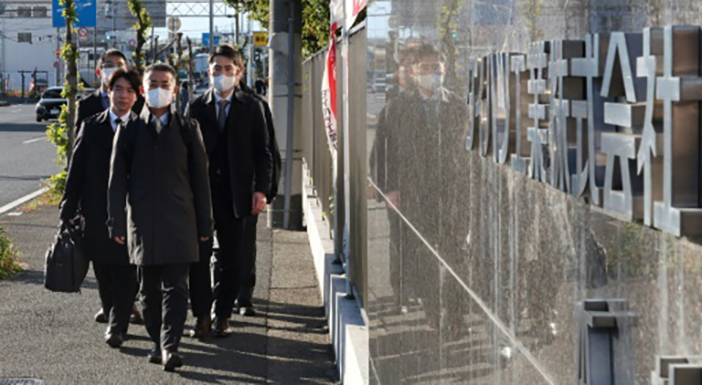
“We understand that the matter has undermined confidence in the entire Japanese manufacturing industry. We sincerely apologize”, Keita Ide, executive manager of the company’s Corporate Management Group, told reporters. A third-party committee consisting of outside attorneys among others found numerous instances of misconduct that the automaker has practiced for a long period of time. This prompted the ministry to conduct the inspection of the headquarters, suspecting that “disregard for safety and legal compliance had spread throughout the company, and the governance system has been lacking”. In addition to the on-site inspection, the ministry will independently from Daihatsu’s own inspection report inspect all 27 models of vehicles currently made by Daihatsu in Japan as early as next year in order to verify if they comply with safety and environmental standards. Daihatsu has suspended shipments of all models currently being sold both in Japan and overseas, having been instructed to do so until the verification is completed. The suspension is expected to be prolonged. Based on the results of the inspection and verification, the ministry will discuss administrative measures by law, including correction orders and revocation of the ministry’s vehicle type designation, which is required for mass production. According to the third-party committee’s report released Wednesday, 174 cases of misconduct were newly found in the tests of 64 vehicle models (including those under development or no longer in production) with the oldest case conducted in 1989. The number has increased from 2014 onward. The misconduct was found in 25 test items, including safety-related tests by using a timer to activate airbags that should have been activated electronically and misstating figures of headrest impact tests. Misconduct was also discovered in performance tests such as car exhaust and fuel efficiency. +++

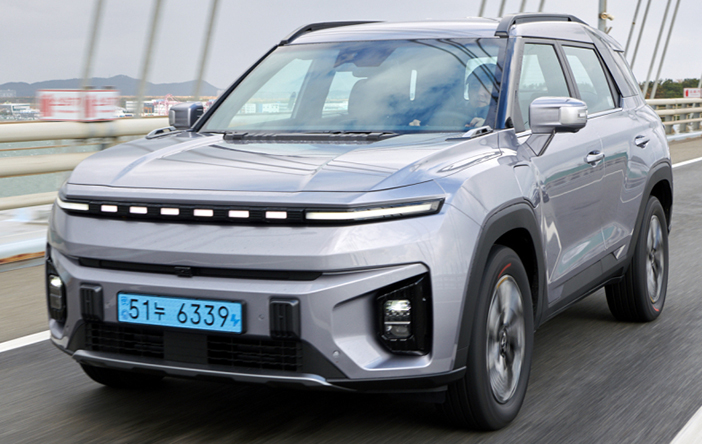
+++ KG MOBILITY , formerly SsangYong, and Saudi National Automobiles Manufacturing Company, a licensed producer of international and domestic automobiles, signed a partnership agreement on Friday to assemble the carmaker’s Torres EVX in Saudi Arabia. The agreement expands an existing deal between the companies for SNAM to manufacture KGM’s internal combustion engine vehicles. Under the new pact, SNAM will augment production capabilities to assemble the all-electric Torres EVX that was launched in South Korea last September. The signing ceremony in Seoul was attended by KG Mobility’s Chairman Kwak Jae-sun and CEO Jeong Yong-won, along with SNAM’s Chairman Mohammed al-Tuwaijri and CEO Dr. Fahd al-Dohish. Also present were Bang Moon-kyu, South Korea’s minister of trade, industry and energy, and Bandar AlKhorayef, the Saudi minister of industry and mineral resources. “As a new member of the KG Group family, KG Mobility has been accelerating its global market expansion since early year. We’re setting our sights on building a robust EV production network in Saudi Arabia, which we see as a stepping stone into the Middle Eastern EV market”, said Kwak. The deal builds upon previous agreements between KGM and SNAM, including a product license agreement in 2019 and 2020 and a parts supply agreement in 2022. These agreements have been set for a combined production volume of 169.000 units over 7 years, with 90.000 units of the Rexton Sports Khan and 79.000 units of the Rexton New Arena. +++
+++ NIO ’s Head of Vehicle Application Software, Xiao Baihong, shared details about the upcoming flagship EV on his Weibo. It will be the world’s first car equipped with an intelligent, fully wired-controlled chassis, according to Baihong. Nio ET9 will be unveiled on Nio Day, which will be held on December 23 in Xi’an.
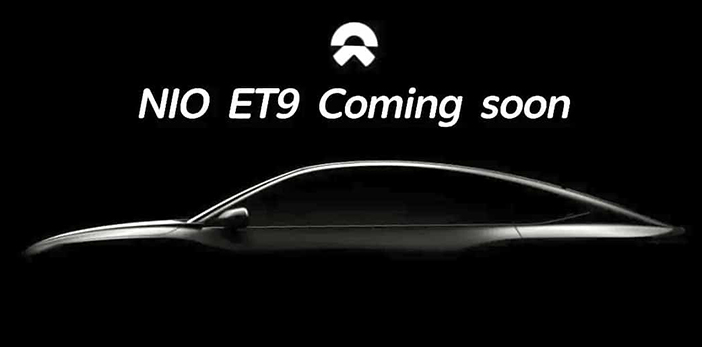
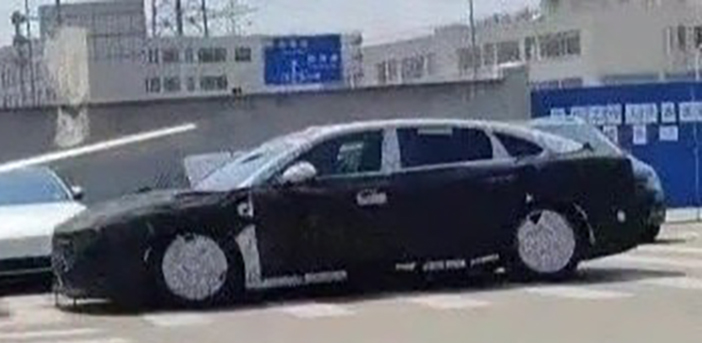
It will be an ultra-luxurious sedan to take on Mercedes Maybach opulence. The EV will have a swappable 150 kWh semi-solid state battery and be built on Nio’s NT3 platform with 900 Volt charging. Despite being unveiled this month, it won’t launch next year, but customers will need to wait until 2025. The price is expected to be around 1 million yuan (210.000 euro in Dutch pricing). Chassis-by-wire enables automakers to shift from mechanical to electronic control systems and emphasize connectivity. Simply put, a wire-controlled chassis means that most of the car is controlled electronically and not mechanically. The key elements of chassis by wire include throttle by wire, gear shift by wire, suspension by wire, steering by wire, and brake by wire. Baihong announced that the ET9 would be fully wire-controlled, so we can expect all the critical parts to be controlled electronically. Chassis-by-wire is also an essential step in autonomous driving implementation as it makes it possible to remove the accelerator pedal, brake pedal and steering wheel. The ET9 will be equipped with a VMC (Vehicle Management Computer) which is responsible for decoupling software and hardware and integrating the drive system, braking, and other wire-controlled hardware such as steering and active suspension. “The vehicle’s brain has evolved into VMC, which takes care of all the wire-controlled hardware”, Baihong explains. VMC is further data-driven, enabling it to evolve. The Nio ET9 will also feature an Intelligent Chassis Controller system (ICC) that controls air suspension and a continuous damping control (CDC) system. Simply put, the CDC controls shock absorbers electronically and can be adjusted to be more sporty and comfortable. ET9 will also be able to adjust air suspension and CDC settings simultaneously, enhancing the driving experience. According to Baihong’s prediction, in the next 3-5 years, Nio’s wire-controlled chassis and VMC intelligent computing platform will become a technological benchmark for high-end smart EVs. “Talking about executive flagship sedans, there’s Mercedes-Benz’s Maybach, the S-Class, the BMW 7-Series and Audi A8. And then there are some sporty ones like Porsche’s Panamera”, William Li said during a live stream testing of 150 kWh battery last week. “Regarding technology, ET9 is ahead of the latest Porsche Panamera. Regarding space, it is comparable to Maybach”, Li concluded. The Nio ET9 will be a massive Maybach-style limousine, about 5.3 meters long with a wheelbase of 3.2 meters. Nio has developed the entire ET9 stack in-house, and the company wants to use it also for NT3 technological promise showcasing and brand building. The announcement sparked discussion in China about whether those technologies will pass the homologation process and get approval for public roads. +++
+++ NISSAN said it would sell China-developed electric vehicles (EVs) globally as it struck a deal with the country’s top university to leverage local resources to accelerate research and development on electrification. The Yokohama-based automaker is considering exporting the line-up of existing internal combustion engine vehicles and upcoming pure electric and plug-in hybrid cars manufactured and developed in China to overseas markets, Masashi Matsuyama, vice president of Nissan and president of Nissan China, told reporters in Beijing. Nissan is considering targeting the same markets as Chinese rivals such as BYD, he said. The company is joining foreign brands including Tesla, BMW and Ford that are expanding their exports of China-made cars to exploit the country’s lower manufacturing costs and increase the capacity utilization of their factories. China accounted for just over a fifth of Nissan’s worldwide sales of about 2.8 million vehicles over the first 10 months of the year, down from over a third for the same period last year. Japanese automakers have faced a severe sales challenge this year in China, the world’s biggest auto market, due to the popularity of domestic brands and heavy price competition amid a rapid shift to EVs. Nissan announced it would establish a joint research center with China’s leading Tsinghua University next year, focusing on research and development of EVs, including charging infrastructure and battery recycling. “We hope that this collaboration will help us gain a deeper understanding of the Chinese market and develop strategies that better meet the needs of customers in China”, Nissan president and chief executive Makoto Uchida said in a statement. The launch of the research center is an extension of joint research efforts the company has had with Tsinghua since 2016. That cooperation has focused on intelligent mobility and autonomous driving technology. +++
+++ RENAULT KOREA ’s Busan plant is rapidly emerging as a key production facility in the global electric vehicle (EV) market, the company said. The carmaker said last month that it will start manufacturing the Polestar 4, a new EV model made by Swedish premium EV maker, Polestar, at its Busan plant in the second half of 2025. Polestar, which became an EV brand in 2017 after separating from Volvo’s high-performance division, plans to aggressively target the global EV market by launching the ‘2’, a mid-size sedan, the ‘3’, a big SUV, and the ‘4’, a mid-size coupe SUV. Polestar CEO Thomas Ingenlath said that production was delegated to the Busan factory of Renault Korea because “it has over 23 years of vehicle manufacturing experience and employs more than 2.000 skilled technicians, and it is directly connected to the export port due to its geographical advantage”. The vehicles produced here are expected to be exported to North America. Established in 1997, Renault Korea’s Busan factory boasts world-class quality and productivity. Among Renault Group’s 20 global car factories, the Busan factory is known to compete for first and second place within the group in major production quality management indicators, such as the number of defects per 100 vehicles produced and the number of defects per vehicle shipped from the factory. Renault Korea produced the Nissan Rogue at the Busan plant from 2014 to 2020 for export to North America, alleviating Nissan’s initial concerns about quality and demonstrating success by receiving additional orders. The Busan factory also received high evaluations in the Harbour Report, ranking 8th among global factories in 2016 and 6th in 2018. The Harbour Report was published by global consulting firm Oliver Wyman. The company compares and analyzes the productivity indicators of car factories over a year and is recognized as an industry standard. With the production of the Polestar 4, Renault Korea is expected to be able to improve the plant operation rate in the short term and accumulate know-how in its own EV production capabilities in the long run. Renault Korea plans to begin a full-scale electrification campaign next year. Starting with the launch of a hybrid SUV, followed by a hybrid sedan, it will produce the next-generation electric car at the Busan factory in 2026. “The production of the Polestar 4 at the Busan factory symbolizes the company’s new start and future vision, and is expected to create more business opportunities”, said Stephane Deblaise, CEO of Renault Korea. +++
+++ Details have emerged of VOLVO ’s new flagship electric saloon; a model known internally at the Swedish car maker under the internal codename V551 but expected to take the ES90 name into showrooms in 2025. Production of the electric Audi A6, BMW i5 and Mercedes-Benz EQE rival is set to take place at a factory owned and operated by Volvo’s parent company Geely in China, as revealed in a photograph and specifications leaked by the company’s board, beginning in May 2024. A photograph published to Volvo’s employee intranet shows members of Volvo’s production team in Zhejiang huddled around signs that read “Volvo Cars V551 First VP Car Celebration” and “Confidential Top Secret”. The reference to VP stands for ‘Verification Prototype’. The car is completely obscured from view, ahead of an expected unveiling in the coming months. The luxury 4-door is expected to be based on Volvo’s SPA2 platform; the same structure that underpins the new EX90 and its Polestar 3 sibling. It accommodates electric drivetrains operating at either 400 or 800 volts. Specifications leaked by Volvo suggest the ES90 will be sold with the choice of both single-motor rear-wheel drive and dual-motor four-wheel drive. It is also said to use a 111 kWh battery (107 kWh usable) delivering 600 km of range in combination with the single-motor, rear-wheel-drive drivetrain. According to Volvo, the ES90 measures 4.999 mm in length, 1.547 mm in height and 1.945 mm in width, making it 61 mm shorter, 32 mm higher and 45 mm wider than the BMW i5. It also receives a wheelbase that is 105 mm longer than its German rival at 3.100 mm. Development of the ES90 is understood to have been partly carried out in combination with Geely’s new Galaxy E8 saloon and Zeekr 7 saloon; the latter of which boasts up to 644 hp and a range of 765 km on the Chinese CLTC test cycle in range-topping dual-motor 4-wheel drive specification. While early speculation suggested the ES90 could share its platform with the recently unveiled Polestar 5, it is understood the new bonded aluminum structure is considered too expensive for the price point and expected production volumes of the new Volvo saloon, which is planned to be offered in all of its existing global markets. The ES90 will be Volvo’s fifth bespoke electric car, joining the C40, EX30, EX90 and EM90. An electric successor to the XC60 is due in 2025, but no plans have yet been revealed for an electric replacement for the S60 and V60. +++