
+++ BMW announced it sold 1.096.486 vehicles in the first half of 2024, placing it at the top spot in the sales chart among premium automakers, despite an incremental 1.3 percent sales drop in the second quarter of the year. The BMW brand recorded a 2.3 percent sales increase in the first half of 2024 compared to the same period last year, with BEV sales surging by an impressive 34 percent to nearly 180.000 vehicles. For comparison, Mercedes first-half sales dropped by 8 percent to 960.000 units, with BEVs declining by 17 percent to 93.400 units; nearly half compared to its biggest rival. Audi saw its sales in the first half of the year drop by 8 percent to 833.000 units, although it recorded a 1.3 percent increase in BEVs. The company announced it is considering closing down the Brussels plant due to low demand for the Q8 e-Tron. The fully electric SUV flagship could face an early axe after being significantly updated in 2022. Audi’s VW Group stablemate Porsche sold 155.945 vehicles in the first half of 2024, 7 percent fewer compared to the same period last year. Porsche’s numbers were affected by a significant 33 percent sales drop in China and a 51 percent drop in global Taycan deliveries. Mercedes, Audi and Porsche, rely on upcoming model launches to help them boost sales and cover up the lost ground. Back to BMW, the company is happy with the sales of the 7-Series flagship, which grew by 22 percent in the first half of 2024. Other models that performed well include the X1 and the 3-Series, as well as the usual suspects from the BMW M division which recorded 99.517 sales. Jochen Goller, member of the board of BMW and responsible for Customer, Brands, Sales, said: “In the first 6 months of the year, we saw double-digit growth of our fully-electric vehicles and models from the upper premium segment”. Goller added that the sales increase was achieved despite the “challenging market environment”, attributing it to their “attractive” product portfolio. The Bavarian automaker has been widely criticized for the polarizing design of some of its models, but it seems that customer preferences were not affected as much as expected. Below, you can see the sales numbers for each BMW Group brand, including Mini and Rolls-Royce. Finally, the second chart shows the sales performance of BMW and Mini in different regions around the world. +++
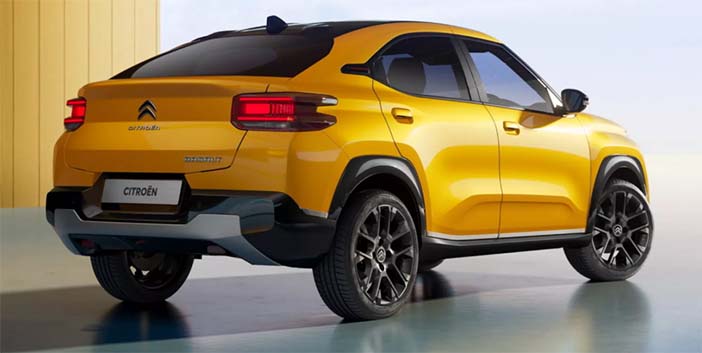
+++ Last April, we were introduced to a CITROEN concept car whose appearance is likely to be very appealing in Europe. It is the Basalt, a coupé SUV initially destined for South America and India, but we should not be surprised if it also makes landfall in Europe. There are several clues to its future arrival. The first one we have already mentioned: most SUVs are well suited here and if you apply a sporty image, all the better. A clear example is how well the Renault Arkana was received. The second clue is that the Basalt is configured on the Stellantis Smart Car platform, i.e. the same one used by the Citroën C3 and C3 Aircross, making it a simple but technically sufficient basis for meeting European safety standards. Of course, this architecture is compatible with electrified versions, such as the multinational’s Hybrid versions, which are powered by 100 and 136 hp mild hybrid petrol engines. The Citroën Basalt will be the perfect continuation of the French carmaker’s new marketing policy, which focuses on simple models at very low prices. In fact, it has no trouble admitting that, with its latest debuts, it is looking to take sales away from Dacia. In principle, the French SUV would be positioned above the new C3 Aircross and in the same segment as the C4 and the C4 X. Citroën would thus have an affordable compact SUV with a difference. The range should be made up exclusively of front-wheel drive options, including electric and some pure combustion variants to achieve a really impressive starting price, as it has achieved with the C3 family. For the moment, the French company is keeping quiet and does not want to comment on the Basalt, so we will wait patiently for their decision (maybe they have already taken it internally). +++
+++ Now that cars with DRIVER ASSIST TECHNOLOGIES have been on the road for several years, it’s possible to gather crash data to see if such features actually help prevent accidents. According to analysis of collision data by the Insurance Institute for Highway Safety, the answer is not really. The study looked at data collected by the Highway Loss Data Institute of Nissan and BMW vehicles from 2013 to 2022. Both brands have a significant number of vehicles equipped with partial autonomous driving features: ProPilot for Nissan and Driving Assistant Plus for BMW. The IIHS found that the presence of such features like lane departure and lane centering did not result in a statistically significantly reduction in collisions. Cars equipped with those features tended to also have forward automatic emergency braking. The IIHS classifies AEB as a crash avoidance feature, not a partial autonomous feature. By contrast, the study revealed that cars equipped with AEB saw a notable reduction in insurance liability claims, which are claims where other drivers’ property is damaged. For example, 2017-2019 Nissan X-Trails equipped with forward collision warnings saw an 49% lower rate of rear-ending crashes. If the X-Trail was equipped with AEB and ACC as well, the rate dropped by 54%. More broadly speaking, Nissans equipped with AEB saw an 8% drop in liability claims, while 2013-17 BMW and Mini vehicles equipped with AEB saw a 13% lower rate. The data didn’t allow for IIHS to isolate BMW and Mini rear-ender crashes. “With no clear evidence that partial automation is preventing crashes, users and regulators alike should not confuse it for a safety feature”, warned Jessica Cicchino, senior vice president for research at IIHS. In fact, the IIHS cautions that such features could “encourage a false sense of security and induce boredom, causing drivers to tune out”. As a result, IIHS president David Harkey said that partial autonomous features should be thought of as a convenience like power windows or heated seats, not as safety features. +++
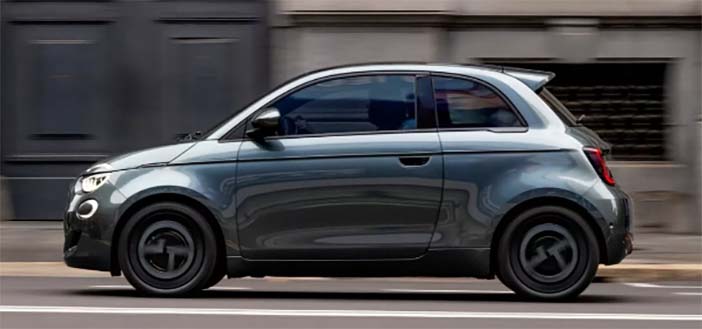
+++ FIAT is celebrating their 125th anniversary by unveiling the new 500e Giorgio Armani. Described as the “ultimate expression of Made in Italy”, the special edition features a unique Dark Green Micinalised or Ceramic Greige exterior with eye-catching “GA” wheels. Moving inside, there’s special seats and laser-cut wood trim. We can expect to learn more closer to launch, but buyers can expect a 7-inch digital instrument cluster and a 10.25-inch infotainment system. They’ll be joined by a glass roof and a JBL premium audio system. The special edition will be offered in Africa, Europe, North America, Australia, Japan, and the Middle East. When it arrives next year, it will have a WLTP combined range of up to 320 km. +++
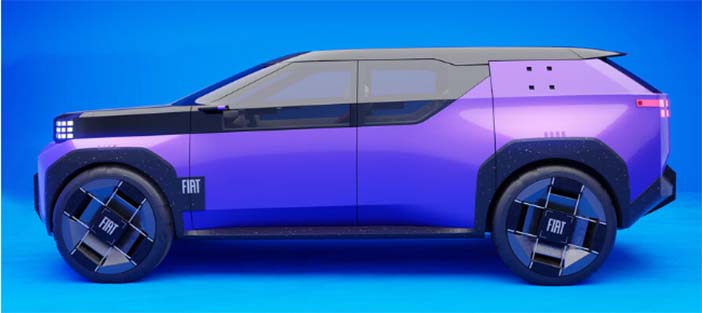
+++ FIAT will launch a Nissan Qashqai-rivalling crossover and a Toyota RV4-like rakish SUV as part of a push towards a new affordable line-up of models. They will follow the recently revealed Grande Panda and sit alongside the 500 and 600 as the Italian brand targets a more diverse spread of segments globally. Revealed as concept cars during Fiat’s 125th anniversary celebrations, the pair, which are currently known simply as the Fastback and SUV, will arrive in 2025 and 2026, although Fiat hasn’t confirmed in which order. This follows its pledge to launch a new car every year up to 2027.
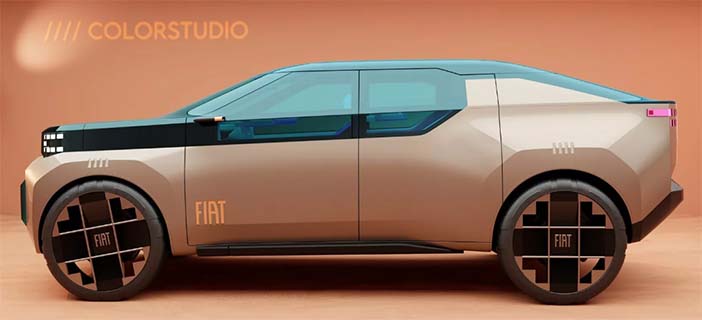
They will both target the C-Segment, confirmed Fiat boss Olivier François: “Finally we will be back in the C-Segment, with very roomy, spacious, family friendly value propositions. That’s what people want today”. Although little else is known about the pair, Fiat has presented the SUV as a “giga-Panda” that will focus on practically, adding that it’s “another confirmation of the special emphasis the brand is putting on the needs of family transport”. The Fastback, meanwhile, is a smaller crossover “with a sporty flair”. It’s billed as a successor to both the Tipo and the South American-market coupé-SUV of the same name. These cars will be closely related to the Grande Panda and Stellantis sibling brand Citroën’s new C3, all using the value-minded Smart Car platform. This can accommodate pure-combustion, hybrid and electric powertrains. Although both new Fiats are at an “advanced stage of development”, details about powerplant options have yet to be confirmed. The C3 offers a 100 hp 1.2-litre 3-cylinder mild-hybrid turbo petrol engine and 320 km electric powertrains. Affordable pricing will be key for the new Fiat pair, explained François: “Our customers want iconic and affordable city cars, frugal and inclusive compacts, family mobility”. I expect top-end prices to stay below €35.000 for the SUV and €29.000 for the Fastback. +++
+++ FISKER might be bankrupt, but the problems continue to mount as the company is recalling 7.545 Oceans from the 2023 and 2024 model year. They’re equipped with an electric water pump that can fail and cause the high voltage battery management system to enter limp mode. According to the safety recall report, limp mode is activated when there is a communication loss on the vehicle’s Local Interconnect Network 6 bus. When the water pump fails, it causes a loss of communication and forces the vehicle into limp mode. If that wasn’t bad enough, Fisker’s limp mode is aggressive and limits battery power to just 8.5 kW. This, in turn, limits the SUV to approximately 20–30 km/h. Needless to say, this creates a huge problem if you go into limp mode while traveling at highway speeds. As the report notes, this can “create hazardous conditions, particularly in scenarios where higher speeds are necessary to keep pace with traffic or to maneuver safely”. It goes on to say the Ocean’s extremely low limp mode speed can lead to dangerous situations as “other drivers may not anticipate such a reduction in speed”. Fisker first became aware of the issue in November of 2023 and started an investigation. Multiple other water pumps appear to have failed in the following months, but the company isn’t aware of any accidents or injuries related to this issue. As part of the recall, the water pumps will be replaced with new ones that feature “improved conformal coating coverage”. Owner notifications are expected to be mailed out in August and a Technical Service Bulletin suggests the issue also impacts 3.763 Oceans in Canada and Europe. +++
+++ It’s impossible to run a good navy if all of your admirals quit and abandon ship. STELLANTIS is dealing with a similar issue in the real world. Over the past few months, at least five of its executives have abandoned the brand. The latest is Mamatha Chamarthi, a woman whose work history would seem to indicate a deep loyalty. Chamarthi led Stellantis’ software business. She was tasked with generating revenue through connected services like navigation. She started with Chrysler back in 1996 as a contractor. In 1998 she came on as an employee and ultimately worked her way into a position as Chief Information Officer with Fiat Chrysler in 2019. Now, she’s quit, effective immediately. Christiani Campos is taking over the now-vacant role. “Cristiani has an outstanding track record in business development in Latin America and Taiwan combined with a solid financial background”, a spokesperson for Stellantis said. They also confirmed that Chamarthi left to pursue other opportunities. Where she pops up could be telling. Other Stellantis executives have similarly left the brand altogether while others have retired. Jason Stoicevich came on board in May as the vice-president of U.S. retail sales. Just 2 months later he decided the position wasn’t for him and left. Richard Schwarzwald, chief customer experience officer, also quit after joining the top executive team in 2021. Tim Kuniskis and Jim Morrison, 2 executives that fans seemed to really love, both retired in May. Both announcements were somewhat unexpected since Morrison had just accepted a new role late in 2023 and Kuniskis seemed primed to bring Dodge and Ram into the electric age. The shifting executive sands at Stellantis have some folks worried about the company. David Kelleher, a dealer in Pennsylvania and former chairman of the Stellantis National Dealer Council told: “Not only did Stellantis forcibly let people go that have talent and experience, other people with immense talent and experience are choosing to leave. So it begs the question: What’s causing that? I’m not going to speculate as to the motives, but they’re all coming on top of each other”. There’s no doubt that Stellantis is in the midst of some big changes internally. It’s launching a lot new models. At the same time, it’s decided to drastically reduce the use of carbon credits in an effort to save cash and go greener. Can it survive so many admirals jumping ship? Only time will tell. +++
+++ TESLA is postponing its planned robot taxi unveiling to October to allow teams working on the project more time to build additional prototypes, in yet another setback for the company’s co-founder Elon Musk. The voluble billionaire had set the initial August 8 date for the event months ago, and optimism about the spectacle has contributed to an 11-day streak of gains that added more than $257 billion to Tesla’s market capitalization. So much for that: The stock closed 8.4 percent lower on Thursday, its largest drop since January. +++