+++ Geely, Chery and JAC will establish car manufacturing in ALGERIA to solidify its presence in North Africa. This information was disclosed by Li Jian, Chinese Ambassador to Algeria. It’s a response of Chinese carmakers to Algeria’s importrestrictions implemented in 2023. Algeria’s economy has been declining for several years in a row. As a result, local authorities aimed to revive the industry by restricting automobile imports. Newly imposed strict rules were about to entice car companies to establish manufacturing facilities in the country. The plan seems to be working as the Chinese Ambassador to Algeria has confirmed 3 automakers will assemble cars in the North African country. It is worth mentioning that JAC previously had a light truck KD plant in Algeria. Others have no industrial background in the North African country. However, there is no information about the upcoming JAC factory in Algeria. In contrast, Chery officials shared in November 2023 that they plan to establish a plant in Bordj Bou Arreridji. This facility will have a preliminary production capacity of 24.000 units per year. In the next 3 years, Chery will ramp up the production capacity to 100.000 vehicles per year. As a result, the factory will also export cars to other North African countries. Geely’s plans in Algeria were disclosed by its local partner Sovidem. The company’s general manager reported that the biggest private-owned Chinese automaker plans to invest $200 million to build an automotive assembly plant in Algeria. Its initial production capacity will reach 50.000 units per year. The Geely Algeria plant will begin operating in 2026. The first model to roll off the production line is the GX3 Pro (Vision X3). It is a small crossover launched in China in 2017. It sells in the Middle Kingdom under the Livan (Ruilan) brand jointly created by Geely and Lifan. Moreover, the GX3 Pro sells in Latin America, Central Asia, Africa and other regions. The GX3 Pro measures at 4.005 / 1.760 / 1.575 mm. It has a 1.5-liter naturally-aspirated engine for 101 hp paired with CVT. The start of production of Chinese cars in Algeria will be advantageous for both Chinese companies and the country. Algeria will resurrect its industry and improve its economy. Geely, Chery and JAC will use those local plants as the export platform to solidify their presence in North Africa. However currently, Geely, Chery and JAC haven’t obtained official permission to produce cars in Algeria. +++
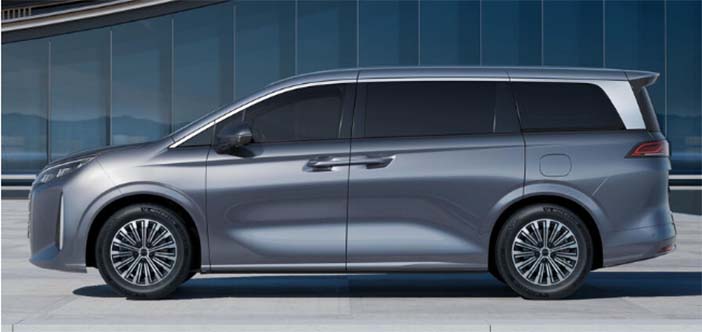
+++ BYD has confirmed plans to sell its new Xia MPV in European markets as part of a growing line-up of global export models. Revealed at the 2024 Chengdu motor show, the Van-shaped Xia has been conceived as a rival to the likes of the Volkswagen Multivan and Mercedes-Benz V-Class. It has seating for up to 8 occupants but the versatility to offer a number of differing configurations, including 7-, 6- and 4-seat layouts. At 5.145 mm in length, 1.970 mm in width and 1.805 mm in height, the Xia is 18 mm shorter, 29 mm wider and 102 mm lower than the long-wheelbase variant of the Multivan. The Xia is based on a newly developed platform designed expressly to support PHEV drivetrains. The MPV is the first of 3 new PHEVs that BYD will export to Europe next year. BYD president Stella Li told last month that PHEVs have a “very important role” to play in the Chinese brand’s European growth, especially in the face of ailing EV demand and EV import tariffs. The Xia receives BYD’s fifth-generation DM (Dual Mode) PHEV system. In the Qin L, it combines a 1.5-litre 4-cylinder petrol engine making 102 hp and 125 Nm with an electric motor making 220 hp and 260 Nm. Electric-only driving capability is provided by either a 10.1 kWh or 15.9 kWh lithium-iron-phosphate (LFP) BYD Blade battery. BYD’s fifth-generation DM drivetrain is claimed to possess the highest engine thermal efficiency of any PHEV system used in a production car, at 46.06%. BYD has produced MPV models in the past, but the Xia represents it first attempt at a global model. +++
+++ The HYUNDAI MOTOR COMPANY is making a bold move towards the future with an investment of 120.5 trillion won ($90.3 billion) over the next decade. This investment is designed to keep Hyundai agile as mass adoption of electric vehicles remains uncertain. Key initiatives include the introduction of advanced hybrid systems, an expanded range of hybrid vehicles, and a new category of vehicles (extended range electric vehicles, or EREVs) that combine the strengths of both internal combustion engines and EVs. The company is also entering new mobility sectors, such as launching a new business to supply autonomous vehicles to software companies. These strategic plans were announced during Hyundai’s CEO Investor Day on Wednesday, where the company outlined its new long-term strategy, “Hyundai Way”. The updated strategy includes a 10 percent increase in investment compared to last year’s 10-year plan. “Under the Hyundai Way, we’re committed to staying nimble in a volatile market, using our unique flexibility to secure long-term leadership in mobility and energy”, said Chang Jae-hoon, president and CEO of Hyundai Motor Company. The breakdown of this investment includes 54.5 trillion won allocated to research and development, 51.6 trillion won for capital expenditures and 14.4 trillion won for strategic investments. Hyundai’s core strategy aims to enhance profitability across its internal combustion, hybrid and EV segments. The company has set a goal to achieve a consolidated operating margin of over 10 percent by 2030. A major part of this strategy is expanding Hyundai’s hybrid vehicle line-up from 7 models to 14 by 2030. These hybrids will cover a range of segments, including compact, large and luxury vehicles, with hybrid options available for nearly all Genesis models. In addition, Hyundai plans to introduce the next-generation hybrid system, TMED-II, to mass-produced vehicles starting January next year. This system will deliver improved performance and fuel efficiency without increasing costs. Future hybrids will also feature advanced technologies like smart regenerative braking and vehicle-to-load capabilities, which allow vehicles to power external devices. By 2028, Hyundai aims to boost hybrid sales to 1.33 million units annually, a 40 percent increase from 2023. To address the slowing pace of EV adoption, Hyundai will launch EREVs in 2026. EREVs operate primarily as electric vehicles but feature an internal combustion engine that generates electricity to recharge the battery, significantly extending the vehicle’s range. Hyundai has developed a new power system for these vehicles, enabling four-wheel drive with just two motors. EREVs will offer a range of over 900 kilometers on a full charge, making them a viable bridge between traditional internal combustion engines and fully electric vehicles. Mass production of EREVs is set to begin in North America and China in late 2026, with sales starting in 2027. In North America, Hyundai will focus on D-segment midsize SUVs under the Hyundai and Genesis brands, targeting annual sales of over 80.000 units. In China, more affordable C-class EREVs are expected to sell 30.000 units per year. Hyundai is also heavily investing in battery technology to enhance EV performance, safety, and cost efficiency. By 2030, the company plans to develop its own entry-level nickel-cobalt-manganese battery that reduces material costs by adjusting nickel content. Hyundai also aims to improve battery energy density by over 20 percent by 2030. Battery safety remains a top priority for Hyundai, with plans to enhance pre-diagnosis technology in its battery management system and develop systems to prevent heat transfer between cells in the event of a fire. Another pillar of the Hyundai Way strategy is the “Mobility Game Changer” strategy. It focuses on advancing autonomous driving technology and software-driven vehicles. With a 22.1 trillion won investment, Hyundai is developing Level 4 autonomous driving systems. As part of this initiative, Hyundai will launch a “foundry” business to supply customizable autonomous vehicle platforms to software companies. This will enable developers to create specialized autonomous vehicles, while Hyundai expands its robot taxi services in key global markets. Hyundai is preparing for the software-defined vehicle, or SDV, era with a next-generation infotainment system based on Android Automotive, set to debut in 2026. Additionally, the SDV Pace Car, featuring advanced autonomous driving and AI capabilities, will be introduced later that year for testing and validation. Lastly, the company’s “Energy Mobilizer” strategy involves a 5.7 trillion won investment to enhance hydrogen technology and build a comprehensive hydrogen ecosystem. Through its HTWO brand, Hyundai aims for net-zero carbon emissions by 2045. +++
+++ MERCEDES-BENZ has confirmed an earlier report from Autointernationaal.nl that it’s next generation S-Class and EQS will be unified under one name as part of a move by the German brand to bring parity between its EV and combustion-engine line-ups. This means the car maker’s flagship will continue with ICE power in its 8th generation, due in 2030, despite Mercedes previously pledging to replace it with the Mk2 EQS from the end of the decade. Mercedes will therefore do away with the EQS name introduced on its flagship electric model in 2021, CEO Ola Källenius has confirmed. “There will be 2 S-Classes in the future, ICE and electric”, he said, adding that both versions will feature similar exterior and interior designs. However, they won’t be based on the same platform. The S-Class EV is set to use the upcoming MB.EA Large platform and its ICE sibling will be on a further developed version of today’s MRA architecture. The plan mirrors the positioning of the new G-Class, which now comes with both ICE and electric drivetrain options without any significant difference in styling. The unification of the 2 models follows disappointing sales of both the S-Class and EQS, with deliveries of the ICE car plummeting by 37% in the first quarter of 2024. This has resulted in S-Class production being cut to just a single shift at the Factory 56 facility in Sindelfingen, Germany, which also produces the EQS. Mercedes-Benz initially projected that electric models would account for more than 20% of its 2.043.800 global sales in 2023. However, they achieved only an 11% share, despite a 73% increase in the firm’s EV sales compared with 2022. This shortfall undermines Källenius’s earlier goal of pure-electric and plug-in hybrid models making up 50% of the brand’s annual sales by the end of 2025. In a strategy update made earlier this year, Mercedes revised this forecast to 50% by 2030. In Europe, this sales lag has resulted in the EV car parc growing by just 2% so far in 2024 compared with last year, prompting manufacturers such as Audi, Ford and Porsche to change tack and refocus on ICE and hybrid cars. Mercedes-AMG’s largest muscle-car limousine makes the big switch to plug-in hybrid power, for a captivating blend of refinement and accessible pace. At Mercedes, this gave the S-Class a reprieve, because the brand decided to extend the lifespan of key petrol and diesel models by investing in the electrification of existing engines to ensure regulatory compliance for emissions and other factors “well into the 2030s”. In a separate interview, Källenius confirmed that Mercedes had budgeted to invest up to €14 billion in research and development and in plants with a focus on digitalisation, electromobility and, significantly, advanced combustion engine technology” within its passenger car operations alone in 2024. Källenius said: “Our engines will always be at the highest technological standard. Otherwise, we would abruptly choke off our combustion engine business in 2027/28”. While the company has given the go-ahead to additional, and previously unplanned, investments in combustion technology, Källenius denies it comes at the detriment to planned EV development. He quashed rumours suggesting that Mercedes planned to stop development of the MB.EA Large electric vehicle platform in favour of the EVA2M, which will be used first by a facelifted version of the EQS next year. He said: “We’re already planning with MB.EA Large”. Estimates put the original planned investment in the MB.EA platform at between €4 and €6 billion. As well as underpinning the replacement for the EQS, this platform is tipped to be used for the as-yet-unconfirmed EV successors to the E-Class, GLE and GLS. One high-ranking insider with key knowledge of Mercedes’ future plans told that the decision to develop an 8th-generation combustion-engined S-Class will almost certainly ensure the E-Class continues into a 7th generation with the choice of petrol and diesel engines alongside an electric-powered version that will be a successor to today’s EQE saloon. Our source said: “The S-Class and E-Class are closely related from a technical standpoint. To do one without the other would greatly affect the economies of scale enjoyed by today’s models”. Despite the differing platforms, the 8th generation S-Class is planned to unify the look of both combustion-engine and electric models in a move mirroring that of their closest rivals, the BMW 7 Series and i7. As with the G-Class, each model is expected to feature its own individual grille but have common bodywork. Before the next- generation S-Class arrives, Mercedes-Benz is committed to implementing a range of revisions for the existing EQS and S-Class flagships. Under the current plans, the electric EQS will gain a major technical upgrade during the second half of 2025 and the combustion-engined S-Class saloon is set to be facelifted in 2026. The EQS has recently received mild styling revisions as part of a so-called “running change” for the upmarket electric saloon but the upgraded version will adopt a heavily modified version of the EVA2 platform. The reworked platform will receive an 800 Volt electric architecture instead of the 400 Volt system in use today, which will endow it with faster charging times. Insiders suggest the 10-80% charge time is set to be reduced by up to 10 minutes compared with today’s EQS, taking as little as 21 minutes on a high-powered charger. Its 118 kWh battery will also be uprated with new chemistry, which will increase the range by 37 miles to 535 miles in its most efficient guise. This technology will be shared with the upcoming electric CLA. Further changes include the adoption of Mercedes-produced eATS2.0 electric motors in place of the Siemens Valeo electric motors of the current model. The single-speed gearbox will also be replaced by a new 2-speed unit, providing the upgraded EQS with added performance potential and possibly a higher top speed. Less than a year after the arrival of the upgraded EQS, Mercedes will introduce the facelifted S-Class, which is scheduled to reach showrooms 6 years after the seventh-generation model first went on sale. This is around 2 years later than the traditional timetable and reflects the extended cycle planned for the existing car. The facelifted version will sport a new-look front end with an even bolder iteration of Mercedes’ traditional chromed grille and a different headlight design. Inside, the luxury saloon will receive an optional MBUX Superscreen and the new MB.OS operating system. The existing twin-turbo 4.0-litre V8 is also set to be upgraded to the latest M177 specification with 48 Volt mild-hybrid tech. Additionally, Mercedes will upgrade the S-Class’s level-three Drive Pilot autonomous driving capability with a new sixth-generation software package. It is expected to allow hands-off driving at speeds of up to 120 kph. +++
+++ MINI has partially halted deliveries of its Cooper and Countryman models due to an impending brake system-related recall caused by potentially defective parts. Cars are affected by issues with the integrated braking system, which determines the amount of feel and feedback provided through the brake pedal. The same problem also impacted more than 80.000 BMW and Rolls-Royce models worldwide earlier this year. In this case, ABS and stability control systems defects were found to potentially cause power braking assistance to fail, meaning the driver could lose control of their car. The BMW Group, which owns Mini, is looking to extend this recall action to include more models “as additional cases outside the original scope of the recall have been identified”. A Mini spokesperson confirmed that the cars affected were the 3- and 5-door Cooper as well as the Countryman. They said: “Some new Mini vehicles, which are affected by the extension of the safety-related recall for the integrated braking system, are currently on hold and will be delivered to customers as soon as the respective parts have been exchanged”. More than 10.000 vehicles are affected. The spokesperson said: “The BMW Group will announce the intended remedy actions imminently. Where vehicles are recalled, affected customers will be informed via a letter to the registered keeper”. Mini sales are “operating as normal”, the spokesperson confirmed, and all Mini models remain available to order. +++
+++ PAGANI nearly hopped on the electrification bandwagon, but it shelved the project due to technical challenges and a lack of demand from its target audience. Unveiled in 2022, the Utopia could have received a V8-electric hybrid system but instead landed with a twin-turbo V12. Company founder Horacio Pagani explained that his team worked with partner Mercedes-AMG to find a suitable powertrain for the Utopia. The brand tested several options, including a hybrid drivetrain built around a twin-turbocharged V8. On paper, the setup sounds a lot like the one found in some of AMG’s models, including the GT 63 S E Performance unveiled in 2021. An output of 840 hp and 1.350 Nm of torque makes the system supercar-worthy, but Pagani’s customers didn’t want it. “In reality, no one is interested in a hybrid car. And I have hybrids in my collection; I have a Porsche 918 Spyder and a few more. But when it’s time for me to take a Porsche out for a spin, I’ll take my 911 R or my Carrera GT. Our clients think along those lines”, Pagani told in an interview. “I believe that if you ask people, most of them will say that a hybrid is something extraordinary because it has all the problems of an electric car and all the problems of a combustion car, along with higher development and maintenance costs”. Beyond the lack of demand, the hybrid system’s motors and batteries added too much weight. Pagani explained that the hybrid prototypes his team tested were overweight by anywhere between 400 and 500 kilos, and this extra mass would have limited the car’s appeal. “Our clients didn’t want anything to do with it. We have to build what the client is going to buy from us”, he said. The demand problem also explains why Pagani hasn’t made an EV to take on Rimac, for example. It started experimenting with battery-electric technology in 2017, working with both Mercedes-AMG and Lucid, but “customers were not interested”, the brand’s founder said. In hindsight, not taking the EV route was a wise choice: Demand for electric hypercars has dropped significantly, according to Mate Rimac. Pagani plans to make V12-powered cars for as long as possible. “We’re doing everything we can to keep the V12”, he assured. The engine that powers the Utopia is homologated until 2031. Crucially, future evolutions are homologated as well, so there’s more to come. Pagani also remains committed to the manual transmission: The Utopia and the Utopia Spider are both available with a 7-speed stick. +++
+++ TESLA plans to start mass production of the Model Y 7-seater option in the Giga Shanghai plant in October, domestic media reported. The updated electric SUV is intended to launch in the Chinese and European markets. The China-made Model Y with third row of seats has already completed the homologation process for the European Union market. The new 7-seater will weigh 45 kg more than the standard 5-seat variant. The updated Model Y, codename Juniper, is supposed to be launched in early 2025. Tesla CEO Elon Musk reiterated in June that a Model Y refresh is not coming this year. It is unclear if the 7-seater Model Y will be the new Juniper update. Tesla launched a slightly updated Model Y for China only in October last year, with more power, ambient lighting, and a revamped dashboard. However, this refresh was not intended for export. In 2021, Tesla started offering a 7-seater version of the Model Y only for the 4WD dual motor Model Y Long Range in the United States. The third of the seats cost $2.000 extra. The Model Y is the best-selling EV in China in 2024, with almost 300.000 units sold between January and July (including exports), far outselling the Model 3 sedan. +++
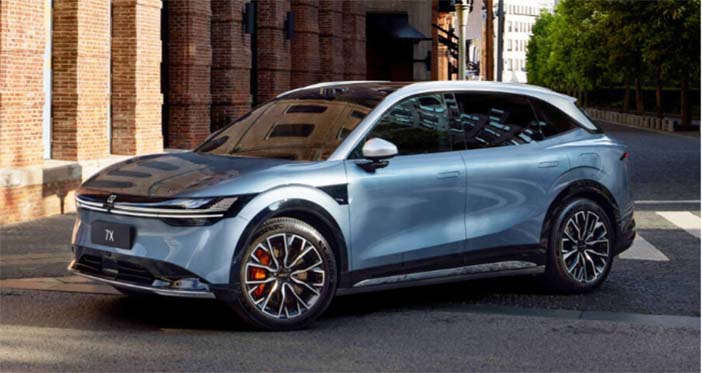
+++ ZEEKR has revealed the 7X, a Volkswagen Touareg-sized premium electric SUV twinned with the rugged Smart #5. It will go on sale in China at the end of September, before heading to other markets (including Europe) by the end of 2025. It follows the Zeekr 001 (a saloon) and X (a) crossover, both of which are already available in some European markets. Measuring 4.8 meter long, 1.9 meter wide and 1.7 meter tall, the 7X will be positioned to take on SUVs like the Hyundai Santa Fe and Kia Sorento, albeit without offering a third row of seats. Instead, Zeekr has positioned the 7X as a roomier alternative to the likes of the Touareg, with a roomy second row and enough space to “easily support a camping staycation at the weekend”. That’s despite its 616-litre boot capacity not being as large as rivals’ (the Santa Fe offers 628 litres with 5 seats in place, for example). Underneath, it sits on the same SEA platform as the new #5 SUV and draws power from either a 75 kWh or 100 kWh battery. In Europe, the #5 will be sold exclusively with the larger pack, so expect the same for the 7X. In the #5, that offers a 560 km range. The 7X also uses the same 800 Volt electrical architecture as the #5, meaning it should be able to charge from 10-80% in just 15 minutes. Zeekr said it can hit 100 kph from standing in just 3.8 seconds but hasn’t yet published power or torque figures. Details on what European-market 7Xs will come equipped with are still under wraps, but we expect the dual-screen interior set-up and plethora of active safety features to be retained. Following other Chinese car makers’ bid to undercut rivals, a starting price of around €47,000 is expected for the 7X in the Netherlands. +++